10/05/2026
  4326 views
Debt is an issue every business faces, but not all of them track and control it well. If you want to understand what debt is and how to manage it more effectively, this article will help you grasp the information accurately.
Mục lục
- What is Debt?
- Terms Related to Debt
- Types of Debt
- Debt Processing Procedure in a Business
- Step 1: Review and verify the origin of the debt:
- Step 2: Choose a suitable payment method:
- Step 3: Prioritize payments reasonably:
- Step 4: Prepare complete payment information:
- Step 5: Make the payment and record it carefully:
- Step 6: Monitor and update continuously:
- Step 7: Resolve any arising issues:
- Step 8: Reconcile and report transparently:
- Experience in Tracking Arising Debts
- Legal Regulations Related to Accounting Debts
- Automate Debt Reminders with 1CRM – An Effective Method for Debt Management
What is Debt?
Debt is the sum of accounts receivable and accounts payable of a business at a specific point in time. This is a relatively complex specialized concept. However, you can also understand it simply as when a business buys products, goods, or services, and a payment obligation arises with another individual or organization but is not paid immediately, it is called debt.
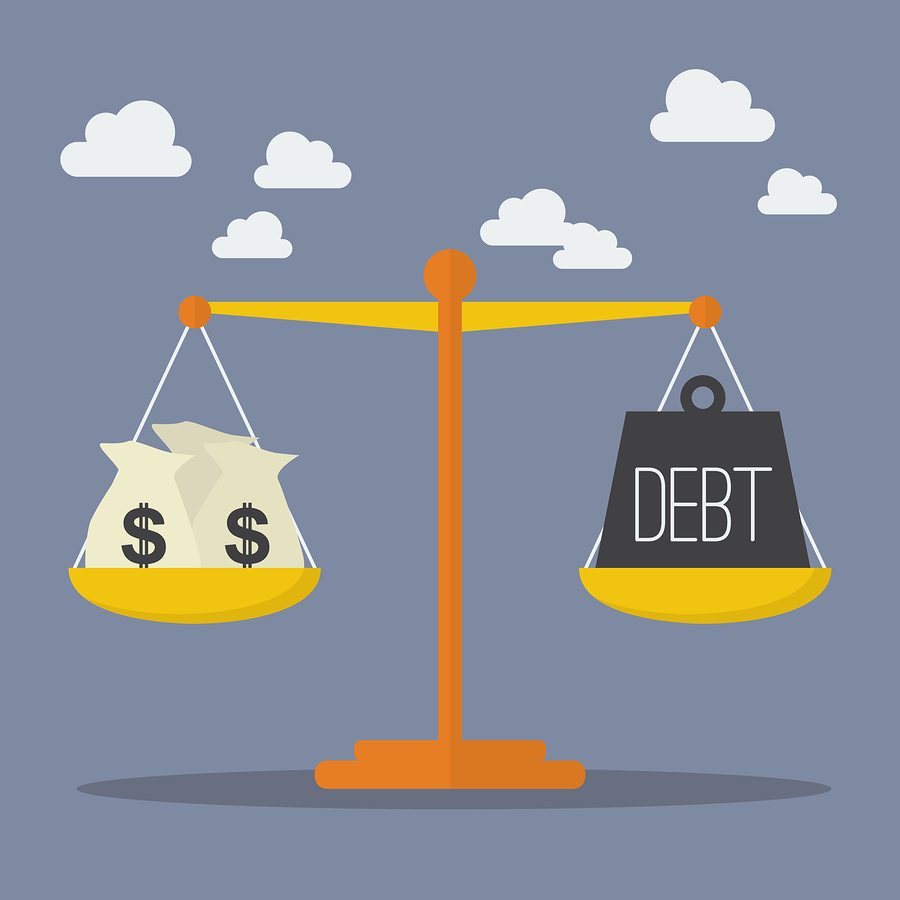
Typically, when referring to debt, it means short-term liabilities, which are debts expected to be paid in the shortest period, usually within one year. Long-term debts, such as mortgages and other loans that take more than 12 months to pay off, are usually classified as separate liabilities and are not included in this definition of debt.
In business, the concept of debt often refers to both types of liabilities that a company must pay or is waiting to collect from another party.
>>> Read more: 5 Latest Debt Payment Request Templates and Detailed Filling Instructions
Terms related to debt include:
- Auditing accounts: The process of reviewing accounts receivable and payable in daily business operations.
- Debt reconciliation: The process of comparing the accounts receivable and payable on the company’s accounting books with the figures in contracts or actual transactions.
- Debt report: The creation of a report to track accounts receivable and payable for more effective management and control.
- Debt collection: The process of recovering money owed to the business by customers or business partners who are late with payments or fail to pay.
Types of Debt
Accounts Receivable
Accounts receivable is the amount of money that a business will collect from internal units, partners, or customers in the future. Accounts receivable usually arise from providing goods or services that have not been paid for immediately.
Types of accounts receivable include:
- Money from the sale of goods or products.
- Revenue from providing services to customers for which the full amount has not yet been collected.
- Receivables based on progress stages in a construction contract.
- Financial investments.
In addition to the main receivables that need to be controlled to ensure the company’s cash flow, accountants also track other receivables such as: internal collections on behalf, advances, collecting compensation, or deducting from employee salaries due to loss or damage of goods…
Accounts Payable
<a href="https://1office.vn/no-phai-tra" target="_blank" rel="noopener
Managing Accounts Payable
Similar to accounts receivable, businesses also need to track accounts payable for each entity, continuously update payable amounts, and reconcile them with the books to pay partners. All liabilities are updated by the accountant as soon as they arise; periodically (at the end of the month, quarter, year), the business needs to compile data and check liabilities with partners to ensure accuracy.
For payables to the state and employees, business owners need to make payments on time and comply with the Labor Law.
In particular, for payables that do not yet have invoices, business owners and accountants need to track and update them as soon as invoices are available to ensure the accounting and business reporting process is free of errors.
Additionally, businesses should pay attention to the following:
- Develop a reasonable sales plan from the beginning, suitable for each customer group and supplier. Continuously update the situation, adjust, and supplement according to the actual situation.
- In case of late payment, it is necessary to establish clear regulations on debt limits, payment deadlines, and penalties for delays or when the customer has no intention to pay.
Debt Processing Procedure in a Business
The debt processing procedure can be flexible and vary depending on the specific industry and business. Typically, this process includes the following basic steps:

Step 1: Review and verify the origin of the debt:
- Collect and thoroughly check all invoices, contracts, and documents related to the debt.
- Accurately determine the amount to be paid, the due date, and the payment terms agreed upon with the supplier.
- Compare the information with the financial and debt management system to ensure it is valid and has not yet been paid.
Step 2: Choose a suitable payment method:
- Based on the contract regulations, the company’s payment policy, and the supplier’s requirements, choose a suitable method (cash, bank transfer, check, etc.).
- Flexibly negotiate the payment method with the supplier/partner to optimize benefits for the business.
Step 3: Prioritize payments reasonably:
- Determine the payment order based on the importance, urgency, and payment capacity of the business.
- Apply evaluation and classification criteria for liabilities to make payments effectively.
Step 4: Prepare complete payment information:
- Create a payment slip/invoice with complete information about the debt: amount, invoice number, bank information, and contact information for both parties.
- Thoroughly check the information before making the payment to avoid errors.
Step 5: Make the payment and record it carefully:
- Pay on time using the chosen method.
- Record all payment information (payment date, document number) in the debt management system.
Step 6: Monitor and update continuously:
- Closely monitor the payment progress to ensure it is on time.
- Update payment information in the debt management system to keep track of the financial situation.
Step 7: Resolve any arising issues:
- Handle cases of disputes, payment errors, or other arising issues.
- Negotiate and adjust payments with the supplier/partner to reach a reasonable solution.
Step 8: Reconcile and report transparently:
- Reconcile debt information with the company’s financial and accounting system.
- Report the debt status and payment progress to relevant parties (managers, finance-accounting department, suppliers).
Experience in Tracking Arising Debts
Businesses should set up a detailed debt ledger for each partner to easily consolidate accounts receivable/payable for each partner. At the same time, a summary debt report should be created to track the debt balance with all partners. Tracking debts on Excel is a simple and cost-effective solution for businesses, especially for small and micro-sized enterprises.
However, besides these advantages, managing and tracking debts using Excel also has some limitations, such as:
- Difficult to track when there is a large number of customers and suppliers to manage, which can easily lead to errors.
- Data is saved in separate, independent files, making it difficult to consolidate reports and consuming a lot of time and effort from accountants.
- Businesses face difficulties in tracking period-end summary data and calculating the status of upcoming debts to balance cash flow.
>>> See more: Latest debt reconciliation report template【Compilation】
Below are the important legal documents that businesses need to understand to legally manage, record, store, and report debts in Vietnam — including key content, what businesses need to implement, and practical notes.
1. Key Legal Documents
-
Law on Accounting No. 88/2015/QH13 (Law on Accounting 2015) — the foundational legal framework that stipulates the principles of accounting work, responsibilities of accountants, documents, and financial statements. It should be referenced when determining the responsibilities of the chief accountant, and the responsibility for recording and reporting debts.
-
Decree 174/2016/ND-CP (guiding the Law on Accounting) — provides detailed regulations on the organization of the accounting apparatus, the content of accounting work, principles for creating documents, accounting records, and standards for accountants (including conditions for chief accountants and accountants in charge). The decree emphasizes that documents must be clear, complete, timely, accurate, and easy to check and reconcile — which is very important for debt management.
-
Circular 200/2014/TT-BTC (Guiding the corporate accounting regime) — provides detailed regulations on the chart of accounts, principles of bookkeeping, and the preparation and presentation of financial statements; thereby directly affecting how accounts receivable and payable are recorded and presented in reports.
-
Circular 133/2016/TT-BTC (applicable to small and medium-sized enterprises) — if the business falls into this category, it must follow the guidelines for bookkeeping and financial reporting according to Circular 133. (according to THU VIEN PHAP LUAT)
2. Legal requirements businesses must implement regarding debts
a. Accounting documents & records proving the debt
-
All receivables and payables must have legal documents (contracts, delivery records, invoices, export/import slips, liquidation records, shipping documents, etc.) to serve as a basis for bookkeeping and reconciliation when needed. Decree 174 emphasizes the completeness and ease of inspection of documents. (according to the Government Portal)
b. Proper recording and accounting
-
Record receivables and payables according to the chart of accounts and accounting principles (Circular 200/2014 or Circular 133/2016 depending on the type of business). The receivable balance must accurately reflect the actual situation to ensure truthful financial reporting.
c. Record retention
-
Retain documents, contracts, and debt reconciliation records according to the retention period stipulated by the Law on Accounting/Government to serve inspections and audits. The process for stamping, signing, and storing must be clear.
d. Reporting & disclosure
-
Present receivables/recoverability in financial statements according to current standards; if there are overdue/bad debts, they must be disclosed and provisions must be made according to accounting regulations. (See guidance in Circular 200/2014).
e. Responsibility for violations
-
If debt management is incorrect, leading to fraudulent reports, tax losses, or damages to the state/shareholders, the business and related individuals (signer, chief accountant) may face administrative penalties or, in serious cases, criminal prosecution as prescribed by law.
3. Some practical notes when applying the law to debt management
-
Record based on proper documentation: Do not record receivables without a valid contract/invoice — this will pose a risk during tax audits.
-
Classify and provision for receivables: Clarify the policy for making provisions for bad debts and record it in the financial statements to reflect actual risks.
-
Periodic reconciliation: Reconcile debts with customers/suppliers periodically (monthly/quarterly) and keep the reconciliation records. This is crucial evidence if disputes arise.
-
Update internal policies in line with the law: When Laws/Circulars/Decrees are amended (e.g., amendments to the Accounting Law), businesses need to update their procedures to ensure compliance. (Check official sources like the National Legal Document Portal).
Metrics such as Accounts Receivable Turnover, Bad Debt Ratio, and DSO are key measurement tools that help businesses assess the effectiveness of debt management and cash flow health. Meanwhile, compliance with the Accounting Law, Decree 174/2016, and Circular 200/2014 (or Circular 133/2016 for small enterprises) ensures legality, transparency, and reduces risks when facing audits/inspections. Regular monitoring, process automation, and staying updated on legislation are three key steps to effective and secure debt management.

Automate Debt Reminders with 1CRM – An Effective Method for Debt Management
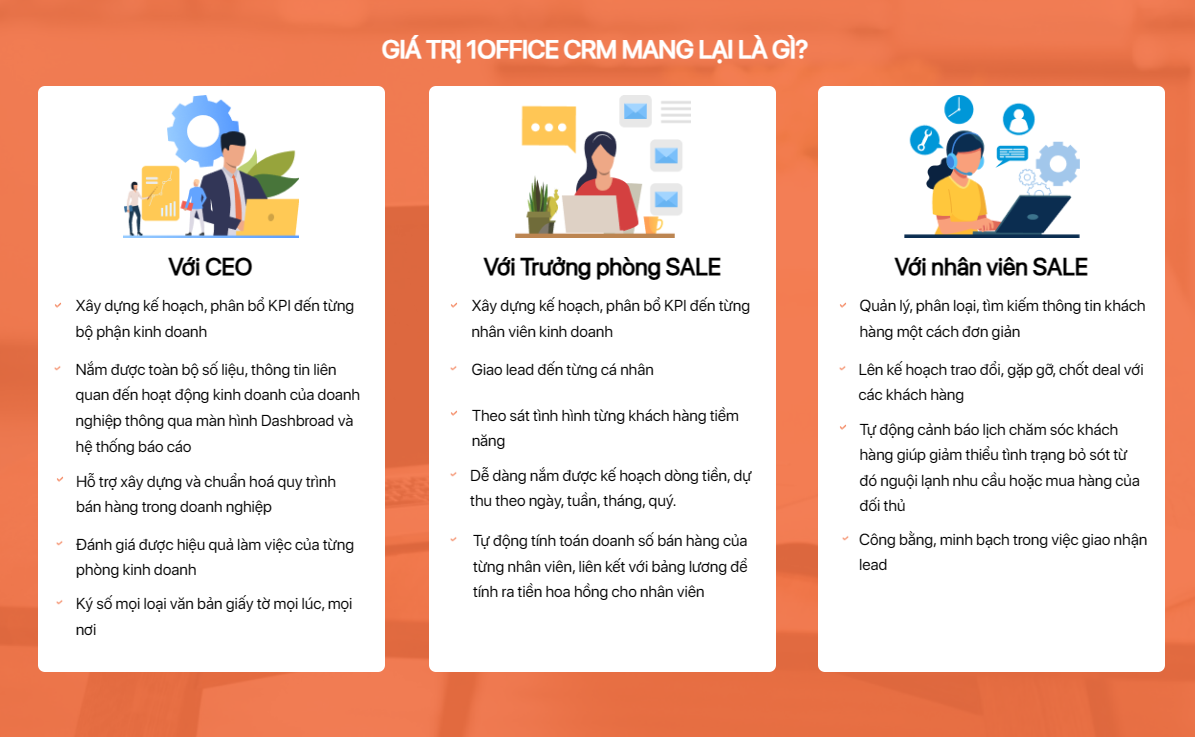
If your business is still experiencing errors in debt management, it’s time to find an effective support tool. Here are some clear benefits of technology in corporate debt management:
- Automatically notify and remind customers about debts: Integrating a customer relationship management (CRM) system helps track customer information, credit limits, and payment history. This tool can also automatically send notifications and reminders to customers about upcoming payments.
- Support accurate, automated payments: Automated payment systems offer various payment methods, reducing delays in the payment process. This helps optimize the customer experience and minimize transaction risks.
- Manage detailed debt information: An effective financial management solution can simultaneously solve many small problems related to a company’s debt management. It integrates information about suppliers/customers and their corresponding invoices, manages payment history, alerts for overdue debts, and more.
- Generate automated debt data reports: Automated reports generated from financial management software help businesses easily get an overview of their financial situation, track the performance of the debt management process, and identify potential issues before they become serious.
>>> See more: 7 most accurate and effective debt management software in 2024
——————–
Effective debt management is a crucial key to ensuring a company’s financial stability. By applying fundamental knowledge and smart strategies in classifying and handling different types of debt, we hope your business will be able to optimize cash flow while maintaining the best relationships with customers and suppliers.