10/05/2026
  16371 views
Building a KPI system for businesses is a crucial process that helps leaders measure, monitor, and evaluate the organization’s operational performance. KPIs provide vital information to shape business strategy and ensure that the company’s core objectives are achieved effectively. Building a KPI system requires meticulousness and careful consideration. Below is a detailed A-to-Z guide for managers to build a KPI system suitable for their business that 1Office has compiled!
Mục lục
- 1. Differentiating between KPI, OKR, and MBO
- 2. Principles for building an effective KPI evaluation system in a business
- 3. Guide to classifying KPIs for each department (with sample file)
- 4. A 5-step guide to building a KPI system for your business
- 5. Mistakes to avoid when building a KPI system for your business
- 6. Benefits of a KPI system for businesses
- 7. Criteria for evaluating effective KPIs
- 8. Manage KPIs effectively with 1Office business management software
1. Differentiating between KPI, OKR, and MBO
In business management, KPI, OKR, and MBO all focus on directing and achieving the organization’s common goals. They all help define metrics and objectives to measure success and evaluate results. Despite their similarities, KPI, OKR, and MBO have distinct aspects and application methods.
Choosing the right method depends on the organization’s specific goals, requirements, and the nature of work in each department. Below is a comparison table of these 3 methods:
| Criteria | KPI (Key Performance Indicator) | OKR (Objectives and Key Results) | MBO (Management by Objectives) |
| Concept | An important metric for measuring performance and achieving goals. | Sets objectives and key results to evaluate the achievement of those objectives. | Manages objectives by setting specific goals and measuring performance based on those goals. |
| Purpose | To track progress and evaluate the performance of business operations. | To create motivation, focus, and measure progress in achieving goals. | To guide work, measure performance, and foster personal development. |
| Application | Applied to organizations, departments, and individuals across many industries and fields. | Popular in technology organizations and startups. | Often used in human resource management to guide work and evaluate performance. |
| Evaluation Frequency | Evaluations are conducted regularly, which can be weekly, monthly, quarterly, or annually. | Evaluated on a quarterly or monthly cycle, and is often updated and adjusted. | Work is typically evaluated and guided on an annual cycle or over a specific period. |
| Confidentiality | KPI information can be shared widely within the organization. | OKR information can be shared publicly within the organization to create transparency and focus. | MBO information is often kept confidential and only shared between the manager and the relevant employee. |
| Evaluation Method | Evaluation is based on predetermined measurement metrics. | Evaluation is based on the achievement of the established key results. | Evaluation is based on comparing actual performance with previously set objectives. |
In summary, KPI is a popular and effective goal management method for businesses. It focuses on measuring and evaluating performance in achieving business objectives, thereby identifying important indicators to track and measure the organization’s progress and success. However, building an effective KPI system requires attention to key factors and continuous adjustments to ensure its relevance and accurate reflection of the organization’s performance.
2. Principles for building an effective KPI evaluation system in a business
Depending on the industry and business objectives, the construction of a KPI system for a business can vary completely. However, to establish the most accurate KPIs and maximize their effectiveness, leaders need to ensure the following 3 principles:

Principle 1: KPIs must be tied to a specific department and linked to business objectives
This ensures that each department in the business has KPIs that are appropriate for their tasks and responsibilities. KPIs should reflect the department’s contribution to the overall goals of the business and create motivation for growth and success.
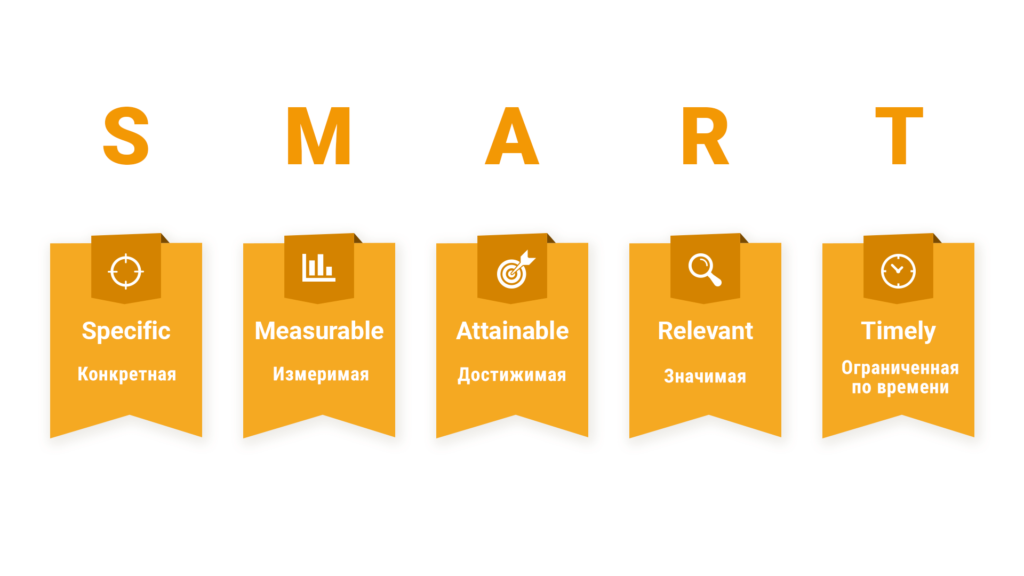
Principle 2: KPI setting must adhere to the SMART model:
When establishing a KPI evaluation system, it is necessary to ensure that they are specific, measurable, achievable, relevant to business objectives, and time-bound to track and evaluate results.
Principle 3: KPIs need to be evaluated regularly and updated cyclically:
Through the evaluation process, it is necessary to identify strengths and areas for improvement to implement corrective measures. Additionally, updating KPIs cyclically is essential to adapt to changes in the business environment and accurately reflect the company’s status.
3. Guide to classifying KPIs for each department (with sample file)
Classifying KPIs for each department is a crucial part of building an effective KPI evaluation system in a business. Each department in the organization has its own tasks and objectives, and creating suitable KPIs for each department will help enhance focus and work efficiency.

3.1 Human Resources Department
- Employee evaluation: percentage of employees achieving competency assessment goals, results of employee competency assessments.
- Work quality: percentage of tasks completed on time and to quality standards, work quality assessment.
- Turnover rate: percentage of employees who leave within a specific period.
- Goal failure rate: percentage of goals not achieved or failed in execution.
| >> Read more: Standard KPI Template for HR & Admin Staff |
3.2 Accounting Department
- Revenue: total company revenue over a specific period.
- Profit: the earnings after deducting costs and losses.
- Profit margin: profit relative to revenue, usually calculated as a percentage.
- Return on investment (ROI): profit relative to invested capital, usually calculated as a percentage.
- Cash flow: the company’s cash inflows and outflows, measuring solvency and financial management capabilities.
3.3 Sales Department
- Number of potential customers: the number of customers likely to purchase the company’s products or use its services.
- Conversion rate: the percentage of potential customers who become actual customers.
- Sales volume: the total value of products or services sold within a specific period.
- Marketing cost per revenue: the ratio of marketing expenses to revenue, usually calculated as a percentage.
| >> Read more: KPI template for sales staff – Increase sales closing efficiency by 65% |
3.4 Marketing Department
- Customer satisfaction level: surveys or feedback from customers regarding their satisfaction with the product or service.
- Customer loyalty rate: the percentage of customers who return to purchase or use the service within a specific period.
- Number of new customers: the number of new customers attracted to purchase or use the service.
- Service quality assessment: the rate of positive reviews on service quality from customers.
3.5 Production Department
- Product completion time: the time from the start of production to product completion.
- Defective product rate: the percentage of products that are defective or do not meet quality standards.
- Raw material usage efficiency: the rate of effective raw material usage in the production process.
| >> Download: 6+ KPI-based employee evaluation forms for departments 2023 |
4. A 5-step guide to building a KPI system for your business

Building a KPI evaluation system for a business is not just about selecting a few metrics and measuring them. It requires a specific and structured process to ensure the system’s integrity and feasibility. Here are 5 important steps to build a KPI system for your business:
Step 1: Identify resources and business goals
Identify the existing resources within the business, including human resources, finances, materials, technology, and infrastructure. Then, managers need to clearly define the business goals the company wants to achieve within a specific period. Examples include: revenue growth, quality improvement, process optimization, enhanced customer satisfaction, etc. These goals must align with the company’s overall vision and strategy.
Step 2: Determine KPI metrics and sub-goals
Based on the business goals established in step 1, leaders need to identify the most important KPI metrics the business wants to measure to achieve its business goals. To accurately determine these metrics, the business can apply the criteria of the SMART model to evaluate each metric. This includes 5 criteria: Specific, Measurable, Achievable, Relevant, and Time-bound.
Additionally, each KPI should be broken down into more specific sub-goals to motivate employees and provide leaders with a comprehensive overview for easier measurement and management. For example, within the goal of revenue growth, KPIs could include: monthly revenue, revenue from new customers, revenue from existing customers, etc.
Step 3: Define measurement and evaluation levels
Determine appropriate measurement levels for each KPI, including numbers (quantity, revenue, profit), percentages (rate of return, revenue growth), quality (customer feedback, defect rate), and time (completion time, response time). Set specific sub-goals for each KPI and define evaluation standards (thresholds) to assess the level of achievement. For example, a monthly revenue goal could be 10% growth compared to the same period last year.
Step 4: Track KPI completion and compensation
Establish a process for tracking KPI completion, which includes collecting, processing, and analyzing data to measure performance. At the same time, the business should link KPI completion to its compensation policy. This encourages and motivates employees to achieve goals and reach higher performance levels. For example, a bonus or reward system can be set up for employees who meet or exceed their set KPI targets.
Step 5: Regularly adjust and update KPIs
Continuously evaluate and adjust the KPI system based on feedback and actual business results. This ensures that the KPI system remains aligned with the company’s initial business goals and strategy. Additionally, leaders need to monitor changes in business goals, market demands, and the business environment to update and adjust KPIs as necessary.
5. Mistakes to avoid when building a KPI system for your business
Setting too many KPIs: Setting too many KPIs can dilute focus and distract from important goals. Instead, concentrate on a few key KPIs and ensure they accurately reflect the business’s objectives.

Setting KPIs that are not linked to business goals: Each KPI should be directly linked to the company’s main business goals to ensure that achieving the KPI also means achieving the business goal.
Setting unachievable or unmeasurable goals: KPI goals need to be set in a way that is achievable and measurable. This helps motivate employees to reach their targets and allows results to be evaluated fairly and accurately.
Focusing on result KPIs while ignoring leading KPIs: KPIs should not only focus on the final outcome but should also include leading indicators to measure the processes and activities that lead to that result. This helps guide and adjust activities during goal implementation.
Failing to continuously adjust, track, and update KPIs: KPIs are not a fixed list; they should be continuously adjusted and updated according to changes in the business environment and the company’s goals. It is necessary to regularly monitor, evaluate, and adjust the KPI system to ensure it remains relevant and valuable.
| >> Read more: How to set achievable short-term and long-term goals for your business? |
6. Benefits of a KPI system for businesses
A KPI (Key Performance Indicators) system is not just a tool for businesses to “count numbers” but also a foundation for strategic planning, performance optimization, and team engagement. When built and implemented correctly, KPIs bring the following practical benefits:
-
Provides motivation and clear direction for employees:
KPIs help each individual understand exactly what the business expects of them, so they know what they need to do and what level to achieve to be recognized and rewarded accordingly. When goals are clear, employees tend to be more proactive in their work, track their own progress, and continuously improve their productivity. -
Helps managers make quick and accurate decisions:
KPIs provide specific performance data, helping managers identify which departments or individuals are performing effectively and which areas need improvement. As a result, decisions regarding budget allocation, personnel, or strategic adjustments are based on actual data rather than intuition. -
Connects individual, departmental, and company goals:
When the KPI system is established vertically, from the company level down to each department and employee, the entire organization aligns with a common vision. This ensures that every individual’s effort contributes directly to the company’s strategic goals. -
Increases resource efficiency and optimizes costs:
KPIs help businesses identify bottlenecks in processes and determine which tasks do not provide corresponding value, allowing them to be eliminated or improved to save costs. Additionally, regular monitoring enables managers to allocate human resources, time, and budget more effectively. -
Promotes a culture of transparency and high performance:
When KPIs are made public and measured fairly, employees feel they are treated equally and have opportunities to develop based on their actual abilities. This fosters a transparent work environment, motivating the entire team to strive for excellence.
7. Criteria for evaluating effective KPIs
A KPI system is only truly valuable when it accurately reflects the productivity and actual contributions of individuals, departments, or the entire company. To achieve this, businesses must ensure their KPI evaluation criteria are designed scientifically, clearly, and are relevant to operational realities.
Here are the key criteria that help KPIs function effectively:
-
Follows the SMART principle:
KPIs must be Specific – Measurable – Achievable – Relevant – Time-bound. This helps the person responsible understand the goal clearly and objectively assess their own work progress. -
Closely linked to OKRs and strategic goals:
KPIs should not exist in isolation but should align with the company’s OKRs (Objectives and Key Results) or overall strategy. In this way, each KPI acts as a ‘link’ to measure progress toward the organization’s larger goals. -
Reflects reality and is actionable:
KPIs should measure results that can be improved through specific actions, avoiding vague or hard-to-quantify metrics. Each KPI should be linked to a concrete action that an employee or department can take to directly impact the outcome. -
Has a regular review frequency and is flexible for adjustment:
KPIs should be monitored regularly — weekly, monthly, or quarterly — to promptly detect deviations, assess trends, and adjust goals if necessary. An effective KPI is one that can ‘live’ with the business, constantly being refined in response to market changes and internal strategy. -
Ensures transparency and consistency:
The KPI evaluation process needs to be transparent regarding scoring methods, weightings, and measurement criteria. When everyone clearly understands how KPIs are assessed, they will trust the system and be more proactive in improving their personal performance.

8. Manage KPIs effectively with 1Office business management software
1Office‘s KPI management software provides a comprehensive and integrated solution to help build and manage KPIs within the business. Using this software helps increase accuracy, efficiency, and automates the process of goal management and performance evaluation, while also facilitating the payroll process.
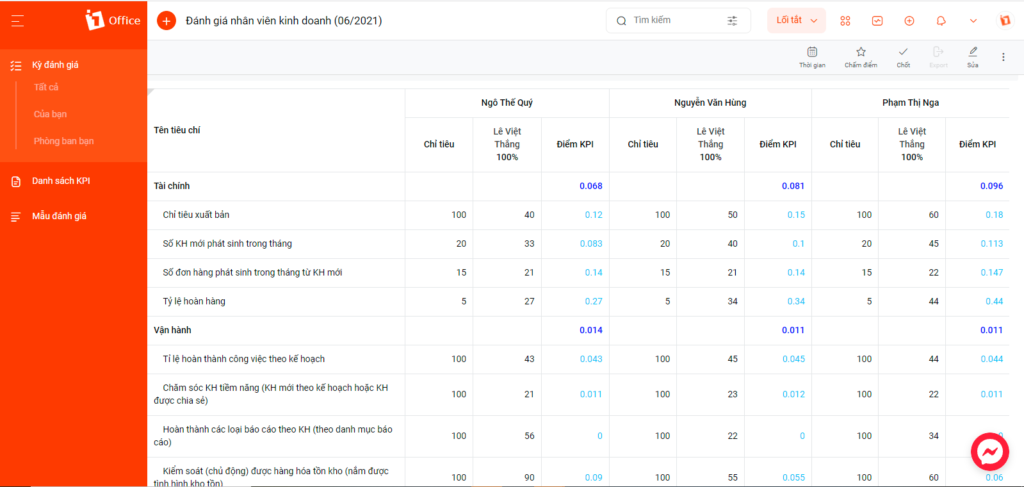
- Define and establish measurable criteria and target indicators for each criterion, helping leaders clearly identify what needs to be achieved and assess progress more accurately.
- Customize and set up KPI evaluation formulas according to the business’s needs, allowing the company to define how to calculate and evaluate the effectiveness of criteria based on its internal processes.
- Easily track the evaluation results of each criterion for each individual or department. This allows managers to view and compare the performance of each employee and department.
- The consolidated evaluation results from 1Office can be directly linked to the company’s payroll, automatically calculating salaries based on KPI completion levels and saving time in the payroll process.
Thanks to these features, managers can fully build a KPI system for their business based on quantitative and qualitative parameters. This helps the business shape its business strategy, optimize goal management, and achieve its set objectives more effectively and comprehensively.
If you are interested in 1Office – The KPI and OKR goal management solution for businesses, our team of specialists is ready to consult and schedule a software demo experience for you. Please contact us via:
- Hotline: 083 483 8888
- Facebook: https://www.facebook.com/1officevn/
- Youtube: https://www.youtube.com/@1office-chuyendoisodn