


 11/05/2026
  858 views
Employee evaluation forms are important tools that help businesses measure work performance and make accurate human resource management decisions. Depending on the specific nature of the job and management goals, each business will develop different evaluation criteria. In this article, 1Office will introduce the latest employee evaluation forms, along with criteria and instructions to help you apply them effectively in practice.

Mục lục
- I- What is the role of employee evaluation forms in a business?
- II- 6 Important Employee Evaluation Form Templates for Businesses
- III- What criteria should an employee evaluation form include?
- IV. Employee evaluation criteria for different industries
- 1. Evaluation criteria for Business – Sales employees
- 2. Evaluation criteria for Marketing – Communications staff
- 3. Evaluation criteria for Production – Operations staff
- 4. Evaluation criteria for employees in the Information Technology (IT) sector
- 5. Evaluation criteria for employees in the Administration – Human Resources sector
- 6. Evaluation criteria for Customer Service staff
- V- Evaluate employees effectively by KPI with 1Office HRM software
- VI. Frequently Asked Questions
I- What is the role of employee evaluation forms in a business?
Evaluating employee performance is a crucial task for every organization and business. Evaluations help businesses monitor and check work efficiency, serving as a basis for rewarding or penalizing individual employees. The importance of employee evaluation for a business is:
- Regular employee evaluations help employers understand where their employees are falling behind.
- Employee evaluations help them identify their strengths and weaknesses and continuously improve.
- It improves employee satisfaction and productivity.
- Satisfied employees have better relationships within the organization and with colleagues, contributing to a good working environment.
- The employee retention rate increases when employees are more loyal.
Read now: The latest 2022 work progress report template for businesses
II- 6 Important Employee Evaluation Form Templates for Businesses
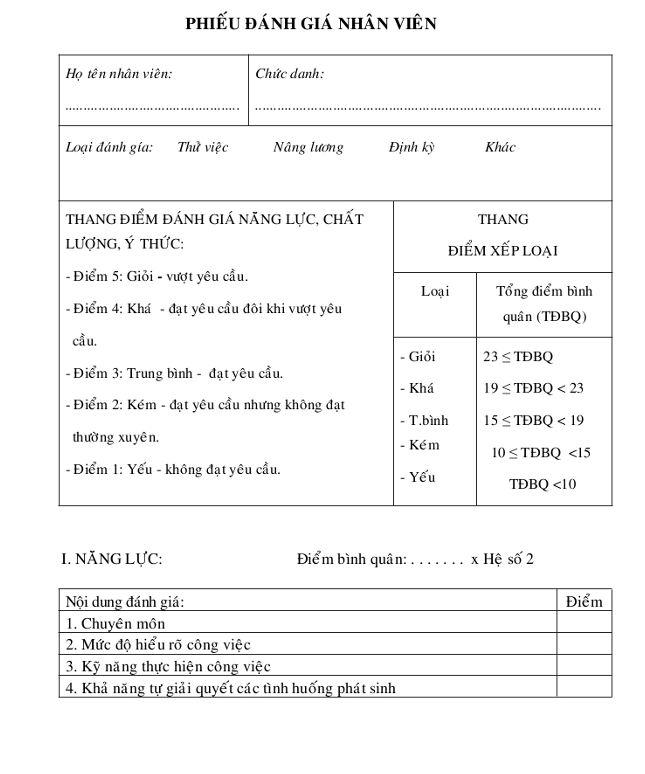
1. Employee Self-Evaluation Form
Besides managers evaluating employees, employees also need to evaluate themselves, reflecting on their performance based on their work results, such as achievements, job outcomes, completion time, etc. Additionally, this form of evaluation can be conducted periodically or used for salary review purposes.
>> See more:
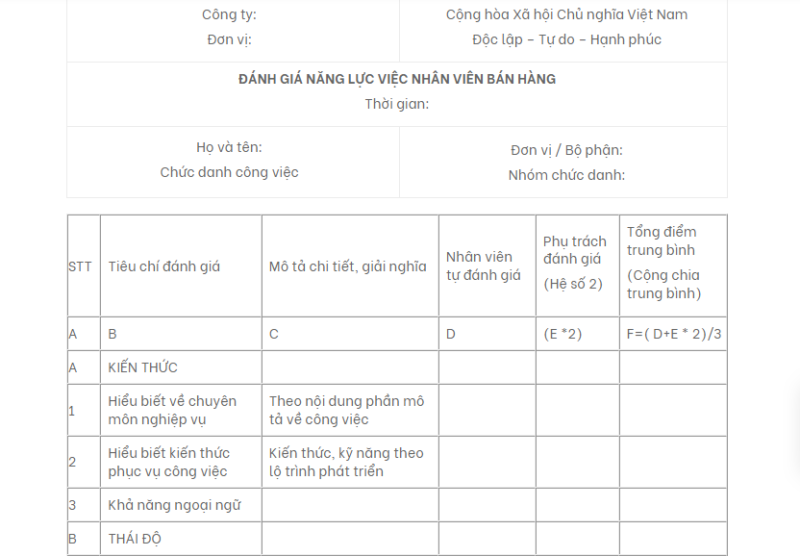
2. Employee Evaluation Form by Industry
Different industries will have separate employee competency evaluation forms. Depending on the specifics of each industry, managers can adjust the competency framework accordingly. You can refer to some of the evaluation templates below.
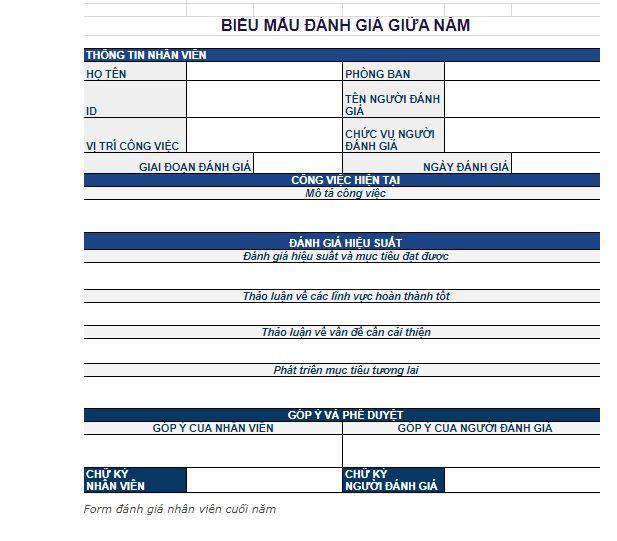
3. Year-End Employee Evaluation Form
The year-end evaluation is an annual activity for managers to assess the work results of employees over the entire year. The evaluation provides managers with a basis and conditions for rewarding employees as well as reconsidering their positions. Below is a year-end employee evaluation template you can refer to.
LEARN ABOUT 1OFFICE’S AUTOMATED EMPLOYEE EVALUATION FEATURE
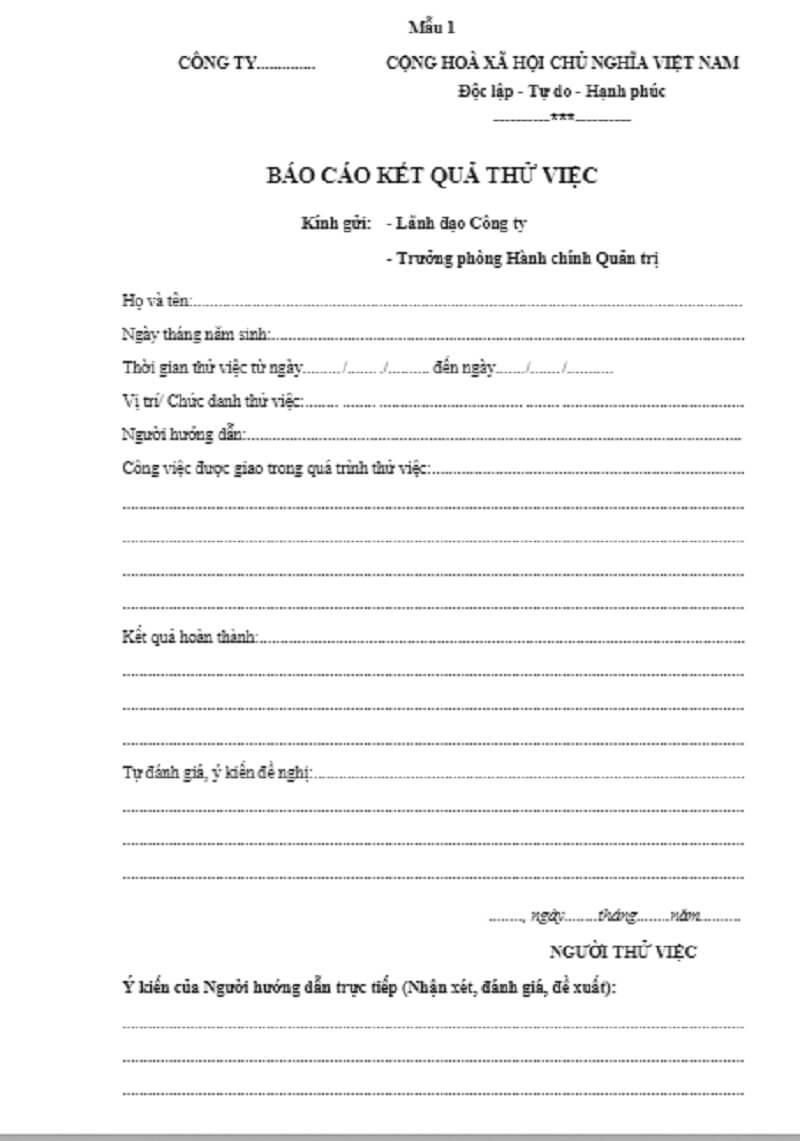
4. Probationary Employee Evaluation Form
For probationary employees, the evaluation form is equally important for every business. The evaluation of a probationary employee is carried out after the recruitment interview process has concluded.
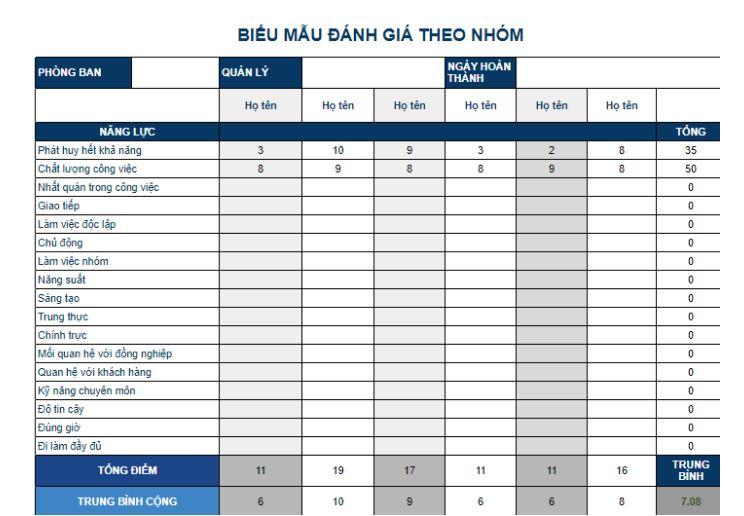
5. Team-Based Employee Evaluation Form
Employee evaluation is not only conducted for individuals but also applied to teams. To evaluate each team member transparently and accurately, you need to provide feedback for each member and then proceed with ranking them based on the competency assessment framework. You can refer to the team evaluation form below.
6. Employee evaluation form by KPI
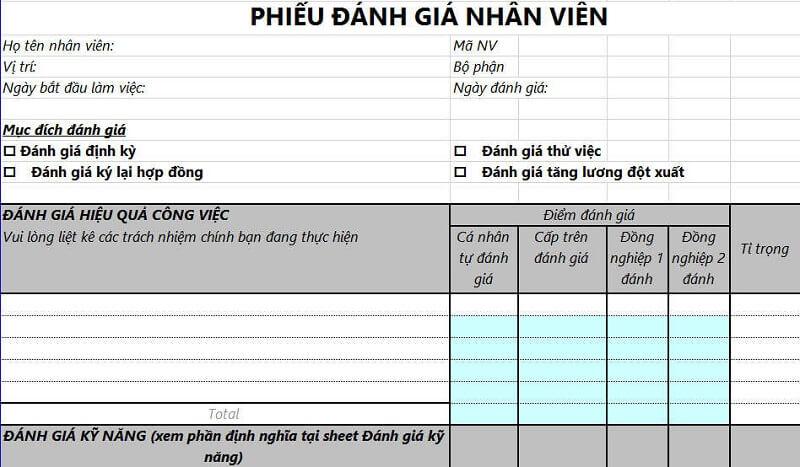
This is a popular KPI-based personnel evaluation form that every business should implement. With this form, managers will evaluate based on skills, personal qualities, and the goal system.
For example: The KPI for an SEO specialist in Q1/2022 is to increase traffic by 15% compared to 2021 and achieve an average of 2,000 daily visits.
| Read more: What is ASK? How to apply the ASK model in human resource management |
III- What criteria should an employee evaluation form include?
An employee evaluation is not only based on work performance but also includes skills and work attitude. To evaluate employees objectively and accurately, you can refer to some of the work evaluation criteria below:
1. Criteria for evaluating work performance
- Workload: This is evaluated based on the employee’s tasks and working hours. For example: A textile worker’s working time is 10 hours/day, and they complete 20 products. From this, a manager can assess that employee’s KPIs as well as the time they use to achieve work efficiency.
- Career advancement opportunities: Talent is a crucial factor in a business’s success. Whether a business can grow strongly depends on its ability to train many skilled employees. If a business can do this, it will develop rapidly.
- Level of task completion: Each job level and position will have different standards for evaluating task completion. Based on the level of completion, managers can most accurately, transparently, and precisely assess an employee’s capabilities and skills.
Evaluating work performance is a task that requires continuous execution and comparison over time. To manage personnel performance evaluation criteria accurately and effectively, businesses today are increasingly applying personnel evaluation software to digitize their human resource management processes.
2. Criteria for work attitude
Honesty in work
Openness and honesty at work create an environment where people feel trusted, especially by the company’s leadership. When you demonstrate honesty, you will earn the trust of leadership and upper management, helping you build more connections and achieve higher productivity.
Time management
Effective time management is also one of the important criteria for evaluating an employee’s professionalism. A person who knows how to organize and allocate their time reasonably for work will certainly help improve the quality and efficiency of their work quickly.

Ambition for self-improvement
A receptive attitude and a desire to learn are key indicators for managers to know whether an employee can bring value to the business. An employee lacking ambition for self-improvement will find it difficult to stay with the organization long-term and will not contribute much value to help the business grow.
Optimism at work
Every job has its own difficulties and challenges. Therefore, a positive and optimistic work attitude will help overcome all barriers and challenges and provide more motivation. When you have an optimistic spirit and love your job, you will be more committed to the business.
Carefulness at work
Being meticulous and careful in your work is an important factor that leads to high efficiency. When you are careful at work, you will earn the trust of colleagues and superiors and be assigned more important tasks.
IV. Employee evaluation criteria for different industries
In the modern business environment, each department and industry has its own specific job characteristics and requirements. Therefore, evaluating employee performance cannot be done using a single, universal set of criteria for everyone. Instead, businesses need to build specific evaluation criteria for each industry to accurately reflect the capabilities, efficiency, and contributions of each individual.
This section will detail the important criteria for evaluating employees in common industries such as Business, Marketing, Manufacturing, Information Technology, Administration – Human Resources, and Customer Service. Each criterion not only helps measure work performance but also supports management in developing capabilities, improving processes, and enhancing the quality of the organization’s operations.
1. Evaluation criteria for Business – Sales employees
Sales achieved versus KPI
This is the most important criterion in the business – sales industry. Each employee will be assigned a monthly/quarterly sales target. Meeting or exceeding the KPI demonstrates the ability to understand the market, grasp customer needs, and close deals effectively.
For example: A pharmaceutical salesperson is assigned a target of 500 million/month. If they consistently achieve 110–120% of the KPI, it shows they are not only good at selling but also know how to maximize market potential.
Customer care & retention ability
Selling doesn’t just stop at ‘closing the deal’; it also involves maintaining long-term relationships. Employees are evaluated based on customer satisfaction levels, customer return frequency, as well as their ability to upsell and cross-sell.
For example: A real estate agent, after selling an apartment to a client, continues to assist with legal procedures and interior design advice. As a result, the client refers many acquaintances, helping to increase sales sustainably.
Negotiation and persuasion skills
This is the “art” of optimizing benefits for the business while keeping customers satisfied. Good negotiation skills help employees shorten the time to close deals, limit the need for significant discounts, and build trust with customers.
For example: During a meeting, a customer requests a 10% discount. A skilled employee will cleverly persuade them by offering additional value (after-sales service, a longer warranty) instead of a direct price reduction.
Proactive spirit in seeking new opportunities
An excellent salesperson doesn’t just rely on existing customer sources but always proactively expands the market and seeks new potential customers. This is a factor that demonstrates dynamism and long-term vision.
For example: An FMCG employee, in addition to selling to the existing supermarket system, also finds ways to connect with newly opened convenience store chains, thereby creating an additional stable revenue stream.
With the 4 criteria above, businesses can comprehensively evaluate the performance of sales staff, based on both numbers and considering soft skills and work attitude.

2. Evaluation criteria for Marketing – Communications staff
Marketing campaign effectiveness (ROI, reach, engagement)
In Marketing, all activities must be tied to specific goals such as the number of customers reached, conversion rates, or revenue generated. Marketing staff are evaluated on whether the campaigns they implement create a real impact for the business.
For example: A Facebook Ads campaign costs 100 million VND. If it brings in 1,000 potential customers, of which 150 make a purchase, the ROI (Return on Investment) will be the basis for evaluating the performance of the employee who ran it.
Creativity & content production ability
Marketing – Communications cannot exist without creativity. This criterion assesses whether the employee can generate new, appealing, and distinctive ideas to attract customers.
For example: A content employee, when creating a script for a Tet holiday video, cleverly integrated family emotional elements, causing the video to go viral, reaching millions of views on TikTok and being widely shared.
Data analysis and trend-spotting skills
Modern marketing relies not just on “intuition” but on data. Employees need to know how to read and analyze data from Google Analytics, Facebook Insights, TikTok Ads, etc., to adjust their strategies. At the same time, they need to be sharp to market trends so as not to miss opportunities.
For example: When noticing a drop in website traffic, a digital marketing employee promptly identifies the cause as a change in Google’s SEO algorithm, then quickly re-optimizes the content and restores the ranking.
Coordination & communication project management skills
Marketing rarely involves working alone. A campaign requires coordination between content, design, ads, PR, events, etc. A good marketing employee not only does their own part well but also knows how to connect and coordinate to ensure the project runs smoothly.
For example: When organizing a new product launch event, the communications staff need to work closely with the PR agency, the poster design team, and the sales department to ensure the communication message is consistent and reaches the right target audience.
With these criteria, businesses can evaluate Marketing – Communications staff comprehensively: from measurable results to creative thinking, analytical ability, and collaboration skills.

3. Evaluation criteria for Production – Operations staff
Labor productivity & product quality
The most important criteria are production output compared to the quota and the percentage of products meeting standards. Employees are evaluated based on their ability to both ensure volume and maintain quality.
For example: A worker on a shift must assemble 200 products; if there is only a 2% defect rate, it meets the standard, but over 5% will be considered as not meeting the KPI.
Process compliance & occupational safety
In a production environment, adhering to processes and safety regulations is mandatory. Employees need to work according to instructions and not skip inspection steps to avoid incidents.
For example: On a food production line, if just one employee fails to follow hygiene procedures (washing hands, wearing protective gear), the entire batch of goods could be rejected.
Coordination and teamwork skills
Production – Operations requires many departments to work together continuously: supplying raw materials, operating machinery, and quality control. Employees are evaluated on their ability to coordinate smoothly and minimize production line “bottlenecks.”
For example: If the operations department is delayed by 10 minutes, the entire production line could be halted, causing tens of millions of VND in damages.
A spirit of improvement and waste reduction
In addition to following procedures correctly, employees are encouraged to propose improvement ideas to optimize efficiency, save raw materials, and reduce waste.
For example: An operations engineer suggests a change in packaging methods, saving 5% on packaging materials and reducing monthly production costs by hundreds of millions of VND.

4. Evaluation criteria for employees in the Information Technology (IT) sector
Technical expertise & code quality
IT staff, especially developers, are evaluated based on their ability to write clean, optimized, and low-bug code that adheres to technical standards. Fixing bugs quickly and reducing the number of new errors are also important criteria.
For example: A backend developer who completes a module on deadline, writes clear and maintainable code, and detects system errors before the official launch will be highly rated.
Problem-solving ability & logical thinking
The IT industry often faces unexpected incidents (server downtime, system errors, security breaches). Employees need the ability to analyze root causes and provide timely solutions.
For example: When an e-commerce website is overloaded during a sale, a system engineer must quickly scale the server or optimize bandwidth to ensure no interruption in revenue.
Willingness to learn & stay updated with technology
Technology changes constantly; without continuous learning, skills quickly become outdated. Therefore, evaluation criteria also depend on whether employees proactively research new frameworks and programming languages.
For example: A frontend developer who is proficient in ReactJS also takes the time to learn Next.js, thereby helping the company shorten product development time.
Teamwork & communication skills
Despite being technical staff, IT employees must still coordinate closely with other teams (Business, Marketing, Operations). Clear communication and documentation skills help avoid misunderstandings between business requirements and technical implementation.
For example: When developing a CRM application, a developer needs to communicate thoroughly with the Sales department to fully understand their needs, avoiding the creation of features that “no one will use.”
Contributions to innovation & system security
Beyond daily tasks, IT staff are often evaluated based on initiatives to improve system performance, automate processes, or enhance security.
For example: A DevOps engineer writes a script to automatically back up data daily, reducing the risk of data loss by 80% and making the company more secure.
In summary, evaluating IT staff requires focusing on technical skills, incident handling capabilities, a willingness to learn, teamwork, and innovative initiatives, as they are the technological “backbone” of the business.

5. Evaluation criteria for employees in the Administration – Human Resources sector
Employee satisfaction level
This is a crucial metric for evaluating the effectiveness of human resource management and the work environment. Satisfaction levels can be measured through: regular internal surveys, direct interviews, feedback via suggestion boxes, or one-on-one meetings. A high employee engagement rate reflects that employees feel valued, the work environment is positive, and internal processes are transparent.
Speed and quality of administrative task processing
This criterion assesses an administrative employee’s ability to manage records, documents, administrative procedures, and support other departments. Success is measured by task completion time, accuracy, and a low error rate. A skilled administrative employee not only works quickly but also ensures procedures are followed correctly, minimizing potential risks.
Recruitment effectiveness & talent retention
This is the ability to find, screen, and recruit candidates who fit the company’s culture and needs. This criterion includes hiring speed, candidate quality, offer acceptance rate, and the ability to retain talented employees long-term. An effective HR department helps reduce recruitment costs and increase overall operational efficiency.
Ability to advise & support leadership in decision-making
HR staff need to provide data, analysis, and suggest solutions to help leadership make strategic personnel decisions. This includes performance analysis, proposing reward policies, improving organizational structure, or initiatives for employee competency development. The ability to provide accurate and timely advice is a key factor in creating value for leadership and the organization.

6. Evaluation criteria for Customer Service staff
Customer response time (SLA):
SLA (Service Level Agreement) is a commitment to the response time for customer requests or complaints. This criterion measures the ability to respond quickly, helping customers feel valued and receive professional service. The shorter the response time, the higher the customer satisfaction.
Customer satisfaction rate (CSAT, NPS):
CSAT (Customer Satisfaction Score) and NPS (Net Promoter Score) are quantitative indicators of satisfaction and the likelihood of customers recommending the service. They reflect the quality of the customer experience, service effectiveness, and customer loyalty to the brand. A high score indicates that customer care staff are working effectively and creating positive experiences.
Successful request/complaint resolution rate:
This is the rate at which issues, requests, or complaints are fully resolved during the first contact. This criterion assesses problem-solving abilities, situation-handling skills, and internal coordination capabilities to deliver fast and accurate results.
Communication and empathy skills with customers:
Customer service staff need to listen, understand customers’ needs and emotions, and handle situations professionally. Good communication skills not only help solve problems but also build long-term relationships, increase customer loyalty, and enhance the company’s positive image.

V- Evaluate employees effectively by KPI with 1Office HRM software
Besides using competency evaluation forms for personnel, applying the KPI management software from 1Office helps managers save maximum time and supports businesses in evaluating employee competency transparently and accurately.
From the software’s data, managers can easily evaluate, pay salaries, and reward employees quickly. With a multi-dimensional, intuitive reporting system in the form of Dashboards and reports, along with smart filters, it helps managers accurately assess employee performance.
Key features of the employee evaluation software:
- Work status report: Helps users track the status and work progress of each individual/department
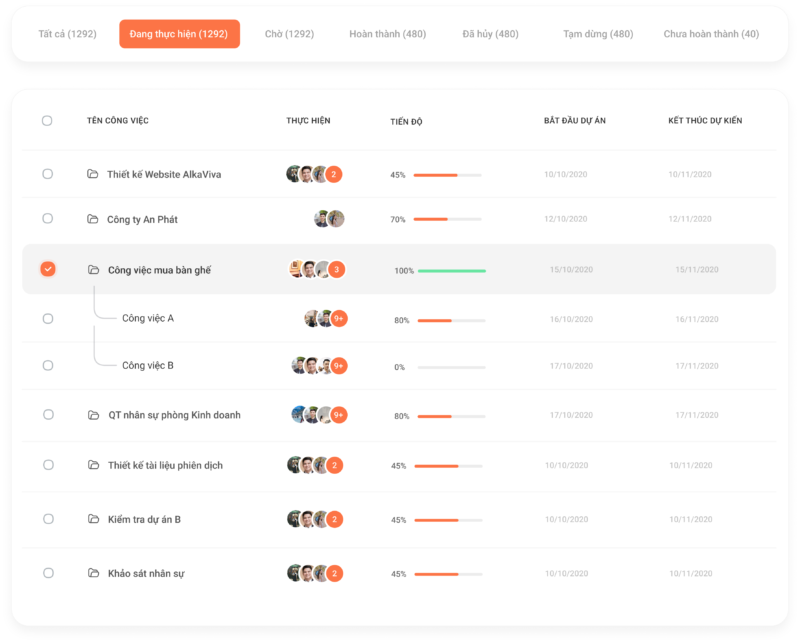
- Employee productivity report: Tracks the total working time and productivity of each employee. This helps managers get the most objective view of each employee’s capabilities to implement fair reward and penalty policies.
- KPI report: Automatically aggregates data into a comprehensive KPI summary table.
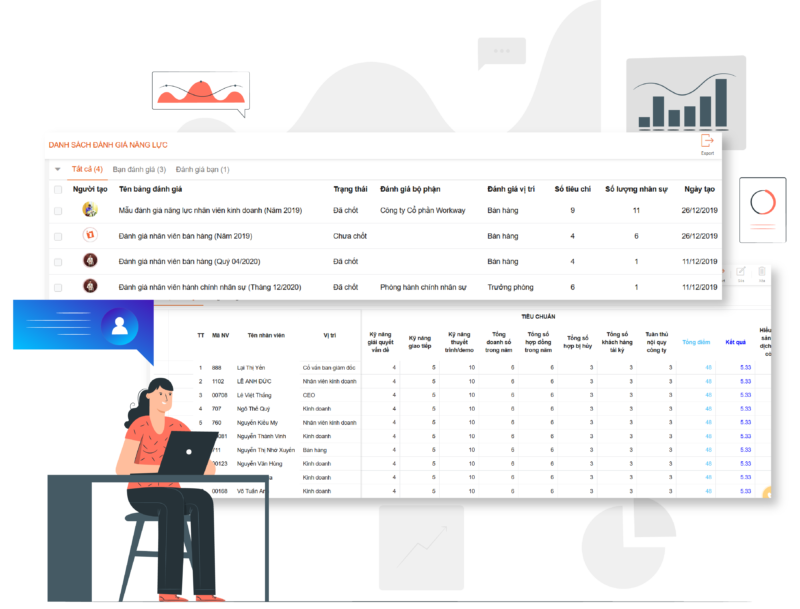
Above are some important contents to help you build an accurate and effective employee evaluation form. We hope this useful information will help you apply it effectively in your business to evaluate personnel as objectively and accurately as possible.
VI. Frequently Asked Questions
For more detailed information, please see:
Hotline: 083 483 8888
Fanpage: https://www.facebook.com/1officevn/
Youtube: https://www.youtube.com/channel/UCeTIRNqxaTwk0_kcTw6SxmA
A good employee evaluation form not only helps managers accurately recognize capabilities but is also a tool to retain talented individuals, enhance performance, and build a positive feedback culture within the company. However, if evaluations are still based on subjectivity and done manually with separate Excel files or Google Forms, it’s very difficult to ensure objectivity and consistency. With AI in 1Office, this process can be standardized and automated: from suggesting criteria based on job positions, analyzing real-time performance data, to alerting on deviations or proposing reward roadmaps – all supported by AI, so that each evaluation is no longer a ‘personal feeling,’ but a data-driven decision.
















