


 11/05/2026
  1078 views
A clear communication plan helps businesses correctly identify objectives, audiences, messages, implementation channels, and ways to measure the effectiveness of each campaign. Without a plan, communication activities can easily become fragmented, making it difficult to control the budget and evaluate post-implementation results. The article below provides a detailed communication plan template, along with instructions on how to create one and tips for more effective application.
Mục lục
- 1. What is a communication plan?
- 2. Basic structure of a business communication plan
- 3. Detailed guide to setting KPIs & measuring the effectiveness of a communication plan template
- 4. Communication plan templates by industry or business size
- 5. 6 Detailed Communication Plan Templates from A to Z
- 6. Effective Communication Planning Process
- 7. The SMCRFN Model – The Foundation for Building an Effective Communication Strategy
- 8. How to Coordinate and Manage a Communication Plan
- 9. Manage communication plan projects effectively with 1Office
- 10. Frequently Asked Questions about Communication Plans
- 11. Conclusion
1. What is a communication plan?
- Clearly define objectives: Helps businesses specify the goals they want to achieve, such as increasing sales, boosting brand awareness, or changing their image, thereby guiding appropriate activities.
- Understand the target audience: A well-structured communication plan will analyze the audience the business wants to reach, allowing for the creation of suitable messages and the selection of the most effective communication channels.
- Optimize resources: Planning helps allocate budget and resources reasonably, avoiding wasted time and money on ineffective activities.
- Ensure consistent messaging: Preparing a communication plan helps ensure the business’s message is consistent across all channels, creating a unified and clear public image.
- Anticipate and manage risks: A communication plan helps businesses foresee potential challenges during the communication process and prepare timely contingency solutions.
- Measure and improve: Creating a communication plan includes evaluating effectiveness through specific metrics, helping the business understand what worked well and what needs improvement in the future.
2. Basic structure of a business communication plan
For a communication campaign to be most effective, it must have a DETAILED – CLEAR – FEASIBLE plan. Basically, a business communication plan has the following structure:
2.1 Define communication objectives
All communication plan templates must include steps for defining objectives. This ensures that all activities are built and implemented based on the established communication objectives in a unified manner.
A goal is a specific, measurable, and concrete outcome that one desires to achieve. Goals are often smaller steps toward achieving a larger purpose. There are many different ways to set goals. The most common method today is setting goals according to the SMART principle:
- S – Specific: Specific, easy to understand.
- M – Measurable: Measurable
- A – Attainable: Achievable
- R – Relevant: Realistic
- T – Time-Bound: Time-bound

Example: Increase engagement and shares of posts on the official Facebook page of Sữa non by 15% within 3 months. Where:
- S: increase engagement and shares of posts on the Facebook page
- M: increase by 15%
- A: this goal is set appropriately for the Sữa non brand
- R: will be assessed based on the company’s actual situation
- T: within 3 months
*Note: Communication objectives are different from business objectives. Communication objectives usually do not guarantee an increase in the company’s revenue like business objectives do.
2.2 Define the Target Audience
The target audience is the individuals/groups that the business aims to convey its communication messages to. This can be potential customers, current customers, partners, the general public, etc. What the business needs to do is clearly define the persona of the target audience to understand them better and effectively implement communication activities in the right direction and towards the right goals.
Below are some methods for defining the target audience that many businesses apply:
- By demographics: age, gender, geographic location, income, occupation, education level, marital status.
- By psychographics and behavior: interests, activities, habits, attitudes, opinions.
- Decision-Making Unit (DMU): user, initiator, influencer, buyer, budget manager, decider.
Example: The target audience for Vinamilk’s “Vinamilk 40 Years – Reaching for the Vietnamese Dream” communication campaign in 2016 was adults aged 25-45 who are interested in health and nutrition. The focus was on urban and city areas, including both the middle and lower classes.
2.3 Communication Strategy
A communication strategy is a detailed plan that helps a business effectively reach its target audience. In it, activities will be fully presented under categories such as:
- Communication channels/ Communication format
- Communication content
- Participants in communication activities
- Approach process
- Communication timeline
Detailing these activities will make it easier for the business to implement its communication plan.

Example: A business develops a communication program to attract customers and increase traffic to its website. Objective: achieve 20% growth in online sales in June.
- Communication format: Online.
- Communication channels: Create advertising campaigns on Google Ads and social media (Facebook, Zalo, Tiktok, Instagram).
- Participants in communication activities: Potential customers, especially those interested in the company’s products and services.
- Approach process: Research and identify potential customers => Create Google Ads campaign => Create social media advertising campaign => Enhance interaction and build connections => Monitor and evaluate effectiveness.
- Communication timeline: Divided into 4 phases: Preparation (1-2 weeks before June), the first week of June, weeks 2-3 of June, the last week of June.
2.4 Communication Message
A communication message, simply put, is a sentence or phrase that a business wants to convey to its target audience. This message aims to attract attention and be memorable to the target audience.
A business can create communication messages based on types such as:
- By delivery format: audio, images, text, video, radio, television, newspapers, social media, and other communication channels.
- By purpose: education, propaganda, advertising, sales, awareness building, information sharing, etc.
- By audience: potential customers, consumers, investors, the community, the public, and other audiences.
- By media channel: television, radio, newspapers, magazines, social media, blogs, and other media channels.
- By time: immediate messages, long-term messages, and future messages.
- By creative format: text, poetry, music, images, video, and other creative formats.
Example: Vinamilk’s message “Reach for the Sky, Vietnam” is a purpose-driven message. The message aims to encourage and inspire Vietnamese consumers. It also reflects Vinamilk’s desire to build its image as a business connected to Vietnam’s development and contributing to improving people’s quality of life.

At the same time, when selecting a communication message, businesses need to ensure the following criteria:
- Concise, simple, easy to understand, and memorable
- Accuracy and practicality
- Alignment with communication goals
- Relevance to the target audience
- The message’s appeal
Example: The message “Reach for the Sky, Vietnam” used by Vinamilk in its advertising campaign achieved great success by ensuring the following criteria:
- Concise and easy to understand: A short, easy-to-understand phrase with 4 words.
- Accuracy and practicality: The message expresses a common desire for development, from human health to the nation’s progress.
- Alignment with communication goals: The message is linked to Vinamilk’s communication goals, mission, and long-standing vision: “To become Vietnam’s leading symbol of trust in nutrition and health products that serve human life”
- Relevance to the target audience: “Reach for the Sky, Vietnam” targets adults in Vietnam who are interested in nutrition. The phrase “reach for the sky” resonates with the interests/needs of Vinamilk’s target audience.
- The message’s appeal: The phrase evokes powerful images of the growth and success of the Vietnamese people and nation. This creates attraction and curiosity about the communication program, leading people to learn more about Vinamilk.
2.5 Execution Tactics
Execution tactics are the specific methods/approaches a business uses to implement its strategy and achieve its goals. Typically, execution tactics include the following elements:
- Situational analysis: Identify and assess the current situation.
- Goal setting: Establish specific and measurable goals.
- Method selection: Outline specific implementation measures to achieve goals. This includes selecting appropriate activities, resources, and tools.
- Scheduling and assignment: Determine the timeline and schedule for activities, and assign tasks to personnel.
- Implementation and monitoring: Carry out activities according to the plan, and track and evaluate the progress and effectiveness of the execution tactics.
- Adjustment and improvement: Based on monitoring and evaluation, adjust and improve execution tactics to achieve better results.
However, many businesses are complacent and only develop execution tactics for the pre-campaign and during-campaign phases. This leads to many obstacles in leveraging the power of post-event communication activities. Therefore, execution tactics need to be developed comprehensively and synchronously. Only then can communication activities achieve maximum effectiveness.
Allocating implementation periods, detailed execution times, responsible personnel, deadlines, etc., is mandatory in execution tactics. This ensures the right person is assigned to the right job, avoiding overlapping, overlooked, or delayed tasks.
Learn about 1OFFICE WORKPLACE – The effective internal communication tool
2.6 Risk Contingency
In addition to the main communication plan, businesses also need to prepare at least 1-2 risk contingency plans. No one can guarantee that a communication activity will be 100% successful when it is still just on paper.

Risk contingency planning helps businesses maintain control over their activities. This allows for timely response measures, ensuring the overall goals are met. Businesses can apply the following process for risk contingency in communication activities:
- Risk identification and assessment: Recognize potential threats and risks.
- Risk prioritization: Determine the risks with the highest impact on the plan.
- Cause and effect analysis: Investigate the causes and understand the consequences of the risks.
- Preventive measures: Develop a plan to mitigate or eliminate risks.
- Monitoring and review: Periodically check effectiveness and identify new risks.
- Emergency response plan: Prepare a plan to respond to unexpected risks.
For example: A business plans to organize an outdoor communication event on June 20th in area A. However, the weather forecast shows a 30% chance of rain. Therefore, the business needs to anticipate the situation if it rains and prepare alternative plans: using outdoor tarps, choosing a venue that combines indoor and outdoor spaces, etc.
2.7 Cost Estimation
Cost estimation involves estimating the necessary expenses to implement a communication plan. This activity helps businesses control cash flow, invest reasonably in plan items, and eliminate situations such as:
- Wasting costs
- Exceeding the allowed budget
- Low affordability
- Excessively high trade-off ratio (risky)
Depending on the purpose and scope of the communication campaign, businesses will have different cost estimates. Below are some common types of cost estimates in communication activities:
- Advertising costs
- Event and exhibition costs
- Tool and software costs
- Content production costs
- Public relations costs
- Online marketing costs
- Contingency costs
To create a cost estimate for a communication plan, you need to follow these steps:
- Step 1: Identify communication tools suitable for the objective.
- Step 2: Research and consult pricing from reputable sources.
- Step 3: Develop an overall budget for communication activities.
- Step 4: Evaluate and adjust the budget based on performance and needs.
- Step 5: Create a detailed plan for each communication activity.
The cost estimate table must be clearly and detailedly itemized for the goods and services to be spent on in the campaign. Some items that should be in the cost estimate table include: No., item name, quantity, unit price, members, notes, supplier, notes, etc.
2.8 Evaluating the Plan’s Effectiveness
Evaluating the plan’s effectiveness is the final step in creating a communication plan. Businesses need to establish criteria to assess and measure the results as well as the feasibility of the plan. These criteria are:
- Objectives and results: Identify and evaluate the results achieved against the set objectives.
- Awareness and understanding: Measure the level of customer awareness and understanding of the brand or product.
- Customer feedback: Evaluate positive feedback from customers after implementing the communication plan.
- Scope and reach: Assess the level of reach and influence on the target audience.
- Message distribution: Evaluate whether the distribution of the communication message according to the plan was effective.
- Breakthrough and creativity: Assess the level of creativity and the ability to create differentiation in the communication plan.
Effectiveness evaluation is not only performed at the end of the communication program but throughout the BEFORE – DURING – AFTER process. All activities are managed and evaluated in real-time to devise appropriate solutions or draw lessons for future instances.
> See more: 5 Steps to Establish a Corporate Communication Process
3. Detailed guide to setting KPIs & measuring the effectiveness of a communication plan template
3.1 Awareness
Objective: deliver the message to the right people, achieve broad coverage while controlling costs.
Core metrics
-
Reach: the number of unique people who see the content/ad.
Data source: Facebook/Instagram Insights, TikTok Analytics, YouTube Analytics, Google Ads, Meta Ads Manager. -
Impressions: total number of times content is displayed (one person can see it multiple times).
-
Frequency: Impressions/Reach – helps assess if there is repetitive “overload”.
-
CPM (Cost per 1,000 Impressions): Cost for 1,000 impressions – to control the effectiveness of awareness spending.
-
Share of Voice (SOV): The proportion of brand mentions compared to the industry (PR, social listening).
-
Sentiment: The ratio of positive/neutral/negative mentions in discussions (social listening).
How to set goals
-
Use an internal baseline (the last 3–6 months) as a benchmark, rather than making general industry comparisons.
-
Example: “Increase Q4 campaign Reach by +25% with a CPM ≤ X and a Frequency between 2.0–3.0.”
Technical notes
-
Consolidating multi-channel Reach can result in user overlap; treat the Reach of each channel as a separate “top of the funnel”.
-
Control Frequency to avoid waste; if the CPM is low but the Frequency exceeds the threshold, stop expanding the audience.
3.2 Engagement
Objective: turn passive viewers into responsive ones—a signal that the content resonates with their needs.
Core metrics
-
Engagements: total Reactions/Likes, Comments, Shares, Saves, Clicks, Replies, Profile Visits… (depending on the platform).
-
Engagement Rate (ER):
-
ER by Reach = Engagements / Reach
-
ER by Impressions = Engagements / Impressions
-
ER by Followers = Engagements / Number of followers (used for community-building posts).
-
-
CTR (Click-Through Rate) = Link Clicks / Impressions – measures the appeal of the call to action.
-
Video metrics: 3-sec View, Average Watch Time, Completion Rate, % View ≥ 50% or 75%.
-
Saves/Bookmarks: a stronger signal of “intent to return” than a like.
Differentiating Paid vs. Organic
-
Always calculate separately: ER_Organic, ER_Paid. Ads that “boost reach” can distort the total ER.
How to set goals
-
Use the 3-month average ER as a baseline, and set a goal to increase it by +15–25% depending on resources.
-
Example: “Increase ER by Reach from 4.0% to 4.6% in 3 months; CTR ≥ 1.2% on posts with links.”
Technical notes
-
Giveaways cause ER to “spike” but the quality is not high—label minigame posts to exclude them from the strategic average calculation.
-
ER should be calculated as a weighted average by Reach/Impressions to prevent a small post from skewing the overall figure.
3.3 Conversion
Objective: turn interactions into valuable actions (leads, registrations, purchases).
Core metrics
-
Leads (MQL/SQL): registration forms, trials, consultations, callbacks.
-
Sign-ups/Trials/Bookings: trial sign-ups, scheduled appointments, bookings…
-
Sales/Customers: orders/actual paying customers.
-
CVR (Conversion Rate) = Conversions / Clicks (or / Sessions, depending on the definition).
-
CPL/CPA/CAC: Cost per lead/per action/per customer.
-
Revenue & ROAS (if for Ads): Revenue attributed to the source/campaign.
Measurement System
-
Standardized UTM for all links (source/medium/campaign/content/term).
-
GA4: Set up conversion events, set a reasonable conversion window.
-
CRM: Record lead source, attach UTM ID, track the pipeline (MQL→SQL→Won).
-
Offline Conversion Upload (Meta/Google): Upload purchase events to optimize ad algorithms.
Goal Setting
-
“Increase form CVR from 4.5% to 5.2%; CPL ≤ 120k; +20% SQLs in 90 days.”
Technical Notes
-
Lead deduplication (dedupe by email/phone + timestamp).
-
Some channels “steal” credit due to last-click; consider data-driven or time-decay attribution.
3.4 Content Performance Tracking Template (Periodic Report)
To accurately assess the health of communication channels, businesses need to systematize data using the metrics tracking table below. This helps identify which content formats are attracting customers and optimize the advertising budget.
| Information Field | Meaning & Formula |
| Basic Information | Post date, post ID, format (Video/Photo), topic. |
| Reach Metrics | Reach: Number of unique viewers; Impressions: Total number of times the content was displayed on screen. |
| Interaction Metrics | Reactions, comments, shares, post saves. |
| Link Clicks | The number of times customers click on the redirect link. |
| Total Engagements | =∑(Reactions + comments + shares + saves + clicks) |
| Source Classification | Organic or Paid. |
| Campaign Notes | Mark special content such as Minigames or User-Generated Content (UGC). |
Measurement doesn’t just stop at the total number; it also needs to be evaluated based on conversion rates and reach. Here are the formulas for in-depth performance analysis
- Engagement Rate on Reach (ER Reach): Reflects whether the content quality is engaging enough to retain viewers.
ERreach = Engagements/ Reach x 100%
- Engagement Rate on Impressions (ER Impr): Measures the frequency of interactions compared to the number of times the content is displayed.
ERImpr = Engagements/ Impressions x 100%
- Click-Through Rate (CTR): An important metric for evaluating the effectiveness of a call to action (CTA).
CTR = Link clicks/ Impressions x 100%
- Average Monthly Page Engagement Rate (ER Page Weighted): An overall view of the entire channel’s performance for the month.
ERpage_weight = Σ Engagements/ Σ Impressions x 100%
3.5 The “Golden” Rules of Marketing Data Management
For data to become a lever instead of a burden, businesses need to operate based on 4 core principles:
-
Unify a single source of data: All metrics must have a common definition, formula, and a single source of extraction. This helps eliminate data discrepancies between departments.
-
Clearly stratify objectives: Do not lump all metrics into one chaotic dashboard. Separate data according to the customer journey for easier optimization:
-
Awareness Stage: Track coverage through reach and cost per 1000 impressions (CPM).
-
Engagement Stage: Measure content appeal through engagement rate (ER) and click-through rate (CTR).
-
Conversion Stage: Focus on financial efficiency, such as cost per lead (CPL), conversion rate (CVR), and return on ad spend (ROAS).
-
-
Update target thresholds periodically: Every quarter, re-evaluate metrics based on the latest actual data to ensure the plan always aligns with the market.
-
Assign specific responsibilities: Clearly define the person in charge of each KPI (Media, Content, CRM), establish a schedule for data finalization, and a transparent verification process.

4. Communication plan templates by industry or business size
Each industry and business size has its own unique characteristics: different business goals, different resources and budgets, and different customers. Therefore, simply copying a generic communication plan template will not be effective. Businesses should refer to the following examples and adjust them accordingly:
4.1 Retail Businesses
Communication Objectives:
- Increase store foot traffic.
- Enhance brand awareness in the area of a new store opening.
Campaign Example: Grand opening of a new branch in Hanoi
Message: “Shop and get instant gifts, only during the opening week.”
Specific Activities:
- Run Facebook Ads and Google Ads targeting a 10 km radius around the store.
- Create a Facebook event, invite customers to check-in at the store to receive a voucher.
- Distribute flyers, display standees, and collaborate with local KOLs for an in-store experience.
- Livestream the grand opening day to drive more online traffic.
Suggested KPIs:
- Awareness: 100,000 reach in the target area.
- Engagement: 2,000 check-ins + 500 event shares.
- Conversion: At least 2,000 customer visits to the store in the first week.
4.2 Tech Startups
Communication Objectives:
- Create a “buzz” for the new product, attracting users to sign up for a trial.
- Build a community of early adopters to spread the word.
Campaign Example: Launch of an EdTech App – Learn English Online
Message: “Learn English easily, just 15 minutes a day.”
Specific Activities:
- Run a 3-phase campaign: Teaser → Launch → Retention.
- Teaser: Short videos revealing product benefits (TikTok, Facebook Reels).
- Launch: Free trial webinar, landing page for early access registration.
- Retention: Send a 3–5 step email drip campaign, invite friends to join for rewards.
- PR in tech news + seeding in foreign language learning groups.
Proposed KPIs:
- Awareness: 50,000 reach on social media + press within 1 month.
- Engagement: 2,000 early access registrations.
- Conversion: 500 active users in the first 30 days.
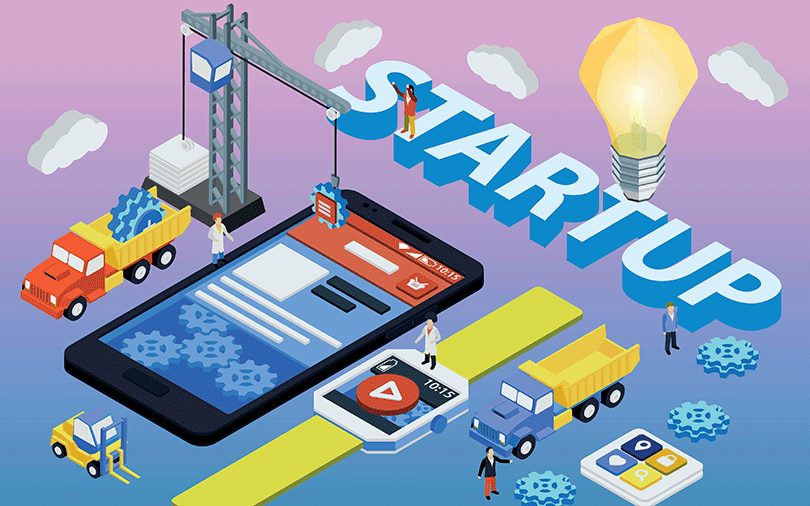
4.3 B2B Enterprises (consulting/solution services)
Communication Objectives:
- Generate quality leads (MQL, SQL).
- Build brand credibility through expert content.
Campaign Example: Webinar + Whitepaper for SMEs
Message: “The optimal HR cost solution for SMEs in 2025.”
Specific Activities:
- Run LinkedIn Ads targeting business owners, HR Managers.
- Organize an online webinar + release a whitepaper downloadable via a registration form.
- 3–5 step email nurture series: from thank you → sharing case studies → inviting for a demo.
- Invite guest experts to increase credibility.
Proposed KPIs:
- Awareness: 20,000 LinkedIn Ads impressions.
- Engagement: 500 Whitepaper downloads.
- Conversion: 50 qualified SQLs for demo appointments.

4.4 Manufacturing Enterprises (medium-sized SMEs)
Communication Objectives:
- Increase brand awareness.
- Support distribution channels and personnel recruitment.
Campaign Example: Video storytelling about the quality production process
Message: “Vietnamese Goods – International Standards, from our factory to your hands.”
Specific Activities:
- Create a video series about the factory, post on YouTube, TikTok.
- PR in business newspapers, specialized manufacturing magazines.
- Open official stores on Shopee/Lazada for direct sales.
Proposed KPIs:
- Awareness: 500,000 impressions on TikTok + YouTube.
- Engagement: 10,000 video views > 50%.
- Conversion: 100 first orders via e-commerce within 2 months.

4.5 Corporations/Large Enterprises
Communication Objectives:
- CSR (Corporate Social Responsibility).
- Employer branding to attract talent.
Campaign Example: CSR – “Greening the Planet”
Message: “Acting together for a green planet.”
Specific Activities:
- Broadcast TVCs, press PR, outdoor billboards.
- Organize offline events: tree planting, beach cleanups.
- Create a social challenge: “Green Check-in”, every 1 post = 1 tree planted.
- Dedicated microsite to track the number of committed trees.
Proposed KPIs:
- Awareness: 30 PR articles, 1,000,000 social impressions.
- Engagement: 50,000 challenge participants.
- Conversion: 5,000 trees actually planted.

5. 6 Detailed Communication Plan Templates from A to Z
In this article, 1Office will share 6 detailed communication plan templates from A to Z. Check them out now!

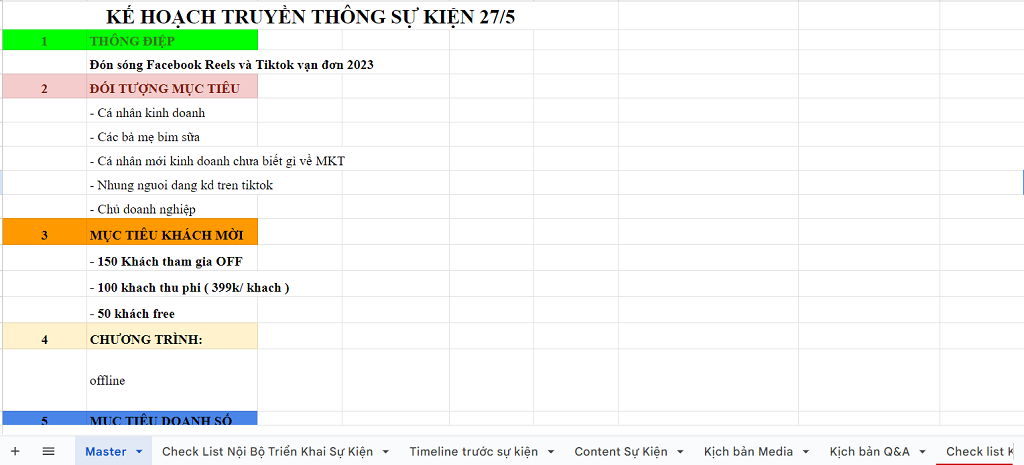
5.1 Event Communication Plan Template
Event communication plans are established to organize communication activities related to an event. The goal is to build an effective communication campaign to enhance public awareness and interaction, and build the brand image. An event communication plan template typically includes the following sections:
- Event Overview: Describe the event overview, main objectives, and core message.
- Audience Analysis: Identify the target audience, their reach, and their influence.
- Communication Objectives: Set specific objectives for the communication campaign, such as increasing website traffic, generating social media shares, or attracting media attention.
- Communication Strategy: Define the methods and communication channels to be used. For example: press, social media, online advertising, PR, or special events.
- Detailed Timeline and Checklist: Establish a timeline and schedule for communication activities, including issuing press releases, organizing press conferences, creating social media content, or running advertisements.
- Resources and Budget: Identify the necessary resources (personnel, tools, partners) and allocate the budget for communication activities.
- Measurement and Evaluation: Define the metrics and measurement methods to evaluate the effectiveness of the event communication campaign, such as social media engagement, website traffic, or public feedback.
5.2 Brand Communication Plan Template
The purpose of a brand communication plan is to build and promote a positive brand image, increase customer interaction, build trust and loyalty, and achieve success and growth for the brand.
Refer to the brand communication plan template with the following categories:
- Brand Overview: Provide a detailed description of the brand, including core values, product benefits, and differentiating features.
- Communication Objectives: Establish specific, easily measurable objectives for the brand communication plan.
- Communication Audience Analysis: This step requires a clear understanding of the target audience to serve as a basis for developing appropriate strategies and activities.
- Communication Strategy: Research and select the main communication methods and channels. Then, proceed to develop the communication message.
- Implementation Timeline: Define the timeline and schedule for communication activities.
- Human and Financial Resources: Determine the financial resources and budget dedicated to the communication campaign. Identify necessary resources, such as personnel, tools, and media partners.
- Measurement and Evaluation: Define the metrics and measurement methods to evaluate the campaign’s effectiveness, such as social media engagement, brand awareness, or sales growth.
5.3 Internal Communication Plan Template
Internal communication plans are widely used to enhance relationships, build a positive environment, foster organizational culture, and increase work efficiency. Here are a few suggestions to help you build an internal communication plan:
Internal Communication Objectives:
- Build a quality and continuous communication environment within the company.
- Share important information and messages about the company’s strategy, goals, and values.
- Create consensus and commitment to the company’s mission and vision.
Target Audience: Members of the company: employees, managers, different departments.
Internal Communication Channels:
- Email, internal messaging, company announcement systems.
- Intranet, online forums, internal applications.
- Meetings, social gatherings, internal conferences.
Time:
- Determine the timing and frequency of announcements, messages, or internal communication events.
- Periodically organize internal meetings, gatherings, or conferences.
Human and Financial Resources:
- Identify the personnel, tools, and skills needed to implement the internal communication plan within the company.
- Assess the budget for content creation, application development, and maintenance of the internal communication system.
Performance Evaluation:
- Establish measurement metrics such as participation rate, views, and feedback from employees.
- Evaluate results and adjust the internal communication plan based on feedback and measured data.

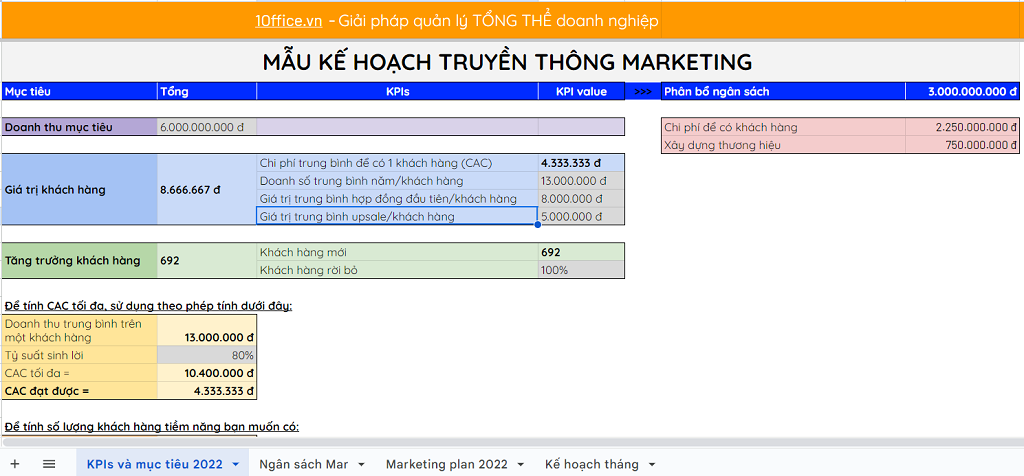
5.4 Marketing Communication Plan Template
A marketing communication plan helps businesses promote their brand, increase customer awareness and interest, and create a positive image. All these activities aim to grow the company’s sales revenue.
So, how do you create the most effective marketing communication plan? Refer to the following Marketing Communication Plan template:
Marketing Communication Objectives:
- Increase awareness of the company’s brand and products/services.
- Generate interest and engagement from potential customers.
- Build and maintain good relationships with existing customers.
Target Audience:
- Potential and existing customers.
- Partners and agents.
- Online communities and the media.
Communication Channels:
- Traditional advertising: newspapers, television, radio.
- Digital media: social networks, online advertising, email marketing.
- Events: exhibitions, seminars, customer meetings.
Communication Strategy:
- Define the communication message and the brand’s core values.
- Plan the use of appropriate communication channels to achieve communication objectives.
- Create creative and engaging content to interact with customers.
Time:
- Determine the timing and frequency of ad releases, email sends, or event organization.
- Periodically update content on social media and the website.
Human and Financial Resources:
- Identify the resources (personnel, tools, partners) needed to implement the Marketing Communication plan.
- Evaluate and allocate the budget for advertising, digital media, and events.
Measurement and Evaluation:
- Establish measurement metrics such as social media engagement, website traffic, and sales growth.
- Evaluate the effectiveness of Marketing Communication campaigns and adjust the plan based on measured results.
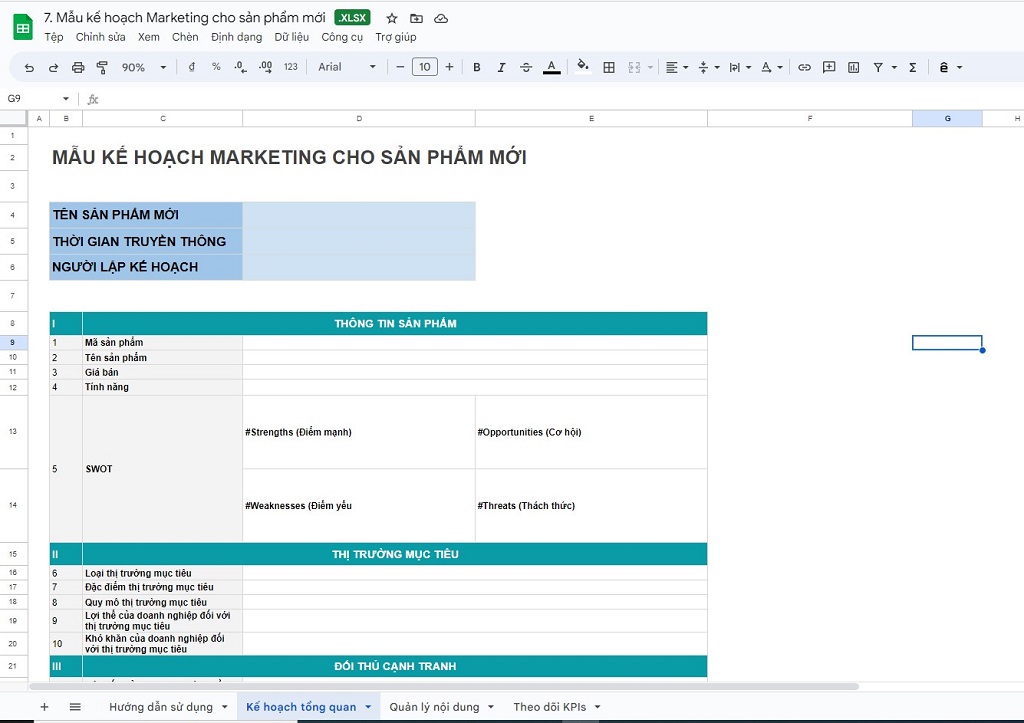
5.5 Communication Plan Template for a New Product
New product communication helps promote, build an image, and attract customer attention to the product. For a new product, communication templates will include the following sections:
- Overall Plan: Outlines the main content and overall objectives of the entire plan.
- Content Management: All content related to the plan will be detailed in this section.
- Checklist: Includes the personnel in charge, detailed tasks, and implementation timeline.
- Result Tracking and Evaluation: Establishes criteria for evaluating results, such as completion time, completion score, etc.
5.6 Online Communication Plan Template
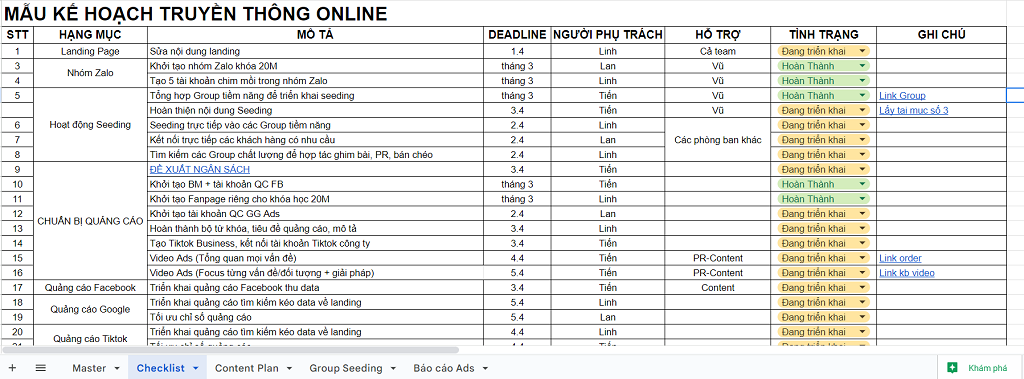
An online communication plan can be organized comprehensively or focused on a specific scope. In this article, 1Office will share with you a detailed social media communication plan template (TikTok, Facebook, Zalo, Email) as shown in the image below.
There, the online communication plan template will include the following 5 main sheets:
- Overall Plan: Includes the message, target audience, program, data collection activities, and event budget.
- Checklist: Landing page, Zalo group, Seeding activities, ad preparation, Facebook ads, Google ads, TikTok ads, media, sales, etc.
- Content Plan: Fanpage content, Zalo group nurturing content, Seeding content, ad copy, email marketing, etc.
- Group Seeding: A compilation of available potential groups, group status, implemented activities, implementation links, etc.
- Report: Reports on data results, engagement, and relevant evaluation metrics on a daily/weekly basis.
6. Effective Communication Planning Process
The communication planning process is a series of specific, sequential steps to ensure that all communication messages from the business reach the target audience effectively and at the right time. Below are the basic steps of this process that you can reference and apply in your business:
Step 1: Define Communication Objectives
First, you need to clearly define the communication objectives of the plan. Objectives can include increasing brand awareness, enhancing reputation, improving sales, or changing public perception of a product or service.
Step 2: Analyze the Target Audience
Research and analyze the audience the business wants to reach. Some characteristics to analyze may include: Demographics (age, gender, occupation), interests, behaviors, and issues they care about.
Step 3: Develop the Message
The communication plan must include the core message the business wants to convey. The message developed and communicated needs to be concise, easy to understand, and relevant to the target audience to create a connection and capture their attention.
Step 4: Select Communication Channels
Based on the target audience analysis, the business will select the most suitable communication channels to deliver the message to the public. Channels can include social media, press, television, email marketing, or online advertising, depending on the communication objectives and user habits and behaviors.
Step 5: Set the Budget and Allocate Resources
Managers need to determine the budget, estimate costs for each communication activity, and allocate resources (personnel, time, tools) to implement activities in the most effective and optimal way.
Step 6: Create a Timeline
After identifying the communication activities to be implemented, you will need to create a specific timeline for their execution. Ensure that messages are delivered at the right time, appropriate for each strategic phase.
Step 7: Implement the Plan
Once the plan is finalized, the business will need to start implementing the communication activities as planned, ensuring all messages and channels are operated consistently and effectively.
Step 8: Monitor and Measure Effectiveness
After each phase, the business needs to continuously monitor key performance indicators (KPIs) such as reach, engagement, conversions, and customer feedback. Based on these results, managers will have a basis for evaluating performance and adjusting the plan if necessary.
Step 9: Review and Learn
Finally, after the campaign ends, the business should summarize what was achieved compared to the initial objectives and draw lessons to improve future campaigns.
7. The SMCRFN Model – The Foundation for Building an Effective Communication Strategy
Besides referencing plan templates, businesses cannot overlook using the SMCRFN model when building communication plans. This is the foundation that helps businesses increase the success rate of their plans.
The SMCRFN model includes the following elements:
- S (Source): Identify the sources of information. This could be individuals, suppliers, communication channels, etc.
- M (Message): Formulate the main message the business wants to convey to customers.
- C (Channel): Select the channels for communication. For example: social media, newspapers, television, email marketing, etc.
- R (Receiver): Profile the target audience you want to reach in the communication plan. Clearly understand their needs, pain points, habits, etc., to develop a suitable strategy.
- F (Feedback): Collect and analyze customer feedback to get objective and multi-faceted evaluations of the campaign’s effectiveness. From there, address weaknesses and reinforce strengths for future activities.
- N (Noise): Obstacles that affect the communication process, such as: misinformation, unstable transmission lines, etc.
8. How to Coordinate and Manage a Communication Plan
During the plan implementation process, many businesses often find themselves losing control and unable to track work progress. This significantly affects the effectiveness of the business’s communication. Therefore, when coordinating and managing a communication plan, businesses need to keep in mind:
- Understand and Grasp the Objectives: Objectives must be relevant and measurable. Team members involved in implementing the plan must understand the progress and their assigned tasks in the overall context. This way, all members can support each other and work together to achieve common goals.
- Track and Adhere to the Plan: Report on work according to the schedule or immediately after completion to the manager or relevant departments for timely updates. Then, continue to coordinate and implement the next activities.
- Allocate Resources Appropriately: Avoid overlapping tasks, which can prevent work from being completed on time and affect overall activities.
- Establish a Standard Framework for Evaluation: Set deadlines for each task to make them easy to control. Evaluations must ensure transparency, accuracy, and fairness.

9. Manage communication plan projects effectively with 1Office
Once you are familiar with the templates and principles of communication planning, the next step is to implement and track them in practice. However, managing each stage of the plan and ensuring everything stays on schedule can become complex. To solve this problem, 1Office is the complete management tool that helps you track the progress of each communication campaign easily and effectively.
To manage and execute communication campaigns effectively, 1Office provides a range of powerful management tools. You can easily assign tasks, track implementation progress, and generate detailed reports on campaign results. With just a few simple steps, you can ensure your communication plan is implemented on schedule and achieves maximum effectiveness.
Work Planning: Create and manage detailed and clear work plans and communication projects. All tasks are assigned and tracked directly within the system.
Automated Task Assignment: 1Office allows for automatic task assignment to team members based on department and position. This helps minimize errors and ensure work progress.
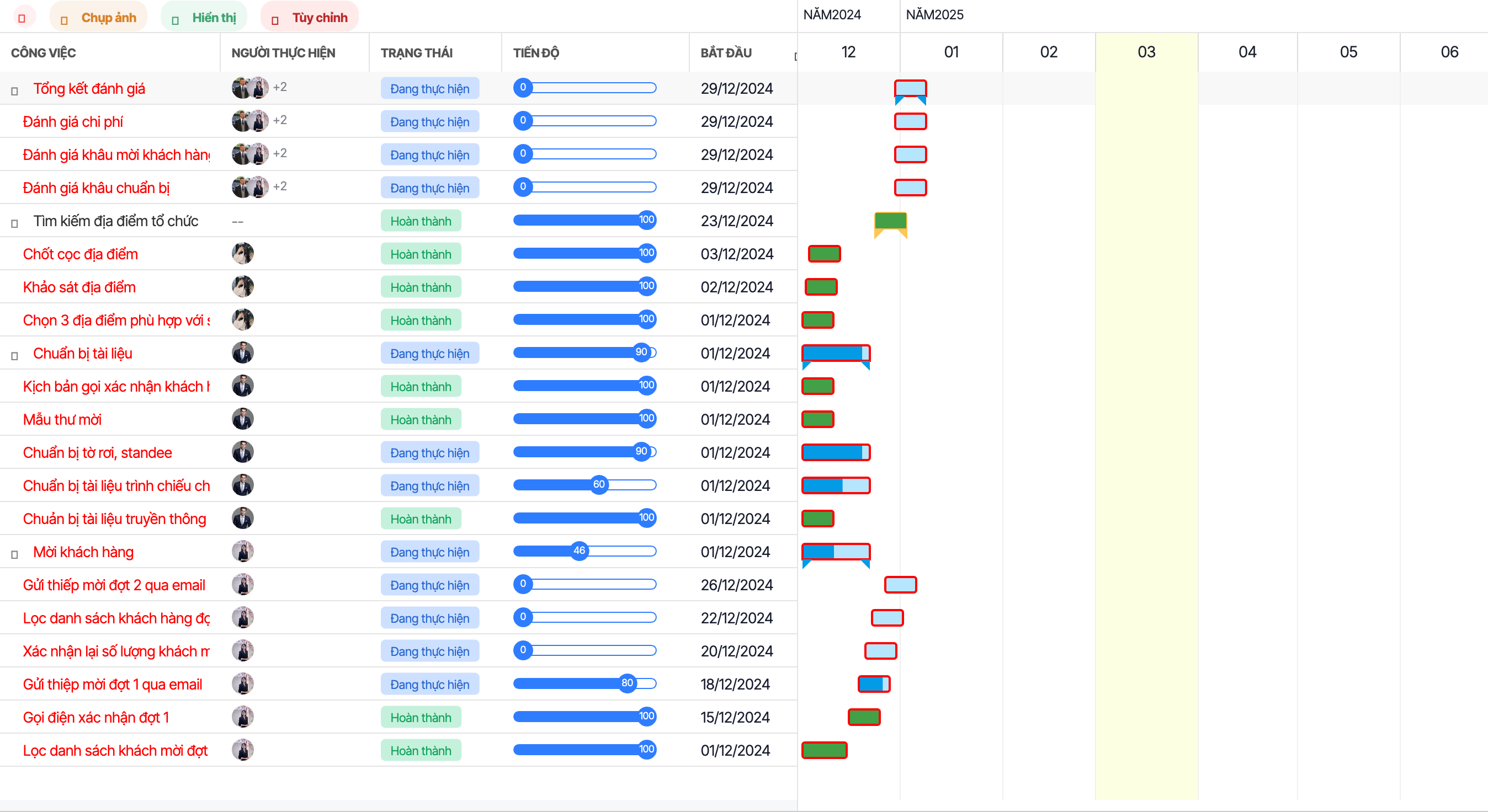 Easily plan communications on 1Office
- Progress Tracking: The system tracks progress and automatically reminds users of important tasks and duties. You can monitor the campaign status in real-time, ensuring no steps are missed.
- Smart Alerts: 1Office features smart alerts, helping you receive notifications when issues need immediate attention, such as slow progress, work errors, or uncompleted critical tasks.
- Automated Workflows: 1Office supports the creation of automated workflows, helping to link modules like payments and digital signatures. Signing communication contracts and disbursing communication costs will become easy and fast.
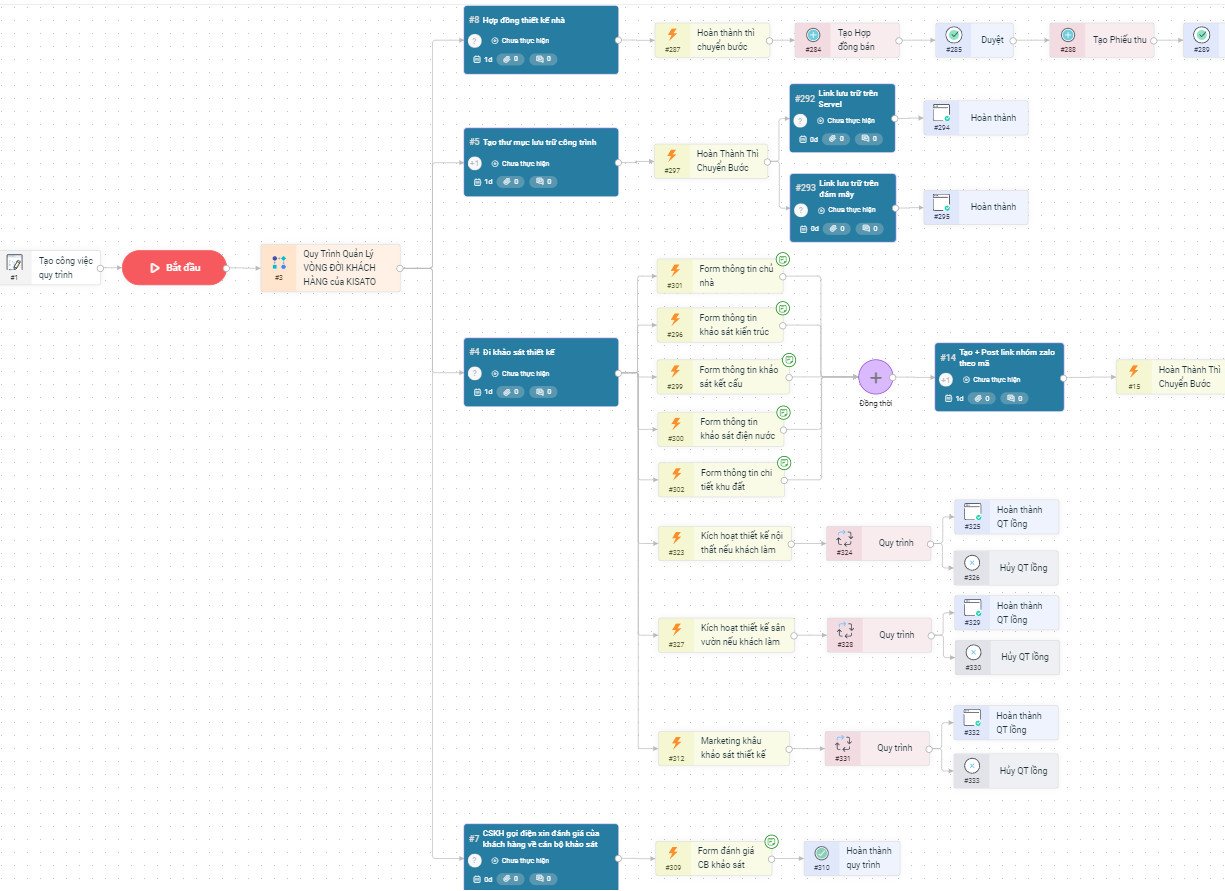
Easily manage the operational processes of a communication project
Campaign Performance Reporting: After implementing the campaign, 1Office provides detailed reports on its performance. You can analyze the results achieved and adjust your strategy to optimize outcomes.
With 1Office, you not only save time but also optimize the entire operational process of a communication project. All tasks, from assignment and progress tracking to results reporting, are performed on a single platform. This enables you and your team to:
- Save time: All work is centralized on a single platform, eliminating the need for multiple tools.
- Improve team communication and coordination: Team members can easily communicate, discuss, and share documents directly on 1Office
- Transparency and clear reporting: Track campaign progress and get clear reports, helping you adjust your strategy quickly.
With these features, 1Office not only helps you optimize communication campaigns but also improves team coordination and ensures all strategic goals are met on time.
Register for a free feature demo!
10. Frequently Asked Questions about Communication Plans
How do communication objectives differ from business objectives?
- Business Objectives: Focus on final financial metrics like revenue, profit, or market share (e.g., achieve monthly sales of 1 billion VND).
- Communication Objectives: Focus on the public’s mindset and behavior to support the business (e.g., make 50,000 people aware of a new product, increase brand trust by 20%).
Should you prioritize Reach or Engagement?
This depends on the campaign stage:
- Initial Stage (Awareness): Prioritize Reach to get the message in front of as many people as possible.
- Middle Stage (Consideration): Prioritize Engagement to assess whether the content truly resonates with the audience’s needs and captures their interest.
How to build an impressive message?
A powerful message should follow the formula: Accurate – Resonant – Catchy.
- Accurate: Aligns with the truth about the product.
- Resonant: Addresses the customer’s pain points or desires.
- Catchy: Concise, memorable, and rhythmic (like how Vinamilk uses “Reach for the Skies, Vietnam”).
Why is risk contingency necessary when the plan is already very detailed?
Communications are always affected by external factors (social media crises, weather, technical issues, algorithm changes). Having a contingency plan helps businesses stay proactive, handle crises quickly, and protect their brand reputation when unexpected incidents occur.
When should a business switch from Excel to a communications management software?
You should consider switching when:
- The volume of data is too large, causing Excel functions to freeze or lag.
- You need real-time collaboration between multiple departments (Content, Ads, Design, Sales), and Excel cannot support notification and permission features.
- You want to automate the aggregation of KPI reports from multiple channels (Facebook, Google, TikTok) onto a single dashboard for immediate decision-making.
11. Conclusion
Above are 6 communications plan templates as well as how to coordinate and manage a communications plan effectively. We hope this article helps you find more new ideas and directions for your upcoming communications plan. We wish you success
















