


13 Sales Skills to Help You Conquer Every Customer


Soft skills play a crucial role in helping employees build and maintain relationships with potential customers, while also delivering exceptional experiences to optimize sales transaction efficiency. To become an excellent sales professional, it’s not difficult if you are diligent in developing the necessary sales skills to persuade customers. In this article, 1Office will show you 13 basic sales skills that a good salesperson needs to be equipped with to increase company revenue.
Mục lục
- 1. What are sales skills?
- 2. 13 Essential Sales Skills for an Excellent Salesperson
- 2.1. Identifying Potential Customers – The Most Basic Sales Skill
- 2.2. Understanding Customers – An Effective Sales Skill
- 2.3. Empathy Skills with Customers
- 2.4. Communication and Interaction Skills with Customers
- 2.5. Effective negotiation and bargaining
- 2.6. Leveraging technology – A top-tier sales skill
- 2.7. Understanding the business product
- 2.8. Cultivating patience and enthusiasm
- 2.9. A friendly attitude and always saying thank you
- 2.10. Storytelling skills
- 2.11. Customer Care Skills
- 2.12. Collaboration and Teamwork Skills
- 2.13. Building Relationships
- 3. How to Cultivate Professional Sales Skills
- 4. Conclusion
1. What are sales skills?
Sales skills are the non-technical abilities that help salespeople persuade customers to buy a company’s products/services. These skills include the personal attributes, character traits, and communication abilities necessary to be successful in the job. Soft skills characterize how salespeople interact with potential and existing customers of the business.
-

What are sales skills?

2. 13 Essential Sales Skills for an Excellent Salesperson
2.1. Identifying Potential Customers – The Most Basic Sales Skill
Identifying potential customers is a crucial step in the sales process, helping sales staff focus their resources on prospects who are likely to generate high revenue.
The biggest challenge for a salesperson is failing to find suitable potential customers, which leads to poor sales performance. To improve this, salespeople need the skill to “sniff out” individuals who fit the target customer profile, people you can approach to build your own customer base.
To identify potential customers, a salesperson needs to clearly understand:
- Who their potential customers are: Who do they include? What are their characteristics? What are their needs?
- Where to find potential customers: On social media, in groups, at events, etc.
- Ways to approach potential customers: Calling, emailing, meeting in person, etc.
After understanding these points, a salesperson can build an effective plan for finding and approaching potential customers.
2.2. Understanding Customers – An Effective Sales Skill
Customers buy for various reasons; it could be because they need a product/service to solve a problem, or they want to improve their quality of life. To understand a customer’s needs, a salesperson needs to put themselves in the customer’s shoes.
Imagine you are the customer: what would you need? Are you interested in product quality or its reputation? Do you need product information, or practical advice on what occasions to use it for and how to use it? Every customer has unique requirements. By observing their actions and listening carefully to their desires, you can provide accurate information and meet their exact needs.
-

Understanding Customers

Additionally, salespeople need to determine their own concession limits. Clearly define the limits on discounts, freebies, payment terms, or other add-ons before you meet the customer. This ensures you reach a mutually beneficial agreement.
Understanding customer needs and persuading them with values beyond money will help salespeople increase their chances of success in the sales process. If the company’s pricing policy doesn’t meet the customer’s expectations, persuade them with other special values such as brand quality and reputation, excellent maintenance services, a long-term partnership, and other strengths.
2.3. Empathy Skills with Customers
For a sales professional, understanding customer psychology is an extremely important factor. One of the effective ways to do this is to empathize with the customer.
Empathy in sales can be simply understood as the ability to listen, ask questions, and survey customers. Empathy helps us easily approach and understand customer needs. As a result, the process of closing deals, signing contracts, and resolving requests will go more smoothly.
To become a good salesperson, you need to practice sharpness in asking questions to extract information from customers. This skill helps you understand customers better, thereby providing solutions that fit their needs. Additionally, you can also use surveys to gather more information about potential customers. These surveys will help you better understand their needs, preferences, and habits. From there, you can create appropriate messages and marketing strategies to reach them.
2.4. Communication and Interaction Skills with Customers
Communication skills are one of the most important sales skills a professional salesperson must have. This skill determines whether you are making a good impression or creating goodwill with the customer. This will directly influence the consumer’s purchasing decision and shape their initial assessment of the company’s product quality.
-

Communication and Interaction Skills with Customers

Essential elements of communication skills in sales:
- Voice: Your voice needs to be clear, easy to hear, and expressive. You also need to pay attention to your speaking speed, volume, and intonation to attract customers.
- Body language: Your body language should convey confidence, comfort, and friendliness. You should avoid excessive or unprofessional hand and foot gestures.
- Listening skills: You need to focus on listening to customers actively and without judgment.
- Questioning skills: You need to use questions skillfully to understand the customer’s needs and purchasing intentions.
- Persuasion skills: You need to use persuasion skills to convince customers to make a purchase.
2.5. Effective negotiation and bargaining
Negotiation and bargaining are essential sales skills for any salesperson. Customers are not always ready to buy your product from the very first conversation. That’s when your negotiation skills and bargaining abilities come into play.
A good salesperson is someone who knows how to listen patiently, understand the customer’s needs, and persuade them skillfully. They also know how to control their personal emotions, avoiding letting emotions override reason during negotiations.
Most importantly, a salesperson must know how to balance and compromise between the company’s interests and the customer’s benefits. This is also a skill you should highlight in your sales CV to pass any interview round.
2.6. Leveraging technology – A top-tier sales skill
In the digital age, technological proficiency is the key to helping sales staff tap into potential customers and effectively manage the sales process.
Many sales jobs require employees to find leads and build a personal brand themselves. In this context, making good use of social media platforms is the fastest way to reach potential customers.
-

Leveraging technology – A top-tier sales skill

Additionally, technological tools and software also help sales staff manage customer information effectively, while ensuring the sales process runs smoothly. Therefore, proficient use of technology is one of the most important skills for a salesperson in the modern era.
2.7. Understanding the business product
To become an excellent salesperson, you not only need to understand the basic information about the product but also master in-depth knowledge of its functions, benefits, and economic aspects. Because only when you truly understand the product can you persuade customers effectively.
Product knowledge will help you answer all customer questions completely and accurately. This will build customer trust and confidence in you. Furthermore, understanding the product will help you maximize its advantages, thereby helping customers recognize the product’s value and make a purchasing decision.
Therefore, if you want to become an excellent salesperson, take the time to thoroughly learn about the product you are selling. This is the solid foundation that will help you succeed in the business field.
2.8. Cultivating patience and enthusiasm
Customers have many different personality types; some are easy-going and make quick purchasing decisions, but there are also meticulous customers who need more time to think and consider.
For meticulous customers, patience is the most important sales skill. Give them time to learn about and compare your product with others. Listen to their concerns and answer them completely and accurately.
A cheerful and enthusiastic attitude is also a key factor in winning over meticulous customers. Show that you care and are ready to help them. Even if they don’t buy right away, they will remember you and may return later.
2.9. A friendly attitude and always saying thank you
A smile and a ‘thank you’ are powerful deal-closing weapons that every salesperson needs to have.
- A smile is an expression of friendliness, approachability, and trustworthiness. When you smile, you make customers feel comfortable and at ease.
- A ‘thank you’ is an expression of respect and appreciation. When you say thank you, you show that you care about and value the customer.
During the sales process, you should frequently use smiles and thank yous. Smile when greeting customers, when presenting the product, when answering their questions, and when ending the conversation. Say thank you when customers give you their time, when they praise your product, and when they close the deal.
Smiling and saying thank you are simple yet effective sales skills. Practice using them regularly to become a professional salesperson.
2.10. Storytelling skills
Storytelling is a top-tier sales skill that helps capture attention, build trust, and persuade customers.
When listening to a consultation, customers always prefer a feeling of closeness and authenticity. When telling a story, the salesperson should use simple, easy-to-understand language, avoiding complex technical jargon. At the same time, they should incorporate practical examples that are relevant to the customer’s life to make the story more engaging and credible.
-

Storytelling skills
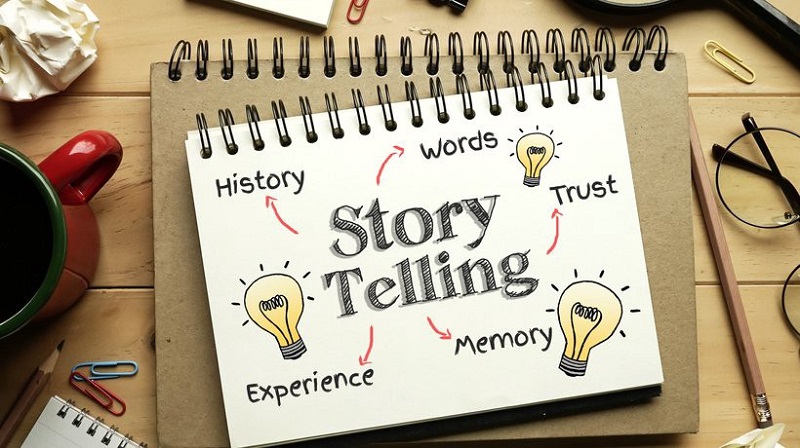
Knowing how to steer the conversation toward the product without sounding like a pushy salesperson will certainly make them more interested in listening. The salesperson should skillfully weave product features into the story, making them feel natural and not forced.
For example, if a customer is facing financial issues, the salesperson can tell a story about someone who used the company’s product and solved their financial problems. This story will help the customer empathize and trust the product more.
2.11. Customer Care Skills
To retain current customers and encourage them to return for future purchases, salespeople need to have after-sales customer care skills. This includes regularly interacting with customers, giving gifts or discount vouchers to loyal customers, maintaining communication, sending thank-you notes, and many other activities.
In the era of rapid digital technology development, customer care has become easier through social media. Besides giving gifts, salespeople should also connect with customers by phone and leverage social media platforms like Zalo or Facebook to optimize the effectiveness of after-sales care.
2.12. Collaboration and Teamwork Skills
In many cases, you are not the one who directly approaches the end-user but must go through an intermediary. Therefore, the ability to collaborate for a common goal is also a crucial sales skill, helping you reach more customers and create more opportunities to boost sales.
Sales work often involves many different departments within the company, such as production, accounting, marketing, etc. Teamwork skills help salespeople collaborate effectively and coordinate with teammates to achieve the best results. At the same time, this skill helps them handle conflicts and difficulties during work. It also helps them learn from colleagues and develop their personal skills.
Typically, B2B (Business-to-Business) sales professionals frequently face such collaborative situations. If you are a sales representative in these fields, make sure you have mastered this sales skill.
2.13. Building Relationships
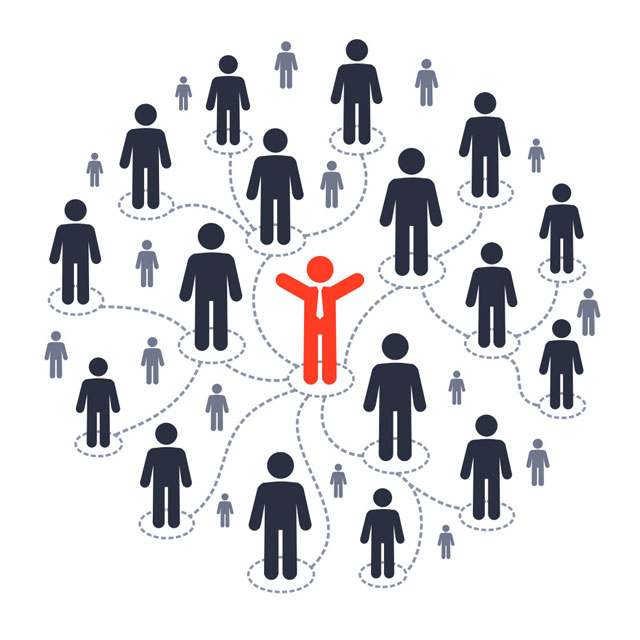
Giving gifts and discount vouchers to existing customers not only helps them feel satisfied and return to make purchases but can also encourage them to refer their friends and relatives to use the business’s services and products. This will help the business expand its network of potential customers quickly and effectively.
-

Building Relationships
To effectively leverage promotional packages, businesses need to note the following issues:
- Choose promotional packages that suit customer needs. Businesses need to carefully research customer needs to select appropriate packages, helping customers feel satisfied and want to return.
- Announce promotional packages to customers in a timely and effective manner. Businesses need to inform customers about the packages promptly and effectively, helping them grasp the information and register to participate.
- Track and evaluate the effectiveness of promotional packages. Businesses need to monitor and assess the effectiveness of the packages to make timely adjustments and improvements to achieve the set goals.
Leveraging promotional packages for existing customers is one of the effective ways to retain customers and expand the network of potential customers. This is an indispensable element in business, and every employee should be well-versed in the sales skills related to this.
3. How to Cultivate Professional Sales Skills
3.1. Continuously Learn and Update
Continuously learning and updating knowledge is the key to enhancing sales skills and achieving high sales figures. Sales staff need to develop a habit of researching and updating information daily, from the business’s products/services and necessary sales skills to current customer purchasing trends and tastes. In the context of the strong development of the 4.0 revolution, digital sales staff play an important role (digital sales are salespeople on digital technology platforms).
This habit helps generate new ideas about the market and how to approach customers. At the same time, updating knowledge helps build flexible plans, meet customer needs, and contribute to the business’s development.
3.2. Set Short-Term Goals
-

Set Short-Term Goals

Setting short-term goals helps focus on the tasks that need to be done in the short term to achieve desired results. Clear goals help concentrate work, measure progress, self-motivate, and self-assess, thereby improving personal skills and weaknesses.
3.3. Practice and Synthesize
Practicing and synthesizing are the best ways to become an excellent salesperson. Repetitive action helps familiarize you with the sales process, from approaching customers to persuading and negotiating. Through practice, employees have the opportunity to identify areas for improvement and discover strengths to build upon. Encountering various situations and different customers helps them clearly understand customer needs and purchasing decisions, allowing them to tailor their sales methods accordingly.
After each transaction, reviewing the results and the approach is an opportunity to learn and improve. Jotting down experiences and lessons in a notebook or document contributes to the learning process and the development of sales skills.
3.4. Evaluate Work Performance
Daily work performance evaluation is a very useful method for improving sales skills. By creating a list of metrics and sales figures, employees can easily track and check whether they have met their goals, as well as identify issues causing customer dissatisfaction and any unclosed deals.
Additionally, through data analysis, sales staff can identify the best-selling products/services. This helps them coordinate with teammates and other departments to propose and implement sales strategies that align with market conditions.
4. Conclusion
Above are all the basic sales skills that 1Office wants to share with you. To become an excellent salesperson, you need not only to equip yourself with the skills above but also to continuously practice them every day to improve yourself and contribute to generating high revenue for the company. We wish you success




