


 12/05/2026
  352 views
In business, what strategic planning is is crucial for analyzing competitors, potential, and making the right decisions for the company’s direction. So, what is strategic planning? How can you build a clear strategic planning process for your business? In this article, 1Office will help you learn in detail about the experience of creating a super simple strategy with 8 steps and things to keep in mind.
Mục lục
1. What is strategic planning?
Strategic planning is the process of defining an organization’s long-term goals and outlining the specific directions and actions to achieve those goals. This is a crucial activity that helps organizations and businesses understand their current position, the opportunities and challenges from the external business environment, and thereby develop appropriate plans to grow and maintain a competitive advantage.
Based on the overall goals and mission of the organization, strategic planning is the process of planning and implementing specific activities. It contributes to making important decisions for the future of the entire corporate structure.
As the foundation for other management activities within the organization, the steps of strategic planning need to be closely coordinated. At the same time, they must also meet requirements such as being specific, flexible, consistent, feasible, realistic, objective, and scientific.
2. What are the types of strategic planning?
Planning is the most important activity in the management process as it serves as the foundation for guiding other activities in the process. In an organization, strategic planning is divided into five types:
2.1 Strategic Marketing Planning
Strategic Marketing Planning is the process of developing a marketing strategy and defining specific measures to reach the business’s target market. The purpose of this planning is to establish, maintain, and grow the business units and products of the company to generate profit.
2.2 Strategic PR Planning
Strategic PR planning is a process of setting the goals a business wants to achieve; identifying the methods and resources needed to accomplish those goals; and creating a roadmap and specific implementation steps for each content and solution applied.
2.3 Strategic Sales Planning
Strategic sales planning is a crucial part of a company’s sales strategy. An effective sales strategy will answer questions such as: Which products does the company focus on selling? What is the company’s sales methodology? What tools does the company use to market and sell its products?
2.4 Strategic Business Planning
Strategic business planning is a management process used to establish a long-term plan for the company’s future. Organizations use this process to define goals, the strategies needed to achieve them, and an internal performance management system to monitor and evaluate progress.
2.5 Strategic HR Planning
Strategic HR planning is the process of setting goals and specific plans to be executed. These plans include policies and activities related to human resources, designed for specific job groups, to meet and implement strategic objectives and ensure operational efficiency.
3. Optimal strategic planning steps for SMEs
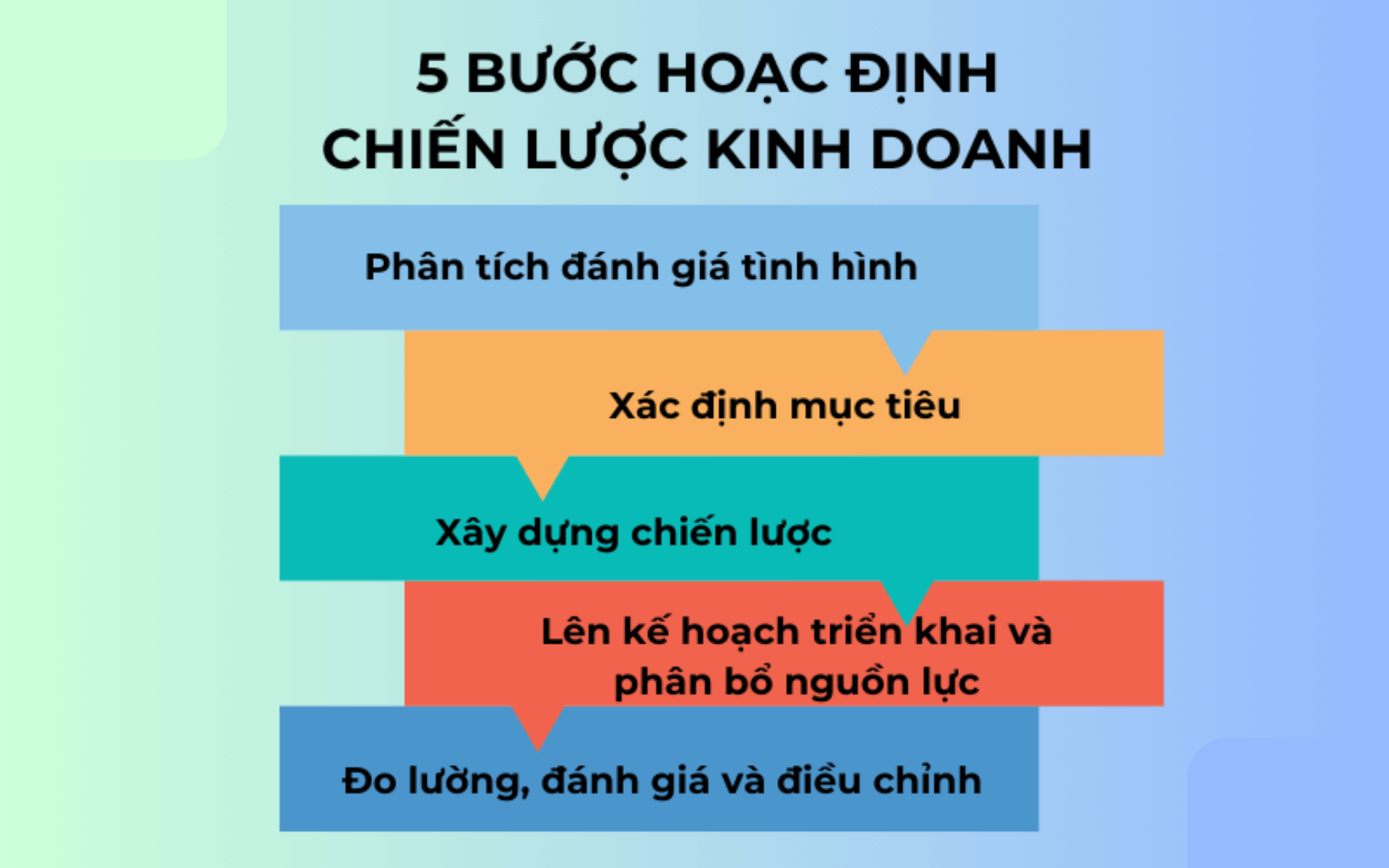
Step 1: Initial Analysis and Assessment
The first step in the planning process is the initial analysis and assessment of the company. Managers must clearly define the business’s vision and mission at this time. The vision will guide employees in achieving the ultimate goal, while the mission will help managers make sound and appropriate decisions for the organization.
Step 2: Analyze the current situation, define objectives
In the planning process, the next step is for the company to analyze the market, industry, competition, and its internal environment. This analysis will help the business identify its strengths, weaknesses, opportunities, and threats. As a result, the company will accurately determine its current position in the market.
Step 3: Formulate the strategy
After analyzing the current situation, the next step is to establish long-term objectives. These objectives will guide managers in selecting specific strategies. Strategies will be chosen at two main levels: the business strategy level and the corporate strategy level.
Step 4: Plan the strategy implementation
After the plan has been clearly completed, the next step is to execute and implement it seriously and effectively according to each outlined provision. The implementers must be competent, understand the strategy, and carry out the implementation as accurately as possible.
The process of implementing the strategy after a clear plan is in place is extremely important. Individuals involved in executing the strategy need to be agile, professional, and closely monitor work progress to ensure the best possible success.
Step 5: Monitor, measure & adjust the strategy
After analysis, the strategy needs to be implemented specifically. An effectively implemented strategy will create a competitive advantage for the company. The strategy implementation process includes the following 6 steps:
- Set monthly/quarterly/annual goals for each specific department.
- Adjust current policies to align with the ability to achieve goals.
- Allocate resources correctly and sufficiently.
- Reform and enhance the organizational structure to implement the new strategy.
- Manage and overcome remaining limitations.
- Introduce new reward policies for achieved results.
See more: Steps to create a strategic plan – Important notes for planning

4. Advantages and Disadvantages of Strategic Planning
4.1 Advantages of Planning
To build a solid foundation for business administration, planning offers many benefits to business owners:
- Assists leaders and business administrators in quickly identifying new opportunities and detecting risks, helping to shape the company’s direction and promote useful measures to improve work quality and competitiveness.
- Ensures stability in the development process when the business faces fluctuations and changes from the external environment.
- Enhances work efficiency by facilitating close collaboration between departments and clearly assigning responsibilities to each individual, thereby motivating employee efforts.
- Prepares well for continuous changes in the economic and social situation by creating a more effective performance evaluation system and preparing operational mechanisms to overcome obstacles efficiently after reviewing information and considering potential future opportunities or risks.
4.2 Disadvantages of Planning
In business, strategic planning, despite bringing many benefits to the organization, still has some limitations.
- When having to continuously adhere to the initial plan, the planning process can make work rigid and inflexible in handling situations. This can reduce the creativity of the implementing employees.
- Risk prediction is sometimes ineffective from the start. This is because it’s impossible to fully identify all issues that may arise during the execution of tasks and duties by employees.
- The results after the planning process often do not accurately reflect the organization’s true capabilities. It can even limit the company’s growth when product output surges unexpectedly compared to the initial plan.
5. Conclusion
The strategic planning process always plays a crucial role for businesses and is a detailed, systematic process that helps businesses easily develop their operations. We hope that through this article shared by 1Office, you have grasped the concept of “what is strategic planning,” gained a more comprehensive overview, and understood the planning process to create a high-impact strategy, choose a suitable strategy for planning, and bring many benefits to your business.
















