


 12/05/2026
  344 views
Delegation is one of the most important and necessary skills for any manager. It not only determines work efficiency but also directly impacts the development of the entire organization. Therefore, enhancing your delegation skills is crucial.
Mục lục
1. What is Delegation?
Delegation is a manager’s ability to effectively entrust and assign tasks to their subordinates. It is the process by which a manager transfers duties, responsibilities, and authority to employees, enabling them to complete the assigned work.

Delegation involves the following elements:
- Clearly defining the task to be delegated and the goals to be achieved.
- Selecting the right personnel for the task.
- Communicating and providing clear instructions for the task.
- Monitoring and evaluating the quality of the completed work.
- Supporting, motivating, and developing employee capabilities.
A good manager needs to master these skills to delegate effectively, increasing the productivity and efficiency of the entire organization.
2. Benefits of Effective Delegation Skills
2.1 Optimizes Productivity and Work Quality

When managers have good delegation skills, they can assign tasks reasonably to each employee based on their abilities, strengths, and job requirements. This helps increase productivity and work efficiency, as each employee is assigned tasks that match their capabilities.
2.2 Reduces the Manager’s Workload
By delegating effectively, managers can authorize some tasks to subordinates, thus reducing their personal workload. This helps managers focus on more important tasks, as well as have time to guide, support, and develop their team.
2.3 Encourages Employee Development
When assigned tasks that match their abilities, employees have the opportunity to showcase and develop themselves. This not only increases their motivation but also helps enhance their skills, experience, and sense of responsibility. As a result, employees become more professional, contributing to the overall growth of the organization.
2.4 Fosters Employee Engagement

When employees are assigned suitable tasks, they feel trusted, given opportunities, and respected. This promotes engagement, commitment, and loyalty to the organization. This, in turn, creates a positive, dynamic, and effective work environment.
2.5 Establishes Organizational Habits
When delegating effectively, managers assign tasks clearly and systematically. This helps create organization, arrange work logically, and avoid overlapping or missed tasks. At the same time, employees will also clearly understand their roles and responsibilities, thereby completing their work more proactively and effectively.
2.6 Improves Team Cohesion
When managers assign tasks reasonably, employees feel respected and trusted. This helps strengthen cohesion, cooperation, and team spirit. As a result, employees will strive together to achieve the organization’s common goals.
3. The 5-Step Process for Effective Delegation
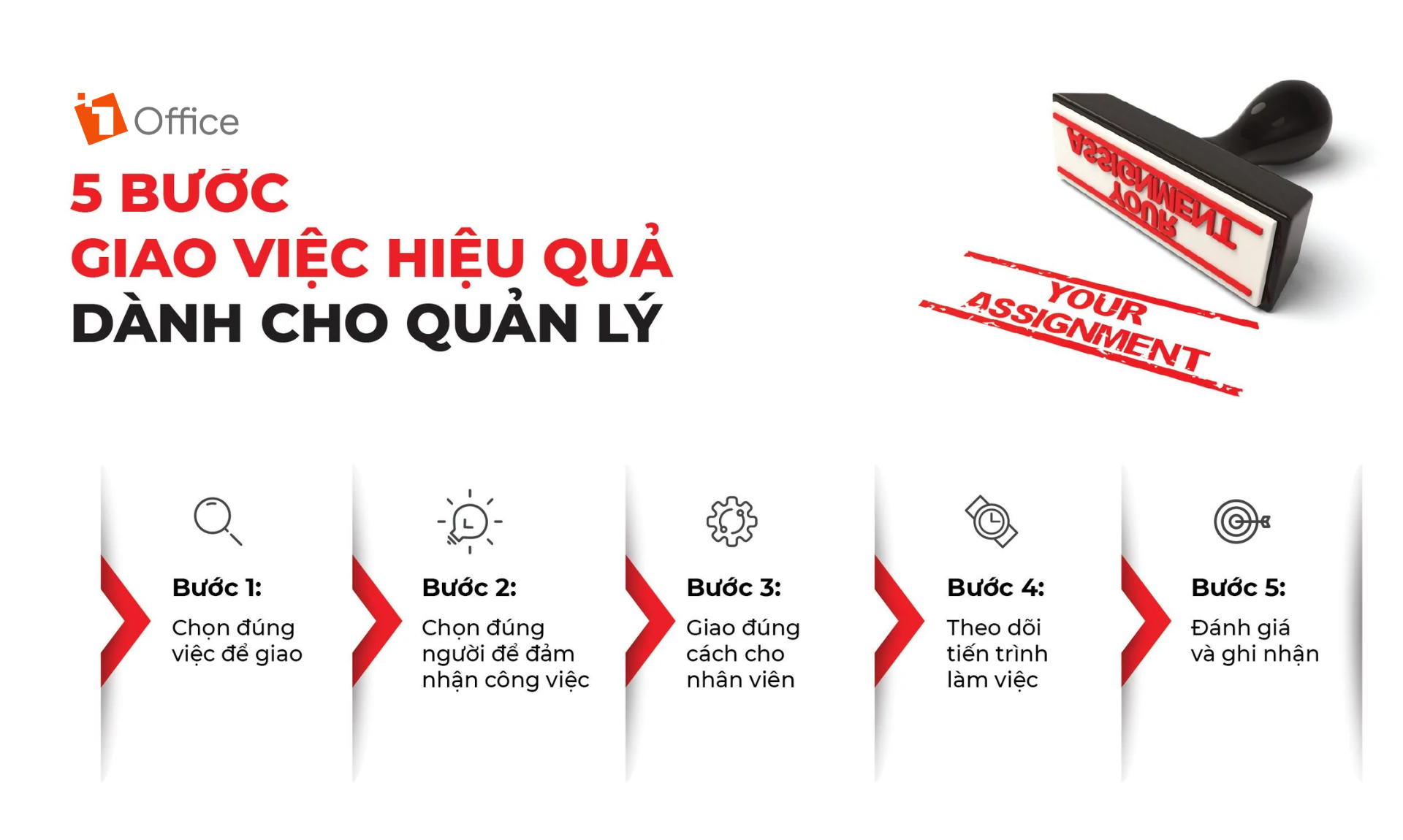
Step 1: Clearly Define the Specific Task
Before delegating, the manager needs to clearly define the task to be assigned, including:
- Detailed job description: content, duties, standards, completion deadline.
- Clearly define the goals, purpose, requirements, and desired outcomes.
- Identify the resources and conditions necessary to complete the task.
Clearly defining the task provides the manager with a basis for selecting the right personnel and communicating the work effectively.
Step 2: Select the Right Person for the Job
After identifying the task to be assigned, the manager needs to select suitable personnel based on the following criteria:
- The employee’s capabilities, experience, and skills.
- The employee’s strengths, interests, and abilities.
- The employee’s workload and priorities.
- The employee’s development needs and opportunities for self-expression.
Choosing the right person for the job will help improve work efficiency and promote employee development.
Step 3: Assigning the Task

When assigning a task, the manager needs to communicate the work clearly and specifically, including:
- A detailed description of the job, tasks, and completion standards.
- Clearly defining the employee’s authority and responsibilities.
- Instructions on the steps, processes, and techniques to complete the work.
- Clearly defining the completion deadline and progress reporting requirements.
- Listening to the employee’s feedback and opinions, and answering questions.
Effective task assignment will help employees clearly understand and commit to completing the work.
Step 4: Monitoring Progress
After assigning the task, the manager needs to monitor and supervise the implementation process, including:
- Checking the employee’s work progress.
- Monitoring the quality and timeliness of the work.
- Identifying the employee’s difficulties and obstacles and providing timely support.
- Making adjustments and providing additional guidance if necessary.
Monitoring progress helps the manager intervene in a timely manner, ensuring the work is completed on schedule and to the required quality.
Step 5: Evaluating Results
After the work is completed, the manager needs to evaluate the results, including:
- Comparing the actual results with the initial goals and standards.
- Assessing the level of completion, quality, and effectiveness of the work.
- Providing comments and feedback on the implementation process and the results achieved.
- Drawing lessons for future task assignments.
Evaluating results provides a basis for the manager to recognize, reward, and develop employee capabilities. It also serves as a basis for improving and perfecting the task assignment process in the future.
4. 5 Principles to Follow When Delegating Tasks to Subordinates
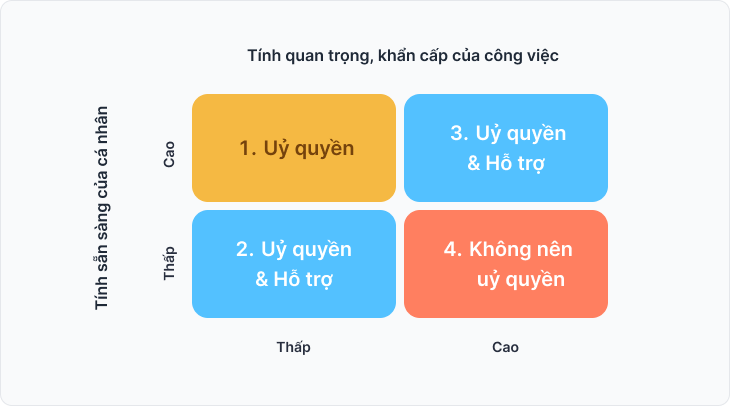
Delegate Based on Capability
Delegating based on capability is the most important principle to ensure tasks are completed effectively and on time. Managers need to recognize the strengths and weaknesses of each employee. When tasks are assigned according to their capabilities, employees will be able to complete the work, avoiding pressure and stress from tasks outside their expertise. This helps employees maximize their potential, enhancing performance and job satisfaction.
Divide Work Fairly, Clearly, and Specifically
Dividing work clearly and specifically helps team members clearly define their scope of responsibility, enhancing focus and maximizing work performance. This also helps avoid conflicts and jealousy, and ensures no task is overlooked. Setting deadlines is mandatory for building a professional, systematic, and disciplined work culture. Deadlines help managers track work progress, and promptly detect and handle any issues that arise.
Check, Closely Supervise, and Regularly Update Progress

Regularly checking and updating progress helps managers grasp the actual situation of the work, promptly detect emerging issues, and take appropriate measures. This ensures that the work is completed on schedule, to the required quality, and meets the set objectives. Additionally, it helps managers understand the capabilities and work efficiency of their employees, thereby providing appropriate support and guidance for their development and self-improvement.
Build a Good Relationship with Employees
Building good relationships with employees in a positive and supportive work environment will boost satisfaction, increase motivation, and improve employee performance. A good relationship between employees and managers creates satisfaction and commitment from employees. When they feel respected, listened to, and fairly evaluated, they will be more engaged with the organization and work harder. A positive work environment also encourages the personal and professional development of employees. When relationships are based on trust and support, employees will be confident in proposing new ideas, participating in projects, and achieving personal goals.
Learn from experience and make adjustments
Learning from experience and making adjustments after each task delegation process is very important. Managers should hold direct meetings with employees to exchange opinions and evaluate the performance of completed work. If the work does not achieve the expected results, the manager needs to remind the employee and learn from the experience together. Conversely, if the work is done well, the manager should encourage and praise the employee. Maintaining an objective and direct attitude, along with clear praise and criticism, will guide the team to improve.
5. Simplify task delegation with 1Office
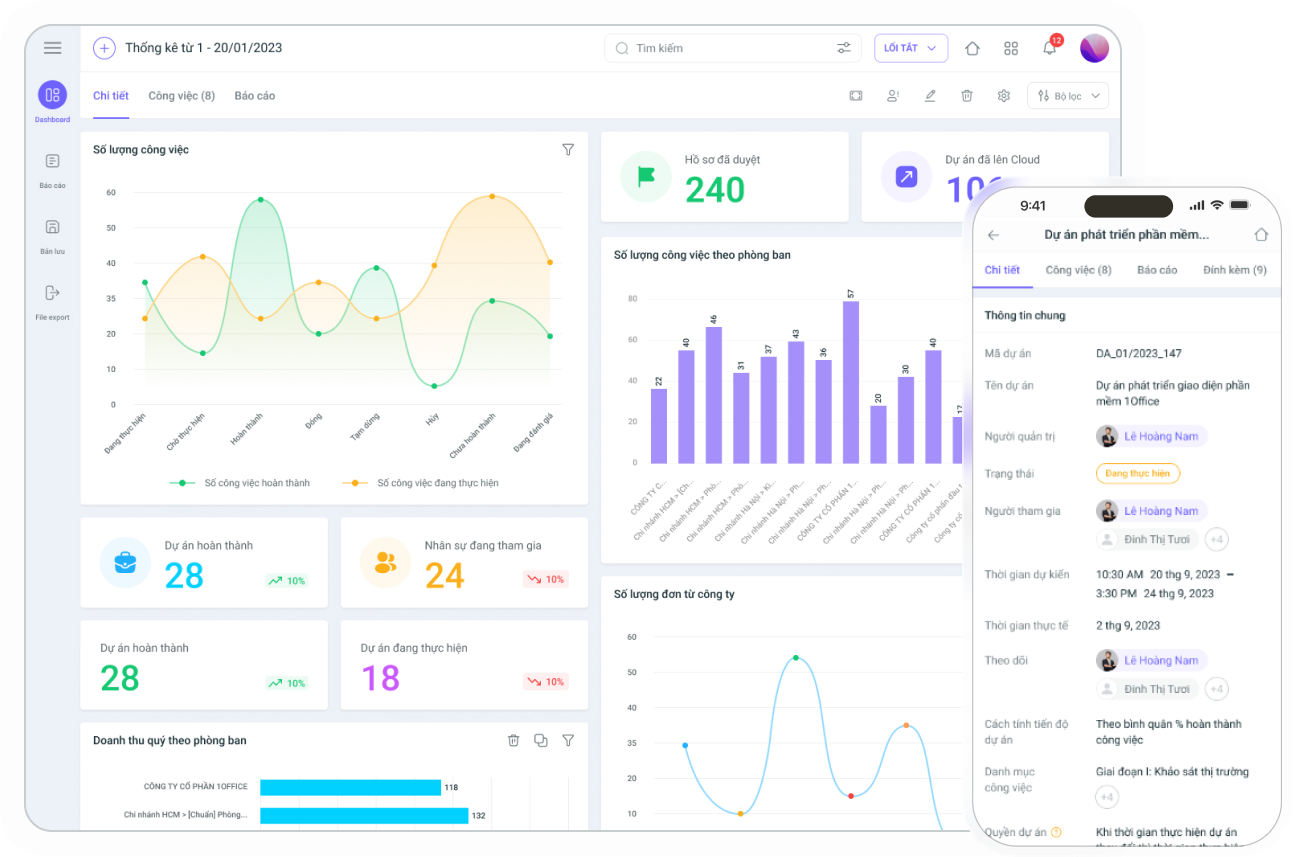
1Office is one of today’s leading professional and effective work management solutions for simplifying task delegation. With many outstanding features and advantages, the software helps managers centrally manage all business tasks on a single system:
- Quickly plan and organize project implementation
- Strict project permissions, ensuring safety and security
- Delegate tasks anytime, anywhere to individuals, departments, and teams
- Create financial estimates and material quotas. Alerts when estimates are exceeded
- Tasks will be synchronized with the personal schedules of project participants.
- Smart alerts, no more forgetting or missing tasks
- Documents are stored centrally, easy to retrieve, preventing loss, omissions, and discrepancies between versions.
- Real-time progress tracking, accurate visual reports
- Easily evaluate the work performance of participating individuals and departments.
Sign up for a free 1Office feature demo!
With 1Office, managing and delegating tasks becomes simpler, more flexible, and more effective than ever, helping managers and employees complete work efficiently together.
6. Conclusion
In the modern work environment, task delegation skills are one of the key factors that help improve work performance and efficiency. Applying an effective delegation process, adhering to principles for delegating to subordinates, and overcoming common obstacles will help managers achieve the best results.
With the support of smart work management tools like 1Office, managing and delegating tasks becomes simpler, more flexible, and more effective, helping organizations develop sustainably and succeed in today’s competitive environment. Experience the smart task delegation feature of 1Office for free now!
















