


 12/05/2026
  299 views
Planning and work organization skills are crucial skills that everyone should cultivate, especially those in management roles like CEOs, department heads, team leaders, etc. So, how can you build a standard and effective plan? What is the best process for implementing and organizing according to a plan? Let’s find out with 1Office in the article below.
Mục lục
What are planning and work organization skills?
To define this skill, we need to break it down into two parts: Planning and Work Organization.
Planning is the process of defining the goals an individual or organization needs to achieve within a specific timeframe. Based on this plan, strategies and methods are then developed to achieve those goals. Additionally, planning is also understood as pre-selecting a future course of action based on clearly defined goals and methods.
Work organization is the process of allocating resources, especially human resources, to complete a plan. Businesses that want to operate effectively and successfully need to organize their internal work well. Implementing plans in a standardized manner with synchronized coordination between departments helps managers easily evaluate activities.
Combining the two concepts above, planning and work organization skills are the ability to accurately define goals, devise strategies and implementation methods, and then delegate tasks, duties, and allocate resources (personnel, finances, etc.) reasonably to achieve the set goals with the most limited resources.
The importance of planning and work organization skills
Planning and work organization skills play an essential role in improving work efficiency, saving time and resources, and contributing to the overall success of not just individuals but the entire team.
Planning skills help managers define the specific goals they want to achieve and create a strategy to realize those goals:
- Defining goals: Goals are the focus of all activities in a plan. Defining goals helps provide overall direction and enhances focus for both managers and employees.
- Identifying necessary steps: Detailed planning helps managers break down goals into specific steps and set deadlines for achieving them. This clarifies the quantity and nature of the work, making it easier for managers to identify the activities that need to be performed.
- Shaping the strategy: Planning is not just about defining goals and steps; it also helps shape the strategy to achieve those goals. Specifically, managers identify the necessary methods and resources, assess risks and opportunities, and then select appropriate measures to ensure success.
For example, in a construction project, the manager needs to create a detailed plan to define the steps for design, material procurement, construction, inspection, and handover. This plan helps the manager define specific goals for each phase, and determine the necessary deadlines, resources, and budget.
Common types of work plans
There are many common types of work plans applied in management and work organization. Some of the most commonly used plans today are:
Project plan

A project plan is a detailed document that outlines the necessary steps to complete a specific project. When creating a project plan, managers need to focus on clarifying the following content:
- Project goals: A specific description of what the project aims to achieve.
- Scope of work: A list of all the tasks required to complete the project.
- Implementation schedule: Breaking down the work into phases and setting completion times for each phase.
- Budget: Estimating the costs for all project activities.
- Required resources: Identifying the resources needed to complete the project, including personnel, materials, equipment, etc.
- Potential risks: Identifying potential risks that could affect the project and proposing preventive measures.
Daily plan
A daily plan is a list of tasks to be completed on a specific day. This plan helps you focus on what’s most important and ensures you complete all necessary tasks, helping you use your time more effectively, reduce distractions, and increase productivity.
A daily plan should include:
- A list of tasks to be performed.
- Estimated completion time for each task.
- Priority level classification (depending on importance and deadline).
- A detailed implementation timeline.
Yearly strategic plan

A yearly strategic plan is a document that describes the organization’s goals and strategies for a one-year period. This plan helps the organization focus on what is most important and achieve its long-term goals. A yearly strategic plan helps the organization direct its activities, allocate resources, and make effective decisions.
A yearly strategic plan should include:
- Updated Vision and Mission according to the company’s direction
- The organization’s overall goals for the one-year period.
- Strategies to achieve the goals.
- A specific action plan for each strategy.
- A system for measuring effectiveness and evaluating the plan’s implementation progress.
Emergency plan
An emergency plan is a document that outlines the steps to be taken to ensure the safety of people and property in the event of an emergency, helping businesses be prepared to respond to dangerous situations, incidents, or crises. Businesses should have this plan ready and implement it by anticipating potential risks and emergency response solutions.
What it should include:
- Identification of potential emergency situations.
- Identification and prioritization of rapid response measures in an emergency.
- Division of tasks and specific assignments for each member.
- Ensuring internal communication and a clear understanding of emergency measures throughout the organization.
Optimal Planning and Work Organization Process
Step 1: Short-term and long-term planning by day/month/year
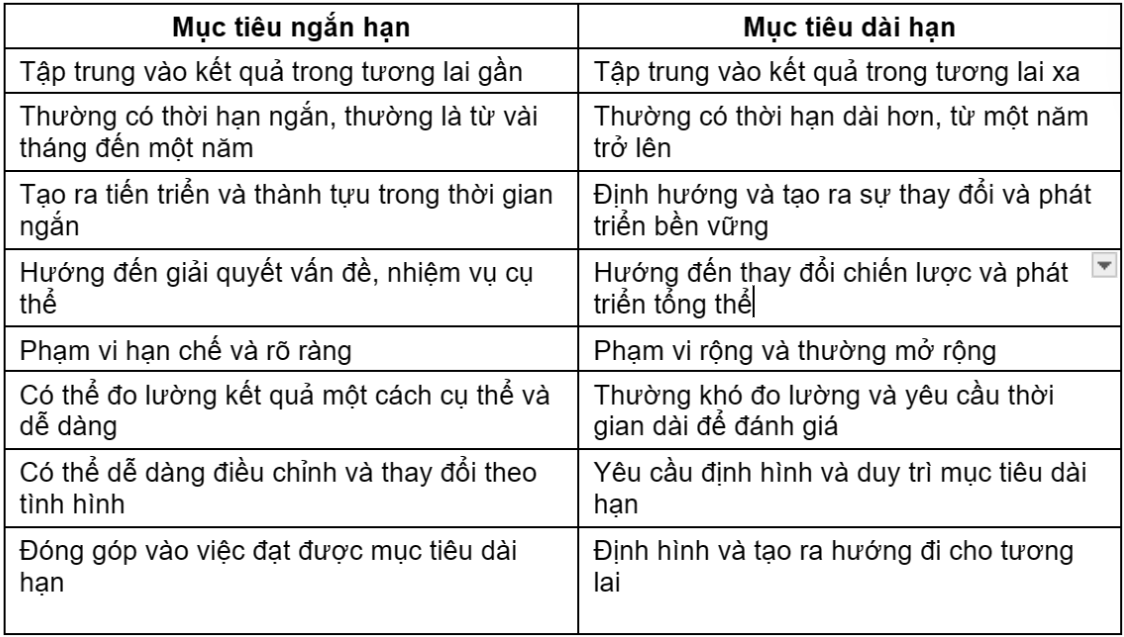
Short-term plans provide details for tasks over a specific period, usually lasting a week or a month. They help you focus on specific tasks and make progress in the near future.
Conversely, long-term plans are more detailed documents that shape the strategy and major goals a business wants to achieve in the future. Long-term plans help managers get a comprehensive overview and set a clear direction for their work.
Businesses should note that short-term and long-term goals have a mutually supportive relationship and influence each other. Short-term goals contribute to achieving long-term goals, while long-term goals shape the direction and create specific short-term objectives.
Step 2: Define goals for each phase
Instead of trying to achieve one large, complex goal, managers should break it down into smaller objectives so employees can focus on each specific phase. This helps them work more effectively and avoid excessive pressure and stress.
Breaking down goals also makes it easier for the business to monitor progress and plan timelines. Managers can prioritize important tasks in each phase, encouraging everyone to complete the most critical assignments first.
Additionally, it is crucial that goals are defined specifically and are measurable. Making goals specific is the best way to track progress and evaluate results effectively.
Step 3: Determine priority order and implementation time
After defining the goals, the manager reviews the priority level of each task, determining the order of execution based on its importance and impact on the overall plan. The manager sets specific deadlines for each task to ensure all members comply.
Step 4: Allocate resources
Once the necessary tasks are identified, the manager reviews and allocates the required resources. This activity includes checking the availability of human resources, materials, finances, and tools. The business needs to use these resources optimally to ensure work progress.
One of the most common methods is Resource Allocation according to the 5M principle (Manpower, Machinery, Materials, Methods, Money). This is a resource management method widely used in project management and production management. This method helps organizations identify and distribute resources rationally to achieve common goals.
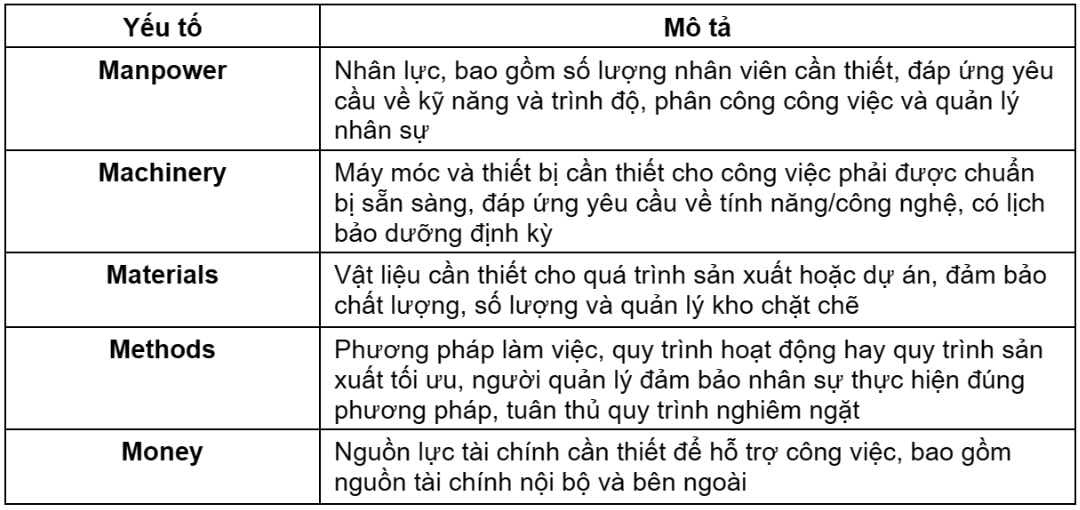
Allocating resources according to the 5M principle requires close coordination and careful management to ensure each element is fully met and on time. Additionally, this model helps businesses minimize waste and enhance efficiency, achieving better results in the work process.
Step 5: Assigning & delegating tasks
The task assignment and implementation process should follow the agreed-upon plan. Throughout this process, coordination and communication within the team are extremely important. This helps everyone understand coordination points and quickly resolve tasks involving multiple departments.
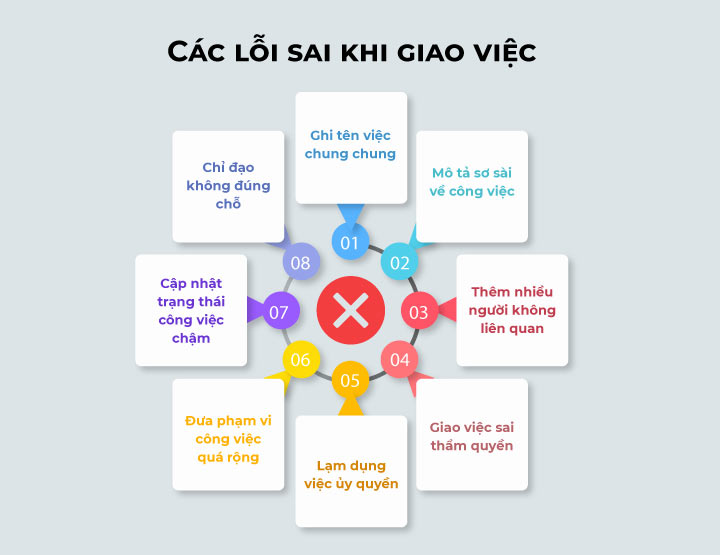
To achieve high efficiency, managers need to assign tasks based on the capabilities, strengths, and skills of each individual. This helps optimize strengths and create natural motivation for employees, helping them achieve the best results.
Additionally, the task delegation process needs to be clear and transparent. Every team member must clearly understand the work to be done, along with their rights and responsibilities. Information about the task assignment must be accompanied by objectives, and managers need to share it clearly and fully right when assigning the task to prevent employees from getting confused, forgetting, or missing tasks.
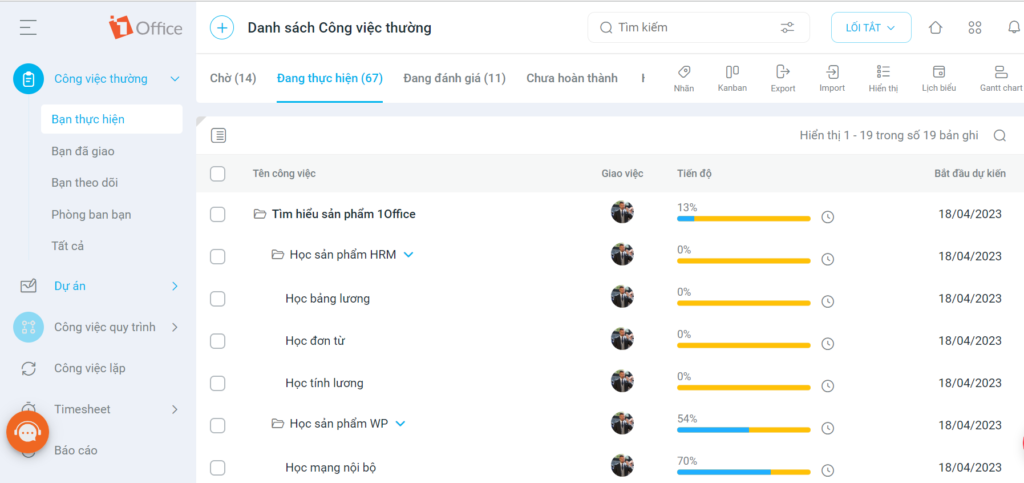
If you are looking for a more effective work management solution to replace the limitations of Excel, 1Office is an excellent choice. 1Office software provides a range of powerful, flexible, and easy-to-use features to help you effectively manage all aspects of your work. Specifically:
- Plan, track, and manage all types of work according to user needs
- Clear permission delegation, assign performers to ensure privacy for each project
- Organize priority workflows and synchronize schedules with tasks
- Automate all business processes, accelerating digital transformation
- Smart alert feature helps performers avoid forgetting or missing tasks
- Exchange, chat between individuals, departments, and internal communication
- Smart, multi-dimensional, customizable, and visual real-time reports
- Digitize and store all documents and records within the business
- Link with KPI, OKR modules to support managers in evaluation and decision-making
Register for a free 1Office Demo account!
Step 6: Control and monitor
Managers need to check and monitor progress to ensure all work is carried out according to the plan. Tracking progress and evaluating work against the original plan helps managers identify problems as soon as they arise and adjust the plan in a timely manner.
Step 7: Measure and evaluate
Performance should be measured and evaluated after a certain period to determine where individuals and the business stand, whether they are following the planned roadmap, and if any actual or potential problems exist.
Do not skip this important stage, as this step will help each individual frankly reflect on themselves and consider areas for improvement in the plan.
5 tips to develop effective planning and work organization skills
Apply the 5W-1H-2C-5M method
The 5W-1H-2C-5M method not only proves its effectiveness in enhancing planning and work organization skills, but it is also the most comprehensive method that helps many businesses build highly effective marketing plans and strategies.
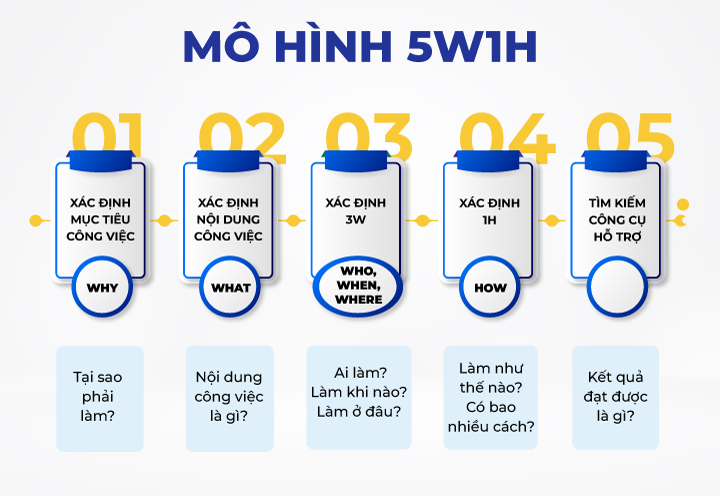
5W – 1H:
- What: Clearly identify the specific task or job to be performed, clearly define the content of the work to be done.
- Why: Determine the objective or reason why the work is being done. This helps provide direction for personnel, preventing them from getting discouraged and giving up.
- Who: Identify the person responsible and related parties. Managers should not assign tasks vaguely but must clearly define the roles and responsibilities of each individual or the entire team.
- When: Determine the start and end times. Setting time limits is the best method to improve delays.
- Where: Determine2C – Cost, Constraints:
- Cost: Determine the costs and resources needed to perform the work, including budget, equipment, and personnel.
- Constraints: Identify the constraints or limitations that may affect the work, such as time, resource, or specific technical requirements for the project.
Everyone should be aligned towards the goal
No matter how perfect or detailed a plan is, it becomes worthless and meaningless if members and departments are not looking in the same direction. The success of any plan depends on the collective effort and unwavering commitment of all participants. To achieve a common goal, a cohesive team is necessary, and fostering this unity is the role of effective communication. By mastering the art of open and clear communication, team members can bridge gaps, unify their efforts, and coordinate smoothly towards a shared vision.
Prioritize tasks in order of importance
After listing all work items, the next step is to classify the nature and priority level of each item. This classification plays a key role in “decoding” the plan, helping you grasp the essence and importance of each task.
Thanks to a clear execution order derived from task classification, each individual can easily focus on their assigned tasks without overlaps, which can cause confusion during implementation.
Always prepare contingency plans
Preparing contingency plans is a crucial step in project and work management, ensuring that the business can cope with risks and unexpected situations. This involves analyzing potential risks and then creating backup plans to minimize negative impacts. Contingency plans need to be carefully and clearly constructed, including alternative solutions and corrective measures for when incidents occur.
Additionally, preparing contingency plans helps the business maintain operational continuity and ensures that work progress is not interrupted. This requires flexibility and a quick response capability from the management team and employees. Regularly reviewing and updating contingency plans is also a critical factor, helping the business stay prepared for any situation that may arise.
Conclusion
The above is all the detailed information about effective planning and work organization skills. We hope this article has helped you better understand planning methods and how to organize work. If you need further consultation on software that supports daily work management and statistics, please contact the expert team at 1Office immediately.
















