12/05/2026
  268 views
The CEO is known as an extremely important leadership position in a business. They hold the highest executive authority, responsible for making important decisions and setting the strategic direction for the company’s development. In the following article, 1Office will answer all questions about what a CEO is, as well as the role, skills, and job description for this position.
Mục lục
1. What is a CEO?
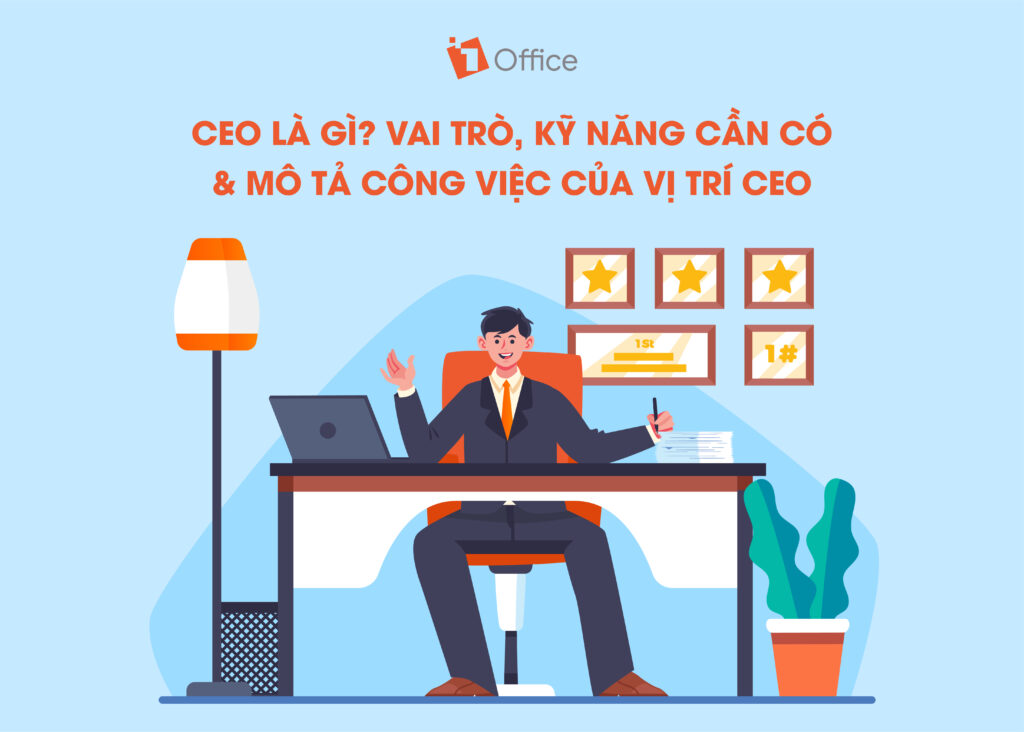
CEO stands for Chief Executive Officer. This is the highest leadership position in a business, responsible for managing and directing all of the company’s operations to achieve business goals.
They are the representative of the company, appointed by the Board of Directors – the body responsible for overseeing the business’s operations and ensuring the interests of shareholders. In Vietnam, terms like General Director, Company Director, and Director are all used to refer to this position.
2. The Role of a CEO in a Business
A CEO is considered the “captain” who steers the ship through thousands of storms in the marketplace, guiding it in the right direction to successfully reach its destination. This saying emphasizes the important role of a CEO in a business. Specifically, here are 5 roles of a CEO in a company’s development:
- Overall leadership and management of the business: The CEO is responsible for setting the strategic direction and development goals for the business. They also directly command and manage the company’s activities to achieve those goals.
- Making important decisions: The CEO holds the highest authority in the business and is responsible for making crucial decisions related to all operations, including decisions on business strategy, finance, marketing, human resources, etc.
- Representing the business: They are responsible for building the company’s image and maintaining good relationships with the public, media, customers, and key partners.
- Creating value and ensuring shareholder interests: As the head of the business, the CEO is accountable to the board of directors and shareholders. This aims to attract more investment capital and ensure sustainable development.
- Coordinating with the Board of Directors: The CEO needs to coordinate with the CHRO, CCO, COO, CFO, CPO, CMO, etc., to ensure the business operates effectively and achieves its set goals.
3. Job Description for the CEO Position
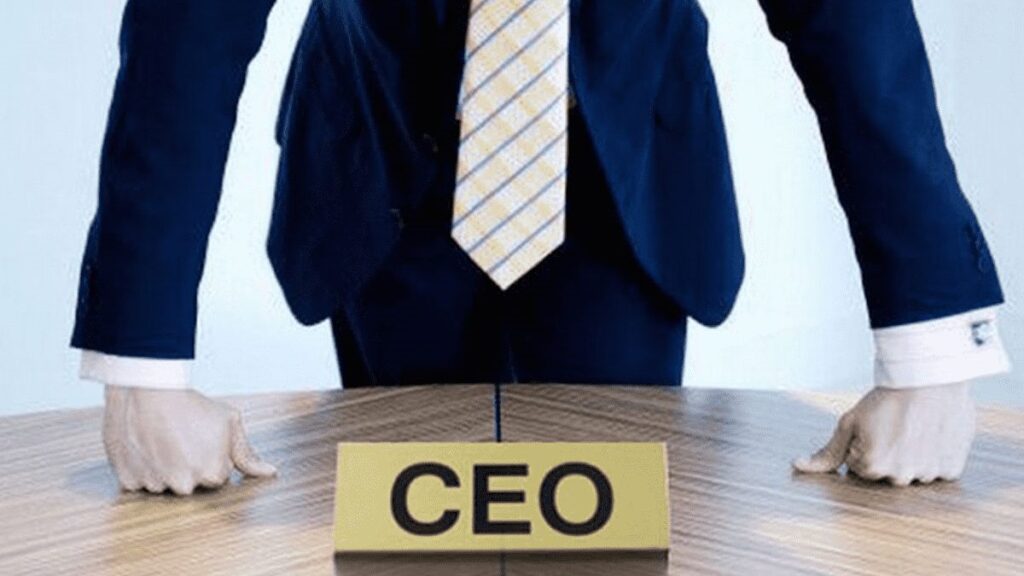
In practice, a CEO’s tasks can vary depending on the size and industry of the business. However, some common responsibilities that a CEO must undertake include:
- Setting the strategic development direction for the business, including vision, mission, goals, business strategy, etc.
- Developing long-term and short-term plans, with specific steps for each phase, to achieve the company’s overall goals.
- Developing products and services and proposing improvements to business operations to meet market demands.
- Being responsible for organizing the personnel structure and building a quality team of employees to meet the company’s development needs.
- Managing the company’s finances, including specific activities such as controlling, approving, measuring, and evaluating to ensure the business operates effectively.
- Managing risks within the business to ensure all operations run smoothly, safely, and avoid unnecessary losses.
- Being responsible for building and maintaining relationships with stakeholders, including customers, partners, investors, etc.
4. Necessary Skills for a CEO
4.1. Strategic Vision
Strategic vision is the ability to see the big picture and anticipate the future of the business. This is a crucial skill for a CEO, as they need to create long-term plans to guide the company’s sustainable development. A CEO with good strategic vision will be able to:
- Define the company’s goals, vision, and mission
- Analyze market and technology trends
- Build a business strategy that aligns with the company’s goals and current situation
4.2. Decision-Making Ability
Decision-making skill is the ability to make quick, accurate, and appropriate decisions based on the company’s actual situation. This is a vital skill for a CEO, as they frequently have to make important decisions that affect the company’s development. A CEO with good decision-making ability helps the business to:
- Gather and analyze information quickly and accurately
- Consider all factors related to the decision
- Choose the most suitable solution for the current situation
4.3. Leadership Skills

Leadership skill is the ability to inspire employees, helping every member of the organization reach their full potential. This is a crucial skill for a CEO because it helps build a work environment where every member is willing to give their all to achieve the company’s common goals.
4.4. Communication Skills
This is a fundamental skill that helps a CEO convey information clearly and effectively. In a corporate environment, this position frequently involves meetings with shareholders, customers, employees, partners, etc. Therefore, if communication skills are poor, disjointed, or the message is unclear, it will be very difficult to persuade and satisfy the audience.
This is especially true during contract signing events that directly impact the company’s business situation. If a leader lacks smart negotiation and communication skills, it is very difficult to bring maximum benefits to the company.
4.5. Problem-Solving Skills
A CEO needs problem-solving skills to promptly handle issues that arise during the company’s operations. A CEO with good problem-solving skills will be able to:
- Identify the problem accurately
- Analyze the cause of the problem
- Choose a suitable solution
- Implement the solution and evaluate its effectiveness
In summary, to solve problems effectively, a chief executive officer needs to view issues from various perspectives, handling and resolving them quickly. This avoids disrupting the company’s operational processes and helps it stay on track with its established strategic goals.
4.6. Time Management Skills
Time management is the ability to balance various tasks and achieve goals. This is a crucial skill for a CEO, as they manage multiple tasks simultaneously, from meetings, phone calls, and emails to making important decisions. Without good time management skills, a CEO can easily become overwhelmed, leading to stress and ineffective decision-making.

A CEO with good time management skills will help the business:
- Create a detailed work plan, including tasks to be performed, completion deadlines, etc. A work plan helps the CEO direct their work and avoid being overwhelmed.
- Organize and prioritize important tasks first, which helps the CEO focus on the most valuable activities while avoiding distractions.
- The ability to handle these issues effectively, avoiding impacts on work progress.
4.7. Relationship-Building Skills
As a Chief Executive Officer, in addition to the important skills mentioned above, you also need the ability to build good relationships with employees, customers, partners, and other stakeholders. This helps build trust, respect, and cooperation from everyone. Below are some ways for a CEO to build effective relationships:
- Actively listen to others’ opinions and avoid interrupting while they are speaking. This will help the CEO clearly understand the speaker’s perspective and build relationships based on understanding.
- Show respect in relationships; a CEO needs to know how to connect with people. This helps you build a broad network of relationships that support the business’s growth.
4.8. Emotional Control Skills
Emotional control is also a necessary skill. In the CEO position, one must face a lot of pressure and stress at work. Without good emotional control skills, a CEO can easily become agitated, leading to poor decisions or damaging their relationships.
Additionally, a successful CEO also needs some important personal qualities such as confidence, decisiveness, perseverance, and sharpness in making important decisions and taking responsibility for the outcomes.
5. Experience for the CEO Position

A basic requirement for a CEO is to have professional experience in the company’s field of operation. The experience for the CEO position is not measured by a specific number of years but by experience in implemented projects and the number of crises resolved.
At the same time, to become a CEO in a company, they need to have extensive knowledge of the market, their products/services, and a certain understanding of the market and competitors.
6. Frequently Asked Questions
6.1. Differentiating between CEO, CFO, COO, and CCO
CEO, CFO, COO, and CCO are important positions on a company’s board of directors. However, each position has different duties and responsibilities. Below is a comparison table of these 4 important positions:
| Criteria | CEO (Chief Executive Officer) | CFO (Chief Financial Officer) | COO (Chief Operating Officer) | CCO (Chief Customer Officer) |
| Definition | The Chief Executive Officer is the head of the business, responsible for all company operations. | The Chief Financial Officer is responsible for financial matters, including accounting, auditing, finance, investment, etc. | The Chief Operating Officer is responsible for the daily operations of the business, including production, operations, supply chain, etc. | The Chief Customer Officer is responsible for building customer relationships and managing sales activities within the company. |
| Responsibility | Manages all operations of the business | Ensures the business operates efficiently from a financial perspective | Ensures the business operates smoothly and efficiently | Ensures customer satisfaction with products/services |
| Reporting Line | Reports directly to the Board of Directors | Reports directly to the CEO | Reports directly to the CEO | Reports directly to the CEO |
| Required Skills | Strategic vision, leadership, communication, problem-solving | Analytical, financial, and management skills | Organizational, management, and operational skills | Communication and customer service skills |
Chart distinguishing the differences between CEO, CFO, COO, and CCO
6.2. Differentiating between CEO and Chairman
| Criteria | CEO | Chairman |
| Position | Chief Executive Officer | Chairman |
| Function | Manages all operations of the business | Represents the business, responsible to the shareholders |
| Relationship | Reports directly to the Board of Directors | Reports directly to the Board of Directors |
| Required Skills | Strategic vision, leadership, communication, problem-solving, time management, relationship building | Strategic vision, leadership, communication, problem-solving, relationship building |
| Responsibilities | Leads the business, makes decisions, builds strategies, develops products/services, manages personnel, finances, etc. | Represents the business, protects shareholder interests, formulates strategies, oversees business operations, etc. |
| Authority | Has the highest authority in the business | Has the second-highest authority in the business |
| Concurrent Positions | May also serve as CFO, COO | Usually does not hold other positions concurrently |
Table distinguishing the differences between a CEO and a Chairman
Note: In some cases, the CEO may also hold the position of Chairman. This often occurs in small businesses or family-owned enterprises.
6.3. What should a CEO do in the context of digital transformation?

Digital transformation is an inevitable trend of the era, strongly impacting all aspects of socio-economic life, including business operations. To maintain their position and achieve sustainable development in the context of digital transformation, CEOs need to implement the following solutions:
- Build a strategic vision: The CEO needs to have a strategic vision, guiding the company to apply digital technology effectively, meet market demands, and compete with rivals.
- Focus on technology investment: Applying software that supports businesses in the digital transformation process helps increase productivity, efficiency, and reduce costs.
- Enhance the capabilities of the workforce: The CEO needs to develop training and development plans for employees so they can meet the job requirements of the digital age.
- Create a suitable corporate culture: The CEO needs to build a corporate culture that aligns with the context of digital transformation, encouraging creativity, innovation, and a learning spirit among employees.
6.4. What should a CEO do to sustain the business during an economic recession?

According to statistics from the VCCI, in the second quarter of 2023, the business situation for Vietnamese enterprises continued to face many difficulties. Specifically, up to 60% of businesses reported a decrease in revenue, 45% reported losses, and 35% had to reduce their workforce.
Therefore, this is a difficult time for all businesses. To sustain the company during this period, CEOs need to implement the following solutions:
- Strengthen financial management: The CEO needs to tightly control cash flow, cut unnecessary costs, and seek new sources of financing to ensure the company’s operations.
- Focus on customers: The CEO needs to focus on customers, listen to their needs, and improve service quality to retain them.
- Enhance human resource management: The CEO needs to maintain employee morale and motivation, creating a positive work environment for employees to reach their full potential.
- Adjust the business plan: The CEO needs to adjust the business plan to suit the current situation, reduce unnecessary goals, and focus on important ones.
- Be prepared for worst-case scenarios: The CEO needs to be prepared for the worst-case scenarios, such as bankruptcy, dissolution, etc., to minimize damages.
———————————-
Through this article, 1Office hopes you have a better understanding of what a CEO is, as well as the duties, skills, and role of this position in a company’s development. Especially in the context of a volatile global economy, CEOs are required to have a strategic vision, rapid adaptability, and the ability to make accurate decisions to lead their businesses through difficulties and toward sustainable growth.