12/05/2026
  403 views
The constantly changing business environment requires organizations to always have response strategies to survive. Therefore, change management is a crucial part of an organization’s management and operations, helping to ensure the business’s adaptation and sustainable development in a constantly fluctuating environment. So, how many steps does the change management process involve? What models should be applied to ensure a successful organizational “transformation”? Let’s explore change management strategies in business with 1Office in the following article.
Mục lục
1. Change Management and Its Role in the Organization
Change Management is the process of managing and directing changes within an organization to ensure that these changes are implemented effectively, safely, and with enough momentum to achieve the organization’s goals.
This is a critical process for any organization that needs to implement changes to enhance its ability to adapt to external environmental fluctuations while minimizing negative impacts on its people and operational structure.
2. Core Principles of Change Management in Business
- Clear Goal Orientation
The most important thing in change management is to define clear and specific business goals for the change process. Goals must be established based on the organization’s needs and purposes and must be integrated with the overall strategy. Change management must ensure that the change process supports and promotes the realization of the company’s overall strategic goals.
- Create a Foundation for Change
Change can only be successful if it is built on a solid foundation. This foundation ensures that the organization has prepared sufficient knowledge, business management skills, and resources to meet the new requirements.
- Promote Employee Participation
For an organization to “transform” successfully, employees must be involved and actively contribute. Change management needs to ensure that employees are fully informed and encouraged to participate actively in the change process.
| >>Read more: Developing an International Human Resource Management Model – Management Content and Key Considerations |
3. When do businesses need change management?
Businesses need change management in the following cases:
- Changes in business strategy
When a business decides to change its business strategy, launch new products, or expand its market, change management is necessary to ensure that all departments understand and correctly implement the new strategy.
- Implementing improvements
When a business wants to increase productivity, improve product quality, or enhance production processes, change management measures must be applied to ensure that employees are trained and adapt to the changes effectively.
- Mergers and acquisitions
When a business undergoes mergers and acquisitions, change management is required to ensure integration and optimize efficiency after the change.
- Process changes
When a business decides to change its work processes or transition to new technology, change management must be applied to ensure that employees understand and correctly implement the new processes.
- Facing competition
When a business faces fierce competition, change management is needed to adapt and optimize operational efficiency, thereby creating a competitive advantage and protecting its market position.
>> See more: 6 steps to build a risk management process for businesses
4. The 8-step change management process
Step 1: Assess and analyze
This step involves assessing the organization’s current situation, analyzing the external environment, and setting strategic goals for the changes that need to be implemented within the organization.
Step 2: Plan
After assessing and analyzing, the organization needs to create a detailed plan to implement the changes. This plan includes goals, budget, timeline, necessary activities, and required resources.
Step 3: Communicate the change
The management board needs to inform and explain to all stakeholders about the upcoming changes in the business, clarifying the purpose of the changes and their benefits for the organization’s development.
Step 4: Train and develop personnel
Conduct training and development for employees to ensure they are equipped with the necessary skills and competencies to adapt to the changes within the organization.
Step 5: Implement the change
Proceed with implementing the planned changes, including carrying out improvements, adopting new technology, optimizing work processes, restructuring the organization, etc.
Step 6: Monitor and evaluate
The organization needs to evaluate the effectiveness of the implemented changes, identify and resolve any issues that arise during the implementation process, and make necessary adjustments.
Step 7: Maintain support
Create a comfortable and open environment to support employees during their adaptation to the changes, facilitate discussions and idea sharing, and establish support mechanisms throughout the implementation process.
Step 8: Implement improvements
The organization needs to evaluate and enhance the change management process to improve activities and achieve better results in future changes.
| Read more: What is PDCA? 4 Steps to Effectively Apply the PDCA Process in Business |
5. Effective Change Management Models in Business
5.1. Kurt Lewin’s Change Management Model
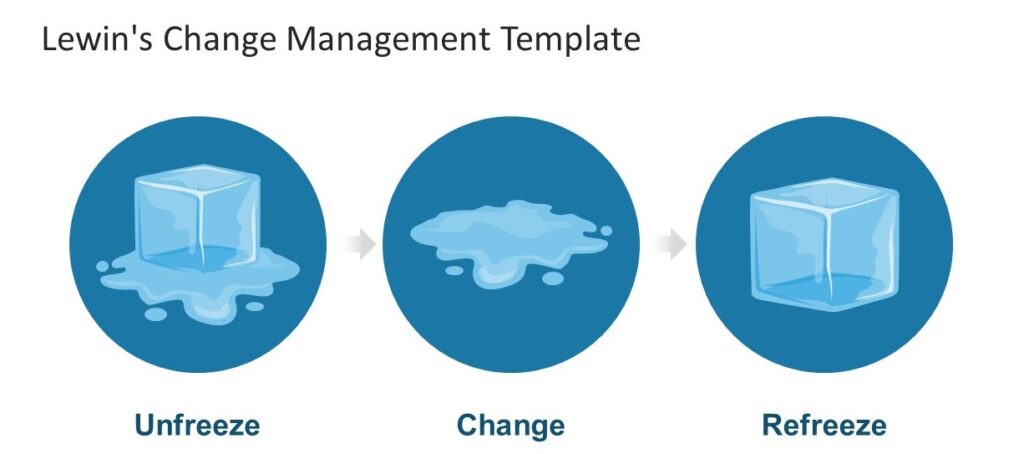
Kurt Lewin’s change management model is considered one of the simplest and most effective models for managing change in an organization. This model consists of 3 main stages:
- “Unfreeze” Stage: This stage involves preparing for the change process by “unfreezing” old processes, values, or organizational structures that are no longer suitable for current needs and circumstances. During this stage, managers need to identify and evaluate the elements and aspects within the organization that require change, provide reasons and explanations for the necessity of the change, and then proceed with preparations for the change process.
- “Change” Stage: This stage involves establishing new processes, structures, and values to replace the elements that were “unfrozen” in the Unfreeze stage. This stage requires managers to have a detailed plan for the change, inform employees about these changes, and guide them on how to adapt.
- “Refreeze” Stage: This stage involves “refreezing” the changes that have been implemented to stabilize the organization and return it to a state of equilibrium. During this stage, managers need to re-evaluate the results achieved from the change process and make necessary adjustments to ensure that the changes have a positive impact and are fully integrated into daily operations and work processes.
5.2. Prosci’s ADKAR Model
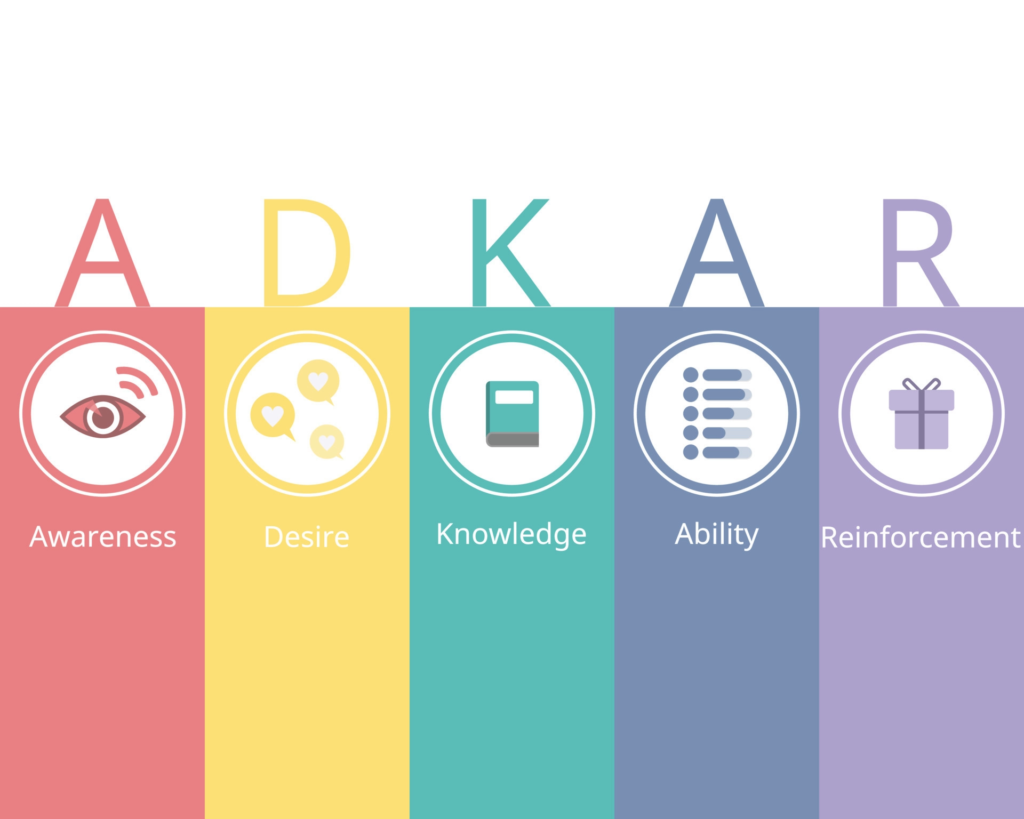
This model focuses on providing employees with the necessary elements to adapt to change. These elements include:
- Awareness: Awareness of the need for change and its impacts. In this stage, managers must inform employees about the necessity of the change process.
- Desire: The desire to participate in and support the change. Managers need to ensure that employees genuinely want to be part of the change process and clearly understand the benefits it can bring them.
- Knowledge: The knowledge required to implement the change. Employees need to be provided with sufficient knowledge about the change process, including the necessary processes, technologies, and skills to adapt.
- Ability: The ability to implement the change. To ensure this, employees must be provided with the necessary resources and support to adapt to the change and perform their new tasks effectively.
- Reinforcement: Reinforcing and sustaining the change. Managers need to ensure that employees continue to implement the change effectively and receive the necessary support to maintain it in the future.
5.3. Bridges’ Transition Model
The Bridges’ Transition Model, developed by William Bridges, focuses on identifying the stages of transition employees go through when facing change. The Bridges model provides organizational managers with a comprehensive picture of the change, recognizing the difficulties and challenges employees face, and thereby identifying the necessary activities to support them in each stage of the transition process.
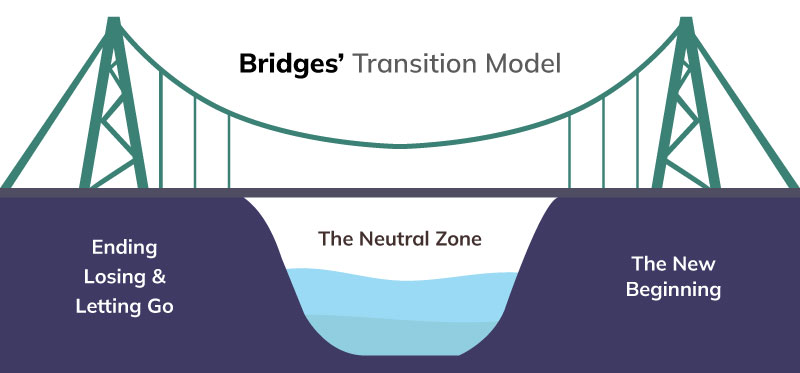
According to the Bridges model, change consists of three main stages:
- Endings: This stage represents the end of what was done in the past. Employees need to understand that what they did in the past will no longer be suitable for the future, and they must accept closing the final chapters and be ready to move on to the next stage.
- The Neutral Zone: This stage represents the transition and acceptance of change. Employees need to adapt to the new environment and the changes that are occurring. This is the most difficult stage and can cause stress and instability for employees.
- New Beginnings: In this stage, employees have accepted and become accustomed to the new environment. This stage also marks the success of the change process.
5.4. The McKinsey 7S Model by McKinsey & Company
The McKinsey 7S model, developed in the 1980s by the consulting firm McKinsey & Company, is one of the most popular models in the fields of strategic management and organizational change management.
The McKinsey 7S model helps organizations evaluate and optimize key factors to achieve their goals. It also helps managers understand the interaction between different elements within the organization and how to change and balance these elements to achieve the best results.
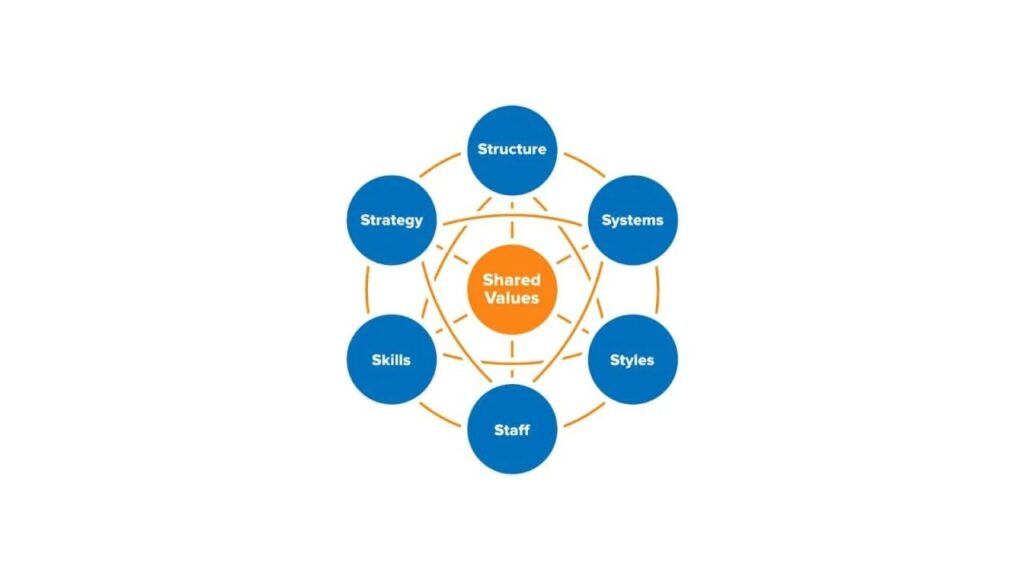
The McKinsey 7S model includes 7 core elements of an organization, divided into 2 groups:
“Hard” Elements (Hard S):
- Strategy: The organization’s strategic plan to achieve its goals and grow in the future.
- Structure: How the organization is designed to divide responsibilities and authority, including departments, divisions, and job titles.
“Soft” Elements (Soft S):
- Systems: The organization’s processes and regulations, including business processes, quality management, human resource management, and financial management.
- Skills: The abilities of employees and the organization to perform necessary tasks, including personal skills, management skills, and professional skills.
- Staff: The members of the organization, including current employees and future hires.
- Style: The management and leadership style of the organization, including management methods, problem-solving approaches, and decision-making processes.
- Shared Values: The core values of the organization, including the goals and principles it pursues.
>> Read now: 3 Modern 4.0 Management Models and Key Management Trends Leaders Need to Know
6. Effective Change Management Methods
6.1. People-Centric Change Management
One of the most crucial factors in change management is focusing on people, because the success of the change process heavily depends on ensuring employee satisfaction and buy-in. To focus on people in change management, the following activities can be implemented:
- Develop a clear communication plan: Ensure that information is communicated fully, clearly, and frequently so that everyone can understand and support the change process.
- Hold regular meetings and dialogues: These meetings provide an opportunity for employees to exchange ideas, ask questions, and have their concerns about the change process addressed.
- Provide training and support for employees: Training programs can include courses, coaching, meetings, and individual support programs.
6.2. Measure and Track the Change Process
Managers need to build a suitable framework to assess the feasibility and measure the effectiveness of the change process. This allows the team to evaluate the progress of the change, and helps reorient strategies and plans if necessary. This will help ensure that the change process is implemented smoothly and effectively, while minimizing negative impacts on business operations.
6.3. Applying Technology to Organizational Change Management
Applying technology is an inevitable trend in organizational change management aimed at optimizing operational processes and connecting departments, thereby creating a solid foundation for change. Among these, 1Office Software is a technology solution that provides the most in-depth toolkit to help managers confidently manage their businesses effectively:
- Provides features to manage project progress, assign tasks, communicate, and synchronize information among team members, helping to implement change management accurately and synchronously.
- Allows managers to manage, measure, and track the change process, thereby making timely decisions and adjustments to achieve set goals.
- Facilitates easy and convenient sharing and storage of information, documents, and data related to the change process.
Get a free consultation & software demo
Through the article above, 1Office has provided readers with the most comprehensive perspective on change management in business, while also offering an effective 4.0 business management solution. For a free consultation and to experience a trial of the leading business management software today, please contact us with the following information:
- Hotline: 083 483 8888
- Fanpage: https://www.facebook.com/1officevn/
- Youtube: https://www.youtube.com/channel/UCeTIRNqxaTwk0_kcTw6SxmA