


 12/05/2026
  368 views
In business administration, work performance management is a crucial stepping stone in realizing the strategic goals of an organization, and it is also a core function in human resource management. Therefore, how to optimize work performance management to boost efficiency and enhance work quality for personnel is always a top priority. In the following article, 1Office will introduce you to the most professional work performance management process for businesses.
Mục lục
1. General Overview of Work Performance Management
What is Work Performance Management?
Work performance is the process where personnel carry out assigned tasks in a specific, scientific sequence to achieve set goals.
Accordingly, work performance management is the process of establishing and reinforcing work goals for employees, while also monitoring and evaluating work efficiency and providing timely feedback and support to improve the work quality and productivity of the personnel.

The Role of Work Performance Management
For the organization
- Helps ensure the work performance of individuals, teams, and the entire organization
- Increases the effectiveness of human resource management, contributing to building a quality workforce
- Provides a basis for accurate and transparent employee evaluations, while also supporting personnel decisions
- A foundation for improving the organization’s operational apparatus, helping managers see the entire work performance process and measure the effectiveness of management
For personnel
- Clearly understand their roles, responsibilities, and the organization’s expectations for their work performance.
- Have goals to strive for, motivation, and commitment to their work.
- Receive support and guidance during the process, helping to improve results and work efficiency.
See also: The latest standard work assignment template for businesses
2. The A-Z Work Performance Management Process for Businesses
Depending on their specific characteristics, conditions, and purposes, each business will establish its own work performance management processes to apply to its operations. However, a professional process system will include 3 stages, corresponding to the following 3 main contents:
Stage 1: Setting Work Goals
The work performance management process is carried out in each business or work cycle. At the beginning of each cycle, the manager is responsible for orienting and guiding personnel in setting work goals and assigning specific tasks to each individual. Goal setting must be done at 3 levels: organization – department – individual. This process will include the following steps:
Step 1. Identify the baseline information for goal setting
The work goals that are set must be based on the actual operational situation of the department and the professional capacity of the personnel, and must also be closely linked to the strategic vision and core values of the entire company. To ensure this, managers will need to use the following documents and forms as baseline information for the goal-setting process:
- The business’s development strategy and production/business plan for the period
- Production and business results from the previous period
- Action plan of the department/unit
- System of job descriptions by title
- Work performance standards document
- Forecast of work performance conditions
Step 2. Choose a goal-setting method
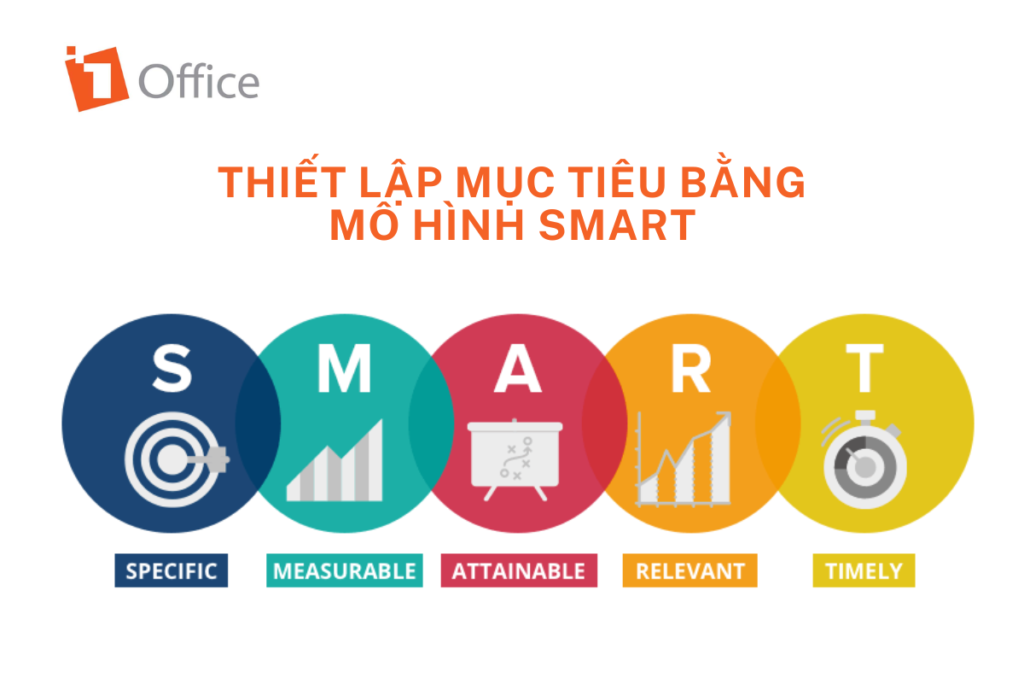
The goal-setting method is the guiding principle that ensures work stays on the right track and aligns with the overall goals of the entire organization. A popular goal management principle widely applied in most businesses today is the SMART model. Accordingly, a “smart” goal needs to meet the following 5 criteria:
- S – Specific: The goal must clarify the desired results of the work, not be expressed in vague, general terms.
- M – Measurable: The goal must be quantifiable and clearly show the specific value that the work results need to achieve.
- A – Achievable: The goal must be appropriate for the performer’s abilities and within the scope of available resources.
- R – Relevant: The goal must be relevant to the needs and operational situation of the individual employee as well as the organization.
- T – Time-bound: The goal must be completed within a specific time frame, with a start and end date.
Step 3. Guide employees in setting goals
Guiding goal setting involves managers helping employees self-assess their capabilities, including strengths, weaknesses, obstacles, and challenges in their work process. This provides direction for employees to set and register their own work goals.
Step 4. Unify goals and assign tasks
After setting and compiling work goals from all levels (organization – department – individual), managers will make adjustments and provide feedback to employees to ensure alignment and consistency between goals.
Then, the goals will be allocated to each individual responsible for the work, and responsibilities will be communicated to relevant parties (supervisors, supporters, etc.). During this process, it is essential to ensure that employees clearly understand their roles and the work standards they need to meet.
See more: Review of 8+ employee work schedule management apps to double productivity
Stage 2: Manage work performance
This is the second stage and also the central phase of the performance management process. This stage requires the close involvement of the direct supervisory management team, including department heads and deputies. To effectively manage the progress of employee work performance, managers need to grasp the following key points:
Step 5. Analyze the employee’s work process
Analyzing the employee’s work process helps managers understand the content, procedures, and conditions for task execution. This forms the basis for managers to provide timely support to resolve difficulties and obstacles for employees during their work, while also improving work efficiency. During the analysis, it is necessary to clarify the factors affecting employee performance, including:
From the employee’s side:
- Work performance capability
- Work motivation
From the organization’s side:
- Technical facilities and work organization conditions
- Leadership culture in the organization, management style
- HR policy system
Step 6. HR management methods in work performance
| Method | Description | Advantages | Disadvantages |
| Management by Command | A management method based on power relations, where the manager assigns targets as commands, and employees are responsible for executing those commands. | – Helps make work implementation faster and more consistent
– Clearly defines the manager’s role |
– Is authoritarian, creating a passive stance for employees
– Limits two-way feedback – Does not encourage or motivate employees |
| Administrative Management | A management method based on the principle of institutionalization. Tasks are implemented through a system of documents that fully detail the implementation process, responsibilities, etc. | – Ability to store and specify work information
– Highly centralized – Controls the implementation process |
– Limits interaction between superiors and subordinates
– Rigid and inflexible – Restricts employee creativity |
| Incentive-Based Management | A management method based on the relationship between behavior and the benefits employees expect. | – Creates motivation and encourages effort from employees
– Employees will proactively perform tasks to achieve the benefits they desire |
– Employees will tend to only perform tasks that benefit them personally, with little regard for common goals
– The success of the method heavily depends on the manager’s ability to analyze needs and predict employee behavior |
| Management by Objectives | Employees establish objectives in consultation with their manager, then use these objectives as a basis for evaluating their work performance. | – Emphasizes employee participation in the performance management process
– Increases motivation and commitment to work |
– Pays little attention to the work implementation process and managerial support |
| Competency-Based Management | The process of assigning, monitoring, and evaluating work performance is closely linked to employee competencies. | Focuses on competency – human resources – in performance management, using competency as the core foundation for development | Difficulty in detailing and quantifying different types of personnel competencies |
Step 7. Monitor work performance
The methods used to monitor and reflect on employee work performance include:
- Record-keeping method
With this method, during the work process, the supervisor will record the employee’s positive (good results) and negative (mistakes, issues) events to serve as a basis for evaluation. Normal work results will be disregarded.
The critical incident log sheet will be presented in the following format:
|
Record of Important Events |
|||
| Department | … | Period | … |
| Manager | … | Title | … |
| Employee | … | Job Position | … |
| Positive Events | Negative Events | ||
| Time | Content | Time | Content |
| 1/3 | Promptly handled equipment incidents | 15/3 | Violated work regulations |
- Behavioral Observation Scale (BOS) Method
This method involves monitoring job performance by using a scale that records the frequency of specific behaviors exhibited during work, which then serves as the basis for evaluation. The behavioral observation scale can be presented in the following format:
| Sales Productivity | Never | Rarely | Sometimes | Frequently | Always |
| Adhere to customer requirements | 1 | 2 | 3 | 4 | 5 |
| Review and prepare for customer concerns in advance | 1 | 2 | 3 | 4 | 5 |
| … |
- Checklist Method
A list of actions required to complete a task is used for monitoring. When an employee completes an action on the list, the manager records the result by ticking the checkbox to mark the item as completed. The checklist template is presented as follows:
| Sales Productivity | Execution |
| Closely follow customer requirements | x |
| Review and prepare for issues customers are concerned about in advance | x |
| … |
Phase 3: Performance Evaluation
This is the final phase, demonstrating the effectiveness of the performance management process. In this phase, managers need to perform the following activities:
Step 8. Prepare for the performance evaluation
In the preparation stage, managers need to:
- Compile all input information for the evaluation, including notes on work progress from phase 2, the work objectives set in phase 1, and other relevant documents.
- Select and apply a performance evaluation method. It is important to note that the chosen evaluation method must be suitable for the evaluation’s purpose and consistent with the performance management methods used previously.
Step 9. Implement the evaluation
- Announce the implementation of the performance evaluation process to all personnel and clearly assign roles and responsibilities to the departments involved in the evaluation.
- Measure, analyze, and compare employees’ actual work results with the established standards and objectives. Based on these results, assign scores, rankings, or comments on the quality of each individual’s performance.
Step 10. Provide post-evaluation feedback
After the evaluation results are available, the manager needs to discuss them with the employee to provide feedback on their performance during the period. The manager should point out both the employee’s strengths and weaknesses in their work process, and also propose solutions to improve and enhance work quality in the next period.
3. Enhance Performance Management Efficiency with 1Office Software
The 4.0 revolution has created a leap in efficiency for performance management with the advent of supporting software and applications. Among them, 1Office is a comprehensive work management software trusted by over 5,000 businesses in the market today. Developed based on consistent scientific thinking and the crystallization of famous management models, 1Office helps businesses solve the performance management problem in the most optimal and systematic way.
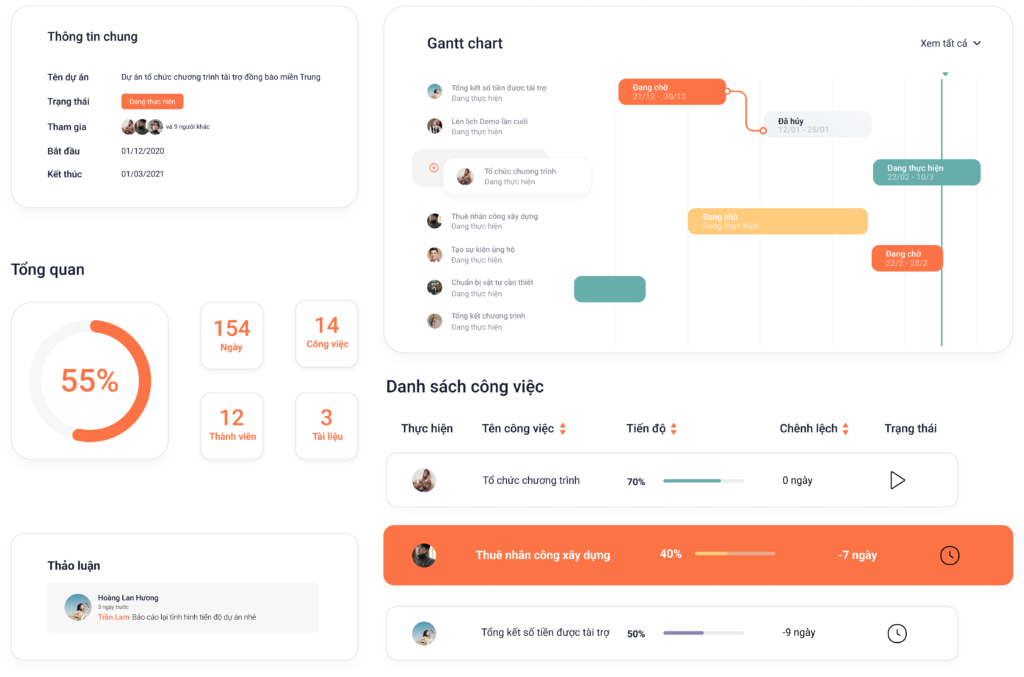
Key Features
- Manage departmental and individual work objectives according to standard KPI/OKRs frameworks
- Track work progress in real-time with a diverse and intuitive reporting system
- Set up scientific performance evaluation criteria, allowing users to customize multiple parallel criteria
- The personnel evaluation module is closely linked to salary, bonus policies, and career paths, helping to motivate and enhance employee commitment to their work
In the article above, 1Office has provided readers with useful information about the most optimal performance management process, while also offering a work management solution that helps businesses optimize operations and increase productivity. 1Office is the most superior business management solution on the market today. For a consultation and software trial, please contact us using the information below:
- Hotline: 083 483 8888
- Fanpage 1Office: https://www.facebook.com/1officevn
- Youtube Channel: https://www.youtube.com/c/1OfficeNềntảngquảnlýtổngthểDoanhNghiệp
















