13/05/2026
  278 views

After the COVID-19 pandemic, the world is facing a crisis and economic recession. All businesses are suddenly at risk of bankruptcy and dissolution, and the design industry is one of the sectors that has suffered heavily from the pandemic’s impact. At that moment, questions were raised everywhere about whether there was any solution to “save” the situation and help businesses survive. The clearest answer is a comprehensive “digital transformation” of the design industry.
Mục lục
Problems for the design industry after COVID-19
Problems with partners and customer sources in the design industry
Since it is not an essential industry for society, this is one of the sectors that suffered heavy losses post-COVID-19 as the number of potential customers decreased, business partners went bankrupt, and all projects and jobs were canceled or suspended.

The design industry suffered heavy losses after COVID-19
For the units that “survived” after 3 months of “hibernation” due to the pandemic, they have to continuously face fierce competition in the market, struggling to find ways to turn the tables and make a successful comeback.
Problems with human resource management in the design industry
With the motto “he who changes first, wins,” all businesses began to increase their work speed and employee efficiency, while also prioritizing cutting unnecessary costs and limiting unwarranted expenses for the company.

Businesses are forced to cut costs after COVID-19
However, cutting costs in this area does not change the fact that businesses still face difficulties in controlling the quantity and quality of personnel in the current era of “racing” to recover their “strength.”
Problems with work performance in the design industry
After COVID, managers who stick to manual methods for managing projects, tracking progress, and working through tools like the Microsoft Office suite and Google Drive will waste a lot of time.
 Free digitalization apps waste employees’ time
The security of these toolsets is not high, which can lead to the risk of information leaks, creating vulnerabilities and major disadvantages for the business.
Additionally, departments still face many difficulties in coordinating the application of workflows in Google Drive or Office, resulting in reduced work quality and low output efficiency.
Reports and summaries of operational results take a significant amount of time to compile, while a large backlog of work remains with no department to handle it. On the other hand, departments and units within the company do not coordinate smoothly, causing projects to frequently miss their deadlines.
The process of submitting and approving documents is not yet optimized because all requests must be made on paper. However, since senior managers are often on business trips, conducting surveys, or working with domestic and international partners, they cannot always be physically present at the office or company to handle these tasks, which is another cause of work stagnation.
Read more: Personal Task Management Tools – The Cure for Employee “Inertia”
Problems with costs in the design industry
The cost of printing documents for managing personnel and tasks is also a headache for managers.
There are many types of documents that must be printed on different kinds of paper, leading to completely different costs. Examples include leave request forms, announcements, personnel records, or drawings, drafts, and even designs that are revised multiple times at the client’s request.
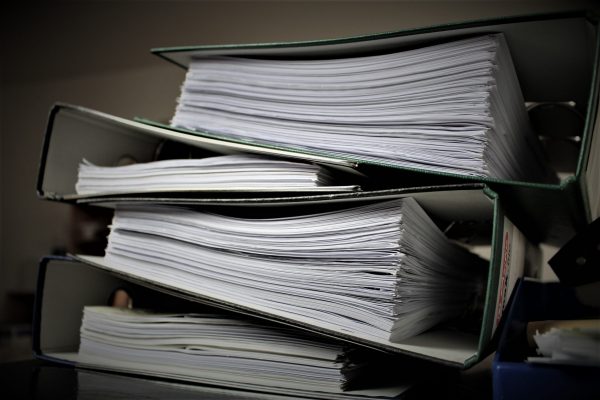
Paperwork is one of the costly items in the design industry
And there are “hidden” costs from missed deadlines, overlooked customer information, or other errors that occur with manual management by personnel and toolsets lacking reminder and scheduling features.
Digital Transformation – An Urgent Step Forward for the Design Industry Post-COVID-19
Applying digital transformation after the COVID pandemic is also the most effective way to pivot for industries in general and the design industry in particular.
Problems with poor management will be “eliminated” as the process of monitoring the work of employees and departments is carried out visually, completely, and quickly with a Kanban board, list-making tools, search filters, and instant interaction. And all these superior features are available on the 1Office software.
This creates close and seamless coordination between different departments through designing and optimizing workflows.
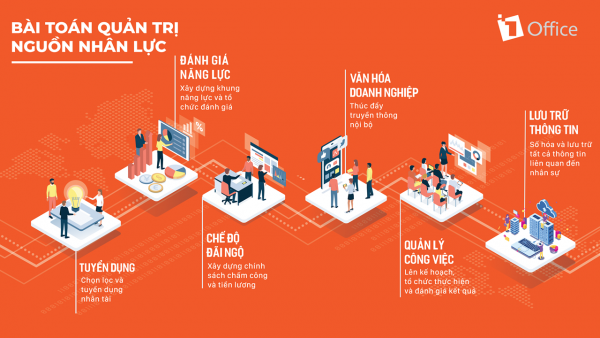
Digital transformation in the design industry is extremely important and urgent
In particular, the issue of tracking timekeeping and calculating salaries for both office staff and on-site construction survey teams is no longer an obstacle, as the software has integrated time clocks and a very convenient GPS timekeeping feature.
Above all, 1Office also allows managers to clearly capture information, the status of work for each customer, and all information from when they were just potential customers, to consulting, design, construction, handover, and customer care after the project is completed.
Learn more about other great features of 1Office here: https://1office.vn/