09/05/2026
  672 views
Bạn đang cần tạm ứng lương nhưng chưa biết cách viết đơn sao cho đúng chuẩn và dễ được duyệt? Trong bài viết này, 1Office sẽ tổng hợp 3+ Mẫu Đơn Xin Tạm Ứng Lương kèm file tải miễn phí, cùng hướng dẫn điền thông tin và nộp đơn đúng quy trình, giúp bạn thực hiện nhanh chóng, thuận tiện.
Mục lục
- 1. Tạm ứng lương là gì?
- 2. Khi nào nên xin tạm ứng lương? Lời khuyên từ chuyên gia
- 3. Tổng hợp các mẫu đơn xin tạm ứng lương chuẩn & Dễ dùng nhất
- 4. How to Write a Salary Advance Request Form that Impresses Your Superiors
- 5. Standard Salary Advance Request Process in a Business
- 6. Frequently Asked Questions (FAQ) about Salary Advances
1. Tạm ứng lương là gì?
Dưới đây là tổng quan về tạm ứng lương, khái niệm và các quy định pháp luật mới nhất áp dụng đến năm 2026, giúp người lao động và doanh nghiệp hiểu rõ quyền lợi và nghĩa vụ liên quan:
1.1. Khái niệm tạm ứng lương
Tạm ứng lương (ứng lương) là việc người sử dụng lao động chi trả trước cho người lao động một phần tiền lương trước kỳ trả lương định kỳ, trên cơ sở khoản thu nhập mà người lao động đã hoặc đang tạo ra. Số tiền này sẽ được khấu trừ vào tiền lương ở các kỳ tiếp theo khi người lao động tiếp tục làm việc.
Điểm khác biệt so với vay tiền: Tạm ứng lương là ứng trước từ chính tiền lương của người lao động, không phải khoản vay độc lập và không phát sinh lãi suất. Việc hoàn trả được thực hiện thông qua khấu trừ vào lương, không yêu cầu tài sản bảo đảm hay thủ tục vay phức tạp như các hình thức vay thông thường.

1.2. Căn cứ pháp lý áp dụng đến năm 2026
Quy định về tạm ứng lương hiện nay được điều chỉnh chủ yếu tại Điều 101 Bộ luật Lao động 2019, có hiệu lực từ ngày 01/01/2021 và vẫn được áp dụng ổn định đến năm 2026, chưa có sửa đổi lớn. Các văn bản liên quan gồm:
- Điều 97 Bộ luật Lao động 2019: Quy định về tạm ứng lương theo sản phẩm hoặc khoán.
- Điều 113 và Điều 128 Bộ luật Lao động 2019: Quy định về tạm ứng khi nghỉ hằng năm và khi bị tạm đình chỉ công việc.
- Nghị định 145/2020/NĐ-CP: Hướng dẫn chi tiết việc thực hiện các quy định về quan hệ lao động, trong đó có nội dung liên quan đến tạm ứng lương.
1.3. Các trường hợp được phép tạm ứng lương
Theo quy định pháp luật, người lao động có thể được tạm ứng lương trong các trường hợp sau:
- Theo thỏa thuận trong hợp đồng lao động, nội quy hoặc quy chế công ty. Đây là trường hợp phổ biến, áp dụng khi người lao động có nhu cầu chính đáng và không bị tính lãi.
- Khi nghỉ hằng năm mà chưa đến kỳ trả lương, người lao động được tạm ứng ít nhất bằng tiền lương của số ngày nghỉ.
- Khi thực hiện nghĩa vụ công dân từ 01 tuần trở lên, người sử dụng lao động phải tạm ứng lương tương ứng với số ngày nghỉ, tối đa không quá 01 tháng lương theo hợp đồng. Khoản này phải hoàn trả sau khi người lao động quay lại làm việc (trừ trường hợp nhập ngũ).
- Đối với công việc hưởng lương theo sản phẩm hoặc khoán kéo dài nhiều tháng, người lao động được tạm ứng hằng tháng căn cứ vào khối lượng công việc đã hoàn thành.
- Khi bị tạm đình chỉ công việc, người lao động được tạm ứng ít nhất 50% tiền lương trước khi có kết luận chính thức.
Các trường hợp đặc biệt như thiên tai, hỏa hoạn không được pháp luật quy định cụ thể, nhưng có thể giải quyết theo thỏa thuận hoặc quy chế nội bộ của doanh nghiệp, miễn không trái quy định pháp luật.
1.4. Hạn mức và thời gian hoàn trả tạm ứng
Về hạn mức tạm ứng, pháp luật không quy định một mức cố định cho mọi trường hợp mà chủ yếu dựa trên thỏa thuận giữa hai bên. Tuy nhiên, trong thực tiễn áp dụng, có thể hiểu như sau:
- Trường hợp thực hiện nghĩa vụ công dân: mức tạm ứng tối đa không quá 01 tháng lương theo hợp đồng.
- Trường hợp nghỉ hằng năm: mức tạm ứng ít nhất bằng tiền lương của những ngày nghỉ.
- Doanh nghiệp có thể quy định cụ thể hạn mức trong nội quy lao động, hợp đồng lao động hoặc thỏa ước lao động tập thể, miễn không thấp hơn mức pháp luật bắt buộc.
Về thời gian hoàn trả, tiền tạm ứng thường được khấu trừ dần vào lương các kỳ tiếp theo theo thỏa thuận giữa hai bên. Riêng trường hợp thực hiện nghĩa vụ công dân, người lao động phải hoàn trả ngay sau khi trở lại làm việc. Mọi khoản tạm ứng đều không tính lãi.
2. Khi nào nên xin tạm ứng lương? Lời khuyên từ chuyên gia
Tạm ứng lương là quyền lợi hợp pháp của người lao động theo Bộ luật Lao động 2019, giúp giải quyết các nhu cầu tài chính ngắn hạn mà không phát sinh lãi suất. Tuy vậy, việc tạm ứng chỉ nên thực hiện khi cần thiết, bởi khoản tiền này sẽ được khấu trừ vào lương các kỳ sau, ảnh hưởng trực tiếp đến thu nhập thực nhận.
Dưới đây là những trường hợp phổ biến mà người lao động nên cân nhắc xin tạm ứng, kèm theo khuyến nghị từ chuyên gia nhân sự và luật lao động.
2.1. Các trường hợp nên xin tạm ứng lương
Trong thực tế, người lao động thường xin tạm ứng khi gặp các tình huống sau:
- Khó khăn tài chính đột xuất như ốm đau, tai nạn, bệnh nặng của bản thân hoặc người thân cần chi phí y tế gấp.
- Chi tiêu cấp thiết gồm học phí cho con, sửa chữa nhà ở hư hỏng, chi phí hiếu hỉ, hoặc các khoản nợ đến hạn.
- Công tác dài ngày hoặc nhiệm vụ đặc biệt, nhất là với công việc theo sản phẩm/khoán, cần chi phí sinh hoạt và di chuyển trước.
- Theo chính sách hỗ trợ của doanh nghiệp, chẳng hạn tạm ứng dịp Tết, nghỉ phép năm hoặc khi công ty trả lương chậm do khó khăn tạm thời.
Những trường hợp này đều phù hợp với quy định pháp luật hoặc thông lệ doanh nghiệp, nên khả năng được phê duyệt thường cao hơn.

2.2. Những điều cần cân nhắc trước khi xin tạm ứng
Trước khi nộp đơn, người lao động nên tự đánh giá kỹ để tránh rủi ro tài chính:
- Mức độ cần thiết và khả năng hoàn trả: Chỉ nên tạm ứng khi thực sự cấp bách và chắc chắn có thể hoàn lại vào kỳ lương sau.
- Ảnh hưởng đến lương tháng tiếp theo: Khoản tạm ứng sẽ bị trừ trực tiếp, khiến thu nhập thực nhận giảm đáng kể.
- Chính sách tạm ứng của công ty: Mỗi doanh nghiệp có quy định riêng về hạn mức, số lần xin và thời gian xét duyệt, cần tìm hiểu trước để tránh bị từ chối.
Trong trường hợp không thể hoặc không nên tạm ứng lương, bạn có thể cân nhắc:
- Vay người thân, đồng nghiệp để giảm áp lực lãi suất và dễ thỏa thuận thời gian trả.
- Vay tín chấp ngân hàng hoặc ứng dụng tài chính uy tín, thủ tục nhanh nhưng cần xem kỹ lãi và phí.
- Quỹ hỗ trợ công đoàn (nếu có), thường áp dụng cho các trường hợp khẩn cấp như ốm đau, thiên tai, với điều kiện nhẹ nhàng hoặc không cần hoàn trả.
3. Tổng hợp các mẫu đơn xin tạm ứng lương chuẩn & Dễ dùng nhất
Dưới đây là một số mẫu đơn xin tạm ứng lương phổ biến, được thiết kế chuẩn thể thức hành chính Việt Nam, giúp nhân viên nhanh chóng hoàn thiện thủ tục mà vẫn đảm bảo đầy đủ thông tin và thuyết phục cấp trên:
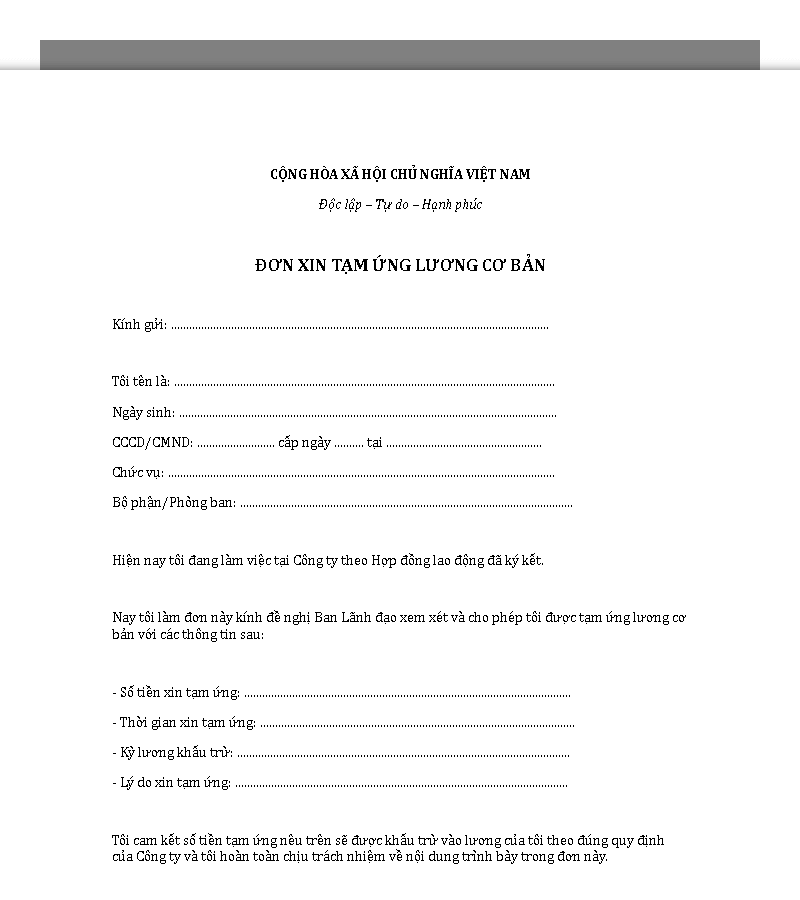
Mẫu 1: Mẫu đơn xin tạm ứng lương cơ bản (Dành cho mọi đối tượng)
Đây là mẫu đơn cơ bản, phù hợp với hầu hết nhân viên, giúp hoàn thiện thủ tục xin tạm ứng nhanh chóng. Bạn chỉ cần điền thông tin cá nhân, số tiền và kỳ lương mong muốn. Mẫu này ưu tiên sự gọn gàng, rõ ràng và dễ được phê duyệt trong các trường hợp cấp bách thông thường.
>>> Tải ngay mẫu đơn xin tạm ứng lương cơ bản dành cho mọi đối tượng
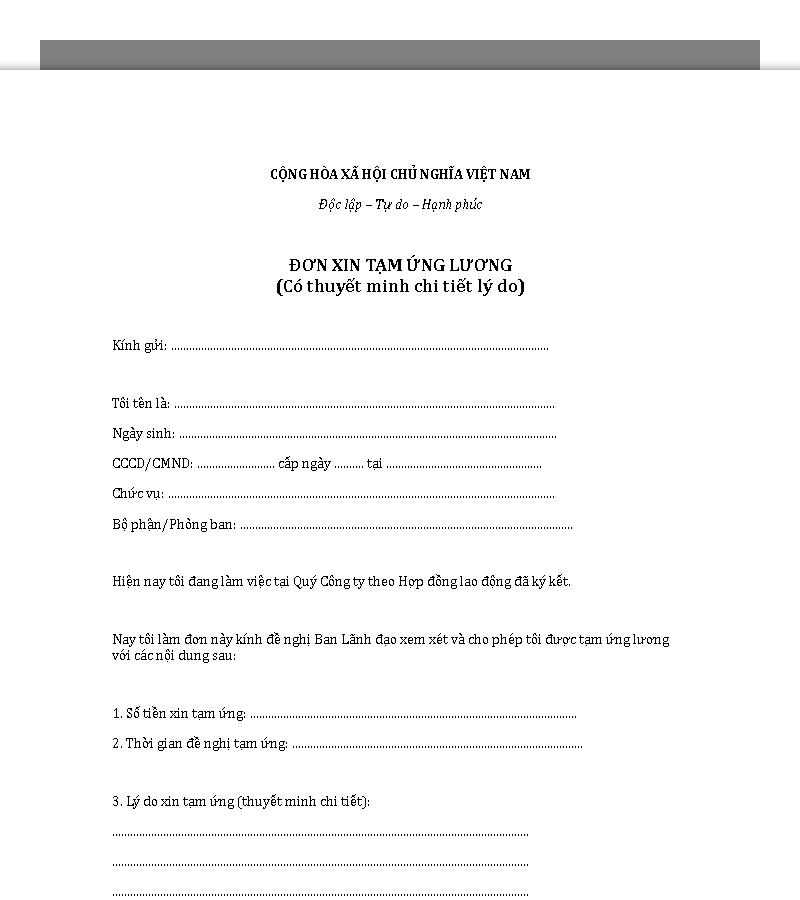
Mẫu 2: Mẫu đơn xin tạm ứng lương có thuyết minh chi tiết lý do
Mẫu này cho phép nhân viên trình bày rõ hoàn cảnh và lý do cần tạm ứng, giúp tăng tính thuyết phục khi xin phê duyệt. Rất phù hợp với các trường hợp đặc biệt như chi phí y tế, học phí hay sửa chữa nhà cửa. Nội dung được trình bày cụ thể, dễ hiểu, giúp quản lý nắm rõ tình hình trước khi phê duyệt.
>>> Tải ngay Mẫu đơn xin tạm ứng lương có thuyết minh chi tiết lý do
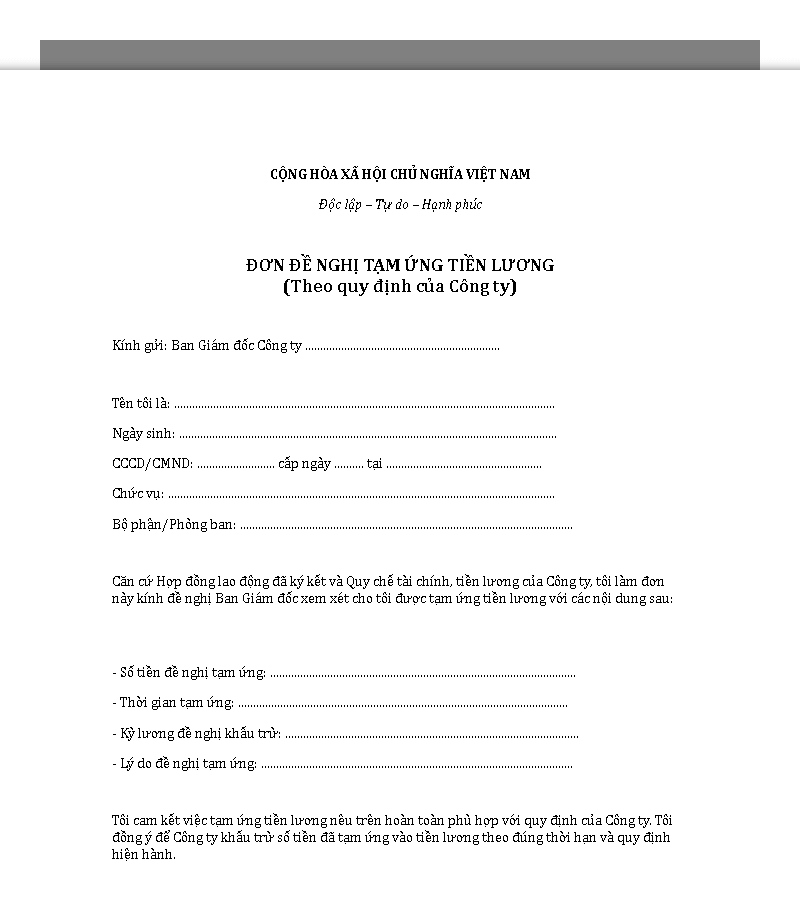
Mẫu 3: Mẫu đơn đề nghị tạm ứng tiền lương theo quy định công ty (Mẫu nội bộ)
Đây là mẫu dành riêng cho quy trình nội bộ của doanh nghiệp, đảm bảo tuân thủ các chính sách và hạn mức tạm ứng của công ty. Mẫu này thường được dùng trong các công ty lớn hoặc có quy định chặt chẽ về tài chính. Việc sử dụng mẫu này giúp thủ tục minh bạch, dễ theo dõi và thuận tiện cho phòng nhân sự, kế toán xử lý.
>>> Tải ngay Mẫu đơn đề nghị tạm ứng tiền lương theo quy định công ty
How to fill in basic information:
Important notes:
Customizing the template:
|
4. How to Write a Salary Advance Request Form that Impresses Your Superiors
Writing a salary advance request is not just an administrative procedure but also a way to demonstrate responsibility, honesty, and professionalism to the company. A clear, polite, and persuasive request will increase the chances of quick approval and create a good impression on management. Below is a detailed guide following Vietnamese administrative format.
Part 1: Title and Addressee
- Title: Centered, in all caps: SALARY ADVANCE REQUEST FORM (or REQUEST FOR SALARY ADVANCE)
- To: Address the person with the authority to approve according to the company’s internal regulations. For example:
- Mr./Ms. [Full Name] – General Director (for large advance amounts).
- Mr./Ms. [Full Name] – HR Director.
- Mr./Ms. [Full Name] – Head of HR & Administration.
- Mr./Ms. [Full Name] – Chief Accountant (for small companies).
- If unsure, you can address it generally: The Board of Directors or The HR & Administration Department. You can also add a line addressing your direct manager for their prior confirmation signature.
Part 2: Personal Information – Fill in completely and accurately (Information must match HR records for easy verification), on the left or right side according to the company’s template:
- Full Name: ………
- Department/Division: ………
- Position: ………
- Phone Number: ………
- Start Date: ……… (if necessary)
Part 3: Request Content
- Polite opening: “My name is …, currently working at …, I would like to request that the Board of Directors/Company consider my request for a salary advance as follows:”
- Clearly state the advance amount:
- In numbers: 10,000,000 VND
- In words: Ten million Vietnamese dong
- Salary period for the advance: For example, “Salary advance for January 2026” or “Advance from the current month’s salary.”
Part 4: Reason for the Advance – The most important part, which determines whether the request is approved.
- Brief (2–4 sentences), truthful, and legitimate.
- Common reasons:
- Illness, medical expenses: “Due to my/my parents’ hospitalization, I need urgent funds for treatment.”
- Children’s tuition fees: “As the deadline for my child’s second-semester tuition fee is approaching.”
- Home repairs: “Due to severe damage to my house that requires urgent repairs to ensure living safety.”
- Weddings/Funerals: “Due to a family funeral that requires organizational expenses.”
- Other urgent expenses: “To pay off a bank loan that is due to avoid late payment penalties.”
- Avoid vague or non-urgent reasons such as: “Need spending money,” “Shopping,” “Business investment,” “Non-urgent personal debt repayment.”
Part 5: Repayment Commitment – Shows responsibility and reassures the company:
- “I commit to fully repaying the above-mentioned advance amount through deduction from my next month’s salary (or according to company policy). I will be fully responsible for any violation of this commitment.”
Part 6: Signature and Date – If submitting a hard copy, sign by hand; if submitting online, type your full name
- Date … Month … Year … (On the right side of the page)
- Applicant (On the right side of the page)
5. Standard Salary Advance Request Process in a Business
For a salary advance to be processed clearly and transparently, employees should follow this 5-step process:
Step 1: Prepare the Form and Documents
The employee obtains or downloads the Salary Advance Request Form from the HR department or internal system. Fill in all required information, including full name, employee ID, department, advance amount, reason, and expected repayment time. Attach supporting documents if necessary, such as hospital bills, tuition fee notices, home purchase contracts, or wedding/funeral papers. The form can be signed by hand or electronically if the company allows.
The form should be submitted to the direct manager for confirmation, then forwarded to the HR department or the department responsible for processing advances. The submission can be a hard copy or done online via the HRM system or internal email. It is advisable to submit it at least 5-7 working days before the date the money is needed to ensure timely processing.
Step 3: Review and Approval
The advance request will be reviewed by authorized levels depending on the amount:
- The direct manager assesses the reasonableness and repayment ability.
- The HR department checks the eligibility for an advance according to company policy and advance history.
- The Accounting department verifies the limit and financial capacity.
- The Board of Directors gives final approval for large advance amounts (usually from 20-50 million VND or more).
Processing time is typically 3-7 days but can be faster if the request is valid. The employee will be notified of the approval or rejection with a reason.
Step 4: Receive the Advance
After approval, the Accounting department will disburse the money via bank transfer to the salary account or in cash (for small companies or special requests). The employee needs to sign a receipt of advance or a payment voucher and keep a copy for future reference.
Step 5: Repayment and Deduction
The advance is usually deducted in installments or in full from subsequent salary periods as agreed. The Accounting department will clearly state “Salary Advance Deduction” with the amount on the payslip. Employees should check their payslips for verification. If an employee resigns before full repayment, the remaining amount will be deducted from the final salary/bonus or a direct repayment will be requested. If the repayment plan needs to be adjusted, the employee must submit an adjustment request for approval.
Following this process helps employees receive timely financial support while ensuring transparency and avoiding disputes. Businesses should clearly communicate this process in their labor regulations and guide new employees for easy implementation.

6. Frequently Asked Questions (FAQ) about Salary Advances
Question 1: Is there interest on a salary advance?
Usually not. According to Article 94 of the 2019 Labor Code, a salary advance is an interest-free advance to support employees during short-term difficulties. However, some businesses may have their own internal regulations, such as charging interest if the advance extends over many periods or exceeds the limit. Therefore, you should check the company’s regulations or ask the HR department before submitting a request.
Is a salary advance subject to personal income tax? (It is only calculated when the total taxable income exceeds the prescribed threshold after the full month’s salary is finalized).
Question 2: Is a salary advance subject to Personal Income Tax (PIT)?
It is not taxed separately, but it will be included in the total taxable income for the month when the salary is finalized. When you receive the advance, this amount is not yet taxed. In the next pay period, the company will add the previous month’s salary to the advance amount to calculate the total taxable income. If the total income exceeds the personal and dependent deductions, the employee will be subject to normal PIT withholding.
For example: Your salary for Month 1 is 10 million, and you take a 5 million advance → In Month 2, you receive an actual salary of 5 million (after deduction). PIT is calculated on the total 10 million from Month 1.
Question 3: What if my salary advance request is not approved?
A business has the right to refuse when:
- The reason is unreasonable or unconvincing.
- You have requested advances multiple times during the year or have an outstanding advance.
- The amount exceeds the maximum advance limit according to company policy.
- The company is facing temporary financial difficulties.
If your request is rejected, you should: ask for the reason, provide additional documents if needed, and resubmit the request with a more reasonable justification. If it is still not approved, consider alternatives such as borrowing from relatives/colleagues, taking out a personal bank loan, or seeking support from the trade union fund (if available).
Question 4: Can I request an advance that exceeds the salary for the days I have already worked?
Usually not. The maximum advance amount is typically equal to the salary corresponding to the number of days worked (or 50-100% of the monthly salary, depending on the company). This helps mitigate the risk of the company advancing too much money if an employee suddenly resigns. Some exceptions (approved on a case-by-case basis) may apply for long-term business trips, special assignments, or under the company’s specific support policies.
Question 5: Does a salary advance affect Social Insurance, Health Insurance, and Unemployment Insurance contributions?
It does not have a direct impact. The contribution levels for Social Insurance, Health Insurance, and Unemployment Insurance are still calculated based on the base salary in your contract, regardless of any advance. Even if your net pay for the following month is lower due to the advance deduction, your insurance contributions remain the same → your social insurance benefits are not affected.
The Salary Advance Request Form Templates in this article are easy to use and can be customized to fit your actual needs. Following the instructions correctly will help you request an advance quickly, transparently, and professionally, while ensuring your legal rights when you need short-term financial assistance.