


 10/05/2026
  77 views
Choosing HRM software for the healthcare industry is no longer an option, but a mandatory requirement to optimize operations, minimize errors, and retain a high-quality workforce. This article from 1Office will provide a detailed review of the top 7 human resource management software solutions for hospitals and clinics.
Mục lục
Top 7 Human Resource Management Software for Healthcare
Below is a detailed review of 7 HRM software solutions designed to solve the complex problems of the healthcare industry, from managing shifts and certifications to automating payroll.
Summary Comparison Table
| Software | Core Features for Healthcare | Strengths / Model |
| 1Office 1HRM | – Manage & automatically alert on practicing certificate expirations.
– Multi-method timekeeping (FaceID, GPS), manage shift assignments, and online shift swapping. – Automate payroll and complex allowance calculations. – Integrated AI for CV screening in recruitment and a training system (LMS). |
A comprehensive, all-in-one solution integrated with AI to solve the core problems of healthcare human resources. |
| VnResource HRM Pro | – GPS timekeeping via mobile app.
– Good process automation capabilities. |
A robust system with extensive implementation experience, suitable for managing a mobile workforce. |
| HrOnline | – Manage shifts, shift rotation, and hourly timekeeping.
– Manage certificates/degrees specific to the healthcare industry. |
Has a specialized “healthcare version” available, requiring minimal customization. |
| AZZA HRM | – Meets international human resource management standards. | Suitable for hospitals and medical facilities with international integration requirements. |
| Medisoft | – HR module is pre-integrated into the HIS system. | A solution fully synchronized with the Hospital Information System (HIS). |
| NanoSoft Hospital System | – HRM module is tightly integrated with the hospital management system (HIS). | Synchronizes HR data with medical examination and treatment activities. |
| FTS HRM | – An in-depth HRM solution that handles complex processes. | Suitable for public hospitals/healthcare sectors and large-scale deployments. |
1HRM
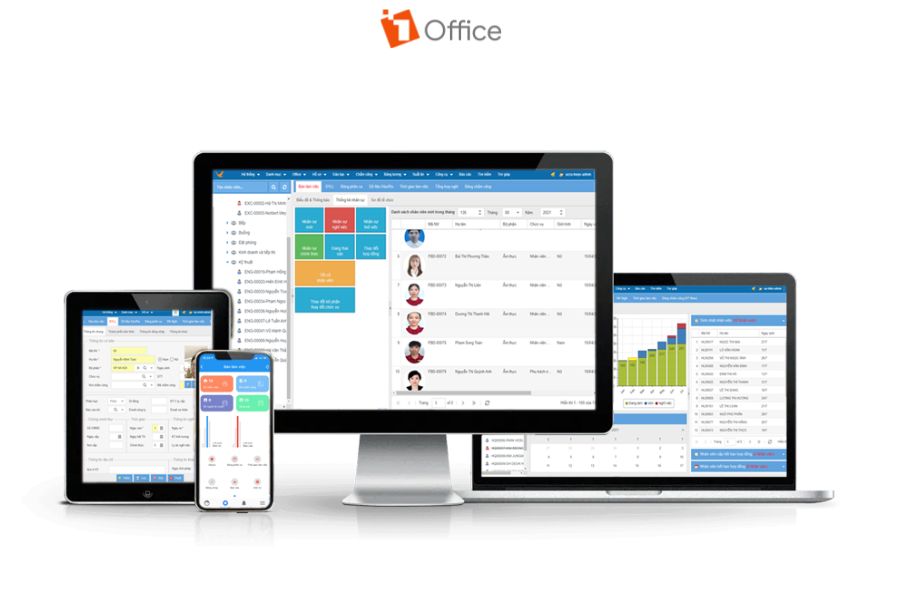
1Office 1HRM is a comprehensive human resource management platform designed to solve the 4 biggest challenges facing healthcare facilities, helping to automate and bring transparency to the entire operational process.
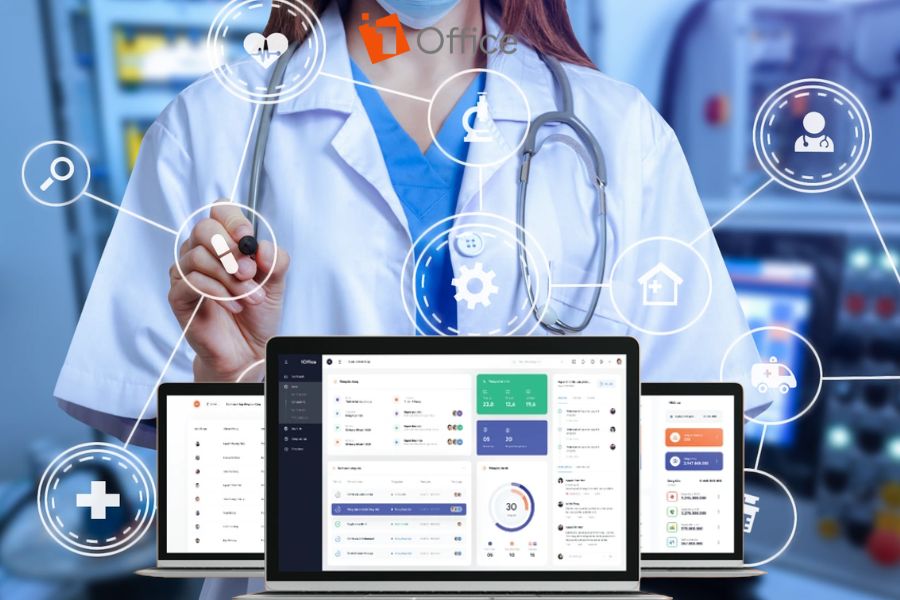
- Automatic alerts for degree/practicing certificate expiration: 1Office 1HRM allows for centralized storage of all personnel records, including various types of certificates and practicing licenses. The system provides an “Expiring Contract Alert” feature, which can be customized to automatically remind the HR department and medical staff before certificates expire, ensuring 100% personnel compliance.
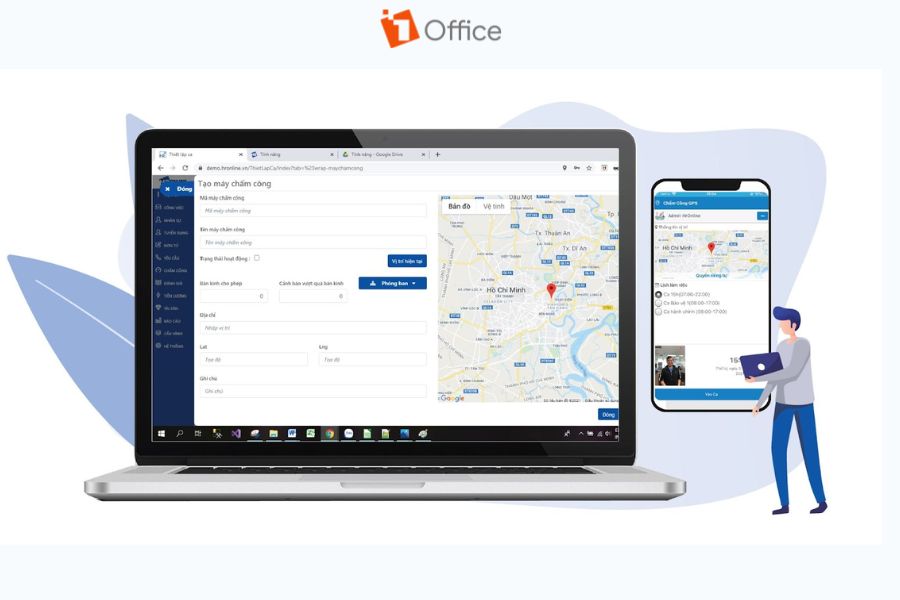
- Accurate timekeeping: The system connects to all types of time clocks (fingerprint, FaceID) and supports timekeeping via a mobile app (GPS), suitable for both administrative staff and medical teams participating in off-site work. Timesheets are compiled in real-time, and employees can check their own work hours directly on the app, minimizing complaints.
- Automated salary and allowance calculation: The healthcare industry has an extremely complex salary and allowance structure. 1HRM automatically inherits data from confirmed timesheets and shift schedules to calculate salaries, eliminating the need for manual data entry. The platform allows for setting up flexible salary formulas like Excel, making it easy to customize specific allowances (night shifts, holiday shifts, professional allowances).
- Solving personnel shortages with AI and Training: The platform integrates AI to automatically screen CVs, helping the HR department quickly process numerous applications to find suitable doctors and nurses. Additionally, the competency assessment and training module allows hospitals to build competency frameworks for each position, establish personal development roadmaps, and manage courses (LMS), addressing the challenge of retaining and developing staff.
VnResource HRM Pro
VnResource HRM Pro is a solution with many years of practical experience in the Vietnamese market, featuring excellent automation capabilities. This platform also offers a mobile application with GPS timekeeping functionality, suitable for managing mobile healthcare staff. For hospitals or medical facilities in need of a powerful system, this is a worthy consideration.
HrOnline
HrOnline’s strength lies in its specialized features built for the healthcare industry. This software focuses on solving core tasks such as shift management, shift rotation, hourly timekeeping, and certificate/degree management. If you want a software with a pre-built “healthcare version” that requires minimal customization, this is a good candidate.
AZZA HRM
AZZA HRM is a human resource management solution with extensive experience, recognized as a choice for hospitals and medical facilities in the era of international integration. This software focuses on professionally managing core HR tasks, including records management, labor contracts, detailed tracking of insurance participation (social insurance, health insurance), and leave management.
Notably, AZZA’s system is also designed to handle complex timekeeping and work shift challenges, a critical requirement for hospitals operating 24/7. For medical facilities seeking a stable solution that complies with international management standards, AZZA HRM is a worthy consideration.
Medisoft
Medisoft provides a comprehensive hospital operating model, in which the HR module is integrated into the hospital information system (HIS). If your organization is looking for an HR solution that comes with and fully synchronizes with an HIS, Medisoft is a suitable choice.
NanoSoft Hospital System
Similar to Medisoft, NanoSoft offers a solution that tightly integrates hospital management (HIS) and human resource management (HRM). This is an option for medical facilities that want to synchronize HR data with medical examination and treatment activities.
FTS HRM Software
This is an in-depth HRM solution from FTSHRM. This software is particularly suitable for public hospitals or healthcare facilities that need to deploy a large-scale system with many departments and complex processes.
Unique Human Resource Management Challenges in Healthcare That Need to Be Solved
The healthcare industry has very unique personnel characteristics: rotating shifts, strict practicing certificate requirements, and significant pressure for transparency and legal compliance. Therefore, human resource management in hospitals and clinics is much more complex than in typical businesses.
Complex Shift Management
In a hospital environment, staff work in various shift models—morning, evening, split shifts, emergency shifts, or rotations between departments. If managed manually with Excel spreadsheets, scheduling can take hours and is prone to errors. The biggest difficulties are sudden schedule changes, the risk of overlapping shifts leading to staff shortages or surpluses, and a lack of synchronization between departments.
Unfair and Non-Transparent Salary Calculation
Payroll in the healthcare industry isn’t just based on standard working hours; it also includes many unique factors like: night and holiday shift allowances, professional allowances; bonuses based on treatment effectiveness; and pay for overtime, extra shifts, and emergency calls.
If this entire process is calculated manually, discrepancies or complaints between employees and the HR department are almost inevitable.
Talent Shortages and Competition in the Industry
High-quality healthcare personnel, especially doctors and nurses, are always in short supply and face fierce competition between public and private hospitals. Therefore, HR work is not just about administrative management but must also focus on retaining, developing, and optimizing team performance.
Common challenges include:
- High turnover rates due to work pressure and a stressful environment.
- Difficulty in tracking individual performance to build clear career progression paths.
- Lack of centralized HR data, making it difficult to evaluate and plan for long-term human resources.
Compliance Requirements for Degrees/Practicing Certificates
In the healthcare sector, ensuring that employees have valid practicing certificates is a mandatory requirement according to the Ministry of Health’s regulations. However, with hundreds of employees, each holding multiple types of certificates with different expiration dates, manual tracking can easily lead to oversights.
Common issues include:
- Expired practicing certificates that have not been updated.
- Lack of an automated alert system and centralized electronic record storage.
- Difficulty in compiling reports to verify the valid practicing status of personnel.

Managing a Mobile Workforce
Healthcare staff not only work at the main hospital but also frequently participate in off-site activities, community support, mobile clinics, or training. This makes managing timekeeping, shifts, and reporting difficult if relying solely on a fixed, office-based system.
Key Functions of HR Management Software for the Healthcare Industry
To address the challenges above, an HRM software for the healthcare industry needs to be equipped with the following specialized function groups:
Personnel Information Management
In the healthcare industry, managing personnel information is not just like in a typical business; it involves specific requirements regarding professional expertise, practicing licenses, certificates, healthcare job classifications, and more. Digitizing records helps reduce errors, speed up processing, support reporting, and increase management efficiency.
HR management software for the healthcare industry should have the following features:
- Detailed profile management: Including personal information, contracts, work history, and classification (doctor, nurse, technician, etc.).
- Practicing certificate management: The most crucial feature is tracking the expiration dates of medical, pharmaceutical, and nursing certificates, and it must have an alert system for upcoming expirations or renewals.
- Assignment and transfer management: Easily manage the deployment of personnel between departments/wards.
- Data standards compliance: The software must be able to meet government data standards, for example, the 109 data fields as per the Ministry of Home Affairs’ circular.
Timekeeping & Work Schedule Management
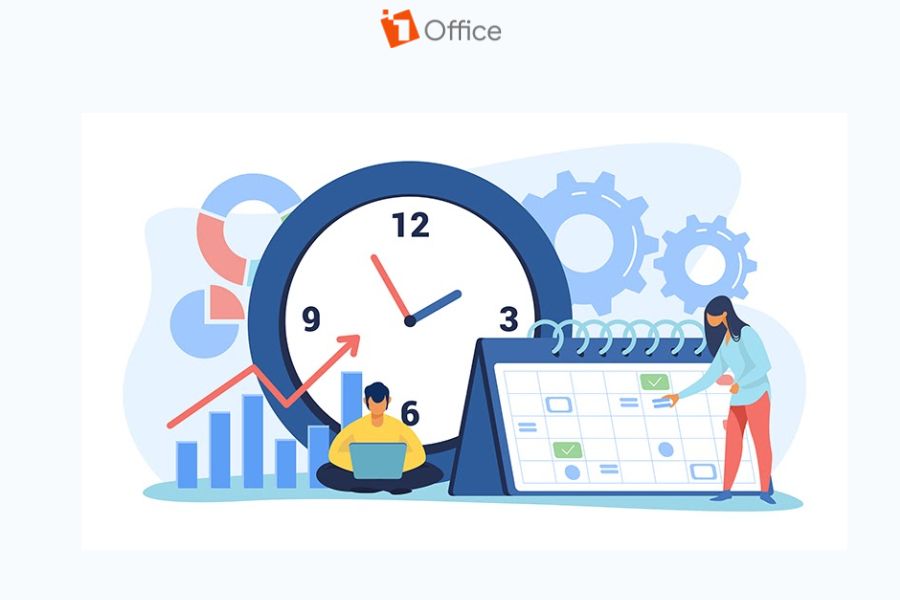
This is a particularly important function due to the nature of 24/7 shift work. The software must support the creation and management of detailed work schedules for doctors and nurses in various departments. The system should allow employees to flexibly request shift changes, leave, or additional on-call shifts.
Payroll & Benefits
Payroll management is a key function to ensure transparency and fairness. HRM software for the healthcare industry must be able to automatically calculate salaries based on timekeeping and shift data, including complex allowances like night shifts and professional allowances.
The system must also support the management of social insurance, health insurance, and personal income tax.
Performance Management
The software should allow setting up professional key performance indicators (KPIs) such as the number of patients examined, number of surgeries, or re-examination rates. The training and development management function is also very important, helping to plan continuous training and link it to certificate renewals. This data serves as a basis for personnel planning and building clear reward and disciplinary plans.
HR Data Reporting & Analysis
This is a tool that supports leadership in making strategic personnel decisions.
- Overview reports: Statistics on the number of personnel by department/unit, by professional group (doctors, nurses…), and turnover rates.
- Cost analysis: Reports on salary, allowance, and on-call shift costs for each department/unit to optimize the budget.
- Support for regulatory reporting: The software must be able to export human resources statistical reports in the standard format required by the Ministry/Department of Health.
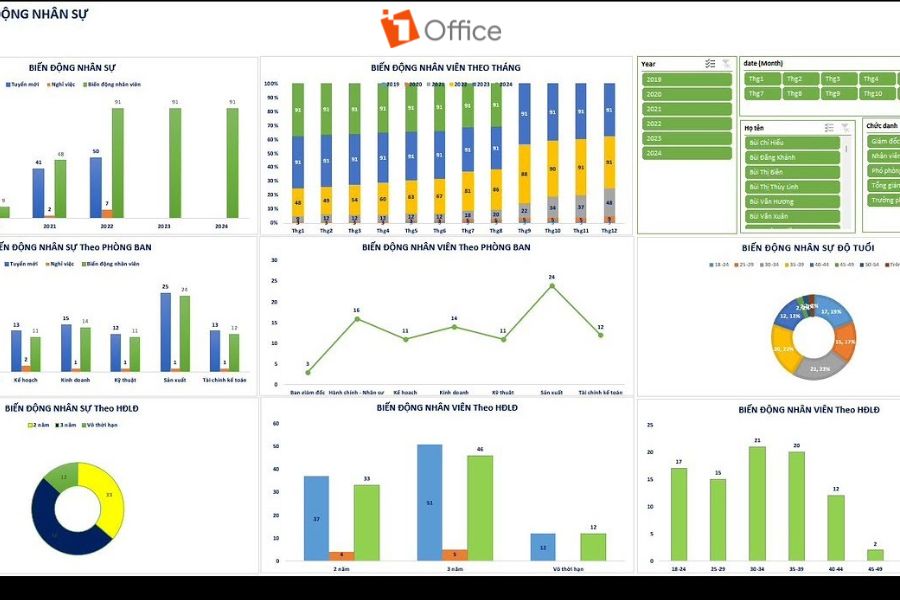
- Data visualization: Provides charts and dashboards to help leadership quickly grasp the personnel situation.
Healthcare-Specific Management
HRM software for the healthcare industry must meet the sector’s unique requirements:
- Managing diverse professional groups: Flexibility in managing groups of doctors, nurses, pharmacists, etc., with different regulations.
- Monitoring professional licenses: Must have an expiration alert feature and be closely linked to personnel records.
- Industry regulation compliance: Ensures compliance with state regulations (e.g., 109-field form) and can connect to the database of public officials and employees.
- Data security: Healthcare personnel data is highly sensitive; the software must have high security, encryption, and strict access authorization.
- Integration with HIS: Ideally, the HRM software should be able to integrate with the Hospital Information System (HIS) for comprehensive data synchronization.
Criteria for Choosing HRM Software for the Healthcare Industry
Below are the 5 most important criteria that hospitals, medical centers, or clinics should consider when choosing HRM software.
Meets the Specific Needs of the Healthcare Industry
This is the top criterion. Suitable HRM software for a hospital or medical facility needs to:
- Ability to track professional licenses and automatically alert when they are about to expire.
- Ability to manage flexible shifts, night shifts, emergency shifts, and automatically calculate related allowances.
- Support for exporting human resources report templates as required by regulatory bodies like the Ministry/Department of Health.
- Ability to customize approval workflows and grant permissions for different departments/units.
User-Friendly Interface
Most healthcare staff are not IT experts, so a friendly, intuitive interface is a must. The design should be simple, allowing staff to quickly look up shifts, view payslips, and request leave without complex training.
Most importantly, HRM software for the healthcare industry must support multiple platforms, especially mobile applications (phones, tablets), so that doctors and nurses can update their work anytime, anywhere.
Connectivity with Other Healthcare Systems and Internal Tools
Effective HRM software needs to interconnect data with other systems in the hospital to create a unified management process.
- Integration with HIS (Hospital Information System): helps synchronize personnel data with medical examination schedules, on-call shifts, and patient management.
- Connection with timekeeping, payroll, insurance, and accounting software: helps fully automate the process of calculating salaries, and deducting health insurance, social insurance, and personal income tax.
- Integration with internal tools: such as work management software, learning management systems (LMS), asset management, or an employee portal.
- Open API capability: to easily expand and connect with other systems in the future without major modifications.
Budget-Friendly
Cost is a crucial factor, especially for small-scale public or private healthcare facilities. Hospitals should balance the investment cost against the value it brings. Flexible deployment models like Cloud (SaaS) – with monthly payments – can help save on initial infrastructure costs.
It is necessary to clearly calculate the return on investment (ROI), for example, how much data entry labor the software saves and how many errors it reduces in payroll calculation.
Implementation Support & After-Sales Service
An often overlooked factor that determines the success of HRM software implementation is after-sales support. Healthcare facilities should choose a provider with experience implementing for hospitals and clinics, as they understand the specific operational processes.
Since hospitals operate continuously, the software provider must also ensure 24/7 technical support. Additionally, the provider must commit to maintaining and updating the software to always comply with new regulations from the Ministry of Health or the Ministry of Labor.

Conclusion
Human resource management in the healthcare industry is a complex task that demands accuracy, transparency, and absolute compliance. Investing in a specialized HRM software for the healthcare industry is a strategic decision, helping hospitals and clinics thoroughly address challenges in shift management, professional certification compliance, and payroll automation.
Is your hospital ready to automate complex HR processes? Contact 1Office today for an in-depth consultation and to learn how 1HRM can help your healthcare facility operate more efficiently and transparently.
















