


 11/05/2026
  369 views
In the digital era, where data and the speed of decision-making have become vital, businesses are gradually transforming to become more agile, automated, and intelligent. From standalone software supporting individual tasks, the new trend is to build an operational system based on artificial intelligence – also known as an AI platform.
So, what is an AI platform, what are its components, what value does it bring to businesses, and what are the conditions for a successful implementation? This article will help you get a comprehensive overview of AI platforms – from concept to real-world experiences at Vietnamese organizations.
Mục lục
- 1. What is an AI Platform? Why should businesses apply AI platforms to their operations?
- 2. Applications of AI Platforms in Business Operations
- Automating task management and team collaboration
- Seamlessly supporting meetings and post-meeting task assignment
- Optimizing the Timekeeping and Payroll Process
- Enhancing Recruitment Efficiency with AI-Powered Candidate Data Analysis
- Analyzing Performance and Supporting Timely Decision-Making
- Automating Reports and Suggesting Strategic Adjustments
- 3. Core Conditions for Effectively Implementing an AI Platform in a Business
- 4. Experience the AI Platform in Action at the 1Office Next Event
1. What is an AI Platform? Why should businesses apply AI platforms to their operations?
What is an AI Platform?
Simply put, an AI platform is a multi-layered technology platform – integrating data, machine learning models, and interaction and visualization tools – that helps businesses deploy, manage, and optimize artificial intelligence (AI) applications in a synchronized and efficient manner.
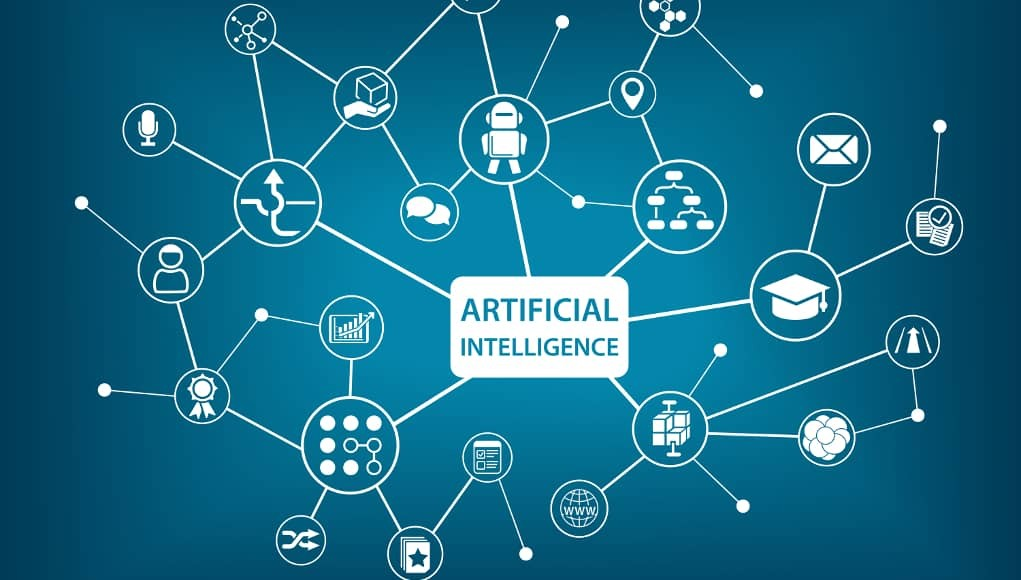
Unlike using a single AI feature like a chatbot or automated reports, a complete AI platform helps businesses:
- Collect, store, and process data from multiple sources
- Train and deploy AI models suitable for business problems
- Personalize user experiences through dashboards, chatbots, and email reminders
- Self-learn and improve over time based on actual operational behavior
Why should businesses apply AI platforms to their operations?
In a context of a rapidly changing market, high customer expectations, and increasing internal complexity, manual decision-making and operations are becoming obsolete. An AI platform helps solve the “efficiency – accuracy – control” problem simultaneously, delivering many clear benefits:
- Accelerate decision-making: No need to wait for summary reports or department meetings – the AI platform analyzes real-time data and suggests specific actions.
- Automate processes: From approving requests and assigning tasks to alerting risks – the system can handle it all without manual reminders.
- Reduce dependency on people: No more “only working when the boss asks,” “forgetting deadlines,” or “assigning to the wrong person” – AI assists in every step of the operation.
- Enhance internal experience: Employees work more easily, managers have better control, and leaders are not tied down by minor tasks.
2. Applications of AI Platforms in Business Operations
One of the reasons many businesses are shifting to AI platforms is the ability to integrate artificial intelligence into every “touchpoint” of their operations. More than just an analytical tool, an AI platform can also assist personnel with daily tasks – from work and HR to reporting and process management.

Automating task management and team collaboration
An AI platform helps businesses track work progress proactively and intelligently:
- Remind the right person at the right time, reducing missed deadlines
- Suggest task completion times based on workload and historical performance
- Detect bottlenecks in processes to optimize coordination between departments
As a result, managers no longer have to “manually supervise” but can still grasp the overall operational picture in real-time.
Seamlessly supporting meetings and post-meeting task assignment
Instead of spending time taking notes and sending out minutes, an AI platform can:
- Automatically record meeting content
- Summarize detailed and organized minutes
- Assign tasks immediately after the meeting, including deadlines for each person
The entire post-meeting process becomes fast and consistent, helping the organization save time while ensuring clear responsibilities.
Optimizing the Timekeeping and Payroll Process

With data collected from the timekeeping system and user behavior, the AI platform can:
- Detect anomalies: incorrect clock-ins, excessive OT, paid time off that is still counted as work…
- Suggest solutions or automatically update timesheets based on actual shifts
- Automatically compile payroll, reducing manual entry errors
This is a step forward that helps reduce the pressure on the HR department, while employees can be confident in a transparent and accurate salary.
Enhancing Recruitment Efficiency with AI-Powered Candidate Data Analysis
The AI platform not only helps businesses hire the right people but also hire faster:
- Filter and tag candidate profiles according to specific criteria
- Suggest the most suitable top profiles for each position
- Automatically send personalized interview invitation emails
- Track conversion rates from each candidate source to optimize recruitment costs
Instead of spending hours reading CVs, the HR department can focus on the candidate experience.
Analyzing Performance and Supporting Timely Decision-Making
The AI platform helps businesses evaluate personnel based on real data rather than intuition:
- Automatically compile KPIs in real-time
- Alert on performance drops or work efficiency anomalies
- Suggest actions to adjust goals or reallocate tasks if necessary
This helps managers make timely, fair, and reality-based decisions.
Automating Reports and Suggesting Strategic Adjustments
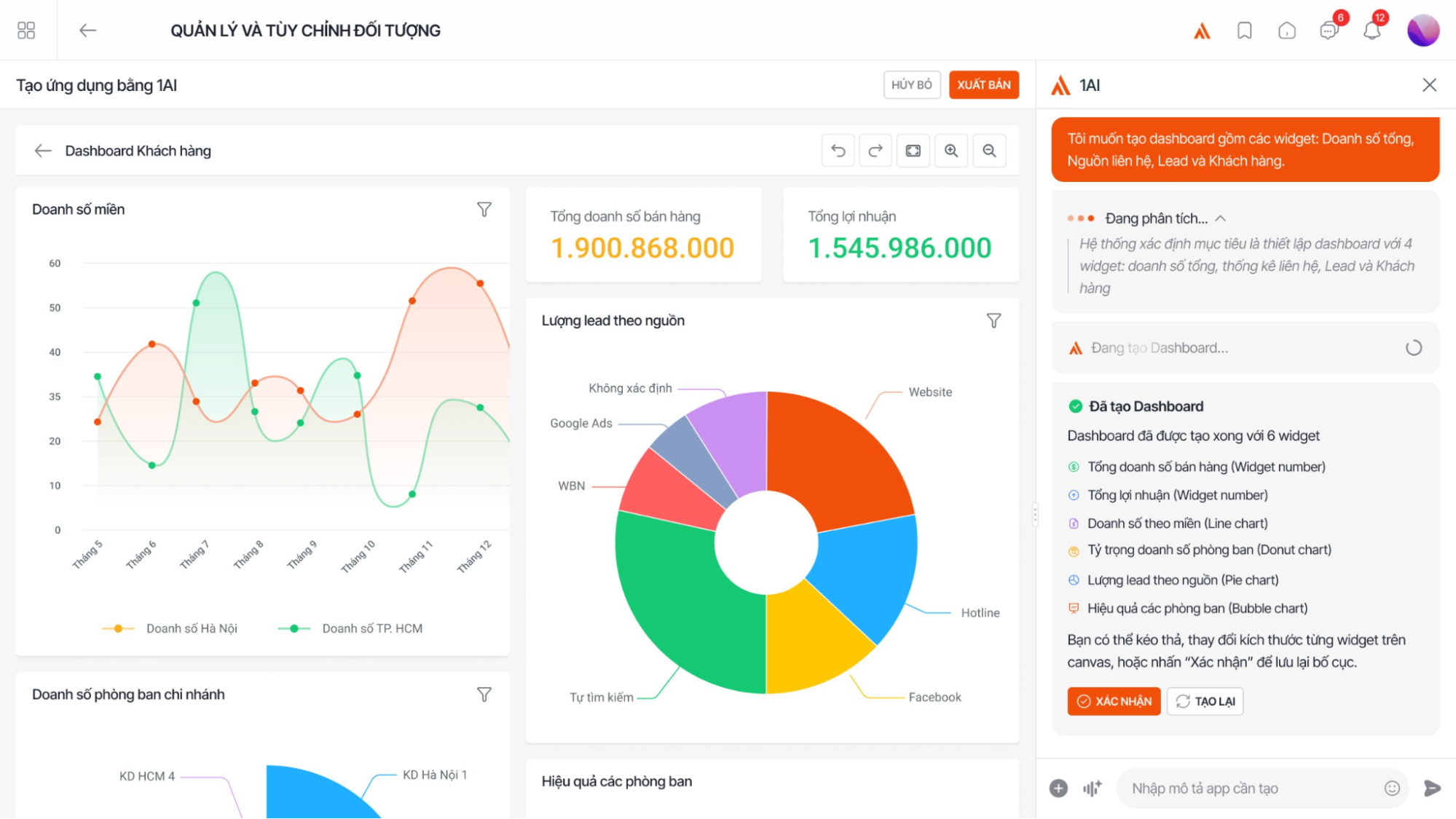
Without waiting for reports from departments, the AI platform can:
- Automatically generate periodic reports for each role: CEO, CFO, department head…
- Interpret data in easy-to-understand language, no need to read charts
- Suggest specific actions based on trends: cutbacks, investments, resource changes…
For example: “Recruitment costs have increased by 28% for 3 consecutive months – recommend reviewing the effectiveness of candidate sourcing channels.”
3. Core Conditions for Effectively Implementing an AI Platform in a Business
Applying an AI Platform to management depends not only on the technology but also on the business’s approach to implementation. Here are 4 prerequisites to ensure the AI Platform not only exists in the system but truly creates operational value.
Clarity on the Problem and AI Application Goals
Before implementing any AI platform, businesses need to clearly define: What problem in the organization is AI being used to solve?
Instead of adopting technology based on trends, leadership needs to clarify:
- The strategic goals that AI needs to support (enhancing performance, forecasting risks, optimizing operations…)
- The business processes where AI can be integrated to add value (such as management reporting, performance data analysis, automation of repetitive tasks)
When the goals are clear, the AI Platform can be implemented with a specific roadmap and its effectiveness can be clearly measured.
The Platform Must Have Customization and Flexible Integration Capabilities
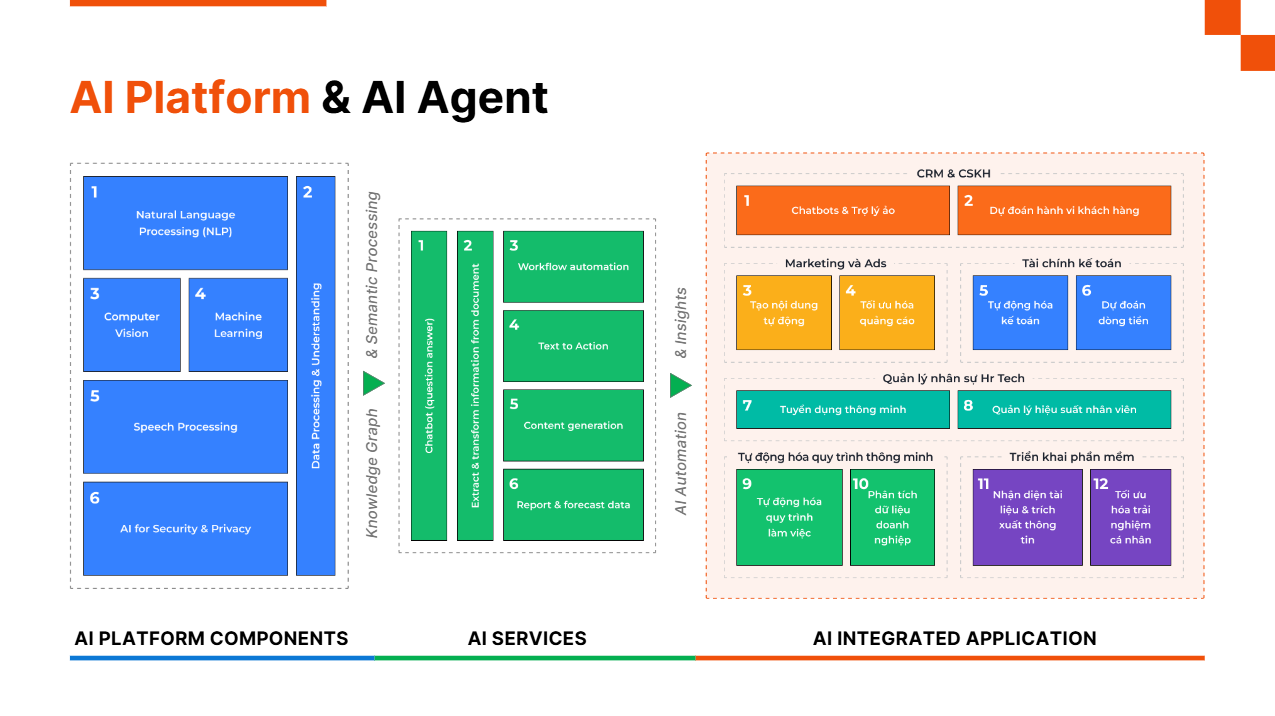
An effective AI Platform cannot be a closed, rigid system. In a context where each business has different processes, structures, and data systems, customization is a mandatory factor.
Businesses should prioritize choosing a platform that has:
- The ability to be customized according to the organizational model (processes, permissions, roles…)
- The ability to integrate with existing systems (CRM, HRM, ERP…)
- The ability to scale with the business’s size and future AI application levels
This helps ensure the AI Platform is not only suitable at the time of implementation but can also accompany the organization’s growth rate in the long term.
Train the team to use and leverage AI effectively
Technology will not be effective if people do not understand and operate it correctly. Implementing AI doesn’t stop at system installation; it must be accompanied by a training plan and a shift in the team’s mindset.
Some user groups that need special attention:
- Mid-level managers: Understand how to read and interpret analytical reports from AI, and know how to provide feedback for AI improvement.
- Operational staff: Understand how AI supports daily tasks and collaborate with AI in automated processes.
The team’s actual level of usage and collaboration is the deciding factor in whether AI becomes an “operational assistant.”
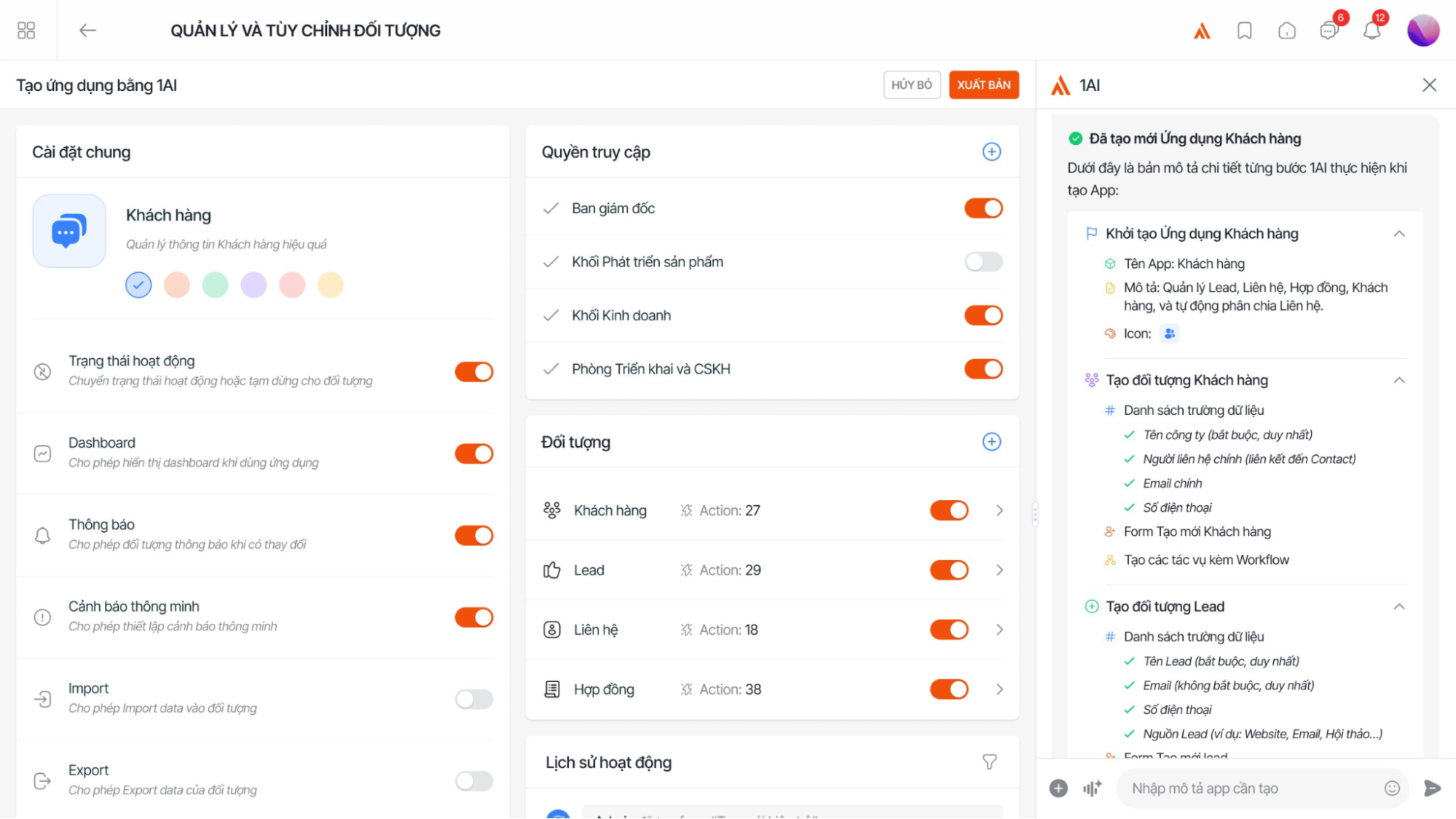
The more powerful the AI, the more important the role of internal control becomes. Businesses need to establish principles for authorization, security, and monitoring to ensure AI is used for its intended purpose and operates transparently.
Some factors that need to be clarified:
- Who is allowed to access which types of data?
- Who has the authority to approve actions proposed by AI?
- What is the mechanism for monitoring AI’s actions and user feedback?
Building a control system not only gives businesses peace of mind about security but also enhances accountability and transparency when integrating AI into the management system.
4. Experience the AI Platform in Action at the 1Office Next Event
The AI Platform is the dream of many CEOs, but turning it into an effective execution tool is not easy. Most businesses today are still struggling with off-the-shelf software that lacks the ability to accurately reflect how their organization operates.
1Office Next was created to break down that barrier. It’s not just a piece of software that “has AI” or “can be customized a little bit.” 1Office Next is a platform where CEOs can directly design how their business operates—no code, no waiting for IT, no longer constrained by system limitations.
1Office Next – A technology event exclusively for the generation of CEOs who dare to redesign their operating models
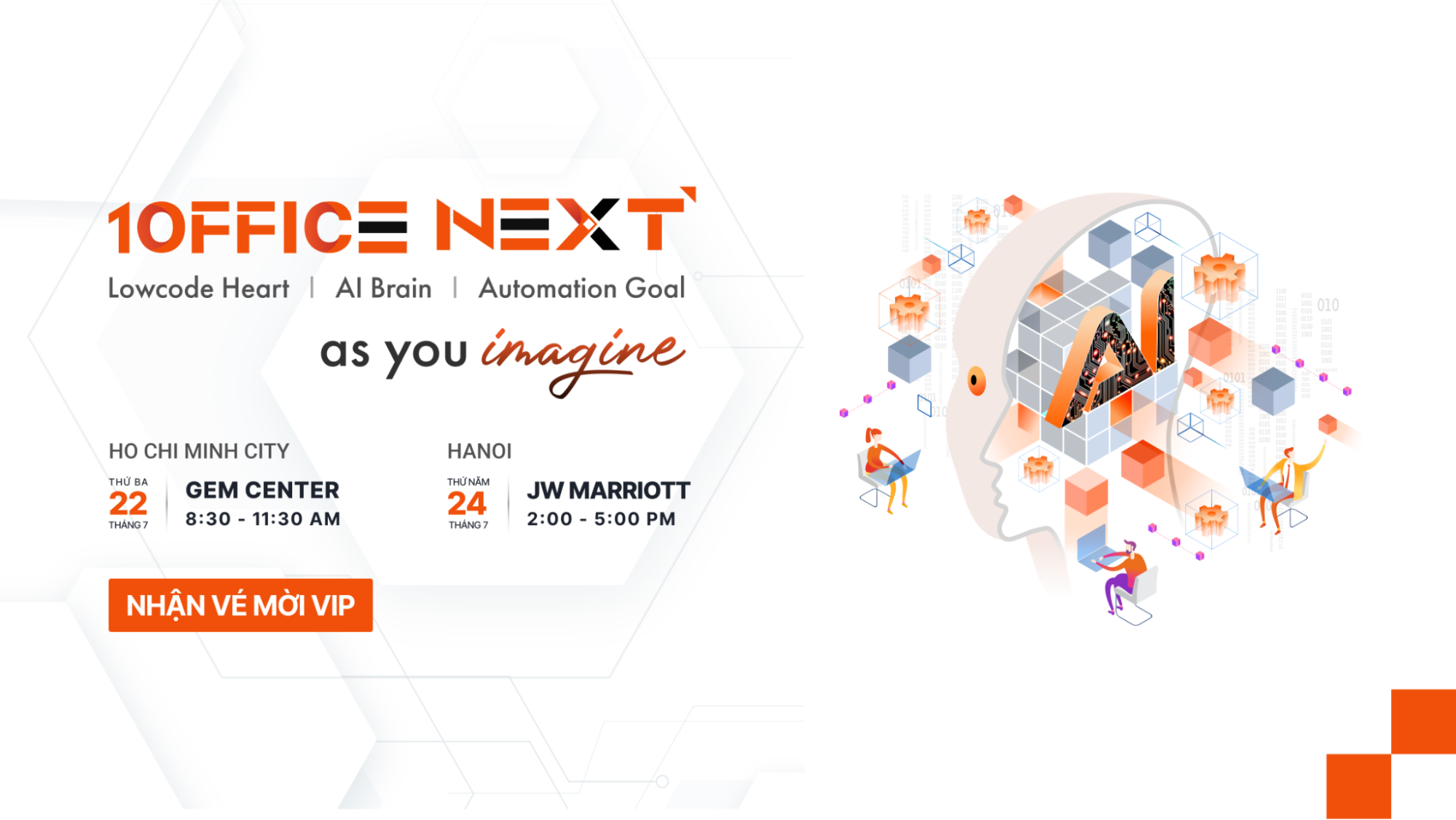
Exclusively for over 1,500 senior leaders, this event is more than just a technology showcase. It is the declaration of a new generation of software—where AI does not replace people, but partners with leaders to turn every organizational idea into a concrete system. 1Office Next will take place at:
- 📍 Ho Chi Minh City: GEM Center, July 22, 2025
- 📍 Hanoi: JW Marriott Hotel, July 24, 2025
At the event, you will get to:
- Witness an AI Agent instantly answer strategic questions like: “Which department is underperforming?”
- Directly experience the Low-code platform and personally modify your own business management system.
- Connect with hundreds of CEOs, CTOs, and industry experts who share the aspiration of building autonomous, intelligent, and adaptable operating models.
1Office Next is not an update. It is a declaration of how Vietnamese businesses will operate in the AI era.
| Register to attend now >>> |
















