11/05/2026
  340 views
In the Industry 4.0 era, B2B software (Business-to-Business) has evolved far beyond being a mere support tool to become a key factor determining a company’s competitiveness and survival. Especially for CEOs, startup founders, and managers, effectively integrating B2B software is not just a technology strategy but a core business strategy.
This article will provide an in-depth analysis of B2B software, from its nature and strategic impact to the latest trends, helping your business gain a comprehensive view and make smart investment decisions in the right B2B software ecosystem.
Mục lục
- B2B Software: Definition and Nature
- The Strategic Impact of B2B Software on Businesses
- The B2B Software Ecosystem and Interaction Between Solutions
- Breakthrough Trends in B2B Software
- Effective B2B Software Selection and Implementation Strategy
- B2B Software for Specific Industries
- Security and Compliance in B2B Software
- Methods for Measuring ROI from B2B Software
- Conclusion
B2B Software: Definition and Nature

B2B software is an application system specifically designed to optimize transactions, processes, and relationships between businesses. Unlike B2C (Business-to-Consumer) software, which focuses on the end-user experience, B2B software aims to automate, streamline, and optimize complex business processes between organizations.
Differences from B2C Software
While B2C software is often simple, intuitive, and focused on UI/UX, B2B software is typically more technically complex, focusing on scalability, security, and compatibility. The procurement and implementation cycle for B2B software is also longer, often lasting from several months to a full year, as it involves multiple stakeholders and complex integration requirements with existing systems.
The Strategic Impact of B2B Software on Businesses
1. Comprehensive Digital Transformation
B2B software is not just an automation tool but a primary driver for comprehensive digital transformation. Research by McKinsey indicates that businesses that successfully integrate B2B software can reduce operating costs by up to 25% and increase productivity by up to 30%.
Real-world example: After implementing an ERP system, Vinamilk Corporation optimized its entire value chain from farm to factory, helping to reduce logistics costs by 15% and increase market demand forecasting accuracy to 90%.
2. Breaking Down Data Silos
Modern B2B software helps break down “data silos”—the situation where information is isolated between departments. A unified data system gives businesses a 360-degree view of their operations, enabling them to make data-driven decisions.
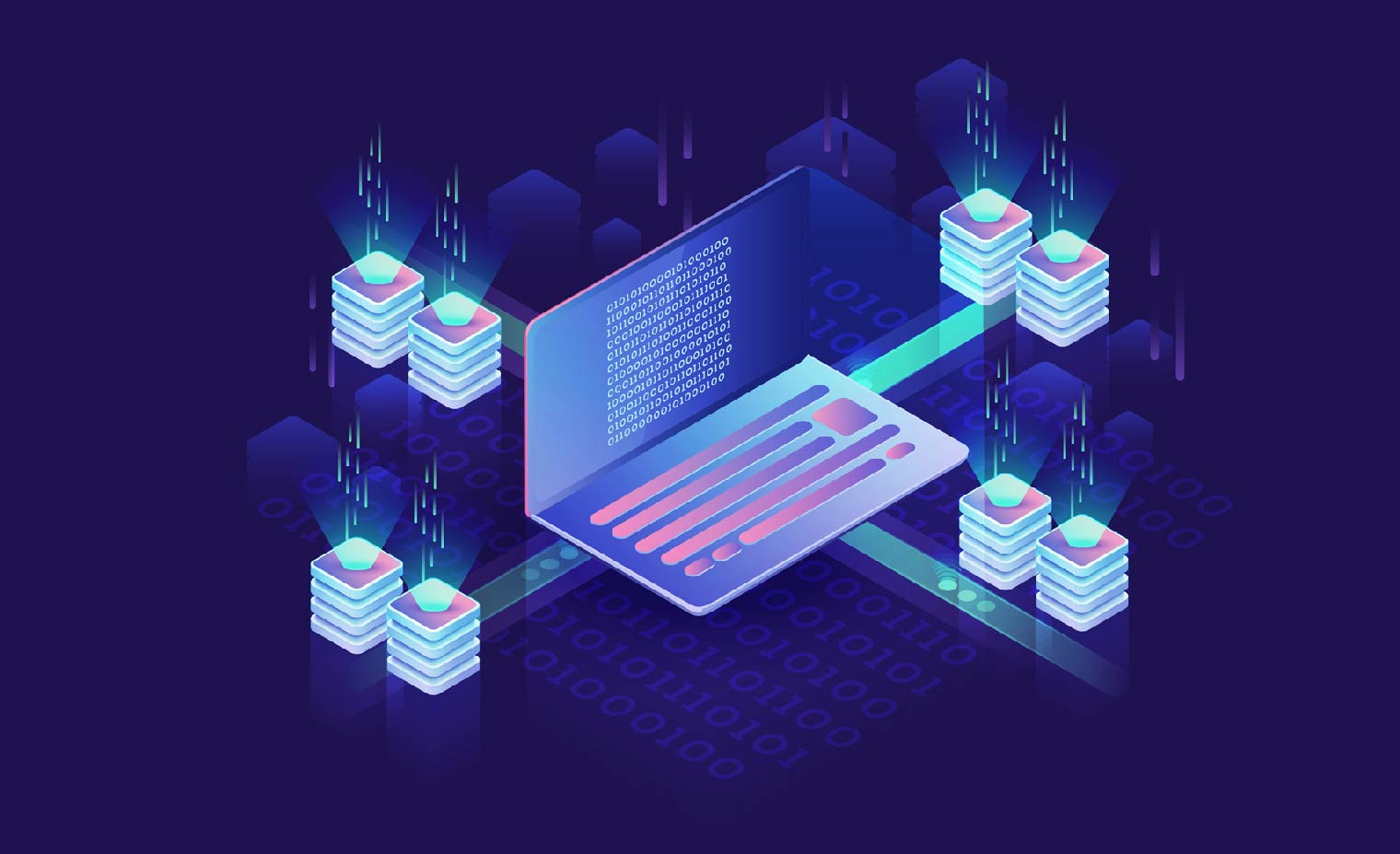
A study by Deloitte shows that businesses using data from B2B software achieve 5-6% higher performance than their industry competitors. In particular, the ability to make quick and accurate decisions is an indispensable competitive advantage in today’s volatile business environment.
3. Intelligent Automation
Modern B2B software not only automates repetitive tasks but also integrates artificial intelligence (AI) and machine learning (ML) to perform intelligent processes that learn and improve continuously. For example, an intelligent supply chain management system can predict demand, optimize inventory, and automatically adjust production schedules based on multiple complex variables.
According to a Gartner report, by 2025, 70% of management tasks in businesses will be automated by AI integrated into B2B software, freeing up human resources for more creative and strategic work.
The B2B Software Ecosystem and Interaction Between Solutions
1. ERP (Enterprise Resource Planning) Software
ERP is the backbone of the B2B software system, integrating and managing core business functions from finance and human resources to production and supply chain. Advanced solutions like SAP S/4HANA, Oracle Cloud ERP, and Microsoft Dynamics 365 are not just management tools but also real-time business analytics platforms.
In-depth analysis: Implementing an ERP requires a comprehensive transformation strategy. Statistics show that 75% of ERP projects go over budget or fail to meet their initial goals due to a lack of needs assessment processes and organizational preparation. Vietnamese businesses need to adopt a phased approach to implementation with a clear roadmap, prioritizing modules that deliver the quickest value.
Real-world case: Masan Group Corporation successfully implemented SAP ERP through a “quick win first” strategy—deploying the finance and sales modules first to deliver immediate results, then expanding to production and supply chain. As a result, ROI was achieved in just 18 months instead of the 3-5 years typical of many traditional ERP projects.
2. CRM (Customer Relationship Management)
CRM systems like 1Office, Salesforce, HubSpot, and Microsoft Dynamics 365 have evolved from simple contact management tools into comprehensive customer experience management systems. Modern CRMs integrate predictive analytics, marketing automation, and decision support systems.
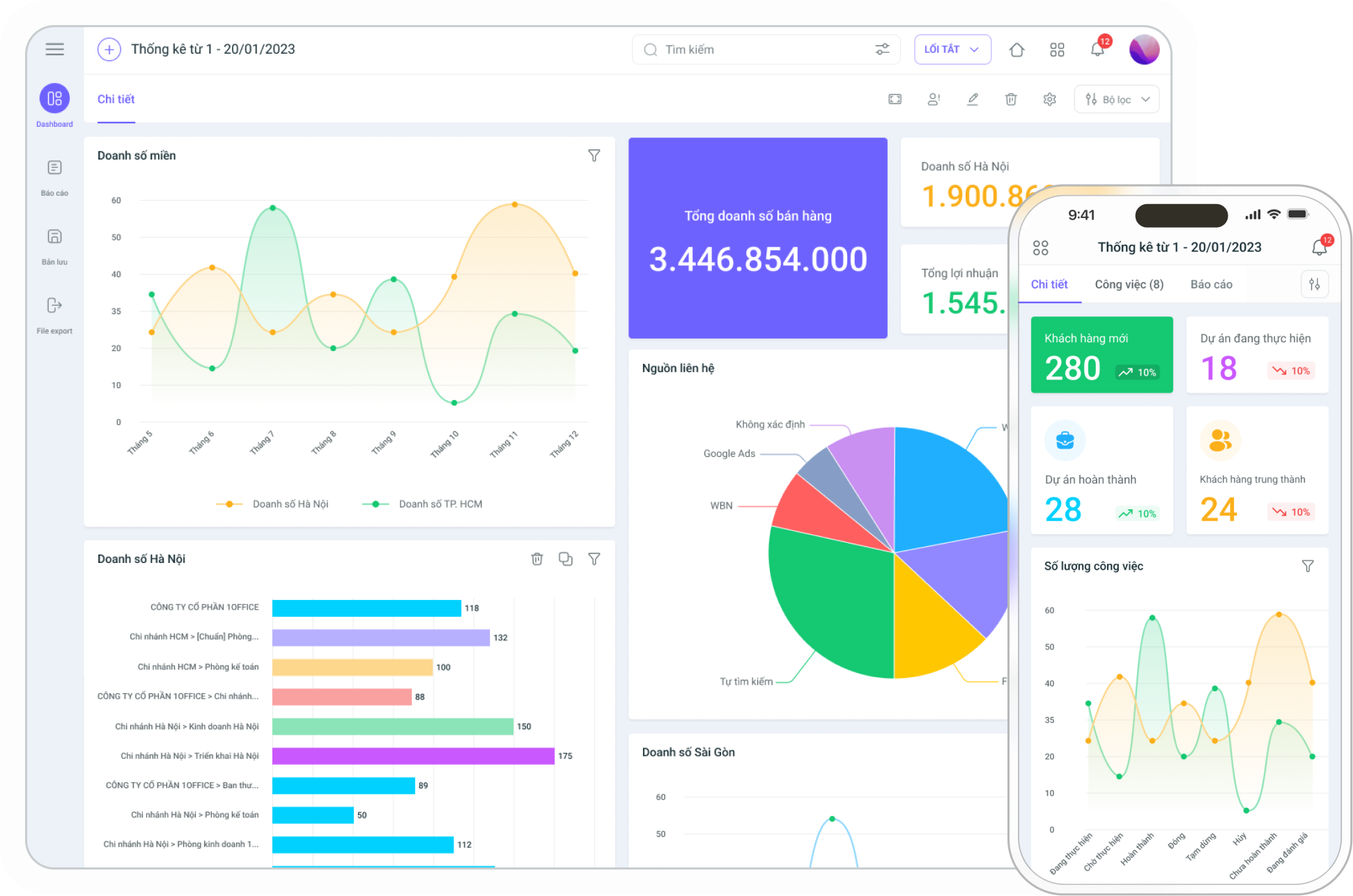
In-depth analysis: The biggest challenge for Vietnamese businesses when implementing a CRM is changing their culture and processes. A study by the Vietnam Digital Transformation Alliance indicates that 65% of CRM projects fail not because of the technology, but due to a lack of an organizational culture change strategy.
Effective strategy: Adopt the “CRM Maturity Model” method—implementing in 5 levels from basic management to customer experience optimization, with each level lasting 3-6 months to ensure organizational adaptation.
3. SCM (Supply Chain Management)
Supply chain management software has become a vital element, especially after the global disruptions caused by the COVID-19 pandemic. Solutions like SAP Ariba, Oracle SCM Cloud, and Blue Yonder not only manage but also optimize the entire supply chain, from raw material sources to the final point of consumption.
Breakthrough trend: SCM integrated with blockchain ensures transparency and traceability, which is especially important in the food and pharmaceutical industries. Digital Twin technology allows for the simulation and optimization of the supply chain in a virtual environment before real-world application.
4. HRM (Human Resource Management)
From simple personnel management, HRM software like 1Office’s 1HRM, Workday, BambooHR, and SAP SuccessFactors has evolved into platforms for managing the entire talent lifecycle. Integrated AI helps predict turnover trends, recommend personal development plans, and optimize the recruitment process.
New trend: HRM software integrates sentiment analysis technology to assess employee engagement levels, thereby proposing measures to enhance satisfaction and work performance.
Breakthrough Trends in B2B Software
1. API-first and Microservices
Microservices architecture and an API-first strategy are reshaping how B2B software is developed and deployed. Instead of huge monolithic systems, modern B2B software is built from small, independent, and flexible services connected via APIs.
Strategic benefits: This architecture allows businesses to update, expand, or replace individual parts of the system without affecting the whole. Deployment time is reduced from months to just a few weeks, and development costs are cut by up to 30%.
2. Low-code/No-code
Low-code/no-code platforms like 1Office, Microsoft Power Platform, Zoho Creator, and OutSystems are democratizing B2B software development. These tools allow business professionals to create and customize applications without needing in-depth programming knowledge.
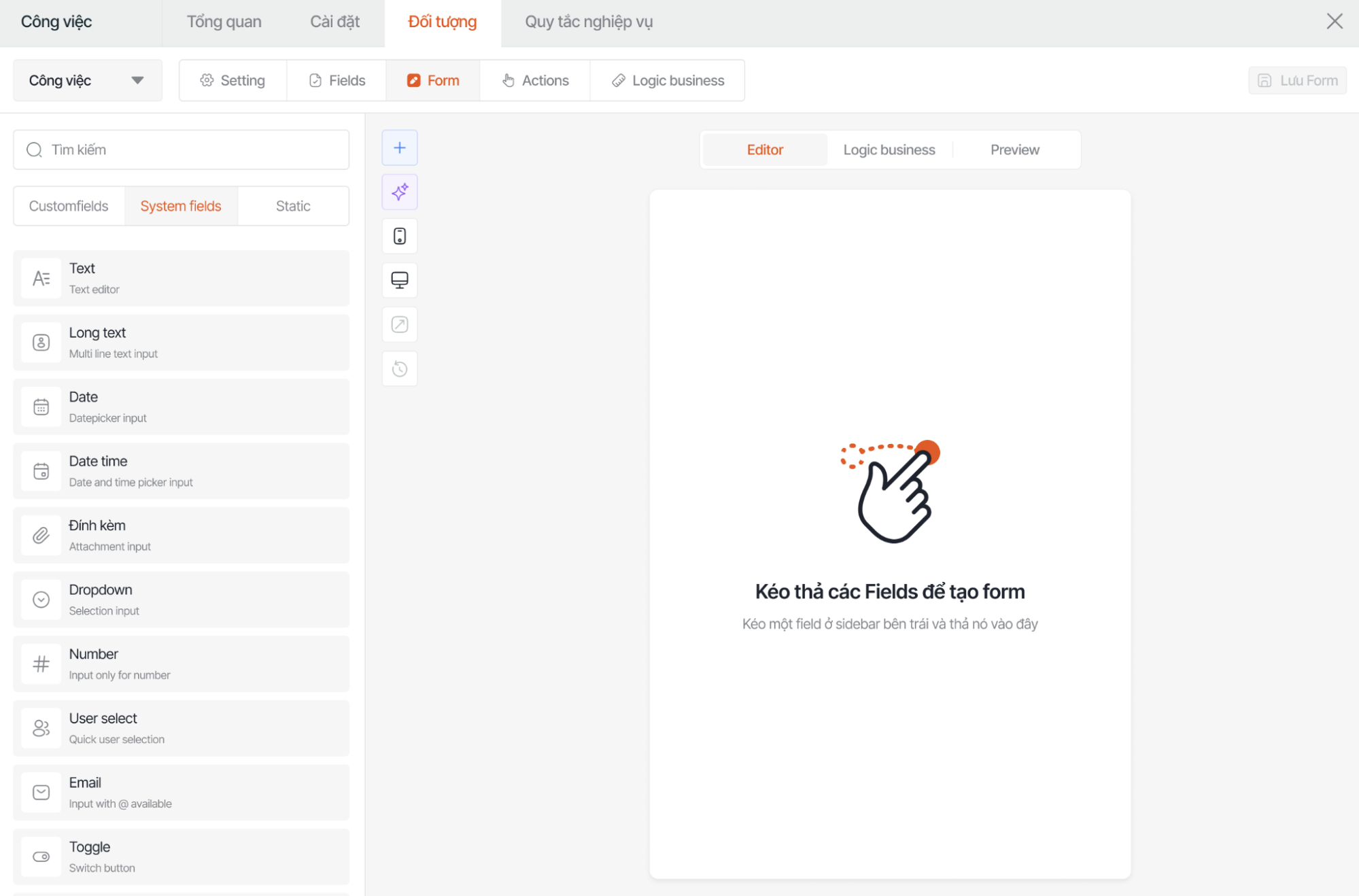
Register for a free 1Office Demo account!
Impact on Vietnamese businesses: With limited IT resources, low-code platforms help small and medium-sized enterprises in Vietnam quickly digitize their business processes. According to the Vietnam IT Outsourcing Conference, businesses adopting low-code solutions can shorten internal application development time by up to 70%.
3. AI and Machine Learning
Artificial intelligence and machine learning are being deeply integrated into B2B software at all levels. From intelligent customer support chatbots to market demand forecasting algorithms, AI is significantly enhancing the value of B2B software.
Practical applications:
- Predictive analytics: Modern B2B software can predict market demand with up to 85% accuracy, helping businesses be proactive in production and supply.
- Intelligent Process Automation (IPA): Combining RPA (Robotic Process Automation) with AI to automate complex processes, even those requiring decision-making capabilities.
- Text analysis and natural language processing: Automating the classification and processing of business documents such as invoices, contracts, and emails.
4. SaaS and Cloud-native
The SaaS (Software-as-a-Service) model has become the standard for B2B software. Cloud-native solutions are built specifically for the cloud environment, taking full advantage of scalability, security, and flexibility.
Financial analysis: Shifting from a capital expenditure (CAPEX) model to an operating expense (OPEX) model helps Vietnamese businesses, especially SMEs, access advanced technology without a large initial investment. According to the Vietnam Cloud Computing Association, the total cost of ownership (TCO) for a SaaS solution is 30-50% lower than traditional on-premise software after 5 years of use.
Effective B2B Software Selection and Implementation Strategy
1. Data-Driven Needs Assessment
Instead of choosing B2B software based on features and reputation, businesses need to conduct a specific, data-driven needs assessment:
- Analyze current processes: Use Process Mining tools to identify bottlenecks and opportunities for improvement.
- Quantify potential ROI: Build a detailed business case with specific KPIs for each B2B software.
- Gap Analysis: Assess the gap between current capabilities and business goals to define software requirements.
2. Comprehensive Implementation Strategy
Instead of implementing individual software solutions one by one, businesses need a comprehensive strategy for their B2B software ecosystem:
- Build an Enterprise Architecture: Design a comprehensive enterprise architecture before selecting specific solutions.
- API Integration Strategy: Define an integration strategy between software via APIs to ensure seamless data flow.
- Phased transition roadmap: Divide the implementation process into phases with clear objectives to ensure feasibility and minimize risk.
3. Comprehensive Change Management
The success of B2B software implementation depends 80% on people and processes, and only 20% on technology:
- Role-based Training: Develop different training programs for each user group.
- Build a Team of Change Champions: Select and train influential individuals within the organization to promote the adoption of the new system.
- Multi-channel Communication: Develop an internal communication strategy to ensure all employees understand the benefits and impact of the new system.
B2B Software for Specific Industries
1. Manufacturing and Processing
In addition to traditional ERP and SCM, the manufacturing industry needs to focus on:
- MES (Manufacturing Execution System): Connects the management system with the production floor, optimizing production planning and scheduling.
- PLM (Product Lifecycle Management): Manages the entire product lifecycle from idea and design to production and after-sales support.
- Digital Twin: Creates a digital replica of the factory and production lines to simulate and optimize operations.
2. Retail and Distribution
The retail industry requires specific B2B software such as:
- Omnichannel Commerce Platform: Integrates online and offline sales channels into a unified system.
- Smart POS: Not only processes transactions but also analyzes customer behavior and suggests cross-selling/up-selling.
- Retail Analytics: In-depth analysis of shopping behavior, display effectiveness, and price optimization.
3. Financial Services
Financial institutions need to focus on:
- Core Banking System: A platform for managing core banking operations.
- Transaction Monitoring Systems: Monitors transactions in real-time to detect fraud.
- RegTech Solutions: Automates compliance with increasingly complex legal regulations.
Security and Compliance in B2B Software
Modern Security Challenges
B2B software stores and processes sensitive data, making it a target for cyberattacks. Vietnamese businesses face:
- Supply Chain Attack: Attacks through third-party software vendors.
- API Vulnerabilities: Vulnerabilities in the APIs connecting software systems.
- Cloud Security Risks: Specific security risks in the cloud environment.
Comprehensive Security Strategy
- Zero Trust Architecture: Applies the “never trust, always verify” principle to all users and systems, requiring continuous authentication.
- DevSecOps: Integrates security into the entire software development lifecycle, not just as a final check.
- Data Classification: Classifies data by sensitivity level and applies appropriate protection measures.
Methods for Measuring ROI from B2B Software
1. Measuring Tangible Value
- Cost Savings: Reduces operational, personnel, and infrastructure costs.
- Productivity Improvements: Increases productivity through automation and process optimization.
- Revenue Growth: Increases revenue by improving customer experience and expanding the market.
2. Measuring Intangible Value
- Business Agility: The ability to adapt quickly to market changes.
- Decision Quality: Improves the quality of data-driven decisions.
- Employee Satisfaction: Increases employee satisfaction through effective work tools.
Conclusion
B2B software has gone far beyond its role as a support tool to become a strategic factor in shaping the future of businesses. In the context of global competition and market volatility, businesses that pioneer the adoption of modern B2B software will build a sustainable competitive advantage.
The challenge is not just choosing the right software, but also building a comprehensive digital transformation strategy, where B2B software is the tool to realize the business vision. Vietnamese businesses need a systematic approach, combining technology, processes, and people to maximize the value from their investment in B2B software.
With a strategic vision and the right implementation approach, B2B software will not just be an expense, but a lever that helps your business reach new heights in the digital era.