


 12/05/2026
  281 views
In today’s context, data has become a valuable resource, and big data analysis – Big Data Analytics has become a fascinating topic, attracting special attention from many businesses and organizations. However, the process of mining and analyzing big data poses a complex challenge, requiring in-depth knowledge and advanced skills. In this article, 1Office will provide you with an overview of everything you need to know about what Big Data Analytics is!
Mục lục
What is Big Data Analytics?
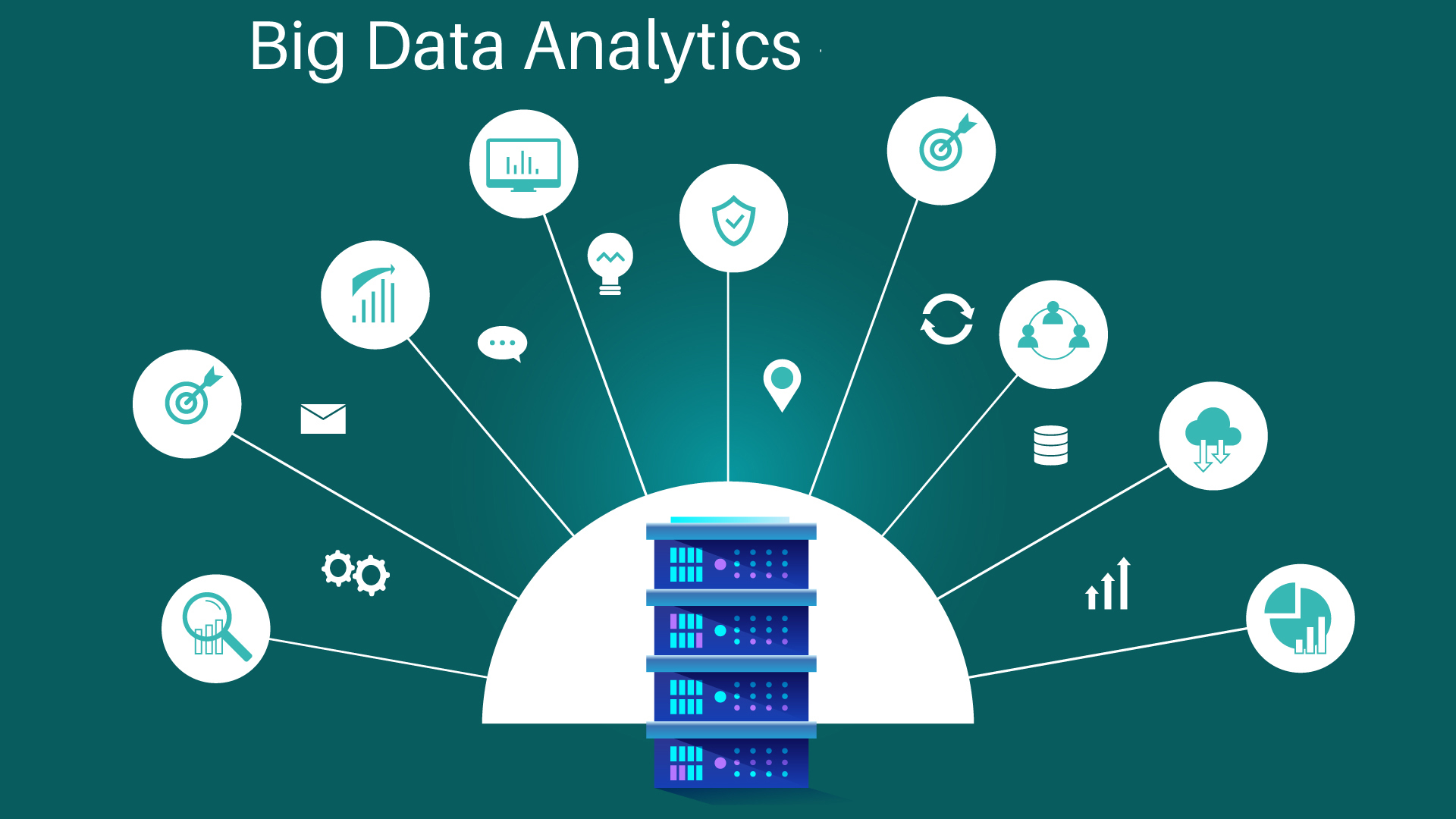
Big Data Analytics is the process of analyzing and processing large, diverse, and complex datasets to find and discover useful and valuable information for businesses. The data in this process is collected from various sources, including both structured and unstructured data, from different sources such as computers, sensors, websites, social networks, and many others.
Through Big Data Analytics, businesses can discover useful, reliable information and the relationships between data, thereby supporting decision-making and business strategy development.
Why is Big Data Analytics important for businesses?
Today, big data analysis has become a crucial tool for businesses of all sizes and in various fields. In general, big data analysis helps businesses transform data into information and information into insights. Applying Big Data Analytics can provide a significant competitive advantage over competitors, specifically:
Understanding customer behavior and habits
Big Data Analytics helps businesses collect and analyze customer data from various sources. This gives them deeper insights into customer needs, shopping habits, preferences, and behaviors. Through this analysis, they can make smart business decisions and marketing strategies, thereby creating more attractive products and services to meet customer needs.
Optimizing business operational efficiency
Big Data Analytics assists businesses in comprehensively evaluating, analyzing, and optimizing production, distribution, and inventory management processes. The result is improved operational efficiency, reduced costs, and increased revenue, thereby enhancing productivity and business effectiveness.
Predicting trends & forecasting situations
The ability of Big Data Analytics to forecast future trends and situations based on past and present data analysis helps businesses create/change medium and long-term plans and strategies, while optimizing the accuracy of business decisions. Big data enables businesses to identify new opportunities, make smarter business decisions, operate more efficiently, increase profits, and create customer satisfaction.
Enhancing the customer experience
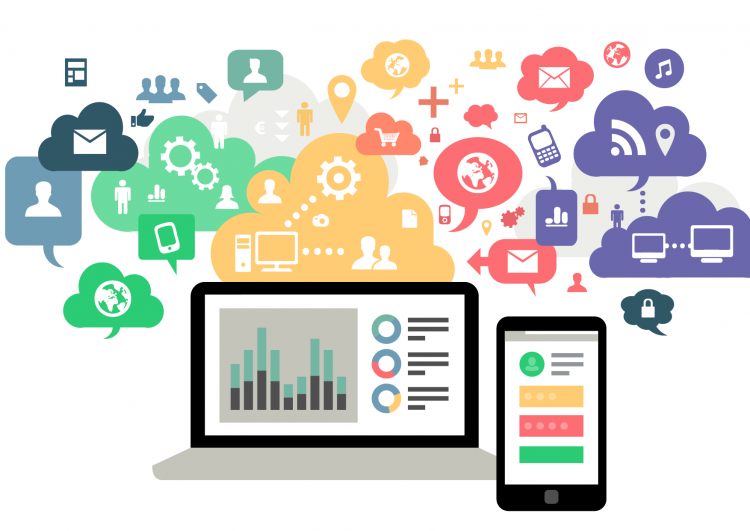
With in-depth analyzed data, businesses can use it to improve the customer experience from the product/service research stage to the after-sales process. This helps build trust, foster satisfaction, and establish long-term relationships with customers.
Strengthening information security
When using Big Data Analytics, information security becomes crucial to prevent data leaks or breaches of security regulations. Therefore, businesses need to implement strict data security measures to protect customer and company information.
Big Data Analytics Methods
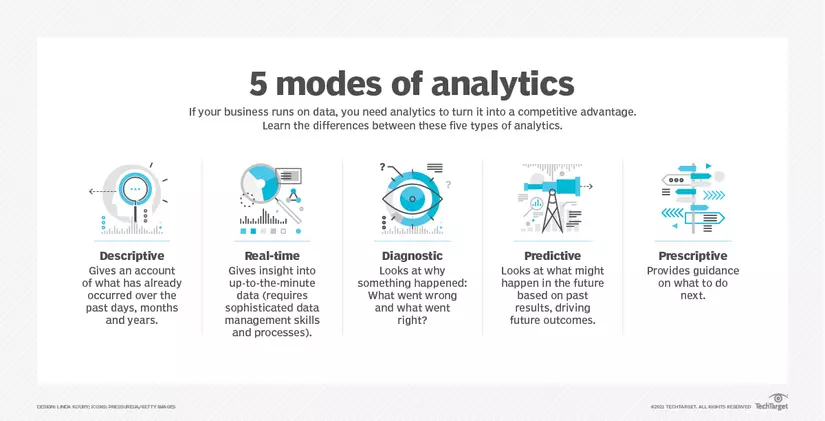
There are many types of Big Data Analytics or big data analysis methods used in the data analysis process:
Descriptive Analytics
Descriptive analytics is a type of data analysis that helps businesses better understand their current trends and performance. By simplifying and summarizing data into a readable format, descriptive analytics helps businesses identify important trends and details.
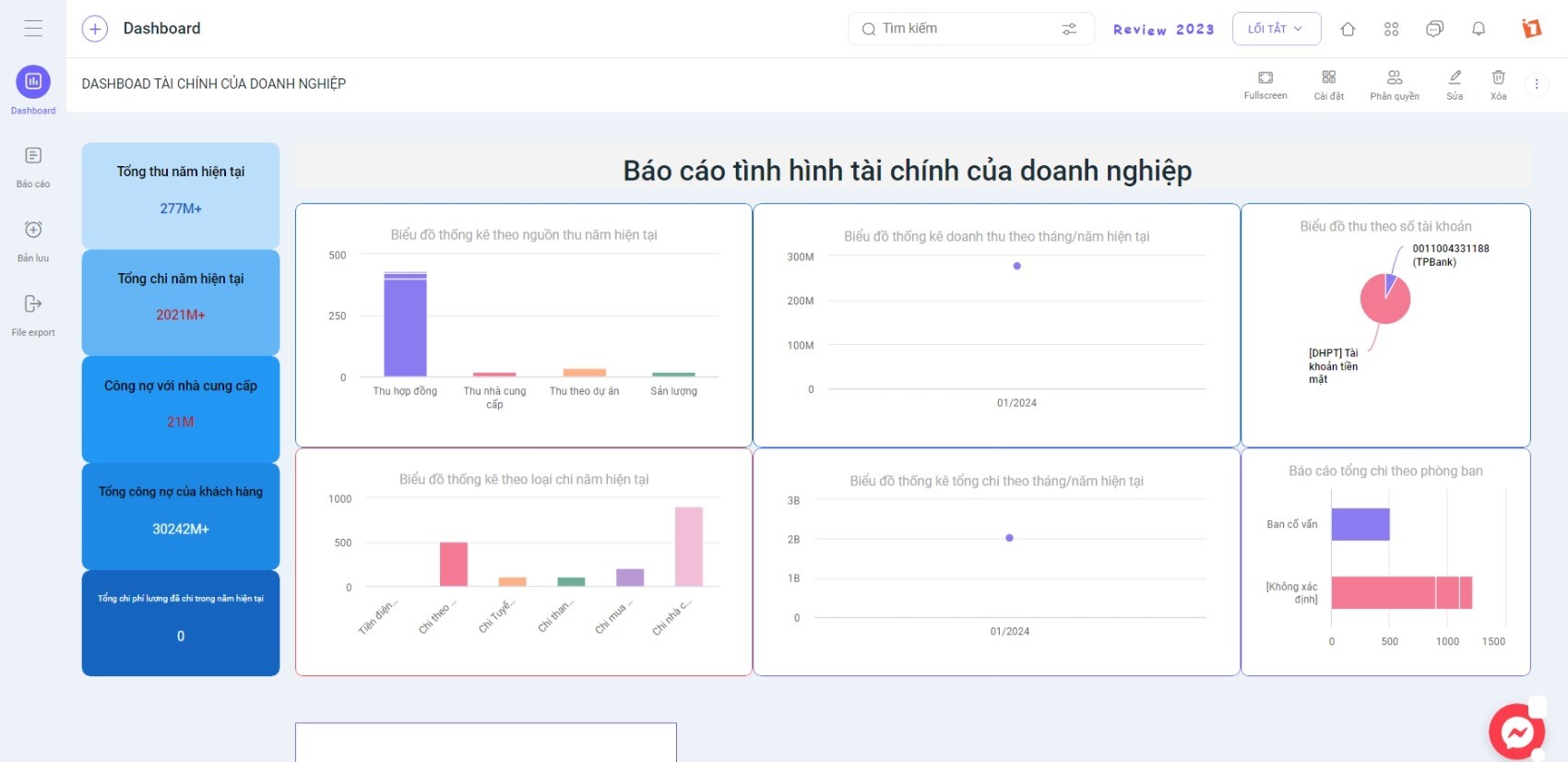
After identifying trends and details with descriptive analytics, businesses can use other types of analysis to learn more about the causes of those trends. This helps businesses make more informed business decisions.
For example: Dow Chemical Company used descriptive analytics to track data on its office space utilization. The descriptive analysis showed that a lot of office space was underutilized. With this information, Dow Chemical Company promoted the use of facilities around its office environment and saved about $4 million per year.
Diagnostic Analytics
Diagnostic analytics is a type of big data analysis that helps businesses better understand the causes of certain events related to customers, employees, products, etc. By using diagnostic analytics, businesses can answer the question, “Why did that happen?”

In business, diagnostic analytics is useful in many areas, such as:
- Investigating the reasons for churn rates: Diagnostic analytics can help businesses identify the factors that lead to customer churn. From there, businesses can implement measures to improve the customer experience and reduce the churn rate.
- Understanding the usage trends of loyal customers: Diagnostic analytics can help businesses better understand how their loyal customers use their products or services. This allows businesses to provide more personalized experiences for loyal customers.
For example: A business uses diagnostic analytics to evaluate the effectiveness of its social media marketing campaigns. The analysis shows that one of the most effective campaigns was one that focused on creating engaging and relevant content for the target audience. Thanks to diagnostic analytics, the business understood the reasons for this campaign’s success. Consequently, the business can apply similar strategies to future marketing campaigns.
Predictive Analytics
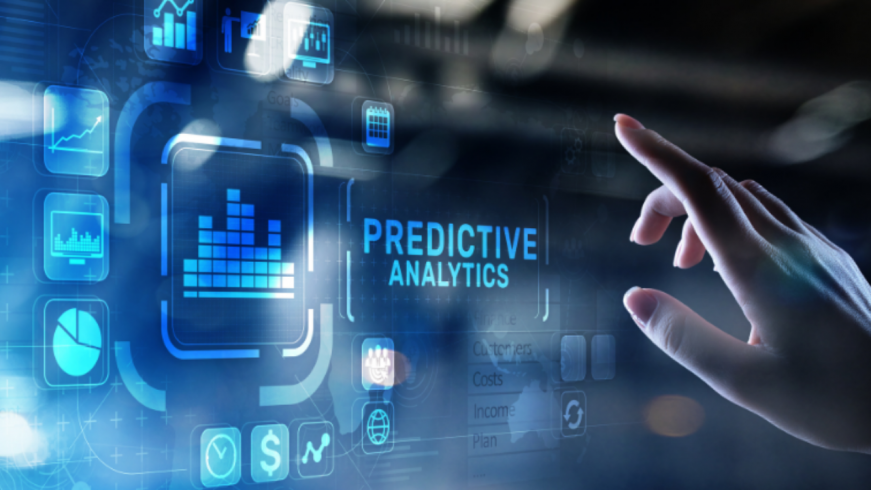
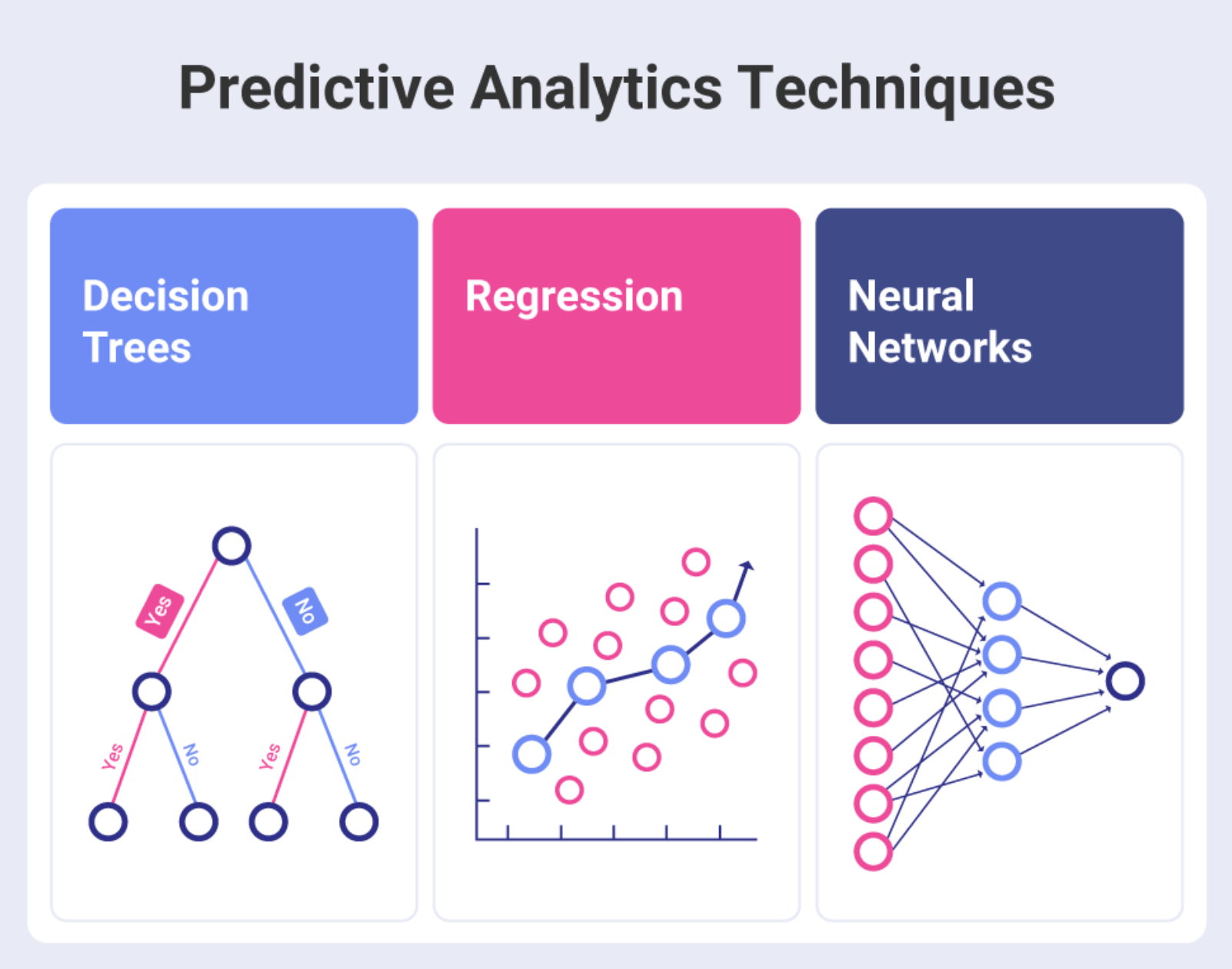
Predictive analytics is a type of big data analysis that helps businesses make predictions about the future, such as customer trends, market trends, etc. By examining historical and current data, predictive analytics can identify patterns and trends that are likely to occur in the future.
Predictive analytics uses predictive tools and models such as data mining technology, AI, and machine learning to make its predictions. These tools can analyze large amounts of complex data to identify patterns and trends that humans might not be able to see.
Predictive analytics is an important tool for businesses in many fields, such as:
- Marketing: Predictive analytics can help businesses identify customer and market trends so they can create more effective marketing strategies.
- Sales: Predictive analytics can help businesses identify potential customers and predict their likelihood of making a purchase.
- Manufacturing: Predictive analytics can help businesses determine future demand for products and services so they can plan production more effectively.
For example: PayPal is a company that provides online payment services. They used predictive analytics to identify fraudulent customer activities. By analyzing past payment data and user behavior data, PayPal can detect unusual patterns that may be signs of fraud. Predictive analytics has helped PayPal significantly reduce its fraud rate. This has helped protect customers and the company’s revenue.
Prescriptive Analytics
Prescriptive analytics is a type of big data analysis that uses results from descriptive and predictive analytics to provide a solution for a specific problem. This type of analysis is based on rules to prescribe a certain analytical path and uses insights from data to recommend the best next step for the company.
Prescriptive analytics can be used in many different fields, such as:
- Healthcare: Prescriptive analytics can be used to identify patient groups at high risk for certain diseases, such as obesity, diabetes, and cardiovascular disease. This can help healthcare providers focus their prevention and treatment efforts on those who need it most.
- Sales: Prescriptive analytics can be used to identify potential customers with the highest probability of making a purchase. This can help marketers target their marketing efforts more effectively.
- Manufacturing: Prescriptive analytics can be used to identify areas of the production process that can be improved. This can help companies reduce costs and improve product quality.
For example: In the healthcare industry, prescriptive analytics can be used to manage patient populations. For instance, a hospital can use prescriptive analytics to measure the number of obese patients. The hospital can then add filters for factors like diabetes and LDL cholesterol levels to identify where to focus treatment. Prescriptive analytics helped the hospital identify a group of patients at high risk for cardiovascular diseases. The hospital was able to focus its prevention and treatment efforts on this patient group, leading to a reduction in the incidence of cardiovascular disease.
How Does Big Data Analytics Work?
The basic operating principle of the big data analytics process includes the following steps:
- Data collection
- Data processing
- Data analysis
- Data visualization.
To perform these analytical processes, businesses can apply various technologies and methods, including statistical techniques, data mining, machine learning, and artificial intelligence.
Data Collection
Data collection is the first and most crucial step in the Big Data Analytics process. Data can be collected from many different sources, including:
- Traditional sources:
- Database systems: Data from the company’s internal database systems, such as CRM systems, ERP systems, accounting systems, etc.
- Reports: Data from business reports, financial reports, sales reports, etc.
- Customer surveys: Data from surveys conducted with customers to understand their needs and preferences.
- Online sources:
- Social media: Data from social media platforms like Facebook, Twitter, Instagram, etc.
- Websites: Data from the company’s websites, such as traffic data, online shopping data, etc.
- Mobile applications: Data from the company’s mobile apps, such as app usage data, in-app purchase data, etc.
Data Processing
Data preprocessing is the next important step after data collection. This process aims to clean the data, remove duplicate data, fill in missing values, and standardize the data to ensure its consistency and accuracy before analysis.
Specifically, the tasks to be performed during the data preprocessing stage include:
- Data cleaning: removing errors, inaccuracies, invalid data, outliers, etc.
- Removing duplicate data: keeping only a single copy of each data sample.
- Filling in missing values: replacing missing values with a reasonable value.
- Data standardization: converting data to the same unit of measurement or value range.
Data Analysis
In the data analysis stage, the data is tested with various models, algorithms, and analytical methods to find important patterns, trends, and information. The data analysis process is complex and requires expertise. Choosing the right models, algorithms, and analytical methods will help ensure the effectiveness of the analysis process.
Data Visualization
Data visualization is an important tool in big data analytics. It helps transform analysis results into visual images, making it easy for users to understand and grasp information. Using these visual forms helps users easily identify patterns, trends, and relationships in the data, thereby making more informed decisions.
Some Fields Where Big Data Analytics Should Be Applied
Big Data Analytics is the process of collecting, processing, and analyzing large datasets to find valuable information and insights. This technology can be applied in many different fields, helping businesses seize opportunities and optimize operations.
Business and Marketing
Big Data Analytics helps businesses identify customer trends and preferences, optimize marketing strategies, and capture the target market. For example, a business can use Big Data Analytics to analyze data from websites, social media, and mobile applications to better understand its customers. From there, the business can build marketing strategies that are more aligned with customer needs and preferences.
Finance and Banking
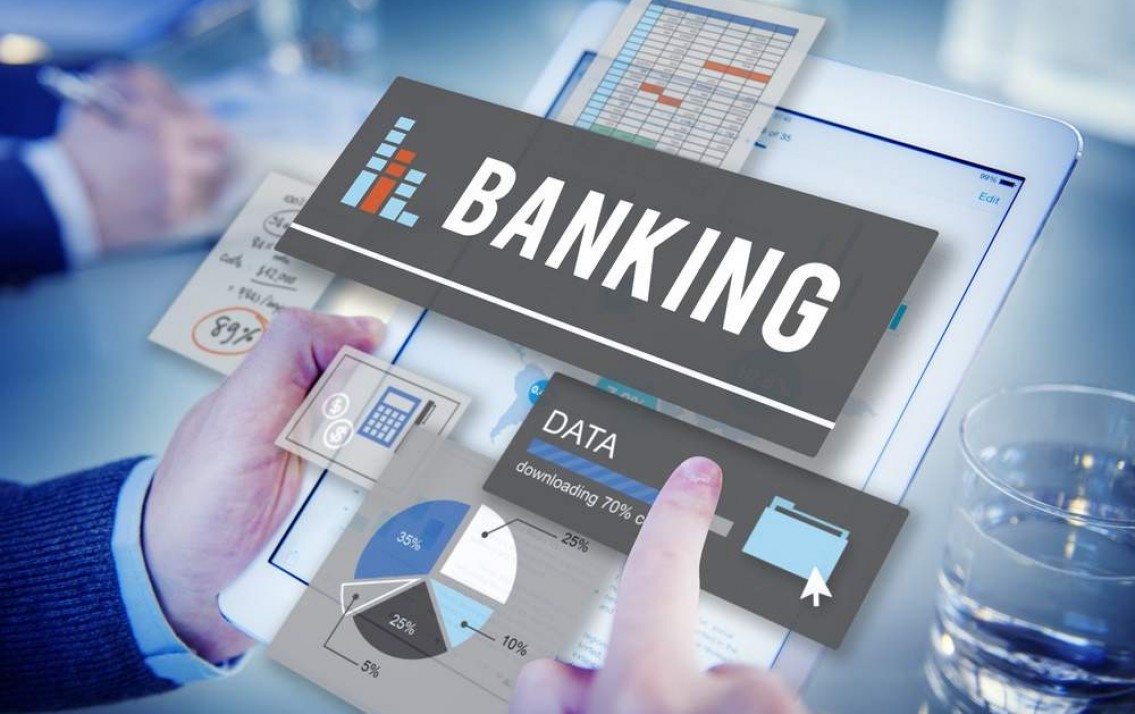
Big Data Analytics supports credit risk analysis, financial market forecasting, and investment performance analysis. For example, a bank can use Big Data Analytics to analyze data from customer credit profiles to identify the risk of default. This allows the bank to make more accurate credit-granting decisions.
Healthcare
Big Data Analytics helps investigate and predict disease outbreaks, optimize patient information management, and advance medical research. For example, a hospital can use Big Data Analytics to analyze data from patient medical records to identify early signs of a disease. This enables the hospital to implement timely interventions to prevent the disease from progressing.
Manufacturing Industry
Big Data Analytics helps monitor production performance, and predict and optimize the supply chain. For example, a manufacturing plant can use Big Data Analytics to analyze data from production equipment to identify potential issues. This allows the plant to take timely corrective measures to avoid production disruptions.
Education
Big Data Analytics helps track learning progress and improve educational quality through the analysis of learning data. For example, a school can use Big Data Analytics to analyze data from students’ assignments, tests, and essays to identify knowledge gaps. This enables the school to provide measures to help students learn more effectively.
Transportation
Big Data Analytics helps predict traffic conditions, optimize routes, and improve traffic safety. For example, a city can use Big Data Analytics to analyze data from traffic cameras to predict traffic congestion. This allows the city to implement traffic control measures to minimize congestion.
Technology and Product Development
Big Data Analytics helps analyze customer feedback and optimize the new product development process. For example, a technology company can use Big Data Analytics to analyze data from customer product reviews to identify features that need improvement. This allows the company to develop new products that better meet customer needs.
———————————-
We hope this article has helped you better understand what Big Data Analytics is and how to apply it in practice. We wish you success in applying Big Data Analytics to achieve great results in your work and business development!
















