


How to account for trade discounts for buyers & sellers


Trade discounts are a common accounting transaction but can be easily confused if not recorded correctly for both the buyer and the seller. This article will help you clearly understand how to account for trade discounts and the important considerations when handling this operation.
Mục lục
- 1. What is a trade discount?
- 2. Types of Trade Discounts
- 3. Guide on How to Account for Trade Discounts
- 4. Example of end-of-period trade discount accounting
- 5. Differentiating trade discounts from related terms
- 6. Guide to Writing a Trade Discount Invoice
- 7. What is the role of trade discounts in business?
- 8. Conditions for applying trade discounts in practice
- 7. Frequently Asked Questions
- Conclusion
1. What is a trade discount?
A trade discount is a price reduction that a seller of goods or services gives to a buyer when they purchase in large quantities/volumes. The purpose of this is to encourage buyers to purchase more goods, while also helping the seller to accelerate sales, reduce inventory costs, and recover capital quickly.

Currently, businesses have two methods for accounting for trade discounts, and managers need to choose the method that aligns with the accounting standards they are applying:
- If the business applies Circular 200, the Trade Discount is recorded in Account: 521 (5211 – Trade Discounts, 5213 – Sales Allowances)
- If the business applies Circular 133, the Trade Discount is recorded in Account: 511 (Revenue from Sales and Service Provision)
2. Types of Trade Discounts
Some common types of trade discounts today include:
- Per-purchase discount: Applied to each purchase, with a specific discount rate depending on the quantity/volume of goods purchased. For example: A retail clothing store offers a 10% discount for customers who buy 10 or more products.
- Volume discount based on total purchase value: Applied when a customer’s total purchase value reaches a certain level within a specific period. This type of discount is usually higher than a per-purchase discount. For example: A food distributor offers a 5% discount to customers whose total purchase value for the year reaches 1 billion VND.
- Cumulative discount (rebate): The value of a customer’s purchases is accumulated over a period, and a corresponding discount is applied when a certain threshold is reached. For example: A cosmetics retail store has a loyalty points program where customers who accumulate enough points receive a discount of up to 10% on their next purchase.
- Post-promotion discount: This is a way to encourage customers to buy additional products after participating in a promotion. A discount is applied to specific products after the customer has purchased a promotional item. For example: An electronics supermarket runs a promotion with a 50% discount on certain TV models and also gives a 10% discount voucher for customers who purchase accompanying accessories.
The application of these trade discount types should be clearly specified in the sales contract between both parties. The buyer should carefully review all terms related to trade discounts before signing the contract.
Reference: How to calculate percentage discounts for businesses during holidays, Tet, sales, Black Friday, etc.
3. Guide on How to Account for Trade Discounts
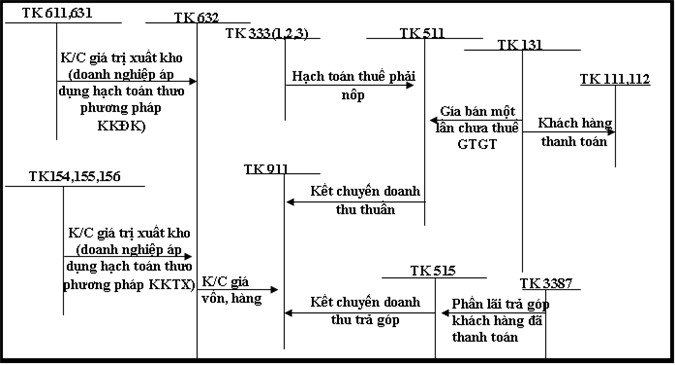
3.1. Accounting for Trade Discounts on the Seller’s Side
Case where the selling price has already been reduced by the discount:
Accounting during the period:
- Debit: Account 331 – Selling Expenses
- Credit: Account 511 – Revenue from Sales and Service Provision (Amount includes the discount)
End-of-period accounting:
- No accounting for trade discounts is needed.
Case where the selling price has not been reduced by the discount:
Accounting during the period:
- Debit: Account 511 – Revenue from Sales and Service Provision
- Credit: Account 621 – Trade Discounts
End-of-period accounting:
- Debit: Account 521 – Trade Discounts
- Credit: Account 511 – Revenue from Sales and Service Provision
3.2. Accounting for Trade Discounts on the Buyer’s Side
In cases where trade discounts are received after the purchase, the accountant must, based on the fluctuation of inventory, allocate the received trade discount or sales allowance based on the amount of inventory that is unsold or has been determined as sold during the period. Specifically:
Case where the selling price has already been reduced by the discount:
Accounting during the period:
- Debit: Account 131 – Accounts Receivable
- Credit: Account 511 – Revenue from Sales and Service Provision (Amount includes the discount)
End-of-period accounting:
- No accounting for trade discounts is needed.
Case where the selling price has not been reduced by the discount:
Accounting during the period:
- Debit: Account 131 – Accounts Receivable
- Credit: Account 5211 – Trade Discounts
End-of-period accounting (Allocating trade discounts to inventory):
- Inventory remaining in stock:
- Debit: Account 152, 153, 156 (Value of the trade discount for unsold inventory during the period)
- Credit: Account 131 – Accounts receivable
- Inventory sold:
- Debit: Account 632 – Cost of goods sold
- Credit: Account 131 – Accounts receivable
- Debit: Account 5211 – Trade discounts
- Credit: Account 511 – Revenue from sales and services
4. Example of end-of-period trade discount accounting
For trading companies, whether they are the buyer or the seller, it is necessary to track trade discounts to ensure the correct calculation of the cost of goods sold, inventory import price, etc.

4.1. Accounting for trade discounts according to Circular 200
Company A sells goods to Company B for a value of 100 million VND. Company B receives a 5% trade discount on the total order value.
Accounting for trade discounts according to Circular 200:
At the time of sale:
- Debit Account 131: 100,000,000 VND
- Credit Account 511: 100,000,000 VND
At the end of the period:
- Debit Account 5211: 5,000,000 VND
- Credit Account 511: 5,000,000 VND
Explanation: At the time of sale: Record sales revenue of 100 million VND to Account 511 and debit Account 131 – Accounts receivable. At the end of the period: Record the trade discount of 5 million VND to Account 5211 – Trade discounts and transfer it to Account 511 to reduce sales revenue.
4.2. Accounting for trade discounts according to Circular 133
Company A sells goods to Company B for a value of 100 million VND. Company B receives a 5% trade discount on the total order value.
Accounting for trade discounts according to Circular 133:
At the time of sale:
- Debit Account 131: 95,000,000 VND
- Credit Account 511: 95,000,000 VND
Explanation: At the time of sale: Record sales revenue including the trade discount (95 million VND) to Account 511 and debit Account 131 – Accounts receivable.
Note: Accounting for trade discounts must be carried out in accordance with the provisions of the Accounting Law and its implementing documents. At the same time, managers need to fully and accurately record information related to trade discounts and should consult with an accounting expert if there are any questions.
5.1. Differentiating between trade discounts and sales allowances
Both trade discounts and sales allowances are forms of reducing the value of goods sold and can be applied to all customers or certain specific customers.
| Characteristics | Trade Discount | Sales Discount |
| Purpose | To encourage customers to buy in large quantities, buy early, or pay on time. | To clear stock, liquidate inventory, and attract customers. |
| Time of Application | Can be applied before, during, or after the sale. | Usually applied before the sale. |
| Form of Presentation | Presented as a percentage or a fixed amount deducted from the selling price. | Presented as a new selling price that already includes the discount. |
| Accounting Entry | Recorded in Account 521 – Trade Discounts. | Recorded in Account 632 – Cost of Goods Sold. |
Example:
- Trade discount: Company A sells goods to Company B for a value of 100 million VND. Company B receives a 5% trade discount on the total order value. Thus, the value of the goods after the discount is 95 million VND.
- Sales discount: Retail store X offers a 10% discount on all products during Black Friday. Therefore, the new selling price of the product will be reduced by 10% compared to the original price.
5.2. Differentiating between trade discounts and payment discounts
Trade discounts and payment discounts are similar in that they are both applied as a percentage reduction on the selling price and aim to incentivize customers.
| Characteristics | Trade Discount | Payment Discount |
| Purpose | To encourage customers to buy in large quantities or purchase early. | To encourage customers to pay on time. |
| Conditions for Application | Based on the quantity of goods purchased, order value, or time of purchase. | Based on the customer’s payment time. |
| Presentation Format | Shown on the sales invoice. | Can be shown on the sales invoice or in a separate notice. |
| Accounting Entry | Recorded in Account 521 – Trade Discounts. | Recorded in Account 511 – Revenue from Sales and Service Provision. |
Example:
- Trade discount: Company A sells goods to Company B for 100 million VND. Company B receives a 5% trade discount if they pay within 10 days. The value of the goods after the discount is 95 million VND.
- Payment discount: Retail store Y applies a 2% payment discount for customers who pay their invoices within 5 days. Customers will receive a 2% reduction on the invoice value if they pay on time.
6. Guide to Writing a Trade Discount Invoice

Case 1: Discount invoice per purchase
On March 1st, Company A launches a promotion: buy 1 XYZ Smartphone, valued at 30 million, and receive a 10% discount. On March 5th, Company B purchases one of these XYZ Smartphones for 30 million, thus qualifying for the discount. At that point, the invoice will be written as follows:
| No. | Name of goods/services | Unit | Quantity | Unit Price | Amount |
| 1 | 2 | 3 | 4 | 5 | 6 = 4×5 |
| 01 | Smartphone XYZ | Unit | 1 | 27.000.000 | 27.000.000 |
| Subtotal | 27.000.000 | ||||
| VAT rate: 10% | VAT | 2.700.000 | |||
| Total amount due | 29.700.000 | ||||
| In words: Twenty-nine million seven hundred thousand dong | |||||
Case 2: Invoices with discounts based on quantity or sales volume
On March 5th, Company A signs a contract with Company B, agreeing that if Company B purchases 10 XYZ Smartphones valued at 30 million each, they will receive a 5% trade discount (30 million x 5% x 10 = 15 million). Company B proceeds to purchase all 10 phones at once and receives the discount (which is less than the total price of the 10 phones).
Because the discount amount is less than the amount on the final invoice received by the buyer, the discount amount will be deducted directly on that final invoice.
| No. | Product/Service Name | Unit | Quantity | Unit Price | Amount |
| 1 | 2 | 3 | 4 | 5 | 6 = 4×5 |
| 01 | Smartphone XYZ | unit | 10 | 30.000.000 | 300.000.000 |
| Trade Discount 5% | 15.000.000 | ||||
| Subtotal | 285.000.000 | ||||
| VAT Rate: 10% | VAT | 28.500.000 | |||
| Total Amount Due | 313.500.000 | ||||
| In words: Three hundred thirteen million, five hundred thousand dong. | |||||
On March 5th, Company A signed a contract with Company B, agreeing that if Company B purchased 10 XYZ Smartphones valued at 30 million each, they would receive a 15% trade discount (30 million x 15% x 10 = 45 million). After purchasing 9 phones, Company B bought one more and received the 15% discount (an amount greater than the price of a single phone).
Because the discount amount is greater than the amount on the final invoice, or in cases where the invoice is issued only after the promotion period ends, the seller must issue a downward adjustment invoice for the previous invoices..
| No. | Product/Service Name | Unit | Quantity | Unit Price | Total Amount |
| 1 | 2 | 3 | 4 | 5 | 6 = 4×5 |
| 01 | Adjustment to reduce the amount and tax for the invoices in the attached statement … due to a 15% trade discount | 45.000.000 | |||
| Subtotal | 45.000.000 | ||||
| VAT Rate: 10% | VAT | 4.500.000 | |||
| Grand Total | 49.500.000 | ||||
| In words: Forty-nine million five hundred thousand dong. | |||||
Additionally, the application of trade discounts and payment discounts must be specifically stipulated in the sales contract between the two parties. Buyers should carefully review the terms related to discounts before signing the contract.
7. What is the role of trade discounts in business?
A trade discount is not just a simple form of “price reduction” but also a strategic tool in business, helping companies manage revenue, maintain customer relationships, and increase their competitive edge in the market. When designed and applied correctly, trade discounts bring long-term value to both the seller and the buyer.
Specifically, trade discounts play a crucial role in the following aspects:
Accelerating goods consumption
When customers receive attractive discounts, they tend to buy more per order or increase their purchasing frequency. This helps businesses quickly achieve sales targets and clear inventory more effectively.
Increasing market competitiveness
In a highly competitive business environment, discounts are a flexible tool that helps businesses retain existing customers and attract new ones. A reasonable discount policy can help a company differentiate itself without directly lowering its selling price.
Helping businesses forecast revenue and output more accurately
By applying discounts based on target output or revenue, businesses can more accurately estimate market demand, allowing them to plan production and inventory reasonably, avoiding shortages or surpluses.
Creating motivation for long-term cooperation between suppliers and customers
Trade discount policies are often tied to long-term goals, such as progressive discounts on an annual or quarterly basis. This encourages customers to maintain sustainable cooperation, helping the business build a stable and loyal distribution network.

8. Conditions for applying trade discounts in practice
The application of trade discounts must be based on clear and transparent conditions to ensure legality in accounting and to avoid future disputes between the business and its customers. Below are the important conditions that businesses need to understand before implementation:
Applied when customers reach a certain output or revenue
Typically, trade discounts are only applied when customers purchase goods in large quantities or achieve a committed sales level within a specified period (month, quarter, or year).
Must be clearly stated in the contract or an addendum:
The discount policy must specify the discount rate, eligibility conditions, application period, and payment method. Stating this clearly in the contract ensures legal validity and serves as a basis for proper accounting and invoicing.
Can be applied at specific times (end of month, quarter, year)
Businesses can choose a time to summarize output or revenue to determine the discount level. This method simplifies calculations and encourages customers to purchase more at the end of the period to achieve a higher discount.
Ensure complete documentation and invoices for accounting
For a trade discount to be recognized as valid for accounting and tax purposes, the business must issue a separate discount invoice or adjust the original invoice, accompanied by a sales reconciliation statement, a confirmation record, and payment documents between the two parties.
7. Frequently Asked Questions
When should a trade discount be recognized?
A trade discount is usually recognized when the sales contract is completed or when the discount has clearly arisen, for example, when the customer has met the purchasing conditions specified in the contract. The trade discount can be adjusted after the invoice is issued and is typically recorded in account 521 (Sales Deductions) according to Circular 200/2014/TT-BTC of the Ministry of Finance.
If a customer returns goods after receiving a trade discount, does the accounting change?
According to Article 16 of Circular 39/2014/TT-BTC, when goods are returned and VAT must be adjusted, an adjustment invoice must be issued to reduce the quantity of goods and the discount amount. When a customer returns goods for which a trade discount was received, the business must adjust to decrease the recognized revenue and discount. Specifically, account 521 (Sales Deductions) will be adjusted downward. At the same time, if the trade discount was included in the VAT calculation, an adjustment invoice must be issued to reduce the corresponding VAT.
Are trade discounts subject to value-added tax (VAT)?
According to Article 7 of Circular 219/2013/TT-BTC on value-added tax, a trade discount will reduce the VAT taxable value if it is recognized after the invoice is issued. A trade discount is subject to VAT if it is applied when the invoice is issued. If the discount is recognized after the invoice is issued, the business needs to issue an adjustment invoice to reduce the VAT payable corresponding to the value of the trade discount.
How are trade discounts handled in financial statements?
According to Article 49 of Circular 200/2014/TT-BTC, trade discounts must be recorded in net revenue and not accounted for separately as an expense. A trade discount is recorded as a deduction from revenue. In the financial statements, it is not recorded separately but is included in the “Net Revenue” section after deducting items such as trade discounts, returned goods, and sales allowances.
If the contract does not specify trade discounts, can they be applied and accounted for later?
If the contract does not specify a trade discount, its subsequent application must be based on a written supplementary agreement. Without such an agreement, the business will face difficulties in accounting for the trade discount due to a lack of legal basis and may have to resolve it through other means, such as a direct price reduction instead of a discount.
Do trade discounts affect after-tax profit?
According to Circular 200/2014/TT-BTC, trade discounts reduce a company’s revenue and pre-tax profit. A trade discount reduces net revenue, which in turn reduces pre-tax profit. As pre-tax profit decreases, corporate income tax will also decrease accordingly, thus affecting the after-tax profit.
Conclusion
Trade discount is an effective sales tool that encourages customers to purchase or pay on time. Applying reasonable trade discounts will help businesses increase revenue, reduce costs, and enhance their competitiveness in the market.
We hope the information in this article has helped you better understand how to account for trade discounts. If you have any further questions or need advice on the 1Office CRM sales management software, please contact us for a detailed consultation.
- Hotline: 083 483 8888
- Facebook: https://www.facebook.com/1officevn/
- Youtube: https://www.youtube.com/@1office-chuyendoisodn




