13/05/2026
  331 views
Are you a recruiter lost in a tiring and stressful recruitment process, juggling job briefs, talent sourcing, conducting interviews, and coordinating offers for multiple positions? Do you wish you had more control over your hiring? The best way to reduce stress is to take the time to create a clear and transparent recruitment plan. So, do you know how to create an effective and accurate personnel plan? If you want to break away from the old recruitment process, you can’t miss this article.

Mục lục
- Common Mistakes in Creating a Recruitment Plan
- The Process for a Successful Employee Recruitment Plan for Businesses
- 1Office HRM – A Solution to Enhance Recruitment Efficiency for HR
- Some of the Most Complete and Detailed Recruitment Plan Templates for 2026
- What are the contents of a recruitment plan?
- Frequently Asked Questions about Recruitment Planning
Common Mistakes in Creating a Recruitment Plan
A recruitment plan is a well-defined strategy to attract, hire, and onboard the right talent. A personnel plan helps business owners and managers focus their efforts on effective recruiting resources. However, businesses today often face many difficulties in the recruitment planning process or make mistakes during implementation. Below are some common mistakes that businesses often make when creating a personnel plan.
Not fully recognizing the importance of a recruitment plan
Most businesses today do not fully recognize the role of recruitment planning. In reality, it can be seen that businesses are still recruiting in the traditional way; for example, when a position needs to be filled, the business owner will ask HR to start recruiting a new person.

At that point, the HR department will begin the process of recruiting and interviewing to find a suitable person. Therefore, recruitment revolves around the cycle of recruiting – training – probation – resignation and relies on the HR department’s recruitment capacity without any prior preparation.
Not understanding the purpose and need for recruitment
One of the common mistakes businesses make is not understanding the need and purpose of recruitment. As a result, recruiters simply think that a recruitment plan is a form showing the number of employees to be hired and when the hiring needs to be completed. Therefore, the HR department often does not clearly understand the needs and purpose of the recruitment, leading to hiring low-quality candidates or those who are not suitable for the position.
Not visualizing the ideal candidate profile
Clearly understanding the candidate profile is one of the important factors for HR to know exactly what kind of employee they need to recruit. In reality, the HR department often does not know what kind of employee they need, what qualities or skills are required to meet the job’s demands.
This will cause difficulties for the HR department because they cannot determine the standards for evaluating the candidate competency framework or the candidate’s suitability for the job. The consequence of this is hiring the wrong person, wasting training time and recruitment costs.
Not investing time in building the recruitment plan
This is a common mistake that many HR departments make when creating a recruitment plan. To have a complete recruitment plan, the HR department needs to invest time and effort in brainstorming, budgeting, and planning. If the plan is only created in a general and sketchy way, it will not be feasible during the recruitment process.

Not determining the priority level for the position to be filled
The purpose of recruitment is to meet the goals of increasing sales, profits, and expanding the customer network. Therefore, members of the HR department may not understand the company’s short-term and long-term growth objectives.
This leads to the allocation of time and recruitment budget not being focused on priority positions. For large enterprises, this will lead to a shortage of personnel in important positions, affecting the efficiency of recruitment.
From the difficulties mentioned above, the importance of creating a recruitment plan for every business is clear. Without a clear and detailed recruitment plan from the beginning, businesses will have to spend a lot of money and time on recruitment without achieving high efficiency. Therefore, a detailed and clear personnel plan is an important step to help businesses recruit quickly and easily. Let’s learn about the 7 steps to create a recruitment plan in the content below.
| For your reference: Top 10 most comprehensive and effective recruitment management software |
The Process for a Successful Employee Recruitment Plan for Businesses
Regardless of your company’s size, you need a detailed employee recruitment plan to track open positions and manage your workforce. Follow these steps to write a recruitment plan that fits your company’s needs.
1. Identify Recruitment Needs
The first step in creating a recruitment plan is to clearly define your hiring goals. In this step, HR recruiters need to thoroughly research the requirements of each position and the most effective marketing methods to attract candidates.
Defining goals for your recruitment plan will help increase the number of employees, diversify the workforce, cut costs, and shorten the recruitment process. You can use these goals to shape your recruitment plan.

For example: Your business is expanding its scale and market, requiring the recruitment of 50 sales employees to meet the workload. At this point, the HR department needs to devise a plan to recruit high-quality, potential candidates.
2. Forecast Recruitment Needs
Next, you need to forecast your business’s recruitment needs for the coming months or year. Reviewing the company’s hiring needs will help you forecast for your recruitment plan, attract and reach more suitable talent, and plan your outreach and budget in the best way possible.
3. Define Skills for Each Position
Each position will have its own professional and skill requirements to meet the job criteria. To quickly recruit suitable talent, the HR department needs to understand the necessary skills to select potential candidates and achieve the set recruitment goals.
A suitable employee is not only one who meets the skill requirements; personality fit is also very important. In the recruitment process, assessing an employee’s personality can be done through the MBTI test. This is an assessment that many businesses are using in their personnel evaluation process.
For example: When recruiting a Marketing employee, in addition to professional knowledge, the candidate needs certain skills such as communication, planning, and work management skills. Therefore, recruiters need to thoroughly understand the specifics of each job to establish criteria for evaluating the candidate in the best way. You can refer to effective recruitment websites to help recruiters find candidates quickly.
| Read now: What is MBTI? Using personality tests to assess employees and candidates |
4. Budgeting for the recruitment plan
A well-planned recruitment budget will help you choose candidate sources reasonably and maximize cost savings for subsequent recruitment steps. When recruitment costs are minimized, it becomes easier to secure additional budget for the resources you need to get the job done.

A comprehensive recruitment budget will include:
- Sourcing costs (e.g., job boards, programmatic advertising, recruitment agencies)
- Selection costs (e.g., background check and assessment tools)
- Employee referral costs (e.g., referral software, background checks)
- Costs for general employer branding activities and costs related to your internal recruitment team (e.g., salaries). Additionally, some organizations will include things like IT equipment/stationery allowances and other related expenses
5. Create an attractive job description
To attract candidates to apply for positions in your company, you need to ensure the job description is detailed and accurate. It must accurately reflect what you expect from this role. If you need a new position or anticipate additional roles, create a very detailed job description for their new job.
6. Establish a clear recruitment process
Once you have defined the goals, needs, and recruitment budget, you can begin building a clear and accurate recruitment process. Creating a recruitment process isn’t just about picking your favorite candidate.
You need to create a thorough onboarding process to quickly increase the conversion rate from candidate to employee. This can include a welcome information packet upon hiring, a virtual greeting, a planned program for the first day, assigning a mentor, and having a check-in schedule for the first week. A strong onboarding process will help employees feel comfortable and warmly welcomed.
7. Evaluate the effectiveness of the recruitment plan
Your recruitment plan should be a living document that reflects the progress and development your company achieves. As your company grows, adapt your recruitment strategy to meet increasing hiring needs. Regularly evaluate the effectiveness and relevance of your company’s strategic recruitment plan and document any updates you make.
| See more: A collection of 12+ effective recruitment methods for every business |
1Office HRM – A Solution to Enhance Recruitment Efficiency for HR
In addition to the steps above, choosing recruitment management software is an effective solution to easily optimize the personnel recruitment process. Among them, 1Office’s recruitment management solution is an effective solution that helps you create recruitment plans, and manage and evaluate candidates quickly. This helps you screen candidates, maintain candidate profiles, and communicate with them easily.
Key Features of the Recruitment Planning Software
Create Recruitment Requisitions
- Create a recruitment process to help businesses optimize recruitment costs and time
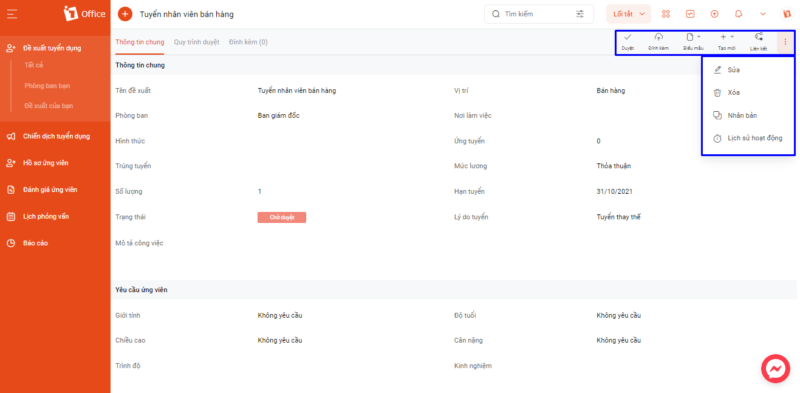
- Recruitment requisitions make it easy to track the company’s hiring campaigns
- Filter and classify candidate profiles according to the recruiter’s proposed criteria
CV Management & Candidate Evaluation
- A tool to help manage personnel records, making it easy to filter and search for candidate profiles for each campaign
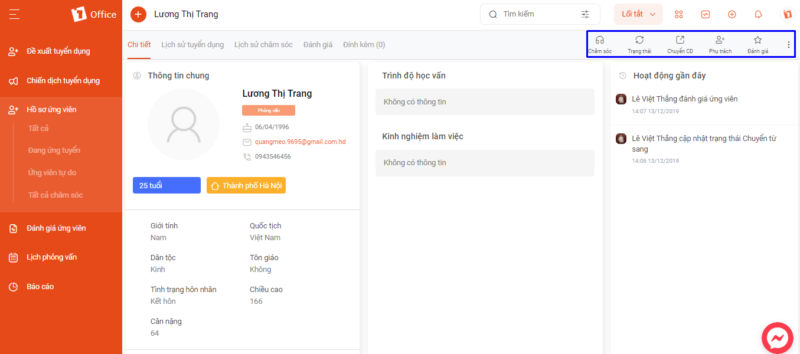
- Save the interaction history for each candidate, making it easy to manage their status
- Directly evaluate the competency of each candidate through criteria and evaluation frameworks for easy candidate searching
Recruitment Campaign Management
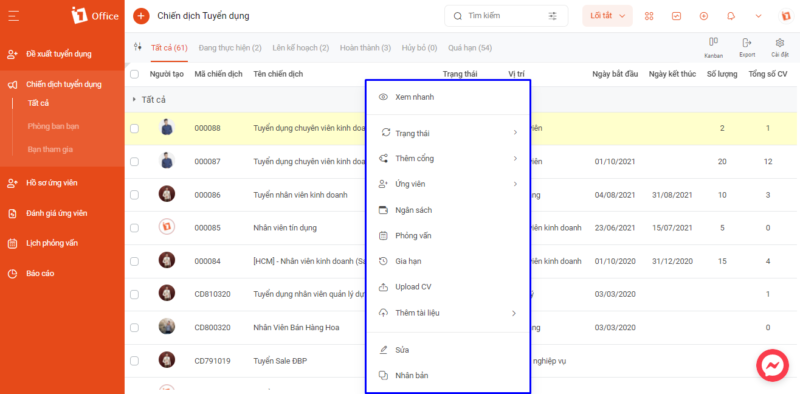
- Automatically connect candidate profiles
- Allows selection of effective recruitment channels
- Automatically push profiles into the system
- Apply AI to the process
Some of the Most Complete and Detailed Recruitment Plan Templates for 2026
Each business will have its own recruitment plan tailored to its size and specific characteristics. Below are some detailed and complete recruitment plan templates you can refer to:
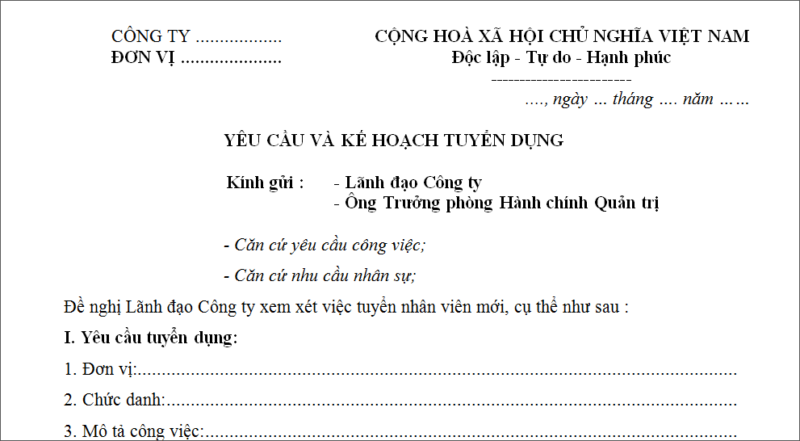
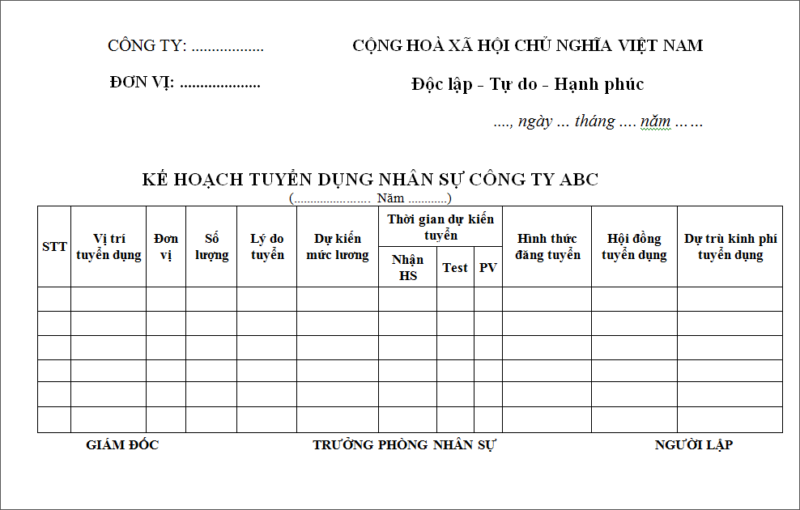
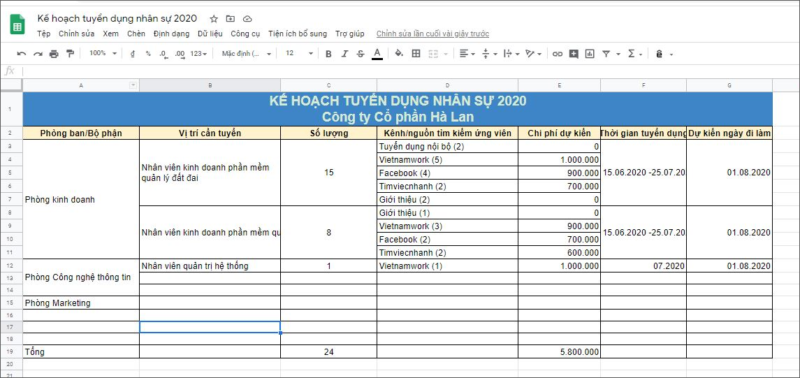
What are the contents of a recruitment plan?
During the planning process, the creator must adhere to requirements regarding the document format and content to provide recruitment information that allows superiors to clearly understand the personnel situation. Therefore, a recruitment plan needs to ensure the following contents:
- The plan must clearly state the date, month, and year of the recruitment need.
- The position that needs to be filled.
- The number of personnel needed for the quarter/year.
- Job requirements for the new personnel.
- Job description, position, and tasks that the candidate will need to perform daily/weekly/monthly.
- Budget for the expected salary and bonuses for the personnel.
- Budgeted cost for recruitment.
- Personnel restructuring plan: Allocate and arrange personnel reasonably for each position and department according to their capabilities and experience.
- Hiring committee: Specify the recommendations of the members of the hiring committee.
- Signatures: Company’s Board of Directors, Head of Administration – Human Resources, Head of the department in need of recruitment.
| Learn more: Top 15+ Most Popular and Best HRM Software |
Frequently Asked Questions about Recruitment Planning
Why is a recruitment plan important?
Recruitment plans are important because they provide a record of the most useful strategies for hiring employees at your company. They benefit both business owners and potential employees by setting expectations for the recruitment process.
Who should use a recruitment plan?
Any business owner or employee who manages staff needs to create a recruitment plan. Recruitment plans will vary depending on the size and type of the business. A large enterprise with 1,000 employees will have a different recruitment plan than a business with 100 employees. Therefore, a recruitment plan plays a crucial role in the long-term HR strategy of every business.
What makes a recruitment plan effective?
The effectiveness of a recruitment plan depends on how well it helps you hire good employees. Businesses need to accurately research detailed strategies to create the best possible recruitment plan.
As you can see, creating a personnel recruitment plan requires a significant investment of time and effort from the business. However, in return, a well-structured and professional recruitment plan will help the business achieve success in its hiring process. Therefore, take it seriously to standardize your personnel recruitment process starting today.
For more details, please see:
Hotline: 083 483 8888
Fanpage: https://www.facebook.com/1officevn/
Youtube: https://www.youtube.com/channel/UCeTIRNqxaTwk0_kcTw6SxmA