


How to Write a Year-End Report and Top 4 Detailed Templates for All Departments in 2025


Writing a year-end summary report is an annual activity for businesses to summarize the results of work performed over the past year, and from there, propose development directions for the new year. However, because the nature of work differs for each department, writing a year-end summary report will also have differences between departments. In this article, 1Office will share with readers a detailed guide on how to write a year-end summary report along with the top 4 summary report templates for all departments that businesses can apply.
Mục lục
- I. Year-End Summary Report – Role and Classification by Department
- II. How to Write a Year-End Summary Report in the Most Detailed and Understandable Way
- III. Top 4 Most Detailed 2026 Year-End Summary Report Templates for All Departments
- IV. What is the approval process for year-end reports in a business?
- V. Frequently Asked Questions
I. Year-End Summary Report – Role and Classification by Department
1. The Role of a Year-End Summary Report for Businesses
The year-end summary report is created to summarize and evaluate the work performance of each individual, each department, and the entire business. Knowing how to write a year-end summary report is a skill that every employee needs to learn. When creating the report, each individual and team must look back at all the work done, the plans implemented, and the successes and failures in executing those plans to propose development solutions for the new year.
Creating a year-end summary report and understanding how to write it play a crucial role in the development of a business, specifically:
- Helps leadership get a comprehensive overview of the business’s activities over the past year
As mentioned above, year-end summary reports are based on information about the work the business has performed over the past year, including completed tasks, underperforming work items, successfully implemented plans, as well as limitations and shortcomings in the work process. Therefore, the year-end summary report will give leadership a general overview of the company’s work and operational capacity over the past year.

- Serves as a basis for company leadership to outline directions and development plans for the new year
From the data on the implementation process of work items compiled in the year-end report, the business will know what to do in the following year to continue leveraging its strengths and overcoming its limitations. The information in the year-end summary report will support business leadership in setting new goals and development directions for the next year.
- Helps management evaluate the capabilities and development level of employees
Based on the year-end summary report, managers can evaluate how their employees have worked and developed, thereby establishing a mechanism to reward individuals and teams with good achievements, while also skillfully developing plans to improve the capabilities of underperforming employees.
2. Classifying Year-End Summary Reports by Department
Each department in a company has its own specific work characteristics, so the way year-end summary reports are written will also differ. Based on the main operational aspects and the departments of a business, year-end summary reports can be divided into 4 main types:
| Report Type | Purpose | Executing Department |
| Year-End Business Summary Report | Summarize sales figures and evaluate the company’s business performance over the past year | Sales Department |
| Human Resources Summary Report | Compile and evaluate the effectiveness of recruitment and the results of personnel training. Also, monitor the work performance of all employees | Human Resources Department |
| Financial Summary Report | Summarize the financial situation and cash flow of the business. | Accounting Department |
| Project Summary Report | Update the status and results of projects implemented during the year, thereby evaluating their effectiveness and proposing development directions for the new year. | Marketing Department
Product Development Department |
Thus, a business needs to prepare at least 4 main reports for its leadership to grasp the company’s operational situation for the year. Although different, all 4 of these reports must adhere to the basic structure that a year-end summary report should have. What is this general structure? Follow the next section for more details.
| Read more: The Latest 2025 Year-End Summary Report Templates for Companies |
II. How to Write a Year-End Summary Report in the Most Detailed and Understandable Way
Regardless of which operational aspect of the business the report covers, a year-end summary report must include 3 basic sections: Introduction, Main Content, and Conclusion.
Report Introduction
Similar to other administrative documents, the introduction of the year-end summary report must include the following information:
- National emblem and motto
- Time and place of reporting
- Company name, department name, branch preparing the report
- Report title
Note: In this section, the National Emblem and the Report Title should be written in all capital letters.
Report Content Section
The main content of the year-end summary report is divided into 2 main parts: A summary of the company’s operational performance and a proposal for development plans in the new year. In this section, the summary report on the 4 operational aspects of the business will have different detailed content based on the tasks performed and achievements gained, but it still needs to ensure the following main points:
1. Summary of the past year’s performance
| Content | Details |
| Implemented work items | What projects did the business implement during the year?
Statistical data tables on quantity, investment costs, profits earned, etc. All information related to the work that has been done. |
| Accomplishments | Highlight the successes that departments and individuals have achieved, including: tasks, the amount of work completed and completed with excellence, and the process of how that work was completed. |
| Areas for improvement | Besides the achievements, the report needs to clarify the limitations and backlogs during the year. Specifically, these are unfinished tasks, cases that did not meet KPIs, or tasks completed with poor quality. |
| Overall assessment | Provide an objective overview of the past year’s performance to both acknowledge the efforts of the entire company and strictly critique cases that were not handled well. |
Based on the main content above, we will provide specific examples of summary reports on operational performance based on the four main operational aspects of a business:
-
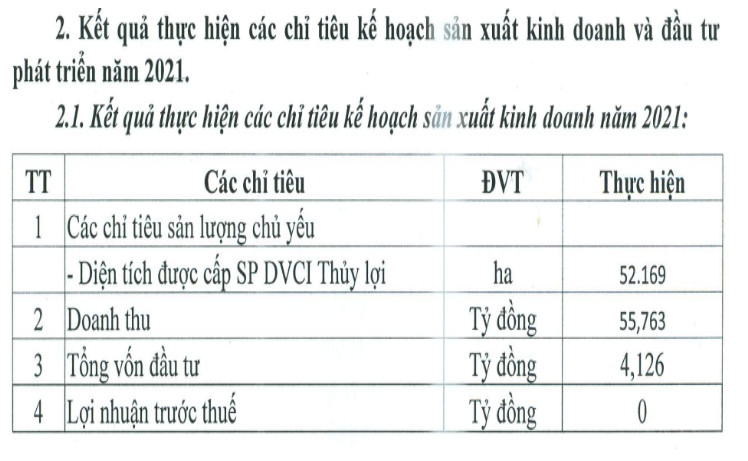
Year-end business summary report:
-
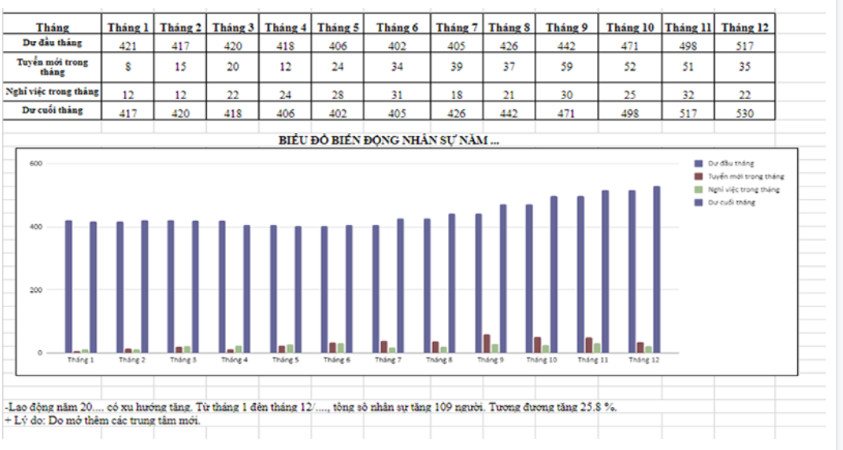
Human resources status report:
For the year-end summary report on the human resources situation, the HR department will clarify the total number of CVs after each recruitment drive, the ratio of probationary employees and official employees to the total number of CVs. This is followed by the results of the internal training program and employee compliance with company regulations.
-
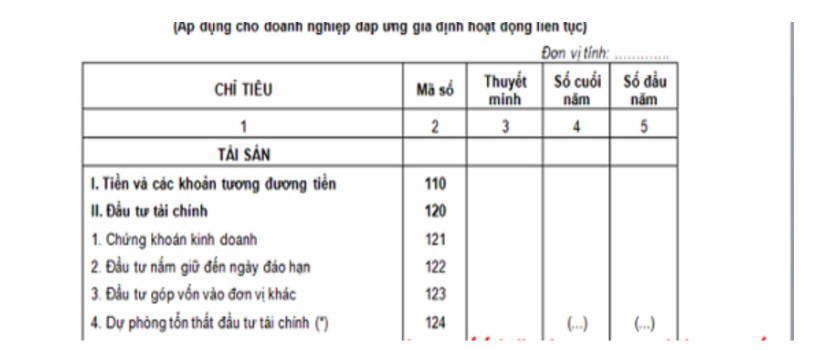
Financial summary report
This is the most important and difficult report to write among all year-end summary reports. The content of the year-end financial report needs to provide sufficient information such as: Company assets; liabilities and owner’s equity; profits and losses; taxes and related payables to the state, other assets related to the business, and the status of cash flow in and out.
The data compiled in the year-end financial report must be transparent, accurate, and clearly systemized. Any error in the financial report, no matter how small, can have major consequences for the report writer.
-
Year-end project summary report
In the year-end project summary report, the information that needs to be clarified includes:
- Number of projects implemented
- Number of personnel participating in the project
- Number of projects that met targets, number of projects that did not meet targets
- Project investment costs
- Revenue generated after project implementation
- Remaining limitations during project execution

2. Propose development directions for the new year
After summarizing all the work done during the year, proposals for directions and tasks for the coming year need to be made. Based on the available data and the capabilities of the staff, the report writer will propose a suitable operational strategy that aligns with the company’s spirit of innovation and development, aiming for a breakthrough in all activities in the next year.
Conclusion
The conclusion of the year-end summary report should be concise, with a general summary of the performance of KPI items for departments and future development directions. The end of the report must have the company’s seal and the signature of the business leadership for confirmation.
>> How to build an automated and detailed business performance report with:
TOP 12 Free and Leading Employee KPI Evaluation Software Today
III. Top 4 Most Detailed 2026 Year-End Summary Report Templates for All Departments
To help businesses save time and have a complete reporting framework immediately, the set of 4 year-end summary report templates for 2026 below is built according to the actual standards of various departments: Sales – Human Resources – Finance – Projects. Each template has a clear layout, is easy to edit, includes all necessary data, and adheres to modern management requirements. This is a suitable set of documents for any business that wants to summarize quickly, accurately, and coherently, and create a foundation for the new year’s plan.
1. Year-end business report template
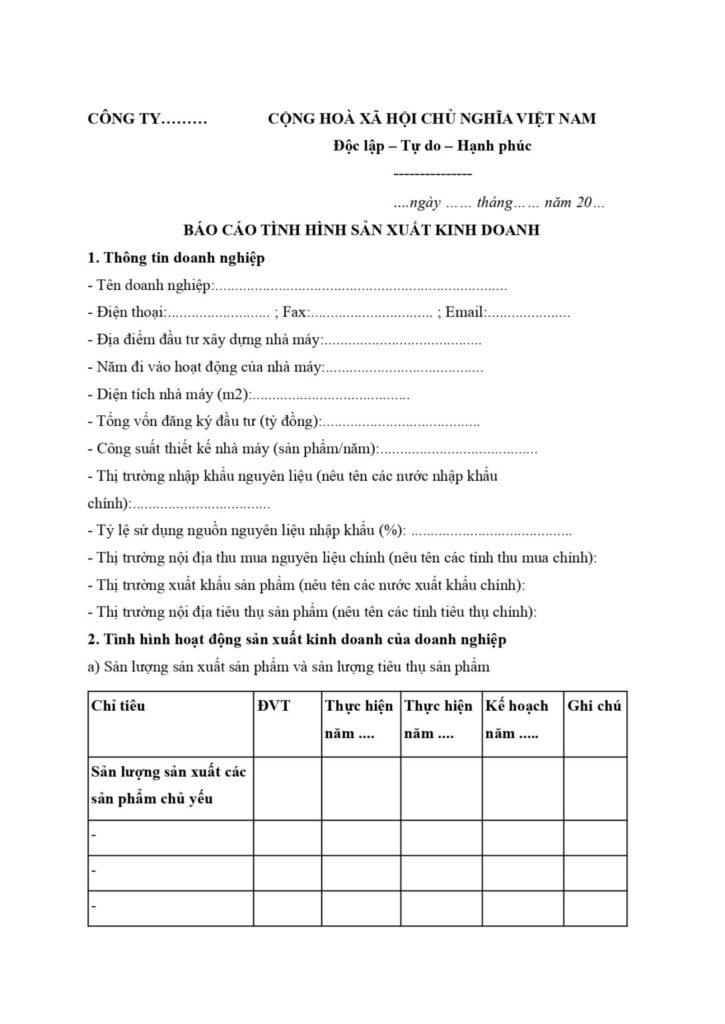
=> Download the template form HERE!
2. Year-end human resources report template
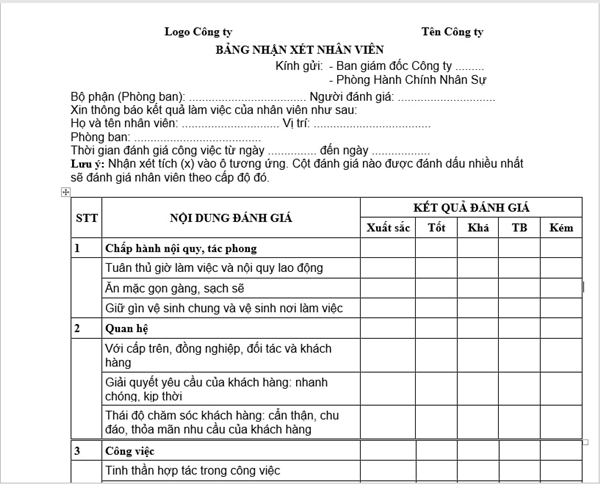
=> Download the template form HERE!
3. Year-end financial report template
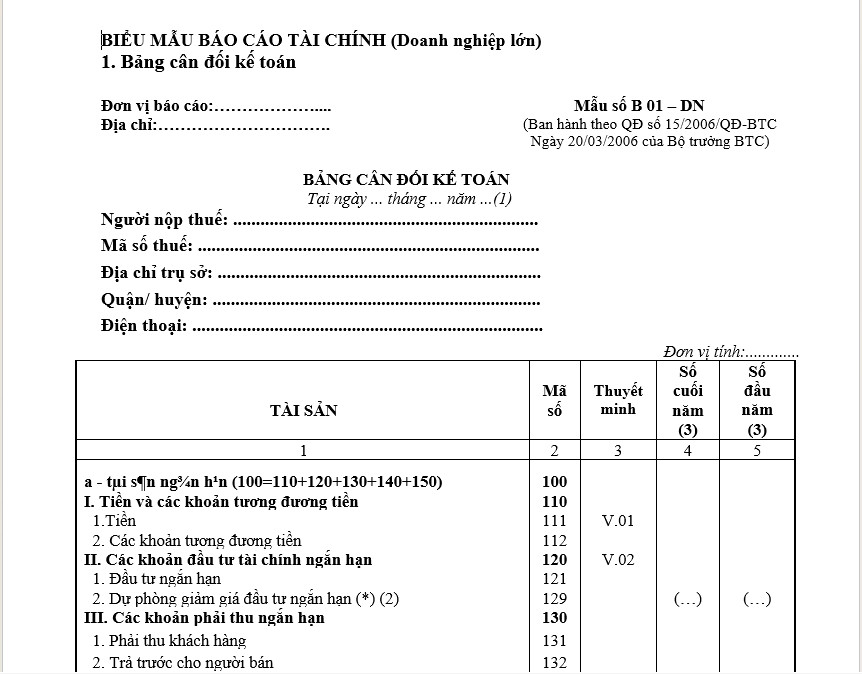
=> Download the form HERE!
4. Year-end project summary report template

=> Download the form HERE!
IV. What is the approval process for year-end reports in a business?
The year-end report approval process is a crucial step to ensure the final document is accurate, complete, transparent, and correctly reflects the activities of the department or the entire business. A standardized process helps minimize errors, shorten timelines, and ensure consistency among related departments.
Below are 5 detailed implementation steps suitable for all types of reports: business, HR, finance, project, etc.
Step 1 – Write the report (First Draft)
In this step, the responsible department compiles data and creates a rough draft of the report.
The content must ensure:
-
Collect complete data by month/quarter/year.
-
Analyze data: compare with the previous year, planned targets, and KPIs.
-
Write the content following the structure: Introduction → Report results → Assess issues → Conclusion.
-
Standardize the presentation (charts, tables, headings, font).
-
Cite data sources clearly for easy cross-checking.
Note: The first draft only needs to be data-complete; perfect wording is not yet required.
Step 2 – Internal department review
The department head or the responsible team will review the content to detect errors.
Areas to review:
-
Incorrect data, inconsistencies between tables, charts, and written explanations.
-
Sections that are unclear, repetitive, or lack a conclusion.
-
Assessments that are not objective or do not align with KPIs.
-
Lack of evidence or supporting data.
-
Check for spelling, presentation, and formatting errors.
Objective: ensure the report is accurate before submitting it to higher levels.
Step 3 – Cross-departmental review
This is an important step to increase objectivity.
Related departments (FA – HR – Business – Operations – Project, etc.) will:
-
Check if the data matches the system/accounting records.
-
Cross-reference KPI targets among related departments.
-
Ask critical questions: causes – solutions – feasibility.
-
Request additional data or adjustments to the reasoning.
The report usually goes through 1–2 rounds of feedback to be finalized.
Step 4 – Approval by leadership
Once the report is complete, leadership (Department Director, Board of Directors, CFO, CHRO, etc.) will:
-
Review the completeness of the report.
-
Assess its alignment with the company’s strategic goals.
-
Re-check the proposals and planned targets for the new year.
-
Decide to “Approve,” “Approve with modifications,” or “Request a rewrite.”
Role of leadership:
-
Ensure the report is directional and applicable.
-
Make strategic judgments based on the provided data.
Step 5 – Announce and archive the report
After approval, the report will be:
-
Announced internally (via email, summary meetings, intranet).
-
Presented at the year-end summary meeting.
-
Archived on the system for other departments to reference next year.
-
Used as a basis for building the new year’s plan, adjusting KPIs, budget, and personnel.
Once published, the year-end report becomes an official company document, used for strategic planning and performance evaluation.

Thus, with the detailed information on how to write a year-end summary report shared above, 1Office hopes that readers can grasp the structure and method for writing a complete year-end summary report to both summarize the year’s activities and formulate a development strategy for the new year.
To make the process of creating year-end summary reports more convenient and easier, thousands of businesses have turned to and applied the 1Office solution – an all-in-one business management software with an automated reporting system that allows users to set up financial, business, or HR reports quickly, accurately, and with personalized displays (reports can be created as charts or clear statistical data). In addition to its automatic reporting and status update capabilities, 1Office also provides a resource library with over 1000 diverse report templates, suitable for reporting purposes in various fields, helping staff save time and effort.
Get a free consultation & software trial
V. Frequently Asked Questions
What data should be prioritized in a year-end summary report?
You should prioritize data that directly impacts overall results, such as goal completion rates, revenue, costs, performance, progress, and key issues. This information helps leadership quickly grasp the big picture.
What is a balanced ratio for presenting achievements versus limitations?
There’s no need for a fixed ratio. The important thing is that the report accurately records achievements, clearly points out limitations, and proposes solutions, rather than being biased towards praise or only highlighting problems.
Should the year-end summary report also include the plan for the next year?
Yes. This section helps the report go beyond just summarizing and provides a basis for the direction and goals of the following year.
What mistakes cause a year-end summary report to be poorly rated?
Common mistakes include being rambling, having lots of data but lacking focus, no clear comparisons, not stating causes, and no specific proposals. Such reports make it difficult for leadership to make decisions.
Is there any software that helps businesses automate year-end summary reports?
Yes. If a business wants to consolidate data from multiple departments, track progress, and create reports faster on a single system, they can consider the 1Office employee evaluation software for centralized management and to reduce manual tasks.
For a free consultation and to experience a demo of the leading all-in-one business management software 1Office, please contact:
- Hotline: 083 483 8888
- Fanpage: https://www.facebook.com/1officevn/
- Youtube: https://www.youtube.com/channel/UCeTIRNqxaTwk0_kcTw6SxmA




