11/05/2026
  327 views
In the context of strong digital transformation and the increasing pace of business, effective project management has become a vital factor for every enterprise. In Vietnam, competitive pressure and the need to optimize processes are driving businesses towards technological solutions—especially scheduling software—as a strategic tool for coordinating and completing projects on time and within budget.
The challenge for CEOs, project managers, and business owners is not just about planning, but also how to track, forecast, and flexibly adapt to the constant fluctuations of the market. That is why scheduling software is gradually becoming an indispensable “right-hand man” in the modern business management ecosystem.
Mục lục
- The Importance of Scheduling Software in the Digital Age
- Benefits of Using Scheduling Software
- Top 7+ most professional and effective scheduling software in Vietnam
- Microsoft Project Software
- Procore Software
- Asana Progress Management Software
- Trello Progress Tracking Software
- Zoho Projects Project and Progress Management Software
- Must-Have Features of Modern Scheduling Software
- Integrated Technology Trends in Software
- Criteria for Choosing the Right Scheduling Software
- ROI Analysis and Basic Costs of Investing in Scheduling Software
- Conclusion
The Importance of Scheduling Software in the Digital Age
The Shift from Traditional to Digital Methods
Compared to using traditional methods like hand-drawn Gantt charts or basic Excel spreadsheets, scheduling software represents a significant leap forward. Statistics from PwC show that only 2.5% of projects are 100% successfully completed using manual progress tracking methods, while this figure increases to 16.2% when applying professional software solutions.
Especially in the Vietnamese market, where 63% of small and medium-sized enterprises are undergoing digital transformation (according to a report by the Ministry of Information and Communications), adopting scheduling software is no longer an option but a mandatory factor for maintaining competitiveness.
Strategic Role in Business
Scheduling software is not merely a technical tool but has become a strategic component in the business management system:
- Central Connection Point: A place to gather and synchronize all project activities, information, and resources
- Decision-Making Tool: Provides real-time data and analysis to support strategic decisions
- Transparency Enabler: Creates transparency throughout the entire project execution process, helping stakeholders grasp the situation accurately
Benefits of Using Scheduling Software
Optimizing Time Management Processes
Time management is always one of the biggest challenges for any project. According to a study by McKinsey & Company, technology projects, on average, run 45% over schedule, and construction projects run 20% over. Scheduling software addresses this issue through:
- Automated Time Calculation: Smart algorithms automatically calculate the time required for each stage, based on historical data and input parameters, reducing errors from manual estimation
- Critical Path Management: Clearly identifies the most important tasks that directly affect the overall schedule, helping managers focus resources where they are most needed
- Early Warnings: The system automatically detects and warns of potential schedule delays before they become serious
A construction company in Hanoi reported a 28% reduction in project completion time after 6 months of implementing professional scheduling software, demonstrating the clear effectiveness of this technology.
Optimizing Resource Allocation and Management
The key issue in project management is not just knowing “what to do,” but also “who does it” and “what to use.” Modern scheduling software solves the complex problem of resource allocation through:
- Resource Demand Forecasting: Accurately calculates the resources needed for each phase, helping to avoid shortages of personnel or materials at critical times
- Capacity Optimization: Analyzes and suggests optimal schedules to ensure resources are utilized at an appropriate capacity, avoiding overload or idle time
- Real-Time Cost Tracking: Continuously updates costs incurred as the project progresses, enabling tight budget control and timely adjustments
Research from the Project Management Institute indicates that businesses using scheduling management software are 28% more likely to complete projects within budget compared to those that do not.
Enhancing Communication and Coordination Efficiency
One of the leading causes of project failure is ineffective communication among stakeholders. Modern scheduling software addresses this issue through:
- Centralized Platform: Creates a single point of access for all project-related information, from schedules and documents to decisions and changes
- Real-Time Updates: Any changes to the schedule are updated instantly and made visible to all relevant stakeholders
- Multi-Channel Communication Integration: Combines email, notifications, comments, and messages into a single, unified system
In Vietnam, a fintech startup recorded a 40% reduction in internal progress meetings after implementing scheduling software, while increasing the on-time completion rate from 65% to 89%.
Enhance product quality through process control
Besides ensuring progress, scheduling software also contributes to enhancing the final product quality through:
- Integrated approval process: Automate quality control processes at key milestones
- Ensure standard compliance: Pre-program the requirements and standards to be met at each stage
- Track and analyze errors: Record and analyze errors that arise to improve future processes
Top 7+ most professional and effective scheduling software in Vietnam
1Office Software – An in-depth solution for project scheduling and progress management
1Office Software is considered the leading and most popular software on the market today. Rated as the best platform for overall work and process management, 1Office has been successfully implemented for over 6,000 businesses and more than 500,000 users.
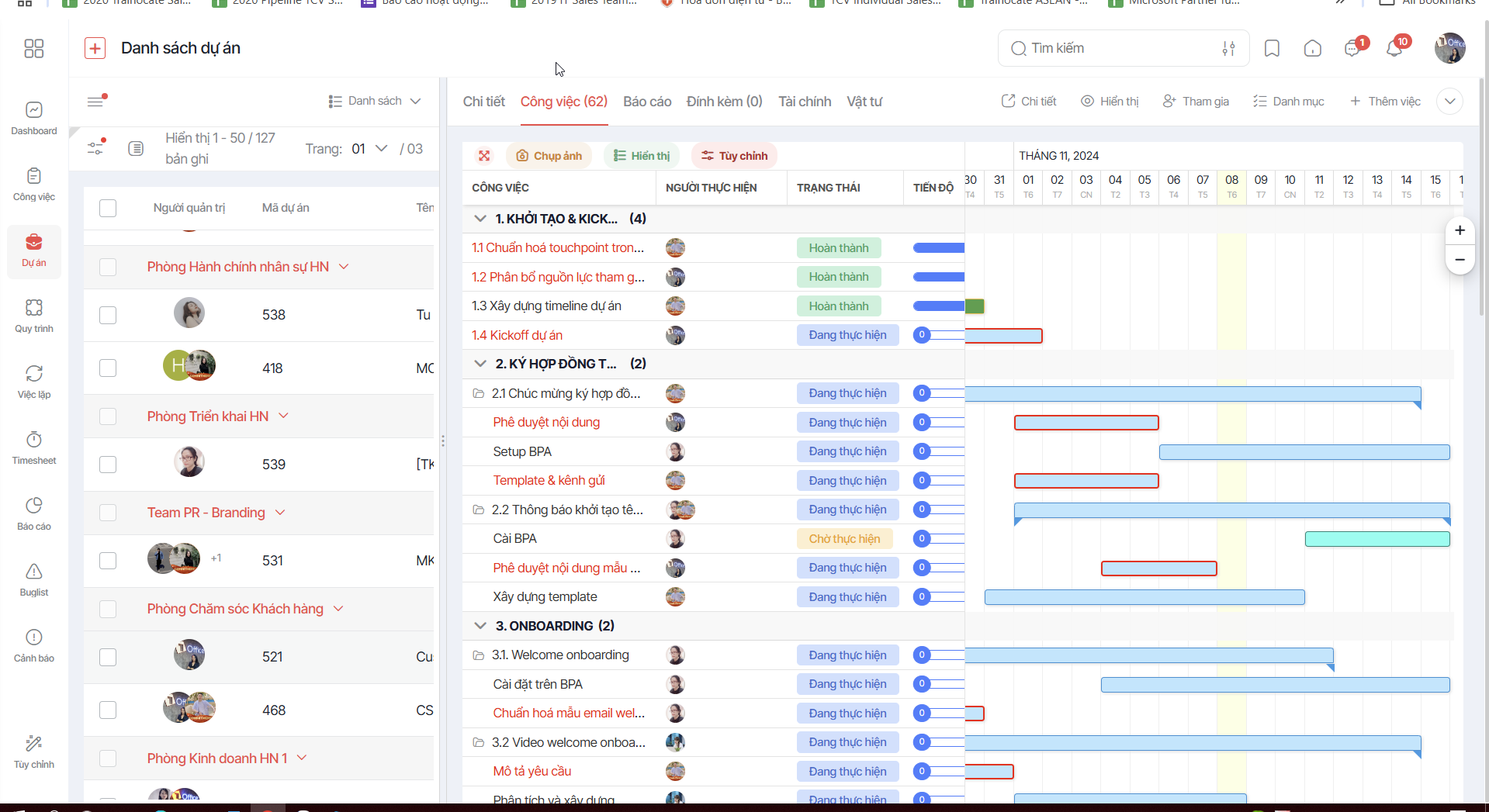
1Office’s project work management platform helps managers assign tasks quickly, and track and monitor progress accurately and promptly… Currently, this is the leading solution among the top project work management software in Vietnam.
Features of 1Office software:
Clear, unified processes on a single platform
- Tightly control projects: progress, implementers, work results.
- Control operational data, synchronize metrics, and optimize data mining capabilities.
- Customize the system, measurement methods, and reports to suit the different characteristics and purposes of the business.
Intuitive, real-time project progress reports
- Accurate, intuitive measurement with detailed figures, charts, and statistics
- Instantly update reports and data on all aspects of the business (sales, project work progress reports, HR, communications,…)
- Accurately measure the results achieved by departments/individuals. Automatically and quickly calculate the profit and loss percentage for each project.
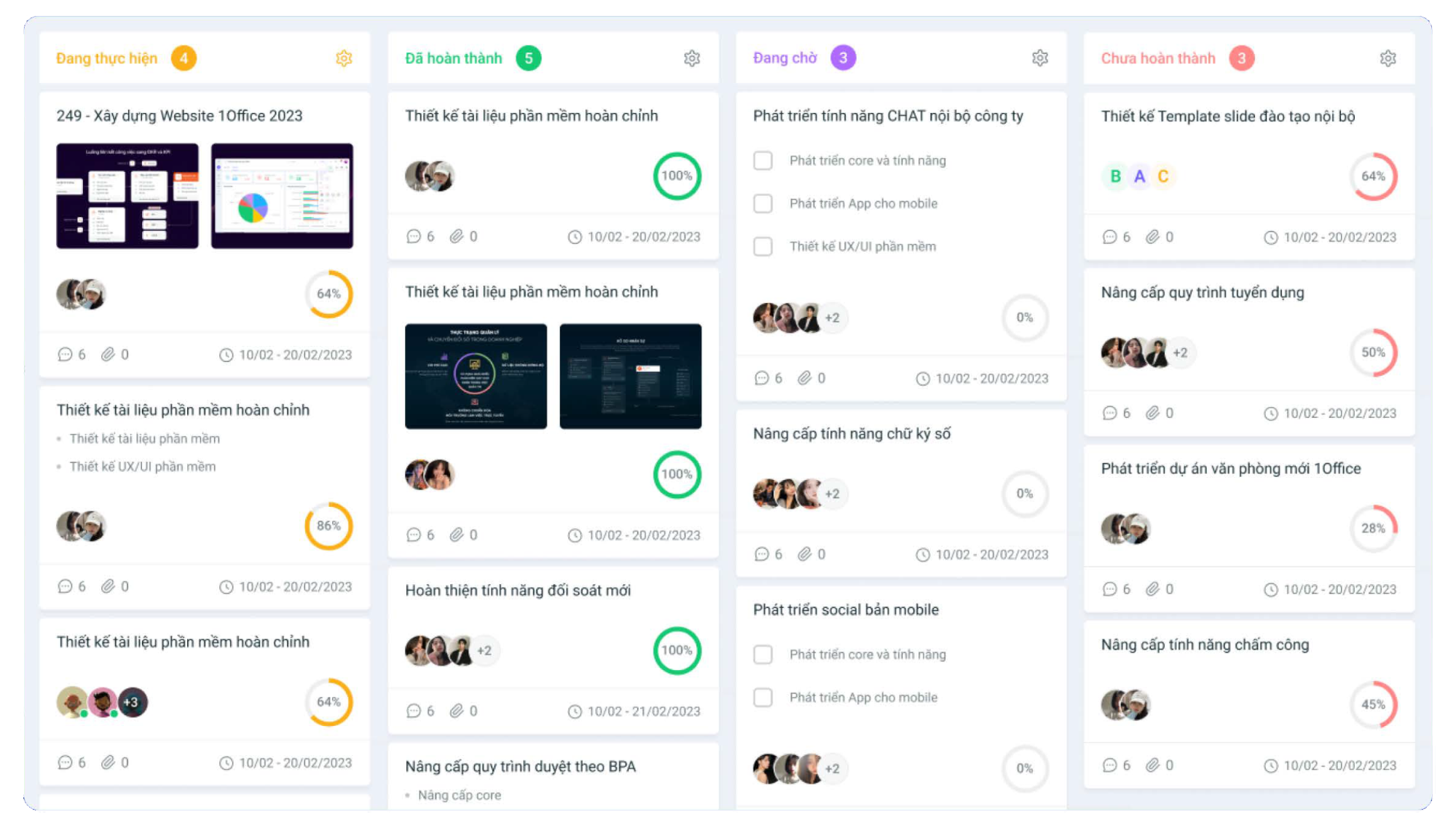
Standardize processes, enhance work efficiency
- Proactively track project progress and processes with automatic, real-time reports, and promptly handle any arising issues.
- The process system is built specifically for each department and personnel position, with a clear division of responsibilities for each part, helping to minimize delays or missed assignments.
- Detect bottlenecks in the project management workflow thanks to visual data, helping managers easily control and devise accurate process optimization plans.
- Helps employees understand the overall coordination picture, enabling them to master their work progress.
For a consultation on the project management software pricing and a free trial, please click the registration button below, and 1Office experts will contact and advise you.
Register to receive a free 1Office Demo account!
Microsoft Project Software
Microsoft Project is a professional project management software from Microsoft with over 30 years of development, widely used globally and in Vietnam.
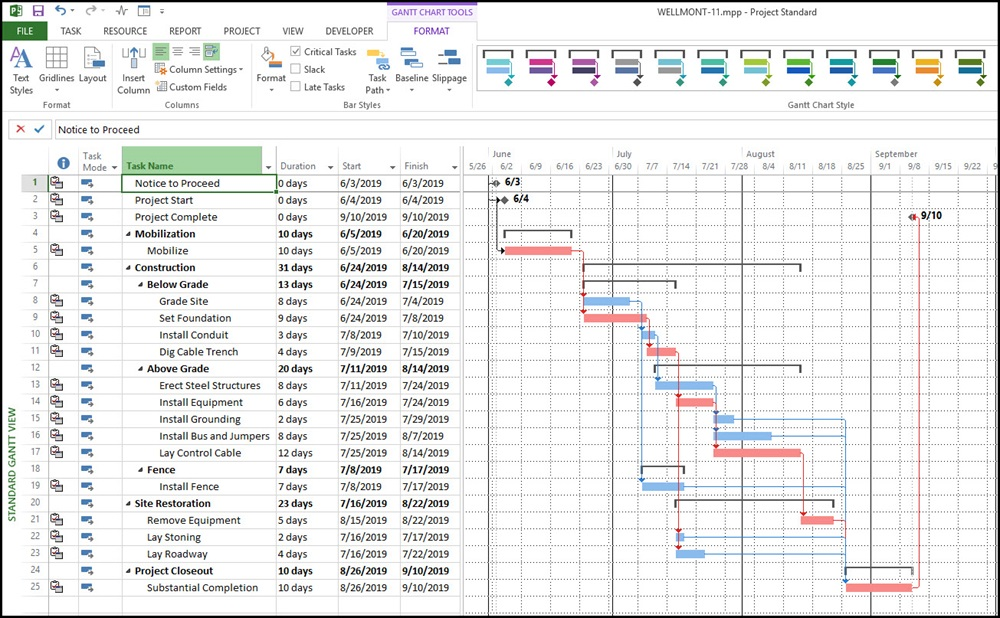
Strengths:
- Powerful scheduling tools with professional Gantt charts
- Detailed resource allocation features
- Seamless integration with the Microsoft Office ecosystem
- Ability to manage complex projects with multiple dependencies
- Diverse and intuitive reports
Price: From 750,000 – 2,200,000 VND/user/month or a one-time purchase at a higher price
Best for: Large enterprises, corporations, especially in construction, manufacturing, and IT that need to manage complex projects
Procore Software
Procore is a leading construction project management solution, available in Vietnam and increasingly popular in the construction industry.
Strengths:
- Specialized for the construction industry
- Comprehensive project management from survey to completion
- Real-time progress tracking on-site
- Integrated management of documents, drawings, RFIs, and submittals
- Powerful mobile app for on-site work
Price: By custom quote, typically from 200 – 500 million VND/year depending on project scale
Best for: Large construction companies, investors, and contractors with large-scale projects
Asana Progress Management Software
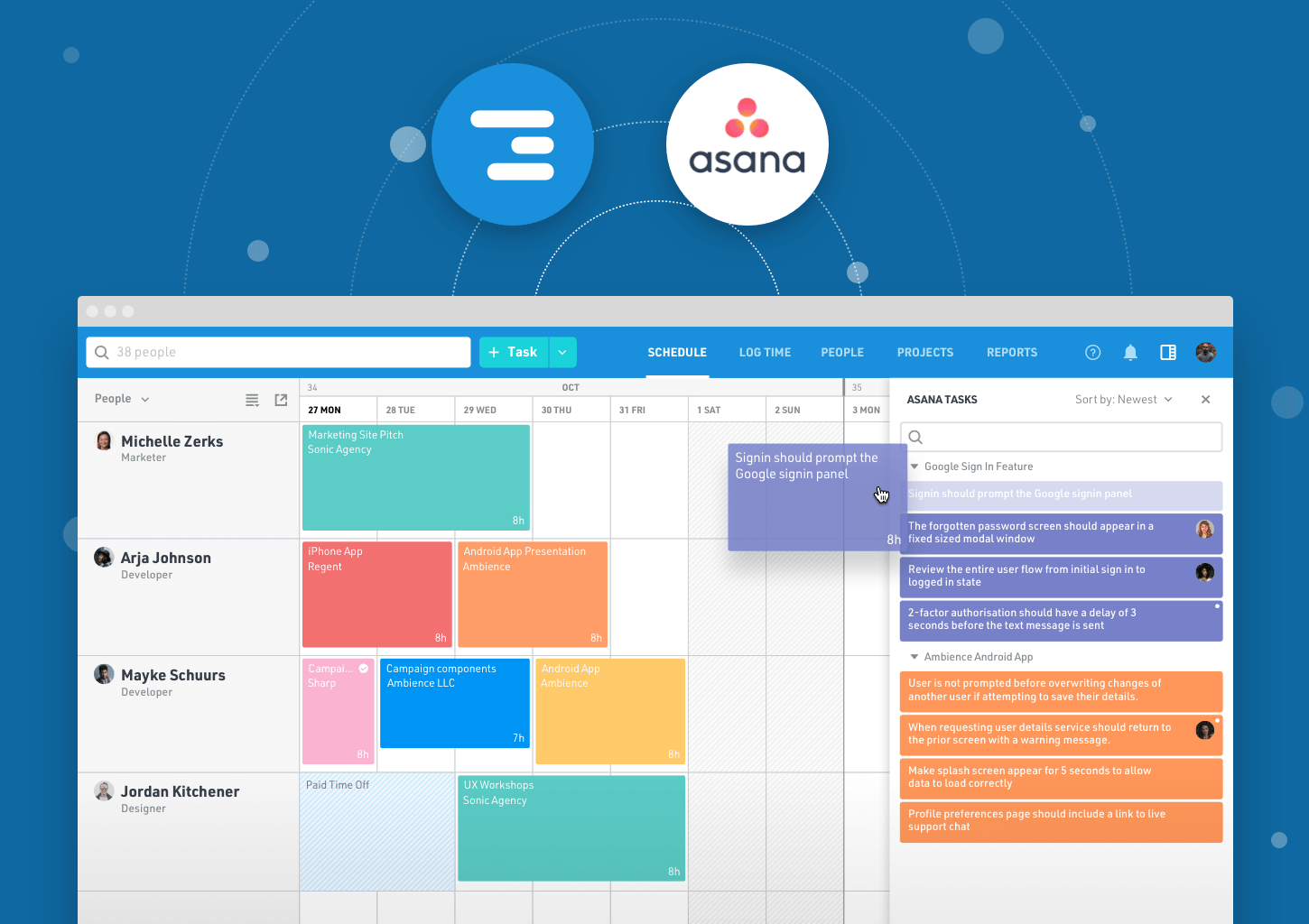
Asana is an intuitive work management platform, now available in Vietnamese and adopted by many companies in Vietnam.
Strengths:
- User-friendly, intuitive interface with multiple views (list, board, timeline)
- Simple progress tracking with Gantt charts
- Clear task assignment with specific deadlines
- Integrates with many popular applications (Google Workspace, Slack, Microsoft Teams…)
- Real-time work progress updates
Price: Has a basic free version, paid versions from 250,000 – 500,000 VND/user/month
Best for: Startups, marketing companies, creative agencies, and teams that need intuitive task tracking
Trello Progress Tracking Software
Trello is a simple, intuitive project management tool based on the Kanban method, favored by many Vietnamese businesses.
Strengths:
- Simple, easy to use with the intuitive Kanban method
- User-friendly drag-and-drop interface
- Low cost, with a free version that includes all basic features
- Integrated reminder tools and color-coded labels
- Convenient mobile app
Price: The free version is sufficient for small teams, paid versions from 120,000 – 250,000 VND/user/month
Best for: Startups, small and medium-sized businesses, especially teams working with sprints or agile methodologies
Zoho Projects Project and Progress Management Software
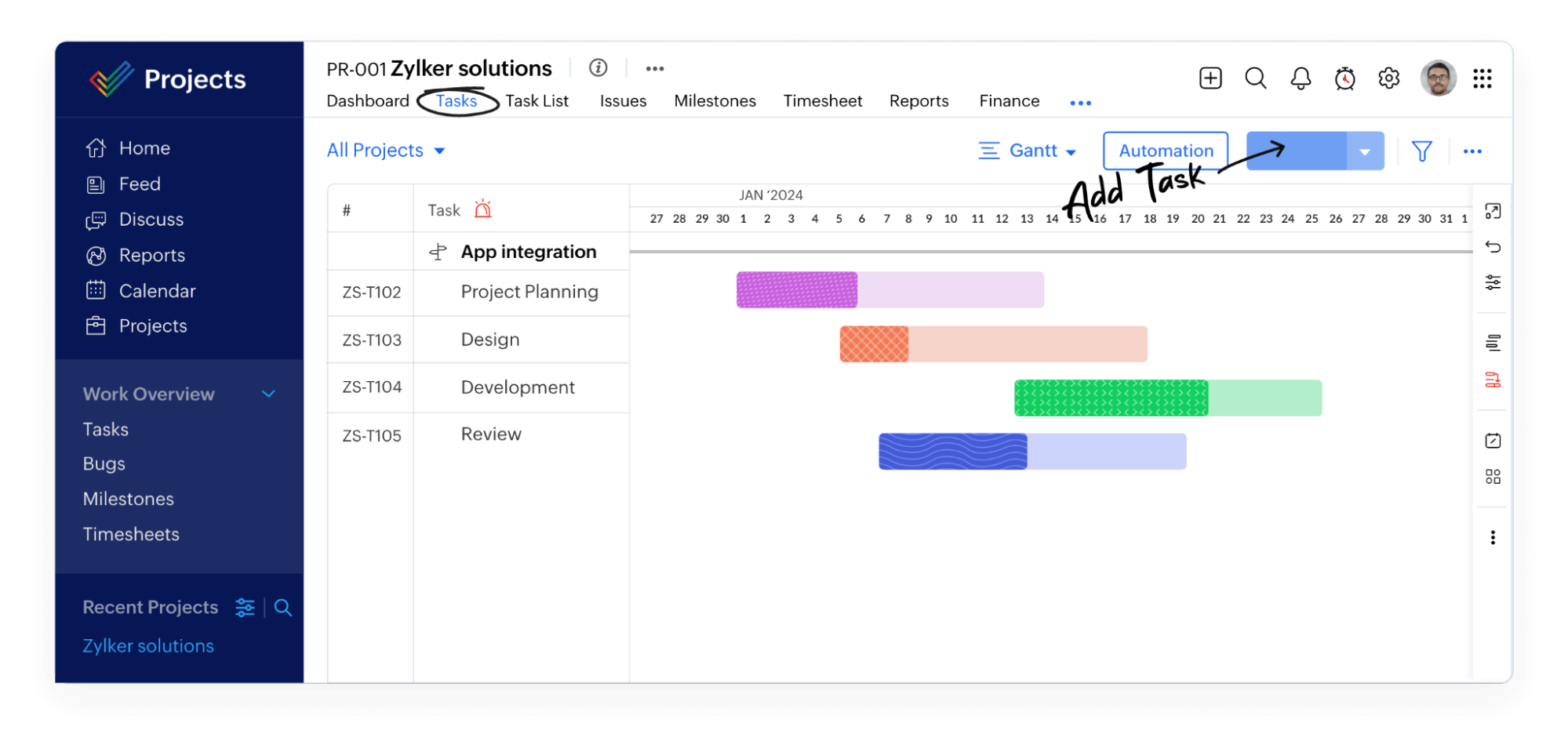
Zoho Projects is part of the Zoho ecosystem, becoming increasingly popular in Vietnam due to its reasonable cost and diverse features.
Strengths:
- Comprehensive project management features at a reasonable cost
- Professional Gantt charts
- Integration with the Zoho ecosystem (CRM, Invoice, Books…)
- Detailed work time tracking
- Automated, intuitive reports
Price: From 90,000 – 250,000 VND/user/month
Best for: Small and medium-sized businesses, especially those already using other Zoho products
Must-Have Features of Modern Scheduling Software
Progress Visualization Technology
The power of modern scheduling software lies in its ability to transform complex data into intuitive, easy-to-understand information through:
- Dynamic Gantt Charts: Not only display tasks over time but also allow for dragging, dropping, adjusting, and updating directly on the chart
- Network Diagrams: Display dependencies between tasks, helping to identify the critical path and potential bottlenecks
- Integrated Kanban Boards: Combine Agile methodologies with traditional progress management, suitable for many different types of projects
- Visual Progress Reports: Customizable dashboards display important KPIs and overall progress
AI Integration and Predictive Analytics
The most prominent trend in modern scheduling software is the integration of artificial intelligence to:
- Risk forecasting: Analyze historical and current data to predict the likelihood of schedule delays or budget overruns
- Automated schedule optimization: Propose schedule adjustments based on performance and resource analysis
- Machine learning from past projects: The system learns from completed projects to improve the accuracy of forecasting and planning for similar projects
Software like Monday.com and Smartsheet have applied AI to increase the accuracy of progress forecasting by up to 35% compared to traditional methods.
Document and Project Knowledge Management Features
An equally important feature is the ability to integrate document and project knowledge management:
- Centralized document repository: All project-related documents are stored in one place, making them easy to search and access
- Version control: Track changes in documents, allowing restoration of previous versions when necessary
- Information security: Assign access permissions for each type of document, ensuring sensitive information is only viewed by authorized personnel
Collaboration and Teamwork Features
To meet the trend of remote and distributed work, modern scheduling software integrates powerful collaboration tools:
- Direct comments and discussions: Allows members to discuss specific tasks directly on the platform
- Task assignment and tracking: Automates task assignment and deadline reminders
- Integration with communication tools: Connects with platforms like Slack, Microsoft Teams to synchronize information
Integrated Technology Trends in Software
Artificial Intelligence and Machine Learning

AI and machine learning are reshaping the future of scheduling software through:
- Automated progress forecasting: Analyzes historical data to accurately predict completion times
- Intelligent resource allocation: Recommends optimal resource allocation based on skills, capabilities, and availability
- Proactive risk identification: Detects hidden data patterns that indicate risks before they become apparent
Virtual Assistants in Project Progress Management
The development of chatbots and virtual assistants is creating a new layer of experience in progress management:
- Progress update assistant: Automatically reminds and collects progress updates from team members
- Natural language query responses: Allows users to ask about project status using regular questions
- Automation of recurring decisions: Handles repetitive decisions based on predefined rules
Criteria for Choosing the Right Scheduling Software
Analyzing Needs by Business Size
Small Businesses (under 50 employees)
- Priorities: Ease of use, reasonable cost, fast implementation time
- Recommendations: Asana, ClickUp, Trello with basic plans
- Reference budget: $5-15 USD/user/month
Medium-Sized Businesses (50-200 employees)
- Priorities: Scalability, system integration, advanced reporting
- Recommendations: Monday.com, Smartsheet, Wrike
- Reference budget: $15-30 USD/user/month
Large Enterprises (over 200 employees)
- Priorities: Ability to handle complex projects, multi-project management, high security
- Recommendations: Microsoft Project, Primavera P6, Oracle Fusion PPM
- Reference budget: $30-60 USD/user/month or enterprise licensing solutions
Evaluation by Industry Criteria
Construction and Real Estate
- Specific requirements: Contractor management, construction progress tracking, BIM integration
- Recommendations: Procore, Buildertrend, Microsoft Project with construction industry add-ons
Software Technology
- Specific requirements: Integration with source code management systems, Agile/Scrum support
- Recommendations: Jira, Azure DevOps, Linear, GitLab
Manufacturing
- Specific requirements: ERP integration, supply chain tracking, inventory management
- Recommendations: Microsoft Project, Oracle Fusion PPM, SAP Project System
Checklist for Selecting Software
Below is a checklist of 10 important criteria for selecting the right scheduling software:
- Project Complexity: Can the software handle the complexity of your company’s projects?
- Project Management Methodology: Does it support the project management methodology your company uses (Waterfall, Agile, Hybrid)?
- Integration Capabilities: Can it integrate with existing systems (ERP, CRM, accounting software)?
- Scalability: Can it scale with your company’s growth?
- Total Cost: Includes licensing, implementation, training, and maintenance costs
- Collaboration Features: Do the features for teamwork and communication meet your needs?
- User Experience: Is the interface user-friendly and easy to learn?
- Customization: Can it be customized to fit your company’s specific workflows?
- Mobile Support: Does it have a mobile app or a responsive interface for remote users?
- Support and Training: Does the provider offer adequate support and training?
ROI Analysis and Basic Costs of Investing in Scheduling Software
Factors to Calculate in ROI
- Direct Costs:
- Software licensing costs
- Implementation and customization costs
- User training costs
- Annual maintenance and support costs
- Quantitative Benefits:
- Reduced project management time (personnel savings)
- Reduced costs from delays and budget overruns
- Reduced meeting and reporting costs
- Increased project success rate
- Qualitative Benefits:
- Improved customer satisfaction
- Enhanced transparency and accountability
- Improved work environment and reduced employee stress
ROI Calculation Example
A medium-sized business with 100 employees implements scheduling software with:
- Initial cost: 50,000,000 VND (includes licensing, implementation, training)
- Annual maintenance cost: 25,000,000 VND
Benefits after 1 year:
- Management time savings: 30,000,000 VND
- Reduced costs from delays: 60,000,000 VND
- Reduced meeting and reporting costs: 15,000,000 VND
- Increased project efficiency: 40,000,000 VND
Total benefits: 145,000,000 VND
Total first-year cost: 75,000,000 VND
First-year ROI: (145,000,000 – 75,000,000) / 75,000,000 = 93%
Conclusion
Scheduling software is no longer merely a support tool but has become a strategic element in modern business operations. In an increasingly fierce competitive landscape and with the accelerating pace of business, investing in a suitable scheduling software solution not only helps businesses complete projects on time and within budget but also creates a sustainable competitive advantage.
When implemented correctly, scheduling software becomes a powerful partner, helping managers and CEOs make informed and timely decisions, ensuring the business stays on the right track and achieves its set goals in this digital age, which is full of challenges but also rich with opportunities.