


 11/05/2026
  170 views
In the context of an economic recession, cost cutting is essential for businesses to maintain and grow. In this article, 1Office introduces 10 effective cost-cutting solutions, with practical examples to help you easily apply them to your business.
Mục lục
- 1. Why is it necessary to cut costs in a business?
- 2. When should a business implement cost-cutting measures?
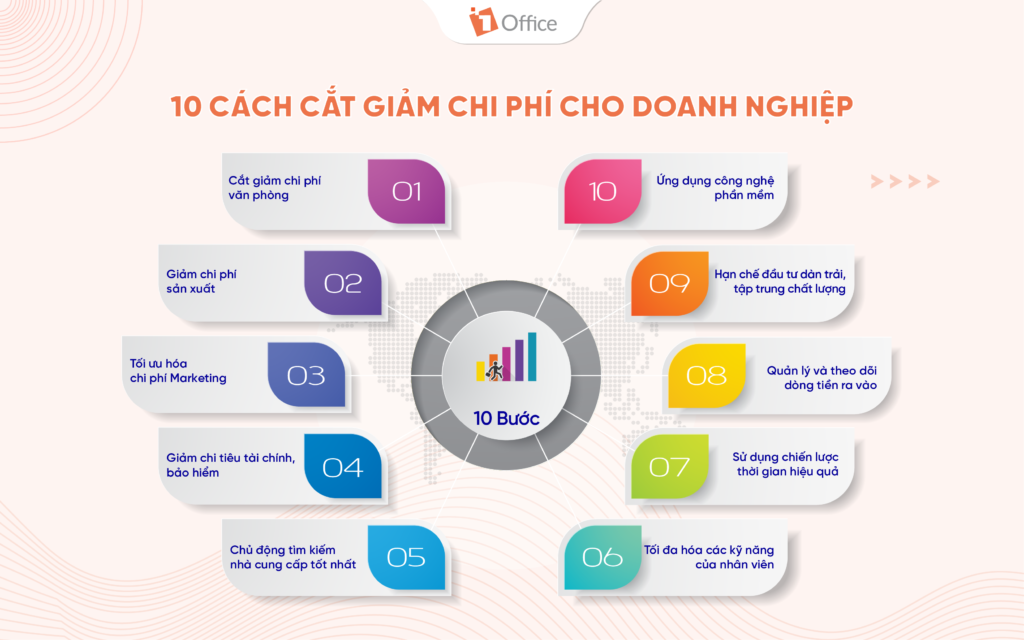
- 3. Top 10 most effective cost-cutting methods today
- 3.1. Reduce office expenses
- 3.2. Reduce production costs
- 3.3. Optimize Marketing Costs
- 3.4. Reduce Financial and Insurance Expenses
- 3.5. Proactively Seek the Best Suppliers
- 3.6. Maximize Employee Skills
- 3.7. Use an Effective Time Strategy
- 3.8. Always manage cash flow
- 3.9. Limit scattered investments, focus on quality
- 3.10. Apply software technology
- 4. Factors to ensure when cutting costs
- 5. Implementing cost-cutting thanks to Government-issued Resolutions
- 6. Comparing cost-cutting and cost optimization
- 7. Common Mistakes in Cost Cutting
- 8. Examples of Cost-Cutting Strategies in Businesses
- 9. Cost-Cutting Lessons from Major Corporations
- 10. Frequently Asked Questions about Business Cost Reduction
- 11. Conclusion
1. Why is it necessary to cut costs in a business?
Business cost cutting is the process of reviewing, optimizing, and eliminating unnecessary expenses to ensure efficient operations while maintaining product/service quality. Cost cutting plays a crucial and strategic role in a company’s business operations:
- Increase profitability by reducing operational and production costs, thereby providing higher profits and generating the necessary financial resources to reinvest in the business.
- Improve capital efficiency by optimizing resource utilization and cutting unnecessary costs, creating opportunities to invest in new projects or expand business scale.
- Maintain market competitiveness because lower costs help stabilize competitive pricing and facilitate market penetration.
- Enhance financial stability, build financial reserves, and ensure stability in unstable or difficult economic conditions.
- Minimizing unnecessary costs helps businesses focus on development and promote innovation and creativity, allocating resources for research and development of new products and services.
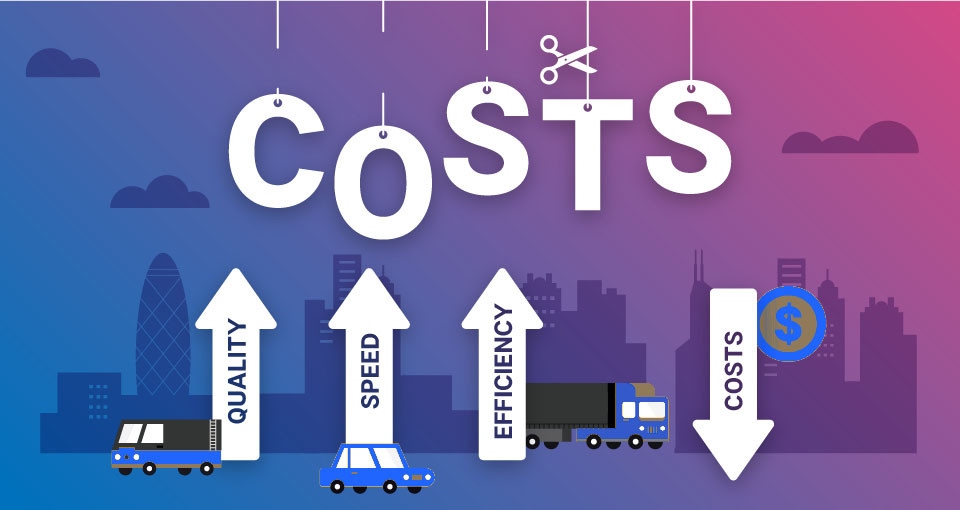
In summary, cost cutting not only ensures efficiency and enhances profitability but also helps businesses maintain competitiveness and stability during a global recession. This is particularly important for responding quickly to market changes and ensuring sustainable development for the business.
2. When should a business implement cost-cutting measures?
A business should implement cost-cutting measures when it needs to resolve an immediate financial crisis or wants to restructure its operational apparatus to enhance competitiveness and maximize long-term profit margins.
A business needs to cut costs and optimize cash flow when:
- When the business faces financial difficulties and needs capital to manage, maintain stability, and avoid the risk of bankruptcy.
- When the business wants to optimize profits and business performance, simplifying operational processes to ensure efficient resource utilization.
- When competition in the industry increases, the business needs to maintain price stability to meet market demands.
- When the business environment changes, the business needs to re-evaluate its business strategy to adapt to the new situation.
3. Top 10 most effective cost-cutting methods today
3.1. Reduce office expenses
Optimizing office expenses is a simple and effective solution to increase competitiveness and improve business profitability. Some cost-cutting measures include:
- Maximize the use of office space; evaluate and rearrange the workspace to minimize unnecessary areas.
- Implement energy-saving measures in the office, such as using LED lights to replace other types of bulbs and turning off electrical devices when not in use.
- Minimize paper usage and printing; instead, use Document Management software to store and search for information conveniently.
- Evaluate and select the most optimal and suitable office services, such as Internet, telephone, security, and cleaning, that meet the business’s needs.
3.2. Reduce production costs
Leaders need to review and eliminate cumbersome, unnecessary processes while simplifying production processes to increase efficiency and reduce working time. By:
- Finding alternative raw material sources with lower costs while ensuring quality, thereby increasing options when negotiating prices with suppliers.
- Considering minimizing the number of employees if possible and replacing them with Process Automation software to increase productivity and reduce waste.
- Conducting assessments and reducing waste in the production process – using the Six Sigma method to minimize deviations in the production process.
- Applying recycling and reuse processes to optimize the use of resources and raw materials for the business.
3.3. Optimize Marketing Costs

Optimizing marketing costs is a continuous process that needs regular adjustment and evaluation to ensure effectiveness and competitiveness in the business field. Some methods to optimize marketing costs for businesses include:
- Reducing the marketing budget by using internal marketing, leveraging the in-house team instead of hiring external agencies.
- Leveraging free communication channels: Social media, Email Marketing, online communities to minimize advertising costs while still increasing reach effectiveness.
- Focusing on creating useful and valuable content for customers to easily generate engagement without investing heavily in paid advertising.
3.4. Reduce Financial and Insurance Expenses
To optimize financial expenses, businesses need to review and compare current insurance contracts and financial services to find more reasonably priced incentive packages from other providers. At the same time, re-evaluate the business’s insurance needs and only purchase the most necessary and suitable types of insurance. For example, occupational accident insurance, property insurance, health insurance, social insurance, unemployment insurance…
3.5. Proactively Seek the Best Suppliers
Research and compare suppliers to find partners with the best quality products or services at reasonable prices and higher discounts. Additionally, businesses can negotiate prices and contract terms with suppliers to obtain the best incentive packages and discounts.
Example: A construction company realized that its supplier’s prices and contract terms were not optimized. Therefore, they conducted an evaluation of the quality, price, and delivery time of potential suppliers. After a month of searching, the company discovered a new supplier with product quality equivalent to the old one, but with more competitive prices and attractive discounts for large quantities.
3.6. Maximize Employee Skills
Human resource management is always the number one priority in every business. Leaders should encourage employees to cut costs in the long term and consider several factors:
- Investing in employee training and development to enhance professional skills and improve work productivity.
- Identifying and leveraging the strengths of each employee to place them in suitable positions to optimize job performance.
- Encouraging continuous learning and experience sharing among employees to improve the efficiency and quality of work.
3.7. Use an Effective Time Strategy

In business, wasting time is like wasting money, because when you manage time ineffectively, you lose the opportunity to use that time for important tasks and cannot maximize labor productivity. Therefore, businesses need to focus on:
- Identifying and prioritizing important and urgent tasks to optimize a reasonable work schedule and avoid overload.
- Periodically reviewing and evaluating the work performance of each individual and department to support them in making adjustments as needed.
- Encouraging employees to organize work into small batches and complete them within a specific timeframe.
3.8. Always manage cash flow
To optimize business costs, managers need to plan and closely monitor monthly cash flow. Leaders need to build a system to track and manage cash flow and inventory to minimize waste and cut unnecessary expenses. Always adjust spending and manage cash flow tightly to ensure that expenses do not exceed the business’s revenue.
3.9. Limit scattered investments, focus on quality
To limit scattered investments and focus on quality, businesses can apply the following methods:
- Review projects and investments and focus on those with higher profit potential and quality.
- Optimize the use of resources and materials to reduce waste and unnecessary costs.
- Encourage employees to contribute innovative ideas and improvements in their work.
3.10. Apply software technology
Utilize free applications like Google Docs, Google Sheets, and Google Drive to centralize company documents and reduce the use of paper documents and printing costs. At the same time, using effective financial management software is also a good way to manage cash flow, track revenue and expenses, and implement reasonable cost-cutting measures for the business.
Get a free trial of the Expense Management feature
4. Factors to ensure when cutting costs
When cutting costs in a business, the following factors must be ensured so that the process is effective and does not negatively affect business operations:

Do not affect the quality of services or products: During the cost-cutting process, it is necessary to ensure that the quality of the business’s services or products is not affected. Costs should not be reduced to the point of negatively impacting the company’s image and reputation.
Focus on long-term benefits: Cost-cutting is not just about immediate savings but should focus on long-term benefits for the business. Sometimes, investing in certain costs can yield greater efficiency in the future.
Ensure transparency and fairness in all activities: The cost-cutting process should be carried out transparently and fairly, while also allowing employees to participate in decisions and contribute their opinions.
Ensure employee well-being is not overly affected: This can be ensured by implementing cost-cutting measures fairly and reasonably, avoiding excessive layoffs or unfairly reducing employee benefits.
5. Implementing cost-cutting thanks to Government-issued Resolutions
Resolution 139/NQ-CP on the Action Program to cut costs for businesses, focusing on the following measures:

Cut unnecessary regulations on planning procedures
The resolution emphasizes eliminating complex regulations, simplifying business conditions, and simplifying unnecessary reporting regimes that create difficulties in business planning. This helps reduce the time and costs that businesses must spend to comply with these regulations.
Enhance the application of new, modern payment methods
The resolution encourages businesses to use modern payment methods such as electronic payments, credit cards, e-wallets, etc. Instead of using costly traditional methods, these new payment methods help save transaction costs and increase convenience.
Strictly handle harassment that creates a burden for businesses
The program is determined to handle acts of harassment and corruption that cause difficulties, injustice, and create a burden for businesses. This helps create a healthy, transparent, and fair business environment, while also reducing unreasonable costs arising from these issues.
6. Comparing cost-cutting and cost optimization
In business administration, “cost-cutting” and “cost optimization” may sound similar, but they actually represent completely different mindsets.
- Cost cutting is often short-term, focusing on eliminating or reducing an expense to immediately ease financial burdens. For example: laying off staff, cutting benefits, reducing marketing spend… This approach can yield immediate results but can easily lead to long-term consequences such as losing quality personnel, brand decline, or slower growth.
- Cost optimization, on the other hand, aims to use existing resources more intelligently through technology, processes, or budget reallocation. For example: using management software to automate reporting instead of hiring more staff, or shifting from a low-performing advertising channel to one with a higher ROI. This is a sustainable solution that both reduces financial pressure and enhances performance.
The key difference:
- Cutting: an immediate reaction – can easily have long-term negative impacts.
- Optimizing: a long-term strategy – helps the business operate more leanly and efficiently.
7. Common Mistakes in Cost Cutting
In an effort to reduce financial pressure, many businesses choose to cut costs but fall into common pitfalls that make the situation even more difficult:
- Massive layoffs: Businesses often think that reducing salaries or laying off staff is the quickest way to save money. But losing talented employees means losing the knowledge, skills, and relationships they bring. The cost of recruiting and retraining later can be even higher.
- Cutting marketing and communication costs: Many companies cut their marketing budgets as soon as difficulties arise, inadvertently causing their brand to lose its market presence. This leads to a sharp decline in revenue, making it difficult to recover after the crisis.
- Touching core expenses: Some expenses, though large, are foundational, such as equipment maintenance, employee training, and management technology. Cutting these can increase operational risks, leading to breakdowns, errors, and even losses greater than the costs saved.
- Cutting without a plan: A lack of financial data analysis before taking action can easily lead to “cutting in the wrong place.” The result is a temporary cost reduction, but a sharp drop in work efficiency and revenue.
- Short-term thinking, ignoring the long term: Businesses focus on immediate survival while forgetting their development strategy. This causes the company to miss opportunities and be overtaken by competitors when the market recovers.
8. Examples of Cost-Cutting Strategies in Businesses
Switching to online work and meetings: Some businesses have adopted online meeting technology and use free applications like Skype, Zoom, or Microsoft Teams to hold meetings and gatherings, reducing travel costs and saving significant time.
Optimizing operations and processes: Businesses have reviewed their work processes and used management software to optimize and minimize unnecessary steps. This helps save time and optimize resource utilization.
Switching to remote work: Some businesses have adopted a remote work model to reduce office and equipment costs.
9. Cost-Cutting Lessons from Major Corporations
Experience from the world’s leading corporations shows that cost cutting can become a “lever” if accompanied by a strategy, but it can also turn into a “double-edged sword” if done to an extreme or in the wrong direction.
Cases where cost cutting benefited the business:
- Toyota – 2008 Financial Crisis: Instead of mass layoffs, Toyota focused on Lean Manufacturing, eliminating waste in production and streamlining processes. By retaining core personnel and improving operational efficiency, the company recovered quickly after the crisis and continued to lead the auto industry.
- Google – Reallocating to AI (2023): Google laid off over 12,000 employees, but simultaneously invested heavily in AI and Google Cloud. This reallocation helped them maintain their leading position in the new wave of technology instead of stagnating.
- Netflix – Data-Driven Content Optimization (2022): Netflix cut spending on low-potential film projects and focused on producing content based on user behavior analysis. The result: many hit series were created, subscriber numbers grew again, and production costs were tightly controlled.
Cases of cost-cutting with negative consequences:
- British Airways – Post-COVID-19 layoffs: During the pandemic, the airline cut over 12,000 employees to save costs. Consequence: when travel demand recovered, the airline faced a severe staff shortage, leading to a decline in service and constant customer complaints.
- Yahoo – Flawed cost-cutting strategy: By repeatedly cutting R&D and personnel costs while competing with Google, Yahoo lost its innovative capacity. Consequence: a steep decline, acquisition, and the loss of a brand that was once an internet icon.
- Sears – Mass store closures: The American retail corporation Sears closed thousands of stores to save on operating costs. However, instead of restructuring and shifting to e-commerce, they simply engaged in extreme belt-tightening. Result: a severe drop in revenue, and the brand has nearly vanished from the market.
10. Frequently Asked Questions about Business Cost Reduction
How can we cut costs without reducing employee motivation?
Be transparent about finances, encourage employees to suggest savings, and provide proper rewards for effective solutions instead of just cutting benefits.
Is cutting the marketing budget during a recession a mistake?
Yes. Instead of stopping completely, shift the budget from paid advertising to content optimization and nurturing existing customers to reduce marketing costs.
Should we lay off staff as soon as the company faces financial difficulties?
No. You should prioritize reducing overtime, freezing new hires, or cross-training staff before resorting to layoffs as a final option.
How do you determine if an expense is “necessary” or “wasteful”?
Use the ROI metric: If an expense doesn’t generate revenue, serve core production, or provide customer value, it’s wasteful.
How does applying technology help businesses save costs?
Technology is not just a tool but a strategic lever that helps businesses eliminate cost and operational bottlenecks. To systematically optimize operations, businesses can choose 1Office – a solution that helps digitize all activities from HR and Sales to Finance, aiming for lean operations and cost savings.
11. Conclusion
The information above is what 1Office would like to share with your business regarding effective cost-cutting solutions, along with government regulations and resolutions on reducing business expenses. If your business is interested in learning about the 1Office all-in-one business management software, please contact us immediately for a consultation and to RECEIVE A FREE TRIAL:
- Hotline: 083 483 8888
- Facebook: https://www.facebook.com/1officevn/
- Youtube: https://www.youtube.com/@1office-chuyendoisodn
















