


 10/05/2026
  83 views
In the context of digital transformation, choosing the right HR management software for medium-sized businesses has become a key factor in optimizing operations and saving costs. Instead of struggling with paperwork and Excel, digital solutions offer comprehensive automation capabilities. This article by 1Office will provide a detailed review of the top 5 HRM software, deeply analyze specific needs, and offer the most suitable selection criteria for SMEs in Vietnam.
Mục lục
1. Review of the top 5 HR management software for medium-sized businesses
Quick comparison chart
To give you a general overview, below is a quick comparison chart of the leading HRM solutions available today.
Quick comparison chart
| Software | Suitable Scale | Key Features for SMEs | Core Advantages |
| 1Office | Medium, large enterprises | Unified 4-in-1 management (HRM, CRM, WorkPlace, Automation) | Comprehensive solution, AI integration. Meets all business requirements. |
| MISA AMIS HRM | Small, medium (SMEs), large | Automated payroll & insurance calculation according to Vietnamese law; Smart timekeeping (FaceID, QR code) | Vietnamese-centric, compliant with Vietnamese law, integrates with the AMIS ecosystem. |
| Base HRM+ | From medium to large | KPI/OKR goal management; Integrated cash benefit management and automated timekeeping – payroll calculation | Modern interface, diverse modules, flexible deployment options. |
| DigiiHR | Small and medium, large | Supports KPIs, competency assessment; HR management based on US standards (BSC-KPI) | Flexible platform, localized interface, fast deployment. |
| Tanca HRM | small, medium (SMEs) | Multiple timekeeping methods (GPS, Wifi, FaceID, AI camera); Automated processing of administrative requests | Affordable cost, intuitive interface, multiple timekeeping methods. |
1.1. 1Office – The Optimal Unified Management Solution for SMEs
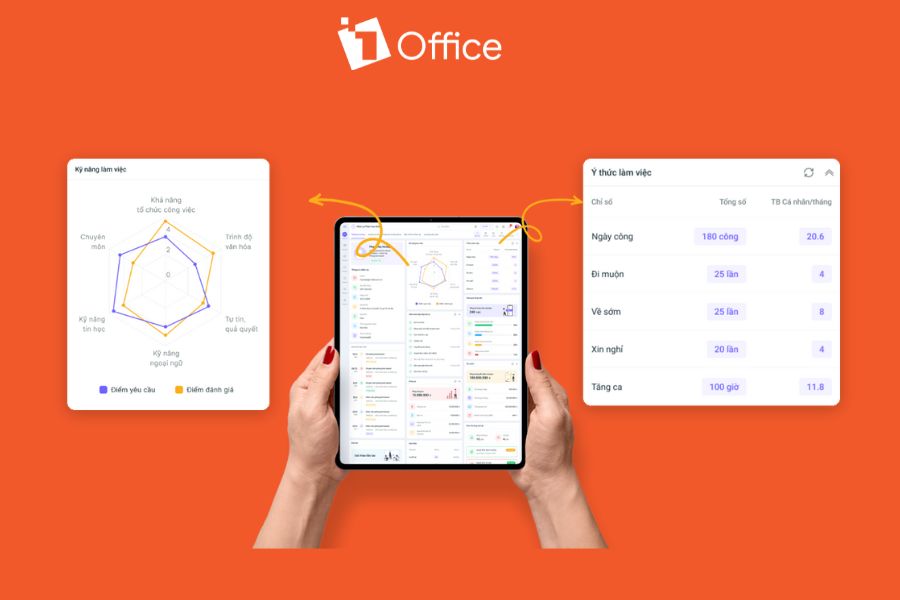
1Office is not just an HR software, but a comprehensive and unified business management solution. The platform is designed to solve 4 core business challenges on a single system: Work Management (WorkPlace), Human Resource Management (HRM), Customer Relationship Management (CRM), and Business Process Automation (BPA).
The solution stands out for its extensive application of artificial intelligence (AI) and Low-code technology to deliver comprehensive business management automation.
Key Features:
- Comprehensive HR Task Automation: The system automatically syncs data between modules. Data from timekeeping and KPI/OKR results are automatically inherited to calculate salaries, bonuses, and benefits without manual entry, minimizing errors and saving time for the C&B department.
- AI-Powered Smart Recruitment: Integrates AI to automatically analyze and screen candidate profiles from multiple sources, assess skills, and recommend suitable candidates. The entire recruitment pipeline is managed centrally, helping HR optimize efficiency and recruitment costs.
- Digitization of Employee Records and Contracts: Centrally manage all employee records on a single platform. Integrates online digital signing of labor contracts and automatically sends alerts when contracts are about to expire, helping businesses standardize processes and minimize legal risks.
- Flexible Timekeeping and Diverse Shift Management: Supports all timekeeping methods (time clock, GPS, WiFi via app) and allows for setting up a library of flexible time calculation formulas. Easily manage and assign shifts for staff (administrative, split, rotating shifts), ensuring transparent, real-time attendance data.
- Performance Management Linked to Competency Development: Provides a toolkit for setting up multi-level KPIs and OKRs, directly linking evaluation results to the payroll. Additionally, the system supports building competency frameworks and managing training (LMS), helping businesses create a clear personnel development roadmap.
Pros:
- As an “All-in-one” solution, 1Office eliminates data fragmentation between departments.
- Powerful automation capabilities help save time and optimize resources.
- The interface is designed based on the habits of Vietnamese users, making it easy to adopt and implement.
Cons:
- As a comprehensive solution with many features, the cost may be higher than specialized software, especially for micro-enterprises.
- Businesses need time to train employees to familiarize themselves with and fully utilize the system’s potential.
1.2. MISA AMIS HRM
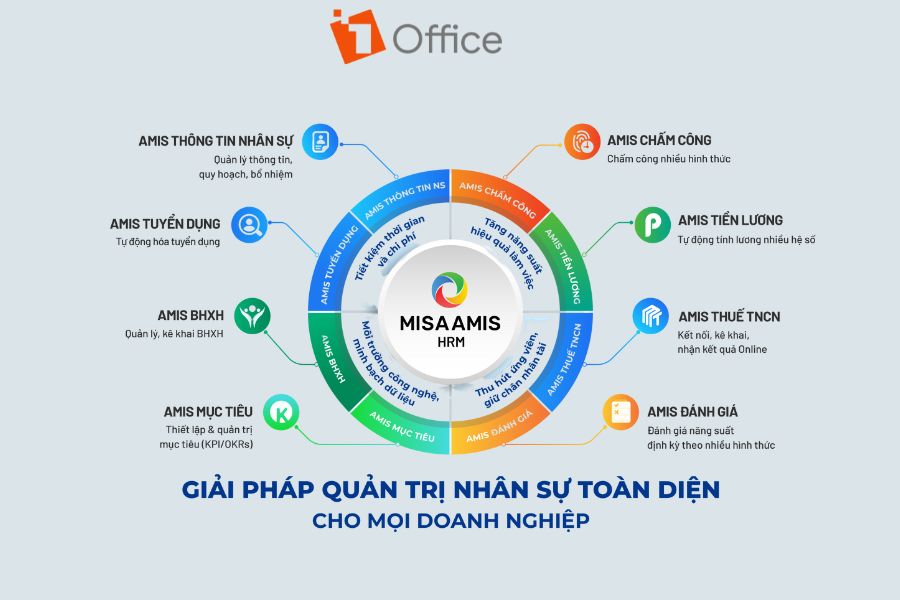
MISA AMIS HRM is a reputable “purely Vietnamese” solution from MISA, specifically designed for domestic businesses, especially medium and large enterprises. The software’s greatest strength is its ability to optimize HR processes and strictly comply with Vietnamese labor laws.
Key Features:
- The software automates the calculation of salaries, bonuses, and insurance, and is continuously updated according to the latest legal regulations.
- The system manages the entire employee lifecycle, from recruitment, onboarding, and evaluation to offboarding.
- MISA AMIS HRM also supports various smart timekeeping methods such as fingerprint, GPS, facial recognition, and QR codes.
Pros:
- Deep integration with other software in the MISA ecosystem, such as Accounting and CRM.
- The interface is entirely in Vietnamese, user-friendly, and easy to use.
Cons:
- Some users consider the interface to be quite traditional.
- To use all features like payroll or recruitment management, businesses may need to purchase multiple separate product packages, increasing the total investment cost.
1.3. Base HRM+
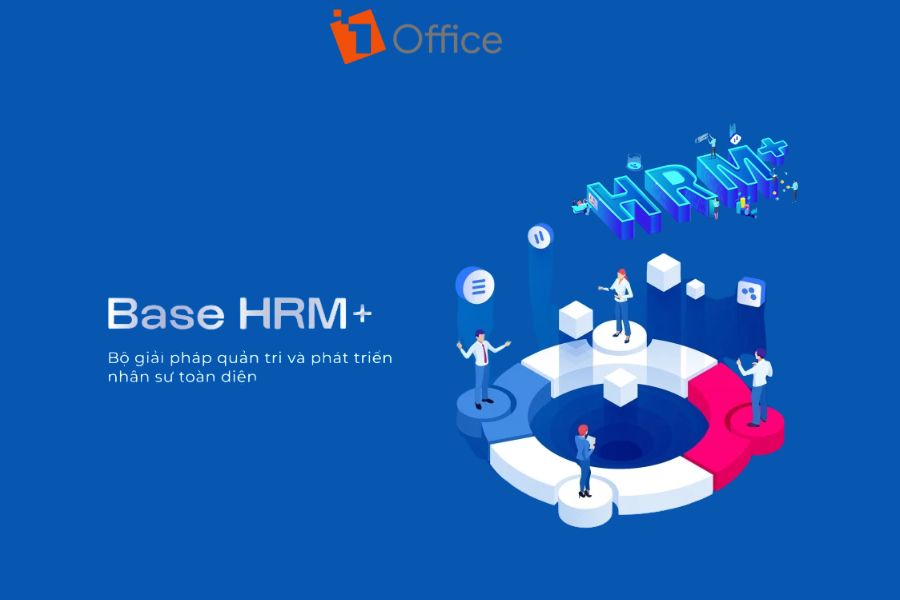
Base HRM+ is an HR management software for medium-sized businesses built with independent modules, suitable for medium to large-sized enterprises. Base.vn’s solution is highly regarded for its modern design and good user experience.
Key features:
- Base HRM+ is very strong in building an HR management framework, from organizational charts to workforce planning.
- The platform supports goal management using both popular methods: KPI and OKR.
- The system automatically aggregates timekeeping and leave data to generate highly accurate payroll.
Pros:
- Because it is built with individual modules, businesses can choose to implement it flexibly according to their needs and budget.
- Modern interface, a convenient mobile app, and a diverse application ecosystem.
Cons:
- The software is not really suitable for micro-sized businesses.
- The initial implementation process often requires detailed guidance from the Base team to achieve the best results.
1.4. DigiiHR
DigiiHR is a specialized HR management software from OCD Management Consulting Joint Stock Company (OOC), targeting small and medium-sized enterprises in Vietnam.
Key features:
- DigiiHR focuses on managing employee records, automating timekeeping and payroll.
- Integrates HR management toolkits based on international standards, such as Kaplan’s BSC-KPI and Harvard’s Competency Framework, helping businesses build a systematic evaluation system.
Pros:
- Flexible platform, suitable for SMEs that need a quick-to-implement solution.
- The reporting system is designed to meet the needs of managers in Vietnam.
Cons:
- The interface is quite simple and offers little customization.
- The software may struggle to meet complex expansion and customization needs if the business scales up significantly in the future.
1.5. Tanca HRM
Tanca is a modern HR management platform that operates entirely on a cloud-based platform, offering a flexible and cost-effective solution for small and medium-sized businesses.
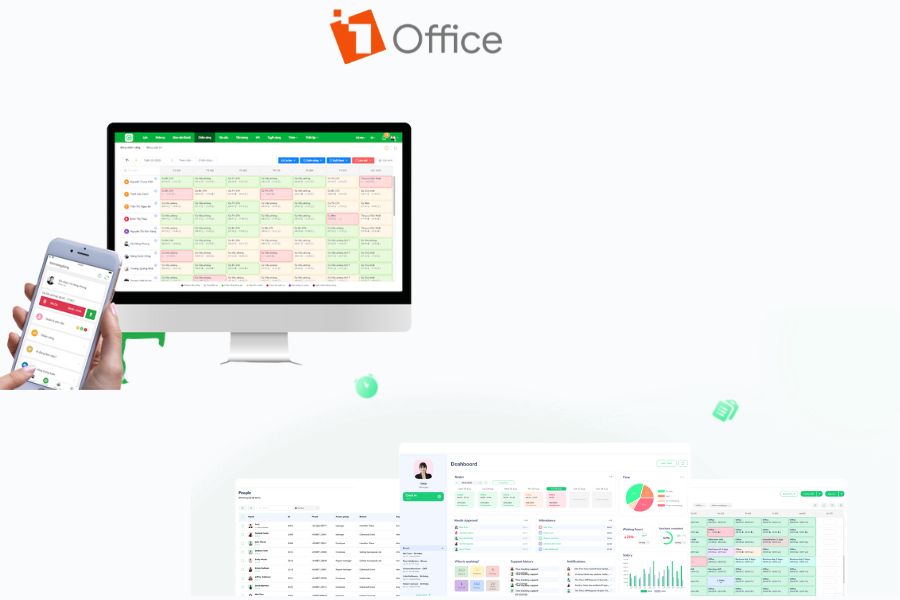
Tanca provides diverse timekeeping solutions
Key features:
- Strong in timekeeping features, supporting various methods such as GPS, Wi-Fi, facial recognition, and AI camera.
- The platform helps automate the processing of administrative requests such as leave applications and payments, helping businesses reduce paperwork by up to 90%.
Pros:
- Cost-effectiveness is a major advantage of Tanca for Vietnamese businesses.
- Intuitive interface and the ability to automate many basic HR tasks.
Cons:
- To use advanced features like recruitment and training management, businesses must purchase additional add-on packages.
- Some users have reported system errors and that the software does not automatically aggregate data from break times.
2. Reasons why medium-sized businesses should use HRM software
According to a Deloitte survey, implementing HR management software for medium-sized businesses is a top priority to improve operational efficiency and maintain employee engagement. Here are the core benefits that HRM brings to SMEs:
- Increase efficiency and optimize costs: HRM software helps automate processes from recruitment and timekeeping to payroll, replacing manual methods that are time-consuming and prone to errors. This helps businesses save significant time and effort and can even handle the workload of 1-2 administrative staff.
- Enhance performance management quality: HRM software provides detailed real-time reporting systems, helping leadership easily track performance, measure KPIs, and get an overview of the “health” of the workforce. This supports managers in making accurate strategic decisions based on real data.
- Ensure legal compliance: The software helps businesses easily track and update the latest legal policies on labor contracts, social insurance, and personal income tax. As a result, businesses can avoid unnecessary legal risks and enhance transparency.
- Systemize data and ensure security: All employee data is stored centrally on a single platform, making it easy to access and manage. Furthermore, these systems ensure a high level of information security through encryption mechanisms and clear access permissions.
- Improve employee experience: The self-service function allows employees to manage their personal information, request leave, view payslips, or register for training courses easily via a mobile app. This is not only convenient but also helps improve employee engagement and satisfaction.
3. Analyzing the specific needs of medium-sized businesses
Medium-sized businesses often have more limited budgets and need flexible solutions that can deliver quick results. The specific needs of this group of businesses include:
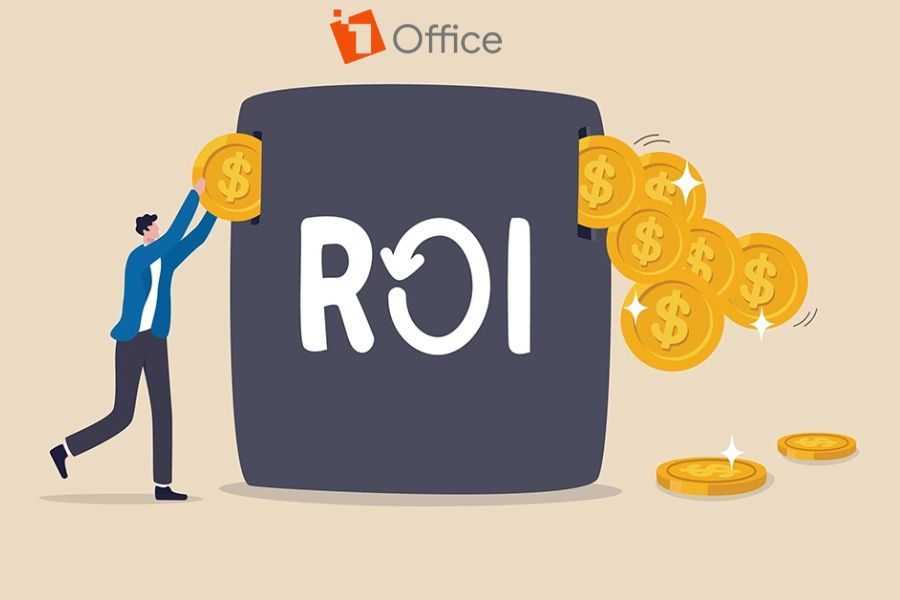
3.1. Reasonable cost and high ROI
For SMEs, the investment cost for HR software needs to be carefully evaluated based on the return on investment (ROI). An effective software must help businesses optimize resources and significantly save on operational costs (up to 40-60%).
This investment can replace the manual work of 1-2 employees, helping to save on labor and printing costs. Therefore, SMEs should prioritize solutions with flexible pricing models (SaaS) and service packages suitable for small-scale workforces.
3.2. Fast implementation speed
Medium-sized businesses don’t have much time for implementation projects that last for months. They need solutions that can be installed and put into use quickly.
Choosing Cloud HR software (on a cloud platform) is a wise decision, as it helps businesses access it flexibly from anywhere and reduces initial IT infrastructure investment costs.
3.3. Comprehensive integration
To ensure a smooth workflow, HR management software for medium-sized businesses must be easily integrated with other systems the company is using, such as accounting software, ERP, or project management tools. Strong integration capabilities help optimize information flow, avoid data duplication, and ensure consistency throughout all management activities.
4. Criteria for “choosing the right” HR management software for SMEs in Vietnam
To choose a truly suitable HRM software, medium-sized businesses in Vietnam need to consider the following 4 important criteria:
The top criterion is that the HR management software for medium-sized businesses must be updated and comply with current regulations on personnel management in Vietnam, especially the complex policies on social insurance contributions, personal income tax declarations, and provisions in the Labor Code.
Domestic solutions like 1Office or MISA AMIS HRM often have a significant advantage in this regard. Conversely, many international software solutions often do not provide in-depth support for the specific salary, tax, and insurance factors of the Vietnamese market.
4.2. Scalability (SaaS) aligned with development orientation
Businesses need to look ahead, considering the software’s scalability to ensure the system can meet future needs as the workforce grows.
SaaS (Software as a Service) solutions are often the preferred choice because they are easier to customize, update, and expand features compared to On-premise solutions (installed locally).
4.3. Reporting system suitable for domestic needs
A good software should provide automated, intuitive reports that help managers fully and detailedly grasp important HR metrics. The system should integrate real-time data analysis tools to support quick and accurate decision-making.
HR data contains a lot of sensitive information. Therefore, HR management software for medium-sized businesses must ensure the highest level of security, comply with legal regulations, and have mechanisms such as data encryption. Equally important is the feature of role-based access control (e.g., HR Admin, mid-level manager, employee), which helps to strictly control the rights to view, edit, and delete data, preventing internal information leaks.
5. Conclusion
Investing in HR management software for medium-sized businesses is no longer an option, but a strategic move that helps organizations optimize processes, enhance employee experience, and make informed decisions based on accurate data.
If you are still hesitant, don’t hesitate to sign up for 1Office’s free trial packages. You will get to experience and evaluate the software’s suitability before making the final investment decision for your business!
















