


 10/05/2026
  99 views
The education and training sector is facing a revolution in human resource management. Therefore, investing in a HRM software for the education and training sector that is specialized and capable of handling complex operations is an urgent requirement. Let’s join 1Office in a detailed review of the top 7 solutions for educational organizations today.
Mục lục
- 1. 7 outstanding HRM software solutions for the education and training sector
- 2. Human Resource Management Challenges in the Modern Education Context
- 3. Essential Features of an HRM Software for the Education and Training Sector
- 4. Core Criteria for Choosing HRM Software for the Education and Training Sector
- Conclusion
1. 7 outstanding HRM software solutions for the education and training sector
HRM solutions for the education sector must be able to handle complex operations such as calculating salaries based on teaching hours, managing specialized teacher profiles, and ideally, integrating with student information systems (SIS/LMS).
Overview summary table
| Software | Core Strengths | Best For |
| 1Office HRM | A comprehensive business management solution. | Businesses/Centers needing a comprehensive solution. |
| GoHR.vn | Specializes in flexible payroll (dynamic formulas) and strategic management (KPI/OKR). | Educational organizations and centers with complex processes. |
| VnResource HRM Pro | Timekeeping specific to the education sector (supports GPS for remote work) and accurate payroll management. | Schools and educational businesses with a long history of operation. |
| DotB EMS | Specialized for educational organizations (Language centers, K-12 schools). Strong in smart teaching schedule allocation and teaching quality assessment. | Medium to large-sized training centers and schools. |
| MISA AMIS HRM | Optimized for Vietnamese labor laws and tightly integrated with MISA accounting software. | Schools wanting to integrate HR with accounting. |
| Base HRM+ | Superior user experience (UX) and KPI/OKR management. | Organizations that prioritize user experience and goal management. |
| BambooHR | An international solution, strong in HR information management and recruitment. | International schools and centers with multinational staff. |
1.1. 1HRM – A comprehensive business management solution with AI and automation
1HRM is the core component of the 1Office unified business management platform. This allows educational organizations to break down data “silos,” connect HR information with work management (Workplace) and process management (BPA), and comprehensively address industry challenges.
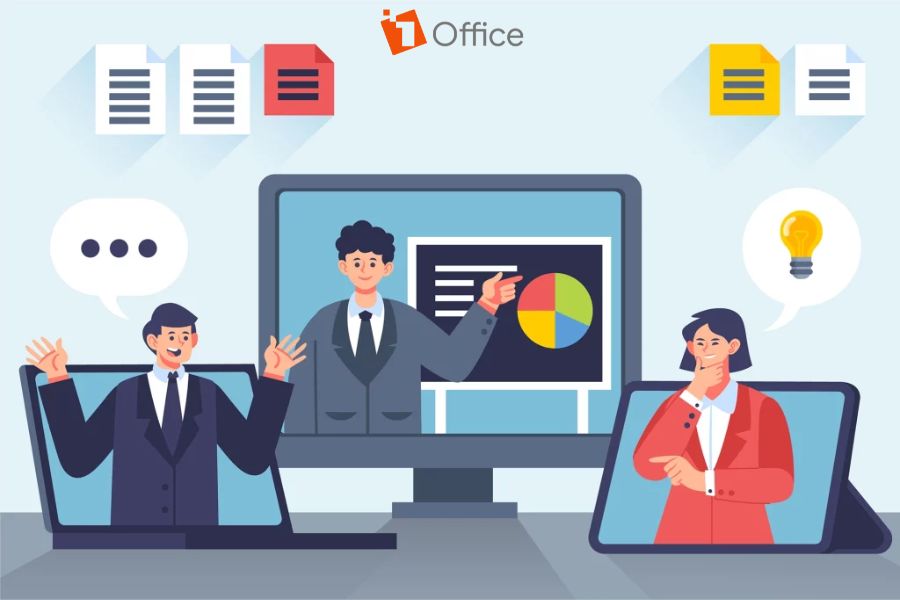
The outstanding strength of 1Office is the application of Artificial Intelligence (AI) and Automation to core HR operations:
- Address the “Brain Drain” problem with AI recruitment: The Recruitment module of 1Office integrates AI to automatically screen CVs, allowing for the analysis of numerous candidate profiles (teachers, lecturers) from multiple sources, assessing skills, and recommending the most suitable profiles.
- Solve the “Complex Payroll Calculation” problem: 1HRM provides flexible payroll formulas (like Excel), allowing the setup of multiple different payslips. The system supports various calculation methods (daily wage, piece-rate pay, sales/KPI-based pay) and automatically inherits data from timekeeping, ensuring absolute accuracy for both tenured and visiting teachers.
- Develop and retain talent: The tool fully integrates Competency Assessment and Training modules. The platform allows for building competency frameworks for each position, creating individual development plans (IDP), and integrating a Learning Management System (LMS). Based on assessment results, the system can automatically suggest suitable courses, helping to develop a succession team.
- Transparent performance management: The software allows for directly linking KPI assessment results to payroll and linking OKRs to the work management system. This helps every teacher and staff member clearly see their contributions and ensures fairness in compensation, reducing turnover rates.
1.2. GoHR.vn
GoHR is a strategic human resource management platform focused on solving the core challenges of payroll and performance for educational organizations.
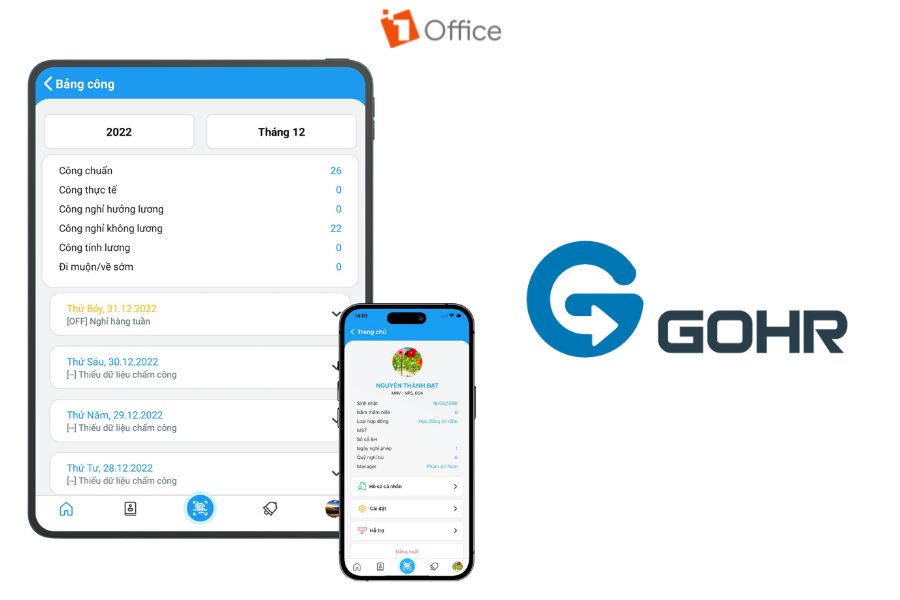
Key features:
- Allows users to set up complex salary and allowance formulas (e.g., teaching allowances, hourly pay for teaching) without programming.
- Provides strong support for performance and goal management through a KPI/OKR system.
- Offers a convenient mobile app for online timekeeping via GPS and QR Code.
1.3. VnResource HRM Pro
With nearly 20 years of experience in the Vietnamese market, VnResource HRM Pro is a comprehensive human resource management solution trusted by many large enterprises and long-standing schools.
Key features:
- Capable of integrating with all common types of time clocks on the market.
- Supports lecturers and staff in timekeeping via GPS on the mobile app when on business trips or teaching at multiple campuses.
1.4. DotB EMS
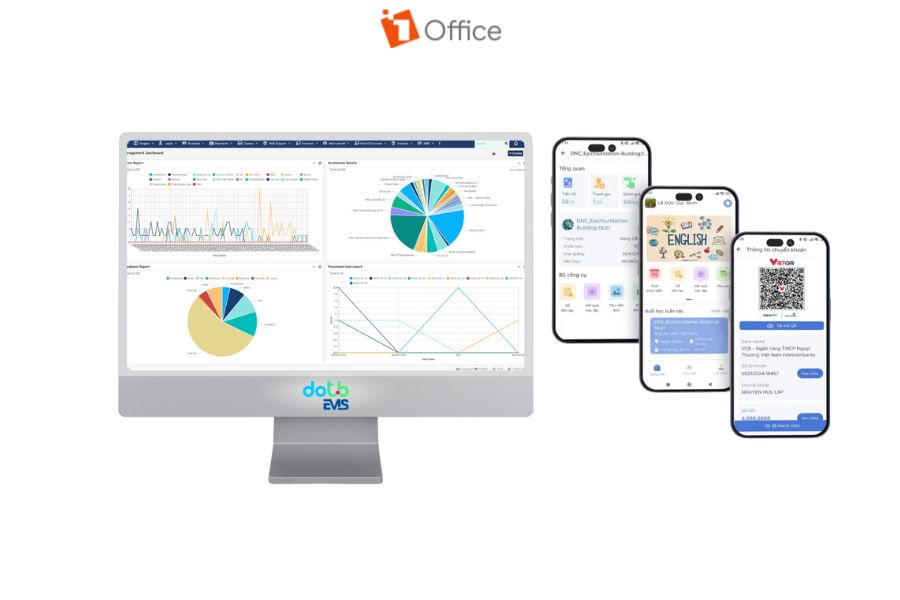
DotB EMS is an operational management software solution specifically designed for educational organizations such as language centers or K-12 schools.
Key features:
- Specifically designed for training centers and schools, rather than being a multi-industry HRM software.
- Automatically assigns classes to teachers based on their skills, availability, and preferred teaching shifts.
- Allows for compiling student feedback to evaluate teachers and automates timekeeping and payroll calculations.
1.5. MISA AMIS HRM
As part of the MISA AMIS ecosystem, MISA’s HRM software provides diverse human resource management functions suitable for Vietnamese businesses.
Key features:
- Automates and ensures absolute accuracy in complex operations related to Social Insurance and Personal Income Tax according to the latest regulations.
- Deeply and tightly integrates with MISA accounting software, creating a seamless and synchronized HR-accounting data flow.
1.6. Base HRM+
Base HRM+ is a comprehensive human resource management solution, part of the Base.vn business management platform, known for its modern design and performance-focused philosophy.
Key features:
- Modern, user-friendly interface, providing a smooth experience for both HR and employees.
- Provides a powerful set of tools for goal and performance management, suitable for modern work cultures.
- Allows businesses to choose and deploy HR applications based on their needs at each stage.
1.7. BambooHR
BambooHR is a renowned international HRM solution, trusted by thousands of businesses worldwide, especially medium-sized companies.
Key features:
- The software is very strong in centralized personnel information management and recruitment (ATS), providing a seamless experience.
- BambooHR is particularly suitable for international schools or foreign language centers with international elements, which have multinational staff and require an interface and management process that meets international standards.
2. Human Resource Management Challenges in the Modern Education Context
The education sector faces many unique characteristics that make traditional human resource management methods inefficient and extremely complex.
2.1. Serious “Brain Drain”
The quality of an educational organization is determined by the quality of its teaching staff. Therefore, talented teachers are always “poached” by rival institutions, leading to a high turnover rate. This issue not only incurs high costs for recruitment and retraining but also puts immense pressure on teaching quality and the organization’s stability in the eyes of students and parents.

2.2. Complex Payroll and Timekeeping
This is the industry’s most specific and significant challenge. Payroll and timekeeping become complicated due to many factors. Organizations must manage extremely flexible teaching schedules (calculated by the hour, session, or term).
Payrolls must handle a series of specific allowances such as teaching allowances, position allowances, and English language allowances, along with overtime pay for extracurricular activities or exam proctoring. Manual record-keeping using logbooks or Excel is not only time-consuming but also highly prone to errors, leading to a lack of transparency and complaints from teachers.
2.3. Diverse Labor Types
Unlike manufacturing businesses, educational organizations must simultaneously manage many different types of labor, including: tenured teachers (full-time), visiting lecturers (part-time, hourly contracts), administrative staff, support staff, and foreign teachers.
Each of these groups has completely different contract types, work schedules, benefit policies, and tax calculations. Manual management makes it nearly impossible to control this diversity.
2.4. Legal Risks
The process of managing contracts, Social Insurance, and Personal Income Tax for various labor types (especially foreign and visiting lecturers) requires absolute accuracy.
Even a minor error in applying the law can lead to legal risks and costly administrative fines. Currently, teacher records are often stored on paper or in separate Excel files, which are easily lost and difficult to update for inspections.
3. Essential Features of an HRM Software for the Education and Training Sector
To address the challenges above, a comprehensive HRM software for the education sector must become a strategic platform that integrates the following core functions:
3.1. Profile & Organizational Structure Management
This is a foundational feature that allows for the centralized storage of all detailed information about teachers and staff. These profiles must include not only personal information but also degrees, professional certifications (pedagogy, foreign languages), bank accounts, and dependent information for Personal Income Tax family circumstance deductions.
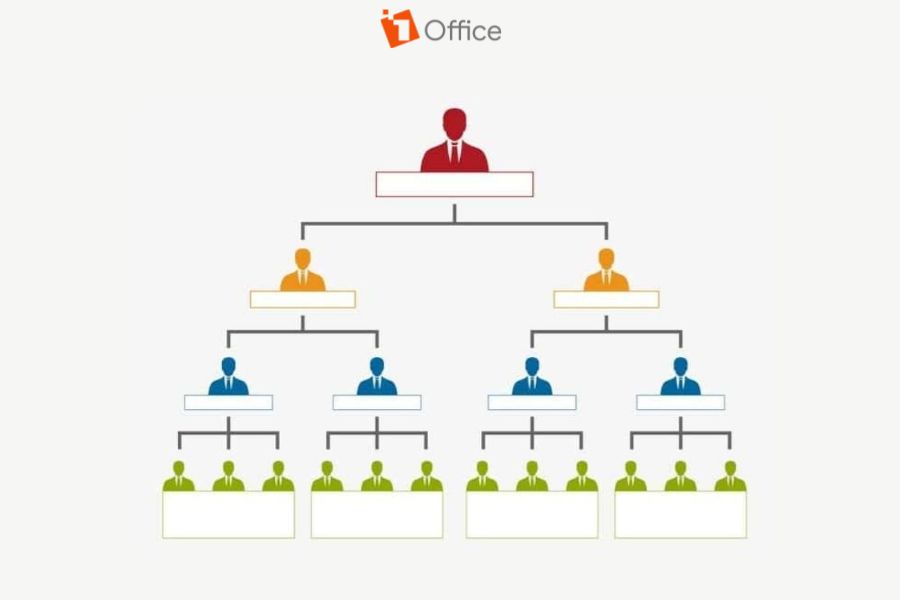
The software must also allow for the flexible setup and management of the organizational structure (departments, faculties, subject groups) and track the entire work history, from onboarding, transfers, and appointments to the process of signing and renewing labor contracts.
3.2. Automated Timekeeping & Payroll
This is the most critical feature for solving the industry’s complex problems. The system must support flexible timekeeping via time clocks or a Mobile App (using GPS or QR code scanning).
For payroll, the software must allow users to self-define salary components and set up calculation formulas for each component (base salary, allowances, deductions), including KPI-based pay. The system must automatically calculate Personal Income Tax according to regulations and automatically compile the number of teaching hours and classes taught by each teacher.
3.3. Recruitment Management
To combat “brain drain,” the recruitment process must be fast and efficient. The software needs to support the entire recruitment process, from posting jobs, screening resumes, and managing interview rounds to onboarding new employees. Digitizing this process helps the organization attract the right people, reduce hiring time, and provide a professional experience for candidates.
3.4. Benefits Management
This feature helps automate administrative procedures and ensure benefits for teachers.
- The system must manage leave policies, allowances, and social and health insurance schemes.
- Provide an employee portal or Mobile App so employees can proactively perform online services such as requesting leave, reporting late arrivals, and registering for overtime.
- The system should have automatic reminders for important events like birthdays, and especially for expiring contracts, helping HR stay proactive.
3.5. Management Reporting System
HRM software is not just for data entry; it must be a decision-support tool. The system needs to provide intuitive dashboards that offer an overview of the number of teachers, their employment status, and key HR metrics.
More importantly, it must generate strategic analytical reports on turnover rates, personnel fluctuations, and teaching performance by department/faculty.
4. Core Criteria for Choosing HRM Software for the Education and Training Sector
To select the optimal HRM system, educational organizations need to focus on the following 5 core criteria to ensure flexibility, legal compliance, and integration capabilities.
4.1. Flexible Payroll Automation
Due to the extremely complex and frequently changing salary structure in the education sector, the software must be highly customizable. Look for solutions that allow setting up “dynamic formulas” to handle complex salary structures, including pay per teaching hour, various allowances, bonuses, and penalties. This automation helps ensure 100% accurate income payment and prevents budget leakage.
4.2. Multi-Method Timekeeping Management
Due to the nature of teachers’ work, which often involves moving between campuses, business trips, or teaching at multiple schools, the HRM software must support various timekeeping methods.
Don’t just choose software that only connects to fingerprint time clocks. Prioritize solutions that support timekeeping via a Mobile App (using GPS or QR codes). This feature is mandatory for effectively managing teachers on remote assignments and employees working at multiple branches.
4.3. Strategic Performance Management Support
Modern HRM software must go beyond an administrative role and become a strategic management tool. The system needs to provide powerful tools for transparent and timely performance evaluation (KPI/OKR) for each teacher and department/faculty.
Furthermore, it must support building clear training roadmaps and managing necessary courses and certifications, helping to guide the career development of the teaching staff.
4.4. Legal Compliance and Data Security
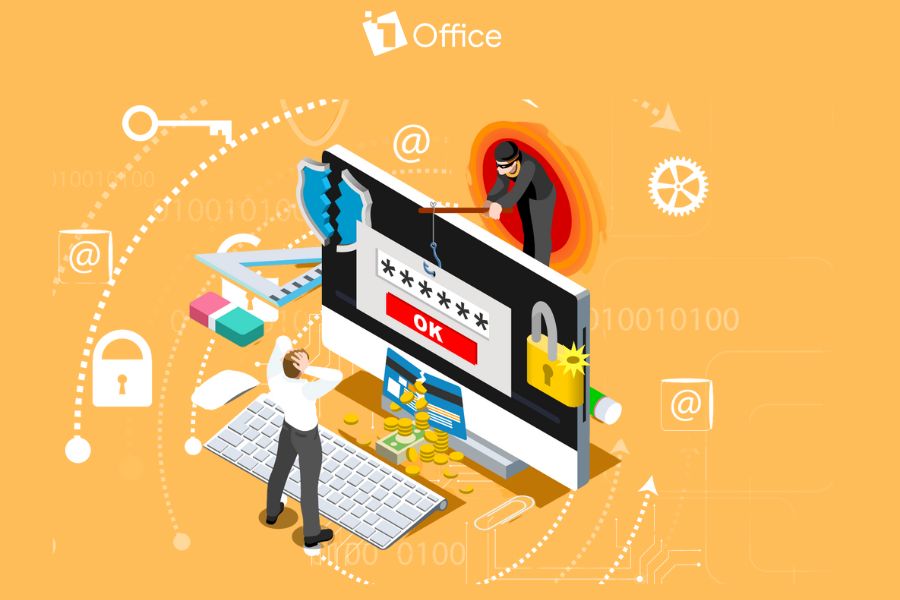
HR data, especially salary, bonuses, and personal information, is extremely sensitive. The HRM software must ensure data is stored centrally, securely, and protected using encryption technologies.
The system must have flexible permission settings (by role or function) to ensure only authorized personnel can access the data. Most importantly, the provider must commit to timely updates regarding the latest state regulations on personnel management, social insurance, and personal income tax.
4.5. Easy Integration with the School’s Existing Systems
HRM software should not be a data “island.” In a school, many other systems are running in parallel. Therefore, the ideal HRM software needs robust API integration capabilities.
It must be able to connect with existing systems such as accounting software, ERP systems, and especially the Student Information System (SIS) or training portals. This connectivity creates a seamless data ecosystem, avoiding information duplication and enhancing overall operational efficiency.
Conclusion
Investing in an HRM software for the education and training industry is a strategic investment. It not only helps automate administrative tasks but also provides valuable data for leadership to make strategic decisions about talent development and retention.
Is your organization ready to automate complex processes and focus on talent development strategies? Contact 1Office today for an in-depth consultation and learn how our platform can solve the unique HR challenges of the education industry.
















