11/05/2026
  456 views
Successful business managers today all have one thing in common: possessing effective planning skills. Planning helps managers make accurate decisions, identify potential challenges, and thereby optimize profits and achieve success. However, effective planning and work organization are not easy and require certain skills and experience. In this article, 1Office will point out methods, practical examples, and mistakes to avoid in planning.
Mục lục
1. How to classify types of plans in businesses today
Classifying plans is one of the essential skills for work that helps managers better understand the nature, purpose, and scope of each type of plan. This classification helps them determine which type of plan is suitable for the business’s needs and goals, allowing them to create more specific and effective plans. There are many ways to classify plans, depending on their purpose and scope of use. Additionally, each type of plan can be combined to create more complex and multi-dimensional plans to best meet the needs and goals of the business. Below are some main classifications:

Classifying planning skills by time:
- Long-term plan: A plan established for a period longer than 3 years.
- Mid-term plan: A plan established for a period of 1-3 years.
- Short-term plan: A plan established for a period of 1 month to 1 year.
Classifying planning skills by level of detail:
- Detailed plan: A specific and detailed plan outlining the steps and activities needed to achieve a goal.
- General plan: A broad and less specific plan of activities, often used at high management levels.
Classifying planning skills by purpose:
- Strategic plan: A long-term plan to achieve major goals and develop the strategy of a business or organization.
- Action plan: A plan to address specific issues or meet urgent needs.
- Financial plan: A plan to manage the finances of a business or organization.
Classifying planning skills by scope of use:
- Production plan: A plan to manage the production process and supply of products or services.
- Marketing plan: A plan to manage the marketing and promotional activities for a business’s or organization’s products or services.
- Human resources plan: A plan to manage personnel, including recruitment, training, and employee development.
In summary, regardless of the classification method, the common purpose of classifying work planning skills is to ensure the business operates effectively, achieves its set goals, and optimizes resource utilization.
See more: 8 Planning Principles – The Golden Secret to Conquering Every Goal
2. 5 Best Planning Methods Applied by Businesses
To select a suitable planning skill method, managers need to evaluate factors such as work complexity, available resources, and completion time. From there, they can choose the planning method that best fits their work.
2.1 The 5W1H2C5M Planning Method
The 5W1H2C5M planning method helps ensure that all necessary information is provided and that required activities are carried out effectively and with a clear direction. This method is widely applied in many fields, from project management to marketing planning, production, and other business activities. This method includes the following basic elements:
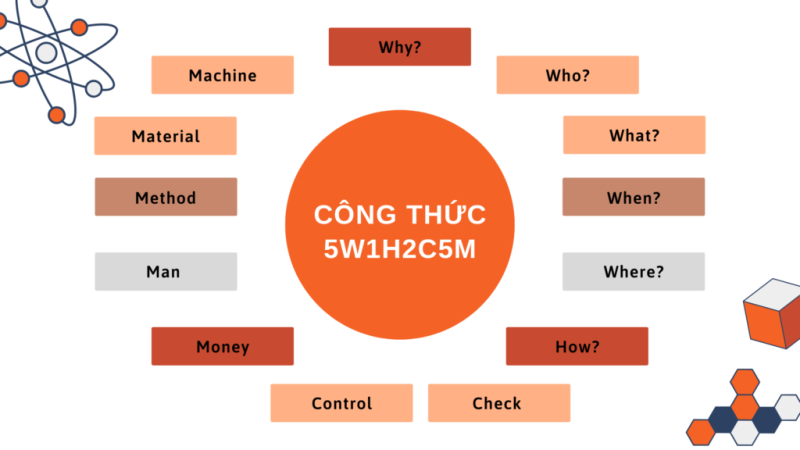
- 5W: What, Why, Who, Where, and When. These questions help guide the necessary information for the plan, including objectives, reasons, implementers, location, and time.
- 1H: How. This question helps guide the method of carrying out the necessary activities to achieve the objective.
- 2C: Cost and Communication. These questions help guide the costs related to the plan and the method of communication and interaction with stakeholders.
- 5M: Measurement, Management, Monitoring, Modification, and Maintenance. These questions help guide the necessary activities to measure, manage, monitor, modify, and maintain the plan.
Practical example: of planning skills using the 5W1H2C5M method in a business is when planning for a new product launch.
First, the planner will answer the 5W questions:
- Who: who is the target customer audience? Example: young people aged 18-25.
- What: what is the new product? Example: a new mobile app that simplifies food ordering.
- Where: where will the product be introduced? Example: at popular cafes and restaurants.
- When: when will the product be launched? Example: at the beginning of summer.
- Why: what is the purpose of introducing the product? Example: to increase sales by attracting customers to use the new app.
Then, in step 1H, the planner will determine how to introduce the product to attract target customers. For example: creating multiple advertising banners on social media, advertising on popular delivery apps, and organizing attractive promotional programs.
In step 2C, the planner needs to determine the costs of organizing the product launch, including costs for advertising, product delivery, broadcasting equipment, and costs for promotional programs.
Finally, in step 5M, the planner needs to evaluate and manage factors related to manpower, materials, machinery, methods, and time to ensure the product introduction is successful and on schedule.
>> Read more: Scientific and effective work plan template to double work efficiency
2.2 SWOT Analysis Method
The SWOT method is a strategic analysis tool commonly used in business to assess the strengths, weaknesses, opportunities, and threats of a company or a product. SWOT is an acronym for Strengths, Weaknesses, Opportunities, and Threats.
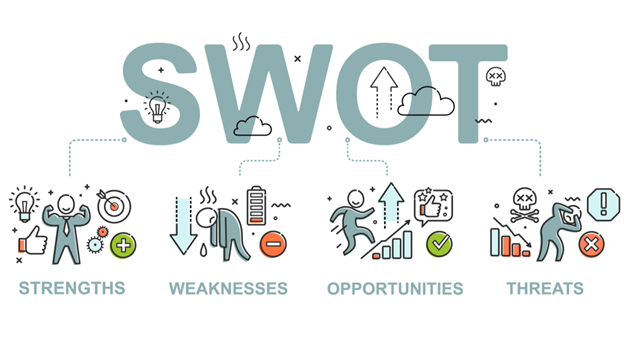
The SWOT method is carried out in 4 main steps:
- Identify the company’s strengths and weaknesses by evaluating aspects such as management, products, location, finances, personnel, customer relations, etc.
- Identify opportunities in the market, including economic, political, social, and technological factors.
- Assess threats in the market, including economic, political, social, and technological factors.
- From there, make sound strategic decisions based on the assessed information.
SWOT is considered an important tool that supports planning skills for managers, helping them make sound decisions and guide effective development. However, to achieve the best results, businesses should use it in combination with other methods and build a specific strategic plan for practical application.
Real-world example: A smartphone manufacturing company is considering expanding its market into a new country.
The company’s strengths include high product quality, an extensive distribution network, and a competitive pricing strategy. However, the company also faces many challenges, including competition from local rivals, strict government regulations, and a saturated potential market.
Based on this SWOT analysis, the company devised suitable strategies to leverage opportunities and address challenges in the new market. Specifically, the company decided to increase investment in product research and development to meet the specific needs of the market, enhance promotion and customer outreach through online channels and local partners, and implement competitive pricing policies to compete with local rivals.
2.3 OKR (Objectives and Key Results) Planning Method
This is one of the popular planning methods used by many large tech companies like Google, Intel, and LinkedIn. It is a method that helps businesses set long-term, measurable, and directional goals, and focus on specific results.
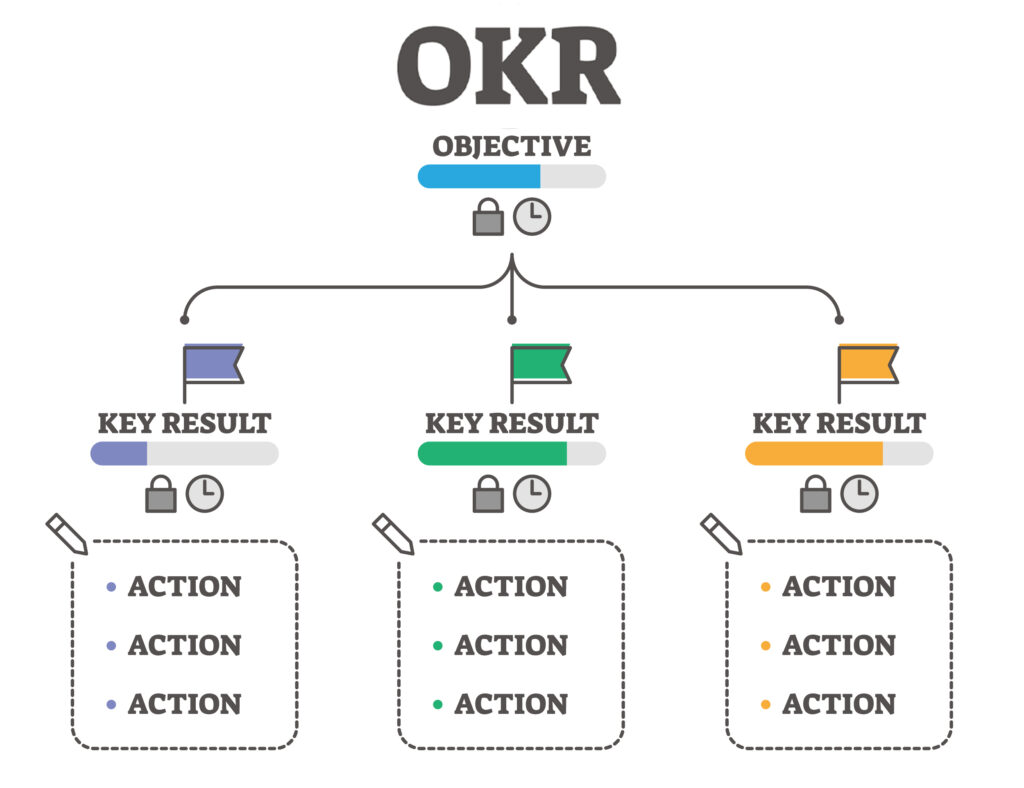
Planning using the OKR model consists of two main components:
- Objective: What the business wants to achieve within a specific, clear timeframe, with the participation of all employees.
- Key Results: The metrics used to measure the achievement of the objective. Key results must be measurable with numbers and achievable within a specific timeframe.
The OKR method has many advantages, such as providing clear direction, being suitable for a dynamic business environment, helping evaluate performance, and encouraging personal development. However, to apply this method effectively, it requires the cooperation and consensus of all employees in the company.
Real-world example: A company applies the OKR planning method, setting a main objective to increase revenue in the coming year.
The departments will set their own objectives aligned with this common goal, as follows:
- Marketing Department: Increase new customer traffic to the company’s website by 50% compared to the previous year.
- Sales Department: Increase sales revenue by 20% compared to the previous year.
- Customer Service Department: Increase the customer request resolution rate to 90% compared to the previous year.
Then, each department will analyze and set Key Results to achieve its objective, for example:
- Marketing Department: Increase search volume for the company’s keywords by 50% compared to the previous year; increase email subscribers by 30% compared to the previous year.
- Sales Department: Increase the number of orders from loyal customers by 15% compared to the previous year; increase the number of customers from online advertising channels by 25% compared to the previous year.
- Customer Service Department: Increase the number of requests resolved within 24 hours to 90%; increase the customer satisfaction rate with the company’s service to 85%.
See more: Effective OKR software for businesses
2.4 Network Diagram Method (PERT)
The Network Diagram Method (PERT) is a project planning and management technique used to evaluate project activities and determine the project completion time. PERT helps project participants understand the required activities, their duration, and the dependencies between them.
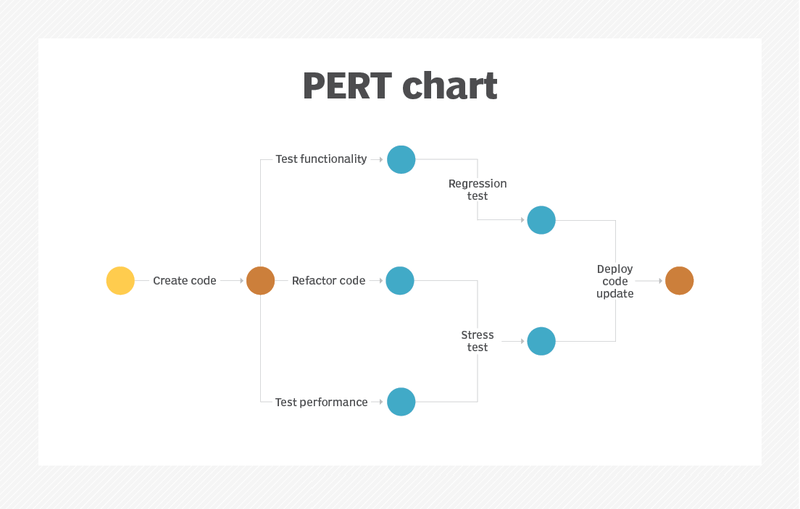
The steps to implement PERT include:
- Identify the activities to be performed in the project.
- Determine the expected completion time for each activity.
- Create a network diagram to represent the activities and the relationships between them.
- Determine the project completion time based on the expected completion time of the activities.
Real-world example: Applying the PERT method in a project to build a manufacturing plant.
The activities to be performed include design, construction, equipment installation, testing, and acceptance. The expected completion time for each activity will be determined, and a network diagram will be created to represent the activities and their relationships. The project completion time will be calculated based on the expected completion time of the activities and the dependencies between them.
| >> A comprehensive and detailed guide to creating a business plan for your enterprise |
2.5 The SMART Method for Work Planning
The SMART model helps ensure that goals and plans are specific, measurable, achievable, relevant, and time-bound to achieve the best results. This is a popular method used in project management and work management across many fields, from business and marketing to education and healthcare.
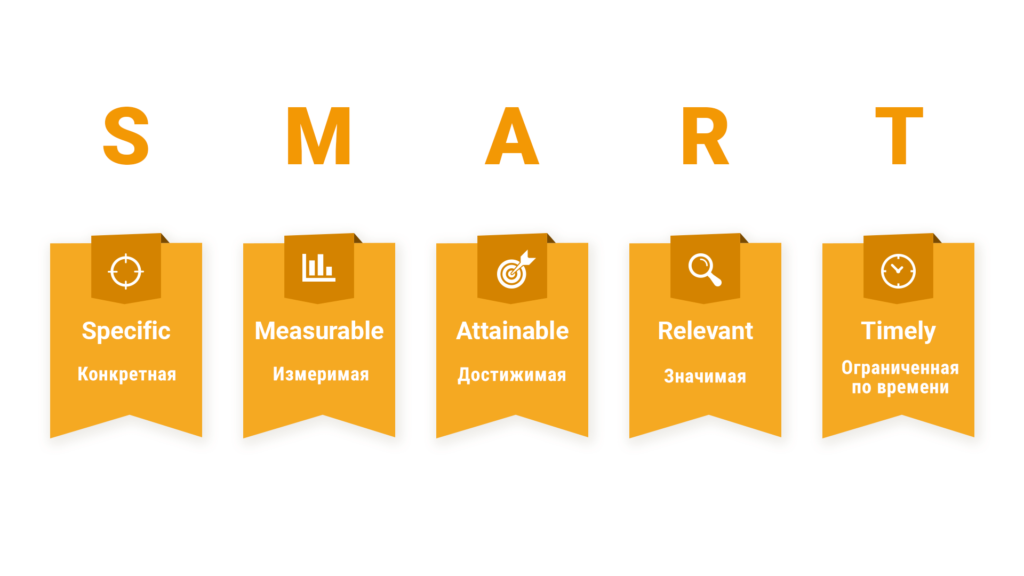
Specifically, goals set according to the SMART model must meet the following 5 criteria:
- Specific: The goal must be described specifically and clearly, leaving no room for deviation or misunderstanding.
- Measurable: The goal must be measurable to assess the level of achievement and track progress.
- Achievable: The goal must be feasible, not too difficult or too easy to achieve.
- Relevant: The goal must be relevant to the overall purpose and strategy of the organization.
- Time-bound: The goal must be set with a specific deadline to create a sense of urgency and motivation for the team.
Practical example: A software development company wants to set a goal for its development team to complete a new project.
By using the SMART method, the company can plan accurately and ensure that the set goals are measurable and achievable.
- Specific: What project needs to be completed? The company will produce a new mobile application to help customers manage their personal finances.
- Measurable: The company wants to achieve its goal by completing the new project within 6 months and generating $1 million in revenue.
- Achievable: The new project can be completed within 6 months because the company has experience in software development and the development team consists of experts.
- Relevant: The new project will help the company expand its market and attract new customers.
- Time-bound: The new project must be completed within 6 months to achieve $1 million in revenue.
In addition, there are several other planning and work management methods used by large or foreign enterprises, such as: The Professional Solution method (planning with expert consultation), the Delphi method (expert consultation using secret ballots), and the Cost-Benefit Analysis method (abbreviated as CBA and often used by governments to analyze economic situations)…
3. Tips to Improve and Enhance Planning and Work Management Skills
Prioritize tasks and focus on one goal
To avoid being overwhelmed by many different tasks, set goals and create a plan for each task, then arrange them in order of priority. Focus on the most important task and prioritize handling it before starting on others.
Create a clear plan on paper or with supporting smart software
After prioritizing your tasks, you need to create a clear plan to execute them. You can use paper or smart software to plan and record tasks. This helps you track progress and ensures no task is missed.
Ask specific questions and anticipate potential issues
Before starting to plan your work, ask specific questions and come up with solutions for potential issues that may arise during execution. This will help you be prepared to face problems and solve them quickly and effectively.
4. Mistakes to Avoid in Planning and Work Management
- Unrealistic plans that don’t match your capabilities: Sometimes when planning, we are overly optimistic and set unrealistic or overly difficult goals. This can lead you to get bogged down in trying to complete the goal and skip basic steps. Set feasible goals that match your abilities.
- Setting vague and unfocused goals: Vague and unclear goals will leave you unsure of what to do to achieve them. Set clear goals and focus on them, schedule and plan each step of the process.
- Creating overly general plans: If your plan is too general, you will miss important details. Set specific goals and create a detailed plan for each task.
- Neglecting the process and focusing only on the result: The execution process is also very important and can affect the final outcome. Place emphasis on the execution process and ensure that every step is carried out correctly.
- Not preparing contingency plans: When planning, no one can predict exactly what will happen. Prepare contingency plans to deal with difficult or unexpected situations that may arise.
5. 1Office – An Effective Work Planning and Organization Solution for Businesses
1Office is a software that helps users manage work processes effectively and is currently used by many businesses. This software provides users with a powerful tool to manage projects, plan work, assign tasks, and track progress.
Specifically, the software allows users to proactively create projects and tasks to be completed, plan resource allocation, set deadlines, quantify work, and assign tasks to employees. It also provides features like statistics and reports to help users track project progress and evaluate the effectiveness of the work performed.
Get a free consultation & software demo
1Office is developed to support businesses in various fields, from manufacturing to services, and for all operational scales, from small to large. It is recognized as an effective software for managing and optimizing business workflows. If your business is struggling with planning methods and skills, or is looking for tools to support the planning process, please contact us at:
- Hotline: 083 483 8888
- Facebook: https://www.facebook.com/1officevn/
- Youtube: https://www.youtube.com/@1office-chuyendoisodn