10/05/2026
  10740 views
Electronic signatures are increasingly used in digital transactions, but not everyone fully understands their legal validity or how they differ from digital signatures. If you want to understand what an electronic signature is, how to create one, its security requirements, and related regulations, this article will help you quickly grasp the most important information.
Mục lục
- I. Key Terminology for Electronic Signatures
- II. Legal Validity of Electronic Signatures
- III. Conditions for Ensuring the Security of Electronic Signatures
- IV. Legal Regulations for Digital Signatures
- V. Types of electronic signatures on contracts
- VI. Guide on how to create an electronic signature
- VII. Differentiating between electronic signatures and digital signatures
- VIII. What are the benefits of using electronic signatures?
- IX. Future trends of electronic signatures in Vietnam
- X. Register for 1Office’s Digital Signature Service
I. Key Terminology for Electronic Signatures
1. What is an electronic signature?
An electronic signature (Electronic Signature) is a form of digital signature used to confirm the identity and legality of an electronic document. It can include a digital signature, fingerprint, OTP code, or any digital verification method, helping to secure and ensure the integrity of the document.
According to Clause 11, Article 3, Law on Electronic Transactions 2023
Common types of electronic signatures used today include: digital signatures, scanned signatures, image signatures, etc. Among them, the digital signature is the type of electronic signature with the highest legal validity. It is widely used in important electronic transactions within businesses, such as: Signing electronic contracts, purchasing goods and services, etc.

2. What is a digital certificate?
A digital certificate (Digital Certificate) is a data message issued by a Certification Authority (CA) that provides electronic signature certification services, confirming the identity of an individual or organization and the relationship between the public key and that identity.
- See more: What is a digital certificate? Differentiating between digital certificates and digital signatures
3. What is a digital signature certificate?
A digital signature certificate (Digital Signature Certificate, abbreviated as DSC) is a data message issued by a Certification Authority (CA), which includes information about the certificate holder, the public key, and other related information. A digital signature certificate is used to authenticate the signer of an electronic signature, ensure the integrity of the signed data, and prevent the forgery of electronic signatures.
4. What is a digital signature certification service?
A digital signature certification service is a service provided by a Certification Authority (CA) to authenticate the signer on a data message. This service helps ensure the integrity of the signed data message and guarantees the non-repudiation of the signer with respect to the data message.
5. What is an electronic signing program?
An electronic signing program is a computer program designed to operate independently or through other devices, information systems, or computer programs to create a unique electronic signature for the signer of a data message.
II. Legal Validity of Electronic Signatures
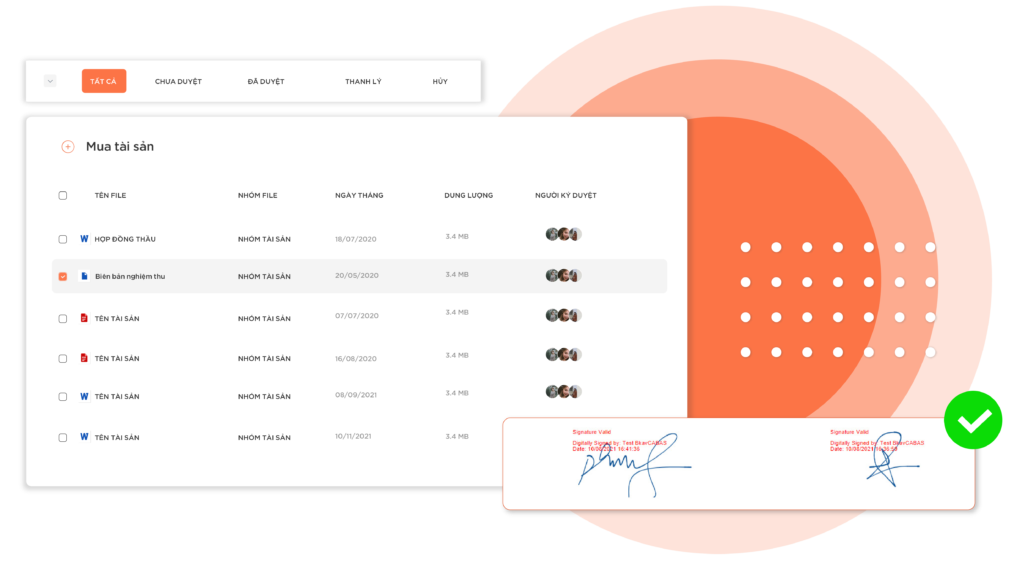
Pursuant to Article 24 of the 2005 Law on Electronic Transactions, an electronic signature is legally valid when:
| 1. Where the law requires a document to be signed, that requirement for a data message is considered met if the electronic signature used to sign the data message meets the following conditions:
a) The method of creating the electronic signature allows for the verification of the signer and demonstrates the signer’s approval of the content of the data message; b) That method is sufficiently reliable and appropriate for the purpose for which the data message was created and sent. 2. Where the law requires a document to be sealed by an agency or organization, that requirement for a data message is considered met if the data message is signed by the electronic signature of the agency or organization, meets the conditions for ensuring the security of the electronic signature, and that electronic signature is certified. |
Thus, electronic signatures are guaranteed legal validity when used in electronic transactions, provided they meet the two requirements for signatures and seals mentioned above.
It is clear that electronic signatures are a crucial tool in the digital age, helping businesses enhance operational efficiency and secure electronic transactions. Leaders must understand the role of electronic signatures and have a suitable implementation plan to fully leverage the benefits of this tool.
III. Conditions for Ensuring the Security of Electronic Signatures
Pursuant to Article 22 of the 2005 Law on Electronic Transactions, the conditions for ensuring the security of electronic signatures are stipulated as follows:
| 1. An electronic signature is considered secure if it is verified by a secure verification process agreed upon by the transacting parties and meets the following conditions:
a) The electronic signature creation data is uniquely linked to the signatory in the context in which it is used; b) The electronic signature creation data is under the sole control of the signatory at the time of signing; c) Any changes to the electronic signature after the time of signing can be detected; d) Any changes to the content of the data message after the time of signing can be detected. 2. An electronic signature certified by an electronic signature certification service provider is considered to meet the security conditions specified in Clause 1 of this Article. |
Digital signatures are created using secure methods, making them difficult to forge and helping businesses protect their legal rights. They also help avoid the risks of signature forgery, preventing potential financial and reputational damage.
IV. Legal Regulations for Digital Signatures

1. Regulations on Digital Signature Format
The digital signature format includes information about the form, size, color, and position of the digital signature. These are specifically regulated as follows:
| For individuals | For businesses |
| An individual’s electronic signature is an image of the signer’s handwritten signature. The electronic signature image must be blue and saved in .png format. | A business’s electronic signature is an image of the business’s red seal. The size of the seal must match its actual size and be saved in .png format. |
| An individual’s electronic signature is not required to display the signer’s information. | A business’s electronic signature must display full information such as the name of the agency, organization, or business, and the time of signing. |
| An individual’s electronic signature is placed at the required signing position. | Depending on the type of document, there will be different signature placement requirements, such as: signing in the right corner of the first page, in the top right corner of the first page, or signing at a 1/3 ratio to the left of the leader’s individual signature, etc. |
In addition, the electronic signature template must meet the following requirements:
- Complies with legal regulations on electronic signatures.
- Is not confusable with the electronic signatures of others.
- Can be used to verify the authenticity of the signer.
2. Regulations on the use of electronic signatures
Pursuant to Article 23 of the 2005 Law on Electronic Transactions, some principles for using electronic signatures on electronic documents/contracts are stipulated as follows:
| 1. Unless otherwise provided by law, parties participating in electronic transactions have the right to agree on:
a) Using or not using electronic signatures to sign data messages during the transaction process; b) Using or not using certified electronic signatures; c) Choosing an electronic signature certification service provider in case of agreeing to use certified electronic signatures. 2. Electronic signatures of state agencies must be certified by an electronic signature certification service provider as prescribed by a competent state agency. |
This regulation demonstrates the freedom and proactivity of parties in electronic transactions to choose the form of electronic signature that suits their needs and capabilities. For state agencies, electronic signatures must be authenticated by a certification authority designated by the competent state authority.
V. Types of electronic signatures on contracts

Below are some types of electronic signatures used by businesses that leaders can refer to:
- A digital signature is the most common type of electronic signature on the market, created using a public and private key pair. The public key is shared with the public, while the private key is kept secret. A digital signature has the same legal validity as a handwritten signature.
- An image signature is a type of electronic signature created by drawing the signature directly on a computer screen. Image signatures have lower security than digital signatures but are simpler and less expensive to implement.
- A scanned signature is a type of electronic signature created by scanning a handwritten or hand-drawn signature and converting it into an electronic format. Scanned signatures are often used for low-value contracts or those that do not require high legal validity.
Among these, the digital signature holds the highest legal validity because it fully meets the requirements for authenticity, security, and legality in electronic transactions. You can learn more about 1Office’s digital signature software to make the right choice for your business.
VI. Guide on how to create an electronic signature
Currently, creating an electronic signature is extremely easy with various methods such as using Word, Excel, PDF, or specialized software. However, for the signature to be legally valid, businesses need to clearly understand the regulations for creating and using digital electronic signatures in Part 4.
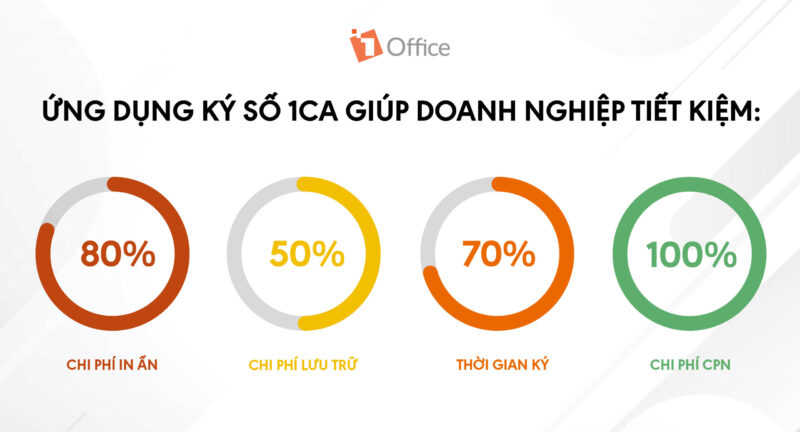
Let’s explore how to create a legally valid electronic signature using the 1Office digital signature service:
Step 1: Click the arrow icon in the top right corner of the screen, select System Settings > select System > select Digital Signature > select Create New
Step 2: Enter the data to integrate the digital signature:
| No. | Field Name | Description |
| 1 | Title | Set a title for your digital signature |
| 2 | Digital Signature Provider | Select your digital signature provider. 1Office currently partners with 4 providers: VNPT, CMC, FPT, and BKAV. |
| 3 | Username and Password | Enter the login information registered by the provider |
| 4 | Digital Signature Type | Public signature: A signature that users create for themselves through providers integrated into the system
Internal-use signature: An internal signature created by an admin for internal users |
Step 3: Click Update. Some actions on the signature list screen include:
- Allow selecting a default signature: Only signatures with an “Active” status can be set as default
- Allow sharing for Public signature types (does not apply to signatures shared by others)
- On the Signature Configuration screen: Auto-save; Edit signature; Download signature
Register for a free trial of 1Office’s digital signature feature today!
VII. Differentiating between electronic signatures and digital signatures
| Features | Electronic Signature | Digital Signature |
| Definition | Information that is logically associated with or attached to a data message, created by the signer and only by that person, to confirm the integrity of the data message and the signer’s intent. | Digital information attached to a data message, created using an encryption method, used to confirm the integrity and authenticity of the data message. |
| Format | Can be in the form of an image, text, sound, video, etc. | Is in an encrypted format, created using an asymmetric encryption algorithm. |
| Legal Validity | Does not have absolute legal validity; it depends on the agreement between the parties involved in the transaction. | Has legal validity equivalent to a handwritten signature, as stipulated in the Law on Electronic Transactions 2005 and Decree 130/2018/ND-CP. |
| Application | Used in many fields, including: signing contracts, purchasing goods and services, registering online accounts, online banking transactions, etc. | Used in important electronic transactions that require high authenticity and security, such as signing contracts, purchasing high-value goods and services, etc. |
| Security Level | Has a lower security level than a digital signature. | Has a high security level, difficult to forge. |
VIII. What are the benefits of using electronic signatures?

Electronic signatures are a crucial tool in digitizing business transactions. Using electronic signatures in a business offers many benefits, including:
Saving time and costs in signing documents and contracts. Instead of meeting in person to sign documents and contracts, businesses can sign online using electronic signatures. This helps businesses save on travel time, printing costs, delivery fees, etc.
Improving work efficiency with many superior features compared to manual signing, such as signing multiple contracts, documents, etc. This allows businesses to sign documents and contracts quickly and conveniently, speeding up work progress.
Expanding business markets by being able to sign documents and contracts with partners anywhere in the world without needing to meet in person. This helps businesses expand their markets and reach more potential customers.
Protecting the interests of the business in electronic transactions. Electronic signatures have the same legal validity as handwritten signatures, thus helping businesses prove their rights and obligations in electronic transactions.
IX. Future trends of electronic signatures in Vietnam
Electronic signatures are becoming one of the core platforms for national digital transformation, especially as the 2023 Law on Electronic Transactions officially takes effect on July 1, 2024. This law not only expands the scope of electronic signature application to all civil, administrative, and commercial transactions, but also creates a solid legal framework to promote widespread adoption nationwide.
1. Accelerating the digitization of administrative and business transactions
After the 2023 Law on Electronic Transactions takes effect, government agencies, businesses, schools, and financial institutions are all encouraged to move their entire signing, approval, and record-keeping processes to a digital environment.
For example:
-
The National Public Service Portal now accepts electronic signatures for most online procedures (such as business registration, tax declaration, and social insurance).
-
Businesses can sign labor contracts, sales agreements, or electronic payslips directly on their HRM system while still ensuring legal validity.
This not only helps reduce document processing time by 60–80% but also enhances transparency and traceability in data management.
2. Applying AI and Blockchain for authentication and anti-counterfeiting
One of the most powerful future development directions for electronic signatures is the integration with AI and Blockchain technology.
-
AI (Artificial Intelligence) will assist in identifying the signer’s identity through biometrics (face, voice, handwriting) and detecting unusual fraudulent behavior.
-
Blockchain ensures that every signature is recorded on the chain, cannot be edited or deleted, thereby increasing absolute reliability and transparency.
Currently, some major providers like VNPT SmartCA and FPT.eSign have begun testing the “Decentralized ID digital signature” model, allowing users to sign documents without relying on a central server, yet still be automatically authenticated via Blockchain.
3. Rapidly growing market
According to the Ministry of Information and Communications (MIC), Vietnam is among the top 5 Southeast Asian countries with the fastest growth rate in electronic signature services, with an average increase of 25–30% per year.
It is projected that by 2030, over 80% of transactions by businesses and administrative agencies will be signed using electronic or digital signature platforms.
Businesses in the finance, human resources, and education sectors are considered pioneers in applying this technology due to their large volume of records and high legal compliance requirements.
4. Moving towards a comprehensive digital identity ecosystem
In the 2025–2030 period, electronic signatures will no longer be just a “document signing tool” but will become part of the national digital identity ecosystem.
-
Citizens and businesses can use a single electronic identity to sign contracts, make payments, file taxes, or handle administrative declarations.
-
The National Electronic Identification and Authentication System (VNeID) will play a central role, connecting with licensed electronic signature platforms.
-
HRM/ERP solutions within businesses will also be deeply integrated with this identity platform, helping to automatically authenticate signers, store personnel records, and cross-reference information with government data.
Thus, electronic signatures will become a “digital identity certificate” – a crucial foundation for a digital society where all transactions are conducted securely, transparently, and without paper.
Electronic signatures in Vietnam are entering a phase of explosive growth, strongly driven by government policies, technological advancements, and the need for business digitalization. In the near future, it will be an indispensable element in every workflow — from human resource management (HRM) and administrative management to business operations and international transactions.
X. Register for 1Office’s Digital Signature Service
1Office Digital Signature is a service that provides digital signatures for businesses, organizations, and individuals. The service is provided by 1Office Joint Stock Company, one of the leading digital signature service providers in Vietnam.
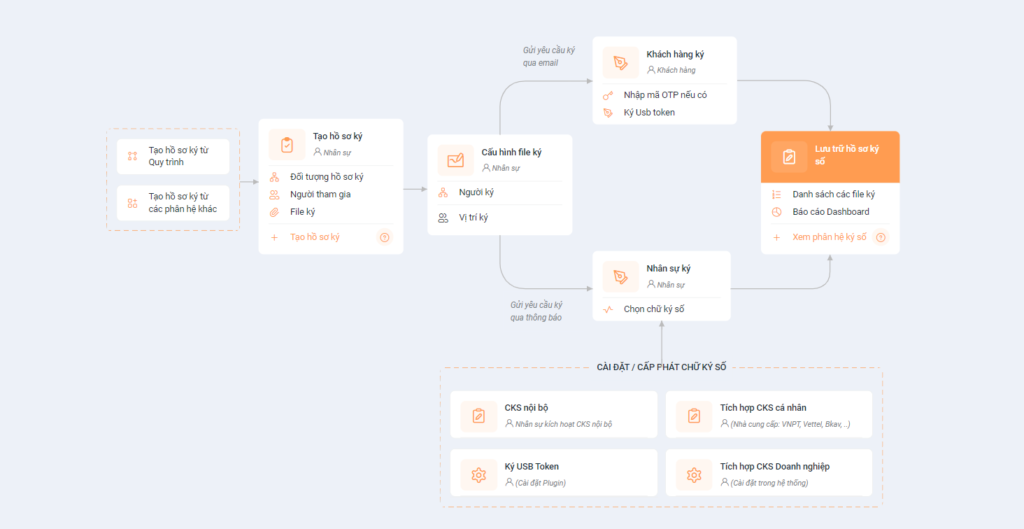
The 1Office digital signature software offers superior features, making it easy for businesses to implement and use. Some of the software’s outstanding features include:
- Sign anytime, anywhere, on any device, helping businesses sign documents and contracts even while on the move, without needing to meet in person. This helps businesses save time and travel costs.
- Secure and legally compliant, helping businesses protect their information and ensure the legality of electronic transactions.
- Centralized document and record storage helps businesses easily manage documents and records, minimizing the risk of loss or damage.
- Supports signing multiple documents simultaneously, helping businesses save time and effort when signing documents and contracts with multiple parties.
- Increases reliability for all participating parties, helping businesses enhance their reputation and brand.
If your business wants to learn more about the 1Office digital signature solution and this superior support for signing electronic contracts, register with us now for a free trial of the software’s features.
We hope this article has helped your business better understand the concept of electronic signatures, their legal validity, and the conditions for ensuring the security of electronic signatures. If you need a 1-on-1 consultation about the 1Office digital signature software, please contact us immediately via:
- Hotline: 083 483 8888
- Facebook: https://www.facebook.com/1officevn/
- Youtube: https://www.youtube.com/@1office-chuyendoisodn