


 10/05/2026
  183 views
It’s undeniable that Hảo Hảo instant noodles hold a top position in the fast-food market in Vietnam. To achieve this success, Acecook has implemented countless impressive marketing activities, making this product familiar, attractive, and easily winning the trust of consumers. Let’s join 1Office in exploring the details of Hảo Hảo Noodle’s marketing strategy to see what Acecook has done to make the Hảo Hảo noodle brand stand out from its competitors.
Mục lục
- 1. Overview of Acecook Vietnam
- 2. Target Customer Profile of Hảo Hảo Noodles
- 3. SWOT Analysis of the Hảo Hảo Noodle Brand
- 4. Analysis of Hảo Hảo’s Marketing Strategy Using the 4P Model
- 5. Hảo Hảo Noodle’s Brand Positioning Strategy
- 6. Evaluating the Pros and Cons of Acecook’s Marketing Strategy
- 7. Hảo Hảo’s Brand Building Journey Through Different Stages
1. Overview of Acecook Vietnam
Since the early 1990s, Acecook has been known as one of the largest instant noodle companies in Japan. They brought this advanced production technology to Vietnam, building the Vina Acecook brand as it is today.
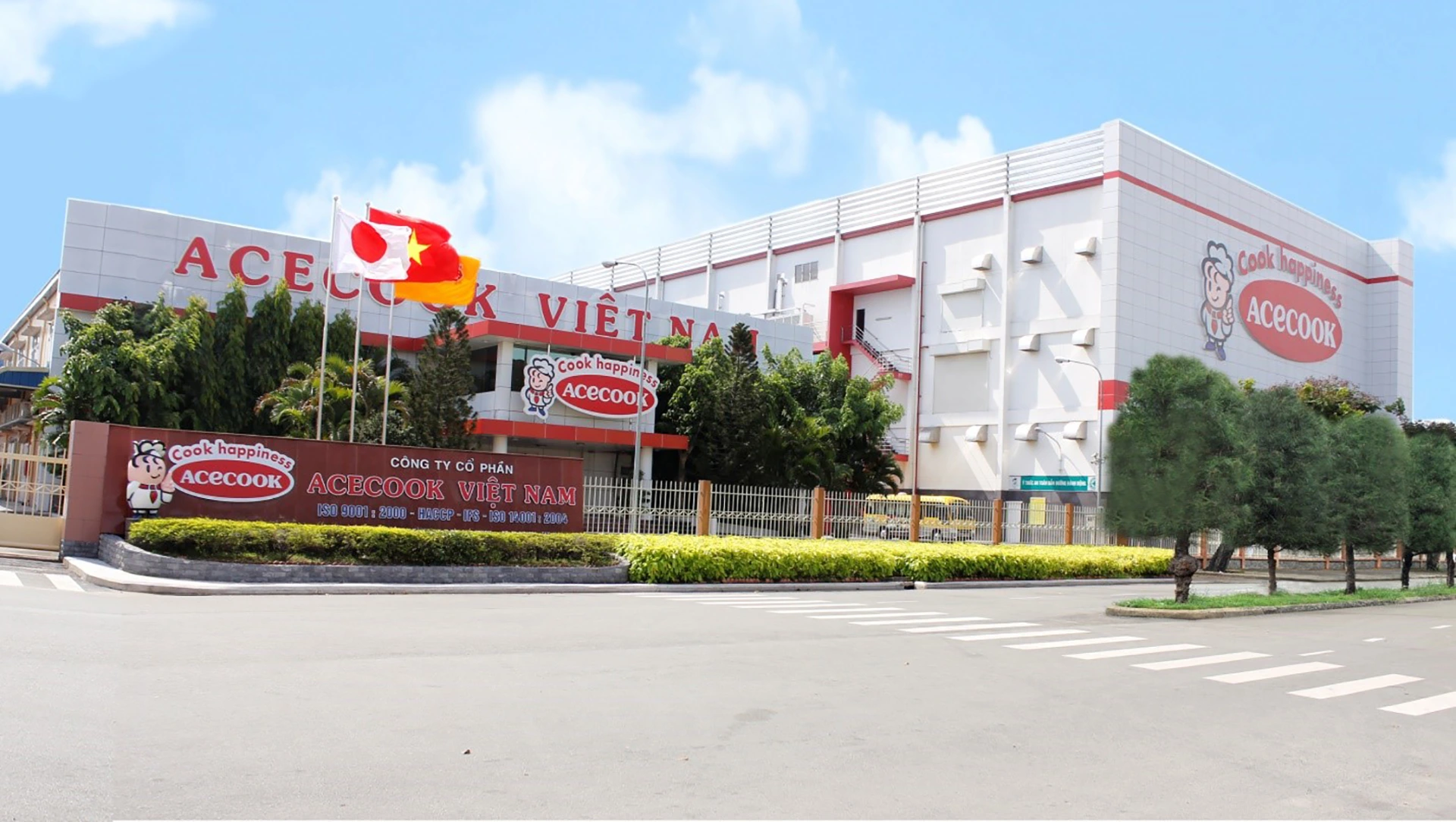
After more than 20 years of development, with efforts in a demanding market like Vietnam, Acecook now holds over 50% of the market share and has nearly 100% coverage with its diverse and rich product range.
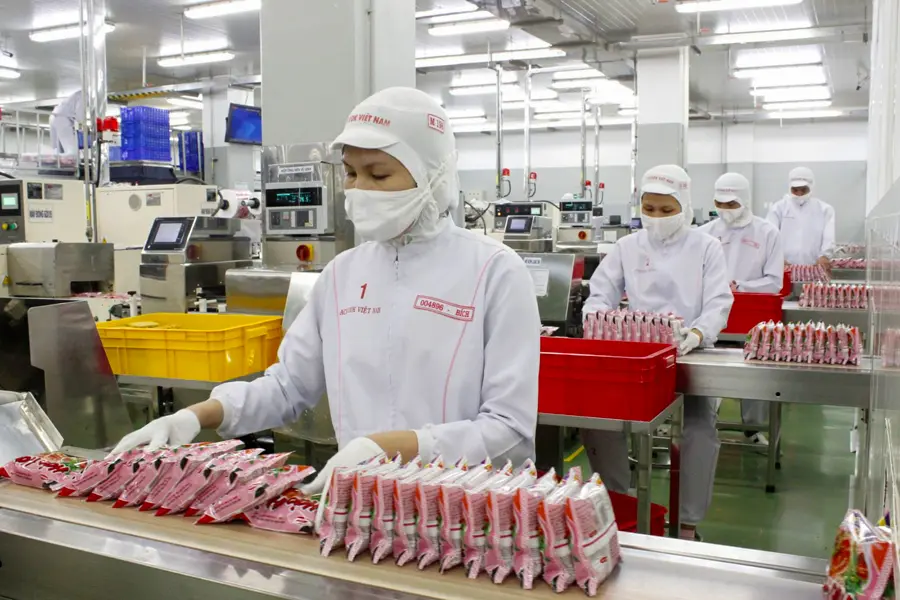
Currently, Acecook focuses on producing fast food with 6 factories spread across provinces in Vietnam. Their products are very diverse, including instant noodles, instant rice noodles, instant vermicelli, and more. These are products that have become closely associated with the daily lives of Vietnamese people.
Hảo Hảo’s maintenance of a familiar image and consistent brand colors over many years has helped the brand become familiar to Vietnamese consumers. This approach is similar to that of successful F&B brands that thrive on consistency – such as the marketing campaign of Highlands Coffee, which built a “modern Vietnamese” style throughout its chain of stores and communication activities.
2. Target Customer Profile of Hảo Hảo Noodles
Demographics
- Age: Suitable for many age groups, but mainly focuses on the 16-40 age group, especially students and workers.
- Gender: Both male and female.
- Income: Low and middle-income groups, suitable for those who want to save on food expenses.
Behavioral Characteristics
- Frequency of use: Frequent, especially for quick meals, late-night snacks, or as a substitute for main meals.
- Consumption habits: Prefers convenient, easy-to-prepare products with diverse flavors and reasonable prices.
- Factors influencing purchase decisions:
- Affordable price.
- Familiar traditional flavors (hot and sour shrimp, satay chicken, etc.).
- Convenience in preparation.
3. SWOT Analysis of the Hảo Hảo Noodle Brand
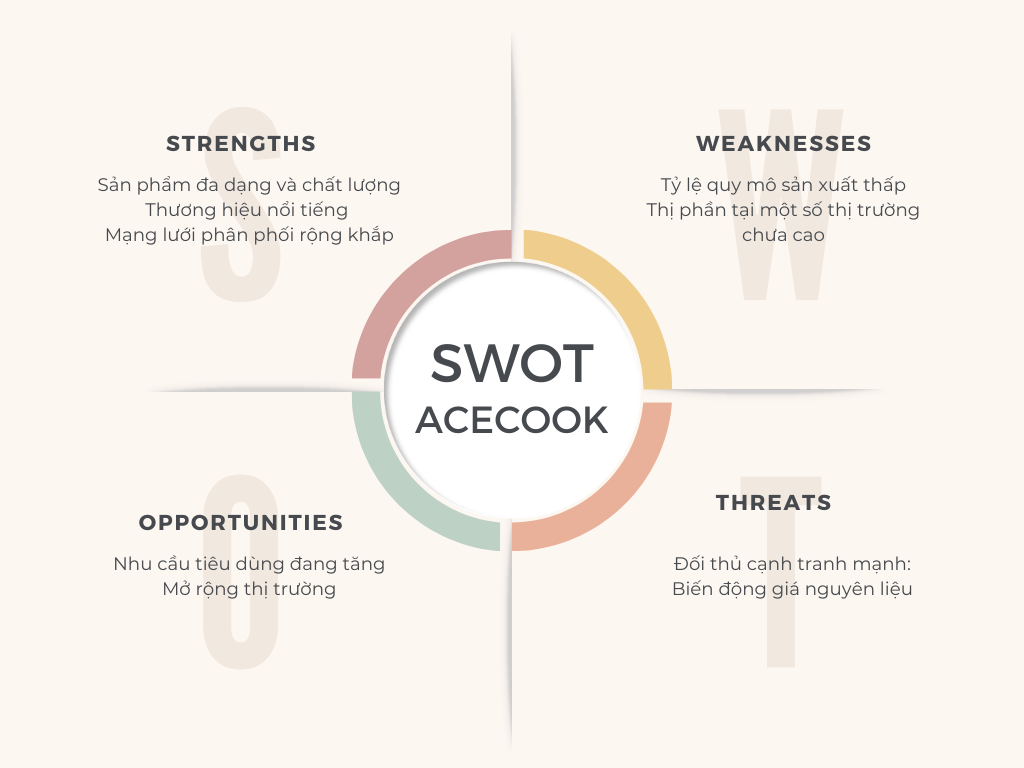
Strength
Hảo Hảo has built a solid position in the market thanks to its outstanding advantages. The strengths that have helped this brand make a mark in the hearts of consumers include:
- Familiar brand: One of the oldest and most popular instant noodle brands in Vietnam, holding a large market share.
- Competitive price: Reasonable cost, suitable for the majority of Vietnamese consumers, from students to workers.
- Distinctive flavors: Flavors like hot and sour shrimp and satay chicken have become “classics,” catering to the tastes of the masses.
- Wide distribution: Available in most supermarkets, convenience stores, grocery stores, and even in rural areas.
- Reliable brand: Loved by consumers for its consistent product quality.
- Reasonable price, suitable for the income of most Vietnamese people.
Weakness
Despite its many advantages, Hảo Hảo also faces some limitations that could hinder its long-term development. The weaknesses to note include:
- Limited variety in the premium product line: The brand mainly focuses on the low-price segment, with few products for high-end customers or those seeking new experiences.
- Reliance on a traditional image: Lack of strong innovation in brand strategy, which may make the image seem boring to the younger generation.
- Health concerns: Some consumers are increasingly concerned about nutrition, and there are few alternative options that align with this trend.
Opportunities
The instant noodle market still has a lot of development potential, opening up great opportunities for Hảo Hảo to exploit and expand:
- Strongly developing market: The habit of consuming instant noodles is still popular in Vietnam and many Southeast Asian countries.
- Product innovation trend: The demand for instant noodle products with added nutrients, less oil, or non-fried options is increasing.
- Leveraging online channels: The growth of e-commerce creates opportunities to expand online sales channels.
- Export market: There is growth potential in international markets, especially among overseas Vietnamese communities.
Threats
Besides opportunities, Hảo Hảo faces numerous challenges from fierce competition and changing consumer trends:
- Fierce competition: Many other instant noodle brands like Omachi, Kokomi, or international labels are constantly increasing pressure.
- Healthy eating trends: Consumers are increasingly concerned about instant products with high fat content or low nutritional value.
- Risks from raw materials: Fluctuating prices of food ingredients can affect production costs and selling prices.
- Media crisis: A single incident related to product quality can negatively impact the brand’s reputation.
4. Analysis of Hảo Hảo’s Marketing Strategy Using the 4P Model
With the goal of becoming a leading food corporation not only in Vietnam but also globally, Acecook Vietnam is committed to continuously researching and developing more diverse, high-quality, and delicious products. The brand always aims to create a rich culinary culture, meet the increasing demands of customers, and contribute to the development of Vietnam’s food industry.
To achieve these successes, Acecook has effectively built and implemented Marketing Mix strategies based on the 4P model.
Product – Product Strategy
Since its launch, the Hảo Hảo noodle brand has quickly become popular and a familiar symbol whenever noodles are mentioned in Vietnam. Hảo Hảo has developed a very comprehensive and effective product strategy. This strategy not only helps them strengthen their market position but also effectively meets the needs and desires of customers.
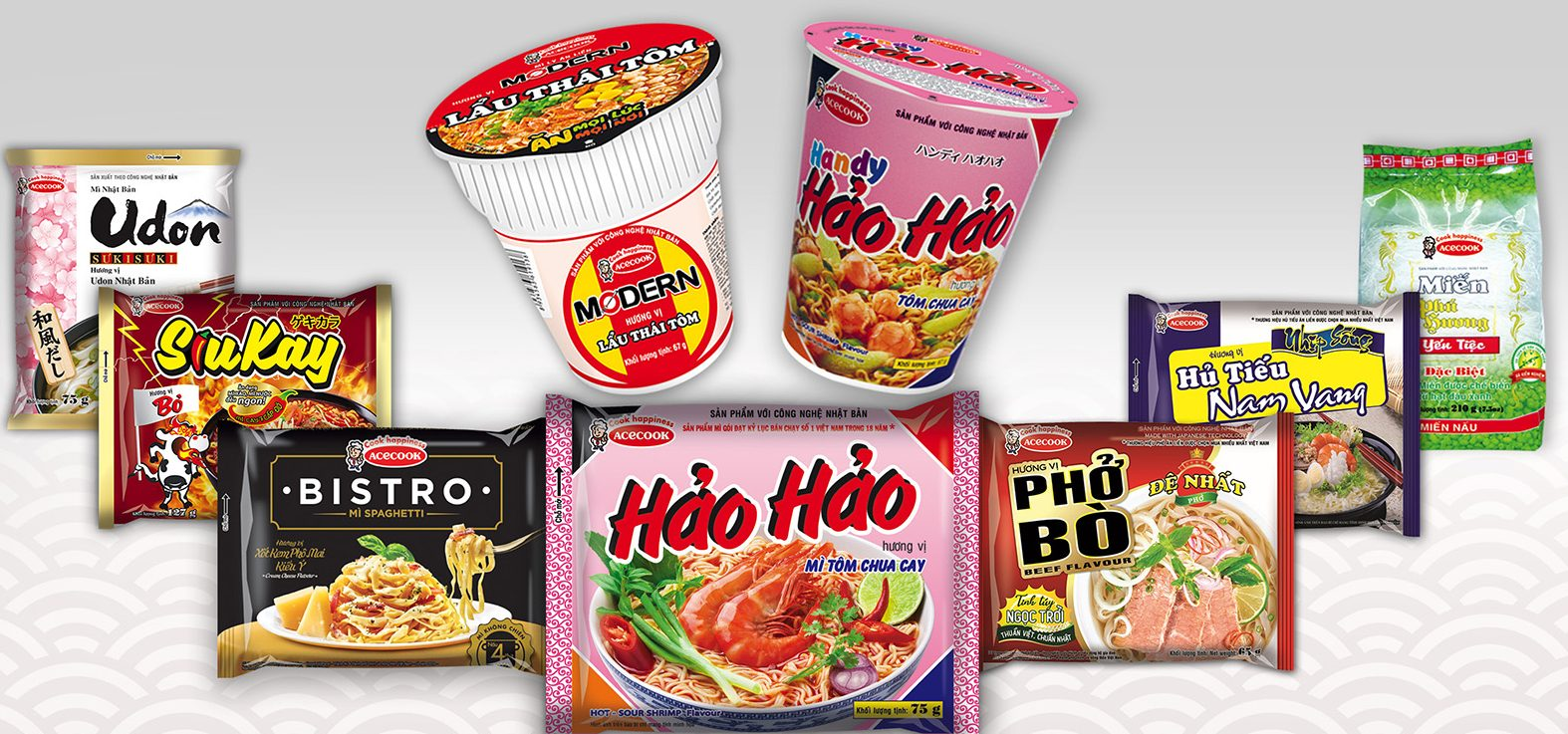
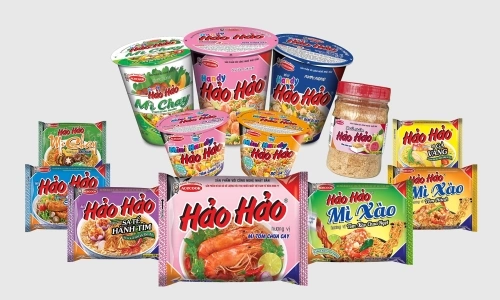
Hảo Hảo focuses on creating a diverse product portfolio, from traditional noodles to spaghetti, udon, ramen, and special noodles like meat, crab, and shrimp flavors. They also place special emphasis on product quality, using good ingredients and ensuring a safe production process. A competitive pricing strategy and attractive brand design are also important factors that help their products easily reach and attract customers.
The effective implementation of the product strategy has helped Hảo Hảo not only attract a large number of customers but also build trust and loyalty from them. A diverse and high-quality product strategy has helped the brand affirm its position in the market, create differentiation from competitors, and ensure sustainable development.
Price – Pricing Strategy
Hảo Hảo’s pricing strategy in its marketing strategy in Vietnam is a key factor that has helped the brand achieve success in the market. Compared to competitors, Hảo Hảo’s pricing strategy focuses not only on low prices but also on the actual value received. Other brands may focus solely on price reduction to compete, but Hảo Hảo balances price and quality, creating differentiation and a long-term competitive advantage.
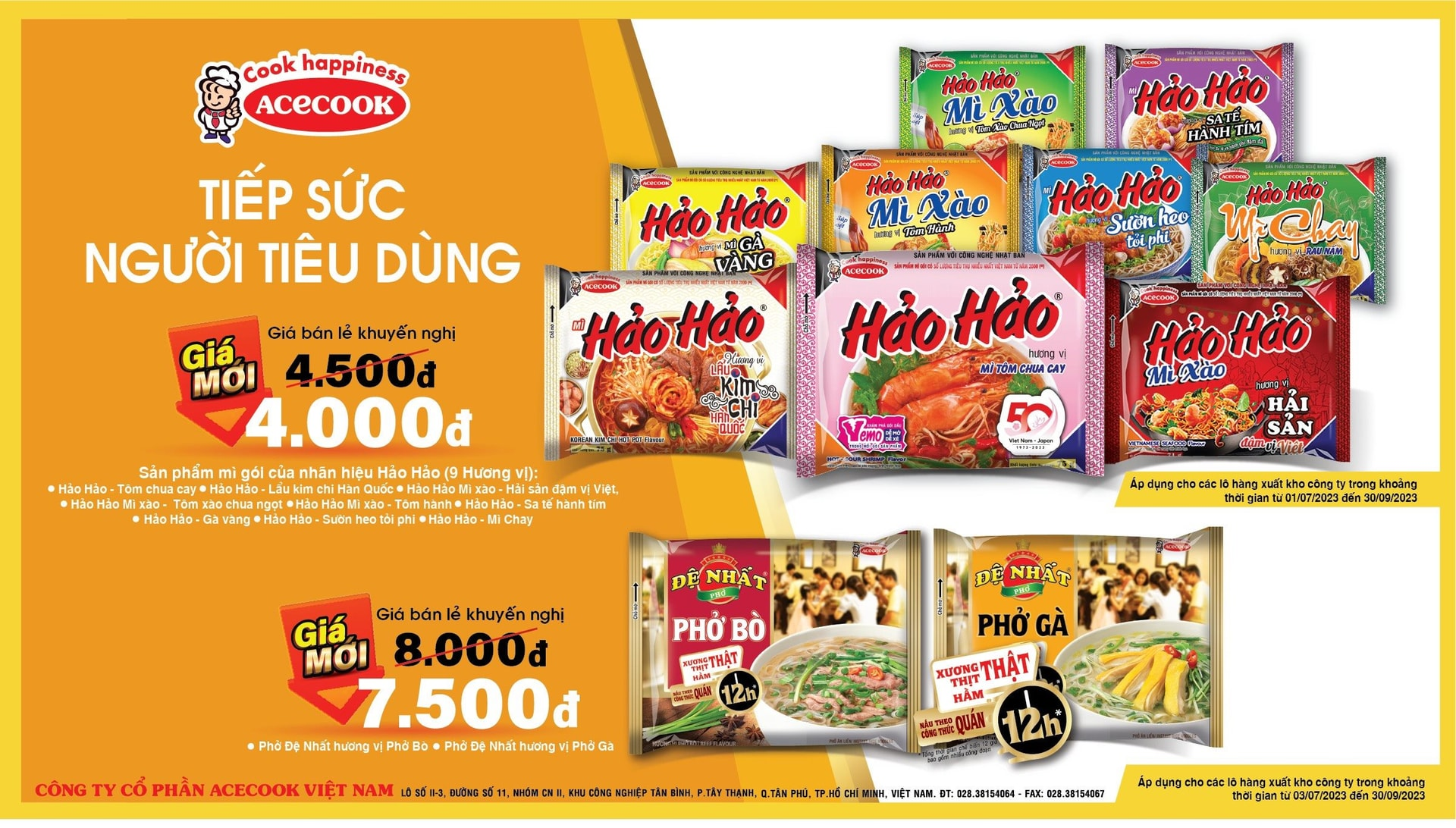
They have applied a competitive pricing strategy with the goal of attracting and retaining customers from various social classes.
- Competitive pricing strategy: Hảo Hảo offers products at an affordable price of 3,000 – 5,000 VND/pack, which is suitable for the purchasing power of almost all Vietnamese consumers. This not only helps them reach a huge customer base but also creates strong competition with other brands in the market.
- Superior value strategy: Although Hảo Hảo’s prices are quite low, they still ensure the delivery of high-quality products. The use of good ingredients and a safe production process not only helps them maintain quality but also creates superior value for consumers. This has contributed to increasing the perceived value of the product, making customers feel they are getting more than what they paid for.
- Consistency in pricing policy: Acecook always maintains consistency in its pricing policy, ensuring there are no significant price differences between product types or across different distribution channels. This helps avoid customer confusion and dissatisfaction, while also protecting the brand’s reputation.
Most of Acecook’s products are sold to students and rural residents, hence the lower price compared to many other brands. Recently, Acecook has started targeting a higher-end segment, launching products like Spaghetti Bistro noodles (12,000-21,000 VND) with premium packaging. This is also Hảo Hảo’s sales method aimed at a higher customer segment.
Place – Distribution System Strategy
Hảo Hảo has built an extensive distribution network, including various channels such as supermarkets, convenience stores, traditional markets, and online stores. This helps their products reach different customer segments, from urban to rural consumers.
Precise positioning plays a core role, focusing on reaching target customers at the right time, ensuring products are delivered to consumers quickly and conveniently.
In addition, Acecook has also established strategic partnerships with large and reputable distributors, helping to ensure that their products are always on the shelves and well-preserved. These partners include major supermarket chains like VinMart, Big C, CoopMart, as well as convenience stores like Circle K and 7-Eleven.
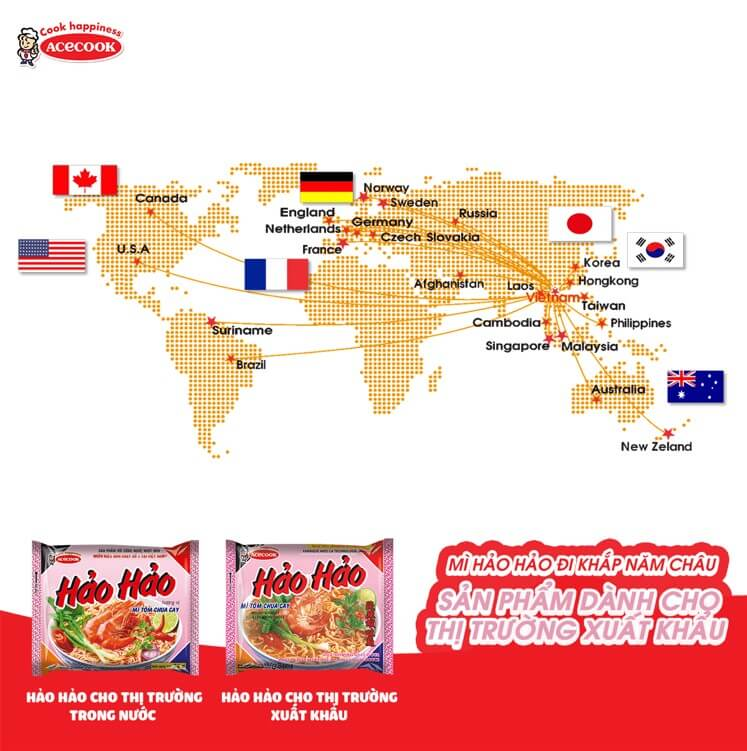
Regarding the distribution system, Acecook maintains a flexible and efficient system capable of adjusting quickly to meet market demand and inventory levels. This helps them optimize the distribution process and minimize storage costs, while ensuring that products are always available to meet customer needs.
Hảo Hảo’s distribution strategy plays a crucial role in the brand’s success. Widespread coverage, efficient operations, and strong exports have helped them build a reliable distribution network, thereby creating conditions for sustainable and stable development. The ability to maintain product quality and respond quickly to market demands not only strengthens Hảo Hảo’s position domestically but also elevates the brand in the international market.
Promotion – Promotion Mix Strategy
Hảo Hảo’s advertising strategy is a crucial part of building and maintaining the Acecook brand in Vietnam. This strategy involves using a combination of different marketing tools to promote products and increase brand recognition.
Advertising
Hảo Hảo uses multiple advertising channels to reach consumers, including television, radio, print, and online advertising. Television ad campaigns often feature famous celebrities, creating significant appeal and enhancing brand recognition. Online advertising is also heavily invested in, with a presence on social media platforms like Facebook, YouTube, and Instagram, where they can reach a large number of young customers.
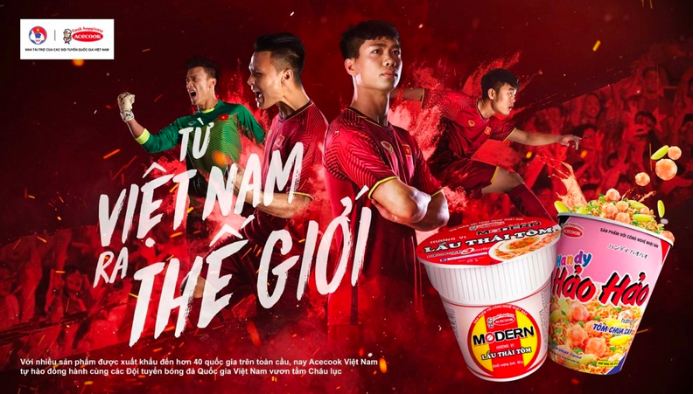
Notably, the “From Vietnam to the World” campaign, in collaboration with the Vietnam U23 national team, made a huge impact. This was a campaign that combined sports and commerce, aiming to promote the Hảo Hảo noodle brand and the Vietnam U23 team in the international market.
Some highlights of the campaign:
- Collaboration between sports and commerce: This campaign created opportunities for both the Vietnam U23 team and the Hảo Hảo noodle brand to develop and expand internationally.
- Brand promotion: Hảo Hảo noodles were introduced to the international market through events, concerts, and other activities related to the Vietnam U23 team.
- Boosting the fame of the Vietnam U23 team: This campaign helped the Vietnam U23 team gain attention and support from the international community, especially from friendly nations.
- Creating business opportunities: The campaign generated numerous business opportunities for related enterprises, from selling gift items to Hảo Hảo noodle brand products.
Hảo Hảo’s advertising campaigns often focus on emotional elements and the familiarity of a family meal. This storytelling approach creates a sense of closeness, similar to how many major brands use emotional marketing to take the spotlight, a prime example being Samsung’s marketing strategy, which continuously explores stories about the lifestyle and connections of young users.
Promotions
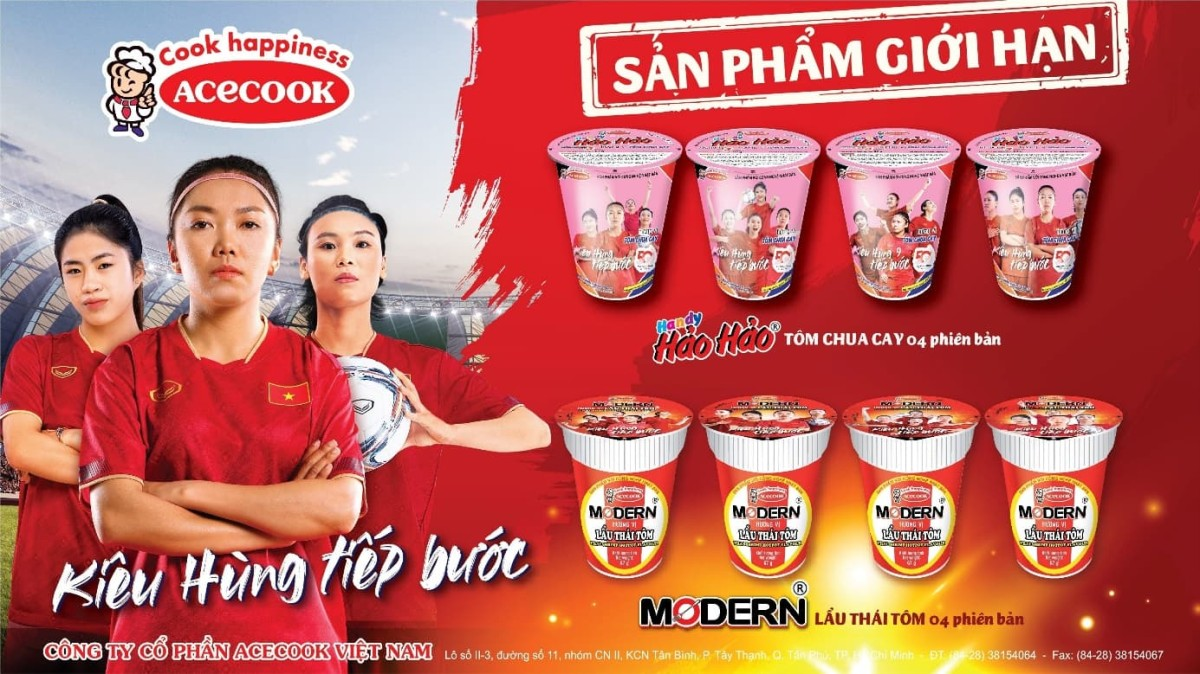
Promotional programs are an indispensable part of Hảo Hảo’s promotion strategy. They frequently organize promotions such as free gifts, discounts, and contests for customers. This not only helps boost sales but also creates a bond between the brand and customer care.
Public Relations (PR)
Hảo Hảo builds a positive brand image through public relations activities. They regularly participate in and sponsor community events, charitable activities, and social support programs. These activities not only help improve the brand’s image but also create a positive impression in the minds of consumers.
With relentless efforts, Acecook not only maintains its position as a beloved instant food brand in Vietnam but also expands its influence to the international market, affirming its pioneering role in the industry.
5. Hảo Hảo Noodle’s Brand Positioning Strategy
Positioning as “tasty – convenient – affordable”
This is the core element that creates the strength of the Hảo Hảo brand — a clear, easy-to-understand positioning that suits the vast majority of Vietnamese consumers.
-
“Tasty”: Focusing on flavor, with a recipe tailored to the Vietnamese palate; using messages and images that emphasize delicious, “rich” flavor — a factor that drives repeat purchases.
-
“Convenient”: The product is easy to prepare, conveniently packaged, and suitable for the fast-paced lifestyle of students and urban workers — meeting the need for a quick, time-saving meal.
-
“Affordable”: Competitive pricing with multiple SKUs to suit different income levels; this strategy helps Hảo Hảo maintain its hold on the mass consumer segment, from urban to rural areas.
When a brand maintains clarity and consistency in its positioning, it can easily build its own market, much like how Apple’s marketing campaign creates differentiation through a philosophy of minimalism and a focus on the core user experience.
Application in the marketing mix:
-
Simple, memorable communication messages; familiar and relatable imagery.
-
Diverse promotions, combos, and packages to increase accessibility across all income levels.
-
Packaging & distribution designed to optimize convenience and brand recognition.
How Hảo Hảo Creates a Unique Identity Compared to Competitors
Hảo Hảo competes not just on price, but also on emotion and long-term consumer habits.
-
Focusing on a “familiar” flavor: Maintaining the formula that creates the “Vietnamese taste” makes consumers feel a sense of familiarity, encouraging repeat purchases.
-
“Approachable” brand: Using imagery and advertising language associated with family meals, memories, and tradition—differentiating itself from competitors who opt for a modern/premium direction.
-
Extensive distribution network: While many competitors focus on modern channels, Hảo Hảo maintains an advantage in traditional channels (local grocery stores, markets) and rural areas.
-
Smart pricing and SKU strategy: A variety of package sizes and price points helps Hảo Hảo “occupy every niche” on the shelf.
Consistency in Brand Image Building
Consistency is key to maintaining long-term brand trust.
-
Consistent messaging: All channels (TV, POS, social) convey the “delicious—convenient—affordable” message in a language tailored to each target audience.
-
Consistent product experience: Ensuring flavor quality across production batches and implementing strict quality control to avoid disappointing consumers.
-
Consistent visual identity: The logo, colors, mascot (if any), and packaging design are maintained and only subtly updated to avoid losing brand recognition.
-
Consistent distribution: Maintaining price levels and channel availability so consumers can easily find and purchase the product anywhere—a crucial factor in building consumer habits.
6. Evaluating the Pros and Cons of Acecook’s Marketing Strategy
Advantages
- Product Diversification: Acecook has a rich product portfolio, from traditional noodle types to premium products like spaghetti, udon, ramen, etc. This helps them meet the diverse needs of consumers.
- Competitive Pricing Strategy: With reasonable prices suitable for the majority of consumers, Acecook has successfully attracted a large customer base. Competitive pricing combined with good product quality has created a major advantage for the brand.
- Extensive Distribution System: Acecook has built a strong distribution network covering over 95% of retail points. Exporting products to more than 46 countries also helps them solidify their global brand position.
- Effective Brand Promotion: Acecook’s advertising and promotion campaigns are always creative and effective, from collaborating with famous stars to organizing attractive promotional programs. This helps the brand maintain high recognition among consumers.
- Positive Public Relations: Acecook consistently participates in community and charitable activities, creating a positive image and a good impression in the minds of consumers.
- Multi-channel Approach: Effectively using both traditional and online marketing channels helps Acecook reach a large number of customers and maintain relationships with them.
Disadvantages
- Competitive Pressure: Although Acecook has advantages in price and quality, it still faces fierce competition from other brands, especially as the market becomes increasingly saturated.
- Dependence on the Domestic Market: Despite expanding exports, the majority of Acecook’s revenue still comes from the domestic market. This could be a weakness if the domestic market faces difficulties or fluctuations.
- Consistent Product Quality: Maintaining consistent quality across the entire extensive distribution system can be a challenge. A few quality incidents could affect the brand’s reputation.
- High Advertising Costs: To maintain a strong presence, Acecook must invest heavily in advertising and marketing, leading to high operating costs. This can affect the company’s profitability.
7. Hảo Hảo’s Brand Building Journey Through Different Stages
Market Penetration Stage (2000–2005)
This was the initial stage, with the main goal of creating brand awareness and winning the first customers in an instant noodle market already crowded with domestic and foreign brands.
-
Strategic objective: To quickly build brand awareness, prove the product is “delicious and convenient,” and suitable for the Vietnamese palate.
-
Product & packaging: Launched basic, familiar flavors with easily recognizable packaging (logo, colors, slogan). The packaging often emphasized “delicious aroma” and “easy to cook.”
-
Distribution channels: Focus on traditional channels: grocery stores, markets, newly emerging convenience stores; use wholesale agents to quickly cover points of sale.
-
Communication activities: Television advertising, outdoor advertising, in-store promotions to encourage first-time trials.
-
Expected results: High product trial rate, initial repeat purchases from young customers, students, and workers—the main consumer groups for instant noodles.
Growth and Intense Competition Phase (2006–2015)
As the instant noodle market became saturated and many strong competitors emerged, Hảo Hảo shifted to a strategy of consolidating market share and differentiation.
-
Strategic objectives: Maintain growth rate, increase market share, strengthen loyalty, and expand segments.
-
Product innovation: Launched many new flavors, developed product types (small packs, family packs, instant products with improved flavors). Focused on R&D to adapt to regional tastes.
-
Pricing strategy: Maintained accessible prices, implemented SKUs at various price points to capture different customer tiers; used pack sizes as a strategic pricing tool (mini packs for trial, large packs for family consumption).
-
Distribution & channel expansion: Stronger coverage in supermarkets, convenience stores, and modern channels combined with traditional channels; optimized the supply chain to ensure stable service in rural channels.
-
Marketing & PR: Ran television campaigns, sponsorships, and point-of-sale activations; enhanced public relations and brand advertising to solidify its position as a “mainstream product”.
-
Brand management: Built a familiar, close image with family and traditional messages—aiming to tap into the “familiarity” emotion of consumers.
-
Results: Stable growth, solidified its position as a leading brand in the popular price segment; increased purchase frequency.
Consolidation & Innovation Phase
The current phase is about brand optimization, portfolio expansion, and adapting to new consumer trends (health, enhanced convenience, digital channels).
-
Strategic objectives: Maintain leadership, diversify products, adapt to health trends, and increase brand equity.
-
Trend-driven innovation: Developed “low-salt,” “low-oil” products, and convenient products with nutritious ingredients; improved eco-friendly packaging; created more premium instant products for new customer groups.
-
Digitalization & e-commerce: Boosted sales on e-commerce platforms, utilized online promotions, and combined digital marketing (social, KOL, viral content).
-
Customer experience & community building: Built a fan community, encouraged UGC (user-generated content), and created interactive social media programs to maintain an emotional connection with young consumers.
-
More sophisticated communication strategy: Focused on storytelling, emphasizing brand heritage + innovation, and combining PR and CSR to enhance the brand image.
-
Supply chain optimization: Applied technology in inventory management, demand forecasting, and distribution to reduce costs and maintain coverage in all geographical areas.
-
Expected results: Maintain core market share, open new customer segments, increase revenue from modern and online channels, and strengthen brand trust in the modern competitive landscape.
———————–
With outstanding quality and a reasonable price, Hảo Hảo has successfully won over a large number of consumers. The above is a detailed analysis of Hảo Hảo instant noodles’ marketing strategy. We hope that the information shared by 1Office will help you understand better and draw valuable lessons from Hảo Hảo, thereby applying them effectively to your own business strategy.
















