11/05/2026
  144 views
Agile is a flexible project management methodology that helps businesses optimize workflows and accelerate product launches. In this article, 1Office will explain Agile in detail, its core principles, and suggest how to apply Agile effectively in practice.
Mục lục
- I. What is the Agile Methodology?
- II. The 4 Core Values of the Agile Methodology
- III. The 12 Core Principles of Agile
- IV. The 6 Most Popularly Applied Agile Methods Today
- V. 6 Tips for Easier Project Management with the Agile Scrum Model
- VI. The Role of Leadership in Agile Implementation
- VII. Common mistakes when applying Agile
- VIII. Manage project work progress effectively with 1Office software
I. What is the Agile Methodology?
The Agile methodology is a flexible approach to project management that focuses on breaking down work into small parts, continuous feedback, and continuous improvement. Agile helps teams quickly adapt to change and increase efficiency in product completion.
In practice, the Agile methodology is built on iterative and incremental principles. It is a way to manage a project by dividing it into multiple phases. It involves continuous collaboration with stakeholders and continuous improvement at every stage. Once work begins, teams cycle through a process of planning, executing, and evaluating. Continuous collaboration is crucial, both among team members and with project stakeholders.
II. The 4 Core Values of the Agile Methodology
- Individuals and interactions are more important than processes and tools: When building the Agile methodology, people are always valued more than processes or tools. This is because it is people who meet business needs and drive the company’s development process.
- Working software is better than comprehensive documentation: Focus time on creating complete software that perfectly meets customer requirements.
- Customer collaboration is more important than contract negotiation: Understand what the customer needs in order to advise and adjust the product, rather than just relying on the terms of the contract.
- Responding to change is more important than following a plan: Agile encourages adapting to change, which could be changes in technology, personnel, deadlines, etc.
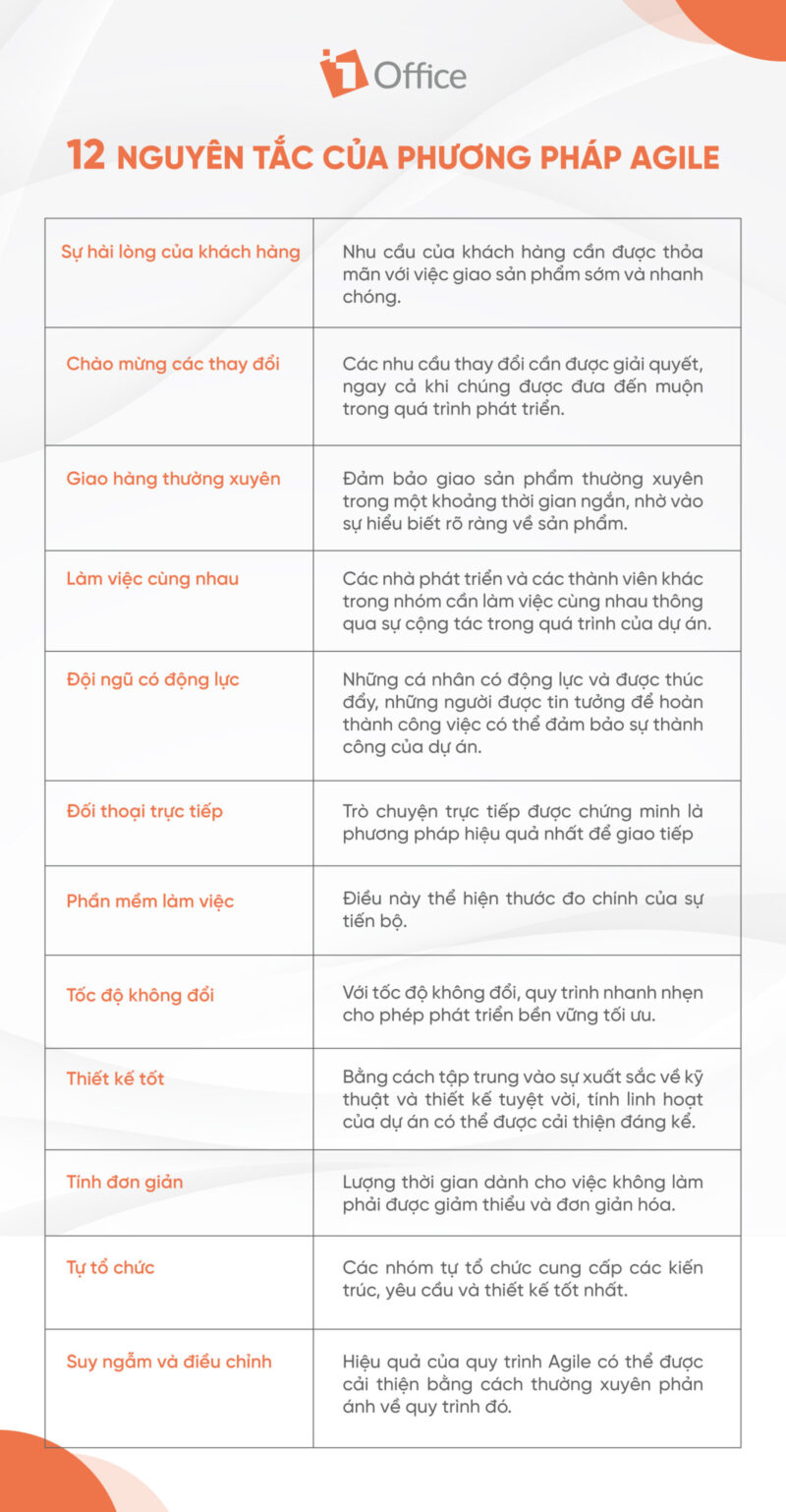
III. The 12 Core Principles of Agile
Below are the 12 basic principles of the Agile Methodology.
See more: Task Assignment Software – A comprehensive work management solution for businesses
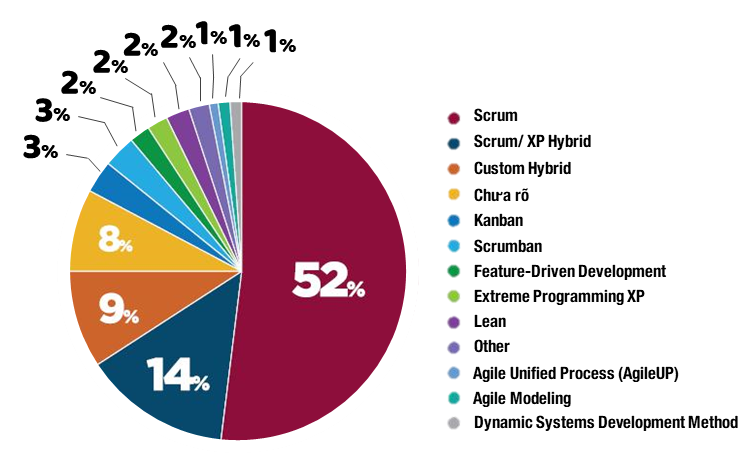
IV. The 6 Most Popularly Applied Agile Methods Today
The Agile methodology is the main method, and many experts have built upon the Agile Methodology to create their own sub-methods. In this section, let’s explore the 6 most commonly used “sub” Agile methods:
1. Kanban
Kanban is a simple implementation tool that visually depicts workflow to manage projects and allows teams to see the project’s progress and tasks to be completed in the future. Projects managed with the Kanban method are primarily managed through a Kanban board, which divides tasks into three columns: “To Do,” “In Progress,” and “Done.”
2. Scrum
Just like Kanban, the Scrum model also sets up its own Scrum board (similar to a Kanban board) and groups tasks into columns based on progress. It can be said that the difference between Kanban and Scrum is that Scrum focuses on breaking down a project into sprints and only plans and manages one sprint at a time.
3. Extreme Programming (XP)
This is a method designed to serve Agile software development projects. This Agile method focuses on strengthening interpersonal relationships as a key to achieving success in software development. In addition, XP also focuses on promoting teamwork, caring about the learning of developers, and fostering a good working environment.
4. Feature-driven development (FDD)
FDD is another Agile framework that serves an organization’s software development. It often involves creating software models every two weeks and also requires developing and designing features for the model. Essentially, it is an iterative and incremental software development process with the main purpose of delivering stable and functioning software on time.
FDD divides projects into five basic activities:
- Develop an overall model for the business
- Create a list of features in the software
- Plan by feature
- Design software by feature
- Build the software structure according to the listed features
5. Dynamic Systems Development Method (DSDM)
Focuses on the entire project lifecycle, with its main purpose being to provide a foundation for project management. This method provides a complete roadmap for delivering products to customers on time and within budget. Like Scrum, XP, and FDD, DSDM uses sprints. This framework is based on eight fundamental principles:
- Focus on the business need
- Deliver on time
- Collaborate
- Never compromise quality
- Build incrementally from firm foundations
- Develop iteratively
- Communicate continuously and clearly
- Demonstrate control
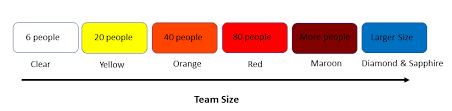
6. Crystal
The Crystal Method is about providing the best software development process, so the “People” factor is at the core of this method. In addition, it also focuses on other factors such as: Interaction, Community, Skills, Talent, and Communication to increase mutual support among individuals participating in the project.
|
V. 6 Tips for Easier Project Management with the Agile Scrum Model
1. The Skill of Distilling Information During Project Execution
- Information overload, too many unnecessary attributes, or excessive complexity will increase project costs, causing waste for the organization
- Only provide customers with what they request, as adding too many unnecessary features will waste resources and money, reducing the company’s profits
- We should avoid excessive complexity. Otherwise, our projects will have: more costs, more errors, more misunderstandings, and more risks. And sometimes, simpler things deliver more value.
2. Respect the Customer’s Product
Respecting the customer’s products enhances product personalization and builds a closer relationship with consumers of the company’s services/products. The employee lifecycle within a company is always changing, so managers must link predecessor and successor activities so that internal customers get involved early in the process with the team working on the predecessor activity.
3. Don’t Waste Time in Meetings
Frequent meetings not only waste employees’ work time but are also part of a non-agile culture.
Coordination meetings should only be held to facilitate uninterrupted project execution. In collaborative meetings, only technical issues should be discussed.
4. Measure Risks Before Project Execution
Performing a risk analysis before starting a project is a proactive way to minimize future problems, which will help you have a more agile and efficient project.
Contingency plans should be created in case risks occur. However, risks can be minimized through the use of risk management software or by good planning, identification, qualitative analysis, quantitative analysis, response planning, monitoring, and control.
5. Focus on Data-Driven Reports Instead of Lengthy Text
You should use graphical methods that will certainly attract more attention: colors, images, icons, charts, prototypes, etc.
Focus on communicating exceptions and new issues, rather than similarities
6. Optimize and Standardize All Company Processes
Optimizing and standardizing processes will help the company’s workflow run more smoothly. Additionally, process optimization helps the company minimize errors in production activities caused by human resources. The benefits a company gains from process optimization include:
- Improve employee performance and efficiency
- Minimize errors in task execution
- Save time and costs by automating simple, repetitive tasks
- Enhance competitive position in the market
See more: What is the SMART Model? How to Apply SMART Goals in Business
VI. The Role of Leadership in Agile Implementation
For a successful Agile implementation, the role of leadership is crucial. Agile is not just a set of tools or processes, but a new mindset, a cultural shift throughout the entire enterprise. This requires strong commitment and guidance from leadership, as they are the ones who inspire, provide direction, and ensure teams have the necessary conditions to operate effectively.
1. Provide Strategic Direction and Vision
Leadership needs to clearly answer the team’s questions: “Why are we adopting Agile?” and “What do we expect to achieve from this change?”. With a clear vision and goals, teams will have the right direction, avoiding the situation of adopting Agile superficially or just “following the trend”.
2. Inspire and Motivate
Agile is only effective when the team has the belief and motivation to change. The leader’s role is to be an inspirer, helping employees understand the benefits that Agile brings: being faster, more flexible, and creating more value for customers. A positive environment will help teams be willing to experiment and adapt.
3. Create a Transparent and Open Environment
Agile encourages frequent exchange, continuous feedback, and transparency in all work stages. To achieve this, leaders need to build an open culture where employees can share opinions, report difficulties, and even admit mistakes without fear of punishment. This helps the business detect problems early and improve quickly.
4. Empower and trust the team
One of the common mistakes when applying Agile is that leaders still maintain a micromanagement style. In Agile, leaders need to empower teams with autonomy, trusting them to make their own decisions and take responsibility for the results. When empowered, teams become more proactive, creative, and have a higher sense of responsibility.
5. Accompany and support during the change process
The transition to Agile is not always smooth. Teams may face skill gaps, internal resistance, or a lack of suitable tools. The role of leadership is to accompany, listen, and provide timely support, ensuring that employees do not feel left behind.
6. Invest resources and make a long-term commitment
Agile cannot just be about “chanting slogans.” For a substantial implementation, leadership needs to commit resources:
-
Invest in Agile management tools (like Jira, Trello, 1Office…).
-
Organize training to enhance employees’ understanding.
-
Allocate time for daily stand-ups, sprint reviews, and retrospectives.
This investment and commitment demonstrate a long-term determination, helping Agile become part of a sustainable development strategy rather than just a short-term project.
7. Act as an “Agile Sponsor”
In many Agile models, the leader acts as the Agile Sponsor – the person with the highest responsibility, who removes obstacles and ensures teams have the necessary conditions to operate. They are the bridge between the company’s strategy and the practical implementation within small teams.
VII. Common mistakes when applying Agile
Agile is not just a “project management tool,” but a mindset that the entire organization needs to adopt. However, during actual implementation, many businesses—especially in Vietnam—often encounter the following mistakes:
1. Treating Agile as a fixed set of rules instead of a flexible mindset
Many teams apply Agile like a rigid checklist (e.g., daily stand-ups must be on time, the sprint backlog must be 100% perfect), which leads to pressure and a loss of creativity.
-
Consequence: The project becomes “overloaded” with processes, instead of being truly flexible to react quickly to changes.
-
Solution: View Agile as a philosophy, not a “rulebook.” Businesses should customize their methods (Scrum, Kanban, or hybrid) according to their actual culture and team size.
2. Lack of commitment from leadership
Agile is often implemented from the project management level down, while senior leadership still maintains an old management mindset (top-down, rigid).
-
Consequence: Employees feel that “Agile is just a slogan” without real support, leading to a loss of trust and a return to traditional ways of working.
-
Solution: The leadership team must participate directly in the Agile process (e.g., attend sprint reviews, listen to feedback). At the same time, it’s necessary to train managers on the Agile mindset to spread it from the top down.
3. Copying processes from elsewhere without customizing for reality
Businesses often copy the Agile models of Google, Spotify, or other large tech companies without considering differences in culture, resources, and industry.
-
Consequence: The team gets “overwhelmed” by complex processes, and Agile becomes a burden instead of a support system.
-
Solution: Start small (with a pilot team), experiment, and gradually adjust based on the internal situation. Agile should be “tailor-made” for the business; there is no one-size-fits-all formula.
The Agile method doesn’t fail because of the method itself, but usually because of how it’s applied. To succeed, businesses need to be flexible, have commitment from leadership, and make adjustments that fit their organizational culture.

VIII. Manage project work progress effectively with 1Office software
By applying a professional work management model to the software, 1Office helps you increase your work overview and promote team collaboration. If you use 1Office, you can easily cut down on resource-wasting activities, automate workflows, and focus on tasks that bring real value to the business.
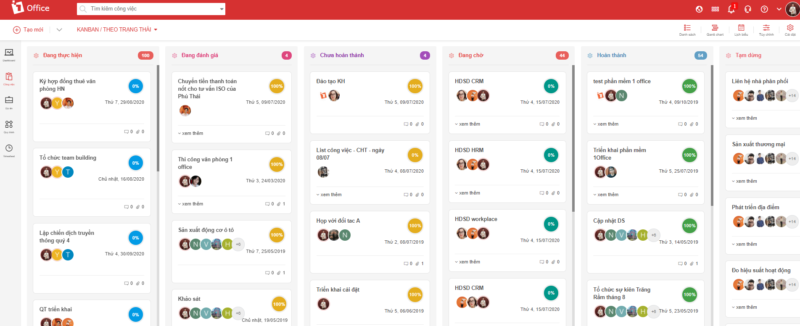
When using 1Office work management software to manage your business, you will receive several benefits:
- Online work management helps managers easily oversee tasks throughout the entire project implementation process.
- With a structure built on the Kanban model, it helps managers easily assign tasks, track, and evaluate employee performance.
- Comment on and send reminders about employee work progress directly on task cards without needing to meet in person.
Through the article above, we hope that the information provided by 1Office will help readers gain a more specific and clearer understanding of the Agile Scrum method and tips for businesses to implement Agile to manage work progress more effectively.
For contact and reference information:
Hotline: 083 483 8888
1Office Fanpage: https://www.facebook.com/1officevn
Youtube: https://www.youtube.com/c/1OfficeNềntảngquảnlýtổngthểDoanhNghiệp