


 11/05/2026
  549 views
Working capital is one of the key financial indicators that helps businesses maintain regular operations and effectively manage short-term solvency. But what is working capital, what are its components, and how can it be managed to avoid cash flow shortages? This article will help you understand everything from the concept and calculation formula to its practical application.
Mục lục
- 1. What is the concept of working capital?
- 2. What are the components of working capital?
- 3. Working capital formula and the meaning of the working capital ratio
- 4. Effective Working Capital Management Methods
- 5. Examples of Working Capital in Different Types of Businesses
- 6. Frequently Asked Questions about Working Capital (FAQs)
- 7. Conclusion
1. What is the concept of working capital?
Working capital is a financial metric representing operational liquidity, reflecting a company’s ability to use its current assets to pay for immediate debt obligations and operating expenses.
Working capital plays a key role in ensuring operational activities such as:
- Maintaining liquidity: This is the direct resource for handling due loans, employee salaries, and payments to suppliers, helping the business maintain its reputation and operate without interruption.
- Creating momentum for breakthroughs and investment: Having flexible capital allows a business to quickly seize opportunities, from purchasing raw materials at a good price to implementing promotional campaigns and expanding production scale.
- Building a sustainable foundation: This capital acts as a safety “cushion” against unexpected risks, while also creating opportunities to invest in research and development to strengthen the company’s long-term market position.

2. What are the components of working capital?
Working capital is a collection of highly liquid current assets, including cash, short-term investments, inventory, and accounts receivable, which work together to maintain the company’s business operating cycle.
2.1 Cash and cash equivalents
- Cash: includes cash on hand, bank deposits, and cash in transit
- Cash equivalents: are short-term investments with a recovery or maturity period of no more than 03 months from the investment date, easily convertible into a specific amount of cash, and with no risk of conversion from the purchase date (e.g., promissory notes, treasury bills, etc.)
2.2 Short-term financial investments
- These are investments with a capital recovery period of less than 01 year or within 01 business operating cycle, excluding short-term investments considered cash equivalents
- Includes: held-to-maturity investments with a term of no more than 12 months, short-term deposits, trading securities, etc.
2.3 Short-term receivables
- These are assets owed to the business by other entities at the time of reporting and will be collected in a short period (within 12 months or one normal business cycle)
- Includes: accounts receivable from customers, internal receivables, prepayments to suppliers, advances to employees, etc.
2.4 Inventory
- These are assets stored for sale during the business operating cycle. Includes merchandise, finished goods, and goods on consignment.
- In the process of production: semi-finished goods, work-in-progress costs.
- Raw materials, tools, and supplies used in the production process.
>> See more: Top 7 Business Financial Management Software to manage cash flow effectively today
3. Working capital formula and the meaning of the working capital ratio
After understanding what working capital is and its role in a business’s operations, the next step is to grasp how to calculate it and the significance of this indicator. Applying the formula not only helps a business determine its current working capital level but also reveals its financial health: whether the business has a surplus, a balance, or a shortage of capital to operate. The working capital indicator is a “quick measure” of short-term solvency, financial security, and the efficiency of the company’s cash flow management.
3.1. The working capital formula for businesses
Working Capital = Current Assets – Current Liabilities
Example: ABC Company has current assets of $100,000 and current liabilities of $50,000.
- Applying the formula, we have: Working Capital = $100,000 – $50,000 = $50,000.
- Therefore, ABC Company has a working capital of $50,000.
3.2. What is the significance of the working capital indicator?
- In the case of positive working capital, it means the company’s current assets are greater than its current liabilities. The company has sufficient resources to cover its short-term debts and would have cash left over if all current assets were liquidated to pay off these liabilities.
- If the working capital indicator is negative, it means the company’s current assets are not sufficient to cover all of its current liabilities. The company has more short-term debt than short-term resources. Negative working capital is a warning sign of poor short-term business health, low liquidity, and potential problems in meeting debt obligations as they come due.

>> See more: Analysis of 15 Business Performance Evaluation Indicators that managers need to understand
4. Effective Working Capital Management Methods
Working capital management is a crucial part of corporate financial management. The goal of working capital management is to maximize profits and minimize risks while ensuring the flexibility of current assets.
Managing working capital requires accurate assessment and forecasting of the organization’s financial needs, as well as the ability to use financial tools to manage assets effectively. If an organization or individual focuses too much on working capital, they may miss long-term investment opportunities and face risks when using current assets. Conversely, if they focus too much on long-term investments, they may have difficulty meeting short-term financial needs.

Here are effective working capital management methods for businesses:
4.1. Managing the Working Capital Fund
In managing the working capital fund, a business needs to determine a safety level for the fund. This level must ensure that the business has enough cash to pay its short-term liabilities and expenses.
During the process of managing the working capital fund, the business needs to create a detailed plan for its use. This plan must clearly define the purposes for using the fund, the expenses to be paid, the priority level of these expenses, and the expected timeline for settling them.
The business also needs to create a detailed financial plan to ensure that the working capital fund is always maintained at a safe level. This plan should specify the level of foreign currency financing, owner’s equity, short-term loans, and other financial sources.
Experience 1Office’s asset management features
4.2. Optimizing the Cash Conversion Cycle
Working capital management not only focuses on increasing capital sources but also on optimizing the cash collection and disbursement process to ensure smooth business operations.
Optimizing the cash conversion cycle helps businesses minimize operating costs, save time, increase operational efficiency, and especially reduce the risk of asset loss due to unexpected expenses.
4.3. Developing Sound Financial Strategies
Working capital management requires developing sound financial strategies to meet the company’s capital needs and maximize profits. These strategies may include increasing capital sources, optimizing capital utilization, accelerating the capital recovery cycle, and promoting profitable business activities such as selling assets, restructuring the business, and collaborating on investments with trusted partners.
4.4. Creating Financial Forecasts and Plans
Creating financial forecasts and plans is a crucial activity in working capital management. Financial forecasting and planning help businesses make sound financial decisions, such as increasing investment capital, reducing costs, paying debts on time, enhancing business activities, and planning for future financing.
4.5. Measuring the Effectiveness of Working Capital Management
Measuring the effectiveness of working capital management is the process of evaluating the results of working capital management activities within a business. The effectiveness can be measured using various methods depending on the measurement purpose and the characteristics of the business. Below are some methods for measuring the effectiveness of working capital management:
- Current Ratio: This ratio indicates the company’s ability to meet its short-term obligations and is calculated by dividing total current assets by total short-term liabilities. The higher the current ratio, the better the company’s short-term solvency.
- Payable Turnover: This ratio indicates the frequency with which a company pays its accounts payable and is calculated by dividing the total value of accounts payable by the total value of payable expenses. The lower the payable turnover ratio, the faster the company pays its accounts payable.
- Inventory Turnover: This ratio indicates the frequency of a company’s inventory being sold and replaced and is calculated by dividing the total value of inventory by the cost of goods sold. The higher the inventory turnover ratio, the faster the company moves its inventory.
- Return on Investment (ROI): This ratio represents the profit earned per unit of working capital and is calculated by dividing profit before tax by the value of working capital.
>>> See more related articles:
- 4 Most Accurate Ways to Calculate Payback Period for Investors (Formulas + Examples)
- What is Corporate Financial Management? Principles for Effective Corporate Financial Management
5. Examples of Working Capital in Different Types of Businesses
The concept of working capital can sometimes seem “dry” and purely accounting-related, but in reality, each industry manages working capital very differently. A retail business is more concerned with inventory, while a service business focuses on accounts receivable from customers. Understanding how working capital operates in each type of business not only helps managers control cash flow better but also optimizes resource utilization and mitigates the risk of financial shortages.
In this section, we will look at specific examples to see the clear differences in how working capital is managed in each industry: retail, manufacturing, services, construction, and import/export.
5.1 Working Capital in Retail Businesses
Industry Characteristics
Retail businesses typically have a diverse product portfolio, large inventory, and high turnover rates. However, the profit margins in this industry are often quite low due to price competition, constant promotions, and high operating costs (rent, personnel, logistics). Therefore, effective working capital management is crucial for survival.
Where is Working Capital Important?
-
Inventory: This is the largest component of working capital for a retail business. If there is too much inventory → capital gets “tied up,” storage costs increase, and there’s a risk of obsolescence. If there is too little inventory → lost sales opportunities due to not meeting market demand.
-
Accounts Receivable & Cash: Unlike B2B businesses, retailers almost always collect cash immediately from customers, so they have less of a burden from receivables. This results in a faster working capital turnover.
-
Seasonality: Retail revenue is highly dependent on peak seasons (Tet, Christmas, Black Friday, Back-to-school). Businesses must have enough working capital in reserve to stock up in time, but they also need a sensible clearance strategy to avoid “dead” stock after the peak season.
Real-world Example
An electronics supermarket like Dien May Xanh typically imports large quantities of TVs, refrigerators, and air conditioners before Tet or the World Cup to meet soaring demand. If they miscalculate demand, hundreds of billions of VND in capital will be tied up in inventory, while the profit margin on each product is only a few percent. Conversely, with good working capital management (optimizing inventory turnover, negotiating payment terms with suppliers, flexible capital allocation), the business can maximize cash flow and maintain stable growth.
In summary, in the retail industry, working capital is not just about “how much cash is available to operate,” but it is a strategic management of inventory and seasonal cash flow that directly determines the company’s profitability and competitiveness.

5.2 Working Capital in Manufacturing Businesses
Industry Characteristics
-
Complex process: from raw materials → work-in-progress → finished goods.
-
Longer capital cycle than retail due to significant investment in machinery, raw materials, and labor before products can be sold.
-
Profit margins depend on input costs and production efficiency.
Where is Working Capital Important?
-
Raw Materials & Work-in-Progress: These make up the majority of inventory. Poor management can easily lead to wasted materials or excessive finished goods inventory.
-
Accounts Receivable: Many manufacturing businesses sell on B2B contracts, often allowing customers 30–90 day payment terms. This causes working capital to be “tied up” for a long time.
-
Accounts Payable: This can be balanced by negotiating extended payment terms with suppliers.
Real-world Example
An export garment manufacturing company (e.g., in Vietnam’s textile industry) must import raw materials (fabric, thread) and pay workers’ wages upfront, but only receives payment from international clients after the order is completed and delivered. Without sufficient working capital reserves, the business will struggle to finance the production of the next order.

Working capital for manufacturing businesses
5.3 Working capital for service businesses
Industry characteristics
-
Low inventory; working capital is mainly related to cash inflows and outflows from services.
-
The biggest asset is often people (high-quality personnel).
-
Profit margins are higher than in retail and manufacturing, but cash flow fluctuations depend on customers.
Where is working capital important?
-
Accounts receivable: Many service businesses (marketing agencies, consulting firms) allow clients to pay after services are completed. Accounts receivable is the main “bottleneck” for working capital.
-
Operating expenses: Employee salaries, office rent, software, marketing. These are ongoing costs that require working capital.
Real-world example
A digital marketing agency signs a 3-month contract to run ads for a client. They have to pay for the ads on Facebook/Google upfront, but the client pays later. Without tight cash flow management, the agency can easily face a working capital shortage.

Working capital for service businesses
5.4 Working capital for construction businesses
Industry characteristics
-
Long-term, high-value projects with a long capital recovery cycle.
-
Huge initial costs: purchasing raw materials, hiring labor, machinery.
-
Payments are often made in phases upon project acceptance, which can easily lead to receivables.
Where is working capital important?
-
Upfront capital & initial costs: Construction companies need significant working capital to start projects.
-
Receivables: Clients (investors) often delay payments → construction companies must bear the working capital burden for a long time.
-
Inventory: Usually not much, but machinery, equipment, and work-in-progress costs account for a large proportion.
Real-world example
An infrastructure construction company signs a 200 billion VND contract but is only paid by the investor in installments after completing project milestones. Meanwhile, the company has to spend tens of billions on labor, steel, and cement from the very beginning. Without reserve working capital, the business can easily run out of cash before receiving payment.

Working capital for construction businesses
5.5 Working capital for import-export businesses
Industry characteristics
-
Dependent on international markets, exchange rate fluctuations, and logistics costs.
-
Large inventory due to the nature of importing large quantities for export or distribution.
-
Working capital is tied up during transportation and customs clearance.
Where is working capital important?
-
Upfront payments & LC (Letter of Credit): Many international partners require deposits or escrow.
-
Shipping & logistics: Goods in transit can take 1–2 months, causing working capital to be “frozen”.
-
Accounts receivable: It can take 30–60 days to collect payment when selling to international partners.
Real-world example
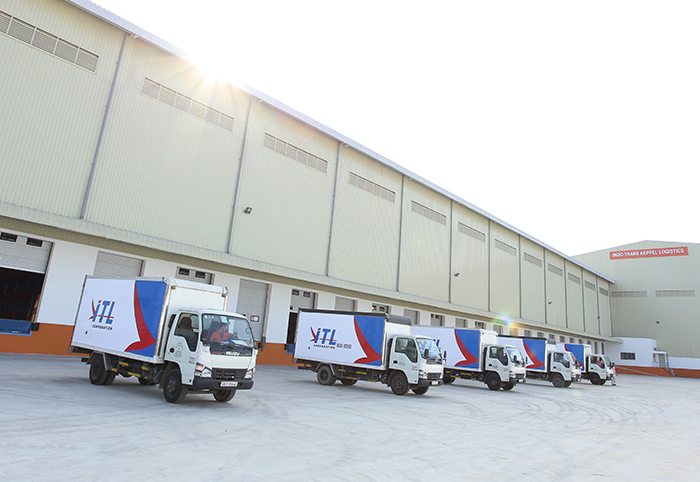
A coffee exporting business must purchase beans from farmers right after the harvest season, but it takes several months to process, transport, and receive payment from international customers. Without sufficient working capital, the business cannot purchase all the coffee in time, losing its competitive edge.
Working capital for import-export businesses
Comparison table of working capital by business type
| Business Type | Key Characteristics | Working Capital “Bottlenecks” | Typical Example |
|---|---|---|---|
| Retail | Large inventory, fast turnover, low profit margins | Seasonal inventory management, timely procurement | An electronics supermarket needs to rotate capital to stock up for Tet/Black Friday. |
| Manufacturing | Long capital cycle, large investment in raw materials & production | Raw material inventory, B2B accounts receivable | A garment company must import fabric and pay workers before receiving payment from customers. |
| Services | Low inventory, capital mainly for personnel & operations | Accounts receivable from customers, fixed operating costs | A marketing agency advances money for ad campaigns, while clients pay later. |
| Construction | Long-term projects, large initial capital, milestone-based payments | Upfront capital for project commencement, delayed payments from investors | An infrastructure construction company must invest tens of billions before project acceptance. |
| Import/Export | Exchange rate fluctuations, logistics, long-distance shipping | Capital “tied up” in transit, LCs/deposits, international accounts receivable | A coffee exporting business must purchase goods during the harvest season but receives payment several months later. |
6. Frequently Asked Questions about Working Capital (FAQs)
Is having too much working capital (a large positive number) always a good thing?
Not necessarily. Excessively high working capital can indicate inefficient use of assets (stagnant inventory, idle cash), so it should be optimized, not maximized.
How can you free up capital that is “stuck” in inventory?
Businesses should adopt a “Just-In-Time” inventory management model, classify goods by priority groups, and use automated reports to detect slow-moving items and address them promptly.
Should you prioritize debt collection or extend payment terms to increase capital?
You need to do both simultaneously: tighten credit policies to collect debts as quickly as possible, while also negotiating extended payment terms with suppliers based on your creditworthiness. This is a way to legally leverage trade credit to supplement liquidity without incurring interest costs.
When does a business need to raise additional working capital from external sources?
A business needs to raise capital (such as through short-term loans or overdrafts) when its cash cycle is disrupted or when an unexpected business opportunity (like a large order) exceeds its current financial capacity. This ensures the business doesn’t miss growth opportunities due to a temporary liquidity shortage.
How can you detect the risk of a working capital shortfall early?
The most effective way is to set up automatic alert thresholds in your management system. When indicators like the quick ratio or accounts receivable turnover fall into a critical range, the system will automatically notify managers to intervene immediately, rather than waiting until cash flow is actually depleted.
7. Conclusion
In this article, 1Office has shared insights into what working capital is and effective methods for managing it. For a free consultation and a trial of the most professional business management software available today, please contact us using the information below:
Get a free consultation & software demo
For more detailed information, please see:
- Hotline: 083 483 8888
- Fanpage: https://www.facebook.com/1officevn/
- YouTube: https://www.youtube.com/channel/UCeTIRNqxaTwk0_kcTw6SxmA
















