


 11/05/2026
  398 views
An agenda is a content plan that helps a meeting, event, or program stay focused and on schedule. Understanding what an agenda is will help organizers prepare content, allocate time, and assign responsibilities more clearly. This article will guide you on the necessary content for an agenda and how to build a professional agenda that is easy to apply.
Mục lục
1. What is an Agenda?
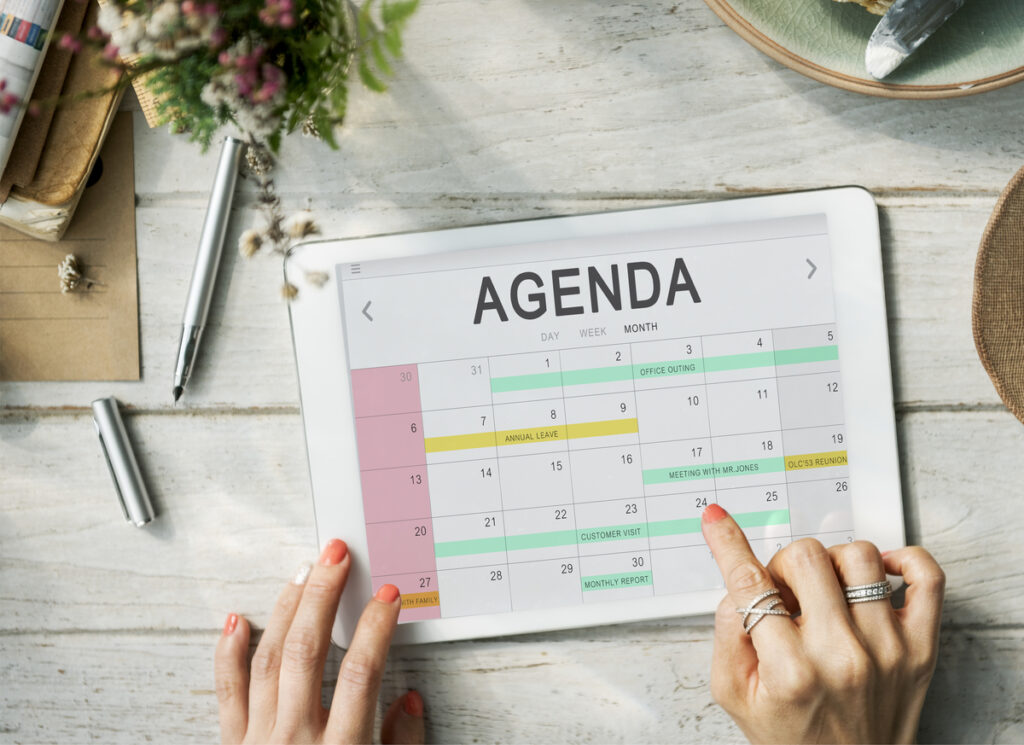
An agenda is a list of activities, content, or topics arranged in chronological order to organize and manage meetings, events, or programs effectively, ensuring everything proceeds according to the plan and set objectives.
2. What is the importance of an Agenda?
An agenda plays a crucial role in the effective organization and management of meetings, seminars, and events. It offers many practical benefits, helping to optimize time, increase productivity, and achieve set goals. Specifically:
2.1 Informs participants about the content in advance
An agenda plays a key role in ensuring a successful meeting by providing attendees with a detailed guide to the discussion topics. This allows them to prepare more thoroughly, contributing to a more effective and high-quality meeting. Sharing the agenda before the meeting demonstrates respect for everyone’s time and the organizer’s professionalism. This helps build goodwill and encourages active participation from attendees.
2.2 Ensures efficiency and keeps the program on track

An agenda acts as a guide, helping to coordinate the meeting to run smoothly, efficiently, and achieve its objectives. With an agenda, the chairperson can easily steer the discussion, ensuring the meeting stays on track and doesn’t go off-topic. This allows everyone to focus on important issues, saving time and enhancing the effectiveness of the discussion.
2.3 Enhances focus and participation from attendees
When informed in advance about the program’s content, attendees tend to be more focused, proactively follow topics they are interested in, and participate constructively. As a result, they can contribute ideas effectively, solve problems together, and make wise decisions. An agenda also helps prevent irrelevant topics from being raised, ensuring the meeting stays on course and achieves its stated goals.
2.4 Records and stores information
An agenda serves as a summary record of the meeting’s main content, including discussion topics, contributions, decisions made, and tasks assigned. After the meeting, the agenda can be considered a condensed version of the meeting minutes, which can be stored for various purposes such as tracking work progress, preparing for future meetings, or providing necessary information.
2.5 Clearly assigns responsibilities
An agenda is a useful tool that helps organizers assign specific tasks to each member. Clearly assigning responsibilities ensures that everyone understands their role and duties, thereby accelerating work progress, improving overall efficiency, and strengthening the sense of responsibility for each team member.
See more:
3. Why create a separate Agenda for each type of event?
The term “Agenda” when combined with other words, creates different types of event categories:
- Environmental agenda: environmental agenda
- Event agenda: event program
- My agenda: personal work log
- Feminist agenda: feminist agenda
- Political agenda: political agenda
- Domestic agenda: domestic agenda
- Meeting agenda: Meeting Log/Minutes
Each event has different goals, participants, and content. For example, an academic conference will have a different structure and content than a company anniversary party, or a sharing workshop will differ from a business meeting. Therefore, having a custom-designed Agenda for each event ensures that it runs smoothly and meets its intended purpose with all the planned content.
Additionally, each type of event has different time requirements. A business meeting needs to focus on decision-making and discussion, while an entertainment event needs time for recreational activities and networking. A specific Agenda helps manage time effectively, avoids waste, and ensures all activities proceed as planned.
Creating a separate Agenda for each type of event will make the organization process easier for you. With a clear and detailed Agenda, the organizing committee can easily assign tasks, track progress, and handle any arising situations. This helps the event run smoothly and minimizes unwanted risks.
4. Characteristics of a Standard Professional Agenda
Each event agenda will be customized according to its purpose and content, but it still needs to ensure the characteristics of a professional agenda. The criteria you need to ensure for an agenda are as follows:
- Clear, easy-to-read layout: Arrange goals, times, and content in a logical, sequential order.
- Reasonable time allocation: Allocate sufficient time for each goal and activity, and include a buffer for unexpected situations.
- Provides complete information: Include the location, person in charge, and specific objectives for each task.
- Professional design: Use a readable font, and appropriate colors and images to highlight important information.
- Flexible and adaptable: Can be changed and adjusted as needed to suit the actual situation.
- Consistent: Use a uniform font, layout, and other design elements.
- Simple language: Avoid using ambiguous language to ensure everyone can easily grasp the information.
By following these principles, you can create an Agenda that suits any need, helping meetings run effectively and achieve their set goals.
5. What Basic Content Should an Agenda Include?
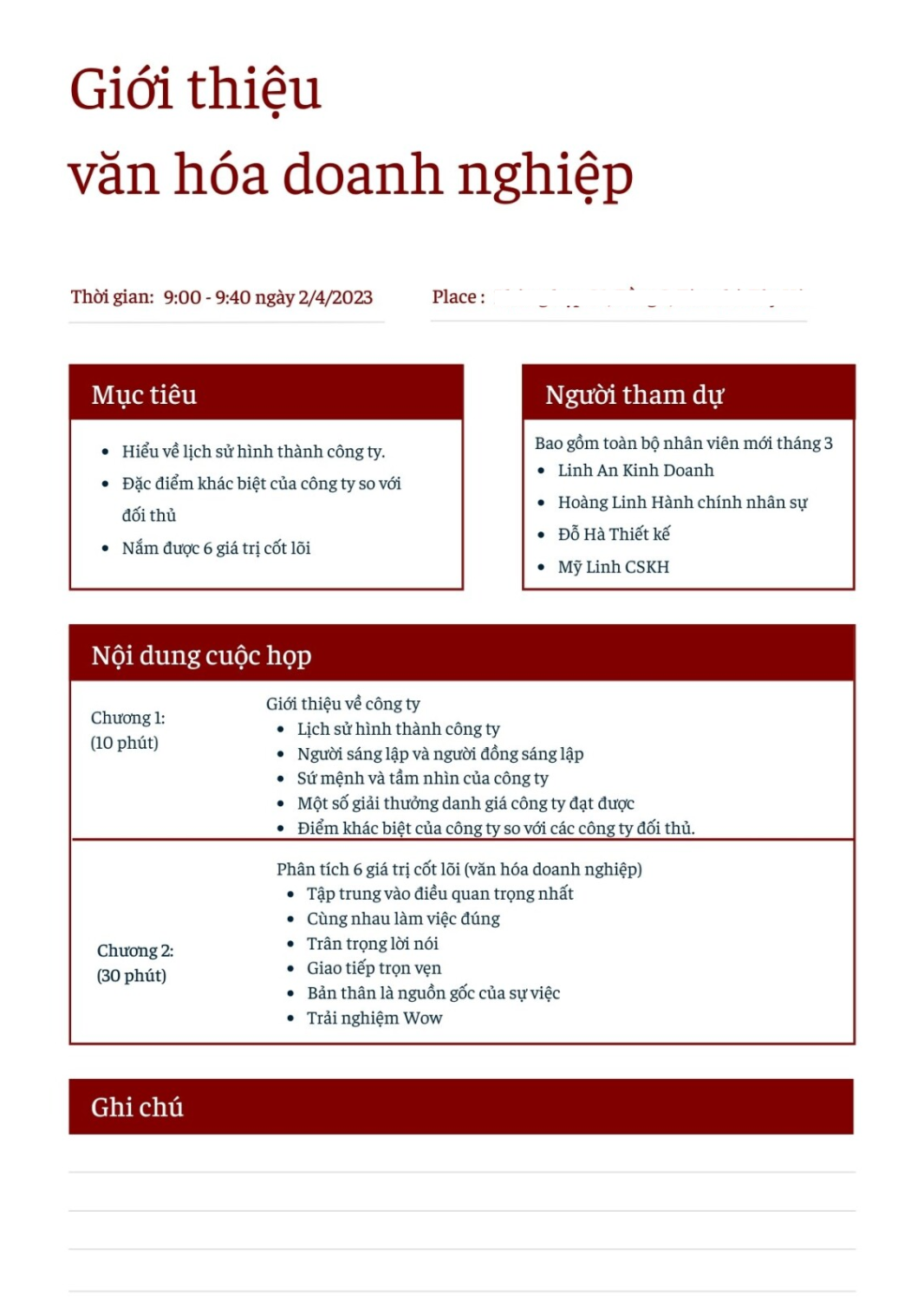
The agenda for each type of program or event will have a different content layout; however, the basic content that should be in an agenda typically includes:
- Title / Main Topic: The title should be concise, succinct, and contain main keywords so that attendees can easily recognize and grasp the topic of the meeting or program.
- Time, location, and attendees: Basic information about the meeting
- Purpose of the event: State the reason for holding the meeting and what is expected to be achieved by the end.
- Program content: List in detail the topics for discussion, presentations, reports, etc., arranged in a logical and prioritized order, while allocating reasonable time for each part.
- Issues to be resolved: The issues should be clearly defined, actionable, and relevant to the meeting’s purpose. Focusing on solutions rather than just discussing problems will help the meeting stay on track and achieve the desired results.
6. Guide to Creating a Standard Professional Program Agenda
A complete and well-designed agenda will demonstrate professionalism in the preparation phase. Moreover, it will be easier for readers to absorb and follow, making work management simpler and faster. So, what are the steps to create an Agenda?
Step 1: Determine the Topic and Create an Impressive Agenda Title
Before starting to build the agenda, you need to spend time researching and determining the topic of this meeting. What type of meeting is it (department/team meeting, board of directors meeting, new product launch event, etc.)? What is the purpose of the meeting that needs to be recorded in the agenda? Gathering this information helps you accurately determine the topic and objectives of the event, from which you can create a good and standard title.
In terms of presentation, a professional Agenda title needs to meet the following requirements:
- Be concise, succinct, and easy to understand (limit to a maximum of 60 – 90 characters to ensure aesthetic appeal)
- The title should cover the main content, clearly showing the reader the specific goals and purpose of organizing the meeting/event/workshop. For example: “September 2024 Marketing Plan Meeting Agenda”
- In terms of format: The Agenda title should be in uppercase, bold, and set to a larger font size than the other content sections. The font should be consistent, and care should be taken to avoid using multiple colors or complex images.
Step 2: Information on Time, Location, and Attendees
The time, location, and attendees section should be placed right below the agenda’s title. To ensure a professional and aesthetically pleasing agenda, you need to pay attention to both form and content when creating this section. Specifically:
- Time of the meeting/event: Clearly state the date, expected start and end time of the meeting, including the full date/month/year. For example: Time: 8:00 AM – 11:30 AM, September 5, 2025.
- Venue of the meeting/event: Accurately fill in the location where the meeting will take place, providing the most detailed information such as room number, floor, and building name. For example: Meeting Room 1, Company X, 2nd Floor, ABC Building.
- Attendees: Provide a detailed list of all meeting participants, including their full names, titles, and departments/divisions to manage attendance and understand the roles and responsibilities of each member.
In terms of presentation, the information about time, location, and attendees in the agenda should be bolded to make it stand out.
Step 3: State the Purpose of the Program/Meeting/Event
The purpose of the agenda is essentially a summary of the meeting/event’s content. A professional agenda should state the purpose directly, focus on the core issues, and align with the type of meeting you want to organize and its objectives.
When writing the purpose, you should use only 1 to 5 sentences to present it, avoiding rambling and excessive detail. Additionally, you should consider whether the purpose will generate interest among the agenda recipients, as this will encourage them to learn more and proactively research the topics beforehand.
For aesthetic purposes, when presenting this section, you should use underlining, bolding, or italics to ensure it is visible to all agenda recipients.
Step 4: List the Main Topics
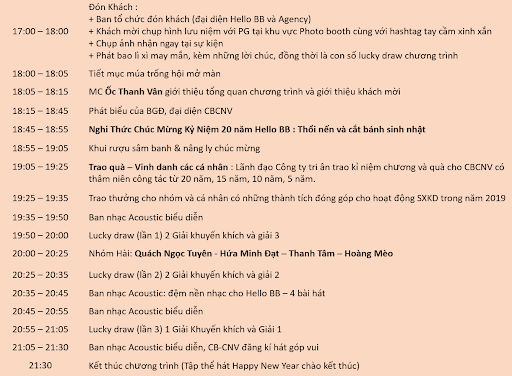
To ensure programs, meetings, and events proceed according to their purpose and cover all necessary content, the agenda you create must clearly present the topics and activities to be discussed/held and the issues to be resolved. Defining the content in an agenda template also helps you avoid overlooking important issues.
When presenting the content section in the agenda, you need to pay attention to the number of topics and the duration of each part. You need to determine which topics the meeting program will cover and how long each topic will take.
To carry out this step effectively, here are a few small tips you can apply when developing the agenda content:
- Avoid cramming too much content into one agenda; instead, focus only on the core issues.
- Topics should be arranged according to their level of importance.
- Include the name of the person responsible for each specific topic so they are informed and can prepare in advance.
Step 5: List Necessary Documents
If any attendees need to bring documents such as presentation slides, reports on the results of the previous month’s/quarter’s/year’s plan, detailed project descriptions, attendance sheets, etc., you should also make a clear note of this in the plan. Listing these documents will help everyone prepare better and ensure the meeting runs smoothly without being interrupted by unexpected issues.
7. Conclusion
The above article has provided a detailed explanation of what an agenda is, the basic content it should include, and a guide on how to create a professional program agenda. We hope the information in this article will be helpful as you create content for your programs, meetings, and events.
We wish you success!
















