


 11/05/2026
  926 views
Company rules are documents that help businesses establish regulations on working hours, labor discipline, rights, responsibilities, and workplace conduct. A clear, compliant set of rules will help businesses manage personnel more transparently, limit disputes, and create a professional working environment. The article below compiles 6 of the latest company rules and labor regulations templates, along with instructions on how to fill them out and notes on application.
Mục lục
- Why should businesses have company rules?
- What content should company rules include?
- Top 6 latest updated company rules and labor regulations templates
- Guide on How to Fill Out the Internal Labor Regulations Template
- What are the key considerations when creating company regulations?
- Company regulations must comply with labor laws
- Company regulations must be suitable for the business’s production and operational characteristics
- A company regulation template must be clear, specific, and easy to understand
- Company regulations must be established based on open agreement between the employer and employees
- Company regulations and labor regulations should be amended and supplemented when necessary
- Frequently Asked Questions about Company/Labor Regulations Templates
- 1Office: The Smart Solution for Business Document Storage and Management
- 7. Conclusion
Why should businesses have company rules?
Company rules are a type of document issued by the employer to specify regulations not clearly agreed upon in the labor contract. They stipulate the terms that employees must adhere to during their work and serve as a basis for resolving labor disputes.

Some roles for businesses when applying company rules and labor regulations in the workplace include:
- Standardize employee behavior: Company rules clearly define permissible and impermissible employee behaviors during work, helping employees to be self-aware and compliant.
- Help businesses manage employees better: The document serves as a basis for the company to discipline employees who commit violations, ensuring that labor discipline within the company is strictly enforced.
- Protect the interests of the company and employees: This form helps the company limit risks to assets, reputation, etc., caused by employee violations. At the same time, company rules also protect the rights of employees in cases where they are disciplined unlawfully.
What content should company rules include?
Company rules must include mandatory regulations on: Working and rest hours; Workplace order; Occupational safety and hygiene; Prevention of sexual harassment; Protection of assets and business secrets; along with a system of Violations, forms of disciplinary action, and corresponding material liability.
-

Required content for a company rules template

Businesses can refer to the necessary content for a rules template:
- Working hours, rest time: Clearly regulate working hours per day, per week, lunch breaks, annual leave, public holidays, etc.
- Employee rights and responsibilities: Includes rights regarding salary, benefits, labor protection, trade unions, social insurance, health insurance, etc., and the responsibilities of employees to enjoy these rights.
- Disciplinary violations: Clearly state the regulations on disciplinary violations, the severity of violations, and the corresponding forms of disciplinary action.
- Responsibility for physical facilities: The document specifies the employee’s responsibility for compensation in case of damage to company property. Businesses need to clearly state the level of compensation and the person with the authority to decide.
In addition, labor regulations can specify other content suitable for the production and business characteristics of each enterprise, such as:
- Regulations on employee dress code, conduct, and work attitude.
- Regulations on the use of equipment, machinery, and supplies by employees.
- Regulations on preventing sexual harassment in the workplace.
- Regulations on occupational safety and hygiene in the working environment.
- Regulations on protecting the business secrets and technological secrets of the enterprise.
- Regulations on the person with the authority to handle violations.
Company rules must be sent for registration to the Department of Labor, Invalids and Social Affairs where the business is headquartered. After successful registration, the business needs to agree upon, issue, and publicize them to employees before they start working.
Top 6 latest updated company rules and labor regulations templates
Labor regulations are an important set of documents that help businesses establish a clear, transparent, and unified working framework. They serve as the basis for personnel management, disciplinary actions, ensuring labor safety, and maintaining internal culture. A standard, complete, and updated labor regulations template according to the 2019 Labor Code will help businesses:
- Reduce the risk of labor disputes
- Standardize personnel management processes
- Enhance employee compliance awareness
- Create a professional and disciplined work environment
To support businesses, below is the latest Labor Regulations template – concisely compiled, easy to apply, and customizable for each company model. Businesses can use it immediately to issue or as a basis for building their own regulations that are more suitable for their operational reality.
DOWNLOAD THE LABOR REGULATIONS TEMPLATE NOW WITH JUST 1 CLICK HERE

- Company internal labor regulations template
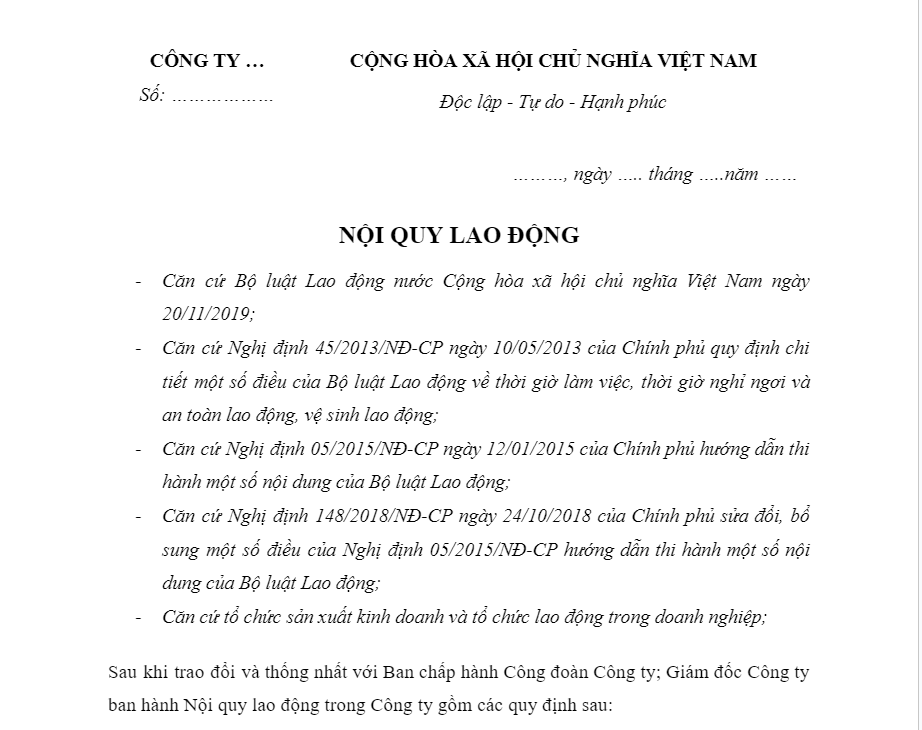
Company Internal Labor Regulations Template
The internal labor regulations template is a document that stipulates labor discipline, violations of labor discipline, forms of disciplinary action, and responsibility for physical facilities. This template is suitable for businesses of all sizes, from small to large, and for companies operating in multiple industries and fields.
>> Download: [1OFFICE] Company internal labor regulations template.docx
Concise Company Internal Regulations Template
This is a concise and succinct internal regulations template, including the most basic provisions on labor discipline, violations of labor discipline, and forms of disciplinary action. This template is suitable for small businesses operating in a single industry or field.
>> Download: [1OFFICE] Concise company internal regulations template.docx
General Company Internal Regulations Template
The general company internal regulations template includes detailed provisions on labor discipline, violations of labor discipline, forms of disciplinary action, and employee responsibility for physical facilities. This company regulations template is suitable for businesses without specific production or business characteristics.
>> Download: [1OFFICE] General company internal labor regulations template.docx
Manufacturing Company Internal Regulations Template
This form is suitable for businesses operating in the manufacturing sector with a large number of employees. It regulates working hours, conduct, hygiene, asset preservation, and commitment to maintaining company confidentiality.
>> Download: [1OFFICE] Manufacturing company internal regulations template.docx
Construction Company Internal Regulations Template
The construction company internal regulations template is a set of labor regulations designed specifically for construction companies and businesses. This template often includes additional provisions related to occupational safety, occupational hygiene, and labor protection.
>> Download: [1OFFICE] Construction company internal regulations template.docx
Commercial Company Internal Regulations Template
The commercial company internal regulations template is designed for businesses operating in the commercial sector. This template often includes additional provisions related to dress code, conduct, and work attitude to make a good impression on customers.
> Download: [1OFFICE] Commercial company internal regulations template.docx
Guide on How to Fill Out the Internal Labor Regulations Template
Internal labor regulations are an important document that defines the rights, obligations, discipline, and policies in the employment relationship between the employer and employees. Creating and filling out the regulations completely and accurately helps businesses comply with the law, reduce the risk of disputes, and improve management efficiency.
Step 1: Preparation Before Filling Out the Regulations
Understand current labor laws
- Internal labor regulations must comply with the Labor Code and related guiding documents.
- Businesses with 10 or more employees are required to establish internal regulations and register them with the labor management agency.
Determine the scope of application
- All company employees, including contract workers and temporary staff.
- Clearly state which departments, divisions, or positions may have separate supplementary regulations (if necessary).
Prepare basic company information
- Company name, head office address, business registration number.
- Business lines, current number of employees.
- The legal representative who will sign the regulations.
Step 2: Fill in basic information on the template
Opening section
- Document title: “Internal Labor Regulations”.
- Legal basis: clearly state the law, decree, or guiding circular.
- Date of issuance and effective date.
Company information and scope of application
- Company name, head office, number of employees.
- Scope of application (all employees or specific departments).
- Person in charge of managing the regulations (HR or department head).
Step 3: Fill in the detailed internal regulation clauses
The main contents required in the labor regulations are:
Regulations on working hours and rest periods
- Official working hours, lunch breaks, shift start and end times.
- Regulations on overtime, extra shifts, working on holidays, and compensatory leave.
Regulations on annual leave, holidays, and sick leave
- Number of annual leave days, regulations for requesting and approving leave.
- Regulations on sick leave, maternity leave, personal leave, and statutory holidays.
Regulations on labor discipline
- Prohibited acts or violations of internal regulations.
- Forms of disciplinary action: warning, reminder, fine, contract termination.
- Procedures for handling violations, right to complain.
Employee benefits and policies
- Salary, bonuses, allowances, benefits, social insurance, health insurance.
- Regulations on productivity bonuses, KPI bonuses, holiday bonuses.
- Other support policies (business trip expenses, training support).
Occupational safety and environmental hygiene
- Provision of personal protective equipment, safety procedures.
- Regulations on hygiene, accident prevention, and incident handling.
Management of records and personal data
- Labor contract records, certificates, degrees, medical records (if any).
- Employee’s right to access and update personal records.
Step 4: Review, sign, and announce the regulations
Review the entire content
- Ensure the clauses are clear and not contradictory.
- Consult the legal department or HR experts if necessary.
Sign for approval
- The legal representative of the company signs and stamps.
- Department heads or employee representatives can sign for confirmation.
Announce the regulations
- Post in a visible place, send copies to all employees.
- Store the original copy to present to regulatory authorities when required.
What are the key considerations when creating company regulations?
Creating company regulations requires a close combination of legal compliance and operational reality, ensuring all rules are transparent, fair, and become an effective tool for maintaining organizational order.
For company regulations to be properly established and effective, employers need to consider the following issues:
Company regulations must comply with labor laws
Labor laws provide the basis for employers to create company regulations. A standard and accurate labor regulation template must comply with legal provisions, specifically the 2019 Labor Code.
-

Building corporate culture is a decisive factor in an organization’s success

Company regulations must be suitable for the business’s production and operational characteristics
This is a crucial factor in creating company regulations to help build harmonious, stable, and developing labor relations within the business. For example, for manufacturing companies, the regulations must clearly specify rules on occupational safety and hygiene. For commercial businesses, the regulations must clearly specify rules on dress code, professional conduct, and work attitude.
A company regulation template must be clear, specific, and easy to understand
Creating clear, specific, and understandable regulations will help employees easily grasp and follow them. Therefore, the clauses in the company regulations need to be clearly explained so that readers can understand their meaning and how to implement them.
Company regulations must be established based on open agreement between the employer and employees
The employer should consult with employees to create company regulations that are suitable for the business’s reality and the employees’ needs.
Company regulations and labor regulations should be amended and supplemented when necessary
Employers must send the company regulations to employees or post them at the workplace for easy access. Additionally, they should be amended and supplemented as necessary to align with the company’s current situation.
Frequently Asked Questions about Company/Labor Regulations Templates
What is the difference between company regulations & labor regulations?
Company regulations and labor regulations are two documents that stipulate labor discipline. However, these two documents have the following fundamental differences:
| Characteristics | Company regulations | Internal labor regulations |
| Scope of application | Applies to all employees working at the company | Applies to employees working under a labor contract |
| Issuing authority | The employer | The employer and the grassroots-level employee representative organization (if any) |
| Form | A document issued by the employer | A document agreed upon and signed by the employer and the grassroots-level employee representative organization, if any |
| Content | Regulates labor discipline, acts of labor discipline violation, forms of labor disciplinary action, and material liability | Regulates labor discipline, acts of labor discipline violation, and forms of labor disciplinary action |
| Public disclosure | Must be disclosed to employees before they start working | Must be disclosed to employees before they start working |
| Registration | Registration is not required | Must be registered with the Department of Labor, Invalids and Social Affairs where the enterprise is headquartered |
Comparison table of company internal regulations and labor regulations
Which businesses need to register their labor regulations?
According to the provisions of Article 120 of the 2019 Labor Code, businesses employing 10 or more employees must register their labor regulations with the Department of Labor, War Invalids and Social Affairs where the business is headquartered.
What does the registration file for labor regulations include?
The registration file for labor regulations includes:
- An application for registration of labor regulations according to the form issued by the Ministry of Labor, War Invalids and Social Affairs;
- The labor regulations that have been agreed upon and signed by the employer and the grassroots-level employees’ representative organization, if any;
- A copy of the establishment decision, business registration certificate, or investment license.
What is the procedure for registering labor regulations?
The procedure for registering labor regulations is as follows:
- The employer submits one set of registration documents for the labor regulations to the Department of Labor, War Invalids and Social Affairs where the business is headquartered.
- Within 07 working days from the date of receiving the registration file, the Department of Labor, War Invalids and Social Affairs is responsible for reviewing and issuing a Certificate of Registration of Labor Regulations or providing a written response stating the reason for not issuing the certificate.
What is the validity period of the labor regulations?
The labor regulations are effective from the date of registration with the Department of Labor, War Invalids and Social Affairs. Amended or supplemented labor regulations are effective from the date of registration with the Department of Labor, War Invalids and Social Affairs.
The labor regulations take effect 15 days after the competent state authority receives the complete registration file. Amended or supplemented labor regulations are effective from the date of registration with the Department of Labor, War Invalids and Social Affairs.
Is it possible to create internal regulations for a manufacturing company with fewer than 100 employees?
Is it mandatory to use a specific template for labor regulations?
No. Businesses are not required to use a fixed template. However, the regulations must meet all the mandatory content requirements under Articles 118 and 119 of the 2019 Labor Code. Businesses can use available templates to save time and then modify them to fit their culture and operational specifics.
Can the Word file be edited?
Yes. The internal regulations file is in .docx format, so businesses can customize the layout, wording, add their own specific rules, or remove unsuitable sections. After editing, businesses need to review it to ensure compliance with current laws.
What is the most recent version of the template?
The latest internal labor regulations template is based on the 2019 Labor Code and its accompanying decrees/circulars (especially Decree 145/2020/ND-CP). Therefore, the current template has been updated according to the latest regulations for immediate use by businesses.
See more: Employee Training Policy Template for Businesses (free download)
1Office: The Smart Solution for Business Document Storage and Management
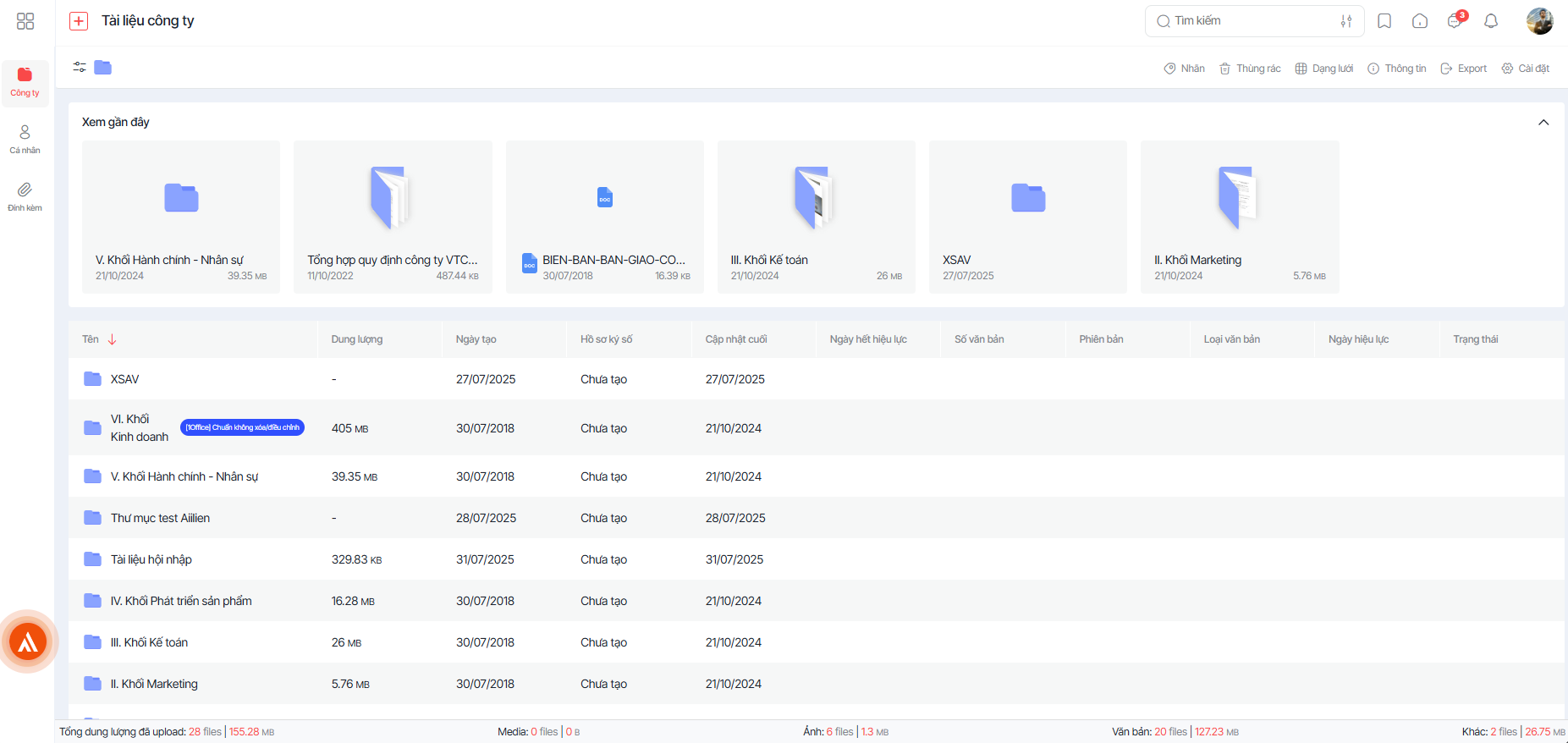
Company regulations are important legal documents that define the rights and obligations of both employees and employers during the work process. Therefore, storing company regulations must be done carefully and systematically to ensure documents are always kept safe and are easily accessible when needed.
Document management software 1Office is a useful tool that helps businesses store and digitize all their paperwork systematically and effectively. Once digitized, documents, including company regulations, will be stored securely and will be easy to access and search.
- Systematic document classification and organization: 1Office allows you to classify company regulations by various criteria such as document type, department, date, etc., making it easy for businesses to search and access them when needed.
- Access documents anytime, anywhere: With 1Office, businesses can access company regulations anytime, anywhere via computer, phone, or tablet.
- Safe and secure: 1Office is stored on a secure cloud server system that meets international security standards.
7. Conclusion
Above are all the regulations and templates for company rules and internal labor regulations that 1Office wanted to share. Thank you for reading the entire article. If you have any further questions, please contact us at:
- Hotline: 083 483 8888
- Facebook: https://www.facebook.com/1officevn
- Youtube: https://www.youtube.com/@1office-chuyendoisodn
















