Coca Cola’s International Business Strategy and Lessons from the Market Leader


The Coca Cola brand has become a global symbol of success in conquering diverse markets. Not only famous for its signature-flavored soft drink, Coca Cola also impresses with its ability to adapt to cultures, innovate creatively, and effectively leverage global trends. In the following article, 1Office will analyze Coca Cola’s international business strategies, from brand positioning and marketing strategies to the expansion of its global distribution network.
Mục lục
- 1. What is an International Business Strategy?
- 2. Overview of Coca-Cola
- 3. Coca-Cola’s International Business Strategy
- 4. FAQ (Frequently Asked Questions)
- 5. Strategic Lessons for Vietnamese Businesses
- 6. Conclusion
1. What is an International Business Strategy?
An international business strategy is a set of plans, directions, and actions that a business implements to expand its operations and compete effectively in the global market. A basic international business strategy will include elements such as:
- Market Identification: suitable countries and regions for operational expansion.
- Products and Services: Researching and adapting products/services to suit the needs, consumer habits, culture, and trends of each market.
- Operations Management: Optimizing the supply chain, production, and distribution on a global scale.
- Risk Management: Forecasting and responding to potential instabilities and risks such as inflation, exchange rate fluctuations, legal and political barriers, etc.
An effective international business strategy allows a company to capitalize on opportunities from different countries while predicting and having appropriate methods to standardize, adapt, and respond to challenges like cultural, legal, and economic differences. An international business strategy plays a crucial role in:
- Market Expansion and Revenue Growth: An international business strategy is the foundation for a company to move beyond the limits of its domestic market and fully exploit the potential of international markets.
- Enhancing Competitiveness: When entering the international market, a company must plan to optimize processes and improve product/service quality to compete with major rivals, strengthening its brand image globally.
- Leveraging Global Resources: Businesses can access and utilize raw materials, human resources, and technology from other countries at more competitive costs, thereby optimizing operational efficiency and profits.
- Adaptation and Long-Term Growth: An international business strategy helps a company adapt to globalization trends, seizing new opportunities and trends such as cross-border e-commerce, the rise of the middle class in developing countries, etc.
- Risk Diversification: Operating in multiple markets helps a company mitigate risks from economic or political instability in a specific region. If one market faces difficulties, the company can still rely on other markets to sustain its operations.
2. Overview of Coca-Cola
2.1. Origins and Formation
On May 8, 1886, Dr. John Pemberton served the world’s first Coca-Cola at Jacobs’ Pharmacy in Atlanta, Georgia, USA. Initially, Coca-Cola was a tonic sold at the pharmacy for the purpose of improving health. In 1887, the brand was officially acquired by Asa Griggs Candler. Under Candler’s leadership, Coca-Cola was shaped into a globally consumed beverage brand thanks to creative advertising strategies that focused heavily on customer emotions and experiences.
Today, with over 33 different brands, Coca-Cola has become a cultural icon with 2.1 billion products consumed daily, present in over 200 countries and territories with more than 700,000 employees and over 225 bottling partners worldwide.
See more:
2.2. Areas of Operation
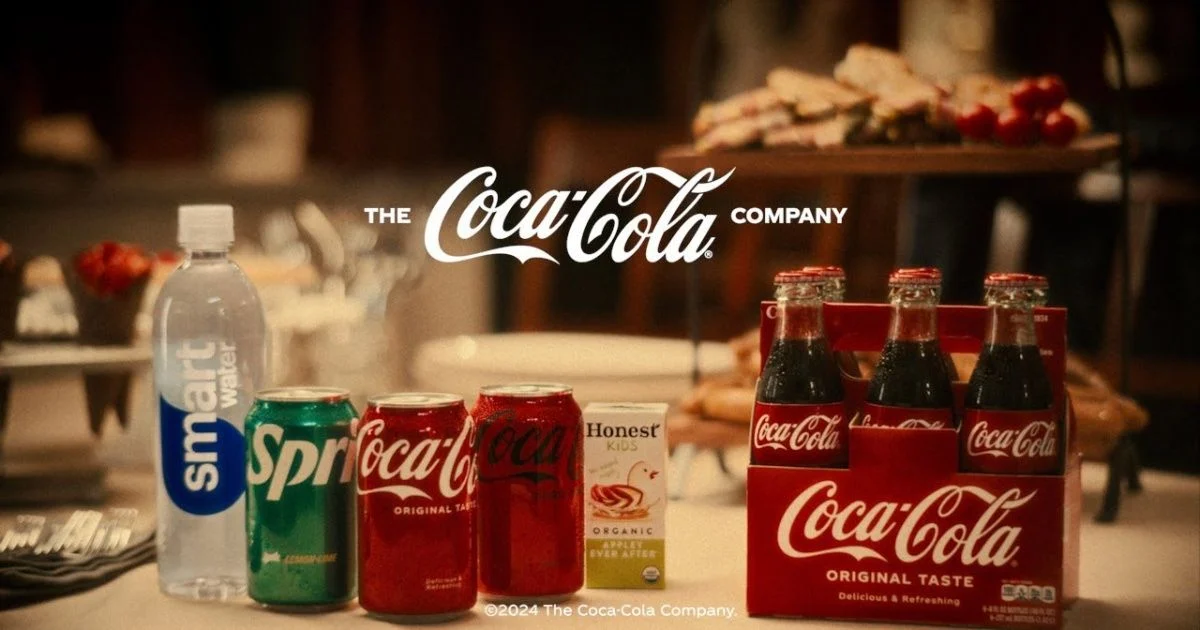
Coca-Cola primarily operates in the non-alcoholic beverage sector, including:
- Carbonated soft drinks: Coca-Cola, Sprite, Fanta.
- Water, sports drinks, and energy drinks: Aquarius, Dasani, Ciel, Topo Chico,…
- Juices and fruit milk drinks: Minute Maid, Nutriboost, Ardes,…
- Coffee and tea: Fuze tea, Costa Coffee,..
- Alcoholic beverages: Simply Spiked, Fresca Mixed,…
Besides its key product line of soft drinks, Coca Cola is also researching, producing, and has launched other beverage products such as coffee, beer, alcoholic drinks, etc.
2.3. Business Philosophy
- Vision: Coca-Cola aims to become a total beverage company, bringing refreshment to the world and creating sustainable value for the community.
- Mission: “Refresh the world. Make a difference.” Coca-Cola’s goal is not just to provide products but also to connect emotions and joy to customers through humanitarian campaigns, creating sustainable value for society.
2.4. SWOT Analysis of Coca Cola
| Factor |
Details |
| Strengths | – Global brand: One of the world’s top brand values, present in over 200 countries with 33 different brands. |
| – Extensive distribution system: Possesses a strong supply network and manufacturing partners. Ensures consumers can easily access the products. | |
| – Diverse product portfolio: Includes carbonated soft drinks, juices, energy drinks, and health-supporting products, meeting the diverse needs and tastes of consumers. | |
| – Impressive Marketing strategy: Creative promotional strategies that connect with consumer emotions through humanitarian and cultural campaigns. | |
| Weaknesses | – Dependence on carbonated drinks: Main revenue still comes from carbonated soft drinks, products that are criticized for health issues (obesity, diabetes). |
| – Environmental impact: Use of plastic bottles causes pollution and creates pressure to reduce plastic waste. | |
| – High operating costs: Requires a large budget for research, production, and the supply chain. | |
| Opportunities | – Product innovation: Develop healthy, low-sugar, or sugar-free product lines to meet modern consumer trends. |
| – Tapping into new markets: Strong growth potential in developing countries (Africa, Asia). | |
| – Technology application: Use AI and big data to personalize customer experiences and optimize the supply chain. | |
| Challenges | – Intense competition: Major competitors like PepsiCo and local businesses are fiercely competing for market share. |
| – Consumer pressure: The growing trend of supporting sustainable and healthy products requires Coca-Cola to change its strategy. | |
| – Economic fluctuations: Factors such as foreign exchange rates, inflation, and trade policies can affect business operations. |
SWOT analysis shows that Coca-Cola is a strong brand with great potential, but it also faces many challenges in adapting to modern trends. To maintain its leading position, Coca-Cola needs to continuously innovate its international business strategy, while improving its environmental impact and expanding its portfolio of healthy products.
3. Coca-Cola’s International Business Strategy
3.1. Transnational Strategy
Coca-Cola has effectively applied a transnational strategy by combining:
Global Cost Optimization: Coca-Cola uses centralized production centers, leverages economies of scale, and partners with regional bottling partners to optimize production costs. This helps the brand’s products maintain competitive prices globally.
Adapting to Local Needs: Coca-Cola customizes its products according to the tastes, culture, and consumption habits of each country:
- Example in Japan: Coca-Cola launched various products such as tea and non-carbonated soft drinks to suit traditional preferences.
- Example in India: The product formula was adjusted to be less sweet, suiting local tastes.
- Localized Promotion Programs: Marketing campaigns are localized by incorporating local languages and cultures, such as printing names in various languages for the “Share a Coke” campaign.
3.2. Flexible Pricing Strategy
Coca-Cola uses a pricing model tailored to each market to increase accessibility:
Price Segmentation by Region:
- In developing countries (like India, Vietnam, Thailand, etc.): Coca-Cola offers products at lower prices to increase competitiveness with local brands and match consumer income levels.
- In developed markets (like the US, Europe): Coca-Cola sells its products at higher prices, adding premium product lines like organic juices and energy drinks to meet diverse consumer needs, especially concerning health issues (obesity, diabetes, etc.).
Seasonal Flexible Pricing Strategy: Product prices are adjusted during holidays, special events, or in response to economic fluctuations in specific countries or regions.
>>>> See more: 9+ Effective and Optimal Pricing Strategies for Businesses
3.3. Extensive Distribution Network
Coca-Cola’s global distribution network is one of the key factors behind the brand’s outstanding success.
“Bottling Partners” System:
- Coca-Cola does not handle all production itself but collaborates with over 225 independent bottlers worldwide. These partners are responsible for local production and distribution, helping Coca-Cola optimize production costs, achieve comprehensive product coverage, and expand rapidly.
- Coca-Cola products are available in all distribution channels, from supermarkets and convenience stores to street vendors. This strategy ensures that consumers can easily access the products anywhere.
Collaboration with Local Partners:
- For example, in Vietnam, Coca-Cola collaborates with local distributors, retailers, and businesses to expand the market and build a strong sales network, making it easier to reach consumers.
3.4. Brand & Marketing Strategy
Coca-Cola is famous for its creative, impressive, and emotionally focused marketing strategies.
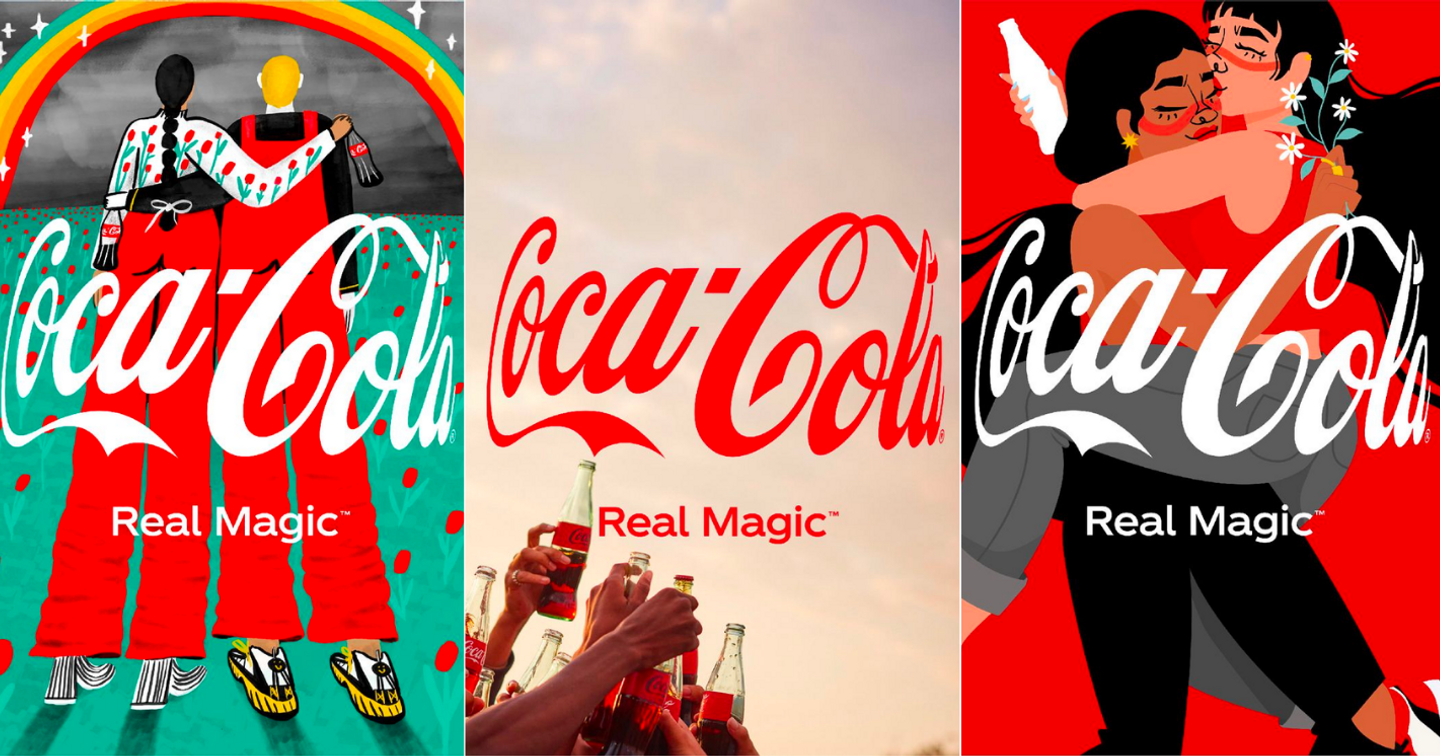
Emotion-Driven Brand Promotion:
- Coca-Cola not only sells a product but also connects its brand with values like happiness, love, and sharing.
- “Share a Coke” Campaign: Printing individual names or messages on bottles, encouraging customers to share with friends and family
- Sponsorship of Major Events: Coca-Cola is an official partner of major events like the Olympic Games and the FIFA World Cup, thereby enhancing global brand recognition and reaching its target audience,
- Application of Technology in Marketing: Coca-Cola uses big data and artificial intelligence to personalize the customer experience, for example, by displaying ads with different messages to different audiences on digital platforms.
Coca-Cola has been building a comprehensive international business strategy, flexibly combining global cost optimization with adaptation to each local market. Coca-Cola’s success comes not only from product quality but also from its flexible adaptability and creative promotional strategies, which are closely tied to emotional and community values.
>>> Read more: Vingroup’s Business Strategy
4. FAQ (Frequently Asked Questions)
4.1. What has Coca-Cola done to adapt to the Vietnamese market?
To adapt and expand its market share in Vietnam, Coca-Cola has implemented several specific business strategies, such as:
- Adjusting products to suit local tastes: Coca-Cola has introduced new products like Minute Maid Splash with orange pulp, Dasani purified water, and Samurai energy drink to meet the diverse needs of Vietnamese consumers, from young people to the health-conscious.
- Collaborating with local partners: Upon entering the Vietnamese market, Coca-Cola collaborated with local companies like Chuong Duong and Vinafimex to expand production and distribution and optimize costs. Later, the company transitioned to a 100% foreign-owned enterprise to increase strategic flexibility.
- Extensive distribution network: Coca-Cola maintains a strong distribution network in Vietnam, concentrated in the North, Central, and South regions, with factories in Hanoi, Da Nang, and Ho Chi Minh City. This network allows products to easily reach consumers in both major cities and remote areas.
- Localized marketing campaigns: Coca-Cola Vietnam has promoted creative communication campaigns focusing on community values, emotions, and connection, such as activities associated with Tet (Lunar New Year) and cultural festivals.
4.2. What is the difference between Coca-Cola’s and Pepsi’s strategies?
Brand and communication strategy:
- While Coca-Cola focuses on emotional values like family and community connection through iconic campaigns such as “Share a Coke” or advertisements tied to major holidays, the Pepsi brand leans towards a young, dynamic audience, using famous celebrities and youthful campaigns like music and sports sponsorships.
Product development:
- Coca-Cola creates diversity in its beverage portfolio with sub-brands like Minute Maid, Samurai, Sprite, and Dasani. Meanwhile, Pepsi has developed strongly in the snack and food sector (associated with Lay’s, Quaker Oats), which helps the company not rely solely on beverages.
Pricing and distribution strategy:
- Coca-Cola has a flexible pricing strategy, adjusting it for different regions and consumer segments. In contrast, Pepsi often sets more competitive prices to attract young consumers or those in the mid-range segment.
Differences in operating models:
- In Vietnam, Coca-Cola invests heavily in its distribution network and local factories. Pepsi, in addition to beverages, focuses on building a food and beverage ecosystem, creating an advantage in retail channels.
These strategic differences help both brands maintain their competitive positions in the Vietnamese market, with each leveraging its unique strengths to reach its target audience.
4.3. Has Coca-Cola failed in any markets? Why?
Despite being a global leading brand, Coca-Cola has also faced major historical failures. These lessons are considered “classic case studies” in marketing and global strategy.
New Coke – An Iconic Strategic Failure (1985)
New Coke was Coca-Cola’s attempt to change its traditional flavor to compete with Pepsi, which was leading in the Pepsi Challenge. However, this change quickly became a strategic mistake for the following reasons:
-
Interfering with consumers’ emotional values: The original Coca-Cola was tied to memories, pop culture, and American pride. Changing the formula made consumers feel a sense of “loss.”
-
Underestimating the brand’s role: Coca-Cola is not just a drink; it’s an icon. Changing the formula broke brand loyalty.
-
Uncontrolled communication: The backlash spread far beyond the company’s predictions.
Result: Coca-Cola had to quickly bring back the old formula under the name “Coca-Cola Classic”.
New Coke became a classic case study on changing a core product without properly assessing brand value.
Failure in India (1977 – returned in 1993)
In India, Coca-Cola once left the market due to legal conflicts with the Indian government:
-
The government demanded that Coca-Cola disclose its product formula – something the company could not accept.
-
The global business model was incompatible with India’s highly protectionist regulatory structure at the time.
-
Domestic brands (like Thums Up) quickly dominated the market.
Upon returning in 1993, Coca-Cola continued to face initial difficulties due to:
-
A complex and multi-layered distribution infrastructure.
-
Differences in consumer culture and beverage consumption habits in India.
-
Strong competition from local brands with a strong local identity.
However, thanks to the strategy of acquiring Thums Up and expanding its extensive distribution system, Coca-Cola gradually regained its market share.
4.4. How did the Zero Sugar strategy impact Coca-Cola’s growth?
The trends of reducing sugar, healthy living, and “better-for-you” products are changing the global beverage industry. Coca-Cola recognized this very early on and implemented the Zero Sugar strategy as a key growth pillar.
Addressing consumer health needs
-
Consumers are limiting sugar, avoiding obesity, and paying more attention to their health.
-
Coca-Cola Zero meets the demand for “the classic taste with no sugar,” helping to expand the customer base (young people, office workers, fitness enthusiasts).
Superior revenue growth compared to the classic line
In many markets, Coca-Cola Zero has recorded double-digit growth.
It is currently one of the corporation’s fastest-growing revenue contributors.
Refreshing the brand, attracting the younger generation
Coke Zero’s marketing campaigns target Gen Z: sports, music, streaming…
This helps Coca-Cola maintain the brand’s “modern” appeal.
Mitigating risks from sugar tax regulations
Many countries impose taxes on sugary drinks (sugar tax).
Coca-Cola Zero helps the company reduce the impact of these policies and maintain its market share.
Conclusion: The Zero Sugar strategy not only complements the product portfolio but also serves as a strategic growth driver, helping Coca-Cola maintain its leading position amidst declining global demand for sugary drinks.
5. Strategic Lessons for Vietnamese Businesses
From the global expansion journey of Coca-Cola – the world’s most valuable beverage brand – Vietnamese businesses can draw many important lessons. Below are 4 core lesson groups that provide guidance for businesses preparing for or currently implementing an internationalization strategy.
5.1. International Expansion Based on Core Advantages
One of the reasons Coca-Cola has remained a leader for over 100 years is its “go global” strategy based on core competencies, rather than spreading thin or diversifying massively. Coca-Cola’s core advantages include:
-
An exclusive formula that creates absolute differentiation.
-
A strong brand with a globally consistent identity system.
-
Superior marketing capabilities driven by emotional communication.
-
A deep and wide distribution system reaching even the smallest points of sale.
Lesson for Vietnamese businesses:
-
Before going international, you must clearly identify your core competitive advantages: technology, unique raw materials, cost, operating systems, product quality, or partner network.
-
Exporting or investing abroad must be based on strengths that have been proven in the domestic market.
-
Go global with your strengths – not just your wishes.
5.2. Distribution System Mindset – The Key to Market Expansion
One of Coca-Cola’s “strategic weapons” is its extensive distribution network: from modern retail chains and convenience stores to rural grocery stores – something that is very difficult for competitors to imitate.
Coca-Cola doesn’t just sell a product; it also “sells a distribution system,” ensuring:
-
The product is always present wherever consumers are
-
Ensuring superior availability and coverage
-
Optimizing costs through joint venture/franchise bottling models
Lessons for Vietnamese businesses:
To expand into international markets, serious investment is needed in:
-
Local distribution networks
-
Logistics and warehousing capabilities
-
International-standard supply chain management
-
Deep understanding of consumer behavior in each region
The classic saying in FMCG still holds true:
“A good product with weak distribution = failure.”
5.3. Brand Power is a Cross-Border Advantage
Coca-Cola possesses a globally recognized brand: the color red, the flowing logo, the inspiring slogans. This is an “intangible asset” that creates tangible value:
-
Helps increase consumer trust from the very first interaction
-
Creates a significant competitive barrier
-
Allows for better control over pricing
Coca-Cola uses emotional advertising (happiness, sharing, festive seasons) to build a cross-border brand that transcends cultural barriers.
Lessons for Vietnamese businesses:
-
Instead of competing on price, focus on long-term brand building.
-
A strong brand helps businesses enter international markets more easily.
-
Logos, packaging, and messaging must be consistent, yet flexible enough to adapt to each region.
-
Marketing investment must be strategic, not just an “expense.”
5.4. Focus on R&D and Innovation to Suit Each Market
Coca-Cola doesn’t just sell a single type of soft drink. They continuously innovate their products to meet global consumer trends:
-
Coca-Cola Zero Sugar for health-conscious consumers
-
Sustainable packaging that reduces plastic and is easy to recycle
-
Localized product lines based on the preferences of each country
-
Expanding the portfolio: mineral water, energy drinks, non-carbonated beverages…
This is why Coca-Cola maintains its long-term appeal and avoids falling into the “product saturation life cycle.”
Lessons for Vietnamese businesses:
To succeed internationally, businesses need to:
-
Invest heavily in R&D, not just simple processing/trading
-
Conduct in-depth research on consumer needs in each market
-
Continuously improve products & packaging
-
Apply technology to production, preservation, and distribution
-
Create new value before being forced to follow competitors
Innovation is the key to maintaining a sustainable competitive advantage.
6. Conclusion
Coca-Cola’s international business strategy has proven effective in building a strong global brand while flexibly adapting to local markets. With an international business strategy, flexible pricing, an extensive distribution network, and an emotionally-driven marketing strategy, Coca-Cola not only maintains its leading market position but also understands the specific needs of each region, including Vietnam.