


 12/05/2026
  288 views
Platforms are becoming a crucial model in modern business due to their ability to connect multiple parties and scale value more quickly. But what is a platform, how does it differ from traditional models, and what are the prominent types? This article will help you understand everything from the concept to a more practical perspective within a business.
Mục lục
- 1. Definition of a Platform
- 2. The Difference Between Platform and Traditional Business Models
- 3. Overview of prominent Platform models today
- 4. Advantages and Disadvantages of the Platform Model
- 5. Enterprise 4.0: The Trend of Adopting an “All-in-One Business Management Platform”
- 6. About 1Office – Vietnam’s Leading All-in-One Enterprise Management Platform
- 7. Conclusion
1. Definition of a Platform
1.1. What is a Platform?
A platform, also known as “nền tảng” in Vietnamese, is a common concept in the information technology field and has gradually become familiar in modern life. A platform refers to a set of basic elements that serve as a foundation for building and developing specific applications or technologies.

Platforms are indispensable for the operation of modern applications and software. Thanks to this foundation, we can create a suitable environment for programs and applications to run more smoothly and efficiently.
1.2. What is a Platform Ecosystem?
A Platform Ecosystem is a digital environment that integrates technologies, tools, and services to support the development and deployment of applications and solutions. In other words, it is a system where different technological components can connect and interact with each other to provide value and services.
Some key features of a Platform Ecosystem:
- Diverse Components: Includes software, hardware, databases, networks, and development tools.
- Seamless Integration: These components are designed to work together effectively, helping developers and businesses easily build and deploy applications.
- Scalability: The Platform Ecosystem can be easily expanded to meet the growing needs of users and businesses.
- Community Support: There is often a community of developers and businesses that contribute and support each other, sharing knowledge and tools.
2. The Difference Between Platform and Traditional Business Models
The Platform model and the traditional model have many notable differences, as follows:
| Characteristics | Platform Model | Traditional Model |
| Value Creation Method | Creates value by connecting users with service or product providers on the platform. The platform acts as an intermediary, not directly owning goods or services, but focusing on facilitating interactions between parties. Value comes from expanding the user network, improving the transaction experience, and leveraging user data to optimize connections. | The business produces goods or services itself and sells them directly to customers. This often requires significant investment in infrastructure, human resources, and raw materials. Value is primarily created through product or service improvements, optimizing production costs, and enhancing the customer experience. |
| Operating Process | The operating process is network-based, where participating parties interact through the platform. The platform provides tools and services to support transactions but does not directly control the product or service creation process. This helps minimize operational costs and increases flexibility in expanding and changing the business model according to market demand. | The operating process is typically linear: from production to distribution and sales. The business controls the entire value chain, from raw material input until the product reaches the consumer. This provides better control over product quality but also requires complex management and high costs. |
| Scale and Scope | Growth is primarily achieved by expanding the network of users and partners. The platform can scale quickly at a lower cost as it does not require heavy investment in physical infrastructure. This model also leverages the network effect, meaning the platform’s value increases as more users and partners join. | Growth is typically achieved by expanding production or distribution scale. This can require large investments in factories, warehouses, distribution systems, and staff. The business needs to optimize processes and manage resources to achieve economies of scale. |
3. Overview of prominent Platform models today
3.1. Hardware Platform
A Hardware Platform is essentially a collection of technical components that a device uses to operate. You can think of it as the brain and nervous system of electronic devices. It includes key parts such as the processor (CPU), memory (RAM), and other control components.
Today, they are commonly found in smartphones (like Qualcomm Snapdragon), personal computers (like Intel x86/x64), gaming devices, IoT devices such as smartwatches, and network equipment. These platforms are the “brains” that help your devices run applications and services efficiently.
3.2. Software Platform

A Software Platform is an environment that provides the foundation for developing, deploying, and operating software applications and services. These platforms include operating systems (OS) like Windows, macOS, and Linux, as well as integrated development environments (IDEs) like Visual Studio and IntelliJ IDEA.
Software platforms provide tools and libraries that help developers create applications quickly and efficiently, while ensuring compatibility and high performance across different devices. They are the “foundation” that supports the entire software ecosystem to operate stably and effectively.
Application software includes programs designed to perform specific tasks. For example, office applications (Microsoft Office), graphic design software (Adobe Photoshop), entertainment apps (Spotify), or work management tools (1Office 1Work).
3.3. Digital Marketing Platform
A Digital Marketing Platform is a system/software used to manage, implement, and track digital marketing campaigns.
A digital marketing platform is a tool that helps businesses manage and implement effective online marketing campaigns. It integrates various tools such as email marketing, social media management, SEO, and online advertising. This platform allows for data collection and analysis to optimize campaigns, integrates with other services like CRM and sales systems, and facilitates easy deployment of campaigns across multiple channels like social media and search engines. A digital marketing platform helps businesses reach their target customers, increase marketing effectiveness, and save costs.
3.4. Customer Data Platform
A Customer Data Platform (CDP) is a technology solution that helps collect, consolidate, and manage customer data from multiple sources into a centralized system. A CDP provides a comprehensive and consistent view of each customer’s behavior and preferences, helping businesses optimize personalized experiences and improve business efficiency.
By automating the collection and processing of data from channels such as websites, applications, social media, or CRM, a CDP helps departments within a business work with accurate, synchronized data. Businesses can execute personalized marketing campaigns and make strategic decisions based on data, thereby improving operational efficiency and strengthening customer engagement. CDPs are increasingly becoming a crucial tool in the digital transformation journey.
3.5. AI Platform
An AI Platform is a technology system that integrates tools and services to build, deploy, and manage artificial intelligence applications. It is a comprehensive solution that helps businesses and developers leverage the power of AI to process data, automate processes, and make intelligent decisions based on data analysis.

An AI Platform provides features such as machine learning, natural language processing (NLP), image recognition, and trend prediction. By integrating data from multiple sources, this platform supports the development of AI models tailored to specific needs, while ensuring flexibility and scalability.
With the support of an AI Platform, businesses can optimize operational processes, personalize the customer experience, and improve business efficiency. This platform is not only for AI experts but is also designed to be user-friendly, helping to expand the application of artificial intelligence in all fields. The AI Platform is becoming the key to digital transformation and innovation in the Industry 4.0 era.
3.6. Cloud Computing Platform
A Cloud Computing Platform is a system that provides computing services over the internet, including storage, data processing, infrastructure, and software tools. It is a solution that helps businesses and individuals access technology resources without needing to invest in complex hardware infrastructure.
A Cloud Computing Platform offers high flexibility, allowing users to scale resources up or down as needed, while optimizing costs by paying only for the services actually used. This platform also ensures high security, reliability, and supports businesses in rapidly deploying applications or services globally.
Typical examples of cloud computing platforms are Amazon Web Services (AWS), which offers services from data storage (Amazon S3) to machine learning (AWS SageMaker); Microsoft Azure, with its deep integration into the Microsoft ecosystem; and Google Cloud Platform (GCP), which excels in AI and big data analytics solutions. These platforms are becoming the backbone for digital transformation and innovation in many fields.
A Social Platform is an online system that allows users to connect, share information, interact, and build communities in a digital space. It is a place where individuals, businesses, and organizations can create content, spread messages, and interact directly with their target audience.

Social media platforms often integrate various features such as posting text, images, videos, live streaming, messaging, and group discussions. They not only serve as communication channels but also as powerful marketing tools, helping businesses build their brand, reach potential customers, and drive sales through advertising or creative content.
For example, Facebook is a popular platform for connecting and sharing, Instagram focuses on images and short video content, while LinkedIn specializes in professional connections and career opportunities. Additionally, TikTok with its creative short-form video content and Twitter with its ability to deliver messages quickly are also prominent examples of social platforms shaping how people and businesses interact in the digital age.
4. Advantages and Disadvantages of the Platform Model
4.1. Advantages
- Creates added value for users: The Platform model helps connect supply and demand, thereby bringing value to both sides. Participants can easily find each other without going through multiple intermediaries.
- Network Effect: As the number of users increases, the value of the platform also increases. The more users there are, the more attractive the platform becomes, creating a long-term competitive advantage.
- Cost optimization: The Platform model can help reduce operational and scaling costs, as most activities and transactions take place online. Maintaining and expanding the platform is also less expensive than with traditional business models.
- Flexibility and scalability: A platform can easily expand its market and services by adding new features without significant changes to its business structure.
- Drives innovation: The platform encourages service or product providers to continuously innovate to compete and retain users on the platform.
4.2. Disadvantages
- Management and regulation risks: Because it involves multiple parties, a platform faces control and coordination issues. Without strict management, problems like counterfeit goods, poor-quality services, or legal issues can arise.
- Dependence on the network effect: Without enough users, a platform will struggle to create real value and can easily be overtaken by competitors.
- Increased competitive pressure: As the platform model becomes popular, competitors can easily copy the model or develop new platforms, making it difficult to maintain a competitive advantage.
- Security and user data protection issues: Since user data is a critical component of a platform, securing information and protecting privacy is a major challenge. Data-related incidents can cause serious damage to its reputation.
- Dependence on technology: A platform requires significant investment in technology infrastructure, and if technical issues occur, the entire platform’s operations can be disrupted, affecting the user experience.
5. Enterprise 4.0: The Trend of Adopting an “All-in-One Business Management Platform”
5.1. The Barrier of Scattered and Unsynchronized Data
In the era of digitalization and technological transformation, businesses increasingly face significant challenges in management and operations. One of the most common problems is scattered data and a lack of connectivity between departments. This leads to a lack of timely information, difficulty in effectively monitoring work, and a great deal of time spent synchronizing processes.
Additionally, increasing competitive pressure forces businesses to make fast, accurate, and data-driven decisions. However, limitations in management tools make it difficult for leaders to access comprehensive and accurate information. Old solutions like Excel or disparate software no longer meet modern management needs, leading to decreased performance, increased costs, and the risk of losing market share to competitors.
Furthermore, scaling the business or adapting to market fluctuations is also a major concern. Many businesses struggle to adjust processes or integrate new technologies into their old systems. This not only slows down the digital transformation process but also creates barriers to optimizing resources and improving the customer experience.
5.2. The All-in-One Management Solution
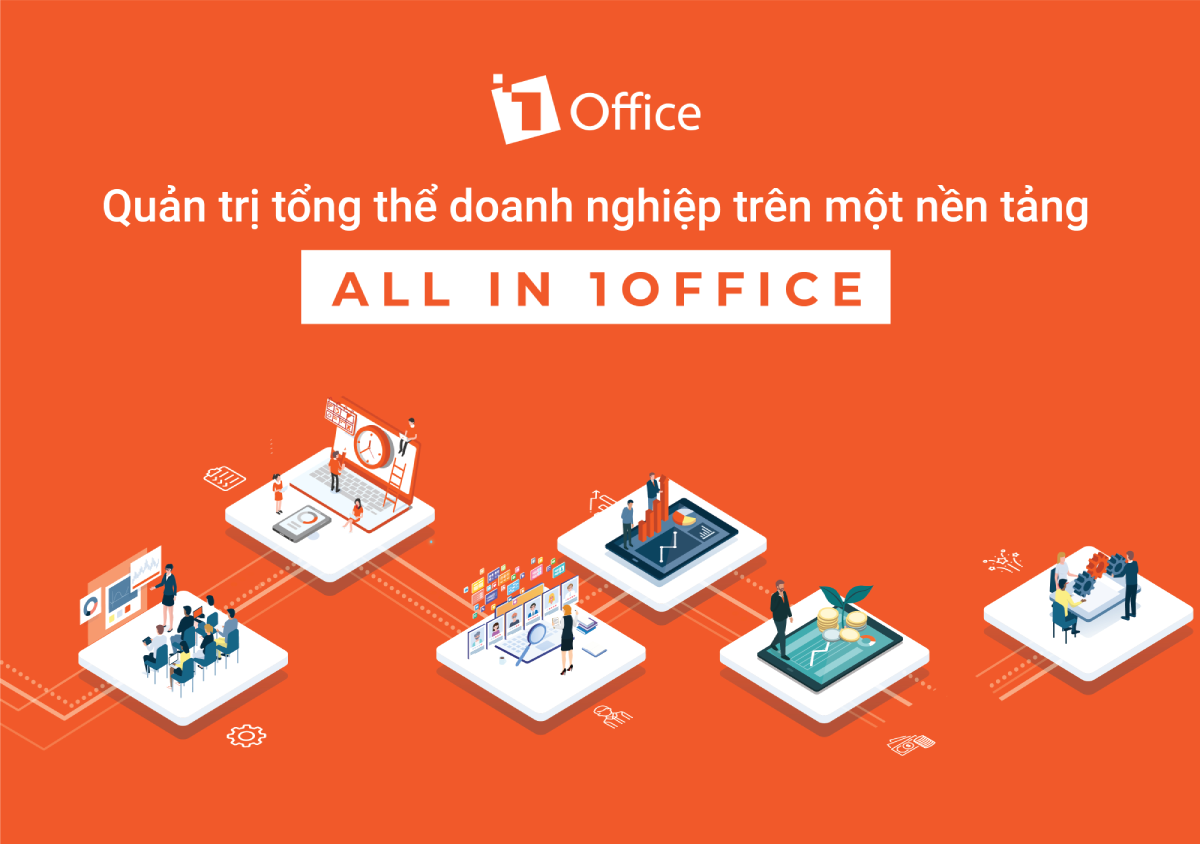
Faced with these challenges, an all-in-one enterprise management platform emerges as an optimal solution to help Industry 4.0 businesses overcome current issues. This is a comprehensive integrated system that connects all departments, processes, and data on a single platform. This not only helps businesses synchronize information but also improves decision-making based on real-time data.
Amid the challenges of the 4.0 era, the All-in-One management solution has emerged as a comprehensive choice to help businesses thoroughly resolve issues related to operations, management, and resource optimization. It is a system that integrates all management functions, connecting every department and process within the enterprise on a single platform, delivering transparency, consistency, and outstanding efficiency.
The All-in-One system allows businesses to manage all operations, from finance, human resources, logistics, and supply chain to sales, marketing, and customer care. With real-time data synchronization, leaders can easily monitor, evaluate, and make quick decisions based on accurate information. There is no longer a situation of fragmented data or wasted time searching for information across disparate systems.
6. About 1Office – Vietnam’s Leading All-in-One Enterprise Management Platform
1Office.vn is a comprehensive and effective enterprise management platform developed by 1Office Joint Stock Company. This solution is researched and developed based on scientific thinking methods, combined with modern technology, ensuring unity, coherence, and comprehensiveness.
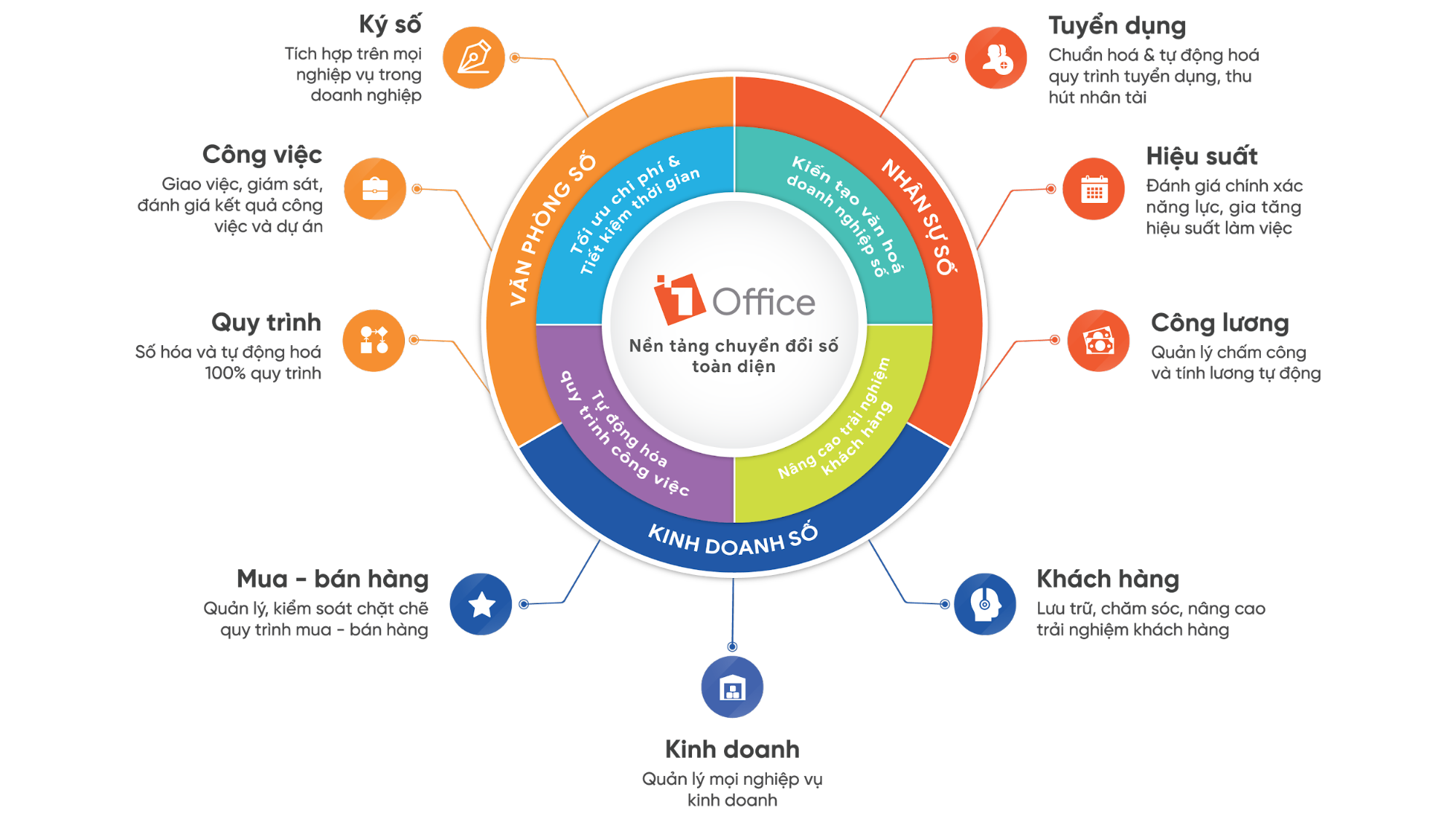
Unlike many current management applications, 1Office is not just an all-in-one enterprise management software but also provides an online working environment on the Internet. With a modern platform and a user-friendly interface, this software is easily recognized and used by Vietnamese businesses, thanks to its development by Vietnamese technology engineers who clearly understand the needs and business operations of local enterprises.
With 1Office, you not only have a project management tool, but also a perfectly integrated system. 1Office helps you save valuable time and focus on what matters most, and what sets 1Office apart is its incredible adaptability and scalability, allowing you to customize it to the specific needs of your business:
- Comprehensive management of business operations: The 1Office all-in-one enterprise management platform features over 30 functions covering almost all business operations (such as Comprehensive HR Management, Comprehensive Financial Management, Performance Management, Information Management).
- Integration and scalability: 1Office is built on a Core Platform developed in-house. This Core Platform has strict regulations on data structure, inheritance, functions, and shared UX/UI. This design allows the 1Office software to easily integrate with other software.
- Customization and automation capabilities: 1Office is flexible enough to be customized for specific cases. Users can proactively set up and flexibly create features that suit their usage needs.
- Standardization of business processes: 1Office allows businesses to set up and standardize all work processes within the enterprise with full automation, such as diverse smart alerts, a huge repository of document templates, and flexible linear or branching process models.
Register for a free 1Office Demo account!
7. Conclusion
A platform doesn’t try to do everything; instead, it creates a foundation for other specialized products to join and grow. In other words, a platform is a powerful tool that helps businesses—from suppliers to end-users of products/services—achieve a competitive advantage and succeed in the digital age. 1Office hopes that through this article, you have gained a better understanding of what a platform is, its pros and cons, and have the most accurate view of this model.
















