12/05/2026
  278 views
Human resource planning is a crucial process in human resource management that involves forecasting and meeting the company’s human resource needs. By clearly identifying the quantity, quality, and skills required for each job position, it ensures that the company has the right personnel to achieve its business goals and adapt to changes in the business environment. So, what are the steps for human resource planning? Let’s find out with 1Office!
Mục lục
- 1. Why do businesses need human resource planning?
- 3. At what stage does a business need human resource planning?
- 4. Steps for Human Resource Planning in a Business
- Step 1: Analyze Influencing Factors
- Step 2: Assess Human Resource Needs
- Step 3: Analyze the Existing Workforce in the Business
- Step 4: Formulate the Human Resource Planning Strategy
- Step 5: Make personnel allocation decisions
- Step 6: Evaluate and adjust the human resource planning process
- Step 7: Build a system to record and manage employee information
- 4. Basis for accurately analyzing the company’s existing human resources
- 5. 1Office HRM: The Market-Leading Human Resource Planning and Management Solution
1. Why do businesses need human resource planning?
The steps of human resource planning in a business include identifying personnel needs, recruiting, developing, retaining, and utilizing the right human resources. This ensures that the organization has a sufficient quantity and quality of human resources to carry out business activities effectively and achieve its goals.

- Meeting job demands: The function of human resource management is to ensure the business has personnel with sufficient skills and capabilities to carry out business activities most effectively.
- Forecasting and responding to change: By forecasting human resource needs, a business can prepare the right personnel to cope with changes such as expansion or downsizing, technological shifts, or adjustments in development strategy.
- Enhancing effectiveness and efficiency: Ensures that positions are filled by the right people with the right skills, thereby improving work quality and achieving business goals more effectively.
- Reducing risks and costs: Related to recruitment and employee retention by forecasting and preparing human resources, avoiding situations of labor shortages or hasty, ineffective hiring.
- Developing and training human resources: By assessing existing personnel and identifying skills that need improvement, the business can invest in developing and enhancing employee capabilities, while also fostering an environment for research and innovation within the organization.
| Read more: Standard Human Resource Training and Development Process for Businesses |
3. At what stage does a business need human resource planning?

Both newly established and currently operating businesses need human resource planning. For startups, planning can focus on identifying initial personnel needs, determining staffing levels, creating a recruitment plan, and building a core team. Meanwhile, established businesses can continue to implement human resource planning to meet the demands of expansion, development, and changes in business operations.
The size of the business is not the only factor that determines the need for human resource planning. Whether it’s a small, medium, or large enterprise, having a rigorous and suitable human resource plan is essential to ensure the sustainable development and success of the business.
In summary, human resource planning is a crucial process that every business should undertake, regardless of its stage or size. It plays a vital role in meeting personnel needs, enhancing work efficiency, and ensuring the sustainable development of the business.
| >> Read more: Job Analysis Skills in Human Resource Management to 3X Management Efficiency |
4. Steps for Human Resource Planning in a Business
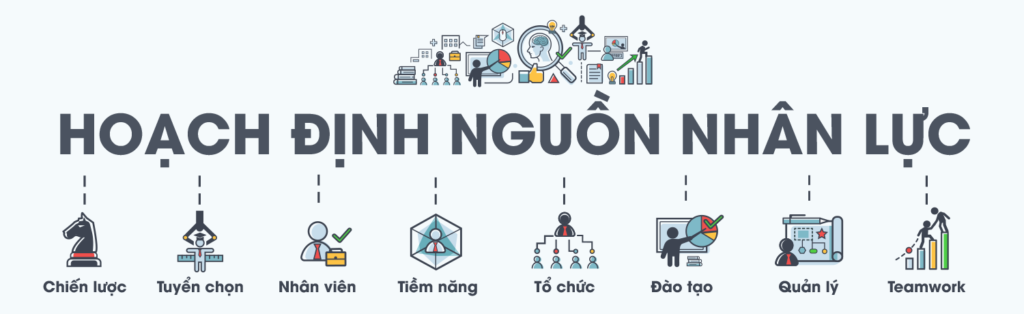
Step 1: Analyze Influencing Factors
Businesses need to assess and clearly understand the environmental and internal factors affecting their human resource management activities. Specifically, some influencing factors include business goals, development strategies, the labor market, socio-economic factors, technological trends, and the work environment.
For example: An e-commerce company is expanding its business from the domestic to the international market. This requires the company to analyze the labor markets in different countries to understand labor requirements and regulations, thereby implementing appropriate recruitment and training strategies.
Step 2: Assess Human Resource Needs
Businesses need to determine the human resource needs for each job position. This can be done by assessing workloads, forecasting future needs, and identifying the number of employees and skills required for each position.
For example, a software company is assessing its human resource needs to implement a new project. They need to determine the number and skills required for roles such as programmers, testers, and product developers to ensure the project’s success.
Step 3: Analyze the Existing Workforce in the Business
By evaluating the skills, competencies, experience, development potential, and work performance of employees, businesses can identify the available human resources and assess their employees’ ability to meet current and future job demands.

Assess the skills, competencies, and experience of employees related to their jobs. At the same time, consider past work experience and qualifications to evaluate their ability to perform tasks. For example: A company assesses the programming skills of its IT staff by testing their technical knowledge, evaluating their problem-solving abilities, and reviewing previously completed projects.
Evaluate the potential and development capabilities of employees to determine if they can grow and expand their job roles. Some aspects to consider include their learning ability, creative thinking, and adaptability to change. For example: A company identifies an employee’s development potential by assessing their ability to participate in training courses and career development programs within the company.
Evaluate work performance, periodic assessments, and feedback from managers and colleagues. For example: A company evaluates employee performance by using quarterly performance review software and holding regular meetings to assess progress and suggest improvements.
Step 4: Formulate the Human Resource Planning Strategy
This includes determining methods for recruitment, training, development, and employee retention, allowing the business to direct and manage its human resources most effectively to meet the company’s needs and goals.
- Determine methods for recruiting and attracting new employees:
This includes posting job advertisements on job websites, using social media, organizing recruitment events, or partnering with universities or training organizations. This HR strategy is a priority for many organizations in the development and market expansion phase. For example: A technology company might use specialized tech job sites like LinkedIn or industry forums to recruit software engineers.

- Determine methods for employee development and training:
This is an HR planning strategy where the organization relies on training and developing its existing staff to meet new demands. In this strategy, the business will create training and skill development programs to enhance the capabilities of current employees. For example: A retail company might organize training courses on sales skills, time management, or communication skills to develop its sales staff.
- Determine methods to maintain and retain the existing workforce:
This strategy may include creating bonus policies and programs, providing opportunities for advancement and promotion, ensuring a good working environment, and encouraging personal development. For example: A company can build a performance bonus program based on individual goals and achievements, provide promotion opportunities for outstanding employees, and create a comfortable and motivating work environment.
Step 5: Make personnel allocation decisions
The business implements specific plans to meet the company’s human resource needs. Below are some specific implementation methods:
- Recruitment plan (if there is a shortage): Determine the number and type of employees needed to meet job demands. Post job advertisements, collect candidate resumes, conduct interviews, and select suitable employees.
- Downsizing plan (if there is a surplus): Identify unnecessary or redundant positions in the company. Evaluate employee performance and capabilities to make effective and fair downsizing decisions.
- Organizational restructuring plan: Evaluate and adjust the organizational structure to meet the company’s goals and strategies. Identify the necessary departments, divisions, and job roles to optimize operational efficiency.
- Appointment and transfer plan: Identify opportunities for employee appointments and transfers within the company to utilize and develop internal talent. Evaluate employee skills, capabilities, and performance to make decisions about promotions or transfers.
Step 6: Evaluate and adjust the human resource planning process
Evaluate whether the human resource plan has met the business’s goals and requirements. Check labor performance indicators, employee suitability, employee satisfaction, and other related criteria. This evaluation can be done by collecting data, analyzing figures, and organizing meetings to discuss with relevant departments.
Based on the evaluation results, adjust and improve the human resource plan. Adjustments may include changes in recruitment plans, training and development, policies, and HR planning processes. The goal is to optimize the alignment between human resource needs and the existing workforce, while enhancing work performance and employee satisfaction.
Step 7: Build a system to record and manage employee information

This is the process of collecting, storing, and managing information related to the business’s employees.
- Collect employee information: such as name, address, phone number, email, educational background, and work experience.
- Manage employee information: Organize employee information in human resource management software
- Ensure information accuracy and security: This information may include work records, employment history, skills and certifications, training progress, and other information related to the human resource management process.
- Use employee information: To support decisions related to recruitment, training, development, and employee promotion.
4. Basis for accurately analyzing the company’s existing human resources
To accurately assess a company’s existing human resources, HR managers need to ensure the evaluation process is conducted fairly, objectively, and clearly. Managers can apply the following methods and procedures:

Assess the skills, knowledge, and capabilities of each employee in job-related areas. Interviews, tests, peer reviews, or skills assessments can be used to accurately evaluate employee abilities.
Evaluate employee work performance based on criteria such as goal achievement, work quality, contributions, and suitability for the job role. Work records, feedback from supervisors or colleagues, or performance appraisal systems can be used.
Assess the development potential and promotion prospects of each employee based on their learning ability, adaptability, dedication, and problem-solving skills.
Evaluate job suitability based on how well they meet job requirements, their skill and competency levels, and their alignment with the company’s culture and values.
Combine the use of HR management tools that help the organization effectively manage and track employee information, such as personal details, competencies, work performance, training, and development, thereby enhancing management capabilities and work orientation.
5. 1Office HRM: The Market-Leading Human Resource Planning and Management Solution
Human resource management software 1Office HRM is a software that helps optimize human resource management, enabling businesses to enhance HR management efficiency, save time and effort, and improve the human resource planning process. With 1Office, your business will get:
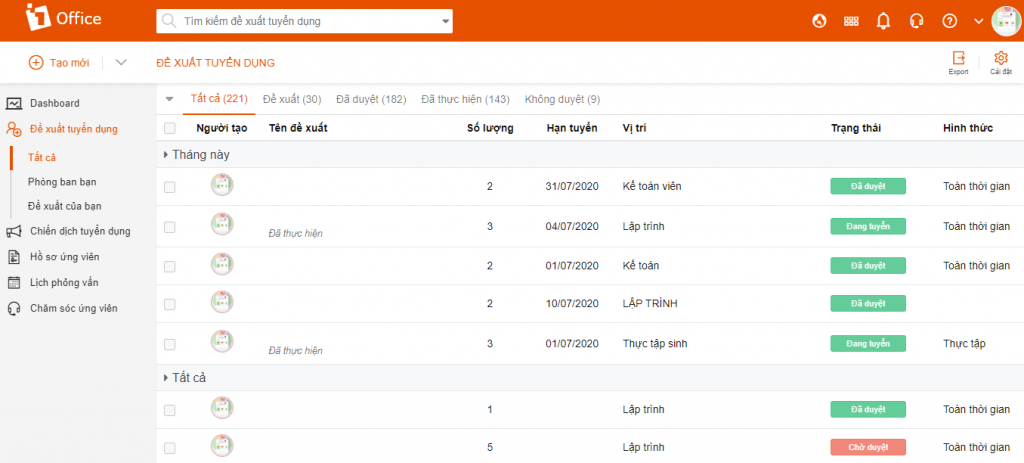
- Digitize and manage all employee records: From personal information, labor contracts, insurance details, to the work history of employees. This allows for easy information access, management, and quick searches when needed.
- Optimize the recruitment process: 1Office provides features to manage the recruitment process, from creating recruitment proposals and automatically pushing candidate CVs into the system to filtering and classifying candidate profiles. This helps reduce the time and effort spent searching for candidates while ensuring the quality of new hires.
- Visual competency assessment (ASK): Helps measure and evaluate the skills, competencies, and work performance of employees. This allows for identifying the strengths and areas for improvement for each employee and providing appropriate training and development direction.
- Track and manage personnel changes: By recording the status of employment contracts (active, terminated, or employee has resigned), businesses can easily monitor the number of current employees and track personnel changes. This makes it easy to build a human resource planning process that aligns with business objectives.
We hope this article has helped your business better understand the role, significance, and steps of human resource planning. We also hope it helps HR managers choose the most optimal and effective solution to support their human resource planning. If your business is interested in the 1Office HR management support software, please contact us immediately for 24/7 consultation:
- Hotline: 083 483 8888
- Facebook: https://www.facebook.com/1officevn/
- Youtube: https://www.youtube.com/@1office-chuyendoisodn