13/05/2026
  237 views
Along with the continuous development of society, every field within a business needs adaptive solutions to grow further. HR 4.0 has created certain changes in corporate human resources management. So, what do businesses need to do to keep up with these trends? Let’s find out in the article below!
Mục lục
- I. What is HR 4.0? The importance of adapting to the wave of HR 4.0 trends
- II. How does HR 4.0 impact business HR operations?
- III. The most prominent HR 4.0 trends in Vietnam, now and in the future
- IV. How to plan an HR strategy to avoid being left behind in the 4.0 era
- V. 1Office accompanies businesses in the process of automating HR management 4.0
I. What is HR 4.0? The importance of adapting to the wave of HR 4.0 trends
1. What is HR 4.0?
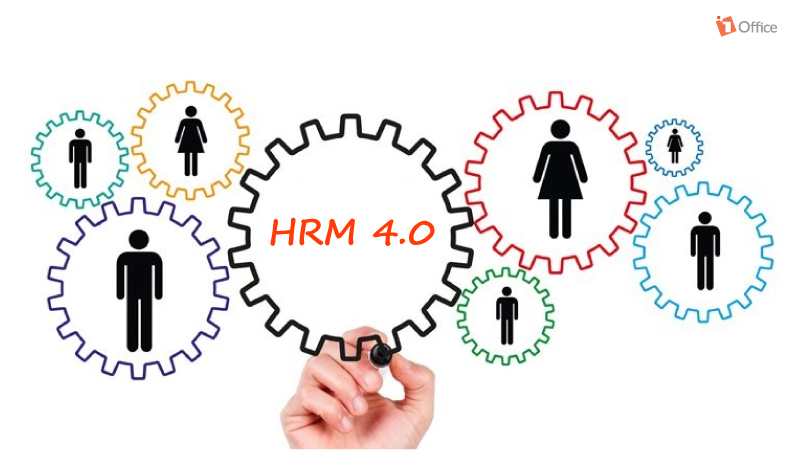
HR 4.0 is the era of applying artificial intelligence, office robots, cloud computing, and big data to human resource management.
The history of the world’s industrial revolutions is well-known for its 4 major Industrial Revolutions:
- HR 1.0: Work was processed manually with paperwork, and HR management tasks only involved hard skills such as calculations, benefits, labor safety, etc.
- HR 2.0: Electricity emerged, HR tasks were handled more neatly, and there was an initial focus on developing hard skills and personnel training.
- HR 3.0: The Internet appeared but was not widely utilized; recruitment activities remained traditional, and there was a growing emphasis on developing soft skills for personnel.
And now, as the 4.0 industrial revolution is unfolding and significantly impacting the world in every field, HR 4.0 has also developed and is the trend that all businesses are aiming for. HR 4.0 – The Internet dominates life, and large amounts of data have become a catalyst for recruitment technology.
The 4.0 recruitment mindset has changed, focusing more on managing employer branding and talent development. Technology harmonizes with the recruitment process, making it more streamlined and efficient.
2. The importance of adapting to the wave of HR 4.0 trends
In the face of the powerful transformations of the 4.0 industrial revolution, human resource management practices worldwide, including in Vietnam, have undergone major changes.
In the last decade, recruitment methods have changed significantly from the past, when candidates no longer had to fill out dozens of pages of paper applications. Now, they can apply from anywhere, at any time, through Facebook, LinkedIn, or other recruitment websites.
Furthermore, with the trend of globalization and the global pandemic, employees are gradually losing motivation for stable office jobs. Instead, they are shifting to part-time and freelance work, taking on multiple remote projects at once. Businesses that have not adopted technology face the risk of losing talent and must find ways to retain their staff.
Adapting to the HR 4.0 wave makes a company’s recruitment and personnel management easier and more streamlined. Businesses need an intelligent management platform so that everyone can easily monitor and analyze the company’s HR situation, thereby making accurate decisions.
Today, employees are accustomed to easier, more convenient, and faster technological experiences. They are also willing to leave a job if they feel unhappy or lack opportunities for development. Businesses must keep up with new technological experiences if they do not want to lose their talented people.
See more: Businesses applying 4.0 technology in their operations

II. How does HR 4.0 impact business HR operations?
New HR trends have created significant changes and impacts, making it difficult for businesses to succeed by sticking to old strategies. This pushes CEOs/senior managers to change if they want to retain talent and maintain a stable workforce. Consequently, the application of technology in HR has also been upgraded and innovated.
Recruitment and personnel management have changed in 3 main aspects:
- Automation: Replacing all manual recruitment and management steps with technology and a unified platform, allowing employees to focus their resources on other important HR tasks.
- Optimization: The HRM 4.0 human resource management platform, as part of the HR 4.0 trend, allows for the digitization of all HR data on a digital platform, enabling businesses to easily manage parameters and optimize resources. Optimization also helps businesses cut many costs related to paperwork, time, etc.
- Evaluation and Forecasting: HR 4.0 with technology acts as a forecasting radar, helping businesses be ready to scale up at any time. Businesses now have the advantage of “proactive action” instead of “waiting to react” to future workforce fluctuations.
In other words, with the HR 4.0 trend, HR specialists need to integrate HR functions more quickly, directly engaging with operational functions. HR activities need to be customer-oriented—both towards employees within the business and the company’s external customers, as customers make direct and immediate demands on the business.
| Learn more: What is an HRBP? A Detailed Job Description for HRBPs in a Business |
III. The most prominent HR 4.0 trends in Vietnam, now and in the future
The development of technology means that human resource management is no longer just about payroll, benefits, and employee training. Now, recruitment also involves building an employer brand, identifying and retaining talent, and most importantly, developing the company’s human resources.
5 latest trends in human resource management 4.0 (HR 4.0):
1. Collaboration with a multi-disciplinary workforce
Companies no longer just hire permanent employees but also collaborate with freelancers, robots, the internet, technology platforms, etc., creating a new trend for the open economy.
2. Greater focus on talent training
Businesses are placing a greater emphasis on employee training. Staff will be trained and have their knowledge honed to become better every day. Learning and working always go hand in hand.
Employee training also increases the bond between employees and the company, creating a sustainable connection.
3. Sourcing candidates through multiple tools
Sourcing candidates through various platforms, such as: Social media, job search apps, human resource management software, etc., to find the right personnel for your company.
4. Focusing on employee well-being
Corporate culture is highly valued. Engagement helps employees stay with the company longer and work more effectively. When employees see the sincerity and benefits they receive, they will commit to the company for the long term.
5. No gap between managers and employees
In the digital age, management trends are also changing. Organizations require agility, so young leaders and new leadership models are better at fulfilling their guiding roles. Eliminating the gap between managers and employees helps create a more open work environment, where individuals have the opportunity to express and develop themselves to contribute their best to the company.
Reference: What is a Human Resource Management System? Criteria for choosing an effective HRMS
IV. How to plan an HR strategy to avoid being left behind in the 4.0 era
With the development of technology, some businesses worry that recruitment and human resource management will gradually lose their place. Here are some tasks that can help a company’s HR department get accustomed to the new changes:
- Cultivate a data-driven mindset
From the data collected, businesses can understand prevailing recruitment trends. Therefore, always find ways to record data in all HR management activities, from the rawest information to measured and calculated figures.
- Leverage social media for recruitment
You need to do more in social media recruiting than just posting job ads on social platforms. A human resource management system integrated with social media helps recruiters quickly find talent, provide a more engaging candidate experience, simplify candidate evaluation, and streamline the experience between candidates and recruiters.
Learn from case studies of pioneering businesses that have applied technology to HR management tasks: recruitment, profile management, timekeeping – payroll, human resource planning, goal management, employee performance evaluation, etc.
- Continuously update on the latest HR and technology trends through events, forums, news sites, blogs, ebooks, etc., from reputable sources.
See more: HRM Software & the role and importance of HRM in business
V. 1Office accompanies businesses in the process of automating HR management 4.0
According to a McKinsey survey, 70% of businesses in the United States have been using e-forms and implementing process automation. As a result, these companies save over $120 billion in administrative and office costs annually.
In addition, in Sweden, data automation, office digitization, and the use of technology software are also being strongly implemented, resulting in the country saving nearly 700 billion SEK per year.
Leveraging these success stories, 1Office provides businesses with the HRM 4.0 human resource management tool, enabling HR management on a unified, fast, cost-effective, and efficient platform.
The HRM 1Office software is an integrated platform that manages and automates regular HR processes within a business. This platform can perform various tasks, including organizing and managing all personnel information and company data. This helps managers, the HR department, and employees easily manage and access information.
Through the article above, 1Office has provided you with useful information about HR 4.0 and the current popular trends in human resource management. We hope these insights will bring many benefits to your business’s HR management efforts.
For more details, please contact:
Hotline: 083 483 8888
1Office Fanpage: https://www.facebook.com/1officevn
YouTube Channel:https://www.youtube.com/c/1OfficeNềntảngquảnlýtổngthểDoanhNghiệp