


 11/05/2026
  120 views
A target customer persona is the foundation that helps businesses understand who they are selling to, what customers care about, and what message to approach them with. But what is a target customer persona, where do you start building one, and how can you ensure it’s not just based on guesswork? This article will help you understand 4 important steps and how to collect data more effectively.
Mục lục
- 1. What is a target customer persona?
- 2. Why do businesses need to define a target customer persona
- 3. Effective Steps to Build a Target Customer Persona
- Example of a target customer persona:
- 4. How to collect qualitative and quantitative data to build a customer persona
- 5. Applying Customer Persona Building to Business Operations
- 6. Common Mistakes to Avoid When Building a Customer Persona
1. What is a target customer persona?
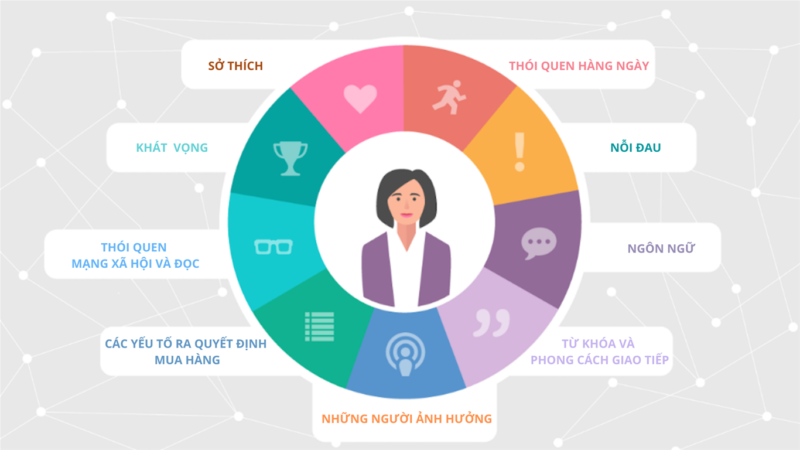
A target customer persona is understood as a detailed description of the customer group a business is targeting, which includes many demographic factors such as: (age, gender, income, location, etc.) as well as behaviors, interests, or factors that influence their decision to purchase the business’s products or services. These factors will help you easily select and choose appropriate messages and content to correctly reach your potential customer base.

- What is a target customer persona? Why do businesses need to build customer personas
2. Why do businesses need to define a target customer persona
Many businesses still wonder, “Why do we need to create customer personas?” and have not yet grasped their importance. Below are the benefits of defining your target audience that you should remember.
2.1. Understand customer psychology and needs
First, building an accurate customer persona will help the business get a comprehensive view of the audience its products and services are aimed at.
From there, the business will grasp the customers’ interests as well as their “pain points” to create a foundation for future product development, business strategies, and marketing directions.
2.2. Improve products
As mentioned above, after understanding the customers’ interests or “pain points,” the business can then make additional improvements to the basic product to better suit its target audience, or even launch new product lines.
For example: Realizing that its target customers are mainly students who are passionate about online games (specifically Liên Quân Mobile), Hong Ha Stationery launched a line of notebooks featuring characters from Liên Quân to increase the appeal to its customers.
2.3. Build effective marketing strategies
Clearly, analyzing customer personas is one of the key factors in marketing strategies that helps businesses understand the real needs of their customers. This facilitates audience segmentation, allowing the brand to direct its efforts and marketing to those who are most likely to become actual customers. Therefore, if your business bases its strategies on buyer characteristics, you will ensure campaigns with a much higher ROI.
For example: After Milo identified that its customers are not the direct users of the product but rather the parents who want their children to be healthy every day, almost all of its TVCs and communication materials have emphasized this point.
2.4. Increase conversion rates
When a business understands its target customer persona, it can easily deliver useful messages and information to them. This creates understanding and meets the customers’ needs correctly and sufficiently, making it easier for them to develop a need and purchase the business’s products or services.
| Read more: Top 12+ Most Effective OKR Software for Goal Tracking and Management |
3. Effective Steps to Build a Target Customer Persona
To build a target customer persona, follow the 4 steps below:

- Effective steps to build a target customer persona

Step 1: Collect Customer Information
To sketch out a target customer persona, you need to collect and process data accurately. You can base this on criteria such as demographics, goals, fears, motivations, and the behaviors of your priority audience. The more customer information you have, the clearer and more specific your customer persona will be.
Here are some data collection methods you can use to gather information:
Surveys and Interviews
Each customer will have a different level of interaction and awareness, so you need to devise multiple approaches to reach your potential customers. Create intelligent questions and categorize them as follows: demographics, personal data, content consumption, and challenges.
Internal Consultation
Your employees understand the product better than anyone else, so organize consultations with them to gather necessary information from customers.
Especially from sales staff, who are in regular contact with customers and hear their stories.
Use Tools
Google Trends, Google Analytics, etc., and many other tools. Based on the information these tools provide, businesses can completely map out their customer personas.
Feedback on Social Media
The 4.0 era, along with the incredible growth of social networks like Facebook, TikTok, Instagram, etc., has created a massive space for user interaction. This is also a huge source of data that businesses can leverage.
Just a small survey on Facebook or a trending video on TikTok can help a business sketch out its target customer persona.
Read more: What is a Pain Point? 5 Tips to Effectively Leverage Pain Points in Marketing
Step 2: Analyze the Data You’ve Collected
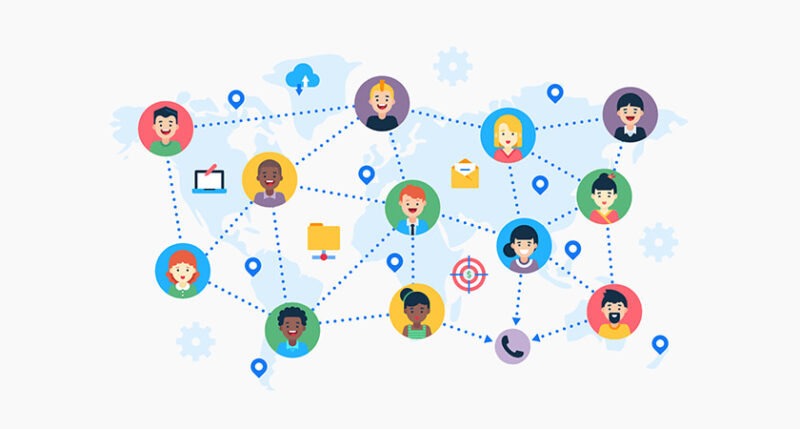
This is the step where you transform the raw data from Step 1 into meaningful information. After collecting information through various methods, there are two main types of data you need to consider. One is qualitative data collected from internal and customer interviews, and the other is quantitative data collected from insight analysis tools.

- Analyze the customer data you’ve collected
How exactly can you do that? Look for common characteristics among the interviewees, and which problems and challenges are mentioned most frequently. This will help you understand what type of content might be more suitable for them.
Some of the information collected might include:
- Age
- Gender
- Income
- Problems
- Interests
- Frequently used media channels
Learn more: What is Customer Insight? How to Identify Customer Insights Effectively and Accurately
Step 3: Build the Target Customer Persona
Once you have finished analyzing the customer data, it’s time for the most important step: creating the customer persona. Depending on the industry/business model and the product for each audience, you will create different profiles. However, a profile generally needs to include the following elements:
- Demographic information: This includes information such as age, gender, location, marital status, occupation, education level, etc. All this information will help you segment the market more easily.
- Challenges and pain points: Understanding the difficulties and pain points your customer group is facing will help you develop solutions and implement appropriate marketing strategies.
- Customer behavior description: Each customer has a unique detailed description, including their daily activities, information-seeking habits, and purchasing behavior, as well as factors influencing their buying decisions.
- Solution approach: Based on the customer’s pain points and interests, the business will highlight the advantages of its products or services that can address them.
| Pocket these essential tips for goal management: What is the SMART model? How to apply SMART goals in your business |
Once the profile is complete, save it and share it with your team so they can provide suggestions and recommend changes to build the most complete target customer persona.
As you can see, the buyer persona is an essential element in a marketing strategy. When you create your content, you will understand your customers much better, and the Marketing team will be able to create useful and relevant content. Additionally, the sales team will develop a more effective approach to quickly increase conversion rates.
Example of a target customer persona:
William, 35, is married, has a bachelor’s degree in Marketing, and has a busy job, although he tries to find a balance between work and family. He works as a Marketing Director for a company that supplies kitchen equipment to restaurants.
Pain Points
Since the company’s early days, he has been working with spreadsheets to track their customer base, which is growing rapidly.
Therefore, he realizes that the old method is no longer an effective tool, and his team members are complaining about their difficulties using spreadsheets.
For this reason, he has spoken with the CEO about the possibility of acquiring a CRM system.
However, his boss believes that spreadsheets are still an effective method for tracking sales and maintaining good customer relationships.
Communication
William frequently searches for CRM-related terms on Google, aiming to find the ideal solution for their problem.
He even asks for more information when he finds a system he likes and also wants to complete his benchmark via email.
He is on LinkedIn, where he regularly consumes content to keep up with his field, as well as on Facebook, which he uses for personal purposes. Additionally, William enjoys watching news on YouTube.

- Contact to clearly analyze the needs of the target customer

Solution
Since their business involves many transactions and communications with customers, as well as orders with special requirements, they need a CRM system with some specific features.
For example, it must be easy to use and intuitive. Besides, it must be scalable, as the company will continue to grow.
Additionally, the software must integrate with their email solution so they can automate communication with leads and customers.
Finally, it must offer segmentation features, which will facilitate the work of the Marketing and Sales departments.
4. How to collect qualitative and quantitative data to build a customer persona
To create an accurate customer persona, businesses cannot rely solely on intuition or subjective assumptions. Instead, data must be collected from multiple sources, combining qualitative and quantitative methods to both grasp the overall picture and delve into the customer’s motivations and emotions. While quantitative data helps measure scale, frequency, and behavior, qualitative data reveals “why” those behaviors occur.
4.1. Collecting quantitative data
Quantitative data consists of specific, measurable numbers that can be statistically analyzed and compared over time. It forms the basis for businesses to make evidence-based decisions rather than relying on intuition. Through quantitative data, you can understand who your customers are, where they come from, how they interact, and what their purchasing behaviors are.
Some common ways to collect quantitative data include:
-
Online/offline surveys: This is the most widely used method due to its flexibility and low cost. Businesses can use Google Forms, SurveyMonkey, or in-store survey forms. Questions should be specific and measurable, such as age, gender, income, shopping frequency, and satisfaction level on a rating scale. For example: “How many times a month do you usually shop online?” or “On a scale of 1–10, how would you rate your recent shopping experience?”.
-
Digital behavior data analysis: Websites, applications, email marketing, and social media provide a vast repository of user behavior data. Businesses can track metrics like visit counts, bounce rates, CTA clicks, and cart abandonment behavior. This data clearly reflects interest levels and barriers in the customer journey.
-
CRM & sales system data: CRM (Customer Relationship Management) and sales management software are “treasure troves” for analyzing customers based on actual transactions. For example, you can see that customer A made 3 purchases in 2 months, with an average order value of 1.5 million VND/order. From this, you can segment customers using RFM (Recency – Frequency – Monetary) analysis to prioritize high-value customers.
Thanks to quantitative data, businesses can easily measure interest levels, evaluate the target market, and identify the most promising customer segments.
4.2. Collecting qualitative data
If quantitative data tells you “what is happening,” then qualitative data answers the question “why is it happening.” This type of data focuses on emotions, motivations, and opinions, and is typically collected through direct interaction or by observing customers’ natural behavior.
Some common methods:
-
In-depth Interview: The business conducts 1:1 direct conversations with customers to explore their true thoughts and feelings. For example, a customer might say, “I like the product, but I haven’t bought it yet because the price is higher than the competitor’s.” This is information that quantitative surveys often miss. It’s important to ask open-ended questions, such as, “Can you describe your experience when you first encountered the product?”.
-
Focus Group: The business invites 6–10 representative customers to participate in a discussion about a product, service, or marketing campaign. This format helps reveal different perspectives and natural reactions as they interact. For example, in a fashion focus group, differences in online shopping trends between Gen Z and Millennials might emerge.
-
Observation: Instead of just asking, businesses can observe customers’ natural behavior. For example, by watching customers in a store, you can see which areas they stop at, how long it takes them to make a purchase decision, or on a website, which banners they click on the most. These actions can sometimes be very different from what they report in surveys.
Although qualitative data is difficult to quantify, it provides depth, helping businesses understand customer psychology and journeys in a more “human” way, rather than just as dry numbers.
4.3. Combining Qualitative and Quantitative Data
The biggest mistake many businesses make is relying on only one type of data. If you only rely on quantitative data, you will lack deep insights into motivations. Conversely, if you only rely on qualitative interviews, you are prone to bias from a small sample size.
Therefore, the most effective approach is to combine both types of data:
-
Use quantitative data to identify trends and pinpoint problems: for example, 60% of customers abandon their shopping carts before checkout.
-
Then, use qualitative data to find the cause: through interviews, you might learn that the shipping fee is too high or the checkout interface is complicated.
-
Finally, combine both types of data to adjust the product/service, for example: optimizing the checkout process or applying a free shipping policy for orders of 500,000 VND or more.
This combination will help businesses build a comprehensive target customer persona, based on both authentic data and an understanding of underlying needs. This provides a solid foundation for designing more effective marketing strategies, product development, and customer care.

5. Applying Customer Persona Building to Business Operations
How to increase the ability to find target customers is a question many people ask. Building an accurate customer persona will have a direct impact on your business operations. Below are some of the best ways to improve your sales campaigns that you can’t afford to miss.
5.1. Identify Your Potential Customers by Personality
In your first interaction with a new potential customer, immediately classify their buyer personality to see which characteristics they fit and which audience group they belong to. For each customer, this makes it easier to categorize them by specific traits and understand the actual needs of each target customer persona to achieve a faster conversion rate.
5.2. Use a CRM to Track Potential Customers
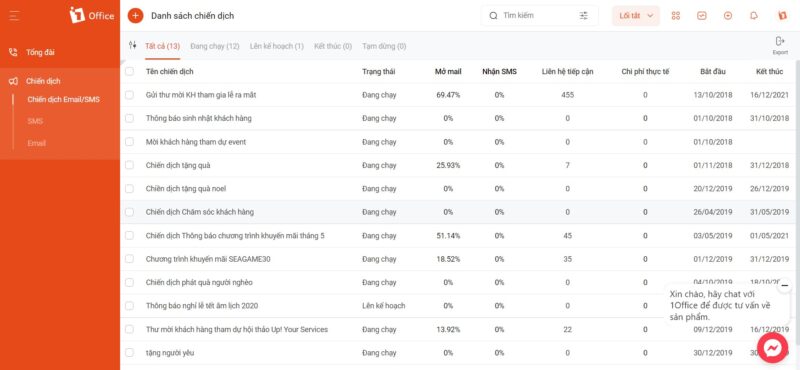
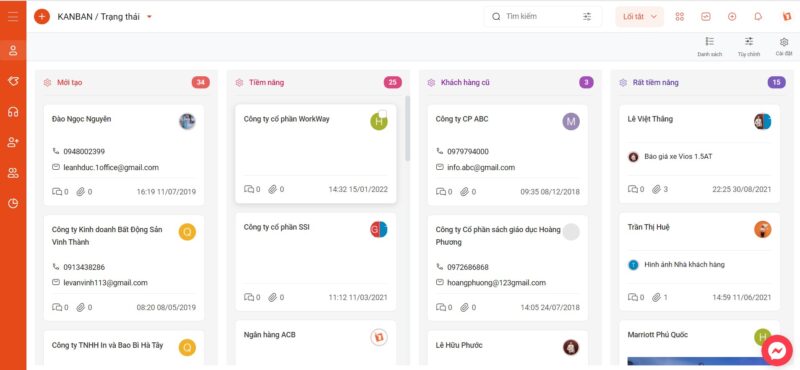
With the rapid development of technology, using customer management software is essential to maintain relationships and connect with your potential customers. The software will show you which stage your customers are in, helping all employees easily track the customer journey.

- Manage Marketing campaigns with 1Office CRM software
- Track the status of potential customers on the software
5.3. Use Different Marketing Funnels
If you can identify your potential customers by personality and closely track their journey, using different marketing channels is a valid approach. This way, you can create a summary of potential customers with similar characteristics and assign them to appropriate channels. From there, you can build a scientific, detailed customer system to produce content and develop effective marketing strategies.
Read more: What is Marketing Automation? – How to Apply It for Business Optimization?
6. Common Mistakes to Avoid When Building a Customer Persona
When building customer personas, most businesses make many mistakes during implementation and in creating a target customer funnel. Below are some common issues that your business should avoid to best achieve its strategic goals.
6.1. Using too many assumptions
To accurately identify their target customer group, businesses should not develop personas based on assumptions or guesswork, but rather through serious behavioral research and data analysis.
6.2. Overusing demographic information
Undeniably, using demographic information is crucial for building buyer personas. However, you shouldn’t focus too much on this factor. Your persona should be as close to the real conditions of potential customers as possible, highlighting their pain points, desires, needs, dreams, interests, and many other factors that demographic research cannot fully capture.
6.3. Interviewing the wrong people
When setting up interviews to collect data for your persona, it’s essential to correctly identify who will participate in this process. You need to determine who your customers are, who your company wants to sell products and services to, and how much they are willing to pay for your services. If you have answered these questions, you should focus on your existing customers. While they are crucial to this process, conducting too few customer interviews will result in a skewed and less effective buyer persona.
In the article above, 1Office has introduced you to target customer personas and how to build them in a standard and professional way. We hope that with this useful information, your business can build an effective marketing strategy to reach its potential customer groups and rapidly increase sales conversion rates. And implementing the CRM 1Office customer relationship management software is one of the best solutions to help businesses save costs, manage customers centrally, and easily optimize sales profits. For consultation, support, and to get started, please leave your phone number, and the experts at 1Office will contact you today.
















