12/05/2026
  568 views
Creating a work implementation plan is a crucial step that helps individuals and organizations manage time effectively, enhance labor productivity, and achieve set goals. In this article, we will explore the benefits of planning, review common work implementation plan templates, and learn how to build the most effective work implementation plan yourself.
Mục lục
- 1. What are the benefits of creating a work implementation plan?
- 2. Common and easy-to-use work implementation plan templates
- 3. Steps to build your own work implementation plan
- 4. Common Mistakes When Creating a Work Implementation Plan
- 5. How to Evaluate the Effectiveness of a Work Implementation Plan
- 6. 1Office – A Comprehensive Work Management Solution for Businesses in the Digital Age
- 7. Frequently Asked Questions about Work Implementation Plans (FAQs)
- 8. Conclusion
1. What are the benefits of creating a work implementation plan?
Implementation planning is a “roadmap” that helps businesses transform goals into concrete actions, ensuring all resources are used optimally, minimizing errors, and helping managers stay in control of progress in all situations.
Key values that planning brings to an organization:
- Mastering proactivity: With a clear roadmap, individuals and teams no longer fall into a reactive state of “doing whatever comes up,” thereby enhancing discipline and focus on core tasks.
- Effective resource utilization: A plan helps allocate personnel, budget, and time scientifically, avoiding waste on unnecessary tasks and ensuring all positions operate at full capacity.
- Establishing risk barriers: By forecasting potential difficulties from the outset, businesses can develop contingency plans, helping to mitigate the impact of unforeseen variables.
- Quantifiable monitoring: Every task is associated with a timeline (Deadline) and specific outcomes, making it easy to track, evaluate performance, and make timely adjustments.
- Connecting and optimizing the system: A good plan creates seamless coordination between departments, eliminates communication bottlenecks, and boosts team performance to its maximum potential.
2. Common and easy-to-use work implementation plan templates
2.1. Work implementation plan templates for individuals
Daily plan template
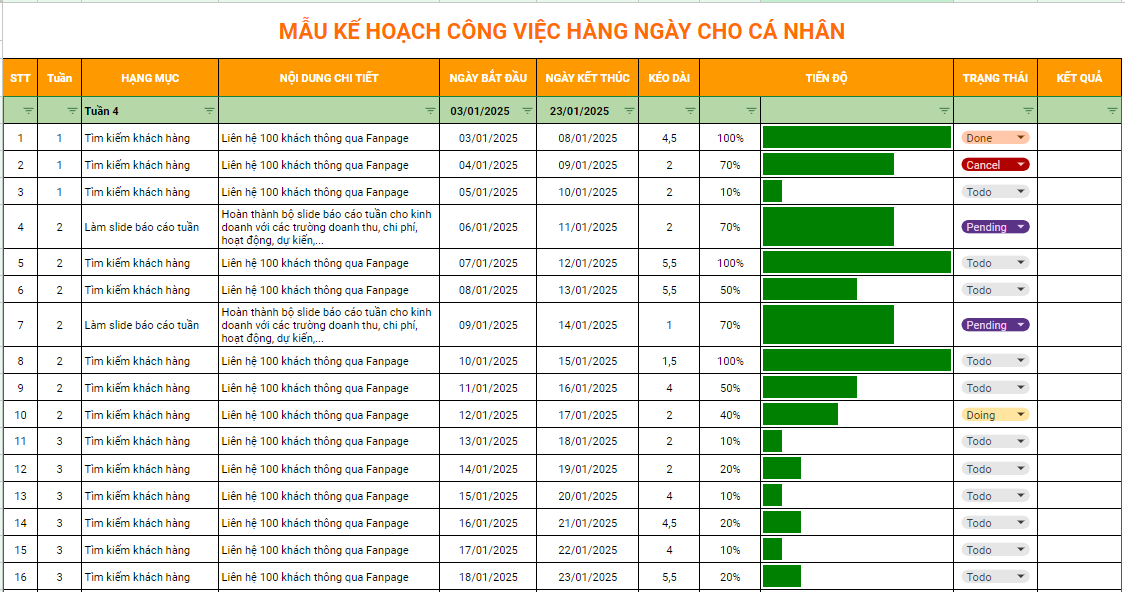
Download the free daily work implementation plan template for individuals
Weekly plan template
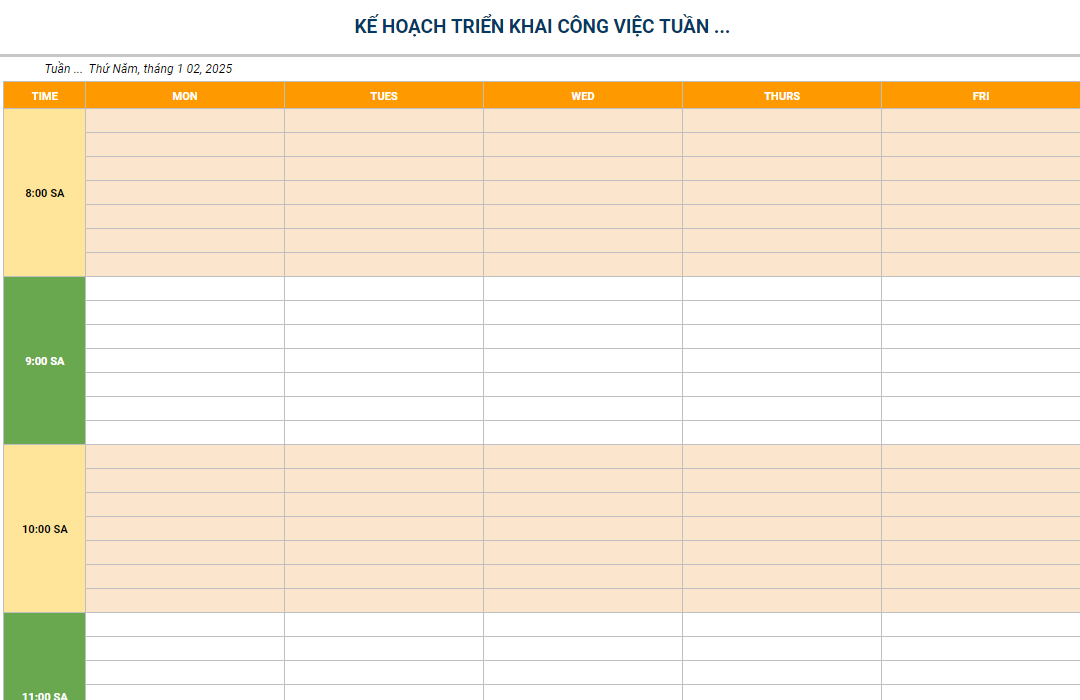
Download the free weekly work implementation plan template for individuals
2.2. Work implementation plan templates for teams
Weekly implementation plan template
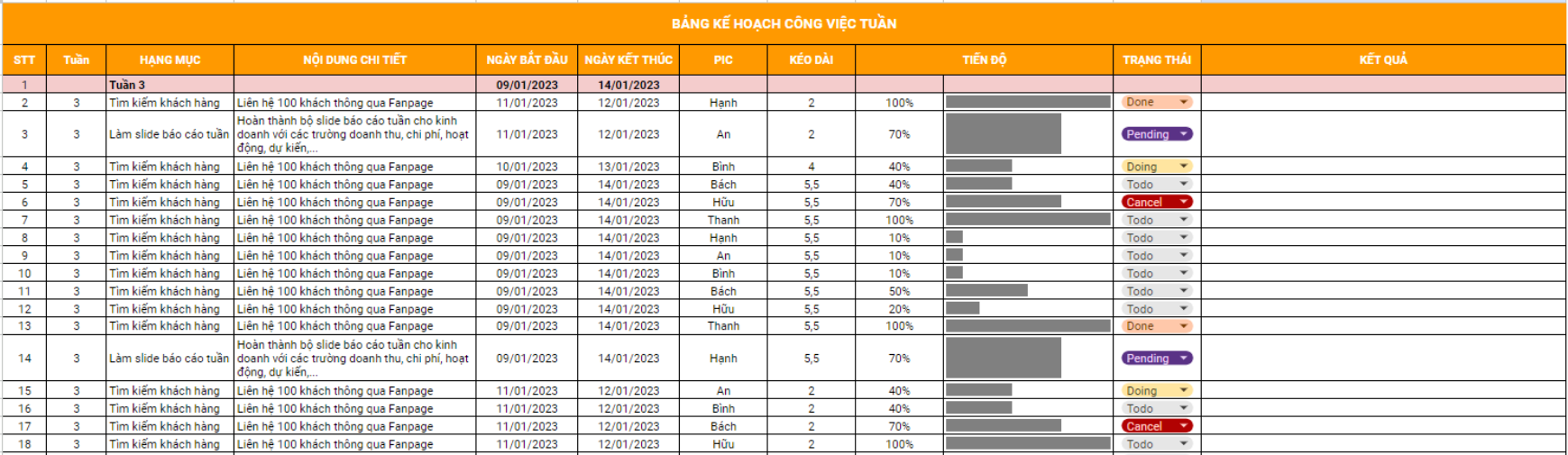
Download the free weekly work implementation plan template for teams
Monthly implementation plan template
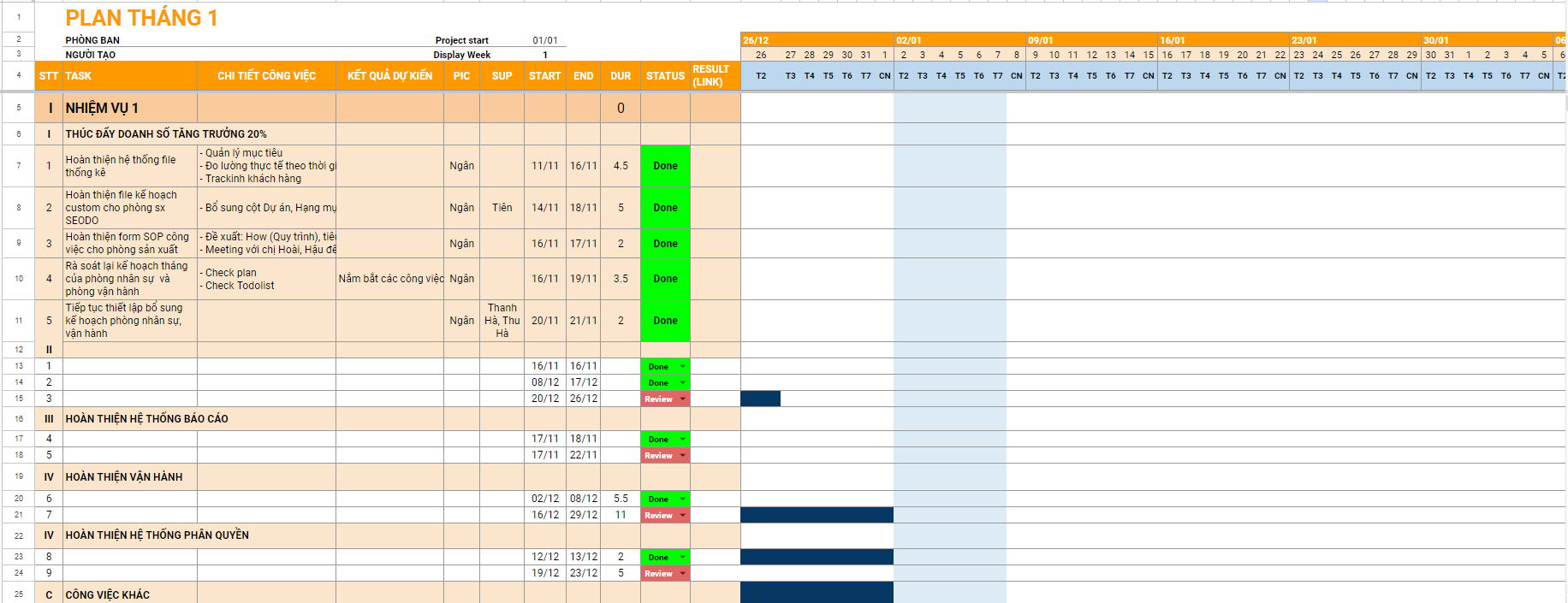
Download the free monthly work implementation plan template for teams
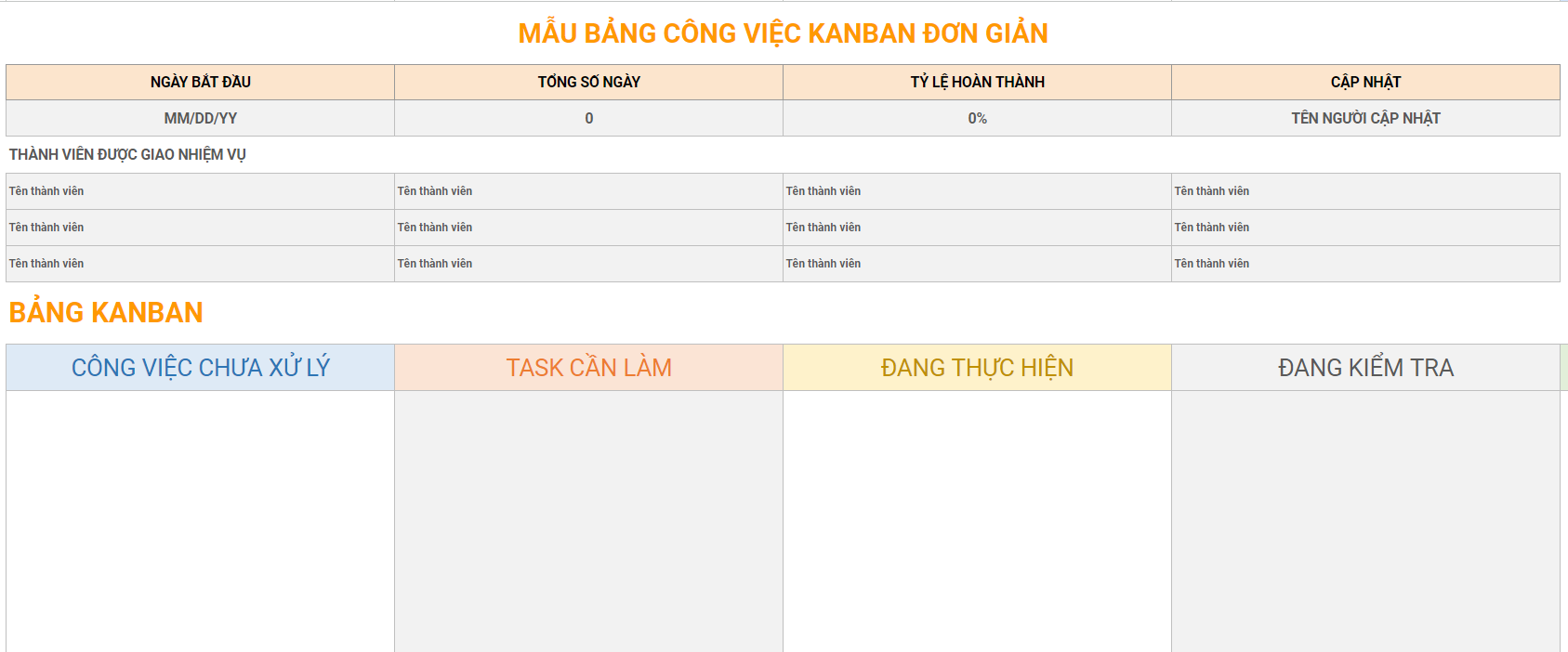
KANBAN board work plan template
3. Steps to build your own work implementation plan
Step 1: Clearly define your goals
The first step is to clearly define the goals you want to achieve. Write down specific and realistic goals; this will help you easily visualize the path you need to take.
Step 2: List the tasks to be performed
Once you have your goals, you need to list the specific tasks required to achieve them. Note that each task should have a clear deadline and execution method.
Step 3: Analyze resources and risks
Before starting to implement the plan, analyze the resources you have (personnel, finances, time) and the potential risks that may arise. This will help you be better prepared for any situation.
Step 4: Monitor and adjust the plan
Finally, throughout the plan’s implementation, you need to continuously monitor progress. If any issues are discovered, quickly adjust the plan to ensure the schedule is not delayed.
Reference:
4. Common Mistakes When Creating a Work Implementation Plan
Whether you are a newcomer or experienced, anyone can make mistakes during the work implementation planning process:
- Not defining clear objectives: One of the most serious mistakes is not defining clear objectives. If you don’t know what you’re aiming for, it will be very difficult to plan and execute work effectively.
- Unreasonable task allocation: Many people often make the mistake of assigning tasks without carefully considering the abilities and strengths of each team member. This can lead to job dissatisfaction and reduced work performance.
- Neglecting progress tracking: Another mistake is not tracking work progress. If you don’t regularly check on progress, you won’t be able to detect and correct errors in a timely manner, leading to potential failures in achieving your goals.
5. How to Evaluate the Effectiveness of a Work Implementation Plan
Evaluating the effectiveness of a work implementation plan is a crucial step to help you improve your work processes in the future. Here are some ways to do this.
Compare achieved results with set objectives
One of the simplest and most effective ways to evaluate a plan’s effectiveness is to compare the achieved results with the initial objectives. If you have met or exceeded your objectives, it proves that your plan was effective.
Gather feedback from team members
Gather feedback from team members about the plan and the implementation process. These opinions will help you identify the plan’s strengths and weaknesses, allowing you to make more suitable adjustments in the future.
Analyze the time and resources used
Finally, you should also analyze how you used time and resources during the plan’s implementation. If any waste is discovered, you need to take corrective measures for better optimization in future plans.
Use tools/solutions to support implementation effectiveness evaluation
Using support tools like work management software (1Office, Trello, Asana), performance management systems (OKR, KPI), and data analysis tools (Power BI, Tableau) helps businesses track progress, measure effectiveness, and make decisions based on accurate data.
Internal communication platforms like Microsoft Teams or Slack also support feedback collection and process improvement. Additionally, integrating AI into implementation effectiveness evaluation helps predict trends, optimize resources, and minimize risks, contributing to increased productivity and competitiveness.
6. 1Office – A Comprehensive Work Management Solution for Businesses in the Digital Age
1Office provides a superior work management solution, helping businesses optimize operational processes and enhance performance. Designed specifically for managers and business owners, the Work Management module of 1Office not only helps organize work scientifically but also provides powerful tools to evaluate and improve team performance.
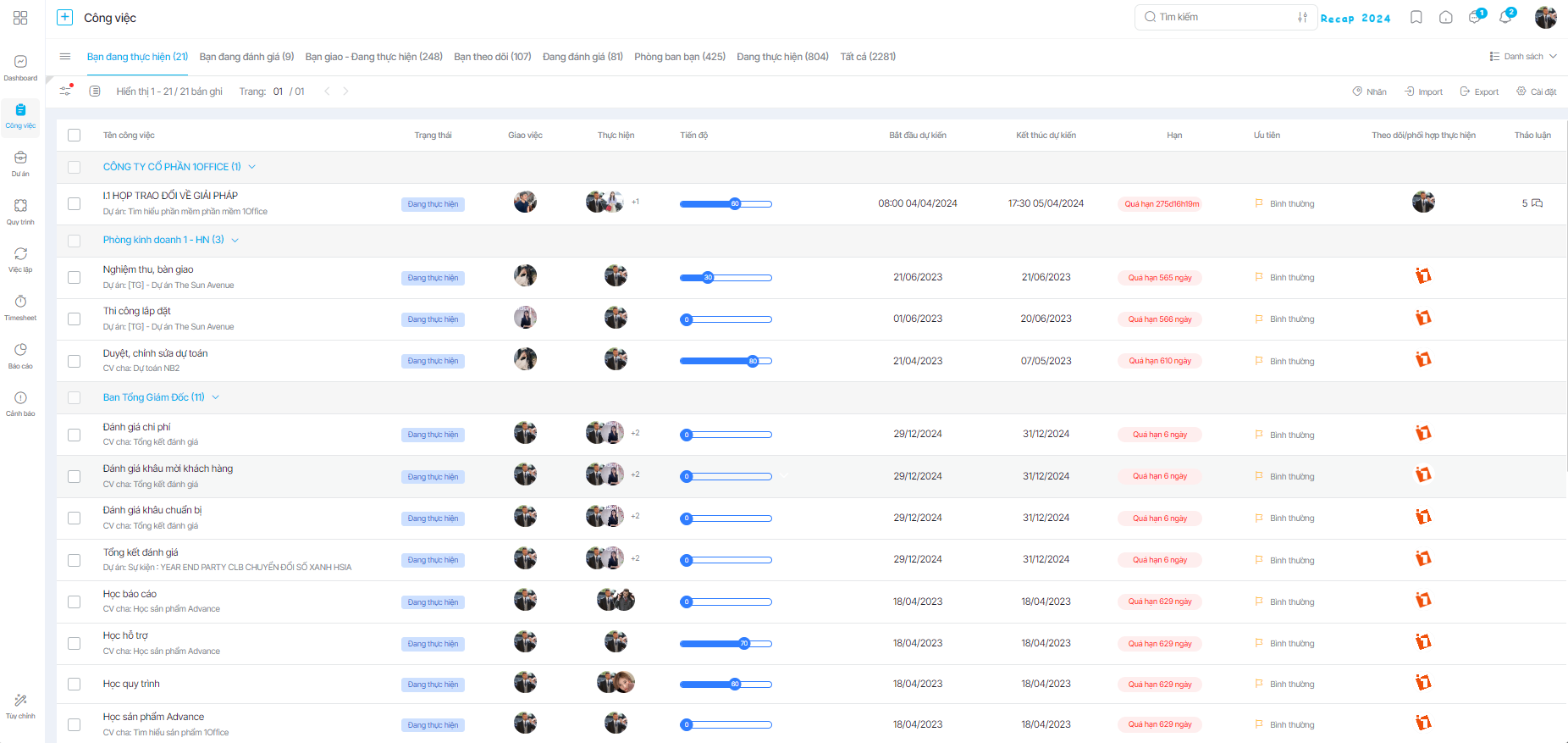
With this solution, businesses will receive:
- Smart planning and clear assignment: The tool supports detailed planning and easy task assignment to individuals or departments. All tasks are automatically synchronized to personal calendars, helping to manage work time more effectively.
- Real-time work progress tracking: Managers can easily monitor the progress and completion level of each employee’s work without manual note-taking or direct inquiries. The system displays the completion percentage and detailed status of each task, making tracking simpler and more accurate.
- Visual reports and performance evaluation: Reports are presented in the form of charts and dynamic dashboards, providing a comprehensive view of work performance. The system automatically updates reports based on actual progress, helping leaders accurately evaluate employee performance with ease.
1Office’s 1Work module not only helps businesses better control their work processes but also creates a foundation for building an effective team, contributing directly to sustainable development and long-term success.
Register for a free 1Office Demo account!
7. Frequently Asked Questions about Work Implementation Plans (FAQs)
What should you do when you have too many important tasks at once?
Categorize tasks by their level of urgency. Focus on completing tasks that are both important and urgent first, then handle the remaining tasks to avoid scattering your resources.
Should you use traditional spreadsheets or task management software for planning?
Use a coordination board (like Kanban) for teamwork or processes with multiple stages (in progress, pending approval, completed). A simple list is only suitable for individuals with simple tasks.
How can you effectively forecast and manage risks right from the planning stage?
Always set aside about 10-20% of your schedule as a buffer and list a few alternative plans for the most critical stages.
Is it necessary to update work progress daily?
Not necessarily, but it is very helpful. It helps you detect errors or bottlenecks early for timely adjustments, avoiding costly and difficult issues as the deadline approaches.
How do you evaluate whether an implementation plan is effective?
Based on the goal completion rate compared to the resources (time, personnel, money) invested. The best plan is one that achieves its goals with the most optimal cost and effort.
8. Conclusion
Creating a work implementation plan is a key factor that determines project effectiveness, helping to control time, optimize resources, and proactively manage risks. To turn your plan into real results, start applying smart work tools today. We wish you and your business efficient operations and on-time goal achievement.