


 12/05/2026
  27 views
The digital economy and the 4.0 revolution are creating a new landscape that requires businesses to take bold steps into the digital era. To do so, organizations need to focus on people as the spearhead of development to create a strong digital workforce that can drive digital transformation. So, how can HR management in the digital age be truly effective and optimize resources for businesses? The following article will provide HR professionals with a comprehensive overview of the HR industry in the digital era and suggest solutions to optimize HR management 4.0.
Mục lục
I. The Current State of HR Management in the Digital Age
1. The New Generation of Workforce Drives HR Development
The labor market in Vietnam is gradually undergoing changes in its workforce structure with the entry of young talent – typically Gen Z – a generation that is up-to-date and quick to adapt to new trends. According to a report by PWC Vietnam, Gen Z employees possess many skills suitable for developing a digital workforce, and 72% of them are also very ready for digital transformation. The youthfulness, creativity, and challenge-seeking nature of this new generation of workforce promise to be a potential factor in helping organizations build and develop a digital HR team.
However, successfully leading a digital workforce requires managers in general and HR professionals in particular to devise decisive leadership strategies, create conditions to promote an experimental mindset, always be ready to respond to any risks, and build a culture of trust by empowering and encouraging employee participation.
2. Globalization, System Networks, and Digitization Demand New Forms of Collaboration
With the rapid pace of change in the “VUCA” world (Volatility, Uncertainty, Complexity, Ambiguity), flexible methods and globalized business systems make organizing the HR system more urgent than ever. Currently, the traditional hierarchical HR operating system still prevails in many businesses. With this system, workflows are carried out in a closed-off manner, causing individuals and departments to work in silos with a lack of connection, which affects the decision-making process. Email remains the primary means of communication, although it is no longer suitable for the working trends of today’s era.
The unpredictable market fluctuations and the challenges of globalization require businesses and HR departments to build a robust HR system capable of instant communication and enabling team collaboration anytime, anywhere.
3. Investment Backlog in Advanced Training Processes
The digital era has opened up countless opportunities for accessing knowledge, leading to changes in job requirements. New demands from the market and consumer trends require employees to continuously enhance their skills and qualifications.
Therefore, HR management in the digital age needs innovation in learning and training methods. However, many businesses still use the traditional Waterfall model for training. This is a linear development process where each stage must be completed in strict order. The limitation of this approach is its lack of flexibility; when a problem arises, the process must start over from the beginning.
Additionally, traditional classroom-style training (with an instructor) is still very common, but it is no longer suitable for the current context. Training is now not only the employer’s responsibility; employees also need to be proactive in enhancing their own knowledge. Therefore, businesses need to invest more in their human resources so they can quickly adapt to digital transformation.
4. Manual and Outdated HR Department Management
Today, the HR department, especially the Administration division, still maintains manual work processes using paper and Excel. The workflow of the HR management department is often stagnant and backlogged, mainly due to a lack of technical and technological equipment, forcing daily tasks to be performed manually. A typical example is the leave request form, which is still circulated as a paper document requiring a direct manager’s signature before being forwarded to the HR administration department. This does not fully reflect the strategic importance of HR management within the business.
A survey on the speed of HR department digitization in businesses showed that 82% of respondents said their departments still work with paper or Excel. Many businesses have not yet adopted management software, even though it helps automate HR processes and reduce the workload for departments. To continue developing as a strategic partner to the company and keep up with the 4.0 wave, the HR department must digitize its workflows.
>> See more: HR management solutions in manufacturing – increase labor productivity by 200%
II. HR Management in the 4.0 Era: 4 Most Popular Trends
1. Data-Driven HR Management
HR data is the most valuable asset for any business. In the digital context, how this resource is utilized will determine a company’s competitive edge and survival in the market. Therefore, the most prevalent trend that many 4.0 managers are focusing on is the digitalization of HR data and the automation of management processes.
Digitized employee records throughout the employee lifecycle allow for the automation of many administrative tasks that were previously handled manually. Through an automated system, employees can proactively and transparently access HR processes, such as timekeeping, leave requests, or travel expenses. This helps the HR department focus on more critical aspects of recruitment strategy, personnel development, and organizational structure. As a result, the HR department can be more closely aligned with the company’s business situation.

2. Optimizing the Recruitment Process with Digital Platforms and Artificial Intelligence
To win the race for talent and build a strong digital workforce, building an employer brand (Employee Branding) is a strategy that businesses are heavily investing in through digital recruitment advertising. Recruiters approach candidates by crafting stories around their brand, leveraging reviews from current employees to spread the corporate culture across various social media channels and job boards.
Furthermore, in the recruitment market, a rapid response time is a crucial factor in attracting top talent. To optimize the recruitment process, ‘headhunters’ have started using online interviews, building recruitment information databases by linking data from various hiring channels, and conducting visual assessments by applying AI to automatically extract data from submitted candidate profiles. It can be said that digital technology and artificial intelligence are major advancements that help ‘elevate’ a company’s recruitment efforts.
3. Modern Communication Platforms Enabling Remote Collaboration and Business Globalization
Teamwork processes are becoming smoother and more efficient thanks to the support of network systems and new technology platforms. Flexibility in time and location is also gradually changing the traditional way of working in every business. Outdated email systems are being replaced by modern communication platforms like Slack, Confluence, Jira, or Microsoft Teams, enabling online teamwork across departments, companies, and countries. These platforms are supported and supplemented by AI systems and robotic tools.
Teamwork requires capable employees who can work flexibly with all team members. The performance of individuals and teams is continuously measured based on KPIs; annual reviews also need to be conducted. The performance measurement system is linked to feedback and survey systems. Businesses need to realize that only by accurately assessing employee capabilities and planning suitable career paths can they retain employees long-term.

4. The Pursuit of Knowledge is a Long-Term Development Goal for Personnel
The HR department can now focus more on advancing employee development, and the training culture within businesses has also undergone significant changes.
Instead of traditional in-person teaching, personalized learning methods have emerged, such as online learning platforms, microlearning formats, gamified applications, podcasts, or short videos that can be watched anytime. This way, companies create opportunities for specialized staff to take ownership of their continuous learning and training process.
Read more: The Most Professional Process for Designing and Building HR Management Software for Businesses
III. Solutions to Enhance HR Management Efficiency in the Digital Age for HR Professionals
1. Turning Digital HR Management into a Strategic Competitive Advantage
A digital workforce contributes significantly to creating value and a strong position for a business in the digital economy. Turning HR management into a strategic competitive advantage requires businesses to promote the digitalization of their human resources.
Digitalization and digital transformation in human resource management must align with the organization’s overall goals. This requires long-term solutions based on consensus between management and staff, starting with the digitalization of employee records, policies, procedures, and the automation of management processes.
It should be noted that HR management in the digital age is not just about equipping employees with the latest software and tools or digitizing operational processes. Instead, HR management in the digital age must start with a change in mindset within each individual. The change to adapt to the times, the talented labor market, and competition will create a more effective and productive work environment for the business.
2. Equip with digital knowledge and skills
To optimize the effectiveness of human resource management in the digital age, managers must first be pioneers, leading the way to guide the digital workforce. To do this, the management team needs to be equipped with digital skills, digital capabilities, and a digital mindset to become a solid framework in the digital transformation of HR management.
Some necessary digital knowledge and skills include:
- Understanding and continuously updating on global HR 4.0 trends
- Skills in planning HR management strategies for the digital age
- Ability to use digital software and tools for HR management
- Data-driven mindset
3. Innovation and agility in human resource management
Innovation is a core process of human resource management in the digital age. Therefore, managers need to implement methods that emphasize agility. A specific example is applying Design Thinking to identify user needs (employees, managers, etc.) to best meet those needs. This is a problem-solving approach based on visual thinking to make solutions tangible.
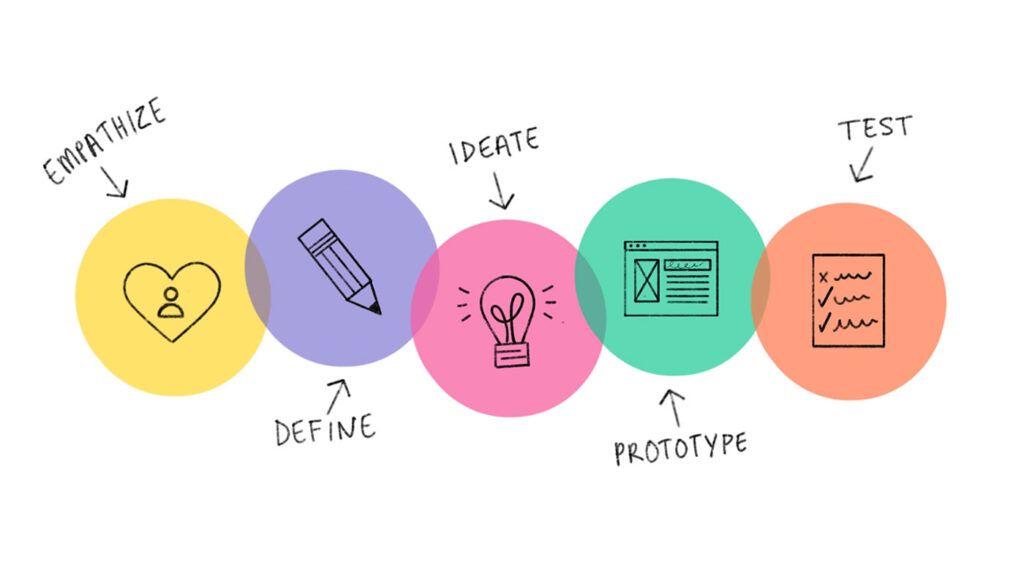
To apply design thinking to HR management, the following steps are required:
(1) Empathize
Start the design thinking process by looking at problems from the employees’ perspective and empathizing with them. This way, managers can clearly understand what employees need and want at work, which serves as a basis for enhancing the employee work experience. Some suggested questions HR can use during this stage are:
- Do my employees feel heard?
- Are employees empowered and involved in important decisions?
- What memorable work experiences do they have?
(2) Define
After gathering a large amount of information about employee needs, HR professionals will need to analyze the data to identify the core problems of the workforce.
(3) Ideate
Ideate is the process of finding solutions to the problems identified in step 2. The ideation process requires breakthrough thinking and creativity from HR professionals. Don’t limit yourself or your imagination; the most optimal solution can come from the “craziest” idea.
(4) Prototype
Test the ideas on a small scale. You can implement the solution for a department, division, or a group.
(5) Test
Carefully observe and evaluate the results obtained during the testing process to measure the feasibility and effectiveness of the solutions.
4. Build a digital environment to enhance the work experience
To nurture and develop a sustainable digital workforce, creating a suitable environment and enhancing the digital work experience for employees is a top priority.
A digital work environment needs to be built on the foundation of the company’s deep-rooted culture, with the support of digital data. By collecting and leveraging HR data through digital tools, businesses can develop practical, relevant management strategies that closely align with employee needs, thereby creating a healthy work environment and optimizing the work experience throughout the employee lifecycle.
5. Apply digital tools in human resource management
The success of digitization and digital transformation is the key to the survival and development of any business. This is especially true for the HR field, which has not been widely digitized. In this context, applying HR management software is the core key to successfully operating an HR management system in the digital age.
The outstanding advantage of digital technology solutions in human resource management is the ability to standardize and automate HR management processes, saving a significant amount of time and effort for the HR department.
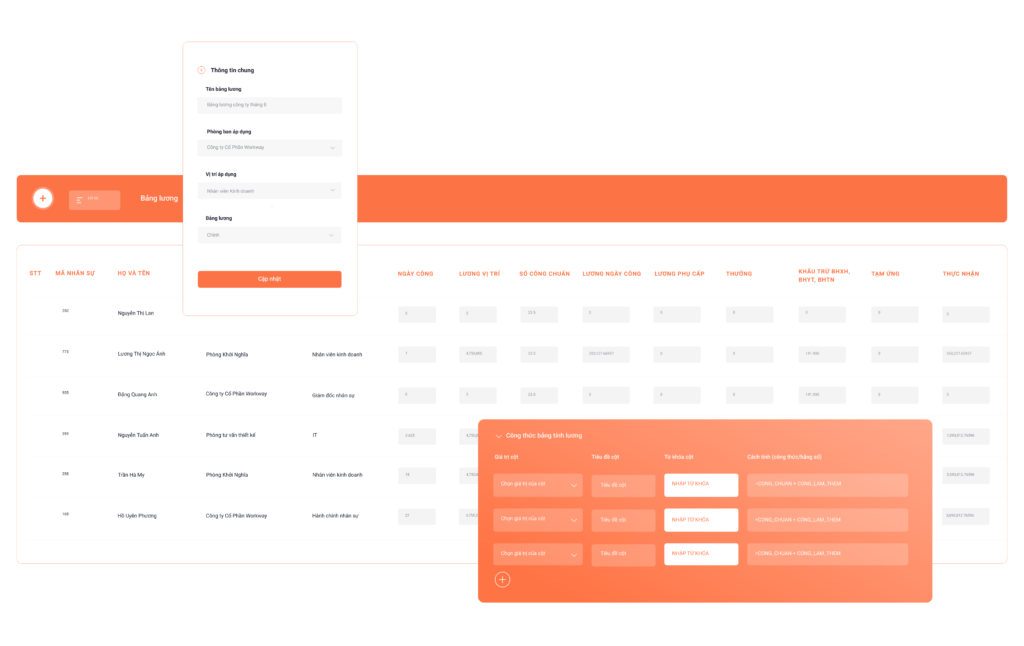
For example, with the employee payroll process, instead of having to compile data from multiple sources to create a payroll sheet in the traditional way, with HR management software, the data needed for payroll calculation such as workdays, KPIs, and salary coefficients for each employee will be automatically updated and calculated to generate an accurate and quick payroll. Thus, thanks to the “intervention” of digital technology, a payroll process that used to take 2-3 days is shortened to just a few hours.
IV. 1Office HRM – The optimal solution for HR management in the digital age
1Office – The comprehensive management solution with its intelligent HRM system is the “golden key” to help businesses optimize human resource management in the digital age. With specialized features, powerful tools, and a rich resource library, 1Office HRM is a powerful assistant that helps businesses optimize management efficiency, thereby creating a competitive advantage in the market:
- Evaluate employee performance transparently and fairly through a set of KPIs and OKRs built to match the company’s standards
- Generate payroll automatically and quickly, and pay salaries directly on the software linked with MB Bank
- Build corporate culture with an internal network – a bridge between employees and managers
In the article above, 1Office has provided readers with an overview of human resource management in the digital age, while also introducing an effective HR management solution to help businesses optimize their resources. For a consultation and a trial of the market-leading HR management software, please contact us using the information below:
- Hotline: 083 483 8888
- Fanpage 1Office: https://www.facebook.com/1officevn
- Youtube Channel: https://www.youtube.com/c/1OfficeNềntảngquảnlýtổngthểDoanhNghiệp
















