11/05/2026
  646 views
Decision-making is a core part of business management, but not every decision should be based on intuition. If you want to understand what a management decision-making model is, what the common models are, and how to apply them effectively in your business, this article will help you grasp everything from the overview to practical implementation.
Mục lục
- I. What is a management decision-making model?
- II. The management decision-making process in a business
- Step 1: Identify the need for a decision
- Step 2: Prepare the basis for the decision
- Step 3: Anticipate decision alternatives and make a selection
- Step 4: Make the official decision
- Step 5: The decision must be communicated to the implementer or implementing organization
- Step 6: Monitor implementation and adjust the decision
- III. The 5 Most Effective Management Decision-Making Models for Businesses
- IV. What Skills Are Needed for Effective Decision-Making?
- V. How Do Individual and Group Decision-Making Models Differ?
- VI. Frequently Asked Questions
- VII. Conclusion
I. What is a management decision-making model?
A management decision-making model is a model that describes the systematic process of making decisions in a company’s management activities. The model outlines the sequence of steps to take when preparing to make a formal decision.
Building a decision-making model is essential for businesses, especially for important decisions. These models play a crucial role in ensuring that decisions are as accurate and effective as possible.
>> See more: 3 Modern 4.0 Management Models and Key Management Trends Leaders Need to Know
II. The management decision-making process in a business
Typically, the management decision-making process in a business is carried out in the following steps:
Step 1: Identify the need for a decision
Identifying the need for a decision is the process of clarifying the problem and the necessity of making a decision. All decisions are based on the company’s strategic goals and direction. Therefore, every decision made will impact the company’s operational efficiency. Identifying the need for a decision helps to clearly define objectives, understand the problem, and specify the requirements to achieve the desired outcome.

The need for a decision is influenced by many factors, such as:
- Business environment: economic, political, social, cultural, technological, and legal situations, etc.
- Customers and market: shopping habits, market trends, consumer needs, etc.
- Resources: human resources, financial resources, physical resources, intangible assets.
- Organizational strategy: goals, values, culture, and organizational structure, etc.
- Technology: Technological trends, the development of new technologies, etc.
For example: Company ABC uses a manual timekeeping method, which costs them time and effort to track and evaluate employee working hours, especially for calculating salaries and bonuses. In the near future, Company ABC will double its number of employees (to over 100). Therefore, the company wants to find and use automated timekeeping software to optimize human resource management, saving time and effort.
Step 2: Prepare the basis for the decision
The business needs to prepare the basis for the decision to ensure its logic, objectivity, and accuracy. This process involves gathering information, data, events, and other relevant factors to be used for evaluation, analysis, and support of the decision-making process.
Depending on the need for a decision identified in step 1, you will proceed to prepare the basis. For example:
- Analyze the SWOT matrix (Strengths, Weaknesses, Opportunities, Threats) to assess the company’s strengths, weaknesses, opportunities, and challenges. This helps identify issues and opportunities that require a decision.
- Collect customer feedback on product/service quality or any information related to the shopping experience of customers who have used the company’s products/services. Based on the collected information, the business can analyze and identify strengths and weaknesses to make appropriate adjustments.
A SWOT analysis as the basis for the decision to use automated timekeeping software at the company is as follows:
| Strengths | Weaknesses | Opportunities | Threats |
| – Saves time and effort
– Increases accuracy and reliability – Easy to manage timekeeping data – Integrated with additional features to support human resource management |
– High initial investment cost
– Time-consuming software training – Dependent on software, lacks proactivity |
– Optimizes management processes
– Enhances HR data management policies – Creates business opportunities |
– Security of timekeeping data
– Habit of using traditional timekeeping methods |
Step 3: Anticipate decision alternatives and make a selection
Before making an official decision, you need to have multiple decision options to choose from. This is to ensure your final decision is the most accurate, comprehensive, and effective.

The decision selection process should proceed in the following order:
- Create decision alternatives
- Evaluate decision alternatives
- Select a decision
For example: Company ABC needs to improve the sales skills of its sales staff in July. Company ABC’s decision selection process was as follows:
- Create decision alternatives: 1. Organize internal training courses, 2. Hire an external training company, 3. Participate in online courses.
- Evaluate decision alternatives: Company ABC evaluates each alternative based on factors such as cost, time, effectiveness, and the company’s training objectives.
- Select a decision: Based on the evaluation, Company ABC may decide to organize internal training courses to minimize costs, have flexible training times, allow members to share knowledge easily, achieve immediate results, and meet its specific needs.
Step 4: Make the official decision
Once a decision has been selected, prepare the relevant information to present to management levels and authorized individuals for approval. This includes the decision proposal and the evaluation criteria used to make the decision.
This is a crucial step to establish a specific course of action and the final decision on the issue to be resolved. Because decisions are only valid when approved and confirmed by an authorized individual or organization.
Step 5: The decision must be communicated to the implementer or implementing organization
Issued decisions need to be fully announced and communicated to the relevant individuals/departments. This activity ensures that everyone understands and correctly implements the decision.
The communication process must ensure the following:
- Communicate information fully and clearly.
- Communicate to the right people, at the right time, and through the right method.
- The recipient clearly understands the decision and their own responsibilities.
- Answer any questions. (If necessary)
>> See more: Customer Relationship Management System Structure – Experience in Choosing an Effective CRMS
Step 6: Monitor implementation and adjust the decision
Finally, the responsible individual/department will proceed with implementation according to the established decision. During the implementation process, the management department needs to continuously monitor and evaluate work performance. To measure and evaluate effectiveness most accurately, the business also needs to establish evaluation criteria such as time, efficiency, progress, feasibility, etc.
Based on feedback and actual results, the business can devise appropriate strategies to achieve the best effectiveness. In some necessary cases, decisions can be adjusted to yield the expected results.
III. The 5 Most Effective Management Decision-Making Models for Businesses
Analysis table of the pros and cons of decision-making models in business.
| Model Type | Advantages | Disadvantages | When to Use |
| Rational Decision-Making Model | – High reliability
– Highly logical – Not constrained by cost and time |
– Slow decision-making time
– Difficulty in verifying information |
– Complex situations that require a high degree of logic and accuracy. |
| Bounded Rationality Decision-Making Model | – Fast decision-making time
– Focuses on the main problem |
– High risk
– Limited scope for searching for goals and methods – Highly reflects personal biases – Lacks comprehensiveness |
– Situations with constraints or limitations on time, resources, or information. |
| Power-Based Administrative Decision-Making Model | – Good at resolving emerging issues
– Centralizes power – High accountability |
– Disagreement in choosing goals
– Lacks diverse perspectives – Risk of power abuse |
– Situations that require quick decisions, centralized power, and decisions from an individual or a small group. |
| Intuitive Decision-Making Model | – Quick
– Time-efficient |
– High risk
– Requires the decision-maker to have extensive experience and knowledge |
– Emergency situations |
| Creative Decision-Making Model | – Generates many new solutions
– Increases flexibility and adaptability |
– High risk
– Not suitable for all situations – Requires a high level of commitment and resources |
– Situations that require creative thinking, innovation, and the exploration of new solutions. |
Here are the 5 most accurate, fast, and effective management decision-making models for businesses:

1. The Rational Decision-Making Model
The rational decision-making model is a systematic approach based on logical assumptions to make logical and reliable decisions. It involves gathering information, analyzing the situation, evaluating options, and selecting the best decision based on predefined criteria and objectives. This model helps ensure that decisions are made on a clear and rational basis, minimizing risks and increasing the likelihood of achieving good results in management and business.
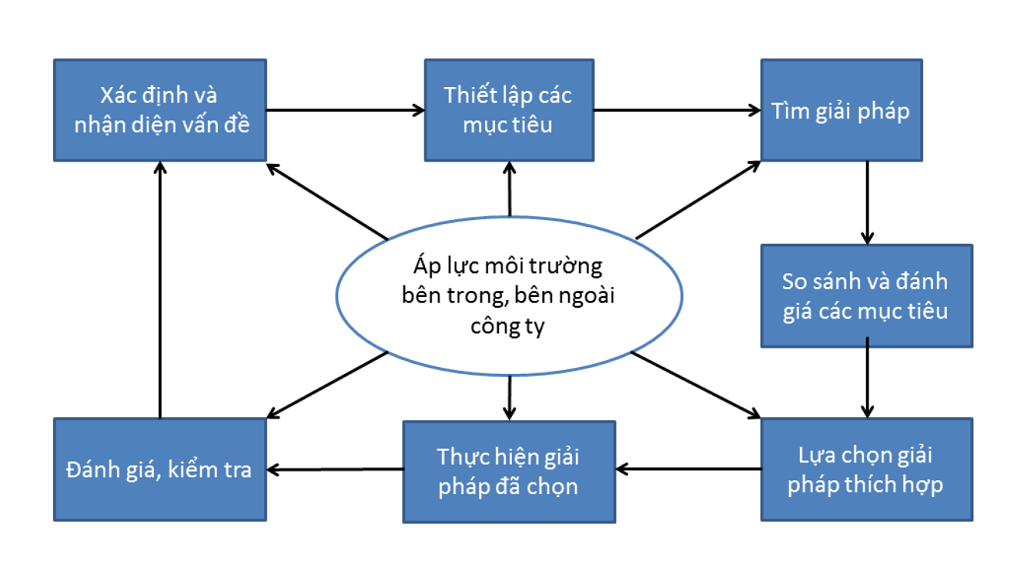
The rational decision-making model follows this process:
- Identify and define the problem
- Establish objectives
- Find solutions
- Compare and evaluate the solutions
- Select the appropriate solution
- Implement the chosen solution
- Evaluate and review
The activities in this process are influenced by pressure from the company’s internal and external environments.
2. The Bounded Rationality Model
The bounded rationality model is built on data within a specific scope to simplify the information source and avoid “data overload.” The decision-maker will focus only on key information sources, along with their cognitive ability and awareness of the issue. The steps are as follows:
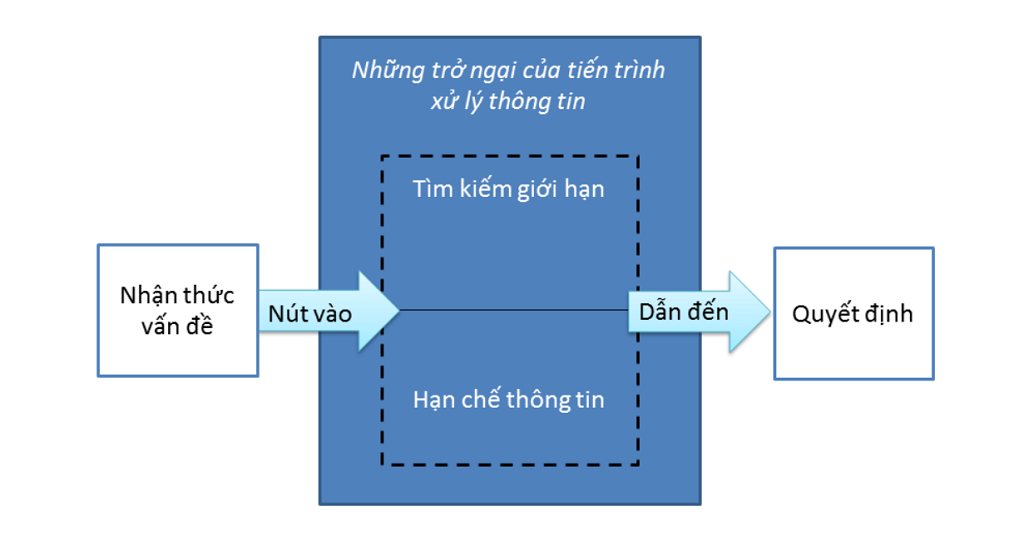
- Problem awareness: Clearly understand the objectives and key factors related to the problem.
- Address information processing obstacles: The decision-maker must identify and eliminate obstacles related to search limitations and information constraints to obtain rational information that supports the decision-making process.
- Make the decision.
3. The Power-Based Management Decision-Making Model
The power-based management decision-making model is built heavily on the power and relationships among stakeholders, which affect the implementation of decisions and the company’s overall objectives. The decision-makers in this model must be individuals with authority who can resolve any issues that arise.
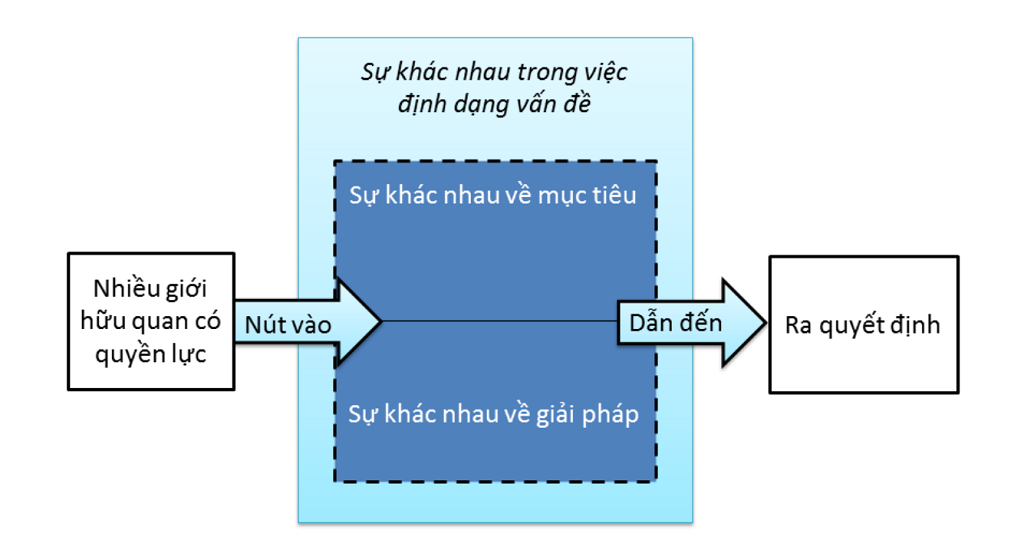
The power-based management decision-making model involves the following factors:
- Powerful stakeholders: These are individuals or organizations with responsibility and authority within the business.
- Differences in problem formulation: Differences in objectives and differences in solutions.
- Make the decision.
4. The Intuitive Decision-Making Model
The intuitive decision-making model represents a process where decisions are made based on the decision-maker’s intuition and instincts. Decisions can be made instantly without the time consumption required by other decision-making models.
To apply the intuitive decision model effectively, the decision-maker must have many years of experience or expertise related to making decisions. This is because the intuitive decision-making process relies entirely on judgment and experience.
>> Read more: Professional – Automated Human Resource Management System
5. Creative Decision-Making Model
The creative decision-making model is a method or process used to generate new, groundbreaking, and unique solutions during the decision-making process. The main characteristic of this model is the exploration, development, and application of creative ideas to solve complex problems and achieve goals.

When applying this model, the decision-maker must have a flexible mindset to make unique decisions. The simple steps to use the creative decision-making model are as follows:
- Define the objective.
- Search for and research knowledge, then use analytical and judgment skills to process the information.
- Decisions/ideas will emerge naturally during the research process.
- Evaluate the feasibility of the decisions and select the final one.
IV. What Skills Are Needed for Effective Decision-Making?
To ensure that every management decision in a business is not only accurate but also brings practical value, leaders and managers need to equip themselves with the following set of important skills:
1. Data Analysis and Processing Skills
- Significance: Data-driven decisions help minimize risks and avoid subjectivity.
- Application: Use financial reports, market data, and internal KPIs to identify the optimal solution.
- Example: A retail business relies on seasonal sales data analysis to decide to increase inventory before the Tet holiday.
2. Forecasting and Risk Assessment Skills
- Significance: Helps leaders look ahead and anticipate potential worst-case scenarios.
- Application: Create multiple decision options, accompanied by contingency plans (Plan B, Plan C).
- Example: A logistics company forecasts fluctuations in fuel prices to adjust transportation contracts in a timely manner.
3. Critical Thinking Skills
- Significance: Questioning assumptions and not hastily believing initial premises.
- Application: Objectively evaluate the pros and cons of each option.
- Example: Before investing in a new branch, a leader must critically ask: “What if the market is saturated?”.
4. Communication and Persuasion Skills
- Significance: A decision is only effective when it is clearly communicated and has the team’s consensus.
- Application: Present logically, using data and specific benefits to persuade subordinates, shareholders, and partners.
- Example: A CEO needs persuasion skills to get the entire team to agree to transition from a traditional to an online business model.
5. Leadership and Quick Decision-Making Skills
- Significance: In a VUCA (Volatility – Uncertainty – Complexity – Ambiguity) environment, speed is a competitive advantage.
- Application: Knowing when to consult for opinions and when to make a quick decision to seize opportunities.
- Example: A tech startup decides to launch a beta product early to capture the market.
6. Post-Decision Evaluation Skills
- Significance: A decision doesn’t end with its issuance; it needs to be continuously monitored and improved.
- Application: Measure effectiveness using KPIs and draw lessons for future decision-making.
- Example: After launching a marketing campaign, the business compares revenue results with the set target to adjust its strategy.
V. How Do Individual and Group Decision-Making Models Differ?
In a business, management decisions can be made by an individual (CEO, department head, supervisor, etc.) or by a group (board of directors, expert council, project team). Each model has its own pros and cons, suitable for different situations.
1. Individual Decision-Making Model
Individual decisions are often made quickly, are streamlined, and have clear accountability. This model is common at the highest leadership levels or in emergency situations.
Advantages:
- High speed, quick response to market changes.
- Clear accountability, easy to evaluate results.
- Maintains confidentiality for sensitive decisions (M&A, high-level personnel, etc.).
Disadvantages:
- Easily influenced by personal bias.
- Limited scope of information, which can lead to less comprehensive decisions.
- High risk if the decision-maker lacks experience.
For example: The CEO decides to stop a marketing campaign due to a sudden media crisis, requiring a response within a few hours.
2. Collective Decision-Making Model
Collective decision-making is often applied when the issue is complex, affects multiple departments, and requires consensus for implementation.
Advantages:
- Multiple perspectives, more data, and fewer errors.
- Increases consensus and commitment from stakeholders.
- Suitable for long-term decisions with strategic impact.
Disadvantages:
- Time-consuming meetings, prone to delays.
- Risk of diluted decisions and a lack of individual accountability.
- Potential for “groupthink,” where members are hesitant to voice dissenting opinions.
For example: The Board of Directors collaborates to decide on a strategy for expanding into the Southeast Asian market over the next five years.
3. Comparison of Individual vs. Collective Decision-Making
| Criteria | Individual | Group |
| Speed | Fast, decisive | Slower due to need for discussion |
| Information Quality | Limited, dependent on the individual | Multi-faceted, multiple sources |
| Responsibility | Clear, attributed to one person | Shared, sometimes difficult to determine |
| Confidentiality | High | Lower |
| Implementation Consensus | Medium | High |
| Suitable for | Operational decisions, urgent situations | Strategic decisions, cross-departmental impact |
No model is “absolutely perfect”. Individual decision-making is suitable for urgent decisions with a narrow scope that require confidentiality and speed. Group decision-making is suitable when the problem is complex, has a wide impact, and requires multiple perspectives and consensus. A flexible business will know when to use individual decision-making and when to use group decision-making to optimize efficiency.
VI. Frequently Asked Questions
Should managers prioritize speed or accuracy?
It depends on the situation. For urgent matters, managers should prioritize speed. But for decisions with long-term impacts on costs, personnel, or operations, accuracy and quality of information should come first.
How can risks be reduced when making managerial decisions?
Managers should clarify objectives, verify data, anticipate potential risks, and clearly define who is responsible for implementation.
When should you avoid making a hasty decision?
When data is insufficient, the issue involves multiple departments, or the decision could have a major impact on finances, personnel, or customers.
What are the biggest consequences of a wrong decision?
The biggest consequences are usually delayed progress, costs to correct the mistake, and employees losing faith in the management. For a growing business, a wrong decision can also lead to missed business opportunities.
Is individual decision-making always faster than group decision-making?
It is usually faster, but not always more effective. Individual decision-making is suitable for tasks that need to be handled quickly, while group decision-making is often more appropriate for complex issues that require multiple perspectives.
VII. Conclusion
This article has summarized the most effective decision-making models for businesses:
- The Rational Decision-Making Model
- The Bounded Rationality Decision-Making Model
- The Political Decision-Making Model
- The Intuitive Decision-Making Model
- The Creative Decision-Making Model
The 5 managerial decision-making models mentioned above are methods that will help you save time and make feasible decisions appropriate to the actual situation. Based on the actual situation and the nature of the decisions, you should apply each type of model in your decision-making. We wish you success!