


 10/05/2026
  195 views
A power of attorney template for a relative is used when an individual wants to have a relative act on their behalf to perform a specific task, procedure, or transaction. A clear power of attorney needs to fully state the information of all parties, the scope of authorization, the duration, and related responsibilities to limit disputes during its use. The article below provides the latest power of attorney template for a relative, along with instructions on how to write it and important notes.
Mục lục
- 1. What is a power of attorney for a relative?
- 2. 8+ Latest Standard Power of Attorney Templates
- 2.1. Power of Attorney Template for a Relative
- 2.2. Handwritten Power of Attorney Template
- 2.3. Personal Power of Attorney Template (Individual to Individual)
- 2.4. Power of Attorney Template (Company to Individual)
- 2.5. Power of Attorney Template for Handling Tasks
- 2.6. Power of Attorney Template for Receiving Money
- 2.7. Land Power of Attorney Template
- 2.8. Power of Attorney Template with Local Authority Certification
- 2.9. Power of Attorney Template for Receiving a Graduation Diploma
- 3. Cases Requiring a Power of Attorney for a Relative
- 4. Guide to Writing a Power of Attorney for a Relative
- 5. Important Notes When Writing a Power of Attorney for a Relative
- 6. Frequently Asked Questions
- 6.1. What are the rights and obligations of the authorizing and authorized parties?
- 6.2. Is it mandatory to notarize a letter of authorization for a relative?
- 6.3. How long is a letter of authorization for a relative valid?
- 6.4. What is the difference between a letter of authorization for a relative and an authorization contract for a relative?
- 6.5. Cases where authorization is not permitted
1. What is a power of attorney for a relative?
A power of attorney for a relative is a legal document in which an individual (the principal) grants a relative (the agent or attorney-in-fact) the authority to act on their behalf to perform one or more specific tasks. This is a common form of authorization when the principal cannot directly perform their duties or administrative procedures due to being busy with work, illness, being far away, or for other personal reasons.
A power of attorney can be applied in many cases, such as: receiving money on behalf, signing for documents, carrying out administrative procedures, submitting and withdrawing documents, handling civil transactions, or representing someone when working with state agencies, organizations, and businesses.
Unlike an authorization contract (which is mutually binding and often used for complex, high-value transactions), a power of attorney is mainly used for small-scope, short-term tasks and does not require remuneration.
A power of attorney is legally valid when it ensures all the following elements:
-
Accurate information of the principal and the agent
-
Clear and specific scope of authorization
-
Defined duration of authorization
-
Signatures of the parties
-
Notarization/authentication (in cases required by law or mandated by the receiving entity)
Thus, a power of attorney helps ensure transparency, avoid disputes, and allows procedures to be carried out more quickly and conveniently when the principal cannot participate directly.
2. 8+ Latest Standard Power of Attorney Templates
See more:
>>LATEST Appointment Decision Template 2026 [ For all businesses ]>>LATEST Resignation Decision Template 2026 [ Easy to use, Download file now ]
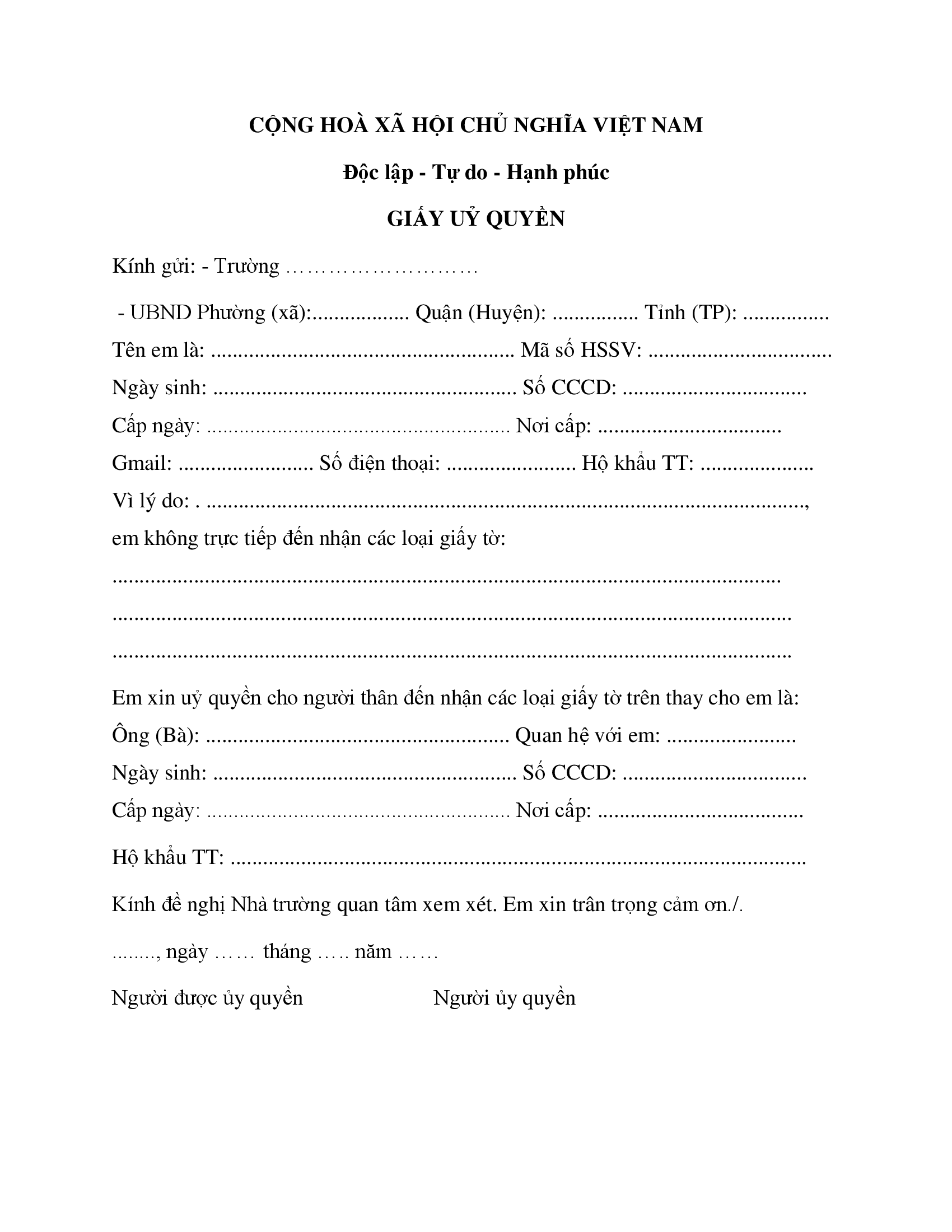
2.1. Power of Attorney Template for a Relative
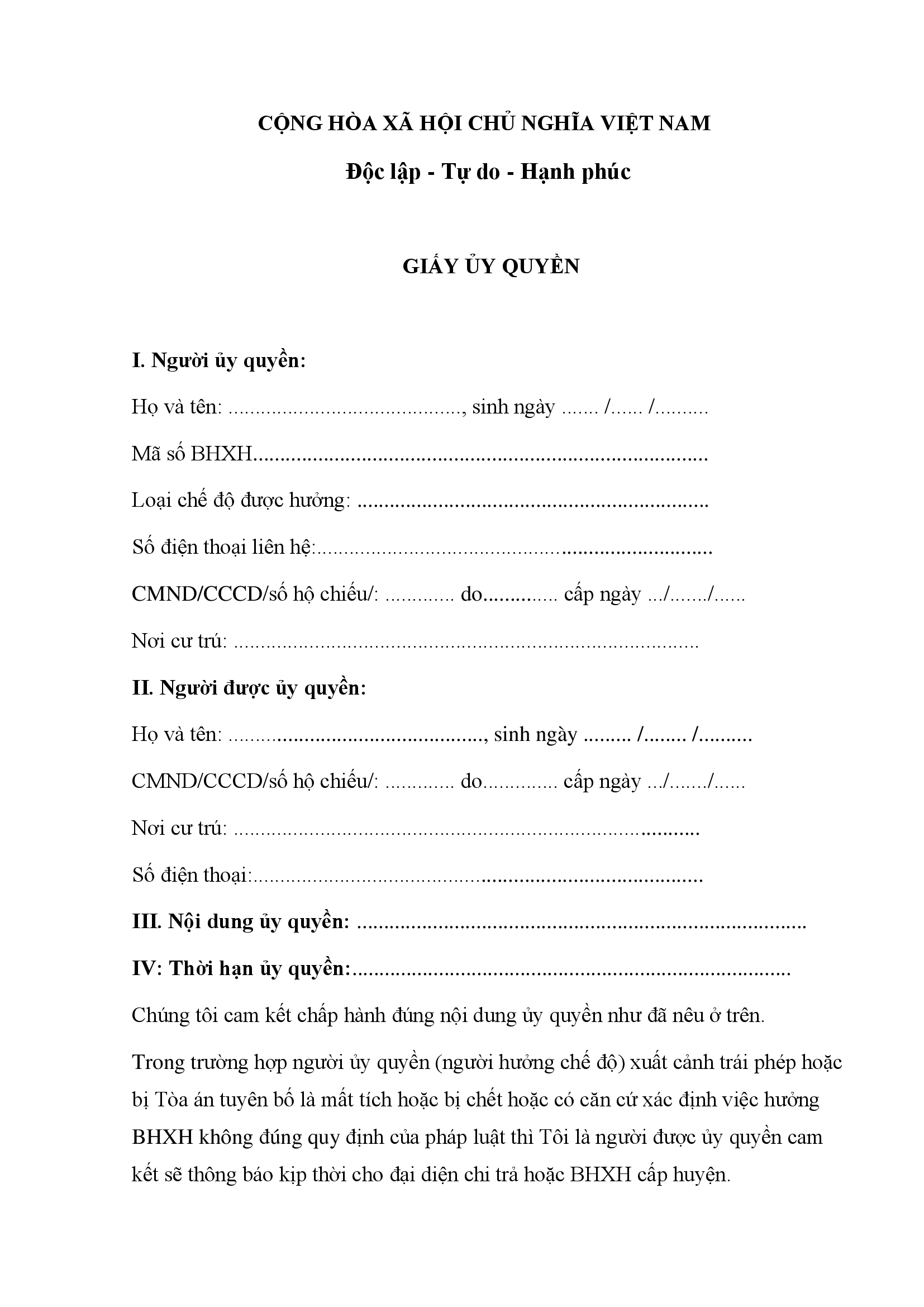
2.2. Handwritten Power of Attorney Template
2.3. Personal Power of Attorney Template (Individual to Individual)

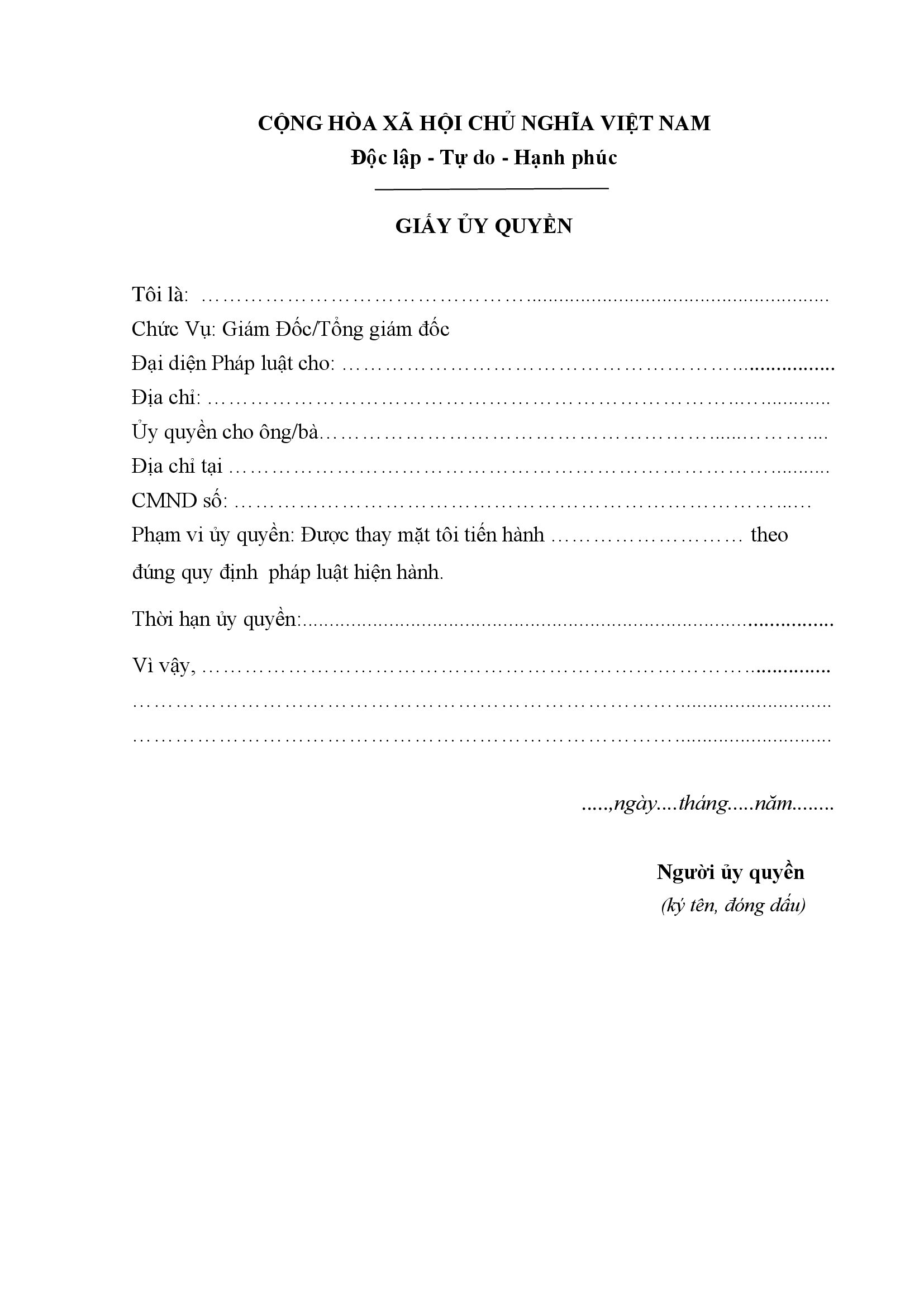
2.4. Power of Attorney Template (Company to Individual)
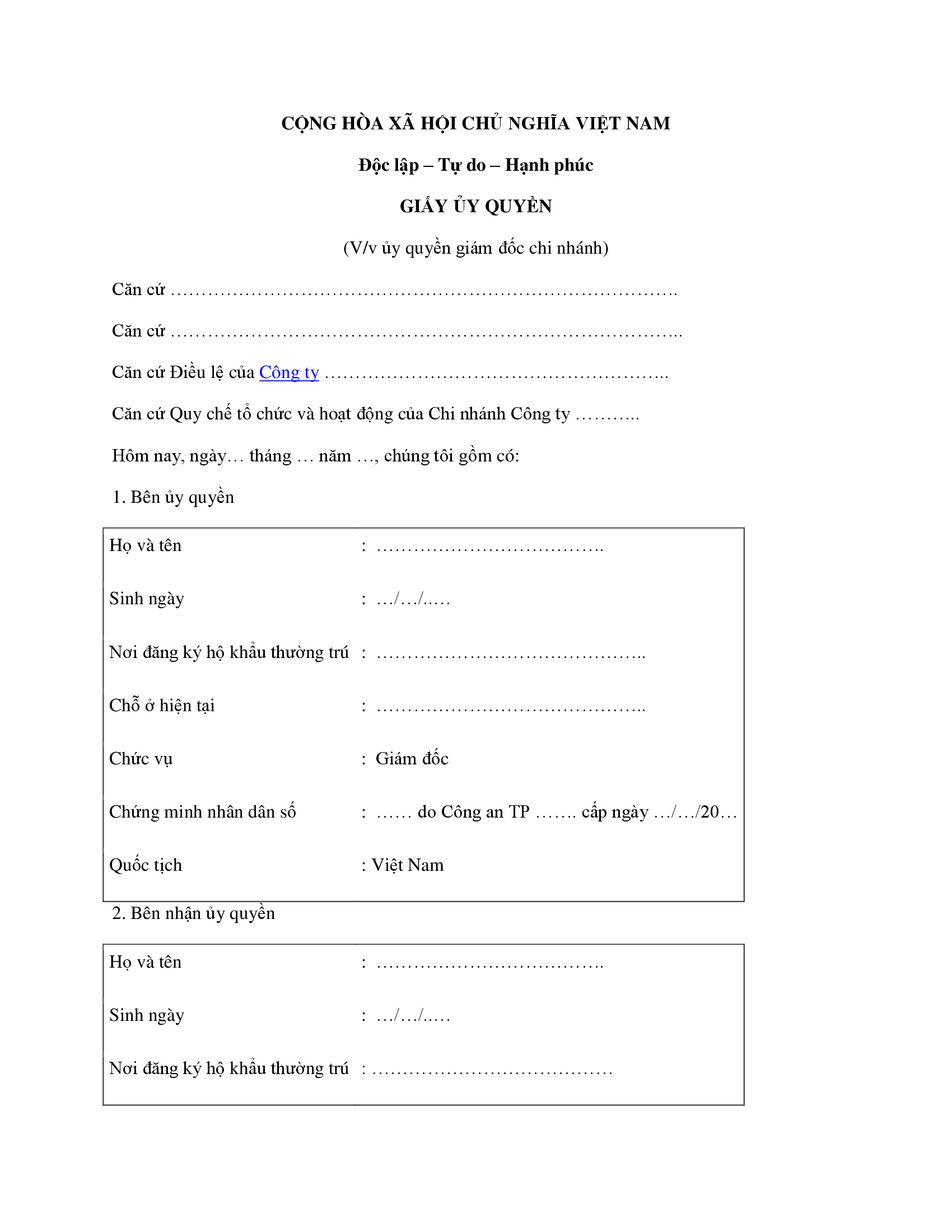
2.5. Power of Attorney Template for Handling Tasks
2.6. Power of Attorney Template for Receiving Money
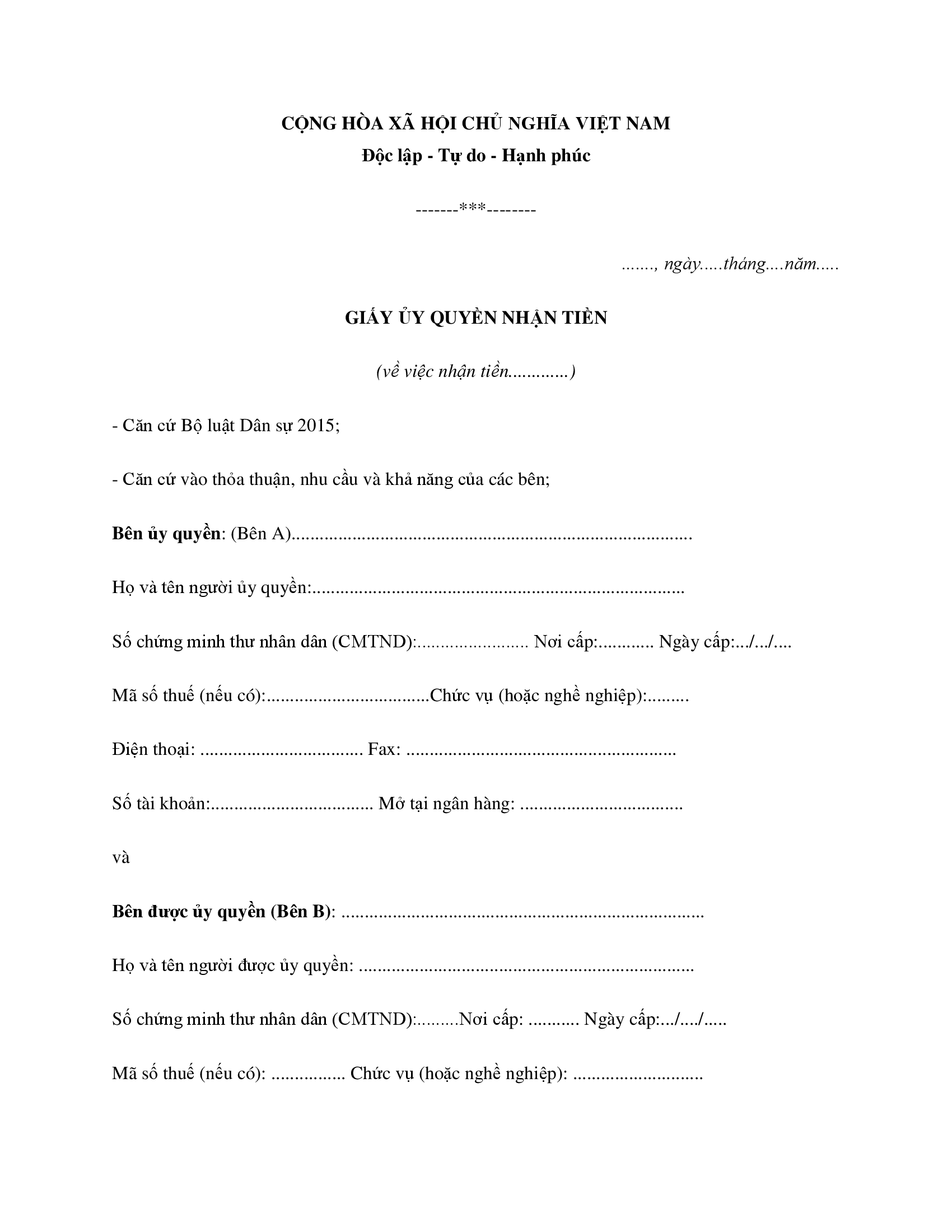
>>> See also: 5+ Common and Latest Power of Attorney Templates for Receiving Money
2.7. Land Power of Attorney Template
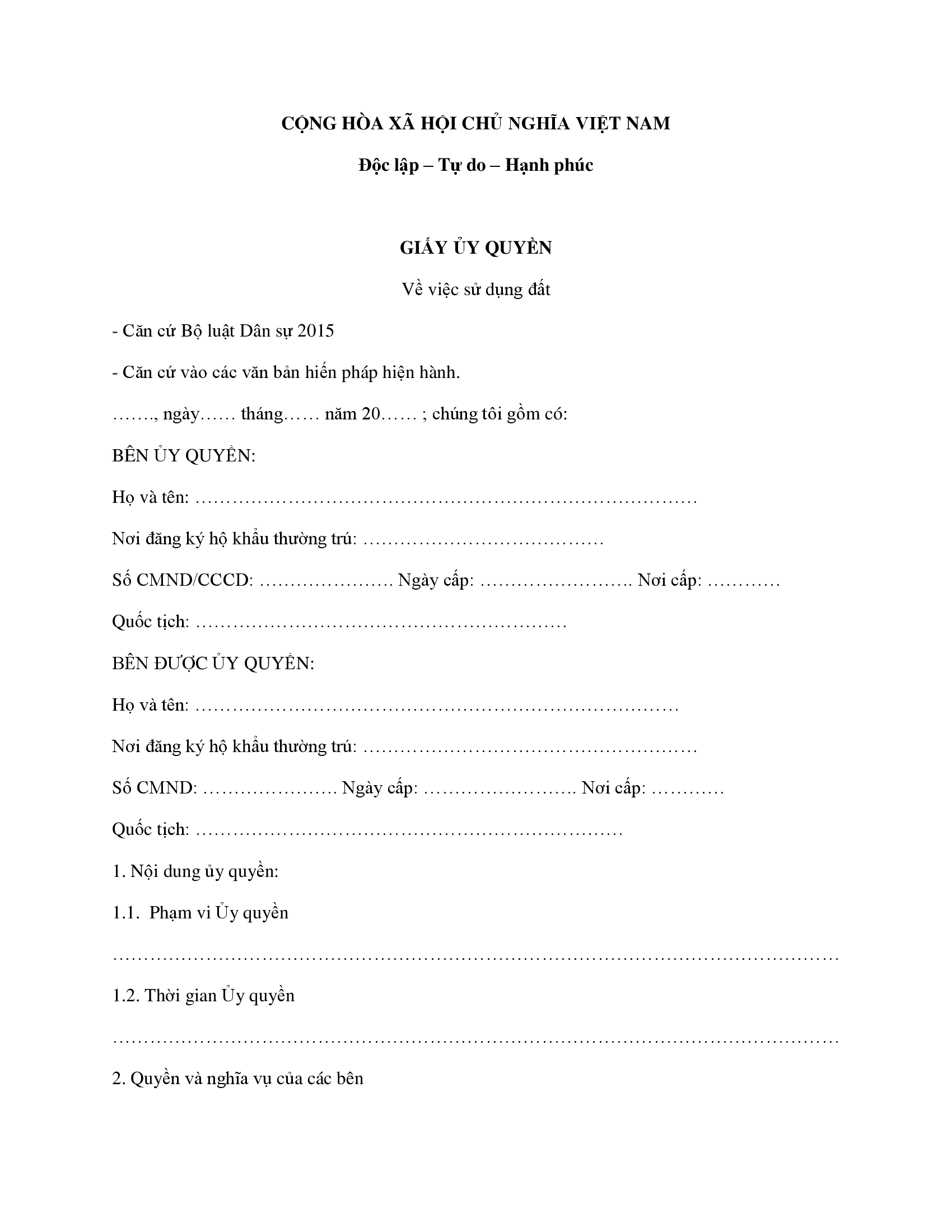
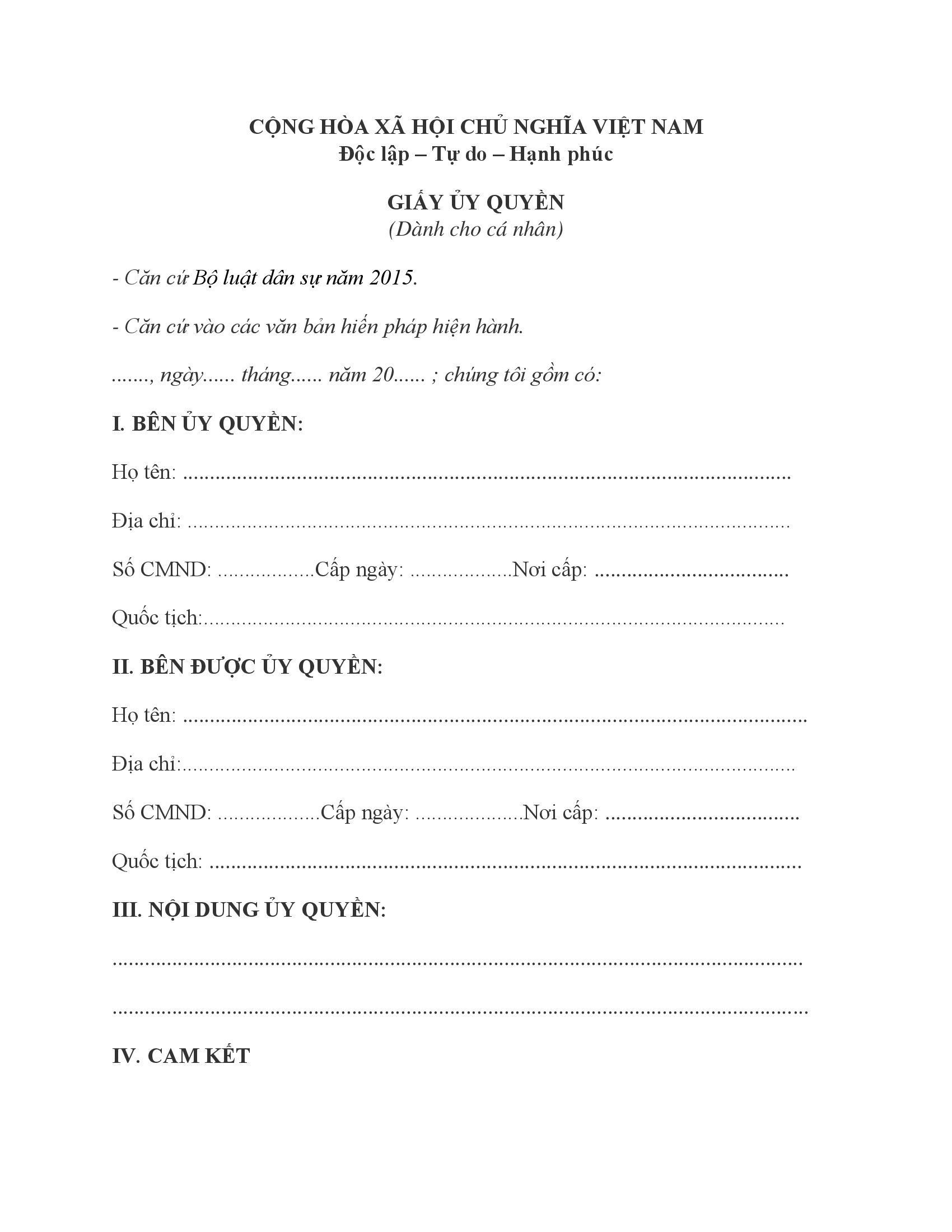
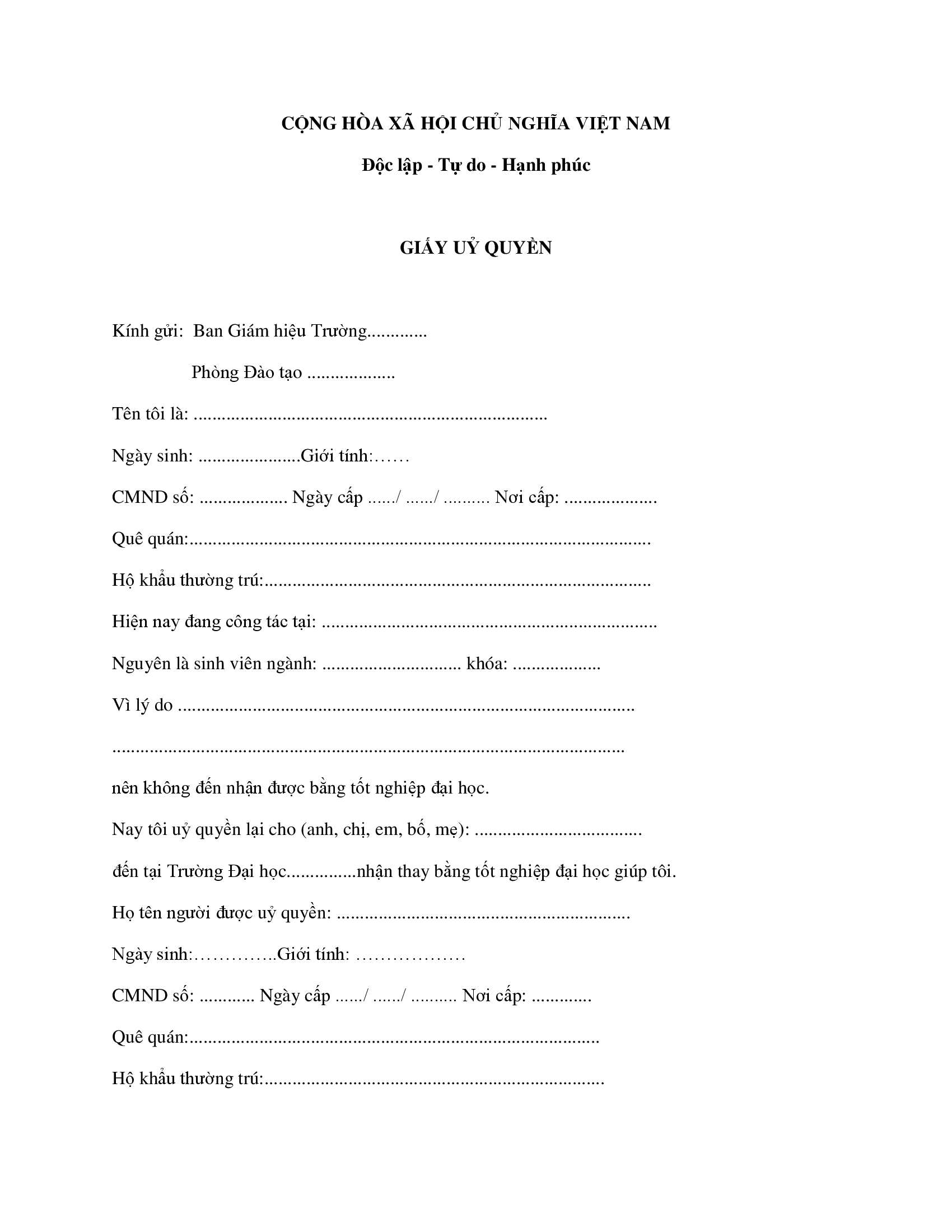
2.9. Power of Attorney Template for Receiving a Graduation Diploma
3. Cases Requiring a Power of Attorney for a Relative
A power of attorney for a relative is a legal document in which an individual (the principal) authorizes a relative (the agent or attorney-in-fact) to act on their behalf to perform one or more specific tasks. This is a voluntary form of authorization, suitable for situations where the principal cannot directly handle matters due to being busy, health issues, or other personal reasons.
According to Article 138 of the 2015 Civil Code (BLDS 2015), authorization is a form of legal representation where the authorized person acts in the name and for the benefit of the principal, exercising rights and obligations within the assigned scope. The power of attorney document serves as the legal basis for defining the responsibilities and powers of both parties.
Receiving important documents on behalf of someone:
- Unable to personally receive important documents such as diplomas, land title certificates, birth certificates, or files from state agencies, etc.
Conducting financial transactions:
- Withdrawing money from a bank account
- Receiving insurance payments, pensions, or other benefits, etc.
Handling administrative procedures on behalf of someone:
- Registering a business license, paying taxes
- Filing documents at court or other public authorities
Managing assets and real estate:
- Signing real estate purchase, sale, or lease contracts
- Transferring land use rights or assets
Handling other personal matters:
- Submitting or withdrawing documents at schools or agencies
- Performing daily tasks in your absence, such as transactions, purchases, or signing for goods, etc.
4. Guide to Writing a Power of Attorney for a Relative
When drafting a power of attorney for a relative, the writer must adhere to legal requirements and standards to ensure the document’s accuracy and validity.
- Detailed information of the principal and the agent:
- Full name, date of birth, ID/Citizen ID card number, date of issue, place of issue
- Permanent address
- Content of authorization:
- Specific description of the authorized task (e.g., receiving a land title certificate, withdrawing money, signing a contract, etc.)
- Scope and powers of the agent
- Duration of authorization (clearly state the start and end dates)
- Commitments of the parties:
- Commitment to act in accordance with the rights and obligations within the scope of authorization.
- Signatures and confirmation:
- Confirming signatures of the principal and the agent
- Confirmation from a competent authority (if required)
5. Important Notes When Writing a Power of Attorney for a Relative
When drafting a power of attorney, to ensure the document is legal and to avoid disputes, you should pay attention to the following points:
Accurate personal information
- Use the exact information from personal identification documents to ensure accuracy
- If there are any changes to the information, you must clearly state the latest details.
Clear authorization content
- Specifically describe the task, for example: “Receive the land use right certificate at the Hanoi City Land Registration Office.”
- Avoid using vague phrases that could easily cause misunderstandings or disputes.
Confirm a reasonable authorization period
- It is recommended to specify the day/month/year or a time range to prevent the letter of authorization from being misused after it expires.
- If no term is specified, the letter of authorization is understood to be valid until the task is completed or the parties agree to terminate it.
Notarize or authenticate if necessary
- For cases involving assets or financial transactions, you can have it notarized at a notary office or authenticated at the People’s Committee of the commune/ward. Authentication ensures that the parties have legal capacity (awareness and control of their actions) and are participating voluntarily.
6. Frequently Asked Questions
According to the 2015 Civil Code, the rights and obligations of the authorizing and authorized parties are stipulated as follows:
Authorizing Party:
– Rights:
- Request the authorized party to perform the task according to the agreed-upon content.
- Revoke the authorization if deemed unnecessary, according to Article 569 of the 2015 Civil Code.
– Obligations:
- Provide necessary information and documents to carry out the authorized task (Article 562).
- Be responsible to third parties for actions performed by the authorized party within the scope of the authorization.
Authorized Party:
– Rights:
- Request remuneration from the authorizing party (if agreed upon).
- Perform tasks within the scope of the authorization.
– Obligations:
- Perform the task according to the assigned content and scope.
- Inform the authorizing party of the results.
- Compensate for any damages caused during the execution of the authorization (Article 565 of the 2015 Civil Code).
A letter of authorization is not required to be notarized in all cases, unless the competent authority requires it or the law stipulates notarization as a mandatory condition.
According to Article 122 of the 2014 Law on Housing and Article 167 of the 2013 Land Law, a letter of authorization in some transactions related to land and housing may not require notarization if the law does not require it. For example:
- Authorization within the family (receiving pensions, goods).
- Simple transactions of low value.
Some cases where notarization is mandatory include:
- Purchase, sale, lease, or transfer of land and houses (Article 167 of the Land Law).
- Borrowing money, mortgaging high-value assets.
According to Article 563 of the 2015 Civil Code, the term of authorization shall be agreed upon by the involved parties.
In the absence of an agreement, the term of authorization will last until the task is completed or is unilaterally terminated by the authorizing party.
Note that a letter of authorization with no specified term may not be legally valid in some special cases.
| Criteria | Letter of Authorization | Authorization Contract |
| Form | Unilateral, only the authorizer signs. | Bilateral, both parties sign. |
| Scope | Usually applied for simple tasks. | Applied for complex, long-term tasks. |
| Legal Basis | Article 563 of the 2015 Civil Code. | Articles 562-569 of the 2015 Civil Code. |
| Notarization | Not mandatory, unless required by law. | Notarization is often required for many transactions. |
According to legal regulations, tasks that cannot be authorized include:
– Personal matters:
- Marriage registration (Article 18 of the 2014 Law on Marriage and Family).
- Divorce (Article 51 of the 2014 Law on Marriage and Family).
- Making a will (Article 630 of the 2015 Civil Code).
– Special rights:
- Election and candidacy for positions as prescribed by law.
- Testimony in legal proceedings (Article 187 of the 2015 Civil Procedure Code).
Complying with these regulations helps ensure the legality of the power of attorney and avoid disputes.
















