


 10/05/2026
  163 views
Considered a symbol of innovation and creativity in the e-commerce industry, Amazon has built an irreplaceable position in the hearts of consumers. So, what did Jeff Bezos do to transform Amazon’s business model from an online bookstore into a global retail giant?
Mục lục
- 1. Amazon’s Development History: From a Bookstore to a Global Retail Empire
- 2. The Initial Steps in Building Amazon’s Business Model and Its Challenges
- 4. The Influence of Technology in Amazon’s Business Model
- 5. Comparing Amazon’s Traditional and Modern Business Models
- 6. Challenges and Opportunities for Amazon’s Business Model in the Future
- 7. Business Lessons from Amazon’s Model for Vietnamese Enterprises
- 8. Conclusion
1. Amazon’s Development History: From a Bookstore to a Global Retail Empire
Amazon was founded by Jeff Bezos in 1994, with the initial idea of an online bookstore named “Cadabra”. Bezos recognized the potential of the Internet when e-commerce was still in its infancy, and he chose books as the first product due to their ease of storage and shipping. With a strategic vision and strong determination, Bezos continuously expanded Amazon’s product catalog from books to many other items, from electronics to fashion, food, and cloud services.

This change marked the transition from an online bookseller to a diverse e-commerce platform. Amazon also pioneered the development of the Marketplace business model, allowing third parties to sell on its platform, turning Amazon into a global transaction hub. This strategy helped Amazon scale without needing to control the entire supply chain, while also leveraging customer data to optimize the shopping experience.
By the 2000s, Amazon didn’t just stop at e-commerce but also expanded into new areas such as cloud computing (AWS – Amazon Web Services), consumer technology (Kindle, Alexa), and digital content production (Amazon Studios). These bold moves solidified Amazon’s position as a multi-industry technology conglomerate, far beyond the limits of retail. A flexible business model, rapid adaptability, and a long-term investment strategy were the key factors that transformed Amazon from a small bookstore into a trillion-dollar empire, changing the way the world shops and consumes.
2. The Initial Steps in Building Amazon’s Business Model and Its Challenges
Amazon’s business model is built on the principle of providing the best value to customers. With a “customer-centric” philosophy, Amazon always seeks ways to improve the customer’s shopping experience. This model not only focuses on selling goods but also extends to other services like Amazon Web Services (AWS), Prime Video, and various other membership programs.
A key element of Amazon’s business model is the integration of technology and business processes. Amazon has applied information technology to every aspect of its business, from warehouse management to delivery and customer care. This not only helps optimize costs but also brings greater operational efficiency.
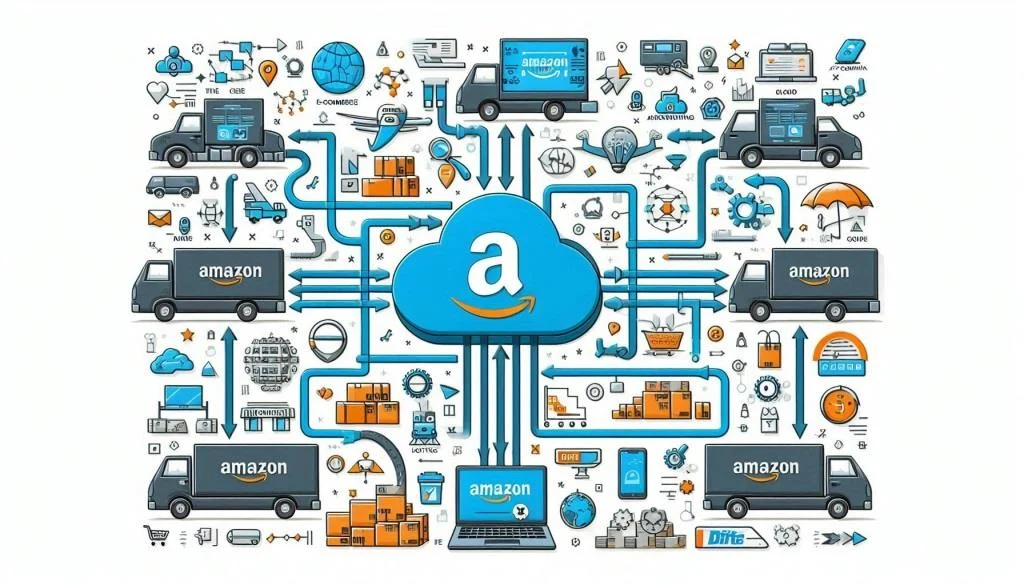
Despite its tremendous success, Amazon has also faced many significant challenges during its development. One of them is the increasing competition from domestic and international rivals. Companies like Alibaba and Walmart are increasingly expanding their online operations and venturing into the e-commerce sector.
Additionally, information security is a major challenge. As the volume of customer data grows, protecting personal information becomes a top priority, and any security breaches can cause serious damage to Amazon’s reputation.From the moment he identified Amazon as a global goods distribution platform, Jeff Bezos understood that logistics and supply chain were vital to maintaining a superior customer experience. He had a vast infrastructure network built, including hundreds of fulfillment centers, warehouses, and shipping centers worldwide.
Amazon uses modern warehouse management systems, integrating automated robots to process and ship goods quickly, minimizing errors. In addition, the company invests heavily in its internal delivery systems like Amazon Flex and a network of trucks and cargo planes under the Prime Air brand, helping to optimize delivery times and reduce costs.
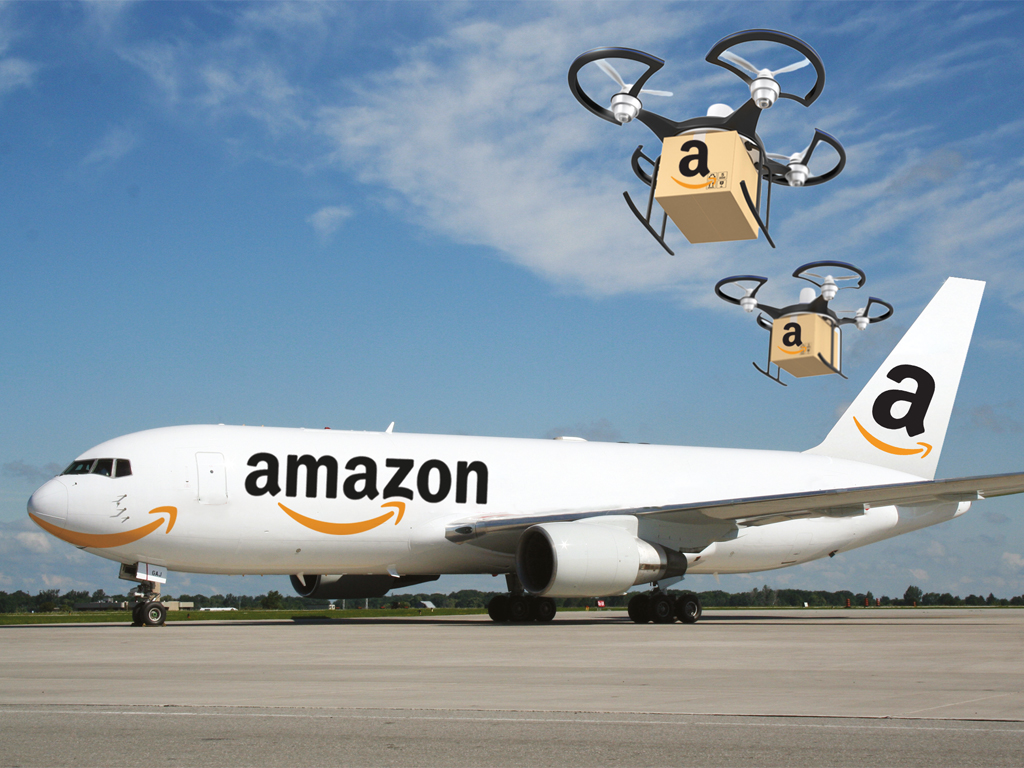
Thanks to its superior logistics strategy, Amazon can offer same-day or even within-a-few-hours delivery in many areas. This not only meets high customer expectations but also creates a significant competitive advantage in the e-commerce market. Furthermore, its global logistics network allows Amazon to minimize reliance on external shipping partners, thereby gaining better control over costs, quality, and delivery times.
In recent years, Amazon has adopted a vertical integration strategy, developing and owning many stages of the supply chain itself. However, the company also flexibly collaborates with local suppliers, leveraging cost advantages and local expertise. A noteworthy point is that Amazon is moving towards sustainable logistics, committed to being carbon neutral by 2040 through the use of renewable energy-powered delivery vehicles and the construction of “green” warehouse systems. Amazon’s massive global logistics network demonstrates the power of sustainable operations—a mindset also reflected in Coca-Cola’s international business strategy when standardizing its international distribution system.
3.3. Amazon Prime: A Decisive Tool in Amazon’s Business Strategy
Amazon Prime, launched in 2005, is a strategic paid subscription service that helps Amazon differentiate itself from competitors. For an annual or monthly fee, Prime customers receive exclusive benefits such as free two-day shipping, access to streaming movie and music services, priority discounts during shopping events like Prime Day, and many other perks.

Besides the goal of building customer loyalty and increasing the lifetime value of each user, the Amazon Prime strategy aims to:
- Superior Customer Experience: The first standout factor is the ability to meet customer needs quickly and effectively. The free two-day or same-day delivery service has set a new standard in the online retail industry. This convenience increases the user’s perceived value and encourages them to return for repeat purchases.
- Comprehensive Ecosystem: Amazon Prime is not just a delivery service but also integrates a range of digital products like Prime Video, Prime Music, and exclusive offers on Amazon Fresh. This diversity has made Prime an indispensable part of consumers’ daily lives, going far beyond a simple shopping service.
- Long-Term Value Strategy: Although the operational costs of Prime are substantial, Amazon has focused on long-term value rather than short-term profit. Each Prime user tends to spend significantly more than non-users, helping Amazon maintain its leading position in the e-commerce market.
Amazon Prime’s success is due to a deep understanding of customer psychology and the ability to build loyalty. When a customer pays for a subscription, they feel more “tied” to the service, thereby increasing their shopping frequency to optimize their investment. Additionally, Amazon’s continuous expansion of Prime benefits, such as exclusive discounts or developing exclusive content on Prime Video, helps increase the service’s value without raising the nominal price. Amazon prioritizes the user experience in every product decision; this mindset also appears in how Vingroup designs its ecosystem, where services, retail, automotive, and real estate all revolve around a seamless customer experience.
4. The Influence of Technology in Amazon’s Business Model
It is undeniable that technology has played an extremely important role in Amazon’s success. From its early days as just an online bookstore, Amazon has continuously applied advanced technologies to enhance efficiency and improve the consumer experience.
4.1. Process Automation
One of the highlights of Amazon’s business model is the application of automation technology in its operational processes. Amazon’s warehouses are equipped with robotic technology to optimize the packing and shipping process. This not only helps save time but also minimizes errors in order processing.
4.2. Big Data and Analytics Systems

Amazon skillfully uses big data to track customer behavior and preferences. By analyzing this data, the company can provide more accurate and personalized shopping suggestions for each customer. This not only increases conversion rates but also enhances the customer experience.
Amazon considers data central to personalizing the user experience; this mirrors Coca-Cola’s international business strategy which leverages global insights to adjust market strategies in each country.
4.3. Technology Ecosystem
Amazon doesn’t just stop at online sales; it has also built a diverse technology ecosystem. From Amazon Web Services (AWS) to Alexa – the virtual assistant, everything contributes to creating a tightly connected environment between the products and services Amazon offers. This is what has helped Amazon attract and retain customers long-term.
5. Comparing Amazon’s Traditional and Modern Business Models
The traditional business model dominated the market for many decades, but it is now being challenged by the modern models that Amazon represents. The shift from physical stores to online stores not only affects how people shop but also changes the entire supply chain.
| Traditional Business Model | Amazon’s Current Business Model | |
| Customer Interaction and Experience | – Primarily focused on the online bookstore website interface.
– Customers only interacted through the online channel, with limited technology integration. – The experience was mainly shopping, with few value-added services. |
– Multi-channel integration: Website, mobile app, Alexa (AI).
– Comprehensive ecosystem (Prime, AWS, Prime Video, Amazon Fresh). – Enhanced personalized experience through AI and data analytics. |
| Operating Costs and Profitability | – Costs were focused on warehouse operations and delivery, heavily reliant on logistics partners. – Limited profitability due to small scale and focus on a single product type (books). | – Automated supply chain, using robots and modern management technology to reduce costs.
– Leveraged AWS and Prime as additional revenue streams, reducing reliance on retail. – High profitability growth due to multi-industry expansion, especially from AWS. |
| Market Coverage | – Initially limited to the US and some online book markets in developed countries.
– Low market coverage, focused on a single industry. |
– Presence in over 100 countries with a diverse product portfolio.
– Expanded into various sectors like cloud computing, digital entertainment, and consumer technology. – Captured emerging markets by building local logistics infrastructure. |
Amazon’s modern business model is a significant upgrade from traditional platforms, optimizing customer interaction and experience, reducing operational costs, and expanding its global market scale. This is a clear testament to the corporation’s digital transformation and long-term strategic vision.
6. Challenges and Opportunities for Amazon’s Business Model in the Future
Despite achieving much success, Amazon’s business model still faces many new challenges and opportunities in the future. The continuous changes in the market and consumer demands require Amazon to change and adapt quickly.
6.1. Changes in Consumer Habits
Millennials and Gen Z are increasingly becoming the dominant consumer force. These customers often seek sustainable and ethical products. If Amazon wants to maintain its position, it needs to meet these demands by developing environmentally friendly products and being transparent in its production processes.
6.2. Increased Competition
Amazon has to compete with Walmart and Alibaba. Walmart is expanding its online operations, becoming a formidable competitor. Alibaba, the e-commerce giant in China, is also targeting the global market. To cope, Amazon is diversifying its products and services. The company is also expanding its global supply chain and investing in technology. However, dealing with monopoly accusations and intense competition from major rivals remains a significant challenge.
6.3. New Technology Trends

Technology will continue to play a crucial role in Amazon’s development. With the advent of artificial intelligence (AI), machine learning, and the Internet of Things (IoT), Amazon has the opportunity to optimize its production and distribution processes while improving the shopping experience for customers. Adopting new technology not only helps enhance efficiency but also brings long-term benefits to their business model.
7. Business Lessons from Amazon’s Model for Vietnamese Enterprises
Amazon’s journey – from a small bookstore to a global retail “empire” worth trillions of dollars – is not just a story of technological vision, but also a valuable lesson in strategy, mindset, and operational culture.
For Vietnamese enterprises, especially those in the digital transformation phase, many practical lessons can be drawn from Amazon’s model to achieve more sustainable development in the context of global competition.
Customer-Centric Mindset – The Key to Every Decision
Amazon’s core philosophy is “Customer Obsession.” Jeff Bezos once said:
“We don’t focus on the competitor, we focus on the customer.”
This is clearly reflected in all of Amazon’s activities — from website interface design and flexible return policies to the development of its service ecosystem (Prime, AWS, Alexa…).
Vietnamese enterprises can learn this lesson: truly listen to and understand customers, instead of just focusing on sales.
Specifically:
-
Use surveys and customer data to improve products.
-
Optimize the customer experience journey at every touchpoint.
-
Create “lasting” value beyond price — such as convenience, speed, and after-sales service.
When customers feel respected, they become loyal – and that is the foundation for sustainable growth.
Invest in Technology and Data Before Scaling
Amazon didn’t wait to get big to invest in technology – it grew because of technology.
As early as the 2000s, they built the AWS platform – which is now a “money-printing machine” that helps Amazon maintain huge profits.
Similarly, its Big Data system helps Amazon understand every shopping behavior, thereby personalizing the user experience.
Vietnamese enterprises can learn from this:
-
Start small, but invest in the right foundation. Whether it’s CRM, ERP software, or a warehouse management system, investing in technology early will make it easier for the business to scale later.
-
Focus on collecting and analyzing data. Data is not just for “reports,” but a decision-making tool — helping businesses understand needs, optimize processes, and forecast risks.
-
Applying AI & automation in inventory management, customer care, or advertising – helping to save costs and increase efficiency.
Flexibly combining traditional and digital commerce
Amazon is a prime example of the phygital model – a combination of “physical” and “digital.”
Despite its success in e-commerce, Amazon still opens physical store chains like Amazon Go and Whole Foods Market, where technology is integrated into the real-world experience.
Lessons for Vietnamese businesses:
-
Don’t neglect traditional channels, but digitize sales, payment, and customer care processes.
-
Apply technology to physical stores, such as QR code scanning, contactless payments, or displaying products using AR/VR.
-
Connect online and offline data to comprehensively understand customer behavior and personalize the experience across all channels.
Build a culture of learning and embracing experimentation – Failure is also an asset
Amazon is famous for its “Fail fast, learn faster” culture.
Many of Amazon’s projects have failed (like the Fire Phone or Amazon Wallet), but the company has always considered it the cost of innovation. It is this spirit of daring to experiment that has helped them create groundbreaking products like Alexa and AWS.
For Vietnamese businesses, especially small and medium-sized enterprises:
-
Don’t be afraid to experiment. No formula is perfect the first time – allow your team to make mistakes and correct them.
-
Encourage a spirit of creativity, rather than focusing solely on “performance.”
-
Create an environment of continuous learning through internal training, experience sharing, or collaboration with startups/tech companies.
Success comes not from avoiding risks, but from knowing how to manage and learn from them – that is the growth DNA of Amazon that Vietnamese businesses should learn from.
8. Conclusion
Amazon’s business model is a testament to continuous innovation and creativity in the e-commerce industry. Despite facing many challenges, adaptability and the ability to innovate will be the key to helping Amazon maintain its leading position in the retail industry. We hope the information in this article has answered your questions about how Amazon transformed from an online bookstore into the retail empire it is today, and that you can draw valuable lessons from this business model to apply to your own business in the future. We wish you success!
















