13/05/2026
  276 views
Every business has its own cultural identity based on its values and standards. And each member is responsible for complying with and spreading the culture of conduct to help the company become more and more successful. In the process of forming the culture of each organization, leaders will have to build a code of conduct for the business. Therefore, in this article, let’s learn how to build a code of conduct for a business.
Mục lục
I. General Introduction to the Code of Conduct in Business
1. What is a code of conduct?
A code of conduct for business (Codes of Conduct) is a document created to implement the company culture, establishing a list of rules, principles, and values to set ethical standards of behavior and guide all employees in a business when performing their professional and daily tasks.

Moreover, the code of conduct also contributes to building corporate culture, creating a brand, and enhancing the company’s reputation.
2. Why is a Code of Conduct necessary in a business?
A code of conduct not only serves as a set of internal guidelines for employees to follow but also as an external statement of the organization’s values:
- Guiding internal culture: It not only sets standards but also provides regulations that help reduce the risk of problems and make work easier to resolve.
- Boosting employee morale: Employees who are treated fairly and with respect tend to be more satisfied with their jobs. Moreover, the code of conduct for business also sets standards and expresses employees’ expectations of the company.
- Illustrating company values: A person might learn about a company for various reasons: its ethics, values, work model, mission, vision, etc. Therefore, understanding these factors helps improve the work environment while also promoting the core values of the business.
Now that we understand the importance of a code of conduct in business, in the next section, let’s explore the elements that form a company’s code of conduct.
II. 6 common codes of conduct in business
1. Code of conduct towards the organization
The code of cultural conduct within a business encompasses all activities, methods of implementation, and operations of an organization. This code typically includes regulations on:
- Communication and discussion culture
- Dress code regulations
- Meeting etiquette
- How to make introductions and self-introductions
- How to use personal business cards?
- Policies on salary, bonuses, and penalties for employees
| Read more: Build an internal communication plan in 6 simple steps |
2. Code of conduct at work
Regarding work, the elements included often relate to responsibility and discipline:
- Regulations on information security
- How to use and maintain company property
- Regulations on copying and plagiarizing intellectual property
- Conduct during business trips
- Regulations on operating, implementing, and securing work
Additionally, you can learn more about some work management skills for speed and efficiency.
3. Code of conduct among colleagues
Communication and conduct among people are always fundamental factors that create conflicts within an organization. Therefore, the corporate code of conduct among colleagues includes:
- Behave appropriately, listen, and contribute ideas for mutual development
- Work in a spirit of politeness and comfort
- Trust, respect, and sincerely cooperate and connect
4. Code of conduct with leadership
Leaders are the heads of the organization, creating a favorable working environment for its development. Therefore, proper conduct with leadership is also something to pay attention to.

- Maintain a polite and serious attitude when communicating with leadership
- Complete assigned tasks on time
- Contribute ideas directly and frankly
- Respect and be responsible for protecting the company’s reputation and honor
5. Code of conduct with customers
In today’s era, customer care is one of the most important factors in retaining customers. Therefore, when building a corporate code of conduct, it is necessary to pay attention to the following factors:
- Sell a perfect service: A perfect service is a service package that, from start to finish, can create comfort for the customer
- Customer care is a key activity: The emergence of numerous competitors has made businesses pay more attention to customer care activities. According to research, if a customer is satisfied with a service, they will share it with 10 other people, and this is the most cost-effective advertising activity for your business.
- Understand customer psychology: Clearly understand what customers want and what issues they are considering. This will help you close deals faster and create higher satisfaction when they use the service.
6. Code of conduct for government, the economy, and the nation
Generally, the code of conduct in this aspect often includes:
- Social responsibility
- Code of conduct towards the national economy in general
Depending on the industry in which the business operates, the items in this code of conduct may include:
- Code of conduct for specific departments and sectors
- Code of conduct with officials from the aforementioned departments and sectors
Read more strategies: Building Corporate Culture in the Digital Transformation Era
III. Basic principles for building a code of conduct in a company
1. Ensure it contains all basic content
Typically, the code of conduct in a company will include the following sections:
- One: Based on the company’s mission, vision, and core values
The above factors help the business determine its reason for existence and the future goals it aims for.
- Two: The legal framework and industry standards that the business must comply with.
The content mentioned in the corporate code of conduct often includes: Professional ethics standards, business norms; and anti-corruption regulations.
- Three: The company’s foundational principles of conduct

Depending on the goals, direction, and corporate culture factors, leaders can establish some basic but very important principles for the organization.
In addition, businesses can also include the goal of developing core values in this section. Some common core values include: strategic alliances, social responsibility, etc.
- Four: Do’s and Don’ts
This section often provides specific rules of conduct for each group. To avoid repetition, this section will state specific, focused principles for each group.
- Five: Action programs
These are programs that the organization periodically conducts to ensure employees comply with the code of conduct. Some common activities include: Training, internal communication activities, etc.
- Six: Detecting and handling violations
The business needs to perform a monitoring function to ensure that the code of conduct is implemented at all employee levels.
Depending on the size of the business, a decision will be made whether to establish a monitoring department. Typically, medium to large-sized enterprises will have a monitoring committee to ensure employees follow the rules correctly.
Each business will have its own unique mission, vision, operating methods, and value goals, so all information is for reference only, allowing you to identify the factors and build your own corporate code of conduct.
2. Ensure it is easy to understand
As a document intended for all employees in the organization, the Code of Conduct must be simple and easy to read and understand. To achieve this, you can follow some of these principles when writing:
- Focus on the company’s core values.
- The language used must be simple, easy to understand, and avoid being long-winded.
- The writing style should be coherent and positive, as this is a declaration.
3. Ensure consistency and rigor
Not only does it create a standard of behavior for employees, but the code of conduct also helps the business improve its image and enhance its position in the eyes of consumers. Therefore, each company’s code of conduct must be rigorous and consistent.
4. Rules based on the company’s mission and core values
To build the framework for the code of conduct, it is necessary to thoroughly understand the organization’s mission and core values to analyze the following factors:
Mission: When analyzing a company’s mission, it usually helps answer some questions:
- What are the goals the business is aiming for?
- What makes you different from your competitors?
- How should you interact with customers and partners?
Core values: Built to ensure the long-term development goals of the business. When analyzing this section, we need to pay attention to the following factors:
- The obligation of individuals to meet customer expectations for products.
- Rights and obligations of citizens: Ensuring legal compliance and the environmental and social obligations of each individual.
- Fairness and integrity: Demonstrated in all operational stages, applying to all stakeholders.
- 5 levels of leadership to achieve success in business administration.
IV. 5 Steps to Build a Detailed Code of Conduct in a Business
1. Identify the participants in creating the code of conduct
Typically, the code of conduct is developed with the participation of the board of directors, long-term employees, and relevant stakeholders.

To build it, a specific and clear understanding of the company’s culture, products, and work environment is necessary. Most codes of conduct are usually established by senior management, after which long-term employees will review and evaluate them.
2. Review any ethical issues that have occurred in the past
Before creating a corporate code of conduct, the organization should look back at the past to review the issues the company has faced. Then, compile a list and create regulations to minimize the recurrence of these issues in the future.
3. Outline the guidelines
Creating an outline for the code of conduct based on practical experience or by referencing competitors’ codes and identifying the components to include in your own.
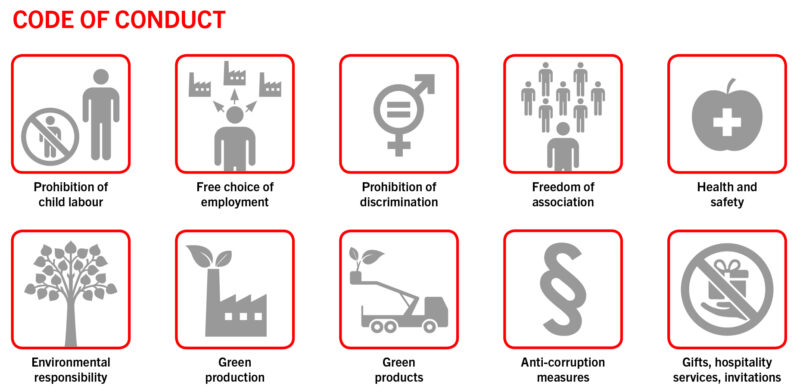
The components include:
- Work environment
- Conflicts of interest
- Company assets
- Company culture
- Bullying and harassment in the corporate environment
- Attendance, minimum working days for employees
- Dress code regulations
4. Discuss the draft with stakeholders
After the draft is ready, the individuals responsible for structuring the corporate code of conduct will consolidate it and seek feedback from company leadership to plan appropriate revisions.
5. Implement the final code of conduct
Once the final draft of the code of conduct is complete, businesses will assign responsibilities to capable and authorized individuals; handle complaints; investigate violations; and implement specific disciplinary measures if employees do not comply with the code’s requirements.
Applying it in practice is a process that takes a lot of time and requires effective work management skills to complete a comprehensive code of conduct. In the next section, let’s explore the codes of conduct of some major corporations.
V- Examples of Corporate Codes of Conduct from Major Corporations
1. PepsiCo
PepsiCo’s code of conduct includes guidelines that help the corporation grow towards its strategic goals. Here, they have The PepsiCo Way, which is built on integrity—integrity in all activities—and is considered one of the company’s most valuable assets.
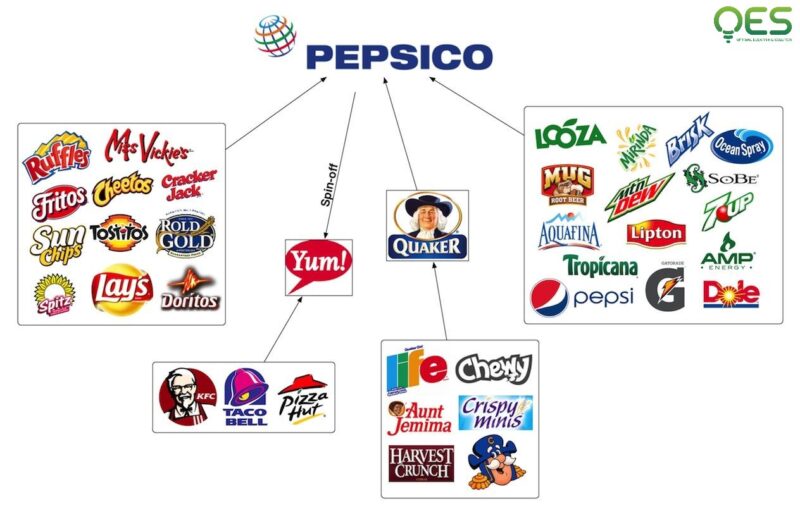
As a global corporation, PepsiCo ensures that the language used is easy to understand and clearly expresses the company’s expectations for its employees.
When referencing this code of conduct, one can see many illustrations and visual examples to engage the reader. Images of the company’s products are flexibly inserted both to promote the brand and to prevent copying.
The leadership also encourages employees to report bribery and violence to the hotline, as it not only affects internal affairs but also the brand’s image.
2. Sony
In Sony’s code of conduct, corruption and bribery are mentioned quite frequently. Not only that, but other issues are also addressed, such as: information security, business records, human rights, environmental protection, etc.
The code of conduct begins with a message from the company’s leadership, expressing their belief in the rules and encouraging employees to follow the stipulated content.
At the end, Sony encourages employees to report any questions that need answering, as these could be potential issues. Therefore, instead of solving problems, the corporation has chosen the method of preventing them from occurring.
3. Microsoft
Microsoft’s code of conduct document is built around the concepts of “trust” and “Customers are at the center of everything the company does.”
The document also specifies the process for when employees face difficult decisions. Additionally, it is structured to be easy to understand and simple, yet it accurately reflects all the organization’s values, helping readers easily grasp the information.
4. L’Oreal
The code of conduct is based on the principles of continuous innovation, high efficiency, and a focus on practice. The code still begins with a call to action and a statement from the Board of Directors. This is followed by specific codes of conduct for each target group the company has and aims for.
Additionally, this code of conduct includes an “Open Talk” section to encourage employees to express their concerns and questions.
Building a code of conduct in a business is considered a “guiding star” to direct the behavior and mindset of its staff. Each organization has unique characteristics, so each code of conduct will be different. Therefore, to create a complete document, managers must invest significant time and effort to complete it.
As the leading business management software platform in Vietnam, 1Office not only provides effective management solutions but also helps businesses create a digital cultural environment. Please contact us for the most dedicated consultation.
For more detailed information, please see:
Hotline: 083 483 8888
Fanpage: https://www.facebook.com/1officevn/
Youtube: https://www.youtube.com/channel/UCeTIRNqxaTwk0_kcTw6SxmA