


Inspiring Employees: 10+ Secrets Exclusively for Leaders


In any organization or business, a leader always plays a key role in driving the development and success of the team. Like a spreading fire, the right leadership principles can inspire and motivate the entire team, helping them rise to overcome any challenge and achieve outstanding results. In this article, let’s join 1Office to explore the specific skills, strategies, and actions that leaders can apply to inspire their employees.
Mục lục
- I. Secrets to inspiring and stimulating passion in employees
- 1. Integrate with the team, care about employees’ issues
- 2. Create a dynamic, creative, and healthy work environment
- 3. Be a shining example for all employees to follow
- 4. Always create opportunities for employees to challenge themselves and be creative at work
- 5. Have policies to support employee training and development
- 6. Trust and delegate tasks appropriate to their abilities
- 7. Recognize and reward employees’ achievements appropriately
- 8. Always show enthusiastic support in guiding employees
- 9. Identify Development Potential in General Trends
- 10. Encourage a Healthy Competitive Spirit
- 11. Help Employees Achieve Work-Life Balance
- II. How to Measure the Effectiveness of Motivating Employees
- III. Top inspirational quotes for employees
I. Secrets to inspiring and stimulating passion in employees
Inspiring employees is not just a task but also a vision, a management philosophy that is gradually changing leaders. It shapes the development of each member of the organization while contributing to the success of the entire team. Below are some skills to help leaders enhance their ability to inspire and maintain motivation within their business:

1. Integrate with the team, care about employees’ issues
Leaders need to understand that genuine concern for employees’ lives and personal issues demonstrates care, creates motivation, and builds good relationships. This, in turn, fosters team spirit, trust, and commitment to the organization.
Therefore, managers need to assess the organization’s current state regarding the work environment, employee relationships, and individual development levels. They also need to clearly define the needs and goals they want to achieve by inspiring their employees.
- Understand the needs and desires of employees to create a comfortable and responsive work environment.
- Build good relationships between management and employees to foster trust and understanding.
For example: Tech Solutions often holds one-on-one meetings with employees to learn about their personal goals, interests, and challenges. Department managers ask employees about the personal projects they are working on and the difficulties they face. This helps to better understand each individual’s work situation and needs, creating conditions for a positive work environment.
2. Create a dynamic, creative, and healthy work environment

A positive work environment that encourages creativity and personal development will help employees feel energized and enthusiastic. Leaders are responsible for building and maintaining this environment. To encourage a creative spirit, you can create a “new thinking” corner in the company, where employees can meet to discuss new ideas and ways to improve work-related issues.
- Encourage creativity by promoting new ideas and different problem-solving approaches.
- Create an interesting and stimulating workspace.
- Build a healthy environment by promoting company values and culture.
For example: The company regularly holds weekly team meetings to discuss new ideas, technical solutions, and ways to improve work processes.
3. Be a shining example for all employees to follow
A true leader guides not just with words, but with actions. They are a source of inspiration, a shining example that sets a standard for employees to strive for.
- Demonstrate dedication to work and provide direction for employees.
- Promote positive values and exemplary behavior.
- Share success stories not only to motivate but also to show that striving to achieve goals is possible.
For example: The CEO of Tech Solutions is a passionate leader who has inspired their entire team. With a passion for the product, and by always listening and encouraging, the CEO has become a shining example for employees to learn from.
4. Always create opportunities for employees to challenge themselves and be creative at work
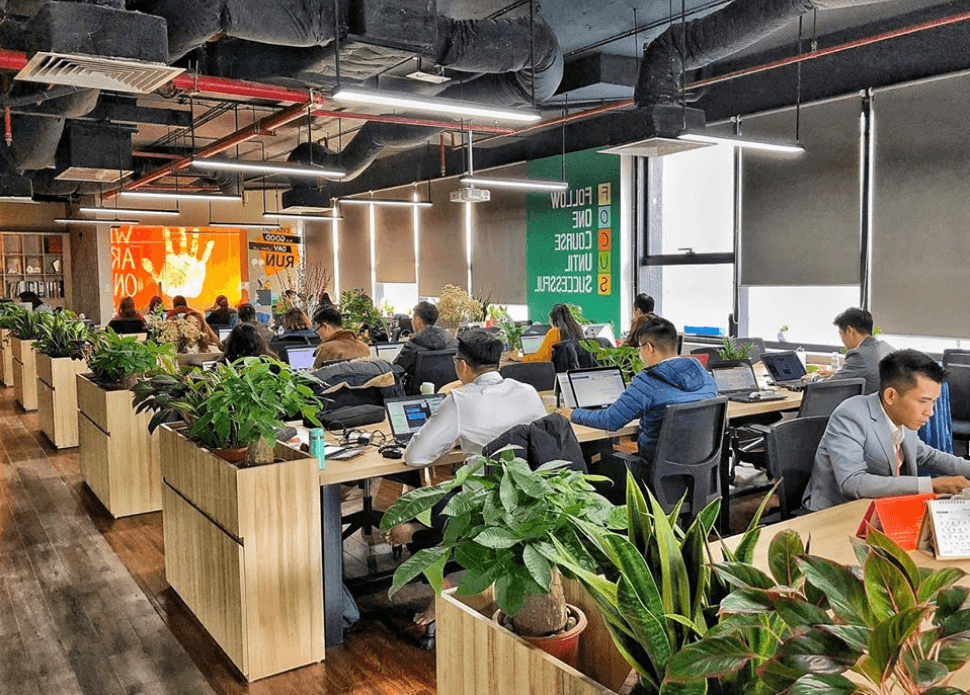
Discovering and maximizing employees’ potential helps them feel valued and continuously strive to develop, thereby contributing positively to the organization’s goals. This not only enhances performance and work quality but also fosters passion and commitment from employees.
- Encourage employees to take on challenging projects with higher complexity.
- Set clear and difficult goals, but ensure they are still achievable.
- Create an open environment where new and different ideas are highly valued.
- Provide time and space for researching, learning, and testing new ideas.
- Provide training courses, workshops, and materials to help employees expand their knowledge and skills.
For example: Company A often organizes internal innovation contests where employees can propose new ideas and implement them in real projects to encourage creativity and contribution. This contest helps promote a positive work spirit, discover new ideas, and improve work processes.
5. Have policies to support employee training and development
Providing learning and development opportunities helps employees enhance their capabilities and confidence. This not only strengthens their position at work but also motivates them to improve their work quality. Some methods leaders can apply include:

- Establish a regular training schedule for employees to have opportunities to enhance their job-related knowledge and skills.
- Provide regular courses, seminars, and training sessions to update the latest information and develop skills.
- Build a career development plan for each employee based on their personal goals and interests.
- Encourage employees to self-study by reading books, documents, participating in online forums, and taking online courses.
In summary, policies supporting employee training and development will help create a foundation for personal and professional growth. This not only enhances their ability to work effectively but also promotes the commitment and effort of each individual.
For example: A travel company can provide training courses on customer service management, communication skills, and other tourism-related courses to help employees develop.
6. Trust and delegate tasks appropriate to their abilities
Placing trust in employees’ abilities fosters confidence and creativity, while giving them the opportunity to demonstrate their unique skills, leading to commitment and positive contributions. Build an environment where employees feel free to express their opinions and suggestions. Leaders need to respect and trust the abilities of each employee to assign suitable tasks, avoiding tasks that are too difficult or too easy to ensure development and commitment.

On the other hand, tasks should be assigned based on experience to ensure they can be performed effectively and confidently. Leaders need to provide information and support when necessary to help employees feel secure when carrying out projects. Finally, ensure that employees clearly understand their responsibilities and are committed to performing their tasks to the best of their ability.
For example: The CEO of Company B delegates decision-making authority regarding customer service improvement and employee management to the head of the sales department. This fosters confidence and responsibility within their team and department.
7. Recognize and reward employees’ achievements appropriately
This is an important method to inspire and promote development within the business. Recognizing and appreciating employees’ achievements is a way to show respect and encouragement, thereby motivating them to continue striving and developing.

Businesses should use various forms of rewards to ensure diversity and excitement. These can be certificates, honor rolls, bonuses, gift vouchers, promotion opportunities, or even opportunities to participate in important projects.
For example: The company can organize quarterly or annual award ceremonies to recognize employees’ outstanding achievements in enhancing the customer experience.
8. Always show enthusiastic support in guiding employees
A leader’s care and guidance not only help employees feel supported and more motivated but also promote their learning and personal development process. When leaders consistently show enthusiasm in guiding employees, they will feel more confident to interact, ready to ask questions, and offer their own suggestions. This creates a foundation for an open and collaborative business environment.
- Create opportunities for open conversations and discussions about both general and personal issues.
- Share knowledge, experience, and useful lessons from your work process.
- Support employees in resolving questions and difficulties at work while providing solutions to overcome challenges.
9. Identify Development Potential in General Trends
To identify development potential, managers need to clearly understand the general trends in the company’s field of operation. By monitoring data, market research, competitors, and influencing factors, the company can identify trends and determine the opportunities and challenges they bring.

Next, the company needs to identify the existing capabilities and resources within the organization to know what can be used to seize opportunities and overcome challenges. Based on the collected information and data, determine the company’s ability to develop within the general trend, including both the ability to innovate and the ability to change.
For example: The company can maintain market research and analysis to identify new trends in the tourism industry and apply them to its development strategy.
10. Encourage a Healthy Competitive Spirit
Encouraging a healthy competitive spirit in the workplace can help promote development and achieve higher performance from employees. However, the company needs to ensure that competition does not cause excessive pressure. Some ways to apply this secret include:
- Create promotion programs based on performance and achievements, thereby encouraging employees to compete for development opportunities.
- Create an environment where new ideas and improvements are evaluated and implemented to benefit the company.
- Create a transparent environment regarding evaluation criteria and performance measurement.
For example: The company can organize internal competitions or sports events to encourage a positive competitive spirit among departments and teams.
11. Help Employees Achieve Work-Life Balance

Wise leaders recognize the importance of balance between work and personal life. Supporting the maintenance of this balance helps employees feel cared for and creates conditions for better work performance.
- Create a flexible environment so employees can maintain a balance between work and personal life: remote work, shift work, etc.
- Encourage becoming effective and feeling happy in both aspects.
For example: The company offers flexible working hours and encourages employees to use leave policies, compensatory time off, etc.
All the above methods aim to create a positive work environment, encourage personal development, and create opportunities for employees to demonstrate their abilities. The way leaders skillfully apply and combine these methods will create strong motivation for employees and contribute to the organization’s development.
II. How to Measure the Effectiveness of Motivating Employees

Define Key Performance Indicators to Measure Motivation
- Engagement and Commitment Index: Measure the level of employee engagement and commitment based on participation in projects, work attitude, and level of cooperation with colleagues.
- Work Performance: Compare the change in the quality and quantity of work before and after being motivated.
- Motivation and Morale: Measure the change in morale, sense of happiness, and competitive spirit of employees after the “motivation” process.
- Personal Development: Consider whether employees have improved their skills, knowledge, and personal abilities.
- Team Performance: If motivation affects a group, measure the overall performance of the group after being motivated, which may include teamwork ability, creativity, and achievement of common goals.
Analyze the Impact of Motivation Within the Business
- Compare data before and after motivation: Compare the identified indicators before and after implementing motivation and compare the changes to determine the impact of motivation.
- Correlation Analysis: Examine the correlation between performance indicators and motivation. The link between increased performance and motivation can be identified.
- Employee Feedback: Collect feedback from employees on the impact of motivation on their work and job satisfaction through conversations, meetings, or surveys.
- Comparison with Goals: Compare the results with the set goals. If these goals are met or exceeded, it can be a sign of the effectiveness of motivating employees.
- Collect Information Periodically: To ensure continuous measurement and track changes, collect information periodically on employee performance and perceptions after each phase.
III. Top inspirational quotes for employees
| No. | Inspirational Quote | Author |
| 1 | There are no limits to what you can accomplish, except the limits you place on your own thinking. | Brian Tracy |
| 2 | Failure is simply the opportunity to begin again, this time more intelligently. | Henry Ford |
| 3 | Always think about the big goal and never stop moving forward. | Nelson Mandela |
| 4 | The difference between the ordinary and the extraordinary is that little extra. | Jimmy Johnson |
| 5 | Never be afraid to fail, be afraid of not trying. | Roy T. Bennett |
| 6 | Opportunity is everywhere, you just need to know how to see it. | Napoleon Hill |
| 7 | No day is wasted when you invest in your own development. | Harvey S. Firestone |
| 8 | Imagine what you want, and then work hard to make it happen. | Oprah Winfrey |
| 9 | Success doesn’t come from chance, but from determination and relentless work. | Colin Powell |
| 10 | Failure is just a stepping stone to greater success. | Oprah Winfrey |
Table of 10 motivational quotes for employees
Thus, we have deeply analyzed the Top 10+ skills for motivating employees and the exclusive secrets for leaders. By effectively implementing these methods, businesses will not only build a strong team but also create a positive, creative, and supportive work culture. We wish your business successful application!




