


 13/05/2026
  390 views
Currently, there are many timekeeping devices on the market, making it very difficult for managers to choose. This article from 1Office will help you better understand the pros and cons of the most popular timekeeping methods in businesses today.
Mục lục
1. What is timekeeping?
Definition of timekeeping: Timekeeping is a familiar and extremely important task in businesses aimed at collecting each employee’s working time in real-time, including: check-in (clock-in time), check-out (clock-out time), shift scheduling, overtime, leave, tardiness, and early departure.

The popular timekeeping methods today are:
- Paper card timekeeping
- Magnetic card timekeeping
- Fingerprint timekeeping
- Facial recognition timekeeping
- Iris scan timekeeping
- GPS location timekeeping
2. Why is timekeeping necessary?
The purpose of timekeeping: To track and manage the working hours of each employee in the most accurate and fair way. This data serves as the basis for calculating salaries, bonuses, or reprimands for employees, helping everyone adhere to discipline and supporting departments in monitoring the work situation of team members to make appropriate adjustments. This creates a professional working environment, contributing to building a more serious awareness of corporate regulations. Today, timekeeping has become common in offices and businesses, becoming an effective right-hand tool for HR managers in monitoring and evaluating employees through timekeeping data statistics. The following is an evaluation of the timekeeping methods in businesses.
If your business is not yet using specialized software, or if you are an individual who wants to track your own working hours, you can immediately refer to the free personal timesheet template in Excel to track workdays, shifts, and support more accurate salary calculations.
3. Evaluating the pros and cons of each current timekeeping method
3.1 Paper card timekeeping method
Paper card timekeeping uses paper cards to record employee timekeeping data. How paper card timekeeping works: when clocking in, employees must insert the card into the time clock, which will then print the date and time information onto the card. Typically, an employee’s paper card is pre-divided into hours for 3 work shifts (morning, afternoon, overtime) corresponding to 31 days. In processing plants, factories, etc., where wearing sterilized clothing or personal protective equipment is mandatory, or if fingerprints are covered in dirt, grease, etc., paper card timekeeping is the perfect choice. The pros and cons of a paper card time clock are:
Advantages of the paper card timekeeping method:
- Simple to install and use on a desk or in a convenient location for timekeeping, and easy to move; no need to take fingerprints, create magnetic cards, or install power lines or network connections.
- Convenient and fast time tracking; employees just need to insert the paper card into the clock to print the time. The machine prints quickly, taking only 1 second per clock-in.
- Cost-effective because the price of a paper card time clock is usually lower than other types of time clocks on the market.
Disadvantages of the paper card timekeeping method:
- Honesty is harder to ensure as buddy punching is entirely possible.
- Paper cards are not very durable and can be torn or get wet if not stored properly.
- Time-consuming and labor-intensive to manually compile data, making errors unavoidable.
- Incurs maintenance costs for the machine, such as replacing ink, making paper cards, etc.
|
Read more: How to Create a Simple and Easy-to-Understand Timesheet in Excel |
3.2 Electronic Timekeeping with Magnetic Cards
Each magnetic card stores an employee’s ID number and necessary information. How to clock in with a magnetic card: to clock in, the employee swipes the card through the card reader, and the check-in/out data is automatically saved in the machine.
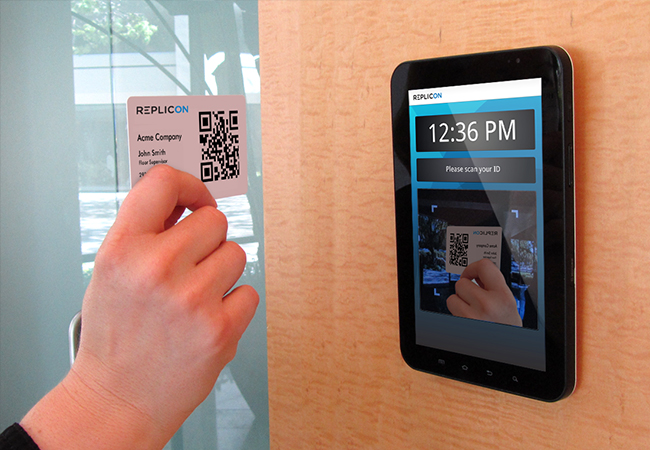
Advantages of timekeeping with magnetic cards:
- Time-saving: at 2 seconds, clocking in becomes simple and fast, helping to reduce timekeeping duration for large-scale businesses.
- Easy to maintain: magnetic cards are made of plastic, making them easier to maintain than paper cards.
- High efficiency: the time clock is connected to a computer, facilitating data processing and aggregation, thereby enhancing HR efficiency.
- Accurate: integration with a computer makes information aggregation fast, convenient, and concise, minimizing errors and saving time, effort, and manpower.
- Flexible: magnetic card clocks can integrate features like facial recognition, fingerprint scanning, etc.
- Additionally, magnetic card clocks have a backup power source to prevent data loss during power outages.
Disadvantages of timekeeping with magnetic cards:
- Incurs additional costs for printing magnetic cards for employees
- Requires employees to carry the card with them
- Buddy punching is easy if there is no supervision.
3.3 Timekeeping with Fingerprints
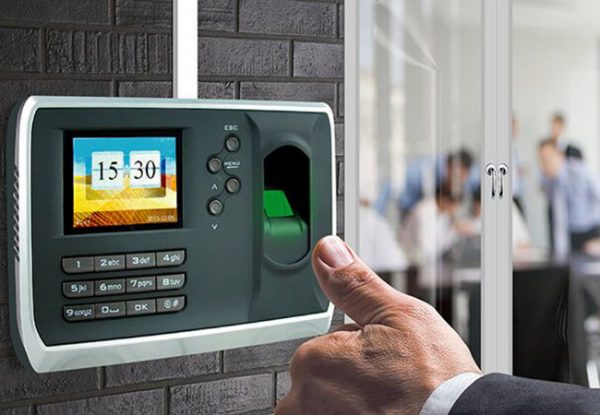
This is one of the most popular timekeeping methods today, using an electronic fingerprint time clock. This method applies biometric fingerprint technology and image processing to identify each person by their fingerprint. The fingerprint timekeeping process is established based on each company’s regulations, including rewards and penalties based on the time clock data. This is also a very common timekeeping method in offices and companies. Pros and cons of fingerprint time clocks:
Advantages of timekeeping with fingerprints:
- High accuracy and stable operation.
- Minimizes buddy punching and other forms of timekeeping fraud.
- Fast and professional clock-in process, suitable for offices and buildings.
- No operating costs or card printing fees, and the device cost is also cheaper than facial or iris recognition systems.
- Highly flexible, allowing HR to extract and aggregate data for payroll, management, and employee evaluation.
Disadvantages of timekeeping with fingerprints:
- If the fingerprint is wet, greasy, injured, or worn, it can affect or prevent successful clock-ins.
3.4 Timekeeping with Facial Recognition
Facial recognition timekeeping relies on identifying facial features using previously stored facial data. This is the most superior and advanced timekeeping method available today.
Advantages of timekeeping with facial recognition:
- Eliminates the limitations of other methods, such as forgotten cards, worn fingerprints, etc.
- Provides high accuracy and prevents cases of timekeeping fraud
- Fast and efficient clock-in speed
- No additional operating costs
- Easy to aggregate, manage, and process data as it is synchronized with computers and other electronic devices
Disadvantages of timekeeping with facial recognition:
- The initial investment cost for the time clock is quite expensive
- Compared to fingerprint, card, or paper methods, the processing speed is slower
3.5 Timekeeping with Iris Recognition
This is a method that uses image algorithms to identify individuals based on the complex and unique structure of the iris, even if the user is wearing glasses or contact lenses. This timekeeping method applies Iris Recognition technology. Pros and cons of iris recognition time clocks:
Advantages of timekeeping with iris recognition:
- Absolute accuracy thanks to the most advanced timekeeping technology available today.
- Fast processing speed, simple, and very easy to use.
- Extremely high security.
Disadvantages of iris scanning timekeeping:
- The cost is too high compared to other timekeeping methods.
3.6 GPS Timekeeping
GPS is an abbreviation for the English phrase Global Positioning System. It is a global positioning system that allows users to use GPS receivers to determine their location with the highest accuracy, no matter where they are on Earth.
GPS timekeeping is not yet common in Vietnam but is favored by many businesses worldwide. With just an internet connection, managers can access all employee information: working hours, their current location, and when they leave the workplace. This timekeeping method is particularly suitable for managing remote employees and flexible work schedules.
One of the timekeeping management software most used by companies and businesses is 1Office. It not only supports remote timekeeping for employees but also integrates many other superior HR and business management solutions.
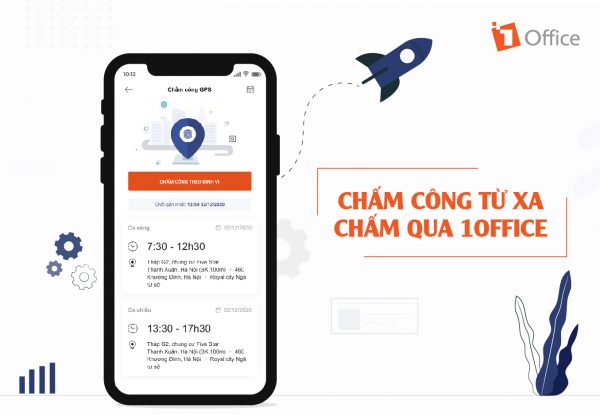
Advantages of GPS timekeeping:
- Managers don’t need to spend too much time yet can still manage timekeeping effectively.
- The software is flexible for each business; some features can be customized for different companies.
- Promotes a more professional work ethic for each employee.
- The software system helps geolocate the company. Employees’ work hours will only be counted when they check in at the company’s location.
Disadvantages of GPS timekeeping: Requires users to have a smartphone with an internet connection.
See more: Top most popular mobile timekeeping apps in 2026
Thus, the article above has introduced the most common and widely used timekeeping methods today. We hope this useful content will help you choose the right timekeeping method for your business, saving maximum time and effort in tracking work hours and calculating payroll for employees.
Register for a consultation: 083 483 8888
















