


 11/05/2026
  408 views
The problem of optimizing logistics operations has always been a major challenge for businesses, with high operating costs, manual processes, fragmented data, and difficulty in tracking goods. Faced with these challenges, logistics software has become a saving grace for many businesses. But what specific features does this software have, and what difficulties in logistics operations can it overcome? In this article, 1Office will help you explore the current leading software options and the criteria for choosing the right one for your needs.
Mục lục
1. 5 Reasons Businesses Should Digitize Transportation Management with Logistics Software
Transportation management software has become a crucial solution in today’s logistics and transport industry. Businesses that adopt this advanced software can unlock significant benefits, markedly improving operational efficiency while quickly meeting the increasingly stringent demands of the market. Here are some reasons for businesses to consider investing:
- Optimize operational processes: The software helps optimize steps like order processing, vehicle dispatching, document creation, and shipping status updates. As a result, the operational process becomes smoother and faster.
- Cost savings: Businesses can better calculate costs based on more stable data for each shipment, route, driver, or warehouse. Important data is centralized in one place, reducing waste, minimizing losses, and improving resource utilization efficiency.
- Enhanced real-time tracking: The software helps businesses proactively track the shipping process by updating order statuses, vehicle locations, and delivery schedules in near real-time. Although not absolutely ‘real-time,’ reducing delays in delivery progress updates helps operations and customer care departments respond faster to incidents and coordinate flexibly.
- Increased accuracy: When data is digitized and synchronized, errors in data entry, reporting, and coordination are significantly reduced. The software also allows for cross-checking, overdue alerts, and automatic reminders.
- Improved customer satisfaction: Customers can receive quick updates on their order status, reducing waiting times and enabling more effective feedback handling. Good logistics management is fundamental to enhancing the customer experience and retaining customers.
>>>Learn more: What is digitalization and how to apply it to your business
2. Top 10 Logistics Management Software Worth Investing In
Below is a comparison table of popular logistics software, giving you an overview of the pros and cons of each based on 5 criteria:
| Coordination & Order Tracking Capabilities | System Integration | Reporting & Analytics | Security | Cost | |
| Software Name | |||||
| Mona | Strong, automatically changes order status, manages shipping from order receipt to home delivery | Integrates with websites as an Extension, integrates online payments, does not integrate with other management modules | Intuitive | Strong, frequently updated | (Package) 50 million VND |
| Bytesoft Logistics | Closely tracks changes in contracts, vehicle information, etc. | No integration | Detailed | Strong, uses Blockchain technology to help with authorization and restrict unauthorized access | Depends on the contract |
| BestGear | Strong, uses GPS positioning technology and data analysis for effective route planning | Integrates with the company’s existing systems | Detailed, customizable | Good | Depends on the contract |
| TMS ViettelPost | Uses TMS (Transportation Management System) and Smart Warehouse, combined with IoT technology | Integrates with Sapo and Getfly management software | Intuitive | Good, uses AI and RFID technology | Depends on the contract |
| OpenTCS | Automated vehicle coordination, supports AGVs and non-continuous transport devices | Integrates with external systems | Supports modeling and scheduling of transportation | Good | Free |
| Mekong Soft | Manages transportation, tracks vehicle routes by depots | Basic ERP, CRM connection API, flexible customization | Detailed reports on transportation and costs, no strong dashboard yet | Good | Consultation required |
| Winta Logistic | Comprehensive order management, real-time tracking, sends messages to drivers/customers when events occur | Multi-dimensional integration, links to comprehensive enterprise management modules | Intuitive dashboard, diverse reports, predictive analytics | Multi-layered security, data encryption | Consultation required |
| Viindoo SCM | Automates warehouse and transportation processes, no order tracking function | Integrates with modules within the same system | Detailed | Good | (Standard) 198,000 VND/user/month |
| MISA AMIS (Logistics module) | Requires integration with external tracking sources | Integrates with internal systems | Supports reporting and data analysis | Good | Depends on the contract |
| SAP Business One | Manages goods, processes inbound and outbound orders, supports vehicle location and fuel consumption tracking | Integrates with internal systems | Supports reporting and data analysis | Good | Consultation required |
Choosing the right logistics management software is a crucial step for businesses to optimize operations, control costs, and improve service quality. Here are more details about the features of the software:
Mona NHTQ
This software is developed by Mona Media and specializes in managing logistics processes related to importing goods from China (NHTQ) to Vietnam. Launched over 8 years ago, Mona has almost monopolized the Chinese import market in Vietnam with a 95% market share, meeting 99% of the operational needs of importing businesses.
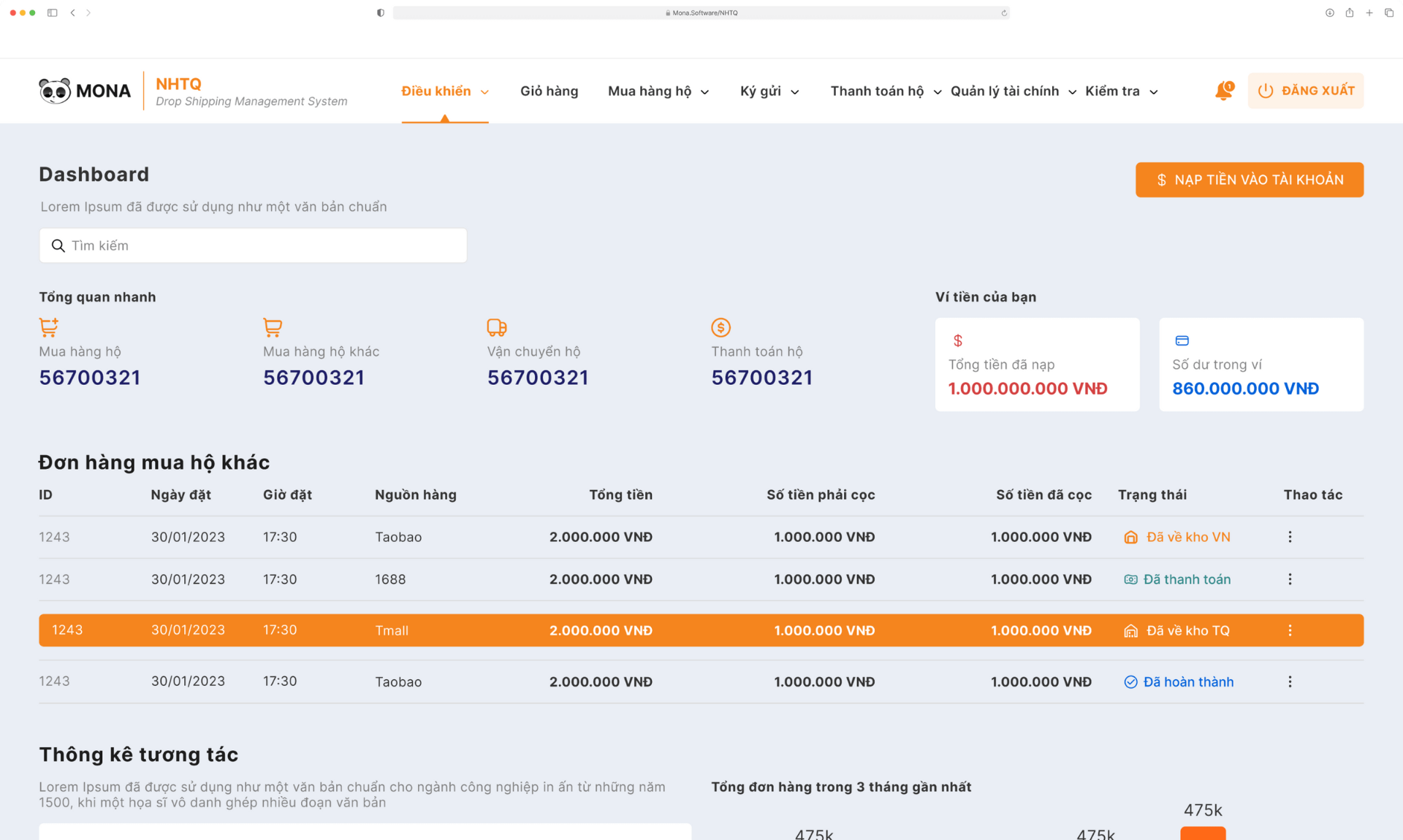
Mona NHTQ software interface
Key features:
- Specialized for the China – Vietnam logistics route.
- Provides order management and shipment tracking from receiving to last-mile delivery.
- Supports cost and document management specific to the China – Vietnam shipping route.
- Assisted ordering via Web Extension and Mobile App.
- Meets up to 99% of the operational needs for importing businesses.
- Suitable for businesses or individuals involved in importing, especially from the Chinese market.
Bytesoft
Bytesoft is a transportation and logistics management software solution provided by Bytesoft – a leading technology company in Vietnam specializing in developing software solutions to optimize business operations. With many years of experience in technology and a deep understanding of transportation specifics, the Bytesoft Logistics module helps businesses improve operational efficiency, manage fleets, optimize transport routes, and manage costs effectively.
Key features:
- Provides modules for transportation management, warehouse management, or overall logistics.
- Typically targets specialized transportation companies.
- Seamlessly integrates with ERP, accounting, and warehouse systems within the same ecosystem.
- Detailed, easy-to-understand transportation performance reports based on KPIs.
- Secures data information using transparent Blockchain technology.
- Suitable for medium to large-sized companies needing a centralized management solution.
BestGear
BestGear is a specialized transportation management software for companies in the container transport and multimodal logistics sectors. The software provides features for fleet management, route optimization, and vehicle tracking. BestGear also integrates timely alerts for incidents during transit, helping managers handle issues easily and minimize risks.
Key features:
- Provides a specialized solution for container transport management.
- Focuses on optimizing routes and transportation through smart routing algorithms.
- Supports fleet management and journey monitoring.
- Intuitive, easy-to-use interface on multiple devices.
- Suitable for freight transport businesses.
- Flexible connectivity with ERP and CRM systems.
Winta Logistic
Winta Logistics is a very popular and widely used transportation management software in Vietnam. Built on the SQL-Server and .net database platform, the software has fast processing speeds, enabling quick and accurate data retrieval. As a result, Winta Logistics helps businesses save time, minimize unnecessary costs, and avoid errors in their shipping operations.
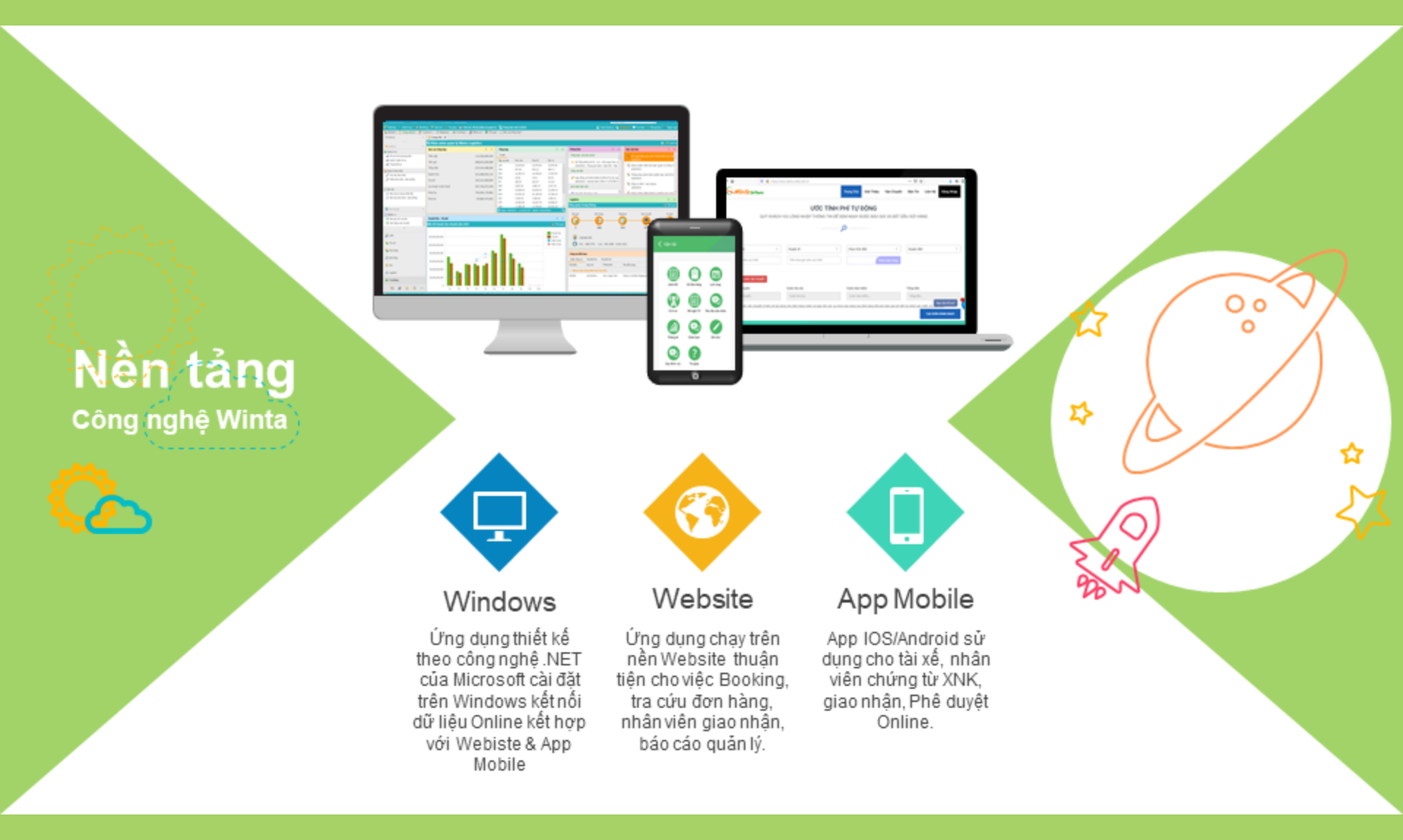
Winta software
Key features:
- Includes multiple modules: CRM, Customs services, transportation, fleet, HR, accounting, etc.
- Customizes the software according to specific business requirements.
- Ability to connect with other devices and software.
- Management by branch, product line, and department.
TMS ViettelPost
This is a Transportation Management System (TMS) developed by Viettel Post, one of the largest logistics companies in Vietnam. The TMS ViettelPost software helps optimize delivery routes, save operational costs, and increase delivery speed through flexible coordination and close monitoring of each order.
Key features:
- The TMS solution is built on Viettel Post’s practical operational experience, making it highly reliable.
- Centralized transportation management, monitoring the entire supply chain.
- Powerful features for order management, transport coordination, and delivery tracking.
- Multi-dimensional reporting, supporting demand forecasting and cost analysis.
- Application of modern technologies: Robots, IoT, barcodes, etc.
- Secure data protection, meeting the standards of large enterprises.
- Suitable for businesses with large-scale transportation needs, especially those who are partners or use Viettel Post’s services.
OpenTCS
OpenTCS is a free, open-source logistics software that acts as a fleet management system to effectively control and coordinate automated vehicles. This solution can manage a wide variety of vehicles, including automated ones like mobile robots or quadcopters.
Key features:
- It is a Traffic Control System.
- Often used in warehouse or production automation to manage autonomous transport vehicles.
- Open-source software, can be self-customized.
- Free of charge.
- Suitable for businesses with internal automation systems and an IT team capable of implementation and customization.
Viindoo SCM
Viindoo SCM is a comprehensive supply chain management solution developed to help businesses optimize warehouse inbound/outbound processes, build a supplier network, and control order status in a synchronized and tight manner. The software helps businesses closely monitor all stages of the supply chain, from inventory management and transport coordination to tracking orders and related documents.
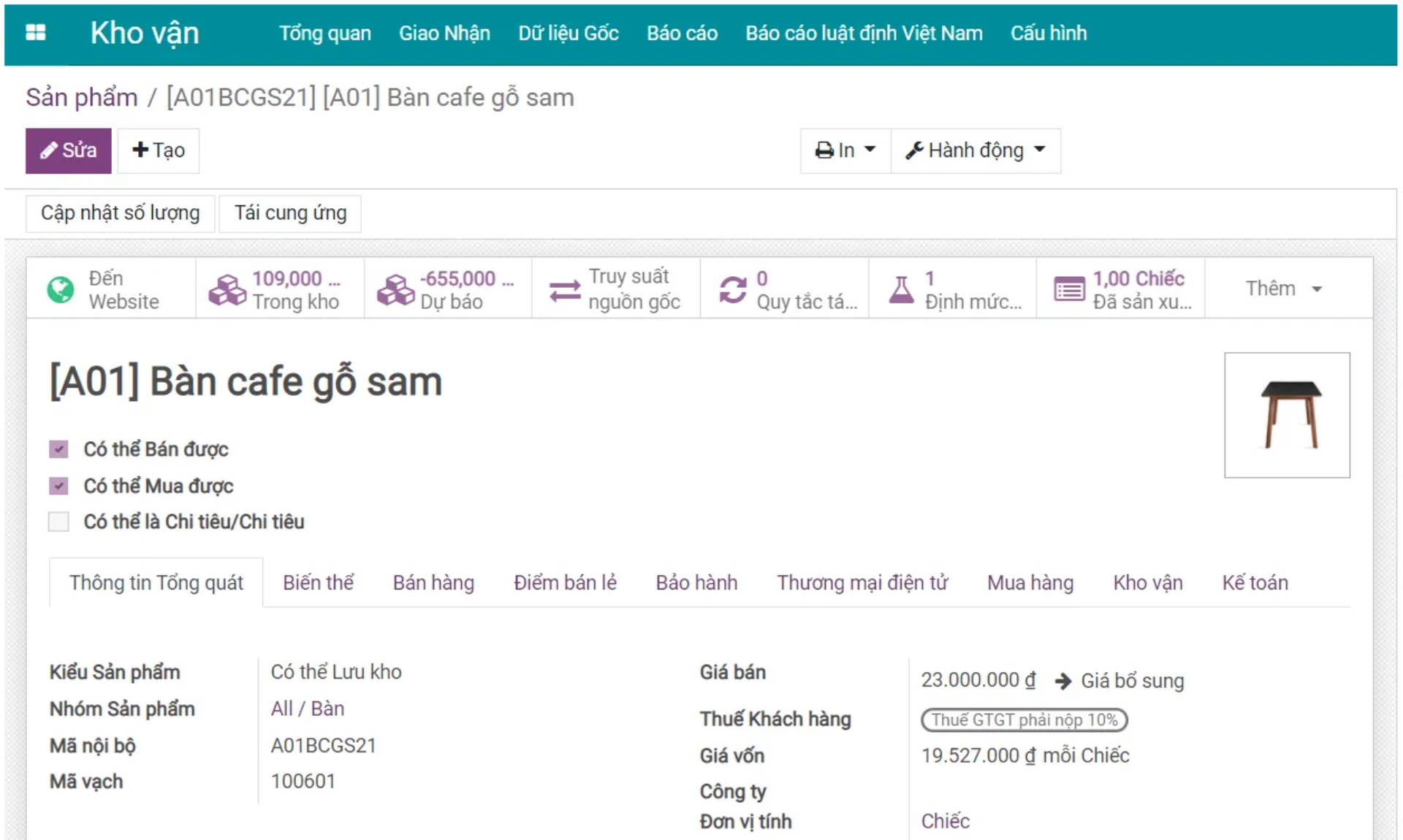
Viindoo software’s Logistics module
Key features:
- Part of a comprehensive ERP ecosystem, seamlessly integrating data with other modules.
- Provides multi-level warehouse management and inventory tracking features.
- Dynamic reports and intuitive dashboards, supporting real-time data analysis.
- Suitable for businesses looking for a comprehensive ERP solution with a supply chain management module, or those wanting a flexible and easily scalable platform.
MISA AMIS Logistics
From a partner familiar to every business, the MISA AMIS Logistics module helps businesses automate operational processes from order reception, warehouse management, and transport coordination to delivery tracking and detailed reporting. The software integrates tightly with the MISA AMIS ERP, accounting, and sales ecosystem, creating seamless data synchronization throughout the entire supply chain.
Key features:
- Deep integration with MISA’s powerful modules such as Accounting, Sales, Inventory, etc.
- Provides capabilities for warehouse management and purchase/sales management related to the flow of goods.
- Strong in its ability to connect with external partners (banks, tax authorities, shipping units, etc.).
- Automates the process of receiving, processing, and shipping orders.
- Detailed, multi-dimensional reporting, supporting analysis and forecasting.
Mekong Soft
Mekong Soft specializes in providing sales and production management software for specific industries, including logistics software. Mekong Soft offers a software solution for managing transport vehicles and freight forwarding, helping transport companies maximize fleet efficiency and optimize shipping processes. With its ability to automate document management, Mekong Soft helps reduce errors from manual workflows.
Key features:
- Detailed management of fleets, vehicles, and transport schedules.
- Tracks the shipping process through various stages.
- Supports management of transport contracts, costs, and transparent revenue/expenditure.
- Detailed and diverse reports for analyzing operational efficiency.
- User-friendly interface, easy to use for all user levels.
3. Criteria for Choosing the Right Logistics Software
Choosing the right logistics software not only helps businesses save costs but also creates a foundation for stable operations and scalability. To make a sound investment, businesses need to carefully consider the important criteria below:
- End-to-End Management: The software should cover all links in the logistics chain, from goods receipt, warehousing, transportation, and delivery to document processing. This synchronization helps reduce repetitive tasks, minimize errors, and improve tracking efficiency.
- Integration with Internal Systems: The solution must be able to connect with existing software such as ERP, customer management, human resource management, accounting, and sales.
- Intuitive Interface, Real-Time Reporting: The software should provide an easy-to-monitor dashboard and visual reports in near real-time. Users at various levels (employees, department heads, management) should be able to export data quickly.
- Flexibility and Scalability: The software should allow for customization according to the operational model, especially as the business grows or adds new branches, warehouses, or shipping routes.
- Data Security and Regulatory Compliance: Logistics data often involves goods, documents, and bills of lading – therefore, the software must ensure security standards, clear access permissions, and compliance with regulations on storage, accounting, and customs.
4. How AI and Low-code are “Revolutionizing” Logistics Software
In a context where logistics is becoming increasingly complex and demands high speed and accuracy, AI technology and Low-code platforms have become secret weapons, creating breakthroughs in logistics management and operations. Not only do they help optimize processes, but these two technologies also support businesses in saving time and costs, and enhancing their ability to monitor and make faster, more accurate decisions.
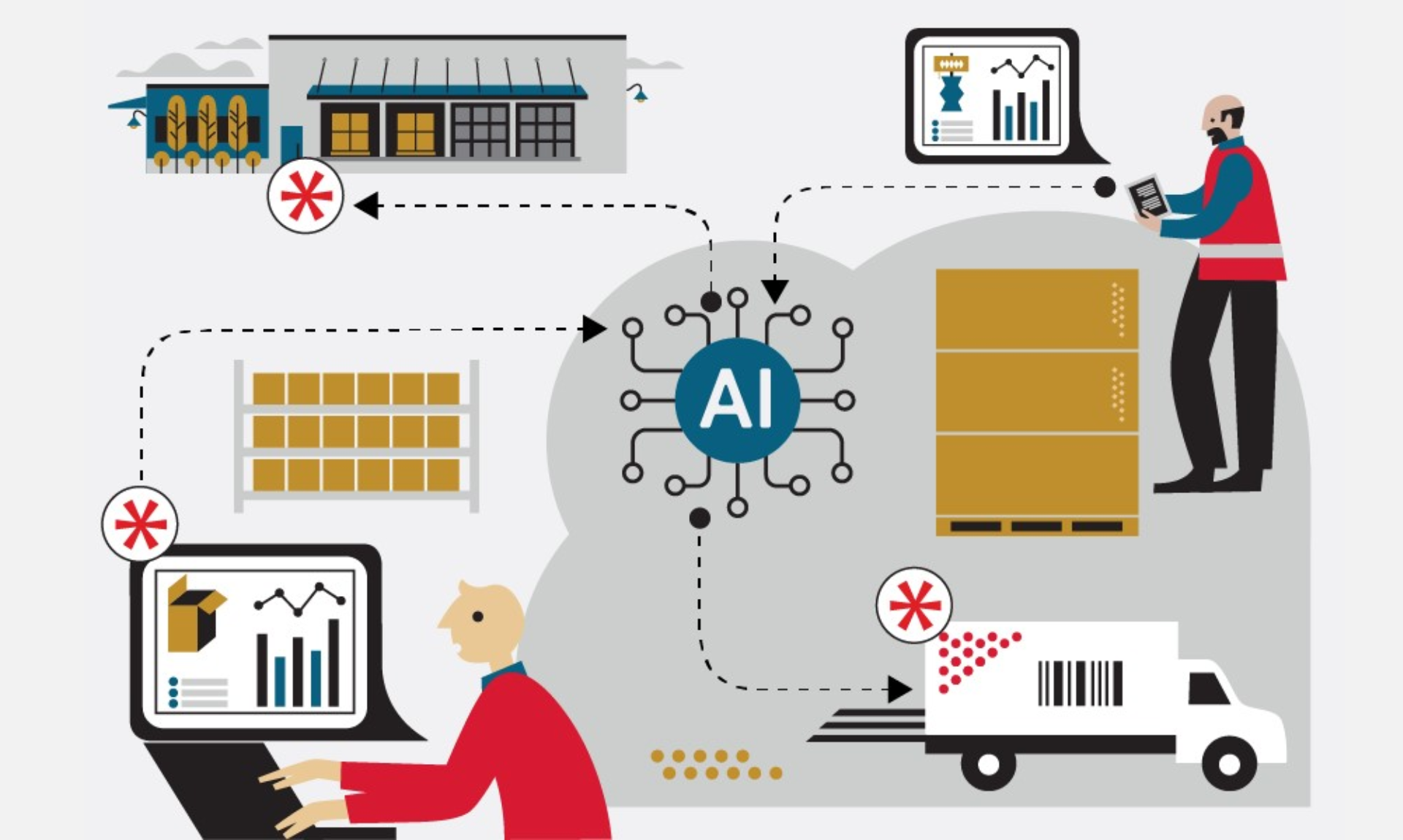
Integrating AI into Logistics Operations
Conventional logistics software focuses on digitizing and automating manual tasks such as data entry, document printing, and basic tracking. Although they improve efficiency compared to paper-based work, their ability to optimize, forecast, and make intelligent decisions is limited.
Meanwhile, modern platforms that integrate AI and Low-code technology are superior due to:
- Using Big Data: Collecting large amounts of data from multiple sources (from IoT sensors, shipping history, market data) to help businesses gain insights into performance, costs, and bottlenecks in the supply chain.
- Applying AI: Analyzing big data to optimize routes, forecast transportation demand, identify and manage potential risks, or automate the sorting of goods in the warehouse.
- Advanced Automation: Not only automating single tasks but also connecting and automating entire complex workflows across all logistics stages, even linking with other systems.
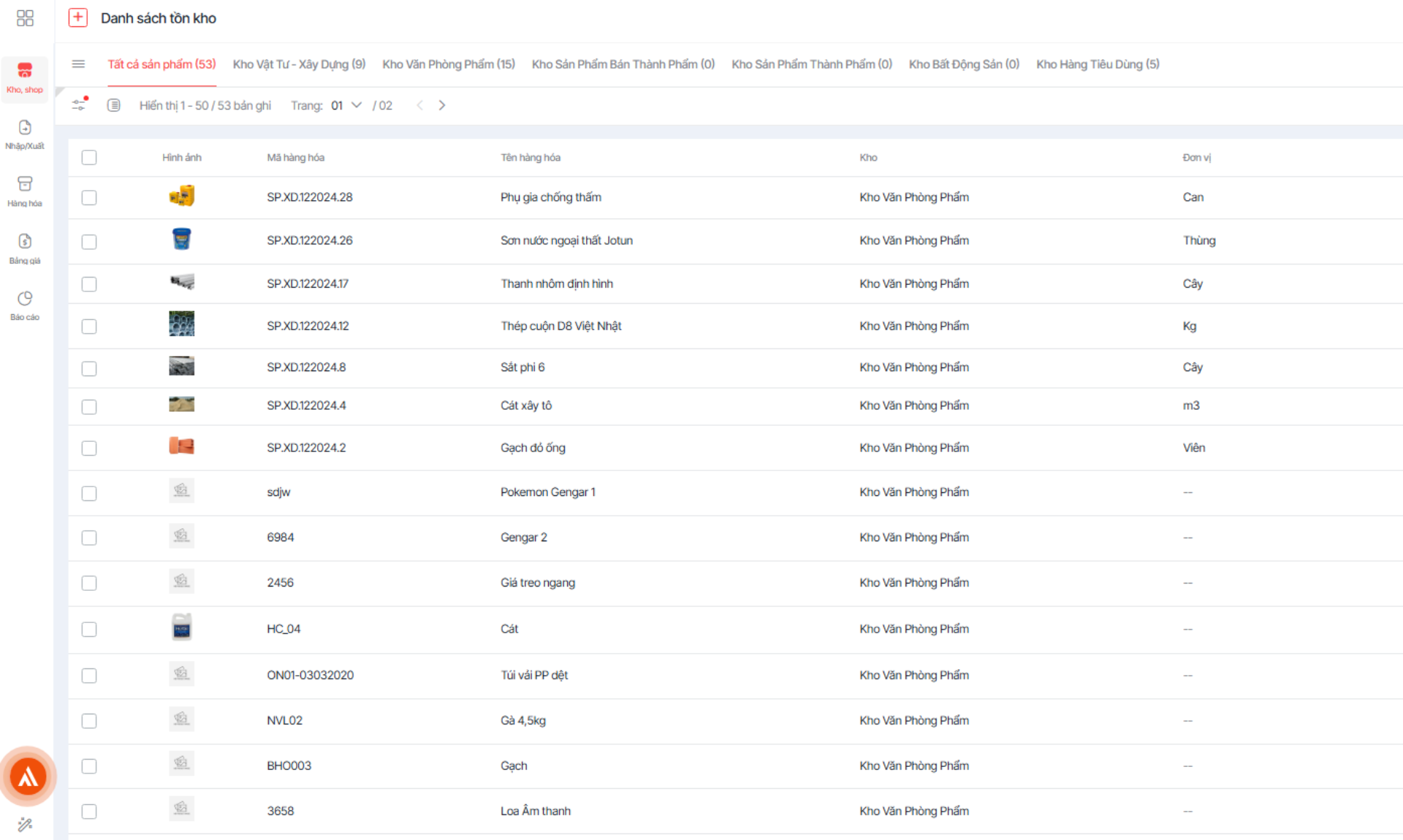
Managing inventory lists with 1Office
Register for a free 1Office feature Demo account!
At 1Office, Low-code and AI are integrated into inventory management as a foundation with strengths such as:
- Building a Detailed Product Catalog: Visually control the warehouse, storing information about all of the company’s products.
- Customizing Warehouse Operations Processes: The powerful customization capability from Low-code allows users to easily tailor goods receipt/issue, inventory counting, or goods movement flows to best suit their specific warehouse and product types.
- Analyzing Inventory Data: With the integration of an AI virtual assistant, 1Office can support the analysis of inventory data to forecast demand, optimize goods storage locations, or analyze the work performance of warehouse staff based on collected data.
When choosing the right logistics software, organizations need to base their decision on a thorough assessment of their specific needs, the software’s integration capabilities, and their long-term development goals. Furthermore, if a business needs a comprehensive management platform to coordinate between logistics and other departments such as HR, finance, and operations, solutions like 1Office will play a role in supporting system expansion comprehensively and flexibly.
















