10/05/2026
  446 views
A specialized HRM software for the construction industry not only helps manage GPS timekeeping and safety training but also automates project-based payroll. Forget the worries of manual timekeeping at remote construction sites or complex Excel payroll sheets. The construction industry demands a more robust solution. Join 1Office to explore the top 6 solutions that help construction businesses optimize resources and minimize operational risks.
Mục lục
- 1. Top 6 Best HRM Software Solutions for Construction Businesses
- Overview Comparison
- 1.1. 1HRM – Comprehensive AI-integrated HR management solution
- 1.2. VnResource HRM Pro – Specifically designed for the real estate sector
- 1.3. ClickUp – Streamlining HR management
- 1.4. Paycor – HRM software for the construction industry with strong timekeeping features
- 1.5. BambooHR – Best for comprehensive HR management
- 1.6. Keka – Best for performance management
- 2. Specific HR management needs of the construction industry
- 3. Criteria for selecting HRM software for a construction company
- Conclusion
1. Top 6 Best HRM Software Solutions for Construction Businesses
Below is detailed information about the top 6 human resource management software with features tailored to the specific needs of the construction industry.
Overview Comparison
| Software | Key Features |
| 1Office HRM |
|
| VnResource HRM Pro |
|
| ClickUp |
|
| BambooHR |
|
| Paycor |
|
| Keka |
|
1.1. 1HRM – Comprehensive AI-integrated HR management solution
The 1HRM human resource management solution covers all operations from recruitment, training, timekeeping, and payroll to performance evaluation. The tool also integrates the power of AI to automate and optimize operations, making it particularly suitable for the construction industry.
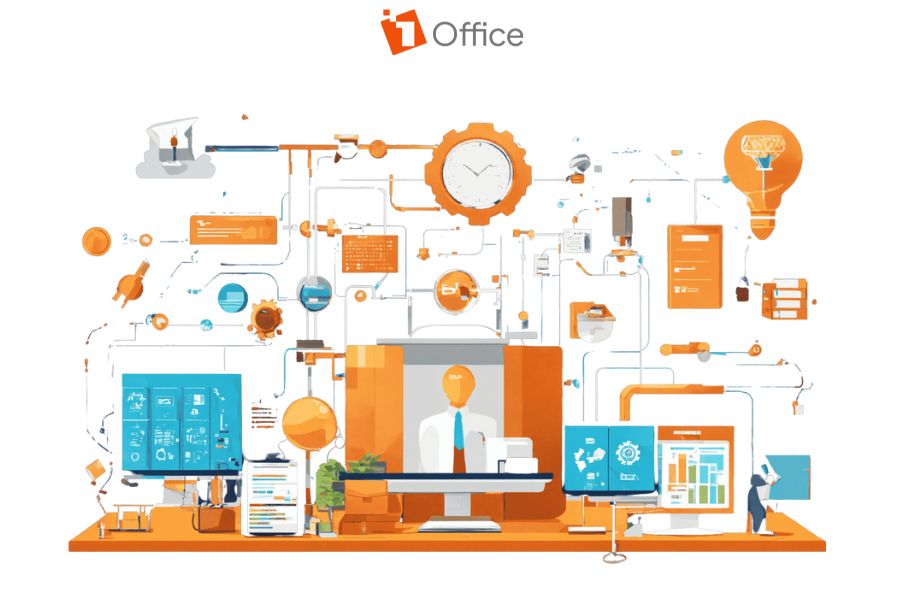
Key features:
- Timekeeping & payroll for construction sites: 1Office solves the challenge of distributed timekeeping in the construction industry by supporting connections with all types of time clocks (fingerprint, FaceID). More importantly, the software allows employees at construction sites to clock in via a mobile app (GPS, WiFi).
- AI integration in project & risk management: The biggest differentiator of 1Office is the “embedding” of HRM into the project management process. AI is integrated to automatically analyze and provide smart risk warnings.
- AI application in recruitment & training: To address the need for large-scale labor recruitment, AI automatically screens CVs, analyzes, and recommends suitable profiles. The system also integrates an LMS to build online courses, which is especially important for mandatory occupational safety training.
- High security and user-friendly interface: The platform is built on a high-security foundation and has an easy-to-use interface for both managers and employees.
1.2. VnResource HRM Pro – Specifically designed for the real estate sector
VnResource provides an HR management solution specifically designed for the Construction – Real Estate industry. This solution addresses the unique challenges of the sector, which often deals with a management model involving multiple companies/legal entities within a single corporation.
Key features:
- Supports a multi-company management and authorization model, allowing employees to work in multiple locations.
- Supports continuous work shift groups and flexible work schedules dependent on project timelines.
- Uses GPS timekeeping for employees who frequently travel or work at construction sites without time clocks.
- Supports flexible payroll for various salary types, including Graded Salary, 3P Salary, and Sales-based Salary.
1.3. ClickUp – Streamlining HR management
ClickUp is a well-known HRM software for the construction industry, considered the best tool for HR project management.
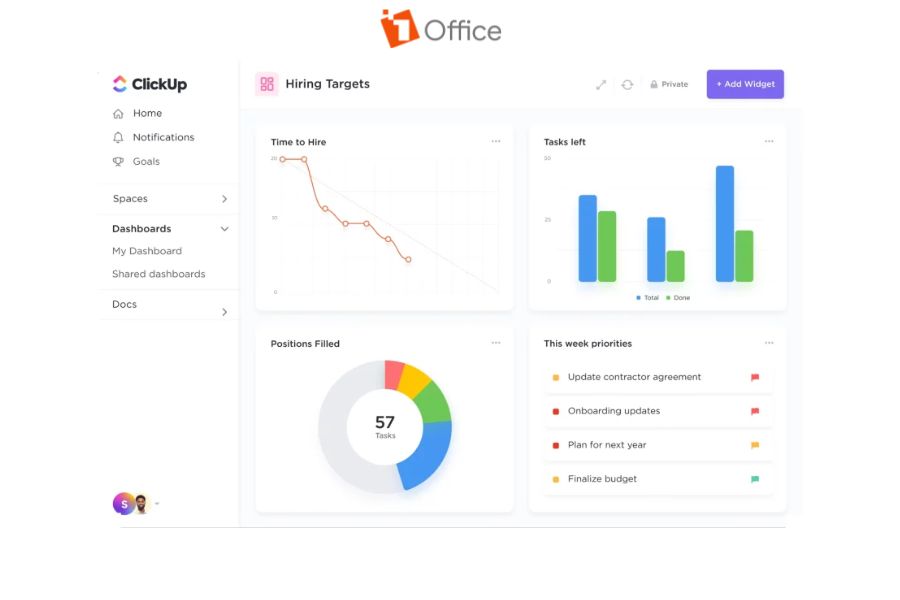
Key features:
- An all-in-one tool that boosts productivity and team collaboration.
- Supports employees with a trackable training process, specifically designed for construction projects from the office to the site.
- Provides free HR templates, such as an HR knowledge base, to centralize policies, processes, and procedures.
1.4. Paycor – HRM software for the construction industry with strong timekeeping features
Paycor is rated as the best software for custom HR solutions, particularly strong in time management and timekeeping for the construction industry.
Key features:
- Ensures compliance with minimum wage laws by using complex features like piece-rate pay and blended overtime calculations.
- Offers advanced time clocks and mobile timekeeping features.
- Provides practical guidance and expert support to customize the software for specific construction management needs.
1.5. BambooHR – Best for comprehensive HR management
BambooHR is rated as the most suitable software for comprehensive HR management. This software helps HR teams in the construction sector save time and reduce operational costs.
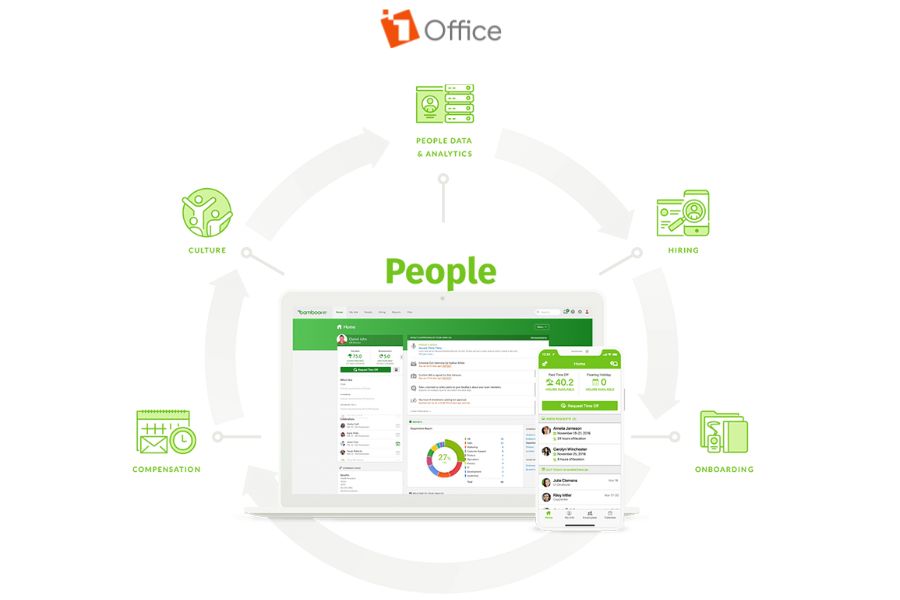
Key features:
- Allows employees and managers to track injury reports, safety training, and other compliance requirements from anywhere with an internet connection.
- Eliminates the need for multiple spreadsheets to track time and manage payroll.
- Manages all employees in a single, secure, and organized database.
- Enhances the onboarding experience for new employees with tools that help them quickly grasp safety procedures.
1.6. Keka – Best for performance management
Keka is an HR software that creates a user-centric experience and is considered the best for performance management.
Key features:
- Provides 360-degree views, OKR software, and continuous feedback, ideal for growth-oriented organizations.
- Helps comprehensively manage temporary staff (contract, seasonal employees) and track their performance to make decisions about long-term hiring.
- Offers a self-service platform for employees to update profiles, request leave, and perform other tasks.
2. Specific HR management needs of the construction industry
The construction industry has unique HR management challenges and needs due to the nature of the work and its workforce:
- Large and dispersed workforce: The construction industry has a large workforce, including many contract employees working at remote locations or construction sites.
- Complex management: The challenge of human resource management and the model of managing multiple companies/legal entities within a corporation is always time-consuming and labor-intensive if done manually.
- Employee transfers: Frequently handling employee transfers between legal entities.
- Diverse timekeeping: Need to manage timekeeping for teams of engineers working on-site or sales staff who are constantly on the move.
- Flexible salary and bonus policies: Need clear salary and bonus policies based on sales or KPIs to attract and retain talent.
- Compliance issues: The construction industry faces workplace risks and needs to comply with complex regulations.

3. Criteria for selecting HRM software for a construction company
To choose the right HRM software for the construction industry, businesses should consider the following essential features:
3.1. Flexible timekeeping and payroll
Effective workforce management requires software that can accurately track, schedule, process payroll, and manage timekeeping. Since the construction industry has various types of workers (hourly, daily, monthly), the software must be able to track different payment models.
A mandatory requirement is support for advanced timekeeping, especially the ability for GPS location-based clock-ins for off-site employees. Additionally, the system must support complex payroll calculations, such as piece-rate pay, sales commissions, or combined overtime calculations.

3.2. Mobile accessibility (Mobile App/Self-Service)
Mobile accessibility is crucial for the construction industry. For workers and engineers on-site, managing data, tracking progress, and coordinating with teams on the go is essential.
The software must have a Portal/Self-service compatible with both Web-based and Mobile-App (iOS & Android) platforms. This allows on-site employees to view their personal information, check annual leave, view monthly payslips, as well as request/approve days off, overtime, and conveniently clock in using GPS.
3.3. HR data management
Proper management of employee data is paramount. The software must create a centralized information hub for all employee information and organize their records. The system needs to securely store employee records, including employment contracts, social insurance information, and related documents.
3.4. Employee self-service & safety training
HRM software for the construction industry must provide employees with self-service processes. These processes include accessing personal records, managing leave, and most importantly, accessing safety training materials.
In the construction industry, tracking safety training courses and other compliance requirements from anywhere with an internet connection is very important. The software should support the creation of workplace safety training modules and allow managers to update and track employee progress.
3.5. Extended operations management
The software must be able to manage the entire project (including information on construction start dates, end dates, participants, documents, and investment capital). Additionally, it must support the control of material and asset inventory, and equipment (including item catalogs, quantities, expiration dates, and stock levels). Other extended features include tracking customer information, material suppliers, and debts (accounts receivable and payable).
Conclusion
Investing in HRM software for the construction industry is a strategic decision that helps businesses standardize processes and optimize resources. Is your business ready to seamlessly manage personnel, materials, and project finances on a single platform? Contact 1Office today for an in-depth consultation and learn how we can solve the most complex operational challenges in the construction industry.