


 12/05/2026
  310 views
A product goes through many processes before it reaches the user, and all these processes are part of the supply chain. The links in the supply chain start from sourcing raw materials and end when the vehicle carrying the finished product reaches the end user. Therefore, the supply chain plays a very important role in delivering products and services to consumers. Let’s explore with 1Office what a Supply Chain is and the most popular supply chain models chosen by businesses.
Mục lục
1. What is a Supply Chain?
A supply chain is a combination of activities and processes related to the production, transportation, and distribution of products/services from the supplier to the end customer. This process spans from the stage where a business sources raw materials to when the product/service is delivered directly to the customer. This network includes information, resources, people, and other entities.
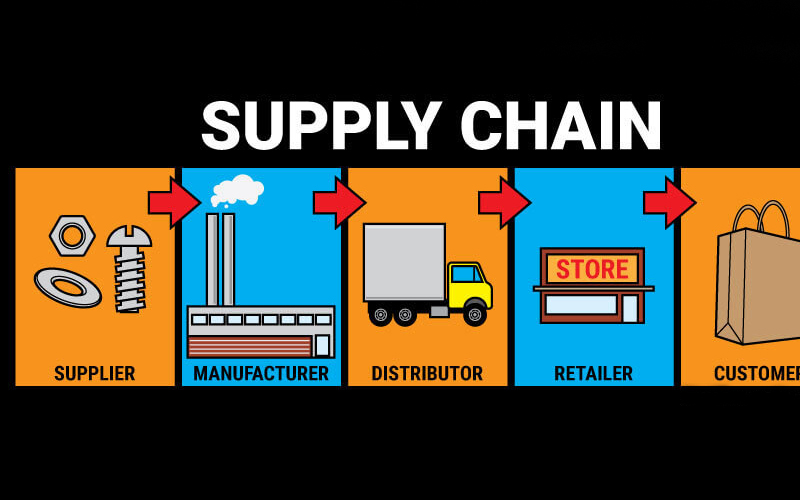
The activities within the supply chain are closely intertwined to transform raw materials into final products, which are then delivered to consumers. Within the supply chain, the residual value (which can be recycled) of products can be reused at any point in the chain. An effective supply chain can help businesses reduce costs, increase productivity, and enhance the quality of products/services.
2. The Role of the Supply Chain
The smooth operation of the supply chain is central to how many businesses function. The supply chain plays a crucial role for businesses, demonstrated in the following aspects:
- Ensuring a stable supply: The supply chain helps businesses secure a stable supply of raw materials and goods, meeting production and business needs. This helps businesses avoid production and business disruptions due to shortages of raw materials and goods.
- Effective flow management: The supply chain helps businesses manage the flow of raw materials and goods effectively, minimizing waiting times, transportation costs, and inventory. This helps businesses optimize the process of producing and distributing products/services to the end consumer.
- Minimizing costs: The supply chain helps businesses minimize production, transportation, and storage costs. This helps businesses improve business efficiency and increase profits.
- Mitigating risks: The supply chain helps businesses mitigate risks and optimize business efficiency for products with seasonal characteristics or limited shelf life.
- Enhancing competitiveness: The supply chain helps businesses enhance their competitiveness in the market.
To ensure a stable and reasonable quantity of goods, balancing inventory and sales for optimal supply chain operation is crucial. However, to achieve this goal, businesses need accurate forecasts of supply and demand to determine appropriate inventory levels and avoid market disruptions.
To make accurate forecasts, businesses need to collect and analyze market information, including consumer trends, economic conditions, competition, and other relevant factors that affect customer demand.
3. The Structure of a Supply Chain
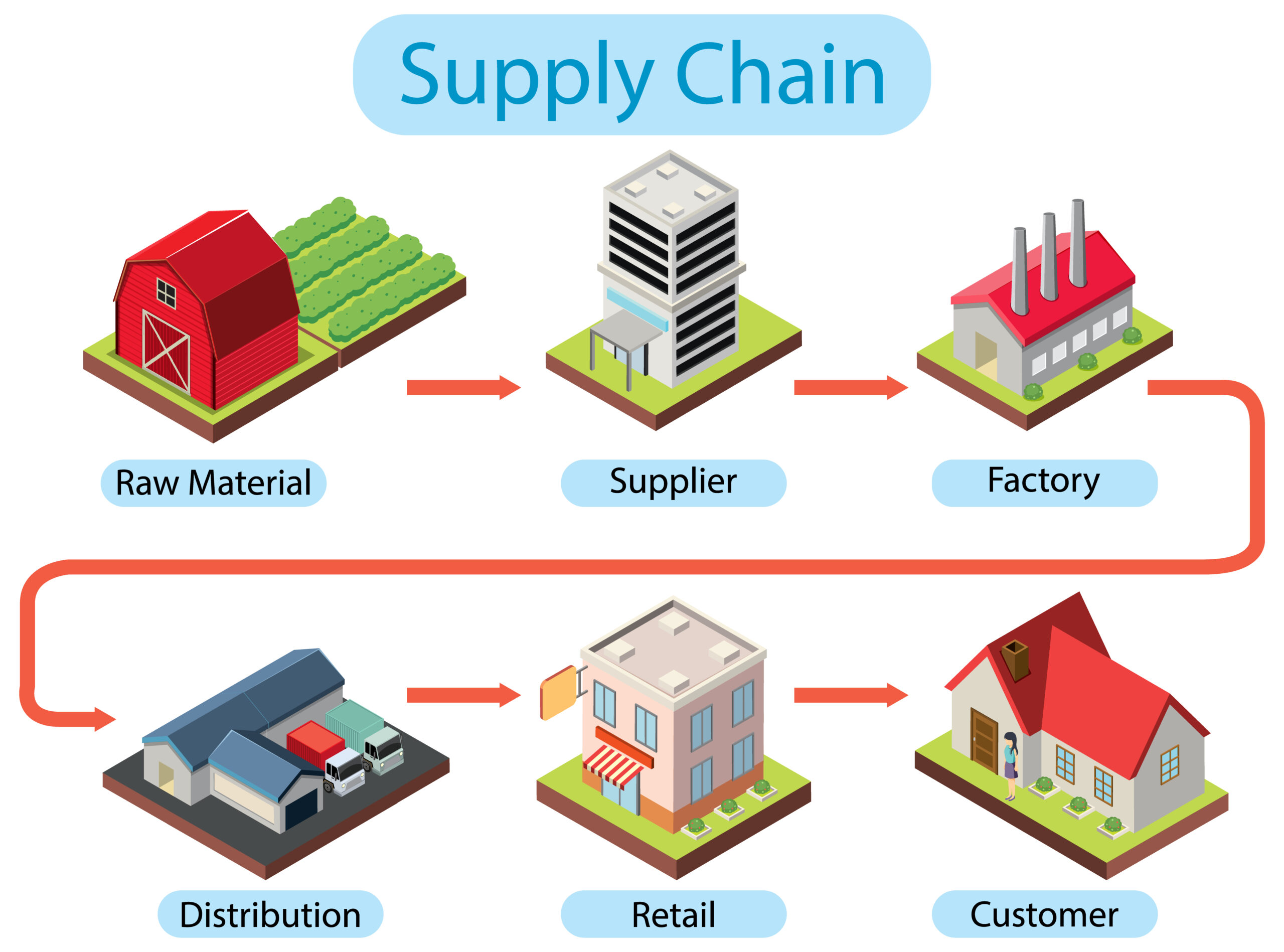
The structure of a supply chain can be designed and customized to fit the needs and characteristics of each business. However, regardless of its design, the supply chain structure must adhere to the following principles:
- Efficiency: The supply chain must be designed and operated efficiently to ensure products or services are delivered to customers quickly, accurately, and cost-effectively.
- Flexibility: The supply chain must be designed and operated flexibly to adapt to market changes.
- Sustainability: The supply chain must be designed and operated sustainably to protect the environment and society.
A complete supply chain is formed from the following 5 basic components:
3.1 Raw Materials
Raw materials are considered a crucial part of the supply chain, serving as the starting point for all goods. Production can only begin once raw materials are available.
3.2 Supplier
Suppliers play a crucial role in the supply chain, ensuring the provision of quality raw materials, parts, and services on time and at reasonable prices. Suppliers can help businesses reduce production and business costs by providing raw materials, parts, and services at competitive prices.
3.3 Manufacturer (Factory)
If there are only raw materials without a manufacturer, it’s impossible to sell to customers. The manufacturer helps transform raw materials into the final product. A strong link between the raw material supplier and the manufacturer is crucial, as any issue in either of these steps will affect the entire supply chain.
3.4 Distributor (Distribution)
After the product is completed, it cannot be delivered to each customer individually. The distributor takes on this role. However, a single distributor cannot meet the needs of all customers in the market. Typically, they will partner with retailers (such as grocery stores, supermarkets, convenience stores…) to distribute the product to users.
3.5 Retailer (Retail)
Retailers are responsible for selling goods to consumers. They usually import large quantities of goods into their warehouses and then sell them individually to each customer. Examples include grocery stores, supermarkets, convenience stores…
3.6 Customer
The customer is the final consumer of the goods. Although they can buy from distributors if purchasing in large quantities, this rarely happens. Most of the time, they buy from retailers, and distributors also rarely sell directly to individual customers.
4. Some Popular Models in the Supply Chain
4.1 The SCOR Model
The SCOR (Supply Chain Operations Reference) model is the most widely used supply chain operations model in business practice today. The SCOR model helps businesses evaluate and measure the performance of the entire supply chain. Within the SCOR model, businesses can manage all activities related to suppliers and customers, such as goods transportation, order fulfillment, warranty processing, and managing the returns process.
The SCOR model operates on three main principles, including:
- Process modeling and restructuring
- Performance measurement
- Best practices.
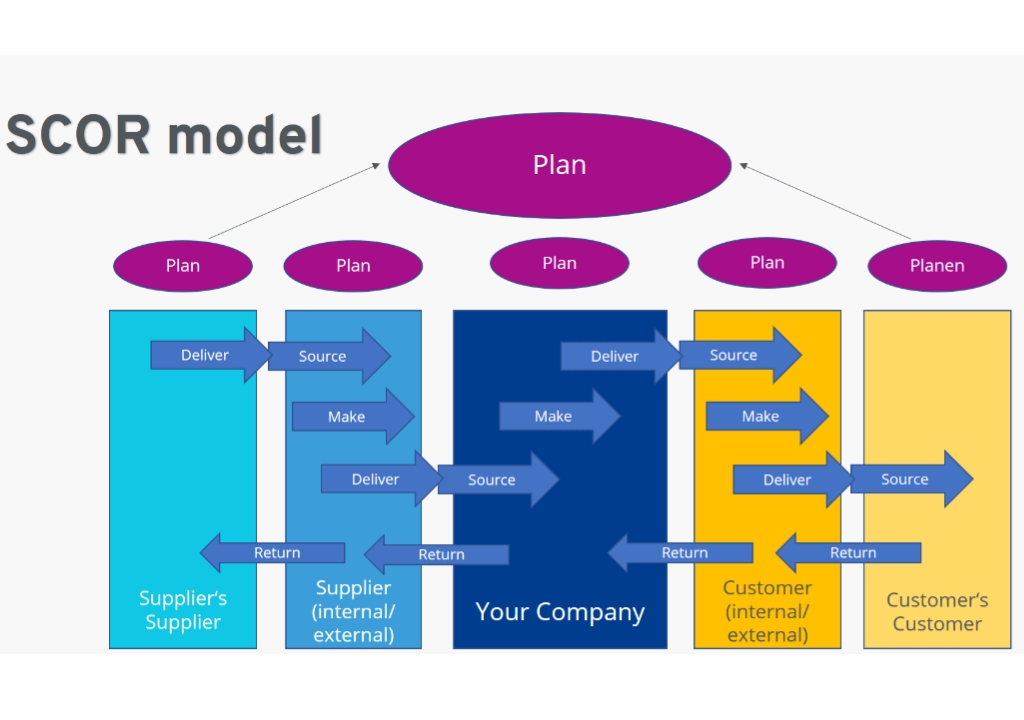
The SCOR model not only helps businesses understand and manage the relationships between steps in the supply chain, from the initial supplier to the end consumer, but also supports the comparison and application of performance standards, thereby helping businesses optimize their supply chain operations and processes.
The operational process of the SCOR model includes the following 5 elements:
- Plan: Includes balancing resources, establishing rules, standards, and a supply chain plan that aligns with the company’s financial plan.
- Source: Involves inventory management, sourcing raw materials, negotiating, and paying suppliers.
- Make: Includes the production, packaging, and release of products according to order requirements. Additionally, this task involves managing the production network, equipment, facilities, and transportation.
- Deliver: Includes all activities related to bringing the product to market, such as order management, warehousing, distribution, and transportation. This step also involves the overall management of the product lifecycle, inventory, import/export requests, and customer service.
- Return: This step focuses on handling returned products for any reason. Every business needs to prepare scenarios for handling returned products. The return process must comply with business rules, inventory management, and other regulations. Additionally, this step is closely related to customer support and care.
The SCOR model does not attempt to describe all of a company’s business processes or activities. Instead, it focuses on three main aspects: customer interactions, product transactions, and market interactions.
4.2 Continuous Flow Model (JIT model)
The Just-in-Time (JIT) model is a supply chain management model that aims to optimize production and warehousing efficiency by providing raw materials and goods at the right time, in the right place, and in the right quantity according to production needs.
In the JIT model, managers need to regularly replenish raw materials to avoid production bottlenecks. Some products in this model include common consumer goods (laundry detergent, cleaning agents, etc.) as well as medical supplies and food.
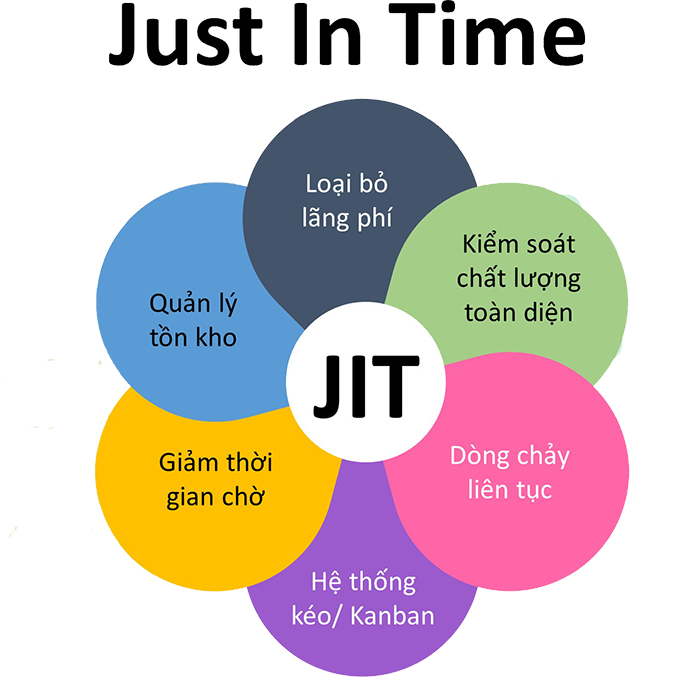
The JIT model offers many benefits to businesses, including:
- Cost reduction: The JIT model helps businesses minimize inventory costs, transportation costs, and production costs by avoiding production bottlenecks.
- Enhanced competitiveness: The JIT model helps businesses enhance their competitiveness in the market through the ability to meet customer demands quickly and effectively.
- Increased customer satisfaction: The JIT model helps businesses increase customer satisfaction by providing products/services at the right time, in the right place, and in the right quantity.
However, the JIT model also has some limitations, including:
- Requires close coordination among supply chain members: For the JIT model to operate effectively, members of the supply chain need to coordinate closely to ensure the timely delivery of raw materials and goods in the correct quantities.
- Vulnerable to market fluctuations: Businesses applying the JIT model need the ability to accurately forecast market demand to avoid surpluses or shortages of raw materials and goods.
To successfully implement the JIT model, businesses need to ensure the following factors:
- Information technology: Information technology plays a crucial role in managing the supply chain under the JIT model. Businesses need to invest in modern supply chain management (SCM) systems to closely monitor and control the supply of raw materials and goods.
- Human resource training: Human resources are a critical factor determining the success of the JIT model. Businesses need to train employees on the principles and methods of the JIT model so they can understand and implement it effectively.
- Changing corporate culture: The JIT model requires businesses to change their corporate culture to emphasize close coordination between departments, flexibility, and adaptability to market changes.
4.3 The Fast Chain Model
The fast chain model is a supply chain management model focused on delivering products or services with speed and flexibility. This model is commonly used in the retail, service, technology, and manufacturing industries.
The fast chain model is based on the following basic principles:
- Customer focus: The fast chain model focuses on meeting customer needs quickly and effectively. Businesses applying this model need the ability to accurately forecast market demand to ensure timely delivery of products or services in the correct quantities.
- Use of information technology: Information technology plays a crucial role in managing the supply chain under the fast chain model. Businesses need to invest in modern supply chain management (SCM) systems to closely monitor and control the supply of products or services.
- Flexibility and adaptability: The fast chain model requires businesses to be flexible and adaptable to market changes. Businesses need the ability to quickly adjust supply plans to meet customer demand.
The fast chain model offers many benefits to businesses, including:
- Enhanced competitiveness: The fast chain model helps businesses enhance their competitiveness in the market by being able to meet customer needs quickly and effectively.
- Increased customer satisfaction: The fast chain model helps businesses increase customer satisfaction by providing products or services quickly and meeting their needs.
- Cost reduction: The fast chain model helps businesses reduce inventory, transportation, and production costs.
However, the fast chain model also has some limitations, including:
- High investment required: To successfully implement the fast chain model, businesses need to invest in modern information technology and infrastructure.
- Difficult to control: The fast chain model requires businesses to have the ability to tightly control the supply of products or services.
–
4.4 Flexible Supply Chain Model
The flexible supply chain model is a supply chain management model capable of adapting to market changes. This model focuses on meeting customer needs quickly and effectively, even when the market changes. The flexible supply chain model is often applied in highly volatile industries, such as fashion, technology, and pharmaceuticals.
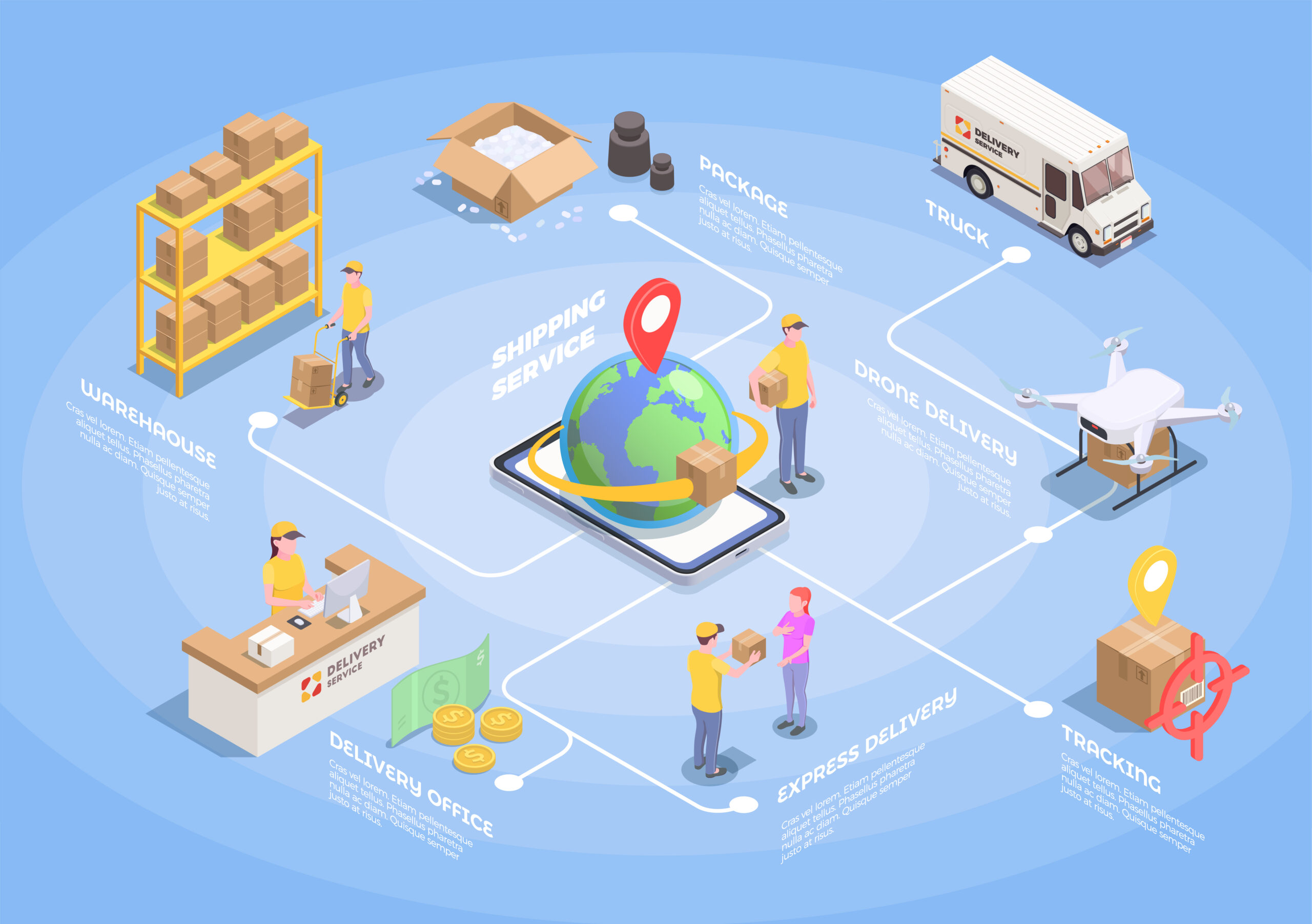
The flexible supply chain model is based on the following basic principles:
- Customer focus: The flexible supply chain model focuses on meeting customer needs quickly and effectively, even when the market changes. Businesses applying this model need the ability to accurately forecast market demand and have contingency plans to meet customer needs when the market changes.
- Use of information technology: Information technology plays a crucial role in managing the supply chain under the flexible supply chain model. Businesses need to invest in modern supply chain management (SCM) systems to closely monitor and control the supply of products or services.
- Flexibility and adaptability: The flexible supply chain model requires businesses to be flexible and adaptable to market changes. Businesses need the ability to quickly adjust supply plans to meet customer demand.
The flexible supply chain model offers many benefits to businesses, including:
- Increased competitiveness: The flexible supply chain model helps businesses enhance their competitiveness in the market by enabling them to respond to customer needs quickly and effectively, even as the market changes.
- Enhanced customer satisfaction: The flexible supply chain model helps businesses increase customer satisfaction by enabling them to deliver products or services quickly and meet their needs, even as the market changes.
- Reduced costs: The flexible supply chain model helps businesses minimize inventory costs, transportation costs, and production costs.
However, the flexible supply chain model also has some limitations, including:
- High investment required: To successfully implement a flexible supply chain model, businesses need to invest in modern information technology and infrastructure.
- Difficult to control: The flexible supply chain model requires businesses to have the ability to tightly control the supply of products or services.
5. Digitize the supply chain management process with 1Office
Inventory management software from 1Office is a comprehensive digital solution for supply chain inventory management, meeting the needs of various types of businesses. With 1Office, businesses can improve operational efficiency, reduce costs, and enhance their competitiveness. The digital supply chain management solutions from 1Office include:
- Purchase Management: 1Office helps businesses automate purchasing processes, from purchase planning, ordering, and receiving goods to payment. This helps businesses save time and costs, while minimizing errors in the purchasing process.
- Warehouse and Logistics Management: 1Office helps businesses manage their warehouses effectively, including tracking inventory, receiving goods, dispatching goods, managing warehouse locations, and more. This helps businesses optimize warehouse space, reduce inventory loss, and improve distribution efficiency.
- Production Management: 1Office helps businesses automate production processes, from production planning and scheduling to product quality control. This helps businesses increase production productivity, reduce waste, and improve product quality.
- Distribution Management: 1Office helps businesses manage the product distribution process, from distribution planning, ordering, and transportation to delivery. This helps businesses ensure that goods are delivered to customers at the right time and place.
- Customer Management: 1Office helps businesses manage customer information, track orders, handle complaints, and provide customer care. This helps businesses enhance the customer experience and increase customer satisfaction.
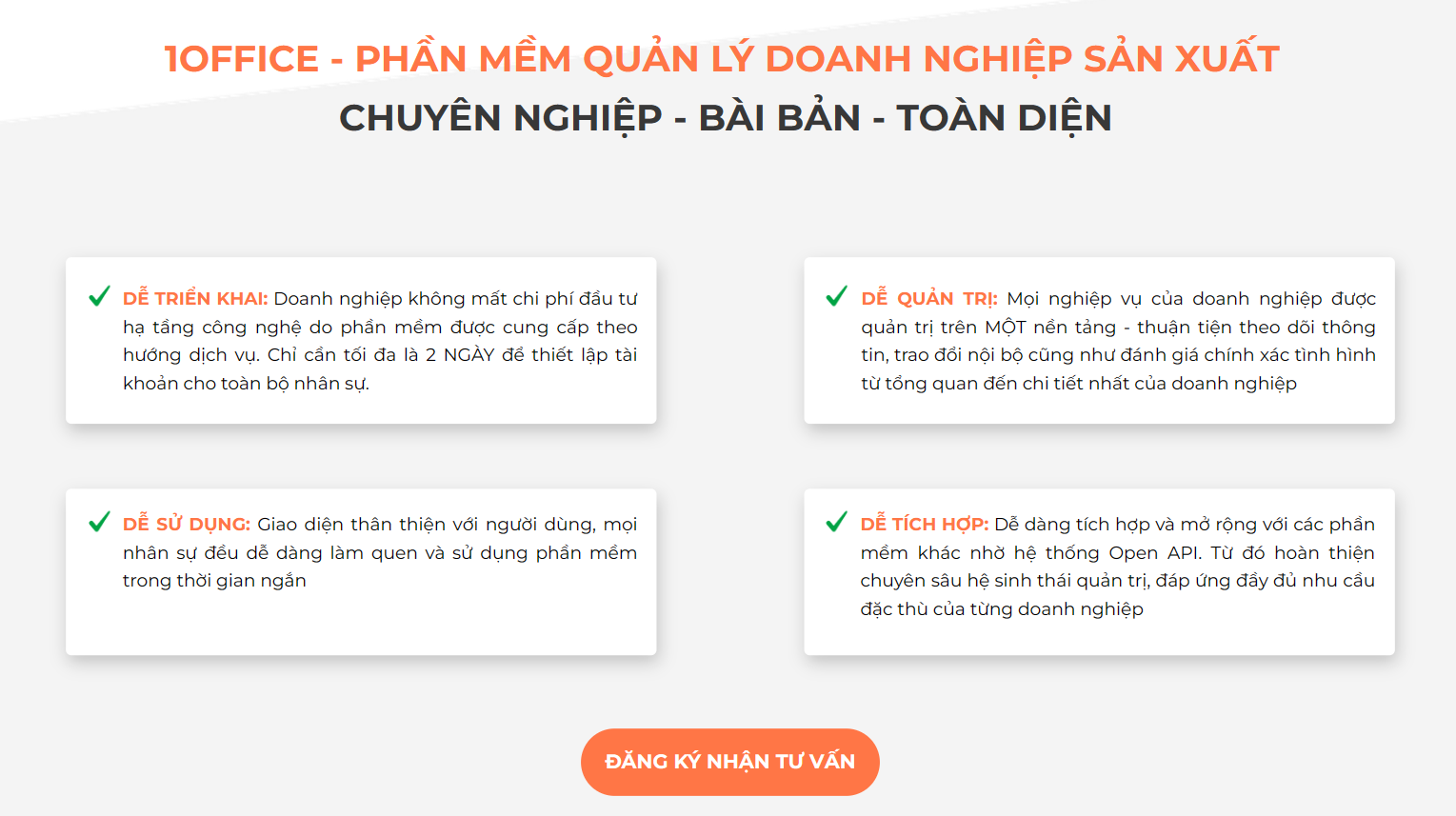
Benefits of digitizing supply chain management with 1Office:
- Increased operational efficiency: 1Office helps businesses automate supply chain management processes, thereby saving time, reducing costs, and minimizing errors.
- Reduced costs: 1Office helps businesses minimize costs in purchasing, logistics, production, distribution, and customer care.
- Enhanced competitiveness: 1Office helps businesses respond quickly to customer needs and improve product and service quality, thereby enhancing their competitiveness in the market.
- Increased customer satisfaction: 1Office helps businesses provide a better customer experience, thereby increasing customer satisfaction.
















