


 12/05/2026
  353 views
SMEs make up a large proportion of the economy, but not everyone fully understands their characteristics or the opportunities and challenges they face. In this article, you will gain a clear understanding of what SMEs are and why this model is increasingly important.
Mục lục
- What is an SME?
- Comparing the differences between SMEs and Startups
- The role of SMEs in today’s economy
- Criteria for classifying SMEs by size
- Opportunities and Challenges for SME Businesses
- Sustainable Development Strategies for SME Businesses
- 1Office and its “mission” to provide comprehensive management solutions for Vietnamese SME businesses
What is an SME?
SME is an acronym for “Small and Medium Enterprise,” used to refer to small and medium-sized businesses. These businesses typically have revenue, assets, or a number of employees below a certain threshold. SMEs play a crucial role in the economy, especially in creating jobs and allocating human resources.
In fact, SMEs account for up to 95% of all businesses worldwide and provide employment for about 50% of the workforce. In recent years, this type of enterprise has grown strongly both domestically and internationally.
According to the World Bank Group’s criteria, SMEs are classified as follows:
- Micro-enterprises: Have fewer than 10 employees.
- Small enterprises: Have 10 – 200 employees, with capital under 20 billion VND.
- Medium enterprises: Have 200 – 300 employees, with capital from 20 – 100 billion VND.
However, each country may apply its own criteria to define enterprise types that suit its economic conditions. In Vietnam, in addition to personnel size and capital, other factors are also considered, such as the field of operation, the number of employees participating in social insurance, etc.
Comparing the differences between SMEs and Startups
SMEs (Small and Medium Enterprises) are often confused with Startups, but in reality, these two models are distinctly different.
| Characteristics | SMEs | Start-ups |
| Size | Small and medium | Micro or small |
| Age | Has been operating in the market for some time (1-3 years) | Newly established |
| Business Model | New or proven model | Usually a new, innovative model |
| Objective | Stable growth, with potential for expansion | Rapid, breakthrough growth |
| Profitability | Often profitable from the start | May operate at a loss initially |
| Competitiveness | Relatively high | High |
| Capital Requirements | Lower | Higher |
| Support | Supported by organizations and government | Often backed by venture capitalists |
| Technology Adoption | Uses conventional technology, upgrading as needed | Uses advanced technology to achieve core objectives |
The role of SMEs in today’s economy
Contributing to economic development
By increasing production and providing goods and services, SMEs make a significant contribution to promoting economic growth. At the same time, SMEs help distribute economic resources more widely and equitably. As they often operate in rural and impoverished areas, SMEs create business and development opportunities for local communities, helping to reduce the development gap between regions.

Creating jobs and reducing unemployment
SMEs are becoming a significant trend in the modern economy. SMEs create more jobs than large corporations due to their smaller scale and lower capital requirements. This helps address employment issues for workers, reduce the unemployment rate, and provide stable income for the population. In this way, SMEs not only improve economic livelihoods but also contribute positively to social development.
Diversifying the market economy
Most SMEs focus on the retail sector—a field with a wide variety of products and business areas. This provides an abundant supply to the market, meeting consumer demand. This growth also promotes healthy competition among SMEs, creating leverage for the economy, improving operational efficiency, and contributing to the country’s development.
Inspiring the talented younger generation
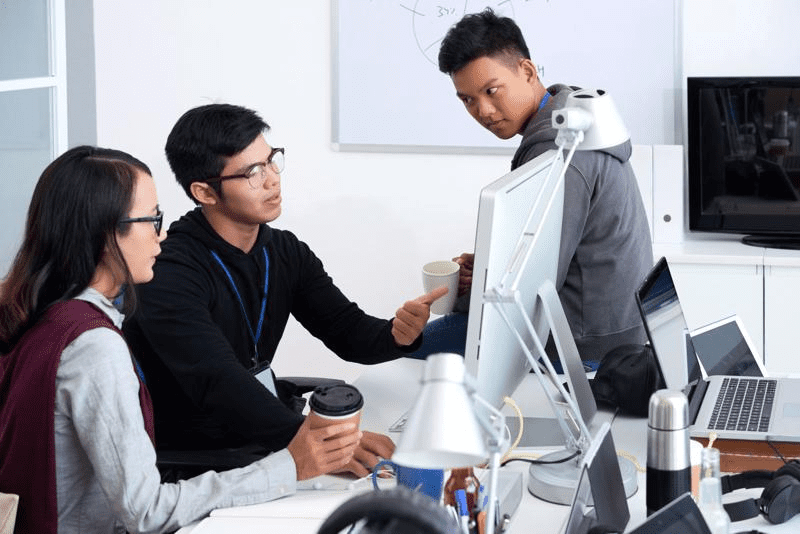
Giants like Google and Microsoft mostly started as small and medium-sized enterprises or even startups. The workforce in SMEs is often very young, which is why they have many creative and excellent ideas for entrepreneurship. Therefore, SMEs are like a cradle for nurturing young talent, contributing to positive changes in the economy.
Promoting local economic development
SMEs often maintain close ties with local suppliers and customers. Active participation in the local supply chain strengthens economic relationships within the region, promoting interaction and mutual support among businesses.
Additionally, some SMEs are capable of exporting products and goods. Expanding into export markets helps generate profits for the business while also contributing to the international trade balance.
Contributing to national GDP
Although SMEs are medium, small, or micro-sized, they constitute the majority of businesses operating in each country. Therefore, their total revenue makes a significant contribution to the GDP. Specifically, SMEs contribute 30% – 53% of the total GDP income and produce 19% – 31% of the total exports to the international market.
Criteria for classifying SMEs by size
Below is a table classifying businesses by sector and size:
| Sector | Micro-enterprises | Small enterprises | Medium-sized enterprises |
| Agriculture, industry, forestry, construction, and fisheries | – Average annual number of employees contributing to social insurance does not exceed 10.
– Total capital does not exceed 3 billion VND or annual revenue does not exceed 3 billion VND. |
– Average annual number of employees contributing to social insurance does not exceed 100.
– Total capital does not exceed 20 billion VND or annual revenue does not exceed 50 billion VND. |
– Not classified as a micro-enterprise according to regulations.
– Average annual number of employees contributing to social insurance does not exceed 200. – Total capital does not exceed 100 billion VND or annual revenue does not exceed 200 billion VND. |
| Trade and services | – Average annual number of employees contributing to social insurance does not exceed 10.
– Total annual revenue does not exceed 10 billion VND or total capital does not exceed 3 billion VND. |
– Average annual number of employees contributing to social insurance does not exceed 50.
– Total capital does not exceed 50 billion VND or annual revenue does not exceed 100 billion VND. |
– Not classified as a micro-enterprise according to regulations.
– Average annual number of employees contributing to social insurance does not exceed 100. – Annual revenue does not exceed 300 billion VND or total capital does not exceed 100 billion VND. |
Opportunities and Challenges for SME Businesses
Any business model faces opportunities and challenges during its formation and development, and SME businesses are no exception. Especially as more and more businesses enter the market, SMEs must confront numerous competitive factors and new opportunities.
Opportunities
SME businesses in Vietnam currently have many opportunities for growth:
- Abundant Market and Human Resources: Vietnam has a large and young population, with a rich labor force and low labor costs. This helps SME businesses easily access and attract talent.
- Prioritizing Technology Application: In the era of digital transformation, SME businesses have the opportunity to access and apply new technologies to improve operational efficiency and optimize processes.
- Innovation and Creativity: SMEs often have the ability to innovate and adapt quickly to market changes, helping them seize new opportunities and overcome challenges.
- A Growing Market: Vietnam’s domestic market is developing strongly with a large population and rising incomes. SMEs can expand their customer base and offer diverse products and services domestically. At the same time, Vietnam is a partner to many countries, creating opportunities for SMEs to export products to international markets.
- Government Support: The Vietnamese government currently has many policies to support SME businesses, such as loans, tax incentives, training, and market development support.

Challenges
Despite many opportunities, SME businesses also face numerous challenges in their operations:
- Difficulty Accessing Credit: With their small scale and limited collateral, SME businesses often find it difficult to access credit from banks.
- Limited Management Capabilities: Many SME businesses lack management skills and specialized personnel, leading to risks in business operations.
- Intense Competition: SMEs must compete with large, well-resourced corporations, which makes it difficult to expand their market and grow their business.
- Rapid Technological Changes: Constantly changing technology requires SME businesses to update regularly to avoid falling behind competitors.
- Difficulty Accessing Global Supply Chains: Although participating in global supply chains can bring many benefits, limitations in production technology and a shortage of skilled labor make it difficult for SMEs to connect with global supply chains and FDI enterprises.
- Governance Gaps: SME businesses often focus on driving revenue without paying attention to their operational systems, such as organizational structure, processes, policies, and culture. This can lead to a fragmented operational apparatus that is prone to “breaking down” when scaling up or facing high work pressure, affecting employee satisfaction, especially as Gen Z enters the workforce.
- Misaligned Leadership: Many SME leaders lack appropriate leadership skills and a clear direction, which can reduce operational efficiency and affect employee morale, forcing the business to reconsider its future path.

Sustainable Development Strategies for SME Businesses
Leveraging Competitive Advantages
SME businesses need to clearly identify their strengths, weaknesses, opportunities, and threats compared to their competitors. Using a SWOT matrix model will help the business understand its market position and create a suitable plan to leverage strengths, address weaknesses, seize opportunities, and counter threats.
Once the market and customer persona have been identified, the business needs to develop products or services to meet needs that have not yet been tapped by others. Finally, building a reputable brand image is crucial, not only to attract customers but also to retain them long-term.
Developing a Financial Management Plan
With limited capital, SME businesses need to manage their finances strictly. To do this effectively, businesses should:
- Create a plan to forecast costs and revenue monthly, quarterly, and annually to get a clear view of the financial situation.
- Manage costs and monitor cash flow closely to ensure efficient use of resources.
- Identify and seek suitable investment capital sources to support the business’s growth and expansion.
- Use tools and financial management software to ensure accuracy and optimize profits, avoid errors, and enhance management efficiency.

Shape corporate culture
Corporate culture plays a key role in ensuring sustainable development, especially for SME businesses. From the very beginning, leadership needs to establish a system of core corporate values and a clear vision for the organization.
In addition to building an open work environment and recruiting talent that fits the corporate culture, investing in training and development (L&D) is crucial. This investment helps enhance personnel capabilities, creating favorable conditions for the long-term development of the business.
Standardize operational processes
A standardized operating system helps improve employee work efficiency and increase customer satisfaction. For SME businesses, it is necessary to build standard work processes and procedures to be applied company-wide.
Although this requires time, knowledge, and skills, it is a fundamental requirement for businesses with a strategic vision that wish to develop sustainably and beyond. Business processes can be divided into four main groups based on function:
- Business operations management process
- Customer management process
- Process for improving and enhancing products and services.
- Regulatory process with state management agencies
Applying digital transformation in business
Many SME companies today are clearly aware of the importance of digital transformation and have achieved significant success in creating a competitive advantage and improving the efficiency of their production and business operations.
To reach more customers and enhance marketing effectiveness, SMEs should develop online sales channels and use digital marketing tools to promote their brand and products.
Besides, applying technology solutions in business administration is essential. This helps businesses automate many manual tasks, minimize operational errors, optimize resources, and reduce costs in terms of personnel, time, and effort. Furthermore, the business will be able to make smarter decisions based on data (data-driven).

1Office and its “mission” to provide comprehensive management solutions for Vietnamese SME businesses
After 8 years of operation and development, 1Office has established itself as a reliable business management and administration platform for over 6,000 SME businesses in Vietnam.
With a deep understanding of the needs and essential challenges of SMEs, 1Office provides comprehensive software solutions that thoroughly address every aspect of business management. The 1Office platform comprehensively covers 4 management aspects, including: Work Management, Human Resource Management, and Marketing Management.
Depending on their needs and available resources, SME businesses can choose practical software to implement first, including:
- 1Work: Provides a suite of tools for work management and internal communication.
- 1HRM: Provides a suite of tools for company human resource management.
- 1CRM: A suite of tools for managing marketing, sales, and customer care.
In particular, 1Office is always ready to support customers from the consultation and survey phase, assessing the business’s technology adoption capabilities, through to the initial trial implementation.
To receive a consultation and experience a demo of 1Office’s software, please find more information [HERE]
We hope the information shared above has helped you better understand SMEs and the important role of this business model in Vietnam’s economy. If you have any questions, please do not hesitate to contact us via our hotline 083 483 8888 or email us at: Support@1office.vn.
1Office wishes you success in your business!
















