What is Critical Thinking? Developing Critical Thinking Skills


With modern technology constantly evolving, the spread of fake news and unverified information on social media has become familiar to us. In this context, using critical thinking to make rational decisions is crucial. Critical thinking is an essential skill in any profession because it helps us gain an objective, multi-faceted perspective on issues and find solutions quickly. So, how can we improve and overcome the challenges in the process of critical thinking? Let’s explore 1Office’s insights right in this article.
Mục lục
1. What is a Counter-Argument?
A counter-argument is the process of using sharp reasoning, persuasive evidence, and tight logic to “debunk” seemingly unshakable viewpoints, opinions, or statements. It’s like an intellectual battle where you use the “weapons” of reason and factual information to prove that the opposing side is wrong or lacks logic.
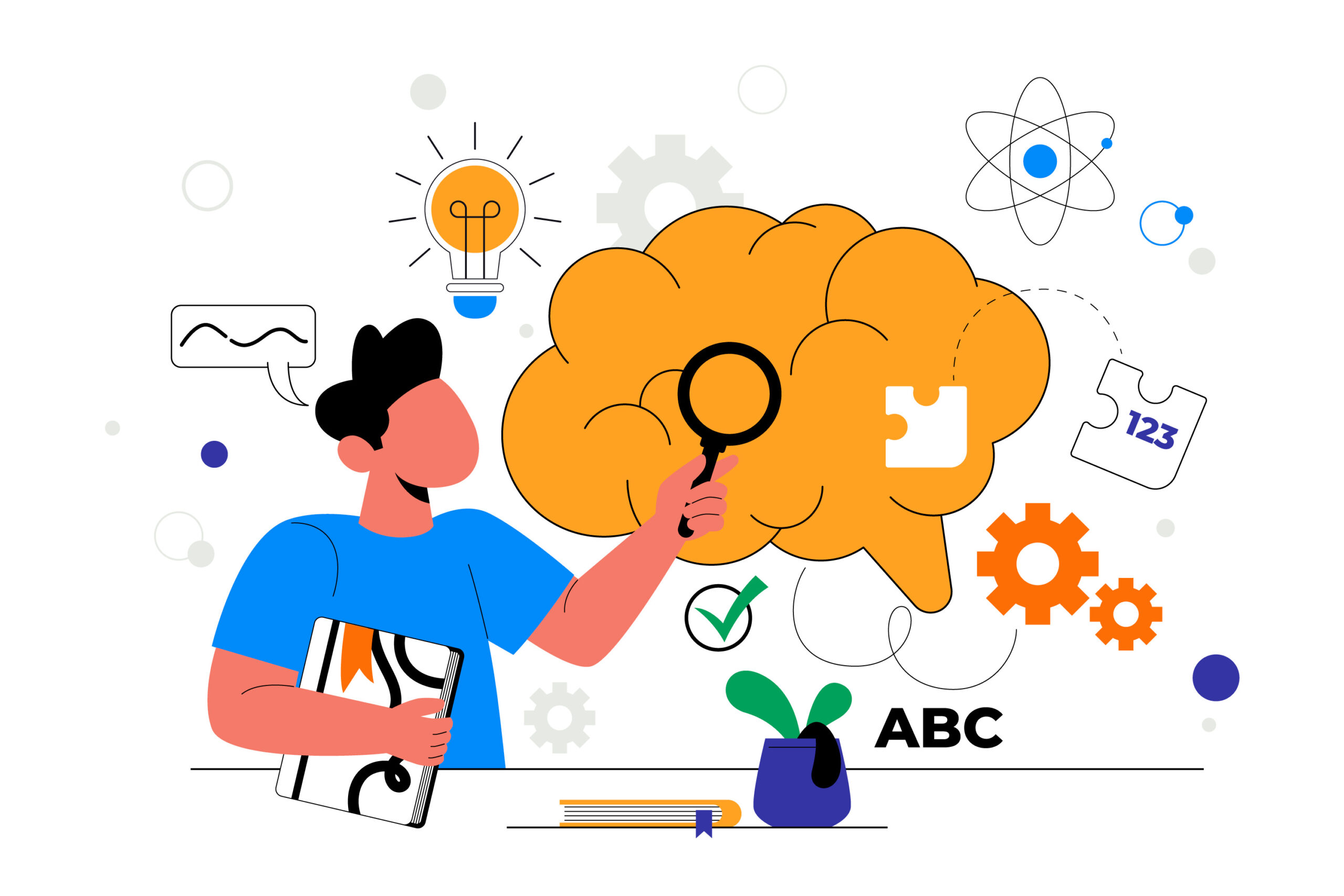
Counter-arguments are not limited to academia but are also widely applied in all areas of life. Whether you are a student, an office worker, or a scientific researcher, honing your counter-argument skills will help you be more successful in your work and life.
2. What is Critical Thinking?
Critical thinking describes the process of analytical thought aimed at making reasonable judgments, logical arguments, and viewing issues from multiple perspectives. At the same time, this process requires careful consideration by asking questions like What; How; Why;… to examine the information and issues that are heard or read.
3. 2 Common Types of Critical Thinking
Today, possessing critical thinking is highly valued because it is a crucial skill that helps us evaluate information logically and objectively. This allows us to make wise decisions to solve problems effectively. Critical thinking is divided into two common types: self-regulated critical thinking and externally-focused critical thinking.
3.1 Self-Regulated Critical Thinking
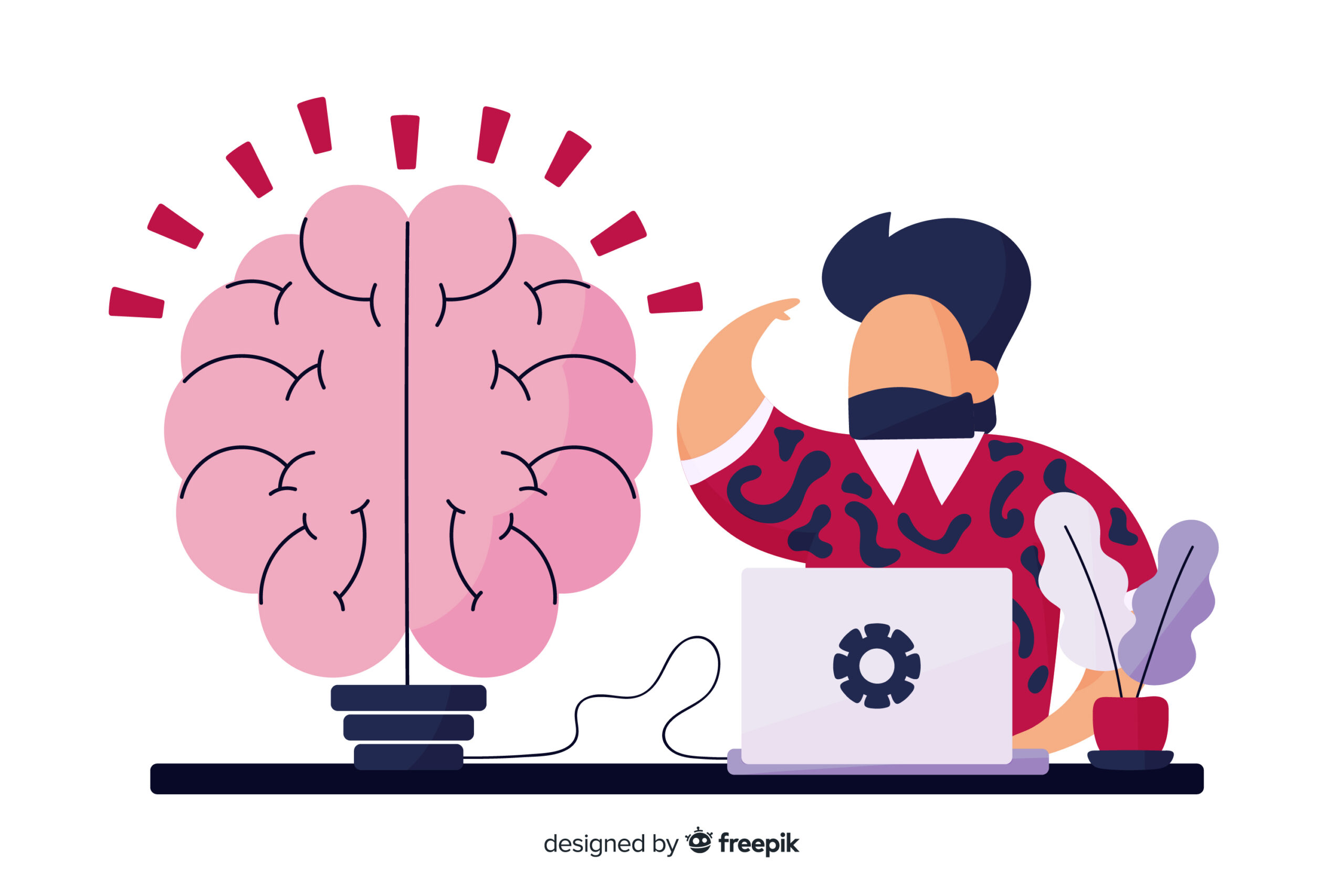
In self-regulated critical thinking, individuals self-reflect and debate their own previous thoughts and viewpoints. When faced with a problem, each person usually has a different personal opinion or perspective. Because these thoughts are not influenced by the opinions of others, they can be right or wrong. As someone with self-regulated Critical Thinking, you have the ability to re-evaluate your own thoughts and challenge those opinions to gain the most comprehensive perspective. After careful consideration, you can synthesize your thoughts, refine them, and arrive at the most suitable conclusion.
3.2 Externally-Focused Critical Thinking
In contrast, externally-focused critical thinking involves receiving and processing external information from multiple perspectives. From there, one analyzes and evaluates the situation to form an opinion or thought that they find most complete and reasonable.
4. Exploring the 6 Levels of Critical Thinking
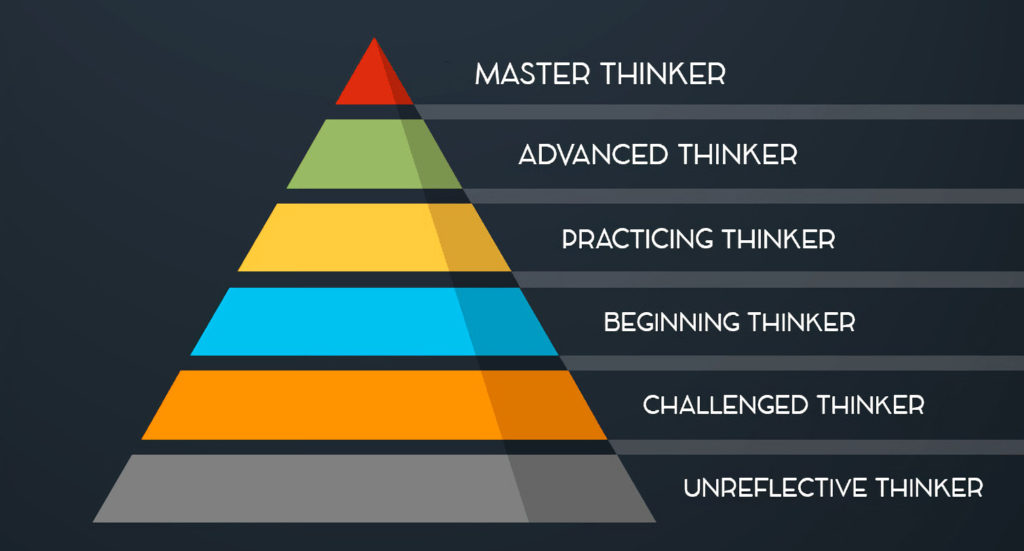
Critical thinking is not an innate ability but is improved and accumulated over a long process. To delve deeper into its development process, let’s explore the 6 levels of Critical Thinking shared below.
4.1 Level 1: The Unreflective Thinker
At this level, the concept of “critical thinking” does not yet exist. This means that at level 1, individuals cannot reflect on their own thoughts. They think and act based on instinct and the opinions of others. Therefore, they may act emotionally, impulsively, and lack the necessary skills for self-improvement.
Because they do not apply any standards to their thinking, they cannot analyze situations or events thoroughly. They tend to think one-sidedly and do not realize their own many shortcomings and unknowns.
4.2 Level 2: The Challenged Thinker
At The Challenged Thinker level, you have a deep awareness of the role of critical thinking. They gradually become aware of their own shortcomings and develop a desire to improve them.
Although still superficial and not fully focused, they begin to form their own opinions and view things from an objective perspective. However, they can easily mistake themselves for having fully mastered the skills of Critical Thinking. This will cause difficulties as they may not intend to practice to advance to the next levels.
4.3 Level 3: The Beginning Thinker
This is the level where you have basic critical thinking. At this 3rd level, individuals begin to understand that their own thinking is not comprehensive and has limitations. From there, they prioritize overcoming these issues.
More mature thinking helps them act more appropriately and they will proactively control their behavior. At the same time, they also develop higher standards for clarity and logic, and gradually come to truly understand the importance of Critical Thinking. They are also willing to accept criticism to adjust their way of thinking.
4.4 Level 4: The Practical Thinker
Reaching level 4 of critical thinking, individuals have a clearer mindset, easily recognize their own shortcomings, and develop the necessary skills to improve.
They can start creating well-structured plans and reasonable strategies to learn, improve, and apply methods. With a complete strategy, they are not afraid to practice their way of thinking and train their multi-dimensional thinking.
4.5 Level 5: The Advanced Thinker
Critical thinking has gradually become a habit when looking at life’s problems. They can detect personal thoughts that have formed biases, both in themselves and in others. From there, they have a clear direction to correct and limit it.
4.6 Level 6: The Master Thinker
This is the final and highest level of critical thinking. At this stage, Critical Thinking has become a reflex of the brain. These are individuals with master-level thinking who have complete control over how they receive, process information, and decide on actions.
They continuously hone this skill by practicing it even in their daily lives. They can easily elevate their thinking to a higher level of consciousness. However, many psychologists believe it is difficult for humans to reach this master level.
Further reading:
- 9+ Team management skills to help leaders retain talent
- 7 important management skills for managers and 7 ways to improve your management skills
- Job analysis skills in human resource management to triple management efficiency
5. The advantages of mastering critical thinking
Critical thinking plays a crucial role in decision-making, contributing significantly to solving problems effectively. With such importance in life, possessing this ability gives you advantages in life.
5.1 One of the first qualities recruiters look for
Currently, recruiters show a preference for promising candidates who can think comprehensively and independently. Regardless of the industry or field, critical thinking plays a vital role.

For example: In the teaching profession, teachers need to plan lessons to effectively impart knowledge to students. Critical thinking helps them define learning objectives, choose appropriate teaching methods, and evaluate the effectiveness of their lessons.
5.2 Better decision-making
With critical thinking skills, they often spend a long time thinking before making a decision. This helps ensure that when they make a decision, it is truly the best option. This thinking process promotes evaluation and analysis to observe from multiple perspectives. As a result, they make wiser decisions and form objective arguments rather than reacting based on immediate emotions.
5.3 Enhanced problem-solving skills
Indeed, critical thinking not only helps us see problems comprehensively but also equips us with the ability to find creative and effective solutions. This is because when using Critical Thinking, we analyze deeply, evaluate information from multiple angles, and do not let emotions override reason. This not only helps us handle unexpected situations but also helps accumulate experience to solve potential future problems.
6. How to practice critical thinking
With the advantages of mastering critical thinking mentioned above, many individuals ask, “So what can be done to practice and improve critical thinking?”. To answer that question, 1Office presents a compilation of 5 common methods for practicing Critical Thinking below.
6.1 Read more

Reading is the most common way to acquire knowledge today. The more books, newspapers, magazines, and online articles you read, the more opportunities you have to broaden your knowledge and gather useful information. Accordingly, you can learn about the perspectives of experts on the issue. Read to understand how journalists break down issues with logical and sharp arguments.
However, it is important to note that not all articles or books are official and have accurate perspectives. Find reputable sources, and avoid those that distort issues, show bias, or misrepresent information.
6.2 Always ask questions
Never blindly trust everything you hear or read. Always question the accuracy and logic of the story. With the growth of media platforms, a lack of critical thinking skills can lead people to share and spread false, unofficial information. This can affect your money, reputation, and you might even pay a higher price. Therefore, don’t forget to question every issue, even if it is agreed upon by the majority.
6.3 Think backward
Reverse thinking is also one of the secrets to practicing critical thinking. When faced with a problem, try to reverse the situation to understand it thoroughly and find the correct result quickly.
Reverse thinking also allows you to see the problem more comprehensively. Because you can observe and evaluate from multiple angles, you see more and grow more in your way of thinking.
6.4 Listen actively

It may sound simple, but listening is one of the best ways to practice critical thinking skills. When debating an issue with others, you need to listen to their arguments. From there, you can evaluate and ask yourself questions. Are your thoughts one-sided? What is the difference between your two ways of thinking? …
Initially, you might not feel happy about “listening.” This is because it means you may have to hear criticism and sarcasm about yourself. However, try to think more positively. Every action and thought you have, whether it’s a failure or a mistake, will lay the foundation for great success in the future.
6.5 Practice critical thinking anytime, anywhere
The more you practice critical thinking, the more proficient you will become. Therefore, don’t hesitate to apply Critical Thinking skills to all activities in life, from studying and working to entertainment and communication.
For example: When watching a movie, try to analyze the plot, characters, and the message the film conveys. When playing a game, think about different strategies to win.
Practicing critical thinking is a long-term process that requires perseverance. However, the benefits it brings are immense. Apply the methods above to practice critical thinking and enhance your thinking abilities.
7. Conclusion
In this article, we have shared knowledge about critical thinking, such as: its concept, classifications, benefits, and provided methods to practice this skill. Through this article, 1Office hopes you can proficiently apply the methods we have mentioned above, master critical thinking skills, and improve your life.