11/05/2026
  588 views
When looking at financial statements, owner’s equity is one of the key indicators that helps assess a company’s actual resources after deducting liabilities. This figure reflects the level of financial autonomy, accumulation capacity, and capital foundation of the business during its operations. This article will help you understand what owner’s equity is, its calculation formula, illustrative examples, and how to distinguish it from easily confused concepts like charter capital and contributed capital.
Mục lục
- 1. What is owner’s equity?
- 2. The role of owner’s equity for a business
- 3. Who needs to be concerned with owner’s equity?
- 4. Current forms of owner’s equity
- 5. What are the components of owner’s equity?
- 6. The Most Standard and Accurate Way to Calculate Owner’s Equity
- 7. Factors that increase or decrease owner’s equity
- 8. Safe owner’s equity ratio for each type of business
- 9. Common Mistakes in Managing Owner’s Equity
- 10. Differentiating Between Owner’s Equity and Charter Capital
1. What is owner’s equity?
Owner’s equity (Owner’s Equity) is one of the components that form a company’s capital and represents the total value of assets owned by the business owner or co-owned with shareholders and joint venture members. Owner’s equity comprises the remainder after all liabilities have been deducted. It is a stable and regular source of financing for the business, creating the necessary resources to put the company into operation.

Contributing members are entitled to benefits such as making business decisions, sharing profits, and bearing responsibility when the business incurs losses. Owner’s equity also provides a basis for valuing the business and reflects the company’s financial capacity and sustainability.
In the event of bankruptcy or cessation of business operations, this owner’s equity will be prioritized for debt repayment, and the remaining portion will be distributed to shareholders according to their initial capital contribution ratio.
>> Read more: What is working capital? Formula for calculating working capital & how to manage it
2. The role of owner’s equity for a business
Owner’s equity plays an extremely important role in a company’s operations, as it is not only a financial resource but also a decisive factor for long-term stability and growth. Below are the main roles of owner’s equity for a business:
Solid financial foundation
Owner’s equity represents the net assets that the business truly owns after deducting liabilities. It is a stable financial source that does not need to be repaid and does not incur interest, helping the business have a solid foundation for development.
Enhancing credibility and borrowing capacity
Businesses with large owner’s equity are often highly regarded by banks and investors for their debt repayment ability, making it easier to access loans or attract external investment on more favorable terms. This helps the company enhance its ability to scale up and invest in new projects.
Increasing flexibility in financial management
With abundant owner’s equity, a business can be more flexible in allocating financial resources for activities such as expanding production, developing new products, or responding to market fluctuations without relying too heavily on borrowed capital.
Protecting the interests of owners
Owner’s equity is the portion of assets belonging to the shareholders or founders of the business, helping to protect their interests in case of financial difficulties. When the business performs well, profits are distributed according to the capital contribution ratio, bringing long-term benefits to the owners.
Promoting sustainable development
The stability of owner’s equity helps a business maintain long-term financial capacity, creating conditions for sustainable development without excessive dependence on debt or short-term financing.
3. Who needs to be concerned with owner’s equity?
Owner’s equity is not just an accounting figure on the financial statements; it is also a crucial indicator of a company’s financial health and growth potential. The significance of owner’s equity varies depending on the stakeholder.
This is the most directly involved group. Owner’s equity represents the portion of net asset value that belongs to them after deducting liabilities. Tracking this indicator helps them clearly understand:
-
Whether the business is increasing in value or its capital is being eroded.
-
Whether profits are retained for reinvestment or distributed as dividends.
-
Whether the return on equity (ROE) meets expectations.

Management and the finance/accounting department
They are the “gatekeepers” of capital flow within the business. Analyzing changes in owner’s equity helps management make important decisions, such as:
-
Balancing profit distribution to shareholders with retention for reinvestment.
-
Determine the scalability of production and business operations.
-
Plan capital allocation reasonably to avoid financial risks.

Banks and credit institutions
When a business seeks a loan, owner’s equity is an indicator of its financial capacity and ability to repay debt. A business with high and stable owner’s equity will be considered more reliable, which leads to:
-
Easier loan approval.
-
Access to loans with more favorable interest rates.
-
Increased credibility when negotiating with financial institutions.

Investors
For investors, owner’s equity is a crucial metric to:
-
Assess long-term profitability potential.
-
Determine the level of safety and risk when investing capital.
-
Compare the financial health of the business with competitors in the industry.
Especially in M&A deals, owner’s equity is a key basis for business valuation.

State regulatory agencies
In some sectors such as banking, securities, and insurance, regulations on minimum owner’s equity are a mandatory legal requirement. Additionally, regulatory agencies rely on this indicator to:
-
Monitor transparency in corporate finance.
-
Ensure operational safety and mitigate systemic risks.

4. Current forms of owner’s equity
Owner’s equity is not just the initial amount contributed by shareholders; it also includes various other elements formed throughout the business’s operations. A clear understanding of the different forms of owner’s equity helps businesses manage resources more effectively and provides investors, partners, and regulatory agencies with an accurate view of the company’s financial capacity.
This is the capital that the owners contributed right from the establishment of the business.
- For sole proprietorships and limited liability companies, this is the capital contributed by the business owner or members.
- For joint-stock companies, it is the share capital contributed by shareholders through purchasing shares or investing according to their ownership ratio.
This contributed capital can be cash or other assets such as factories, machinery, land use rights, etc.
4.2. Additional paid-in capital
This only arises in joint-stock companies when shares are issued at a price higher than their par value.
The difference between the issue price and the par value of the shares is recorded as additional paid-in capital, and this amount is also included in owner’s equity.
4.3. Other capital from owners
Includes other capital besides the initial contribution, such as funds formed from the owner’s capital sources or the value of contributed land use rights.
This capital source can be additional contributions from owners beyond the initial contributed capital.
4.4. Funds appropriated from after-tax profits
- Investment and development fund: Used to expand business scale and for in-depth investment.
- Financial reserve fund: Used to compensate for potential risks and losses.
- Bonus and welfare fund: Designated for employee bonuses and welfare expenses.
- Other funds: According to legal regulations, these funds are also included in owner’s equity.
4.5. Retained earnings (undistributed after-tax profit)
This is the remaining profit after appropriating funds and distributing dividends to owners. This profit is retained and used for investment activities, business expansion, and is still considered part of owner’s equity.
4.6. Capital raised from new investors
- For joint-stock companies: Can raise additional capital by issuing new shares to sell to investors.
- For limited liability companies: Can sell a portion of contributed capital to strategic investors to increase capital.
This capital source helps supplement owner’s equity, supporting business expansion.
4.7. Preferred Stock
Preferred stock provides shareholders with special rights such as priority in receiving dividends or priority in capital repayment when the company issues dividends.
The forms of owner’s equity mentioned above all play a crucial role in maintaining and developing a company’s business operations. Depending on the type of business and development strategy, a company will choose the appropriate form of raising owner’s equity to strengthen its financial resources.
See more:
5. What are the components of owner’s equity?
Owner’s equity is formed by 4 main components: owner’s investment capital, profits from business operations, asset and exchange rate differences, and other sources.

5.1. Owner’s Investment Capital
Owner’s investment capital is the amount of money or the value of assets that the owners or shareholders of a business have contributed to the company to own or co-own it. This is one of the main components that form the owner’s equity of a business. Owner’s investment capital includes 2 types:
- Share capital: Formed from the actual capital contributed by shareholders, stipulated in the company’s charter, and recorded at the par value of the shares.
- Additional paid-in capital: The difference in amount that the company receives from issuing stock over its par value.
5.2. Profits from Business Operations
Profits from business operations are the earnings obtained from core business activities after deducting related expenses.
- Various funds: Appropriated from the year’s profits and include financial reserve funds, development investment funds, and other funds, depending on the specific purpose.
- Retained earnings: The remaining profit that has not been distributed as dividends or used to establish funds.
5.3. Asset and Exchange Rate Differences
An essential component of owner’s equity is asset and exchange rate differences. This includes:
- Asset revaluation difference: Represented by the difference arising from the revaluation of a company’s existing assets, such as fixed assets, investment properties, inventory, and other assets.
- Foreign exchange rate difference: Usually arises from actual purchase, sale, or exchange transactions in foreign currencies, the valuation of monetary items denominated in foreign currencies, or the translation of financial statements from a foreign currency to the national currency.
5.4. Other Sources
Besides the main components, owner’s equity is also formed from other sources such as:
- Treasury stock: Calculated based on the value of shares repurchased by the company, including the share price at the time of repurchase and all other related costs.
- Capital for construction investment, non-business funds, and other sources.
6. The Most Standard and Accurate Way to Calculate Owner’s Equity
To calculate owner’s equity, simply apply the following formula:
Owner’s Equity = Total Company Assets (short-term + long-term) – Total Liabilities
Where:
- Total Company Assets: The company’s short-term and long-term assets, such as cash, bank deposits, financial investments, fixed assets, real estate, and other long-term assets.
- Total Liabilities: The debts and financial obligations that the company currently has to pay, such as loans, payments to the state, taxes, employee salaries, and other debts.
For example: Company A, which specializes in manufacturing and trading electronic goods, has its assets and liabilities detailed in the table below.
| Current Assets | – Cash and cash equivalents: 20 million VND
– Bank deposits: 50 million VND – Inventory: 100 million VND – Accounts receivable: 30 million VND – Other current assets: 50 million VND |
| Long-term Assets | – Machinery and equipment: 300 million VND
– Financial investments: 150 million VND – Other fixed assets: 50 million VND |
| Liabilities | – Short-term loans: 80 million VND
– Long-term loans: 200 million VND – Other liabilities: 50 million VND |
Based on the data above, we calculate the total values as follows:
– Total current assets = 20 million + 50 million + 100 million + 30 million + 50 million = 250 million VND
– Total long-term assets = 300 million + 150 million + 50 million = 500 million VND
– Total liabilities = 80 million + 200 million + 50 million = 330 million VND
Therefore, the owner’s equity of company A will be:
Owner’s equity = (Total current assets + Total long-term assets) – Total liabilities Owner’s equity = (250 million + 500 million) – 330 million = 750 million – 330 million = 420 million VND
Thus, the owner’s equity of that company is 420 million VND.
>> See more: 4 Most Accurate Ways to Calculate Payback Period for Investors (Formula + Examples)
7. Factors that increase or decrease owner’s equity
Owner’s equity is not fixed and can change over time with the business’s operations. Factors that increase or decrease owner’s equity include:
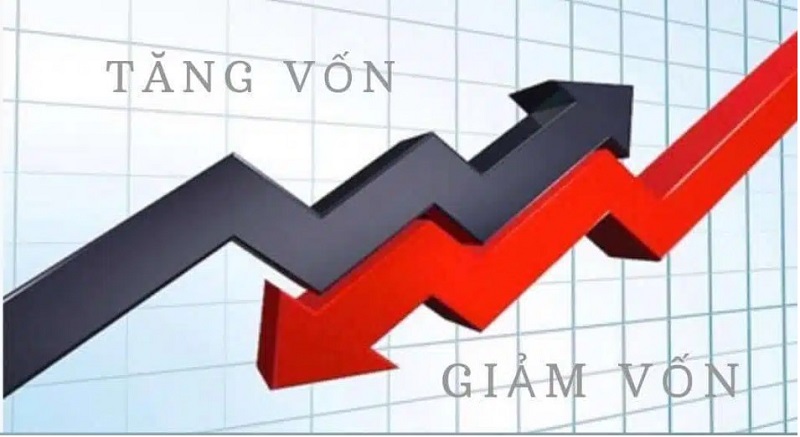
Factors that increase owner’s equity:
- Additional capital contribution: Owners or shareholders can decide to contribute more capital to the business to increase owner’s equity.
- Business profits: When the business makes a profit, a portion of this profit can be added to the owner’s equity.
- Additions from investment funds: When the business receives additional funds from investment funds or financing from financial institutions.
- Issuing shares: The business can issue new shares to raise capital from new shareholders.
Factors that decrease owner’s equity:
- Capital withdrawal: Existing shareholders can request to withdraw capital from the business, leading to a decrease in owner’s equity.
- Business losses: If the business operates inefficiently and records a loss, this can reduce owner’s equity.
- Share buyback: The business can buy back shares from shareholders, leading to a reduction in the number of outstanding shares and a decrease in owner’s equity.
- Dividend distribution: When the business distributes dividends to shareholders, a portion of the profits is paid out, reducing owner’s equity.
- Loan repayment: If the business has to repay a loan, this amount will be deducted from the owner’s equity.
8. Safe owner’s equity ratio for each type of business
The safe owner’s equity ratio is an important indicator used to assess and ensure the stability and sustainability of a business in its operations. It reflects the business’s ability to meet its financial commitments and minimize financial risk.

| Business Type | Characteristics | Safe Equity Ratio |
| State-owned enterprise | An enterprise owned and operated by the government or a state management agency, serving public interests and meeting social needs. | Around 30% to 50% |
| Joint-stock company | An enterprise divided among shareholders through the issuance of shares, with a separate legal entity status and limited liability for shareholders. | Around 20% to 30% |
| Partnership | Individuals or organizations cooperate, sharing profits and having unlimited liability for the company’s debts. | Around 10% to 20% |
| Private enterprise | An enterprise owned and operated by an individual or a group of individuals, which does not raise capital from the public. | Around 30% to 40% |
| Joint venture | A collaboration between two or more independent companies to carry out a specific business project, sharing profits and risks according to their capital contribution ratio. | Variable |
9. Common Mistakes in Managing Owner’s Equity
Managing owner’s equity is one of the key factors that determine the stability and sustainable development of a business. However, many companies make the following common mistakes:
Not Regularly Tracking Capital Fluctuations
Many businesses only prepare financial statements at the end of the year, neglecting to track changes in owner’s equity on a quarterly or monthly basis. This prevents them from promptly identifying issues such as capital being “eroded” by continuous losses or profits not being reinvested appropriately.
Confusing Owner’s Equity with Charter Capital
Many business owners believe that owner’s equity only consists of the charter capital contributed by members/shareholders. In reality, owner’s equity also includes retained earnings, reserve funds, additional paid-in capital, and asset revaluation differences. Misunderstanding its nature can easily lead to an incorrect assessment of financial health.
Failing to Establish or Manage Reserve Funds
Businesses often focus on short-term profits and forget to set aside reserve funds from owner’s equity. When the market fluctuates or financial risks arise, the company lacks the resources to cope, leading to cash flow imbalances.
Using Retained Earnings Without a Strategy
Some businesses distribute too much profit as dividends, not retaining enough for reinvestment. Conversely, other companies retain all profits without an optimal plan for capital utilization, causing cash flow to be “frozen” and reducing profitability.
Not Evaluating ROE (Return on Equity)
Only looking at absolute profit while ignoring ROE is a common mistake. A business with high profits but a sharp increase in owner’s equity can still have a low ROE, reflecting suboptimal capital efficiency.
Lack of Transparency and Accounting Standards
Incorrect or non-transparent recording of profits, capital surplus, asset differences, etc., can lead to “inflated” owner’s equity figures. This not only creates internal difficulties but also erodes trust from investors, banks, and regulatory agencies.
Avoiding these mistakes will help businesses manage owner’s equity more effectively, creating a solid foundation for scaling operations, attracting investment, and enhancing their reputation in the market.
10. Differentiating Between Owner’s Equity and Charter Capital
In addition to understanding the concepts and information about owner’s equity, you need to be able to distinguish between owner’s equity and charter capital. In practice, many investors and business owners confuse these two concepts, leading to serious consequences.

Please refer to the analysis table below to distinguish between owner’s equity and charter capital.
| Criteria | Owner’s Equity | Charter Capital |
| Definition | The total value of the business’s ownership after deducting total debts and payables. | The maximum amount of money a company is allowed to raise from shareholders by issuing shares. |
| Owner | The state, organizations, and individuals who contribute capital. | Individuals and organizations who have contributed or committed to contribute capital. |
| Formation Mechanism | Formed from the state budget and capital invested by owners or shareholders in the business. | Stipulated in the company’s charter and reflects the capital limit that the company can raise. |
| Characteristics | Is not a debt. | If the business goes bankrupt, the charter capital is considered a debt of the business. |
| Significance | Reflects the actual status of the capital sources owned by the business or its contributing members. | Shows the capital structure within the business and is the basis for distributing profits or risks among contributing investors. |
| Relation to Capital | Related to the business’s capital after business operations. | Related to the maximum capital that the business is allowed to raise from shareholders. |
Thus, this article has helped you answer the question, “what is owner’s equity?” and provided related information about owner’s equity. We hope this information is useful to you!